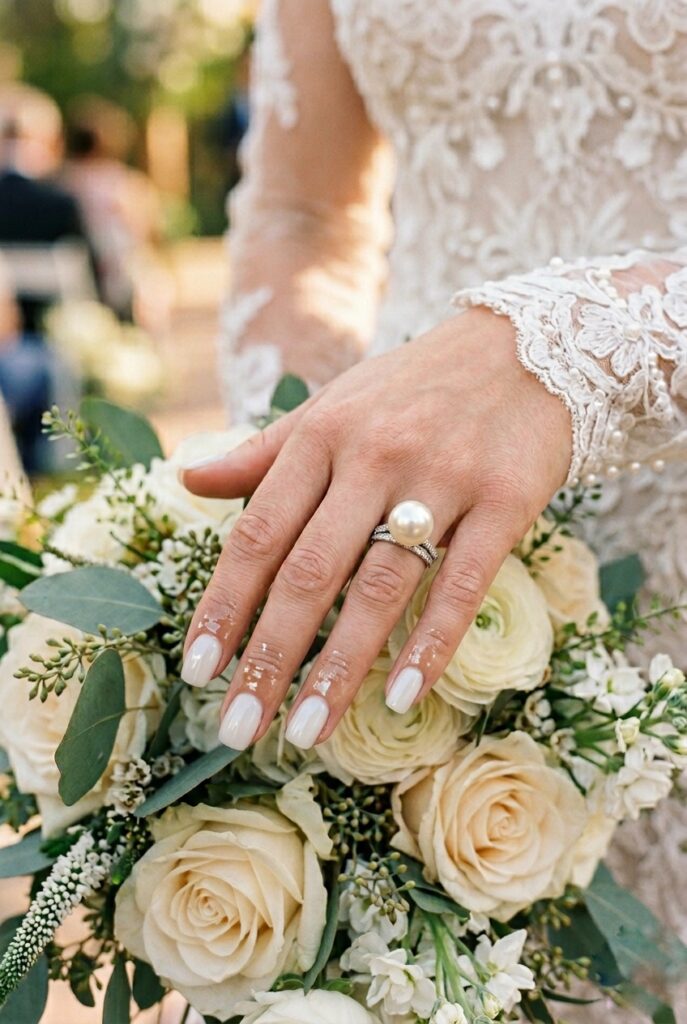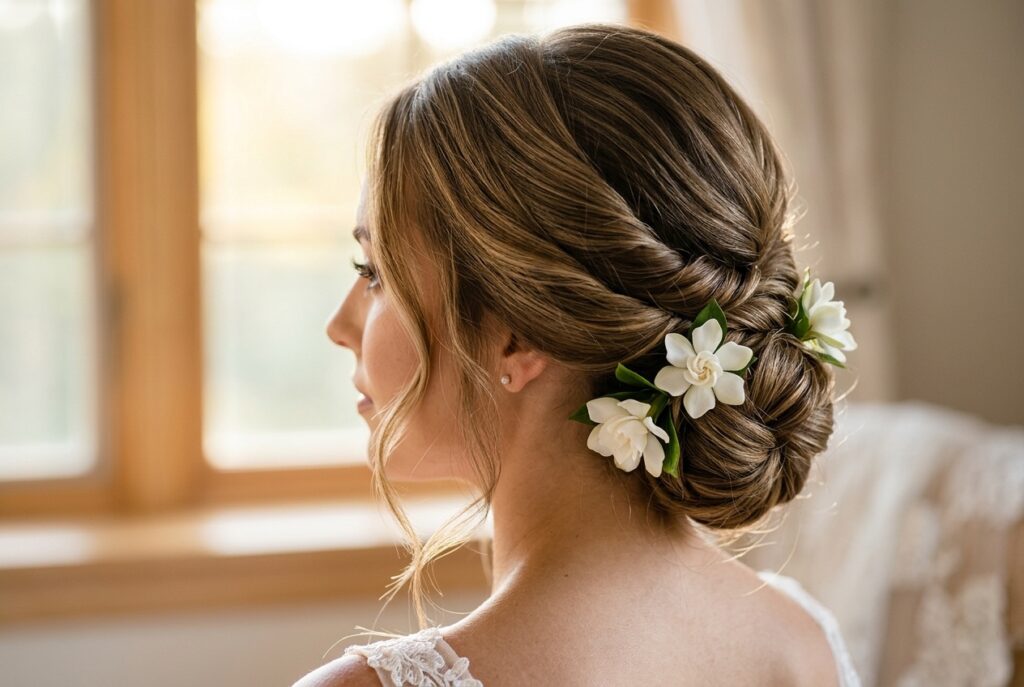
Here’s what nobody tells you: the simpler your nail design, the more technically demanding it is. A neutral base with zero embellishment means every detail shows—every bubble, every uneven line, every chip.

Elaborate designs hide mistakes. Simple ones don’t.
This is how to get it right.
A milky, barely-there manicure only works if your actual nails are flawless underneath.
That means two weeks of nail care before your appointment—cuticle oil daily, keeping them moisturized, no harsh chemicals.
If you’re doing this yourself, budget an extra 30 minutes just for nail preparation.
If you’re going to a salon, show up with clean, unpolished nails (no base coat from you—the tech needs to see what they’re working with).
The finish matters more than the color for simple designs.
A sheer nude with a cream finish photographs flat.
A sheer nude with a pearlescent finish catches light in reception photos.
The same polish, two completely different looks. Ask your nail tech specifically about the finish—”cream,” “matte,” “satin,” “shimmer,” or “pearlescent.”
Don’t just bring a photo. Finishes change everything.
Almond-shaped nails elongate the hand and work with both very simple designs and slightly detailed ones.
Short oval nails feel intentionally minimal (and they’re practical for rings and dancing).
Long coffin or stiletto shapes actually make simple nails look less simple because the shape itself makes a statement. If you love the length, great—but understand that extreme shapes conflict with minimal designs.
You’ll look better with a longer nail and a simple design if you go with a gentle almond or oval instead of a dramatic point.
I have loved the sacred white of marble and ice, the cool grain of oyster shell caught in afternoon light, and how a single pearl seems to hold the room still. What I learned at my own wedding: restraint is not forgetting to try. It is trying harder.
The Short Answer
Simple bridal nails only look simple if you’ve actually done the work to make them fail-proof.
That means choosing a finish (not just a color), locking in the shape that flatters your specific hands, timing your appointment correctly so you’re 3-5 days out from the wedding, and understanding that you absolutely cannot DIY a glassy, perfect finish without professional tools—no matter how many YouTube videos you’ve watched.
1. Milky White or Ivory Manicure (Timeless & Photograph-Ready)
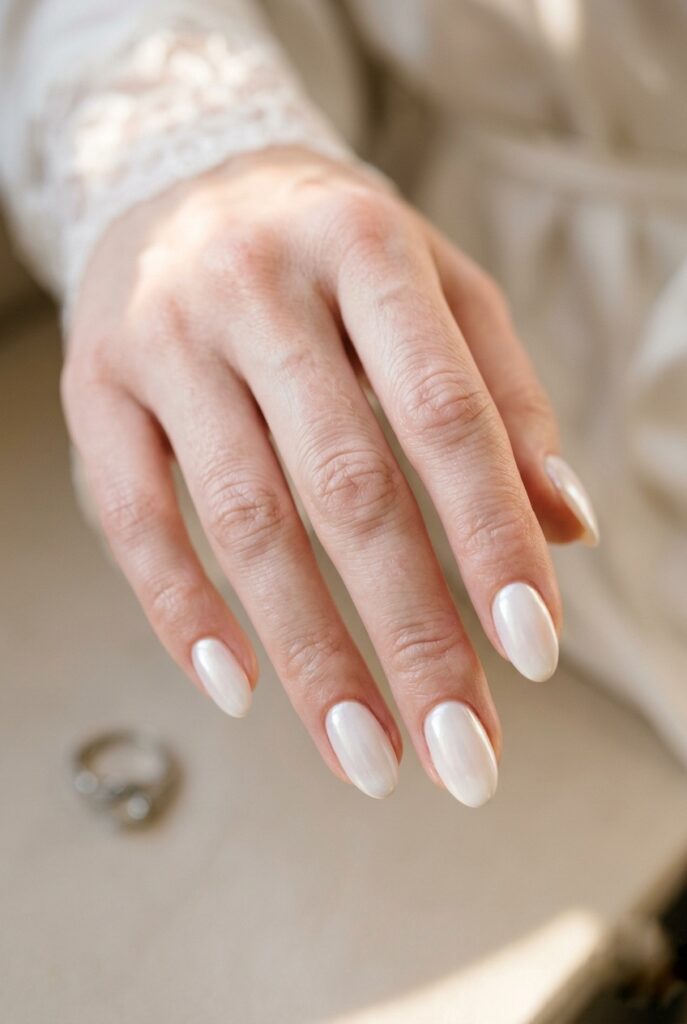
A barely-there white with cream or pearlescent finish is the single most forgiving simple bridal nail choice. It works on every skin tone, every dress color, and reads as intentional rather than “I didn’t try.”
Ask your tech for OPI’s “Alpine Snow,” Essie’s “Blanc,” or Zoya’s “Cloud.” The opaque-but-sheer quality means light colors photograph beautifully without the harshness of pure white.
Where to get it: Salon manicure ($40–$80 full set, $25–$40 polish only). Essie or OPI polish from Amazon ($8–$10 per bottle) if you’re doing it yourself.
Budget Hack: If you’re painting at home, skip the gel base and just use a regular base coat + 2–3 thin coats of opaque cream polish + glossy top coat.
The key is thin coats (not one thick one—that bubbles and cracks). Total cost: $15.
Total time: 45 minutes including dry time. Pro tip: Use a jade roller on your hands before painting to keep them cool; warm hands make polish apply unevenly.
2. Pearlescent Chrome Finish (Modern & Reflects Like a Ring)
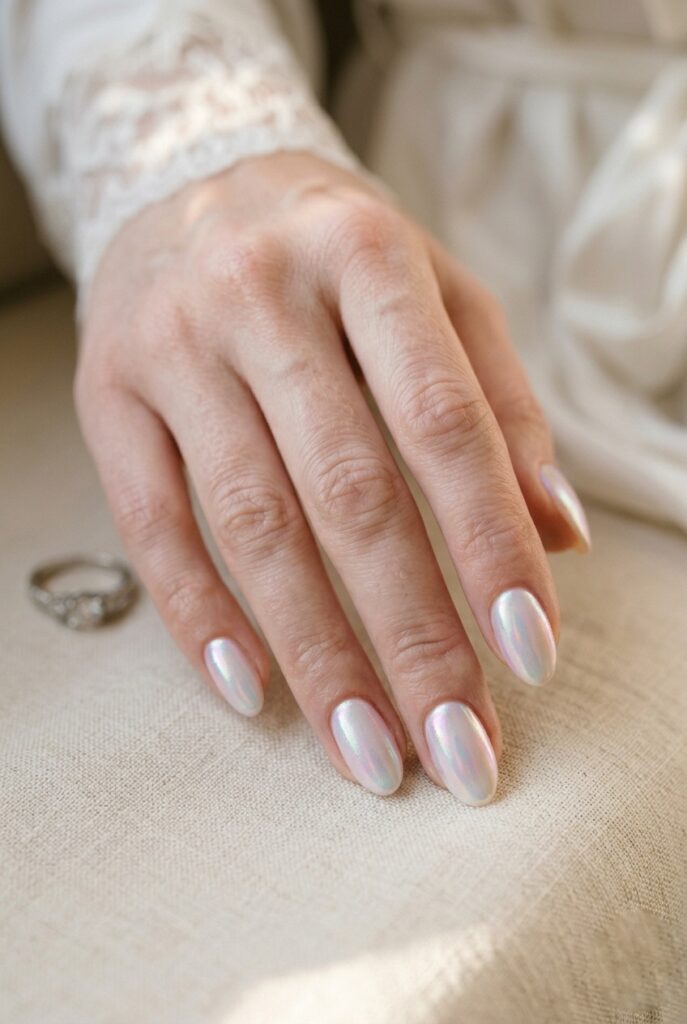
Chrome nails have become polarizing, but pearl chrome is different from mirror chrome—it’s softer, more opalescent, and catches light like an actual pearl.
This finish photographs better than almost anything else under flash photography. The subtle shimmer reads as elevated, not metallic.
Apply a white or nude base, then use a microfiber applicator to buff chrome powder across the nail.
Seal with a matte or glossy top coat depending on the effect you want. If you go glossy, it’s extra reflective. If you go matte, it reads as more understated.
Where to get it: Professional salon only ($60–$100). Not a reliable DIY without specific tools. Some salons will do chrome on top of existing manicures if you want to upgrade.
Budget Hack: Ask your salon if they do “half chrome”—just the tips or one accent nail—to save $20–$30 and still get the effect.
3. French Manicure (Barely-There Tip Version)

The modern micro French tip is not your mother’s French manicure. Forget the thick white band.
A hairline-thin white or ivory line at the edge of the nail, barely visible unless someone’s looking close. This reads as contemporary, not dated.
This is actually easier to DIY than a classic French tip because the line is so thin that slight imperfections disappear.
Use a thin brush or a nail art pen (not the side of a thick brush). Utter precision is less critical.
Where to get it: Salon ($30–$60) or DIY with a nail pen ($5–$8 for a good one from Amazon).
Budget Hack: Use a white gel pen instead of polish—it lasts longer and doesn’t require the same steady hand as polish.
4. Natural Oval Nails, Zero Polish (The “Nothing” Strategy)
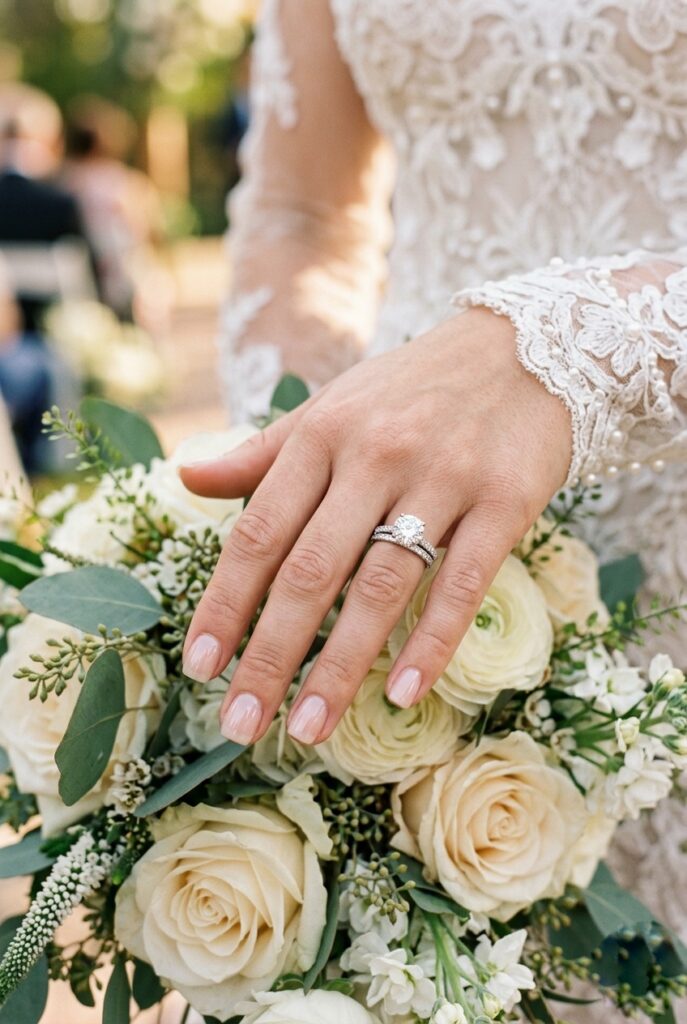
This is controversial, but sometimes the simplest bridal nail is having your nails meticulously manicured, polished with a clear base coat only, and absolutely nothing else.
Your natural nail showing as your “statement.” This requires perfect health—no discoloration, no ridges, no chips.
If your nails are naturally very pink or have any yellowing, skip this entirely.
This only works if your actual nails are your best feature. A professional manicure with buffer work, cuticle care, and a high-gloss clear coat is the execution. The nails themselves are the design.
Where to get it: Professional salon ($25–$40) for the manicure, 30 minutes.
You cannot replicate professional buffing and shine at home.
Budget Hack: Honestly, just get this at a salon once every three weeks leading up to your wedding.
The $40 investment beats a chipped polish disaster on your big day.
5. Nude-Pink Base With Single Pearl Accent (Minimal Embellishment, Maximum Impact)

A soft pink or nude base with a single sculpted pearl on your accent nail (usually the ring finger) is restrained but intentional.
The pearl catches light and gives the manicure visual weight without being “busy.”
This is what happens when you actually mean simplicity instead of accidentally making it look like you skipped the manicure appointment.
Use a builder gel or acrylic to create a raised surface, then place a single pearl on one nail.
Seal everything with top coat. The pearl should sit on top of the nail, not pressed into it.
Where to get it: Professional salon ($60–$85). Pearl placement requires a steady hand and understanding of composition. Not reliable DIY.
Budget Hack: Ask your nail tech if they can add a pearl to an existing manicure for $10–$15 instead of redoing the whole thing.
Many will do this on the day-before appointment as a touch-up.
6. Glazed Donut Finish on Neutral Base (Instagram-Famous for a Reason)

The “glazed donut” is a milky, very slightly tinted white or pink with an ultra-glossy finish that looks wet and dewy.
It photographs like a dream because it’s reflective but not metallic.
The finish makes the manicure look premium even though the color is incredibly simple.
This requires a very specific top coat—usually a builder gel or a specially formulated glossy gel. Regular polish doesn’t achieve this effect.
Where to get it: Salon with gel capabilities ($50–$75). Gel polish kits from Amazon exist ($25–$40), but the learning curve is real if you haven’t used gel before.
Budget Hack: Ask your salon to do gel manicure (no color, just glazed clear gel on a white base). This is cheaper than their “glazed donut special” because you’re avoiding product upsell.
7. Almond Nails, Ballet Slipper Pink (The “Safe” Choice That Actually Works)

Ballet Slipper—that specific shade between nude and pink—is the default bridal nail because it actually photographs well on everyone.
Not too yellow, not too blue, not too beige. Neutral enough to match any dress, warm enough to look intentional instead of washed out.
This is a full-coverage opaque color, which means it’s more forgiving than sheer finishes.
Application is straightforward. The shape (almond) is universally flattering. There is almost no way to mess this up.
OPI’s “Bubble Bath” and Essie’s “Ballet Slippers” are the exact same undertone, just slightly different finishes. Try both if you can.
Where to get it: Anywhere. Salon ($35–$60), drugstore polish ($4–$6), or a gel version ($50–$75).
Budget Hack: Buy the drugstore version a month before your wedding and test it. If you love it, great—use it for your DIY manicure. If not, you’ve only spent $6 and have time to order something else.
8. Short Squoval Shape, Milky Finish (The “Intentional” Look That Requires Zero Maintenance)

Squoval (halfway between square and oval) on short nails is having a major bridal moment because it looks polished without being high-maintenance.
Short nails mean less breakage risk during the ceremony and dancing.
The shape means you don’t have to worry about nails getting caught on fabric or your partner’s clothes.
A milky finish on short nails looks intentional and contemporary, not “I broke my nails and gave up.” This is the practical choice for brides who are worried about durability.
Where to get it: Salon ($40–$70 for shaping and polish). You can shape your own nails with a file, but a tech’s shaping looks significantly more refined.
Budget Hack: If you’re growing out your nails to shape them before the wedding, start 4–6 weeks in advance.
File every 3–4 days in one direction only (not a sawing motion, which weakens them). This is free and prevents the brittleness that comes from not maintaining length as it grows.
Budget Hack: DIY Simple Nails That Don’t Look DIY
If you’re painting your own manicure, the difference between “looks salon-done” and “looks like I tried” comes down to three things: base coat quality, thin coats, and dry time.
Use a quality base coat from Zoya or Sally Hansen ($6–$8)—not the cheap stuff.
Paint three thin coats of your chosen color instead of two thick ones.
Wait 15 minutes between coats. Use a glossy top coat, not matte (matte hides polish quality issues, which works against you here). Total cost: $20.
Total time: 90 minutes including dry time. The result photographs like a $60 salon manicure.
Decision Filter
If you have under 75 guests and are getting married outdoors or in natural light, invest your nail budget in a glossy finish (glazed, pearlescent, or chrome) because it photographs more beautifully in sunlight.
If you’re having an evening wedding with flash photography, a matte or cream finish reads as more sophisticated.
If you have a heavily detailed dress, keep nails completely neutral. If you have a simple slip dress or minimalist gown, you can lean slightly more toward color (a soft pink rather than pure white) because the simplicity of your outfit allows it.
The Real Reason Simple Fails
Here’s what nail techs know that couples don’t: simple manicures look good for three days maximum before they show any wear.
A detailed manicure with art and embellishments can go five or six days.
This is because imperfections on a simple base coat are glaringly visible—every tiny chip, every spot where the color looks uneven.
So if you’re getting your nails done more than five days before your wedding, you’re gambling.
Get them done 3–4 days out. Not two days (panic time if something goes wrong).
Not six days (they’ll look worn in photos).
Three to four days gives you the sweet spot of looking intentional without the risk of visible wear.
The second reason simple fails: most couples don’t coordinate nail shape with their actual hand shape. If you have shorter fingers, long almond nails can look overwhelming.
If you have longer fingers, short oval nails can look stubby.
A nail tech will take your hand shape into account—most people don’t ask them to.
Bring clear reference photos of nails you actually like, then ask your tech: “Do you think this shape works with my hand proportions?”
This takes 30 seconds and prevents the “these look great on the model but weird on me” regret.
The third thing nobody mentions: simple nails require consistent hydration.
Dry, dehydrated nails look dull and unpolished. Hydrated nails with the same polish look premium.
Use cuticle oil twice daily for the week before your wedding, and keep hand cream with you during the day.
This is the invisible labor that makes simple nails look intentional.
Mistakes to Avoid
Mistake 1: Getting your nails done more than 5 days before the wedding. Simple designs show wear faster than detailed ones.
Three to four days out is the window.
Anything earlier, and your nails will look slightly dulled or chipped in photos.
This directly contradicts advice from DIY sites that say “get them done a week in advance”—that advice is for people not worried about photography. You should be.
Mistake 2: Choosing a color online without seeing it on your skin tone in person. A “blush pink” can range from barely-there peachy to deeply mauve depending on undertones and finish.
A $40 salon mistake teaches you more than a $5 bottle of drugstore polish does.
Try drugstore versions first, see how they photograph on your skin in natural light and flash, then commit to the salon version.
You’ll spend $25 total and actually know what works.
Mistake 3: Going for long nails if you’ve never maintained them successfully for more than 3 weeks. Damaged, short tips break the elegance of a simple manicure instantly.
If your track record is breaking nails within two weeks, short squoval is non-negotiable.
Long nails are a luxury for people whose actual nails grow strong and healthy.
Don’t default to them because they look nice on other people.
Mistake 4: Assuming gel polish lasts unchanged through your entire wedding. Gel manicures last 3–4 weeks, but they start showing wear (cloudiness, slight discoloration at the tips) after 7–10 days.
A gel manicure done five days before your wedding looks flawless in photos.
A gel manicure done a week or more in advance can look slightly dulled.
Gel doesn’t chip like regular polish, but it does fade slightly.
FAQ
What nail length works best for simple bridal designs?
Short to medium length (not past your fingertip) photographs best and stays intact through dancing, bouquet tossing, and ring shots.
Long nails draw more attention and require more maintenance through your wedding day.
If you love length, keep the shape soft (almond or oval, not stiletto) so it complements rather than competes with a simple manicure.
Length under 30 words: Short to medium nails photograph best and handle 12+ hours of wedding activity without breaking or chipping, especially with simple designs.
Should I get gel or regular polish for my wedding manicure?
Gel polish lasts longer without chipping (3–4 weeks vs. 5–7 days), but regular polish photographs more naturally and is easier to touch up if needed.
Gel also requires removal in acetone, which can be harsh on nails.
For a single day of wear, regular polish is fine. For a destination wedding or extended weekend, gel is worth it. Decide based on how much activity you’ll have post-wedding before you can remove the polish.
Under 20 words: Gel lasts longer and won’t chip through dancing; regular polish photographs naturally and is easier to adjust if you change your mind.
How do I make simple nails last through dancing and photos without chipping?
Use a high-quality glossy top coat (not matte), keep your nails hydrated with cuticle oil, and avoid using them as tools during the day (don’t open things with your nails, use your fingers).
Keep a nail repair kit with you on the wedding day: a small file, touch-up polish in your exact shade, and a glossy top coat.
If one nail chips, you can do a quick fix in the bathroom without anyone noticing.
Most chips happen because nails are dehydrated, not because the design was flawed.
Under 20 words: Hydrate with cuticle oil, use high-gloss top coat, and keep touch-up supplies on hand to fix chips quickly if needed.
Can I DIY simple wedding nails or do I need a professional?
You can DIY simple nails successfully if you prep properly (clean nails, use quality base coat, paint thin coats), but the finish will likely not be as glossy or flawless as a professional manicure.
Micro French tips and glazed donut finishes are much harder to DIY well.
Milky white bases and ballet slipper pink are more forgiving. Practice on your non-dominant hand first or do a test run 2–3 weeks before the wedding.
If the results stress you out, book a professional; the mental peace is worth $50.
Under 20 words: DIY is possible for simple colors but harder for special finishes like chrome or glazed. Test first to know if you’re comfortable.
Bridal Nail Budget Guide
| Option | Cost (Salon) | Cost (DIY) | Longevity | Best For |
|---|---|---|---|---|
| Milky White/Ivory Polish | $40–$80 | $15 | 5–7 days | Everyone; most forgiving |
| Ballet Slipper Pink (Regular Polish) | $35–$60 | $10 | 5–7 days | Warm skin tones; universally flattering |
| Pearl Chrome | $60–$100 | Not recommended | 7–10 days (gel) | Photography; reflective finish |
| French Tip Micro | $30–$60 | $8–$15 | 5–7 days | Modern take on classic |
| Clear Base Coat Only | $25–$40 | $5 | 5–7 days | Perfect natural nails only |
| Glazed Donut Finish | $50–$75 | $25–$40 (gel kit) | 10–14 days (gel) | Trending look; high-gloss effect |
| Almond w/ Pearl Accent | $60–$85 | Not recommended | 5–7 days | Minimal embellishment; intentional |
| Gel Manicure (any shade) | $50–$75 | $40–$60 (kit + supplies) | 3–4 weeks | Extended wear; no chipping |
Your Actual Next Step
Stop researching nail designs online. Pick one of these options, book a salon appointment for 3–4 days before your wedding, and bring this article with you.
Show your nail tech the specific shade name (not just “a light pink”) and ask about the finish.
Ask if the shape you’re considering actually flatters your hand proportions.
Do a test run with the same salon 2–3 weeks before if you’re nervous.
Then stop thinking about your nails and focus on something that actually matters on the wedding day—which, spoiler, is not your manicure.