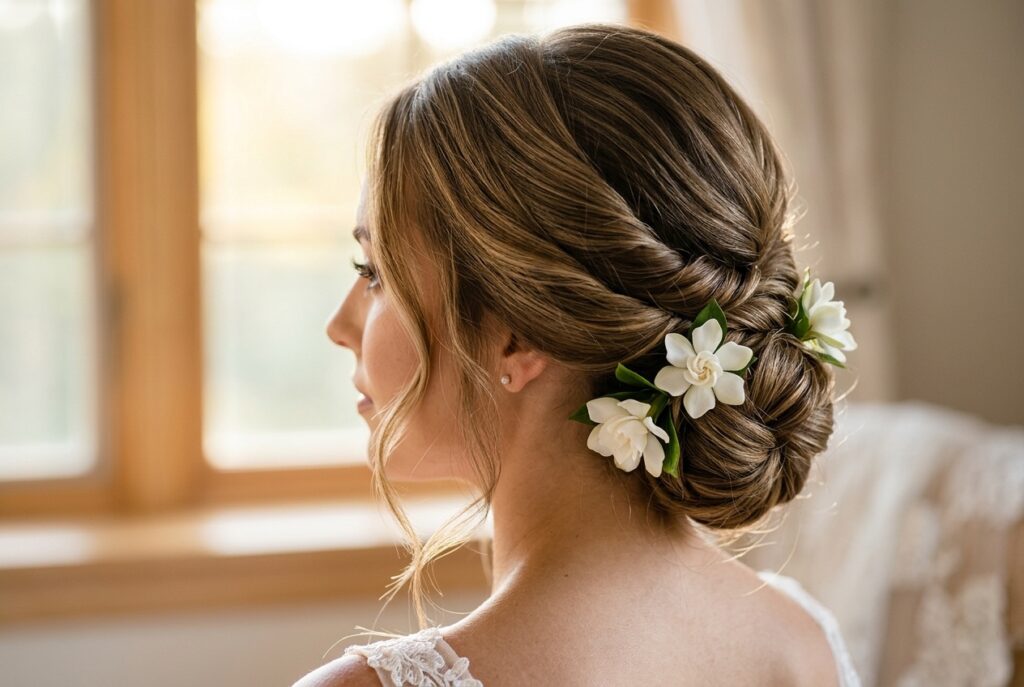
Every bridal nail article treats short nails as the practical backup plan — and that framing is exactly why so many short nail results look like an afterthought.
Short nails done with the right preparation, the right product, and the right finish look like a deliberate act of refinement — and the preparation that makes that true begins four weeks before the appointment, not four days.
1. The Sheer Milky Base — More Work Than It Looks
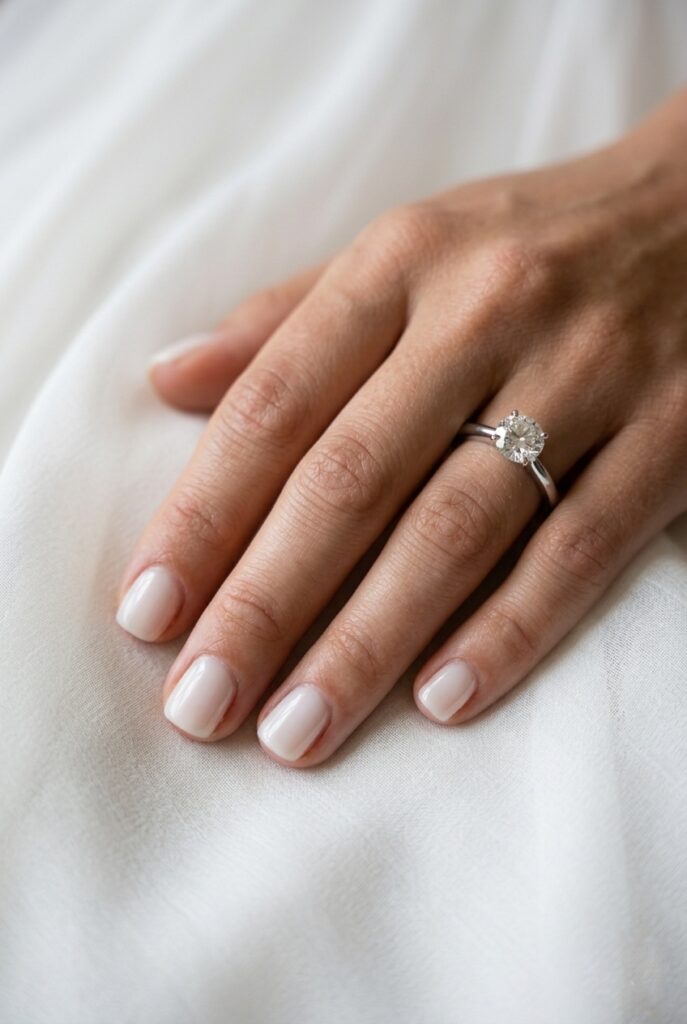
A sheer milky base — translucent enough that the natural nail shows through, glossy enough to read as depth rather than paint — is the finish that makes short nails look as if they were done by someone who has spent years doing close-up photography work, because the combination communicates health rather than coverage.
The version to avoid is a flat opaque white or a chalky nude that photographs matte under reception lighting — those colors read as bargain-bin polish on short nails because there is no length or design to provide visual context — and for the full range of understated designs that operate on this same principle, the simple bridal nails guide covers every low-maintenance finish worth considering alongside a sheer milky base.
2. The Gloss Level Is a Decision, Not a Default
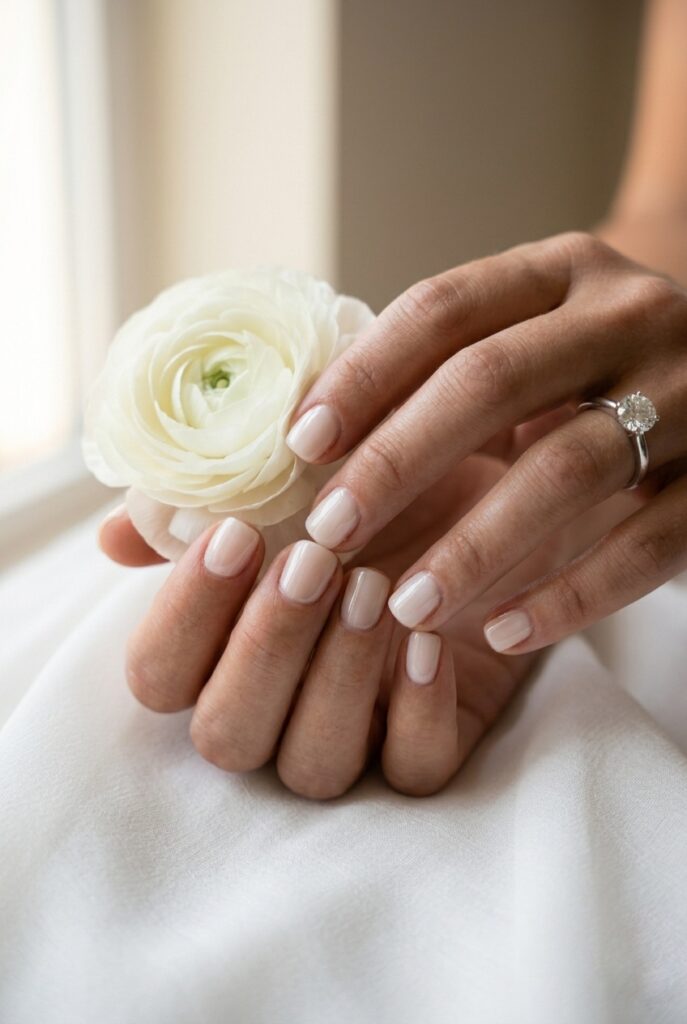
The difference between a short nail set that reads as premium and one that reads as ordinary is almost entirely in the top coat — a mirror-level gloss achieved through a builder or rubber base coat, two coats of a high-shine no-wipe top coat, and a correct lamp cure creates a depth and reflectivity that a standard gloss finish simply cannot match.
Ask your technician which specific top coat product they use rather than requesting “high-shine” — that phrase is not specific enough to guarantee a result — and for the elevated nail finishes that use this same gloss principle as the foundation of a more complex look, the elegant bridal nails guide shows where mirror-level gloss sits within the fuller spectrum of elevated bridal choices.
3. Micro French on Short Nails — The Version Worth Doing
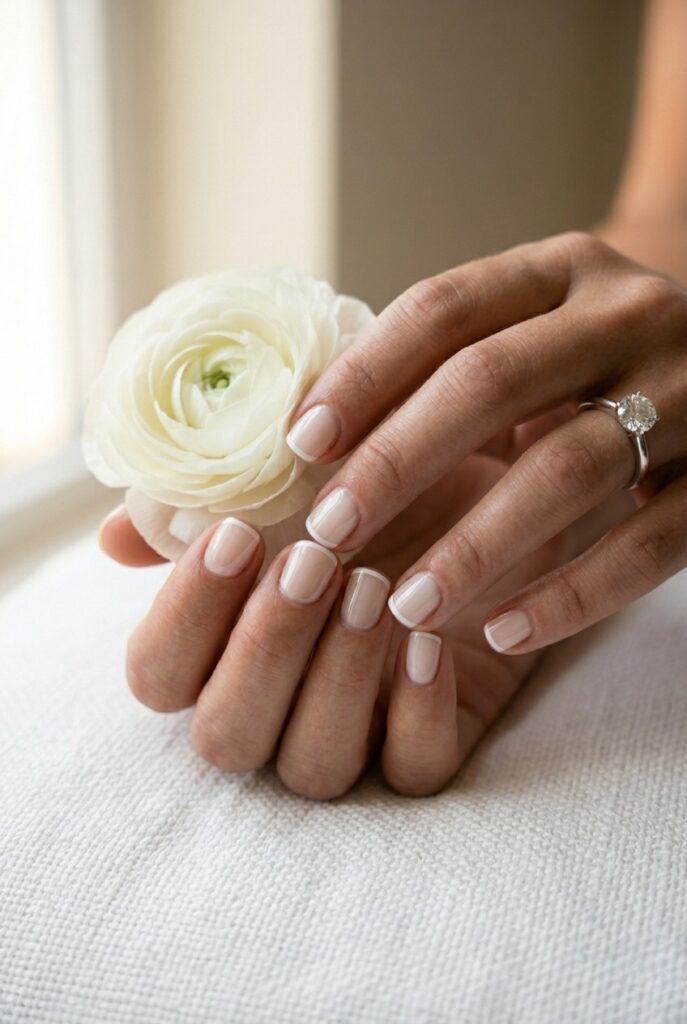
A micro French on a short nail — a white tip line under 1mm wide — reads as a natural nail from twenty feet and reveals itself as a deliberate detail only in close-up ring photography, which is precisely the right behavior for a bridal manicure, while a standard French tip at 2–3mm wide on a nail extending less than 3mm past the fingertip dominates the visual and reads as dated rather than refined.
The tip width should be no more than one-third of the exposed nail length — on a short nail with 2mm of extension, that means a maximum tip line of 0.5–1mm — and for every variable that determines whether a French tip works or undermines your look at short nail lengths specifically, the French bridal nails guide covers tip width by nail length, base shade choices, and the symmetry checks your technician should be running before the top coat goes on.
4. Pearl Chrome on Short Nails — The Finish That Makes Short Feel Intentional
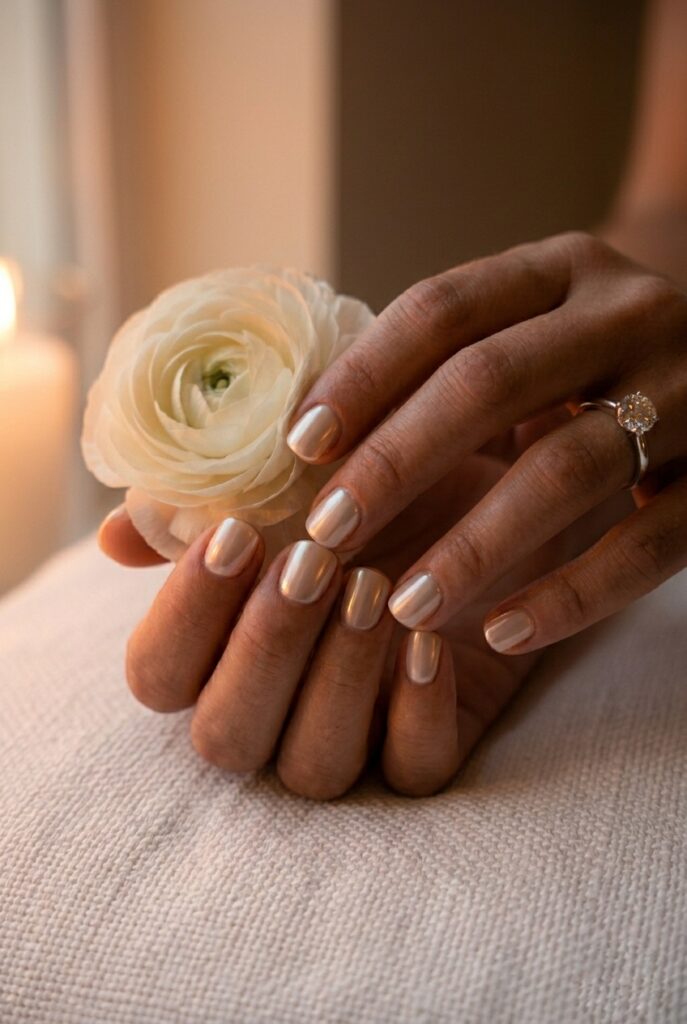
Pearl chrome on a short nail is more effective than pearl chrome on a long nail for a specific reason: the full surface area of a short nail is smaller, which means the iridescent effect is concentrated rather than spread across length — under candlelight, each short nail becomes a small shifting plane of light that reads as jewelry-like rather than cosmetic.
The entire result depends on correct application — chrome powder applied without a sealing no-wipe top coat dulls within hours and shows fingerprint smudges by the reception — so confirm with your technician that they seal chrome before final cure, and treat an uncertain or vague answer as a clear signal to find a technician with a chrome-specific portfolio before you book, checking the bridal nail art guide for what a proper chrome technique looks like so you know what to ask for.
5. The Single Pearl Bead — Maximum Effect at Minimum Scale
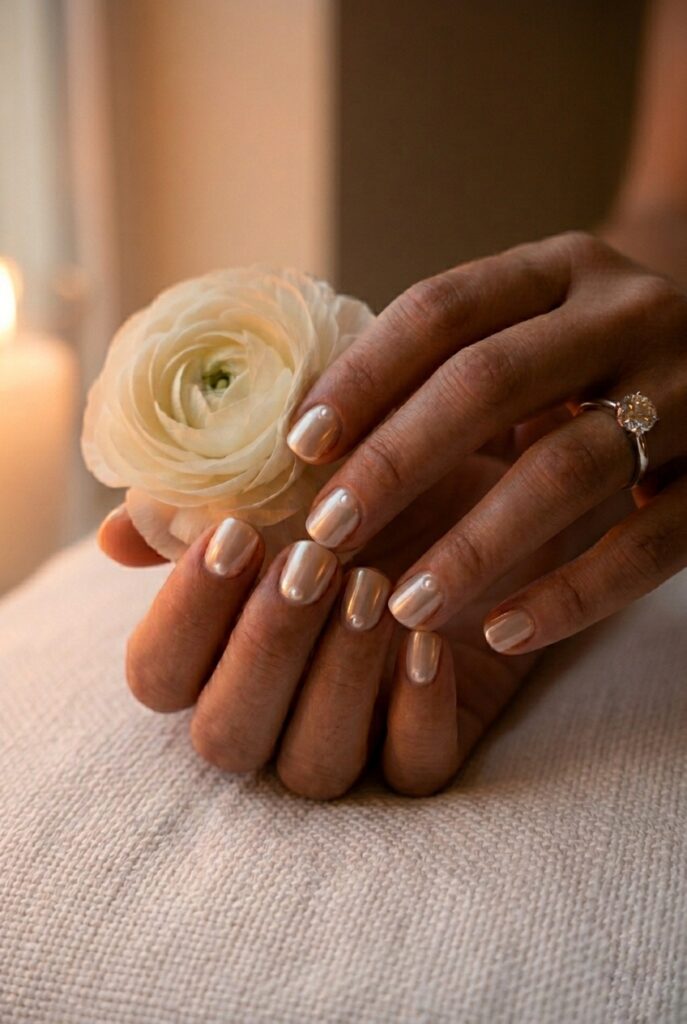
On a long nail, a single small pearl bead is a restrained accent — on a short nail, where everything around it is quiet, it becomes the most considered detail in the frame, and it earns that weight only if the SS5 or SS6 flat-back bead (approximately 2mm) is fully encapsulated in the gel top coat rather than surface-adhered, because a raised pearl on a short nail catches on veil fabric and lace with the same frequency as a square nail corner, and comes away cleanly by hour three if not properly sealed.
The pearl reads as elegant only when the cuticle behind it is immaculate — a bead on a short nail with rough cuticles and dry skin around the edge looks like decoration on an unmade bed — which is why the bride’s wedding day checklist includes the cuticle oil pen as one of the highest-impact items in the touch-up kit, specifically for the ring photo moments when the hands are the entire subject of the frame.
6. Sheer Colored Base — When “Nude” Is Actually the Wrong Call
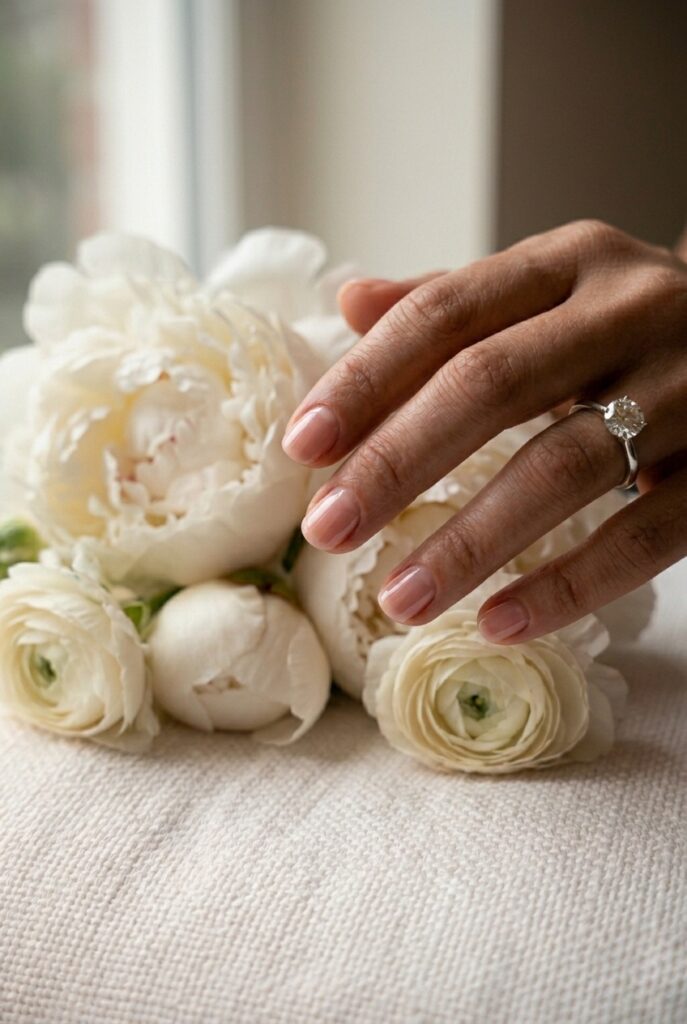
Nude is not one color — it is a spectrum from cold beige to warm blush to golden brown, and the wrong nude on short nails photographs as either gray or yellow depending on your skin tone and the lighting, while a sheer blush or dusty rose with just enough pigment to read as a tint rather than a neutral provides color identity without competing with the ring, reads warm and alive under both flash and candlelight, and gives the nail a distinct appearance that a true neutral cannot.
This calls for the same skin-tone logic as any bridal nail decision — a warm rose-tinted nail photographs correctly against ivory, off-white, champagne, and cream gowns but can read slightly off against stark cool white fabric — and the bridal nails by skin tone guide maps exactly which sheer tints and base tones photograph best across every complexion from cool-fair to deep under wedding lighting conditions.
Budget Hack after Idea 6: If your wedding is within a week and you want to test how your chosen short nail color actually photographs before committing at the salon, buy the regular polish version of your intended shade ($10–$14 at Ulta or Target), apply two coats with a gloss top coat, and take photos of your hand in three lighting conditions: bright window light, dim indoor light, and flash. If the color reads beautifully in all three, book the gel version with confidence. If it photographs off in any of them, adjust before paying salon prices. This twenty-minute test prevents one of the most common short nail regrets: a color that looked perfect in the salon chair and wrong in every photo.
7. The Glazed Finish — Depth Without Color, Shine Without Statement
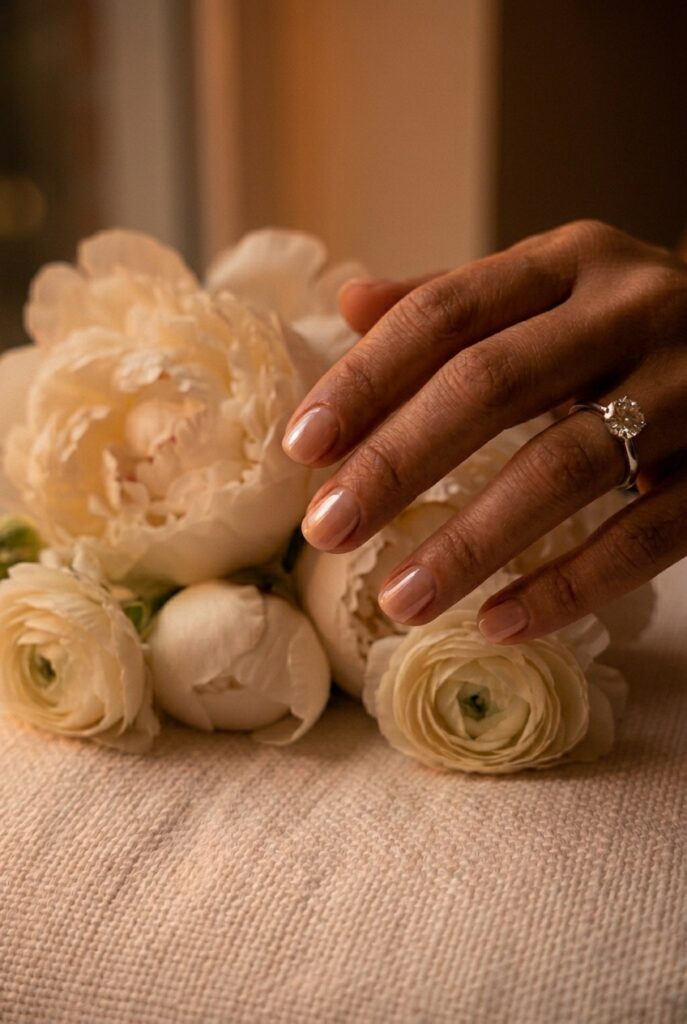
A glazed finish — a sheer gel with an iridescent shimmer quality rather than a flat tint — reads as warm glow under candlelight, luminous skin under flash, and a very healthy nail under natural light, all at once, which makes it the short nail finish that performs most consistently across the three distinct lighting conditions of a full wedding day.
It is also the finish that ages most gracefully between the appointment and the wedding — because there is no defined tip line or color block to move away from the cuticle, the nail at two weeks looks longer rather than grown out — and for the full range of trending bridal nail finishes worth comparing before you decide, the bridal nail ideas gallery covers how the glazed look compares against chrome, milky white, and matte across different skin tones and lighting environments.
8. Short Oval vs. Short Round — The Shape Distinction Nobody Explains
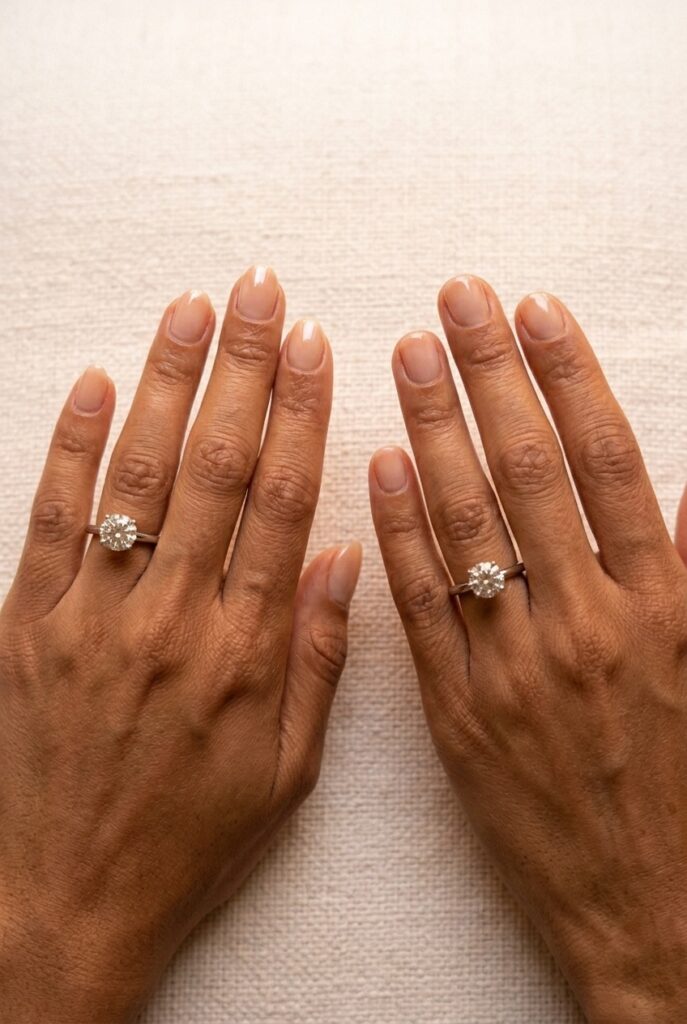
At short lengths, oval and round look nearly identical in person — but a short oval has a slight taper toward the tip that creates a subtle elongating effect visible in ring-focus close-ups, while a short round has a fully curved tip with no taper that reads as a slightly wider nail from most photography angles.
For shorter or wider fingers, short oval is the stronger choice because the ten-degree taper adds the visual length that the nail’s brevity cannot provide on its own — for naturally long narrow fingers, short round is equally flattering and slightly more practical since it is less prone to lateral breakage at the tapered edge — and for the shape conversation taken to its full architectural extreme on the other end of the spectrum, the square bridal nails guide covers every variant of flat-tip geometry and how each one photographs relative to finger proportions.
9. Barely-There White — The Choice Photographers Are Silently Grateful For
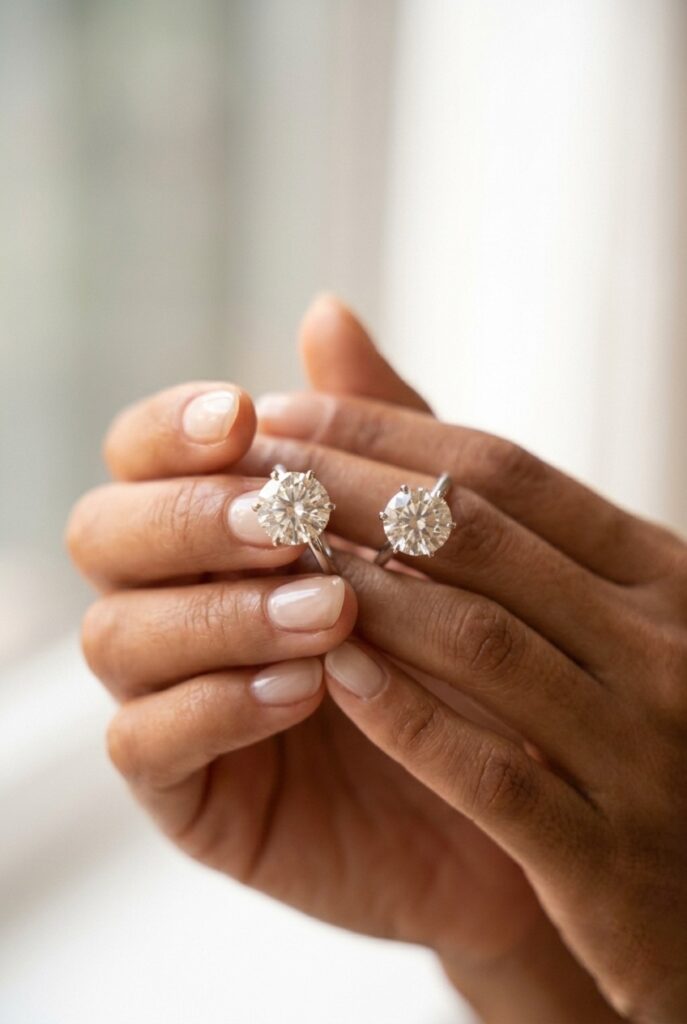
A barely-there sheer white — not quite milky, not quite clear, precisely at the register of a very healthy natural nail — is the finish that lets the ring fill the frame completely without competition, because any color with a defined identity, even a soft blush, commands some portion of close-up attention that this shade does not.
This is not the same as bare nails — bare nails without a product coating look unfinished in close-up photography and are more prone to the subtle skin-tone variation at the tip that reads as inconsistency — but with a mirror-level top coat the barely-there sheer provides a defined, consistent surface that disappears into the skin while still communicating care, and the bridal nail overview covers how this philosophy of nail-as-support-structure-for-the-ring extends across every nail shape and length.
Budget Hack after Idea 9: If you are doing a short natural nail set with a sheer or barely-there polish — no extensions, no art — ask your salon whether they offer a BIAB (Builder In A Bottle) overlay instead of a standard gel base coat. BIAB adds a thin, self-leveling layer of gel that strengthens the natural nail, creates a slightly thicker nail surface that photographs with more depth and gloss, and reduces breakage significantly without adding any visible length. It typically adds $5–$15 to a gel manicure price but eliminates the need for any repair appointments between booking and the wedding. Many salons offer it — most brides don’t think to ask.
10. The Hand Prep Protocol — The Part Every Article Treats as an Afterthought
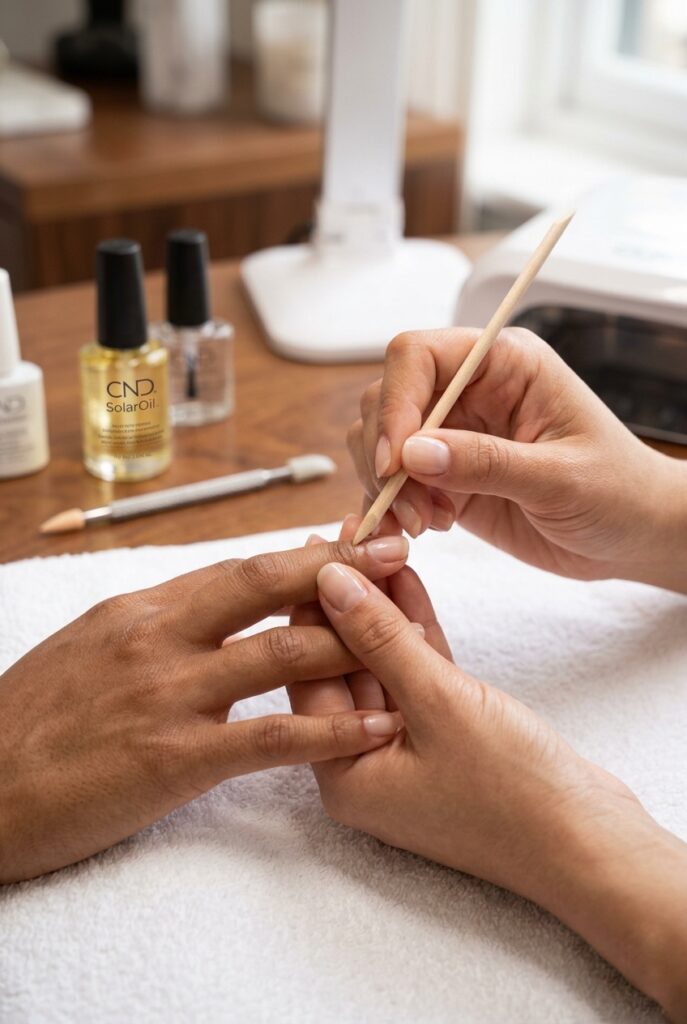
Short bridal nails require the most thorough cuticle and hand preparation of any nail option — more than long nails, more than any embellished set — because the nail itself occupies a smaller proportion of the visual frame, and what fills the rest of the close-up ring shot is skin: the area immediately around the nail, the cuticle edge, and the skin folds across the joints.
The four-week protocol that separates a short nail that reads as expensive from one that reads as a Saturday manicure: cuticle oil every evening from week one, a gentle warm-water soak with cuticle pushing once per week from week two, thick hand cream applied after every hand wash from week three, and gloves for any dish or cleaning work in week four — and the way this preparation connects to the broader discipline of your getting-ready plan is covered in the ultimate bridal look guide, which places your nail prep within the full four-to-six-week getting-ready timeline from trial appointments through to the morning itself.
The short nail that gets the best ring shots is almost always the one that required the most preparation and the least design — and the preparation window is four weeks, not four days.
For the design detail that works most cleanly at short lengths alongside everything covered here, the micro French tip approach in the French bridal nails guide is already linked in Idea 3 above, and for the broader decor context that follows the same principle of restraint executed with precision, simple wedding decor ideas applies that philosophy from your nails to the room around you.