9 Bridal Nails by Skin Tone: The Color Guide That Actually Matches!


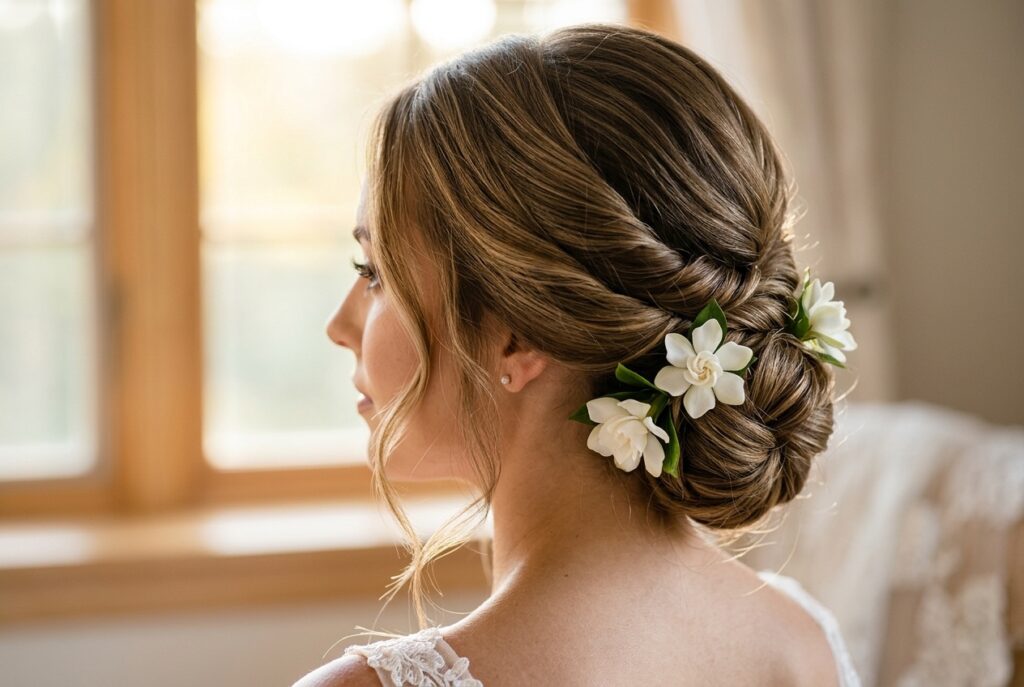
IMAGE 1 HERE Alt text: Fair-skinned bride with cool-toned complexion showing a sheer icy pink manicure on oval-shaped nails against white lace wedding dress fabric Image prompt: Photorealistic close-up of a fair-skinned hand with visible cool pink undertones, wearing a sheer icy pink gel manicure on medium-length oval nails, resting against white lace fabric, soft natural window light from the left side, crisp editorial focus on the nail surface, no jewelry visible, clean background of ivory lace texture. Generate in vertical portrait orientation, 2:3 aspect ratio, optimized for mobile display.

Most bridal nail guides hand you a list of pretty shades and send you off with a wave.

What they skip entirely is the reason half those shades look flat, chalky, or weirdly gray once you’re actually in photos — which is that skin tone and undertone are not the same thing, and the distinction will make or break your manicure.

Matching your nail color to the right depth AND undertone is what separates a manicure that photographs like it was styled by a pro from one that disappears into your hand or fights your dress.

Here’s the complete skin-tone nail guide — organized by who you actually are, not a generic checklist.


A square of silk the color of a pearl button. The ring catches the light before the hand does. Ivory cream is not the same as milky pink, and the wrong nude sits on the nail like a bruise. She held the swatch against her wrist for a long time. The salon smelled of acetone and dried roses. She chose the one that looked like nothing at all.


The Short Answer

Your skin’s undertone — warm, cool, or neutral — matters more than how light or dark your complexion is.

A fair bride with warm golden undertones will look washed out in the same cool blush pink that looks perfect on her fair-skinned, cool-toned best friend.

Start with undertone, then adjust for depth.

Everything else — dress shade, stone setting, bouquet — layers on top of that foundation.


1. Fair Skin with Cool Undertones: Think Icy Pink and Sheer Lilac

IMAGE 1 HERE Alt text: Fair-skinned bride with cool-toned complexion showing a sheer icy pink manicure on oval-shaped nails against white lace wedding dress fabric Image prompt: Photorealistic close-up of a fair-skinned hand with visible cool pink undertones, wearing a sheer icy pink gel manicure on medium-length oval nails, resting against white lace fabric, soft natural window light from the left side, crisp editorial focus on the nail surface, no jewelry visible, clean background of ivory lace texture. Generate in vertical portrait orientation, 2:3 aspect ratio, optimized for mobile display.

Cool-fair skin has pink or bluish undertones in the wrist — you can usually see faint blue-purple veins rather than green ones. Your colors: sheer icy pink, pale lilac milk, translucent barely-blush.

OPI’s Bubble Bath ($11, available on Amazon) is the standard for a reason — it reads neutral enough to never clash but has just enough pink to stop your nails from disappearing. 

Skip this if your dress is bright white satin — a cool icy pink will make your hands look slightly gray in flash photography.

In that case, pull one half-step warmer toward a soft rose.

The cheap version of this look is a chalky opaque white or a sheer glitter topper over nothing — both look unfinished at the cuticle line and flatten the hand in photos.

Instead, go for a jelly finish or a sheer-overlay gel that has depth without opacity.

Price range: $10–$60 salon gel. Buy from Amazon (OPI, Essie) or book a gel manicure at a nail salon offering BIAB (Builder in a Bottle) for a longer-lasting finish.


2. Fair Skin with Warm Undertones: Peachy Nudes and Champagne Shimmer
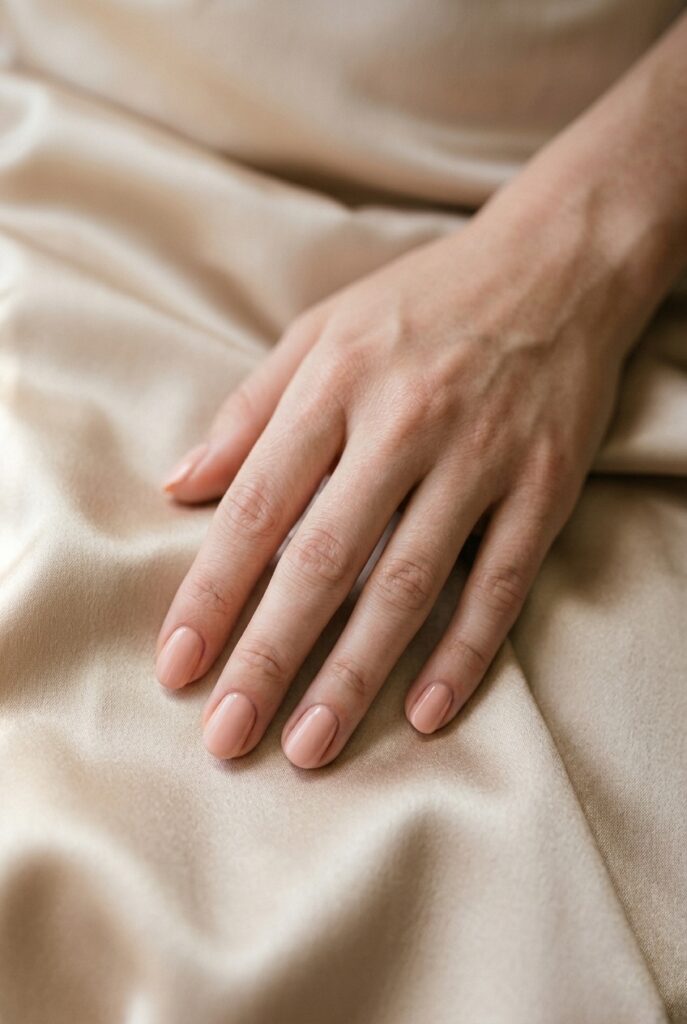
IMAGE 2 HERE Alt text: Fair-skinned bride with warm golden undertones wearing a peach-nude gel manicure on almond-shaped nails beside a champagne-colored wedding gown Image prompt: Photorealistic close-up of a fair-skinned hand with subtle warm golden undertones, wearing a peachy nude gel manicure on almond-shaped medium-length nails, resting against champagne-colored satin fabric, warm soft natural window light, slightly warm color grading, no text, no jewelry, editorial bridal photography feel. Generate in vertical portrait orientation, 2:3 aspect ratio, optimized for mobile display.

Warm-fair skin has yellow or peachy undertones — veins read greenish.

The instinct for many fair-skinned brides is to reach for the palest pinks, but on warm undertones those read cold and slightly ill.

You want peachy nudes: think Essie’s Ladylike or Mademoiselle ($9 at Target) — a warm blush with a whisper of peach.

Champagne shimmer also works exceptionally well here, catching candlelight and adding warmth that straight nudes can’t. 

Only do this if your dress is ivory or champagne, not bright white — the warmth in both will harmonize rather than clash.

Paired with a budget-friendly DIY wedding aesthetic, this nail color reads effortlessly natural without trying.

Price range: $9–$55. Essie at Target or Amazon; OPI GelColor at professional salons.


3. Light-Medium Skin with Neutral Undertones: The Most Flexible Skin Tone at the Nail Counter
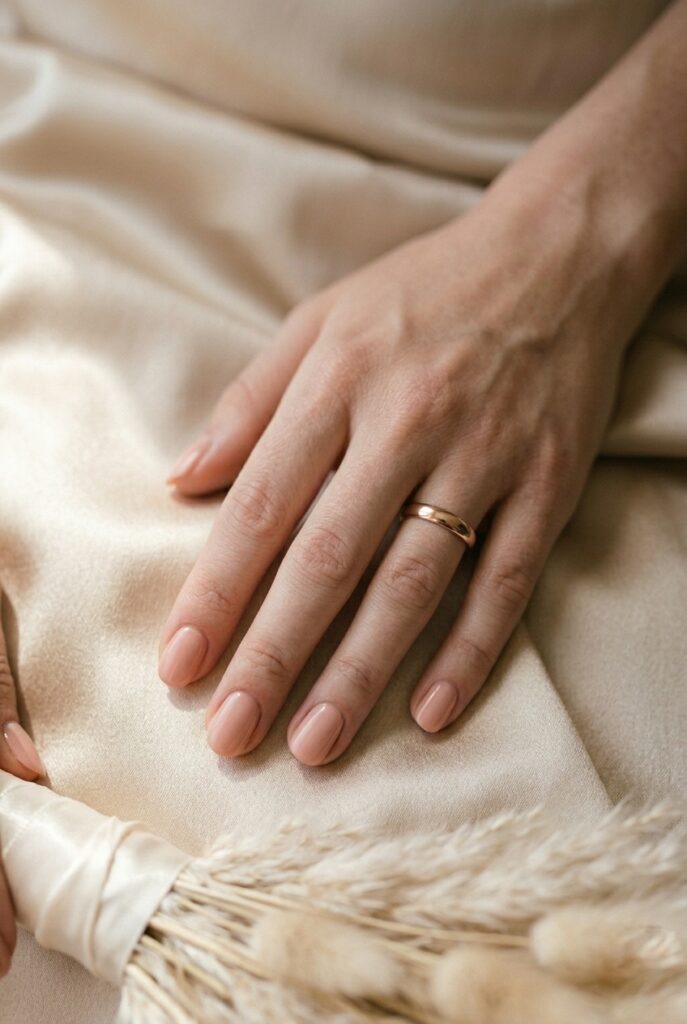
IMAGE 3 HERE Alt text: Light-medium neutral-toned bride wearing a dusty rose manicure with soft sheen on square-oval nails, hand resting on pampas grass bouquet wrapping Image prompt: Photorealistic close-up of a light-medium skin tone hand with neutral undertones wearing a dusty rose gel manicure on squoval-shaped nails, hand resting lightly on ivory ribbon wrapped around a pampas grass bouquet, soft warm natural window light, shallow depth of field, editorial wedding style, no text overlays. Generate in vertical portrait orientation, 2:3 aspect ratio, optimized for mobile display.

Neutral undertones — where vein color is genuinely ambiguous between blue-green — sit at the exact center of the color wheel and respond well to almost anything.

This is the skin tone that can wear dusty rose, warm taupe, soft mauve, or even a barely-there lavender.

The real decision is about saturation: do you want to be invisible and elegant, or do you want the nail to be a quiet statement?

For weddings, dusty rose (try OPI’s Tagus in That Selfie? or Zoya’s Chantal) hits the sweet spot.

It photographs with depth, reads feminine without being precious, and pairs with both white and ivory gowns.

Nail condition matters most here — with neutral skin, any imperfection in the polish application is immediately visible.

Price range: $9–$70. OPI at ULTA; Zoya direct from Zoya.com.

💡 Budget Hack after Idea 3: Skip the bridal upcharge. Salons frequently charge 20–40% more for “bridal manicures” than for a standard gel appointment. Book a regular gel manicure with the exact same service — just bring your chosen shade with you or request it by name. You’ll save $25–$50 on average. Sally Beauty sells professional gel polishes like Gelish starting at $14 per bottle — buy your shade, bring it to the appointment, and the salon charges labor only.


4. Olive Skin with Warm Undertones: Terracotta, Copper Rose, and Mocha Nude

IMAGE 4 HERE Alt text: Olive-toned bride wearing a copper rose nail polish on medium almond nails, hand resting against warm-toned dried flower arrangement with terracotta tones Image prompt: Photorealistic close-up of an olive-toned hand with warm undertones wearing a copper rose gel manicure on almond-shaped nails, hand resting against a dried flower arrangement featuring terracotta and rust tones, warm candlelit atmosphere with soft amber light from the right, rich color depth, editorial bridal photography, no text overlays. Generate in vertical portrait orientation, 2:3 aspect ratio, optimized for mobile display.

Olive skin is one of the most photographically dynamic skin tones — it catches warm light in a way that looks like it was art-directed.

Lean into it.

Terracotta-adjacent nudes, copper rose, and warm caramel polishes all amplify this natural glow.

Essie’s Sand Tropez or OPI’s Throw Me a Kiss ($10–$13 at ULTA) pull out the warmth in olive skin without reading muddy.

What fails: cool-toned nudes (especially light beige-pinks) flatten olive complexions and introduce a grayish cast that no amount of flash photography can fix.

This is the skin tone that accidentally looks “washed out” in the wrong shade, and most bridal guides recommend exactly those wrong shades.

If you’re planning an elegant outdoor wedding, a warm copper-rose nail ties directly into the golden-hour photography palette.

Price range: $10–$65. OPI and Essie at ULTA, Walgreens, or Target.


5. Olive Skin with Cool Undertones: Mauve, Dusty Berry, and Greige
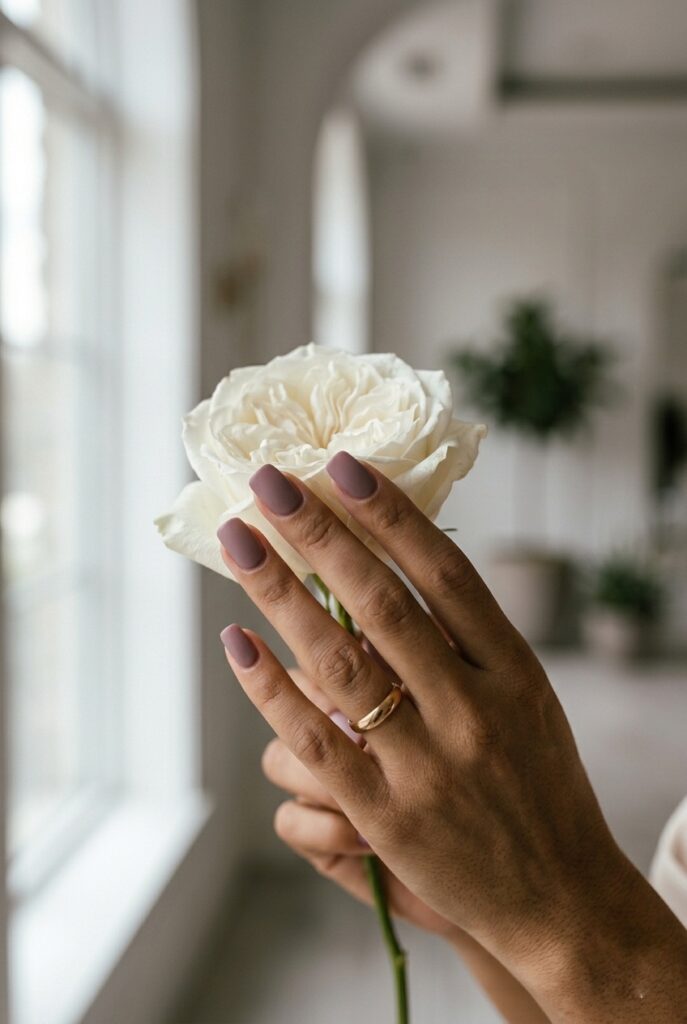
IMAGE 5 HERE Alt text: Cool-toned olive-skinned bride wearing a dusty mauve manicure on short square nails, hand shown holding a white garden rose against a blurred white venue background Image prompt: Photorealistic close-up of an olive-toned hand with cool undertones wearing a dusty mauve gel manicure on short square nails, hand holding a single white garden rose with visible texture and petals, blurred white venue background, soft natural window light with slightly cool tone, editorial bridal close-up photography, no text overlays. Generate in vertical portrait orientation, 2:3 aspect ratio, optimized for mobile display.

Cool olive is genuinely underrepresented in bridal nail guides — most articles treat “olive” as one monolithic category and push warm shades regardless.

But if your olive skin has a more grayish or bluish cast (visible in the inner wrist), warm caramels will fight your undertone. Instead: dusty mauve, muted berry, or greige (a warm gray-beige blend).

Zoya’s Normani or Essie’s Merino Cool sit in this category. They read sophisticated and intentional, which aligns naturally with a simple, elegant wedding aesthetic

Skip this if your wedding decor runs warm-toned (amber candles, terracotta florals) — you’ll want a warm olive shade to tie the whole look together instead.

Price range: $9–$65. Zoya at Zoya.com; Essie at Target or Amazon.


6. Medium Brown Skin: The Range Is Wider Than Any Guide Admits
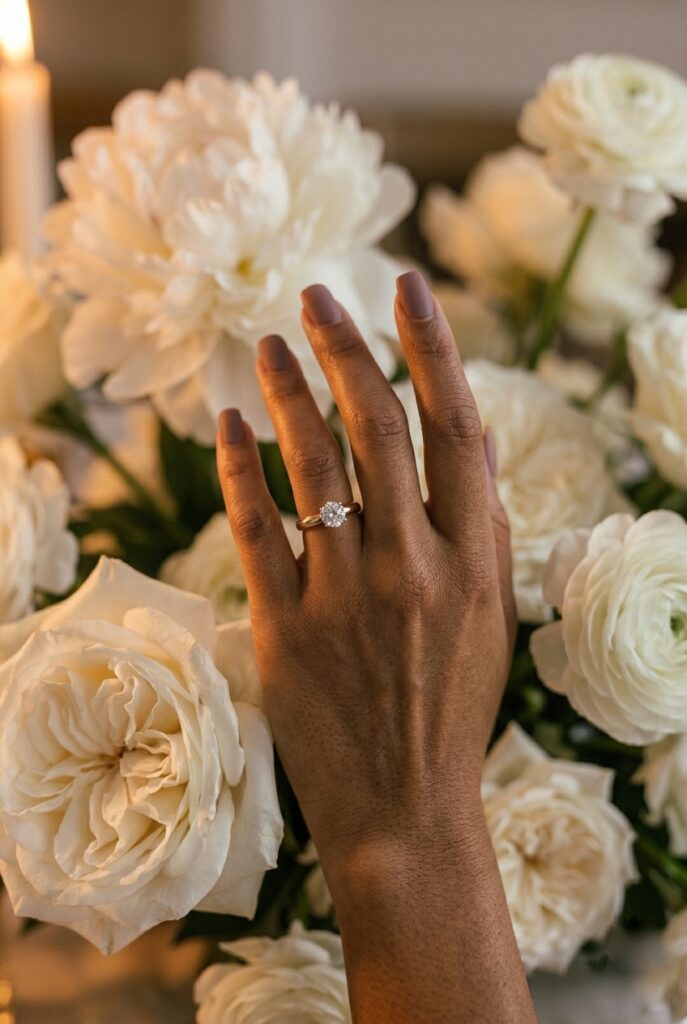
IMAGE 6 HERE Alt text: Medium brown-skinned bride wearing a rich rose-gold shimmer manicure on oval nails, hand raised to show wedding ring against a white floral background Image prompt: Photorealistic close-up of a medium brown-skinned hand wearing a rose-gold shimmer gel manicure on oval-shaped nails with a delicate solitaire engagement ring visible, hand raised slightly against a soft-focus white floral backdrop, warm candlelit atmosphere with golden light from the left, skin tone rich and luminous, editorial bridal photography, no text overlays. Generate in vertical portrait orientation, 2:3 aspect ratio, optimized for mobile display.

Medium brown skin is where the nail color conversation opens up significantly rather than narrowing.

This depth of skin tone carries an enormous range — from warm caramel nudes to deep plum to classic red to high-shine gold.

The constraint isn’t color, it’s finish: matte polishes on medium-brown skin can read flat and dull in photos. You want shimmer, gloss, or chrome.

Rose gold is the single most universally flattering finish on medium brown skin — it pulls out warmth, photographs with depth, and catches candlelight from across a reception room.

OPI’s I’m an Extra or Olive & June’s rose gold shades ($8–$15 at Target) are the starting point.

If you’re considering an indoor elegant reception with warm lighting, medium brown skin under rose gold polish in candlelight is one of the most photogenic combinations in bridal nail work.

Price range: $8–$75. Olive & June at Target; OPI GelColor at ULTA or professional salons.

💡 Budget Hack after Idea 6: Do your nail prep at home, pay only for the color application. The portion of a salon manicure that costs the most is the full spa treatment — soak, cuticle work, shaping. Do your own cuticle prep at home using a cuticle oil (CND SolarOil, $10 on Amazon, used daily for 3 weeks prior) and file your shape before arriving. Ask for polish-only or gel color-only service — this runs $20–$35 at most salons versus $55–$80 for a full manicure, and the result is identical in photos.


7. Deep Brown Skin: Stop Defaulting to Nude — You Can Carry Color That Others Cannot
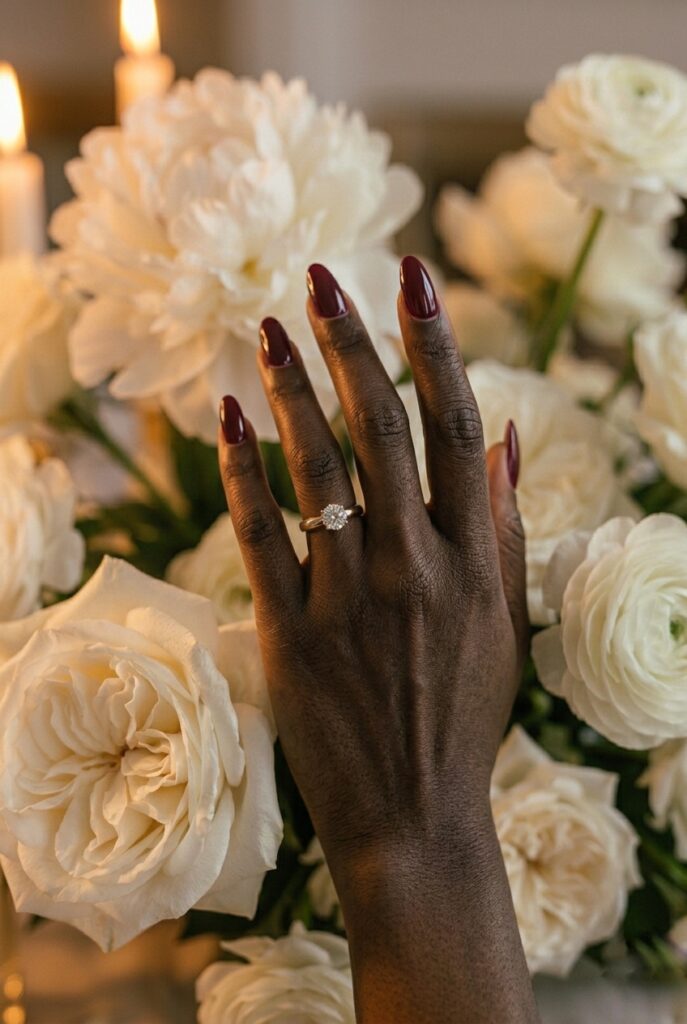
IMAGE 7 HERE Alt text: Deep-toned Black bride wearing a rich burgundy wine nail polish on long almond nails, hand resting on white bridal bouquet of peonies and garden roses Image prompt: Photorealistic close-up of a deep-toned hand with rich ebony complexion wearing a deep burgundy wine gel manicure on long almond-shaped nails, hand resting on a lush white bridal bouquet of peonies and garden roses, warm candlelit atmosphere with amber light accenting the skin tone and nail color, rich contrast between dark nails and white blooms, editorial bridal photography, no text overlays. Generate in vertical portrait orientation, 2:3 aspect ratio, optimized for mobile display.

Here is the thing every bridal nail guide gets wrong about deep skin tones: they recommend bold colors as if that’s the edgy choice when the truth is that deep skin tones carry richness and saturation more naturally than any other skin type.

A deep burgundy, oxblood, or plum on a deeply-toned bride doesn’t read as “bold” — it reads as sophisticated and intentional in a way that the same color on a lighter hand cannot achieve.

OPI’s Malaga Wine, ILNP’s Masquerade deep burgundy ($10 at ilnp.com), or a custom color-matching session at a professional nail studio ($65–$90) are all appropriate.

What actually fails on deep skin: chalky nudes that are several shades too light, and sheer polishes that create an unfinished, washed-out look at the nail bed.

If the nude is too light, the nail looks like a bandage.

Your “nude” needs to be your actual skin tone — deeper, richer, and more saturated than standard salon nude ranges.

The Knot’s nail color tool can help you filter by skin tone when trialing shades.

Price range: $10–$90. ILNP at ilnp.com; OPI at ULTA; professional color-match studios in major cities.


8. Deep Skin with Cool Undertones: Navy, Forest Green, and Jet-Black Chrome
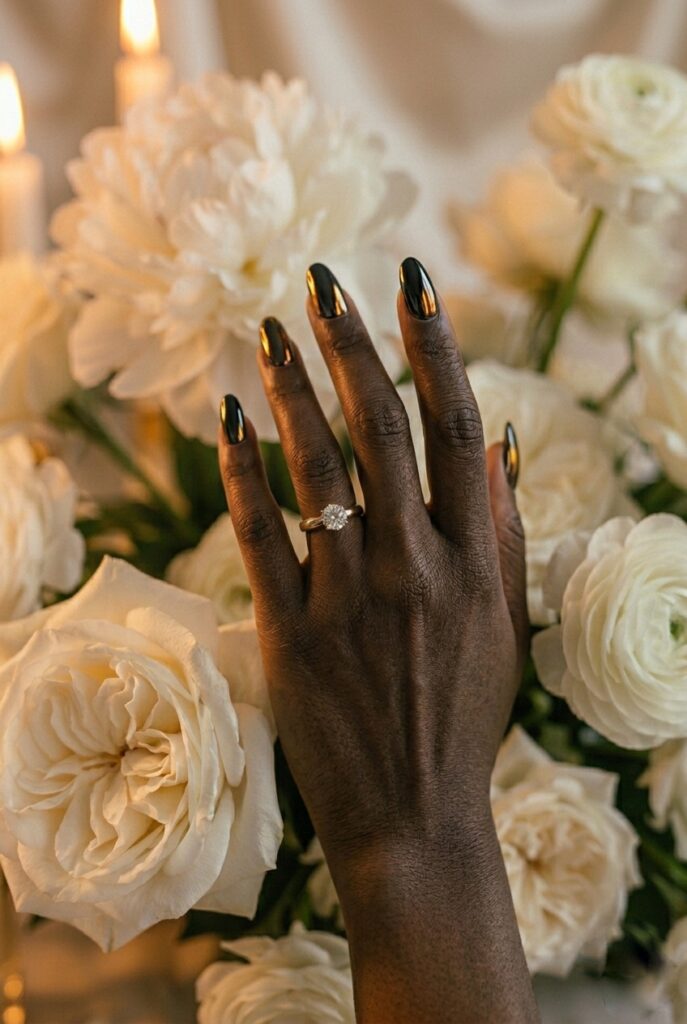
IMAGE 8 HERE Alt text: Deep-skinned bride with cool undertones wearing a jet-black chrome manicure on short almond nails, hand photographed under warm candlelight against ivory silk backdrop Image prompt: Photorealistic close-up of a deep-skinned hand with cool undertones wearing a jet-black chrome mirror finish gel manicure on short almond nails, hand photographed against draped ivory silk, warm candlelit atmosphere with amber and gold light playing off the chrome surface, rich contrast and high visual impact, editorial bridal photography, no text overlays. Generate in vertical portrait orientation, 2:3 aspect ratio, optimized for mobile display.

The interaction between nail color, gown fabric, and skin tone is something no bridal nail article discusses — and for deep skin with cool undertones, it’s critical.

A jet-black chrome or deep navy on cool deep skin against a creamy silk or satin gown creates a visual tension that is genuinely architectural.

It’s not “bold” in a try-hard way — it’s composed, intentional, and photographs with a level of contrast that editorial photographers specifically seek out.

This is not a look for every bride. 

Only do this if your wedding aesthetic already runs modern and elevated — unique wedding decor environments, minimalist venues, black-tie receptions.

For a soft garden wedding with pastel florals, this palette will fight the room.

But for a bride who wants her hand detail to be a design choice rather than an afterthought, this is the move.

Price range: $15–$95. Chrome powder from Amazon ($12–$18); professional gel + chrome application at nail studios.


9. Mixed or Ambiguous Undertones: When You Can’t Tell — Use the Dress as Your Mirror

IMAGE 9 HERE Alt text: Bride with mixed warm-cool undertone complexion holding a swatch card of nail polishes next to her ivory wedding dress fabric, comparing undertones in natural light Image prompt: Photorealistic close-up of a bride's hand with an ambiguous mixed undertone complexion holding two nail polish swatches — one cool pink and one warm peach — against ivory satin wedding dress fabric in bright natural window light, slight color variation visible between the swatches, realistic skin texture, editorial styling, no text overlays. Generate in vertical portrait orientation, 2:3 aspect ratio, optimized for mobile display.

If you cannot determine your undertone from the vein test (some people genuinely have mixed undertones), stop trying to determine it in isolation and use your dress fabric as the mirror.

Hold a cool-toned swatch (pink nude) and a warm-toned swatch (peach nude) against the inside of your wrist next to the dress fabric.

One will harmonize.

One will create a subtle tension you can feel even if you can’t name it.

Most brides with truly neutral or mixed undertones end up in a blush-taupe or a rosy beige — a color that sits precisely at the border between warm and cool.

Zoya’s Presley or Essie’s Topless and Barefoot are reliable starting points.

Use the OPI Shade Finder tool to filter by undertone and occasion — it’s the most practical free resource for narrowing options before you walk into a salon.

Price range: $9–$60. Essie at Target; Zoya at Zoya.com.

💡 Budget Hack after Idea 9: Test your top two nail shades before the appointment using press-on nails, not hand swatches. Press-on sets from KISS or imPRESS ($7–$10 at Walmart or CVS) let you live in the color for 24 hours — including seeing it under wedding-venue lighting, next to your dress, and in photos. Swatches on a card or even on one nail tell you almost nothing about how a color reads at scale over an entire hand. This 10-minute test has saved hundreds of brides from booking the wrong shade and will save you $50–$70 in corrective salon visits.


Decision Filter

If your dress is bright white and your venue has fluorescent or LED-heavy lighting, lean cool-toned regardless of your skin tone — warm shades can read orange under harsh white light.

If you’re having a candlelit evening reception with amber lighting, warm shades will photograph beautifully on nearly every skin tone, and a warm nude or copper will always beat a cool pink in that environment.

For brides with deep skin tones planning a formal black-tie wedding, don’t default to nude — you have the depth to carry richness that lighter-toned brides cannot. Use it.


The Real Reason Your Bridal Nail Color Feels Wrong in Photos

The uncomfortable truth: most brides choose their nail color under the fluorescent lighting of a nail salon, which is the worst possible environment for color decisions.

Fluorescent light pulls blue and strips warmth from every shade.

A peachy nude that looks perfect under salon light reads pink-purple in outdoor ceremony photos and almost invisible in indoor flash photography.

Here’s the insider observation that photographers and nail artists know but almost never tell their clients directly: flash photography on wedding day overexposes the hand by 15–20% compared to ambient light.

Sheer, very pale nail colors simply disappear in ring shots — the photographer’s flash washes them out entirely, and you spend thousands on a manicure that is literally invisible in your wedding album.

The fix is to go one shade deeper than your instinct tells you. If you’re drawn to a sheer blush, book a slightly more opaque blush.

If you’re drawn to a barely-there nude, add a shimmer topper so the nail registers in the flash.

The bold opinion: standard “French tip” nails are the most boring choice a bride can make right now, and they photograph worst on dark and olive skin tones specifically because the stark white tip creates a line of contrast that pulls focus away from the ring and toward the nail edge.

If you want a classic look without the visual noise, a single-shade soft pink or nude always photographs cleaner.


Mistakes to Avoid

Mistake 1: Choosing your “nude” from the standard salon nude range. Most salon nude displays are designed around a fair-to-medium skin tone range, meaning the “neutral nude” on the wall is actually a cool pink-beige that flatters approximately 30% of the people selecting it.

The advice you’ll find in most competitor guides — “go nude for a classic bridal look” — is correct in principle but useless in practice unless you’re specifying which nude for which undertone. Build your specific shade up from undertone first.

Mistake 2: Booking gel two weeks out. The average gel manicure shows 1–2mm of natural nail regrowth within ten days. At two weeks out, you’re in photos with visible grow-out at the base of every nail.

This costs you approximately $45–$65 in a re-do appointment, plus the stress of an extra pre-wedding errand. Book gel no earlier than five days before your wedding.

If you want stronger, longer-lasting application, BIAB (Builder in a Bottle) holds for three to four weeks without visible regrowth and is worth the $65–$85 price point at most nail studios.

Mistake 3: Not testing your shade in wedding-venue lighting. Nobody does this, and everybody wishes they had.

Bring a photo of your reception venue (or visit it during the same time of day as your event), hold your swatch or press-on against your hand in that lighting, and take a phone photo.

Then zoom in.

What you see in that zoomed image is what your ring shots will look like.

Do this test, and you will immediately know if your choice is right.

Mistake 4: Matching your nail color to your bridesmaids’ dresses instead of your own dress and skin tone. You are in the foreground of every photo. Your bridesmaids are background.

Choosing a color that ties to the overall palette rather than to your specific skin tone and gown will mean your hands look contextually correct in group shots and visually off in close-up ring photographs — which are the images you’ll actually print and frame.

The bouquet is a better color reference than the bridesmaid dresses.


FAQ

What nail color is most flattering for brides with dark skin?

Deep skin tones carry richness best — burgundy, plum, warm copper, or a nude matched closely to actual skin depth photograph most flatteringly.

Sheer pale nudes made for lighter complexions look unfinished and chalky; go at least two shades deeper than you think you need. Deep brown skin also carries chrome and shimmer finishes exceptionally well in candlelit and flash photography.

How long before the wedding should I get my nails done?

Get gel or BIAB applied no more than five days before your wedding to avoid visible regrowth in photos.

Regular polish should be done the day before or the morning of, as it chips more easily. For nail prep — cuticle care, shaping, and conditioning — start three to four weeks before the wedding.

Should bridal nails match the wedding theme or the bride’s skin tone?

Prioritize skin tone first. A color that fights your complexion will read wrong in every close-up photograph regardless of how well it matches the wedding palette.

Start with the color that flatters your specific undertone and depth, then layer in theme considerations around that anchor choice.

Is a French manicure still a good option for brides?

A French tip is a valid choice for fair-to-light skin tones, but it photographs best with a soft, slightly pink-tinted base rather than a stark white-on-bare tip.

On medium to deep skin tones, the high contrast between a white tip and the natural nail creates a visual line that competes with the ring in close-up shots.

A tonal almond or soft nude in a single shade is currently the stronger photographic choice.


Budget Breakdown

Nail OptionCost RangeLongevityBest For
Regular polish, DIY at home$8–$15 (polish only)3–5 daysLast-minute, very tight budget
Regular polish, salon$20–$403–5 daysBrides who prefer polish control
Gel manicure, salon$40–$652–3 weeksMost brides, best photo results
BIAB (Builder in a Bottle)$65–$903–4 weeksBrides wanting maximum longevity
Press-on nails (testing only)$7–$101–2 daysPre-wedding color testing
Professional nail art / chrome$75–$1202–3 weeksStatement looks, deep and cool skin tones
Color-match studio session$65–$95VariesBrides with complex undertones

Your nails are in approximately 200 photographs on your wedding day — in ring shots, vow exchanges, bouquet holds, and every handshake and hug captured by your photographer. That’s not a footnote detail. It’s a recurring visual in your entire wedding album. Choose your shade the way you’d choose your lipstick: based on your actual face (or in this case, your actual hand) under the actual lighting of your actual event.

Your next step: pull up the OPI Shade Finder, filter by your undertone, save two or three candidates, then order the corresponding press-on sets from Amazon or Walmart and do a 24-hour wear test at home under your venue’s lighting conditions before you book anything.

That single step eliminates almost every nail regret I’ve seen brides carry out of their wedding day.

Leave a Comment

Your email address will not be published. Required fields are marked *

Scroll to Top