You’ve been to enough weddings to feel prepared, but the moment your heel sinks into a lawn, your dress code reads one level off, or your phone appears in the couple’s first kiss photograph, the preparation gap becomes obvious.
Every item here solves a specific, predictable problem — and all of it fits in a small bag with decisions you can make the night before.
1. The Outfit — Confirmed Against the Actual Dress Code

The dress code line on a wedding invitation is the couple’s instruction about what register the event operates at, and arriving one level under or over it is noticeable to every guest who got it right — “black tie optional” means a floor-length gown or a dark suit, not the cocktail dress you feel confident in, and “garden party” is not a synonym for whatever midi you already own.
When in doubt, go one level more formal than your interpretation, not one level less, because overdressed reads as respect while underdressed reads as indifference, and if your dress code research leads you toward elegant wedding reception settings, those visual references will tell you more about the event’s register than any written description.
2. Shoes That Work for Both Ceremony and Dance Floor

Bring two pairs: one that photographs during the ceremony and one flat or low heel to swap into once dancing starts, because your feet will signal distress by hour three in anything over two inches at a full dinner-and-dancing reception.
For outdoor venues — the converted barns, garden estates, and lawn ceremony sites that you can identify ahead of time in outdoor wedding settings — a stiletto base will sink into the ground before you reach your seat, which makes block heels, wedges, or platforms the only viable heel choice, and flat backup shoes a non-negotiable rather than a nice-to-have.
3. The Gift — Registry-First, Card Always

Always buy from the registry unless your relationship with the couple gives you genuine certainty about an off-registry choice, because the registry is where they listed the specific items they actually want in the colors and specifications they chose — and off-registry gifts given without that intimacy are appreciated politely and donated within eighteen months.
Always include a physical card with a personal handwritten note regardless of gift format, because the couple will open every piece of physical mail in the weeks following the wedding and a card with three specific, genuine sentences is consistently the part of the gift they actually remember.
💰 Budget Hack #1: If the couple has a Zola registry, the platform waives all transaction fees on cash gifts sent directly through the registry fund feature — meaning $100 sent through Zola arrives as $100, with no processing cut. PayPal, Venmo, and some bank transfers take 1.5–3% off the top. Sending a cash gift? Use whatever platform has zero fees, check which one the couple uses, and ask. This costs you nothing and the couple gets the full amount.
4. Your Guest Emergency Kit — Small, Specific, Actually Useful

The kit that earns its place in your clutch is a stain remover pen, blotting papers, two safety pins, clear lip balm, a bandage strip, breath mints, and $40–$60 in cash for coat check and valet situations that appear without a card reader nearby — that is the complete list, assembled from things already in your house or a four-minute drugstore run for under $12.
Everything else in a pre-packaged bridal emergency kit is padding to justify a $35 price tag, and if you want to see what the bride’s version of this system looks like on her end, the bride’s wedding day checklist covers the three-bag approach she uses so you understand what she’s managing and how your kit complements hers.
5. Your Phone — On Silent, and Used With Actual Judgment (Gap Idea #1)
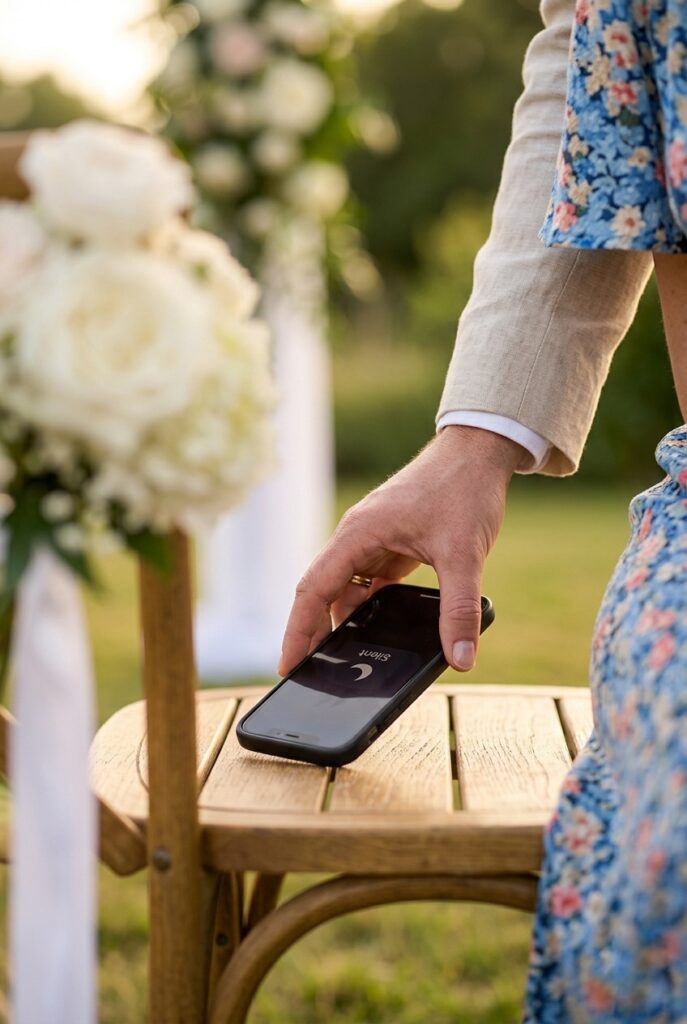
When you hold your phone up to film or photograph the vows, it appears in every frame the professional photographer shoots from the aisle and side angles — this is not hyperbole, it is a composition problem that cannot be retouched away, in photographs the couple paid thousands for and will display for decades.
Put your phone fully away during the ceremony, not on vibrate in your lap — and if the couple has requested an unplugged ceremony, that instruction applies without exception to everyone including the guest who just wants one quick photo of the first kiss.
6. Transportation Confirmed, Arrival Time Planne

Arrive fifteen minutes before the stated ceremony start time — not five — because fifteen minutes gives you time to park, find the entrance, locate a seat, and settle before the processional begins, while five minutes means you are still walking in while it starts, which is disruptive whether or not anyone says so.
Look up driving directions to the actual venue address the night before, not the morning of, because wedding venues at converted barns, private estates, and outdoor ceremony locations frequently require specific gate entrances or parking areas that GPS routes incorrectly, and a quarter-mile walk between parking and ceremony is not visible on the map pin.
💰 Budget Hack #2: If the wedding requires a hotel stay and the couple’s block is sold out or over your budget, search hotel inventory on Hotwire or Hotel Tonight the week before the wedding — not the month before. Last-minute hotel inventory frequently drops 30–50% within seven days of the date as hotels release unsold rooms at reduced rates. A room that was $220 through the wedding block may appear for $140 on Hotwire four days out. This only works if you have flexibility on the exact property; confirm it’s within five miles of the venue before booking.
7. The Seating Chart — Read It Once, Respect It Completely (Gap Idea #2)

Find your name on the escort card display, go to your assigned table, and sit in any seat at that table — that is the complete instruction set, and moving to a different table because you prefer the company there is not a minor social adjustment but a logistics error that triggers a meal delivery mismatch and can mean someone at your original seat receives the wrong dietary option.
For indoor receptions with assigned plated dinners especially, the seating chart was built over multiple hours to account for family dynamics, dietary restrictions per seat, and vendor headcounts per table — switching disrupts all three, on a day when the couple is already managing twelve other moving pieces.
8. Behavior Around the Couple — The Unwritten Rules That Matter

Keep your greeting with the couple to thirty seconds — congratulate them, tell them one specific thing you loved about the ceremony, and move on, because they have eighty to two hundred people to greet and every guest who holds a long conversation is taking time directly from someone else.
Do not offer unrequested opinions about the food, flowers, music, or any other vendor decision during the event, because every element from table arrangements to lighting reflects weeks of considered choices the couple is still in the middle of experiencing, and feedback lands very differently on the day than it would in any other context.
9. Children, Plus-Ones, and the Invitation Envelope — Read It Carefully
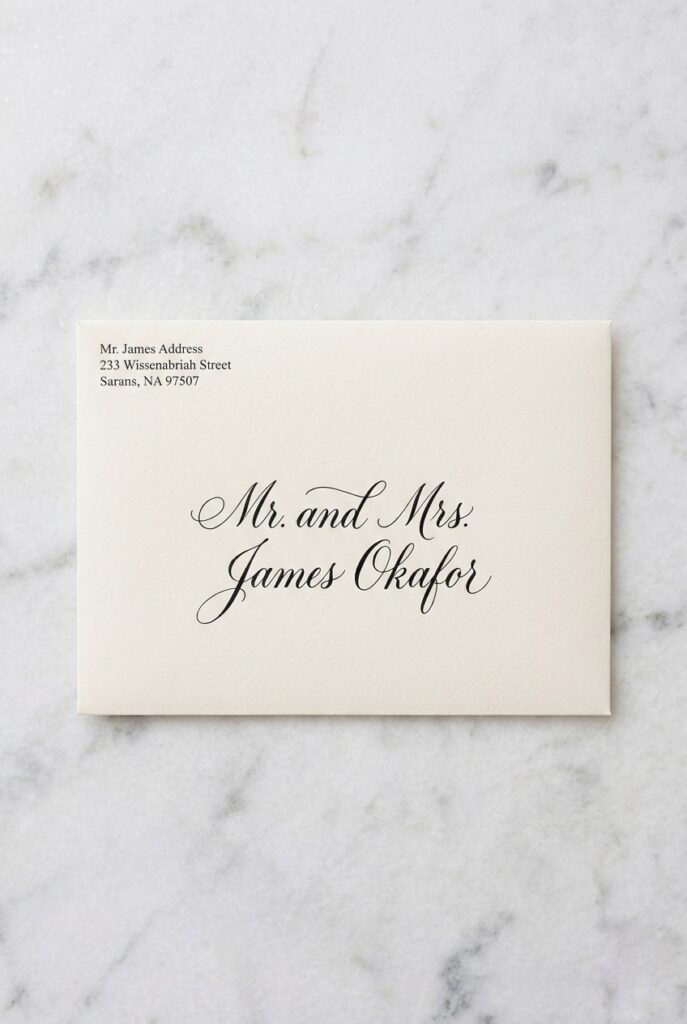
The names written on the outer envelope of your invitation tell you exactly who is invited — your name only means only you, no plus-one, and if children are invited their names appear on the inner envelope or the outer listing — and if you are uncertain, the only correct move is to call or text the couple or their planner and ask directly before the wedding, not at the wedding itself.
RSVP by the stated deadline, not two days after, because the couple is submitting final headcounts to the caterer within days of that date and late responses create real operational complications even when the answer is yes — and an uninvited plus-one who arrives creates a missing seat, a missing place setting, and a missing meal that the couple absorbs on their own wedding day.
💰 Budget Hack #3: If the dress code is black tie and you don’t own a tuxedo or floor-length gown, rent rather than buy. Generation Tux, The Black Tux, and Menguin all rent complete tuxedo packages — jacket, trousers, shirt, tie, cufflinks — for $100–$200 delivered to your door and returned in a prepaid bag. A purchased tuxedo for a single event costs $400–$900. A floor-length formal gown from Rent the Runway for a black tie occasion runs $65–$140 for a four-day rental versus $200–$600 to buy. Renting is the objectively smarter move for any event you’ll attend once.
10. The Social Media Approach — Clear Expectations Before You Post

Check whether the couple has requested a social media blackout — usually noted on the invitation, wedding website, or ceremony program — and if they have, respect it without exception, because the reason is almost always that they want to control how their day is first shared publicly, and that is a completely reasonable thing to want on the most documented day of their lives.
If no restriction was mentioned, hold any ceremony photos until after the couple has posted themselves, tag the venue and photographer if you know them since couples and vendors genuinely benefit from that visibility, and know that venues with distinctive settings — from rustic barns to formal ballrooms — often reshare well-tagged guest photos in ways that organically extend the couple’s own wedding content.
The bride and the groom both have their own checklists to manage on the day — the groom’s wedding essentials guide is worth passing along if you’re attending with a partner who needs to sort his side out, because a guest who arrives prepared on both ends means one less question reaches the couple before the ceremony starts.
Your outfit, your gift, your emergency kit, and your phone discipline are the four decisions that determine what kind of guest you are — get those right the night before and the rest of the day takes care of itself.