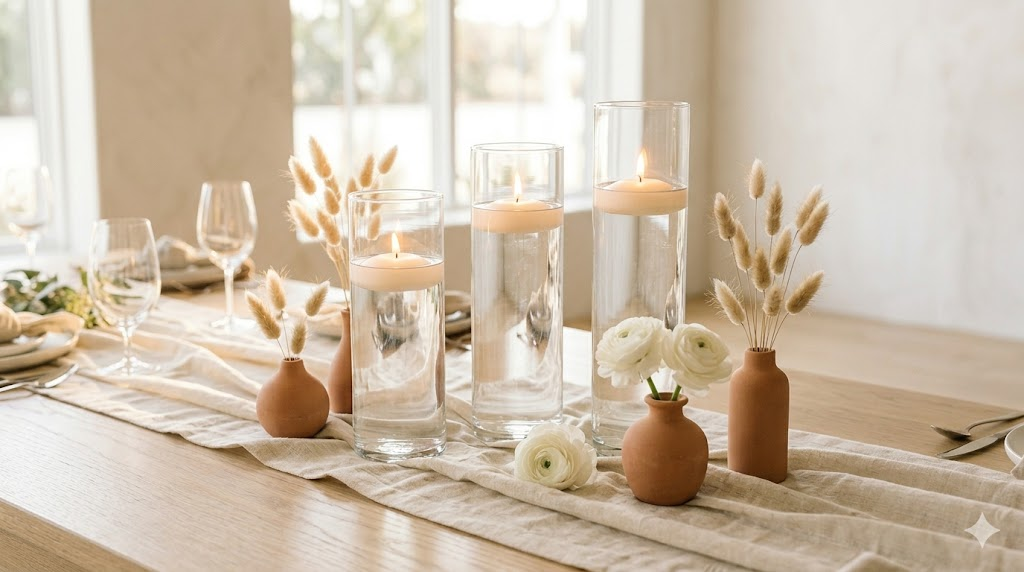
The nail look that reads as elegant on screen and the nail look that reads as elegant in your wedding photographs are frequently not the same thing — what works in a gallery thumbnail flattens under a macro ring-shot lens or disappears against your gown in available light.
Matching your nails to your aesthetic means choosing in relation to your ring, your dress texture, and your venue’s lighting — not choosing a look in isolation because it appeals to you in the moment.
1. Milky Sheer with High-Gloss Topcoat
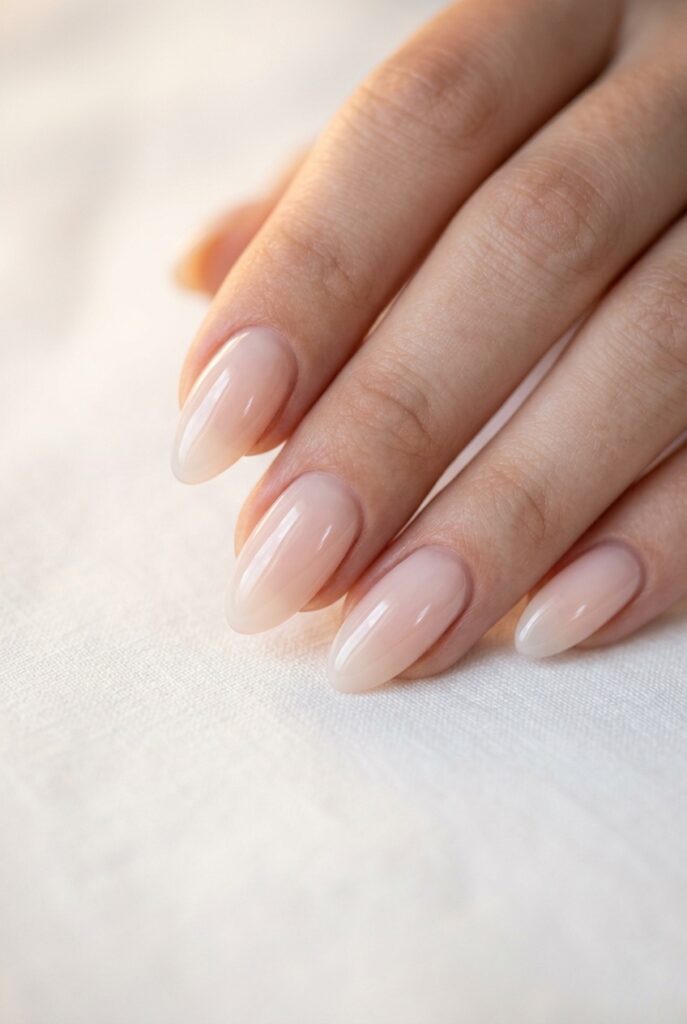
A sheer milky base layered with a gel topcoat reads as polished in person and luminous in photographs without competing with your ring, your dress, or your bouquet — the version that fails is a standard polish topper rather than a proper gel topcoat, because the shine difference is significant and visible in every photograph taken across a wedding day.
Budget $60–$120 at a dedicated nail salon and ask specifically for hard gel or gel overlay for longevity, and for the full picture of how this finish performs across every skin tone from fair through deep, the complete bridal nail guide covers which milky variation photographs cleanest on your specific undertone.
2. Soft Almond Shape in Blush or Barely-There Nude
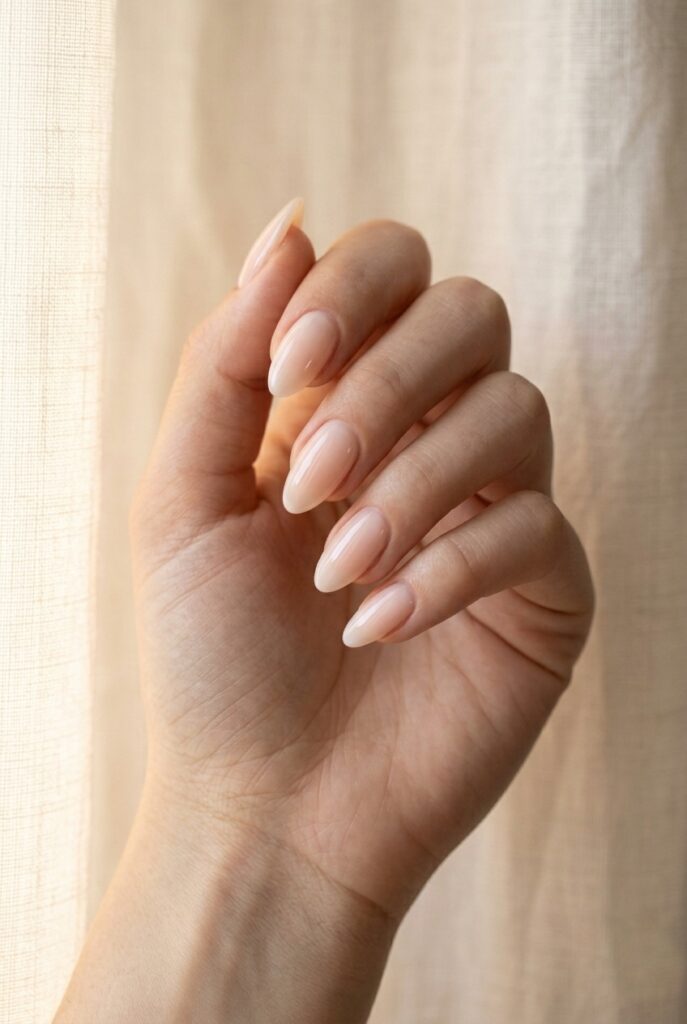
Shape does more work than color in close-up photography — a square nail with a short free edge on a wide nail bed reads as blunt in ring shots even with a perfect color, while almond softens the sides, creates a natural taper, and elongates the entire hand — and the decision order matters: shape first, then color, every time.
Tell your technician you want a soft almond rather than a stiletto before the file touches your nails, because the two shapes diverge at the tip and your technician’s default without specification will almost never be the shape that photographs as precisely as a deliberately requested soft almond — and the short bridal nail guide covers exactly how almond works at shorter lengths if your natural free edge is under 3mm.
3. The Pearl Accent (Placed Correctly)
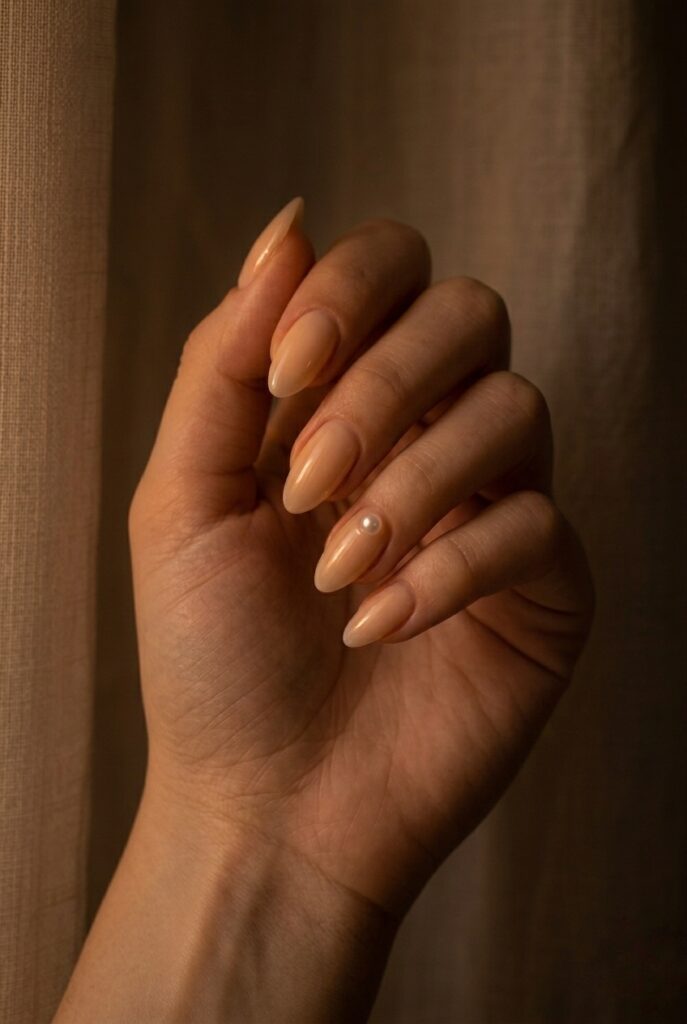
One Swarovski HOTFIX pearl adhered with gel and UV-cured at the cuticle base of the ring finger photographs as intentional and sculptural, while five or six plastic pearls scattered across multiple nails photographs as crafty and falls off by cocktail hour — the entire difference is restraint rather than cost, because the Swarovski flat-back runs $12 for 100 on Amazon.
Ask your nail tech to cure the placement under the UV lamp rather than pressing with top coat only, bring your own flat nano-pearls at $8–$12 per 100 to save the salon sourcing markup, and for how this single-pearl composition interacts with elegant gold table aesthetic and how to brief your tech to place the pearl in a position that doesn’t compete with your ring setting, the linked guide covers the full compositional context.
Budget Hack #1: Skip the bridal nail surcharge at wedding-focused salons, which typically adds 25–40% to your service cost for the word “bridal” on the booking form. Instead, book at a Korean nail salon in your area (search “nail salon” on Yelp filtered by highest-rated), describe exactly what you want, and bring a reference photo. A gel manicure with pearl accent at a Korean-owned nail salon in most US cities runs $45–$65 all-in versus $95–$140 at a salon marketing specifically to brides. The quality is frequently identical or better — Korean nail techs train extensively in gel application precision.
4. Micro-French with Off-White Tip (Not Bright White)
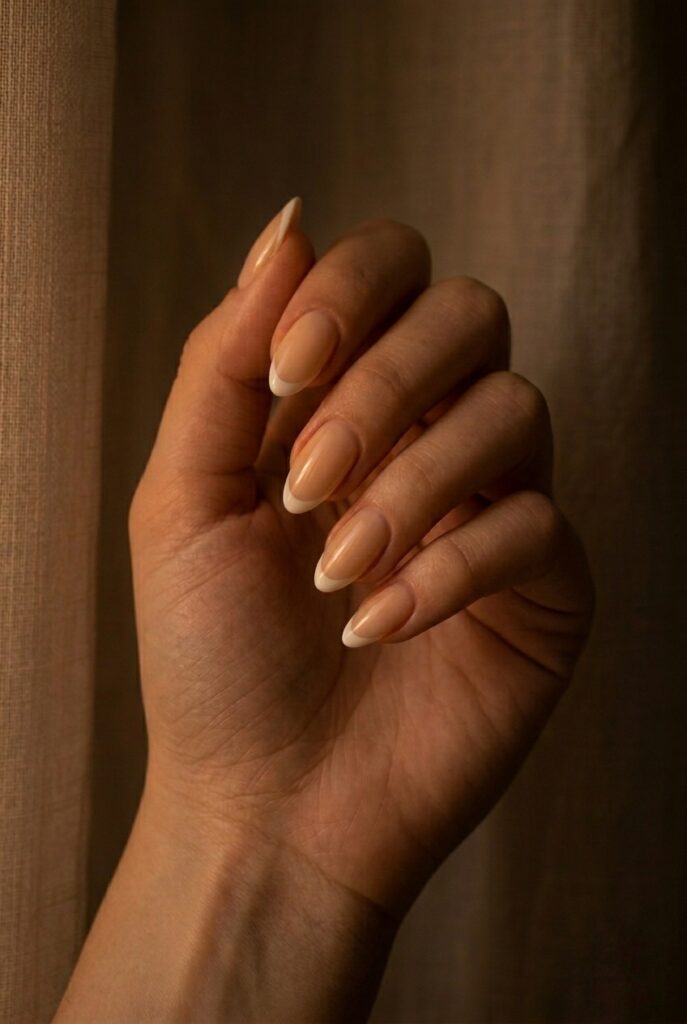
The thick bright-white tip of a traditional French manicure was designed for stage lighting — under natural ceremony light or reception candlelight it reads as dated and harsh, while a 1.5–2mm smile line in ivory or cream over a sheer nude base looks like a very healthy well-groomed natural nail and holds that quality across every photography condition of a wedding day.
Request Nail Envy in Natural or CND Shellac in Cream Puff as the tip color rather than OPI Alpine Snow which is too cold-white, confirm your free edge is at least 3–4mm so the tip has room to read as a tip rather than a pale stripe, and for every French tip variation from hairline micro through standard band width with specific tech briefings for each, the French bridal nail guide covers the full range alongside heel and accessory coordination for the complete look.
5. The Ring-Hand Accent Strategy [Gap Idea #1]
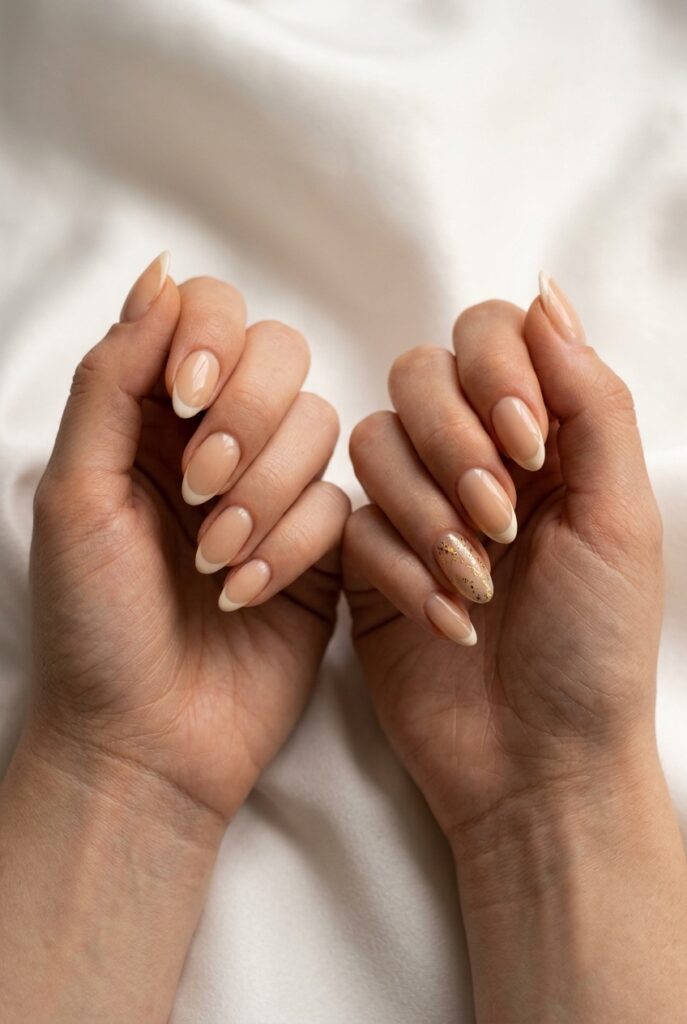
Placing your accent nail on the ring finger creates visual competition between the nail detail and the ring in every close-up shot — the eye goes to whichever object has more detail first, and if the nail has a pearl or foil, the ring frequently loses that competition.
The solution is your non-ring hand — right middle or right index finger — so the ring gets its own clean backdrop on the left hand while your non-ring hand holds the accent detail, and both hands read as composed and intentional when photographed together, which is exactly the level of considered design thinking that defines a modern editorial wedding at every level from nails to table design.
6. Chrome Powder French Tip (Done with Restraint)
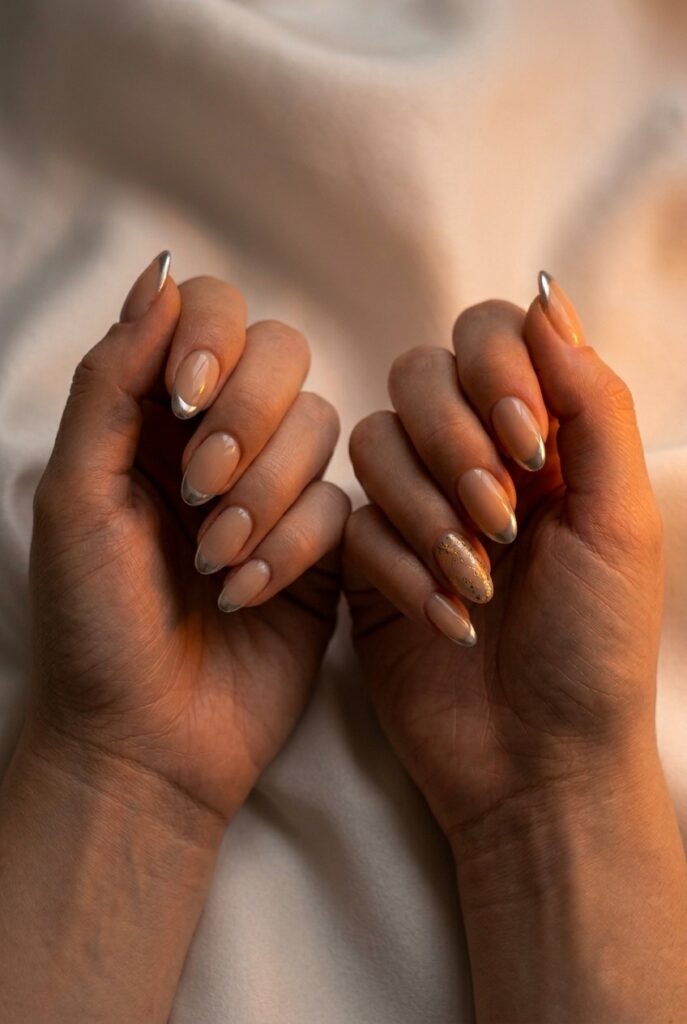
Chrome on the full nail photographs as a reflective silver surface that shows every fingerprint and every gel imperfection — chrome on the tip only, 1.5–2mm over a milky sheer base, catches light exactly the way a diamond does: one precise bright point that drops away rather than competing with everything else in the frame.
Expect $75–$120 at a salon experienced with chrome application, ask to see previous chrome work because application over incompletely cured gel gives a dull patchy result rather than a mirror finish, and for brides planning a candlelit wedding reception where warm amber light is the dominant atmosphere, silver chrome tip catches that light in a way that amplifies the room rather than fighting it.
Budget Hack #2: Chrome powder application is where budget salons frequently fail brides — they apply it before the gel is fully cured, which gives a dull, patchy result instead of a mirror-like finish. To avoid this entirely without paying premium salon prices, buy Kiara Sky Chrome Powder in Rose Gold or Silver (Amazon, $12–$15 per pot) and a silicone applicator sponge ($8 on Amazon). Apply it yourself over a cured gel base at home as a final step, then seal with no-wipe top coat. The same chrome powder that costs $35–$50 extra at a salon costs you $23 total for materials you can use multiple times.
7. Soft Ombré in Two Neutral Tones
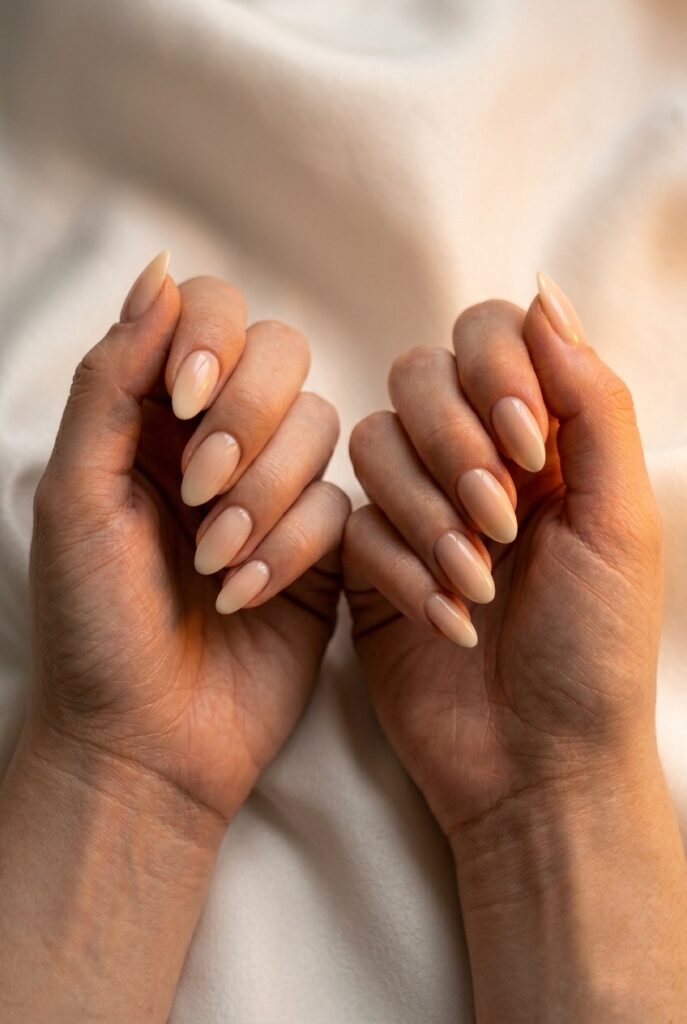
A brush-blended bridal ombré using a fan brush with two gel shades mixed at the midpoint produces a transition invisible at arm’s length that reveals dimension only in close-up, while the sponge version leaves a visible texture seam that reads as a mistake under macro photography — ask specifically before booking whether your salon uses brush or sponge, and book only the brush.
Ivory-to-warm-champagne photographs as a single sophisticated tone with depth and pairs naturally with a softly monochromatic wedding table decor scheme where the overall palette is already working in the same warm-neutral register at $75–$130.
8. Textured Base — Velvet or Brushed-Satin Finish
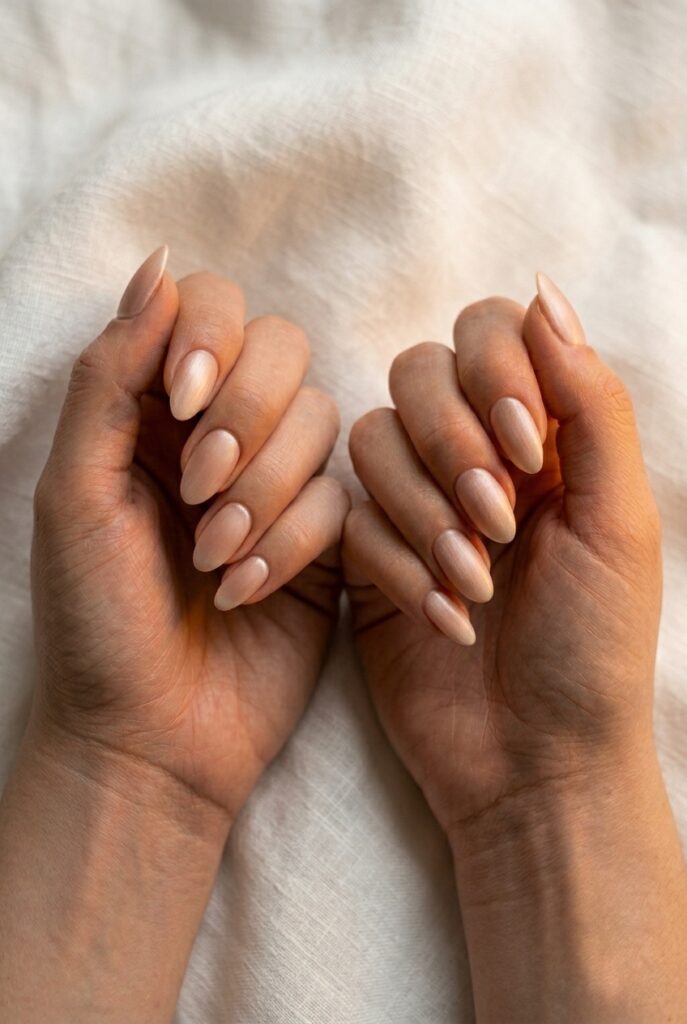
A velvet or satin-finish topcoat over a warm nude gel base absorbs rather than reflects — the nails look sculptural and intentional in natural light, sit in the same texture family as satin and crepe gown fabric, and photograph with genuine depth in ways that both high-gloss and full-matte cannot achieve.
Zoya Matte Velvet at $12 from ULTA or OPI Matte Top Coat at $12.99 on Amazon handle the application, this finish performs at its best in outdoor and well-lit ceremony spaces where natural ambient light gives the matte surface enough dimension to read as sculptural rather than flat, and full service with matte topcoat runs $60–$95.
9. The Pre-Wedding Nail Prep That Changes Everything
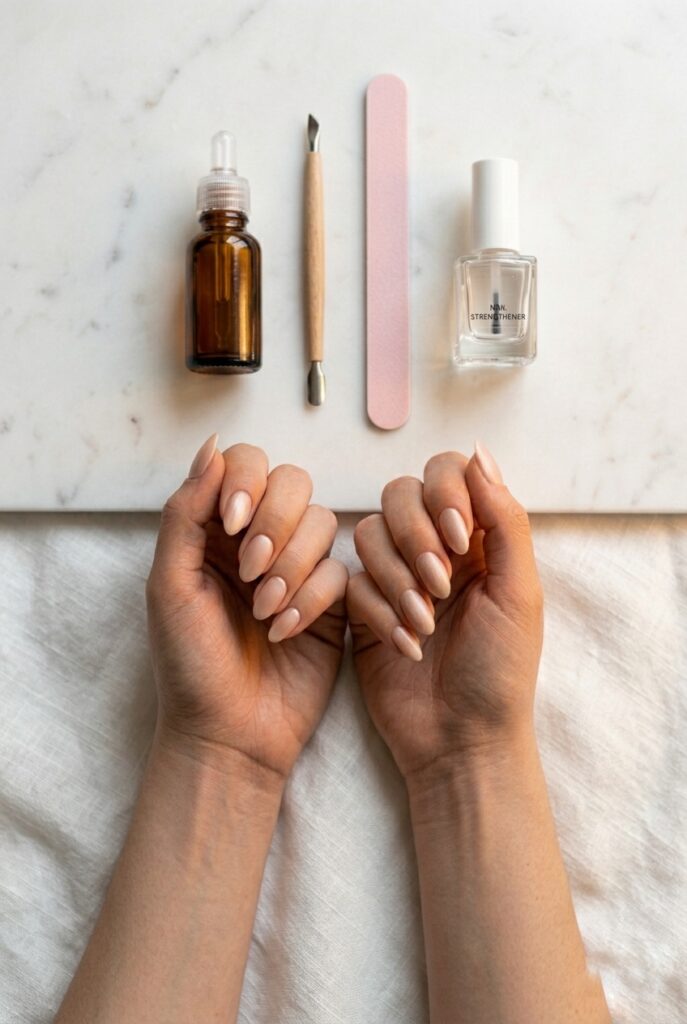
A dry or lifted cuticle visible in a ring-shot macro is the one detail that no nail design can hide and no post-production can fully correct — CND SolarOil cuticle oil twice daily starting at the six-week mark transforms the periungual skin and makes even a simple sheer polish look finished and intentional in close-up photography.
OPI Nail Envy strengthening base coat at $15 from Amazon or ULTA applied twice weekly prevents the thin free edges that chip within hours of high-contact wedding day activities, the $30–$45 total eight-week prep investment frequently eliminates the need for any elaborate nail design because healthy well-prepared nails already read as curated, and if you are building out the full ceremony picture from florals through to personal styling, the wedding florals and ceremony design guide covers how those same preparation and investment principles apply at the ceremony level.
Budget Hack #3: The biggest hidden cost in bridal nails isn’t the appointment — it’s the removal. If you get acrylic extensions for your wedding and then have them removed afterward, most salons charge $25–$40 for the removal service. Book your nail removal appointment at the time you book your wedding manicure, ask specifically about their removal fee, and factor it into the total. Better still: choose hard gel extensions over acrylic. Hard gel removes with a file rather than acetate soak, causes less damage, and many techs charge nothing extra for gel removal when you’re returning as a client. You save $25–$40 and protect the health of your actual nails going into post-wedding events.
10. Negative Space or Sheer Overlay with Bare Nail
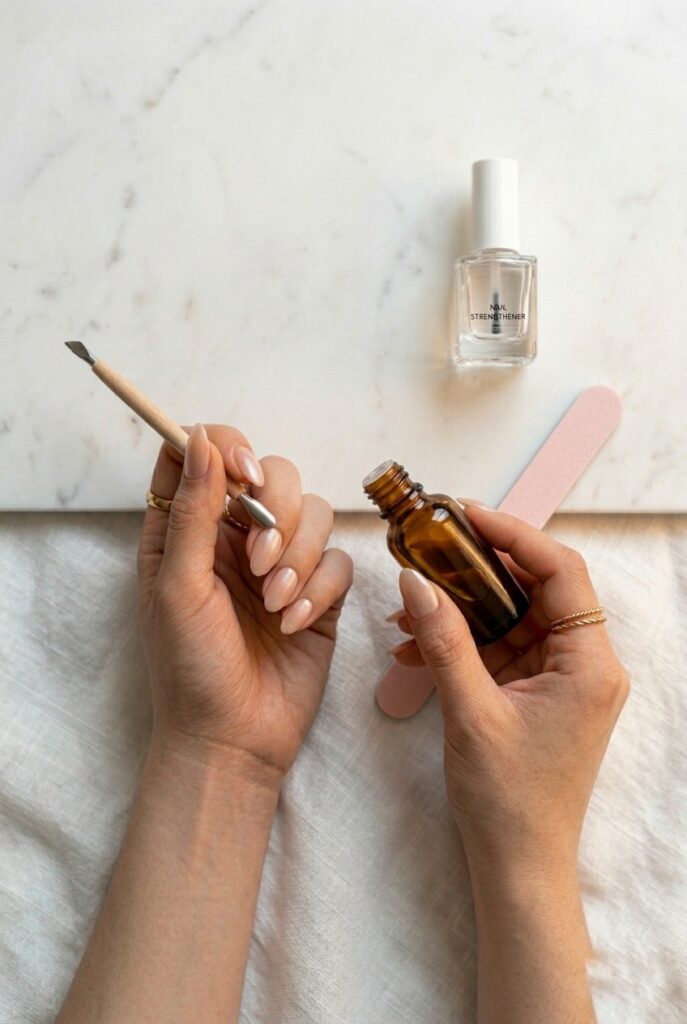
A sheer gel overlay — no color, just the strengthening layer and a high-shine topcoat — lets your ring be the sole object of visual interest your hand is presenting, makes the skin around the nail part of the composition, and reads as extraordinary against both heavy silk and lightweight crepe in a way that any colored nail simply cannot replicate.
This is the lowest-maintenance option across a wedding week of constant hand use — moving arrangements, hugging guests, getting dressed and undressed multiple times — and if the principle of trusting absence over addition is where your aesthetic instincts sit, the simple bridal nail guide takes this philosophy even further with specific overlay protocols and natural nail preparation timelines.
Decide your shape before your color, your finish before your art, and your one accent before you walk into the salon — and write those decisions down on your phone before you sit in the chair so you brief the technician rather than decide under pressure at the color wall.
For the full framework of elegant nail looks with durability ratings and specialist requirements at every price point, the elegant bridal nails guide is the companion read before any salon booking.