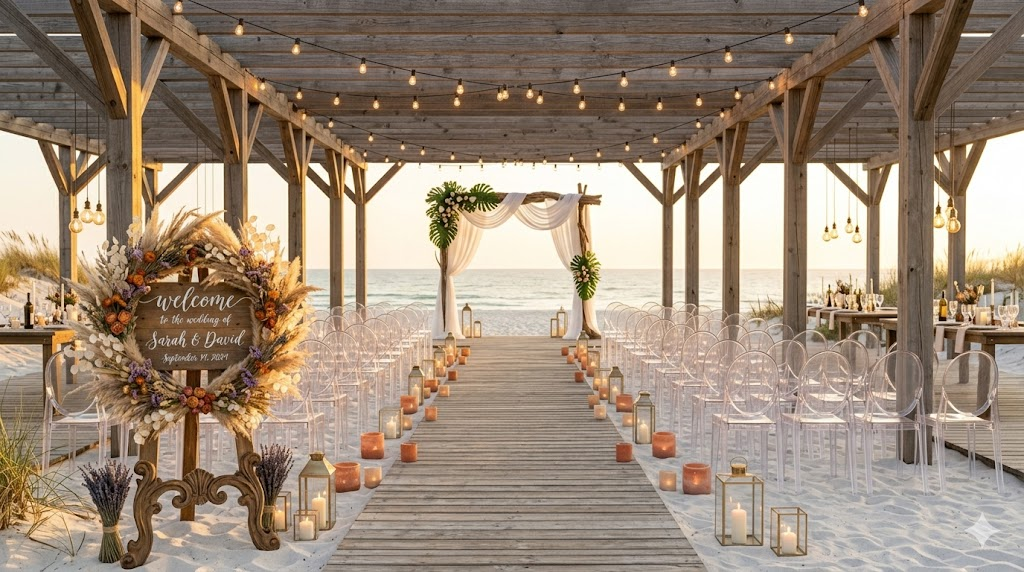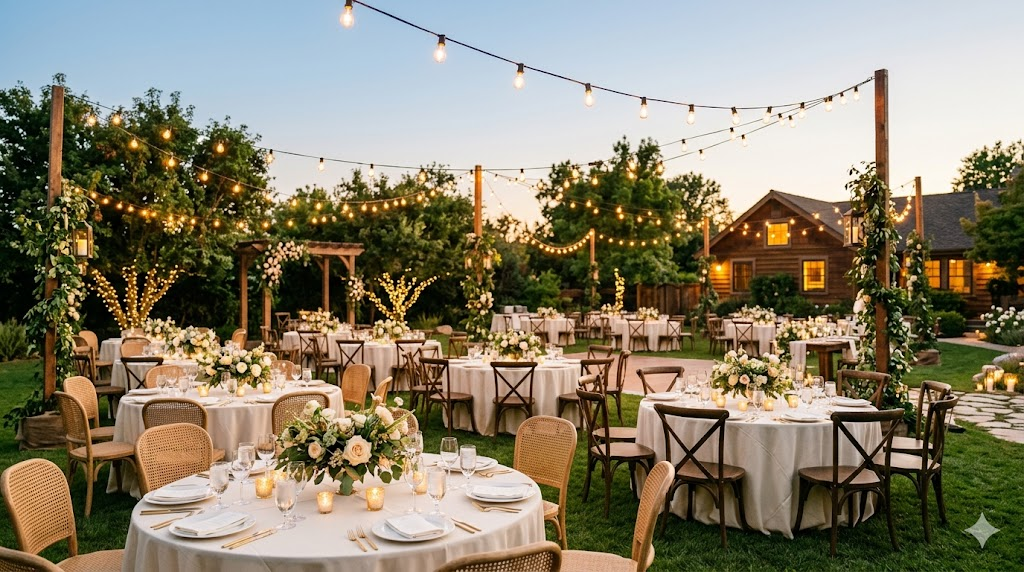
Most couples spend weeks choosing flowers and completely ignore the one decision that determines whether a round table actually works: height.
On a 60-inch round table, the wrong centerpiece height blocks conversation, photographs awkwardly, and wastes money without creating any drama — and the rule that fixes it is simpler than any florist will tell you.
Stay under 12 inches, or go over 24 inches, and never land in the middle.
1. The Full-Radius Cluster: One Central Piece Plus Peripheral Votives
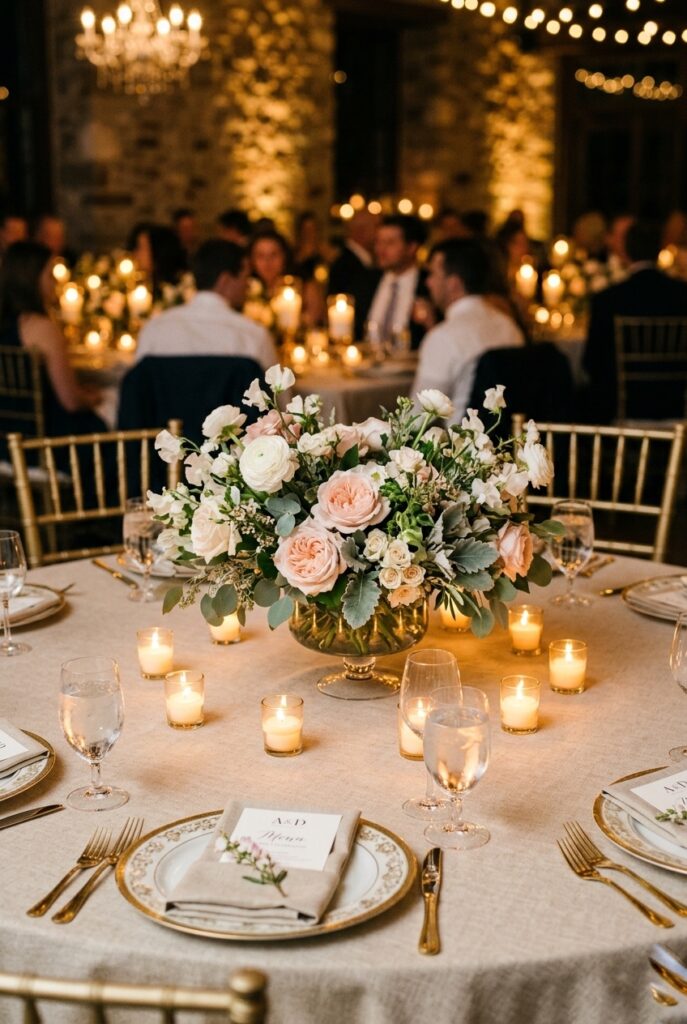
Instead of treating the centerpiece as one isolated object, you treat the entire table surface as the design canvas — a low compote arrangement under 12 inches anchors the center while eight to ten votives radiate outward in a loose ring, and the candles do more visual work than any additional floral bundle ever will.
This is the format professional event stylists use quietly because it looks layered and intentional from every seat, and it sits comfortably within the simple, considered styling that always photographs better than arrangements trying to do too much.
2. Tall Trumpet Vase With Single-Variety Blooms

The key advantage of a tall centerpiece on a round table is one most couples miss: guests can see each other underneath the arrangement, so a narrow trumpet vase over 24 inches tall with air beneath the flowers creates drama without the conversation problem — the wrong version is a thick, wide arrangement at 16 to 18 inches that blocks every face at the table without achieving any visual scale.
Single-variety blooms — white orchids, gladiolus, ivory roses — work strongest in indoor wedding venues with high ceilings, and this is exactly the kind of centerpiece the elegant wedding decor approach is built around.
3. Low Garden Rose Dome in a Compote Bowl

TA low floral dome is almost impossible to make look wrong on a round table because the geometry does the work for you — a round table with a rounded centerpiece creates a visual echo that photographs evenly from every angle, but only if the dome is dense enough that guests cannot see straight through to the mechanics underneath.
This is also one of the most accessible DIY approaches on the list because you are essentially building a compact sphere — cut stems to the same length, pack tightly into a wide-mouth compote, and the shape holds itself.
4. The Constellation Scatter: No Central Piece at All
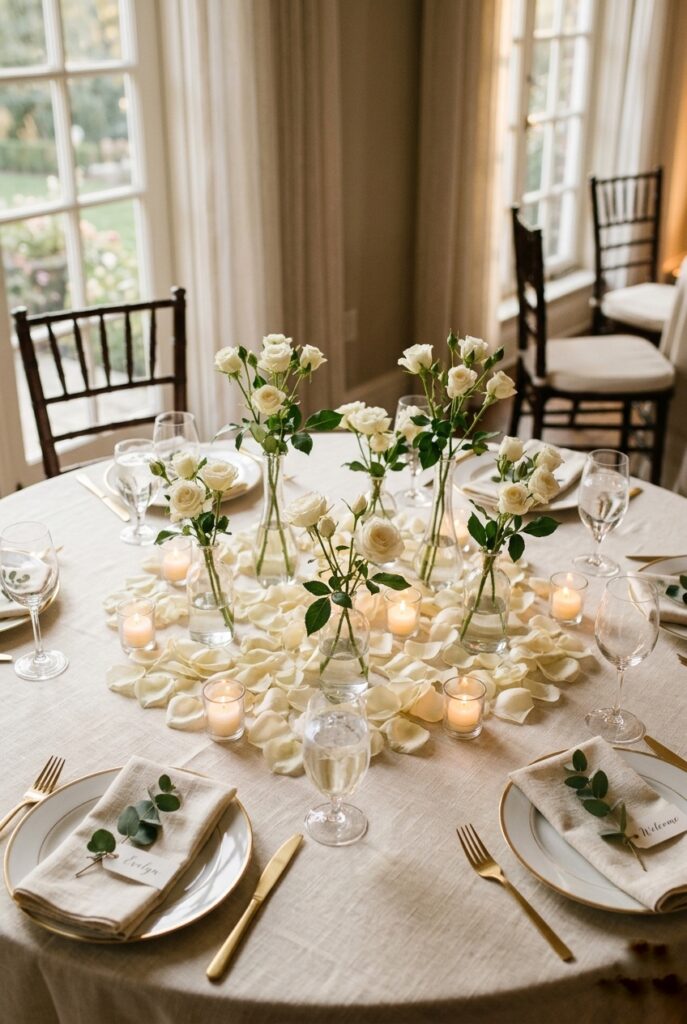
Instead of one centerpiece, this approach creates multiple small moments across the full table surface — bud vases, tea lights, petals, and greenery fragments positioned so the eye never lands in one fixed place, which is what makes the table feel alive rather than staged.
A 60-inch round has enough surface area to support visual scattering without feeling cluttered, and this works especially well for outdoor receptions and garden weddings where a single elevated centerpiece would compete with the setting itself.
5. Greenery Wreath Surrounding a Lantern
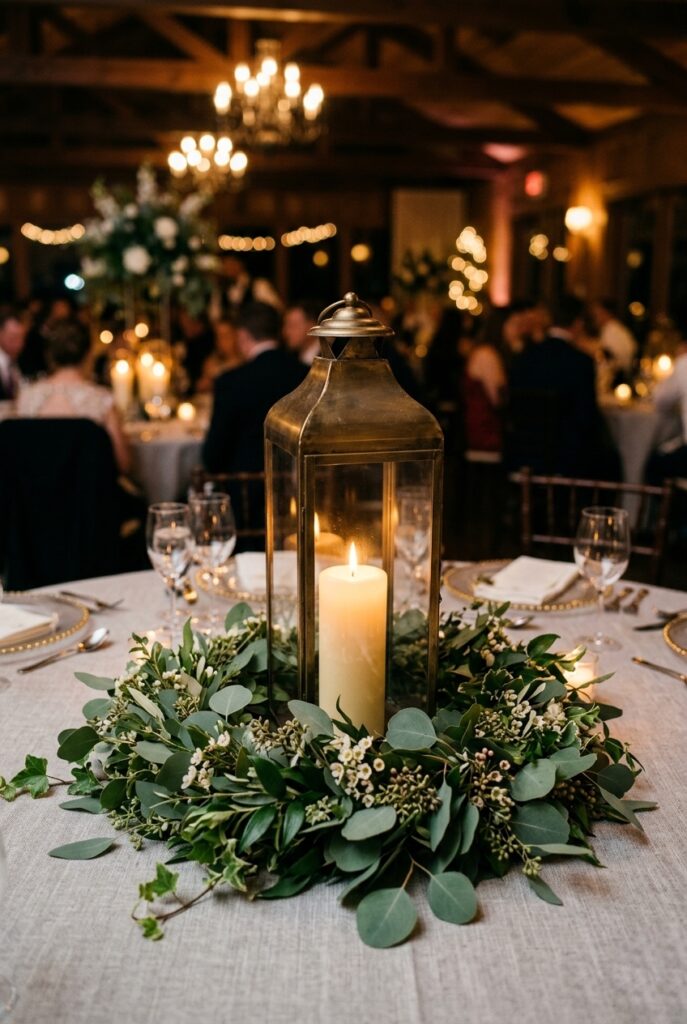
A wreath laid flat across the table makes the centerpiece feel integrated into the table rather than simply placed on it — the circular wreath mirrors the geometry of the 60-inch round beneath it, giving you visual cohesion without requiring large floral quantities.
The lantern at the center provides height, warmth, and evening glow, and if you’re working within a barn or garden venue, this combination ties naturally into the wooden lantern vocabulary covered in the rustic wedding centrepiece guide.
6. Candelabra With Low Floral Collar
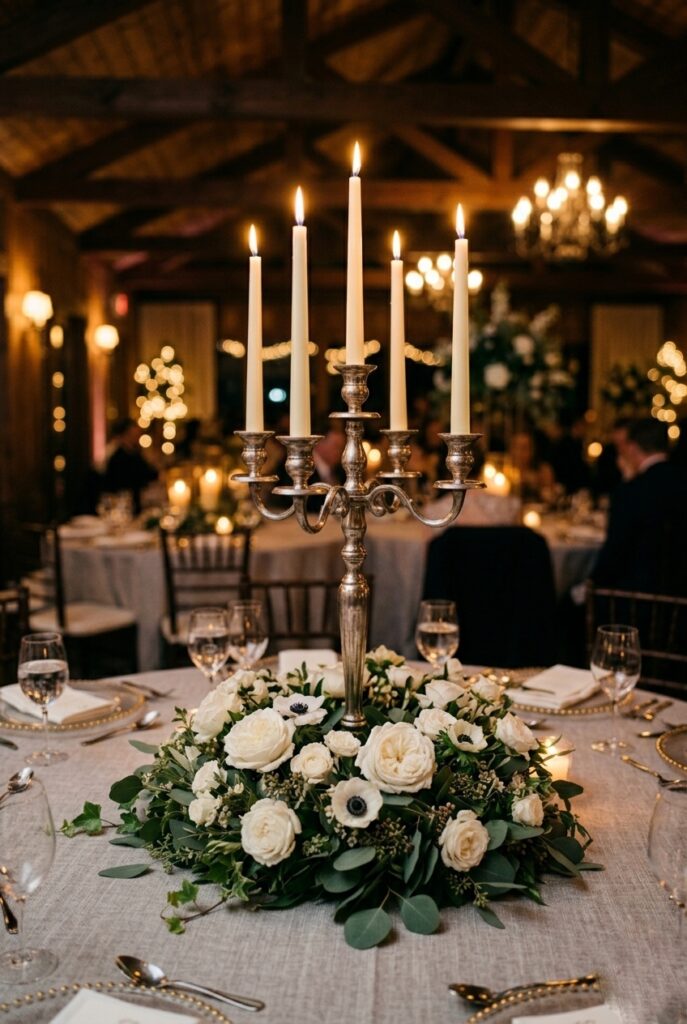
This is one of the most efficient ways to achieve luxury drama without paying for a massive floral installation — the candelabra supplies the architecture and the structural height, while a low collar of garden roses or eucalyptus softens the base, and structural height is dramatically cheaper than floral height.
Everything you need to know about flame clearance, candle formats, and whether your venue will approve this style is covered in the wedding candle centerpiece guide, which is worth reading before you commit to any open-flame format for a round table.
7. Single Hydrangea Head in a Low Urn
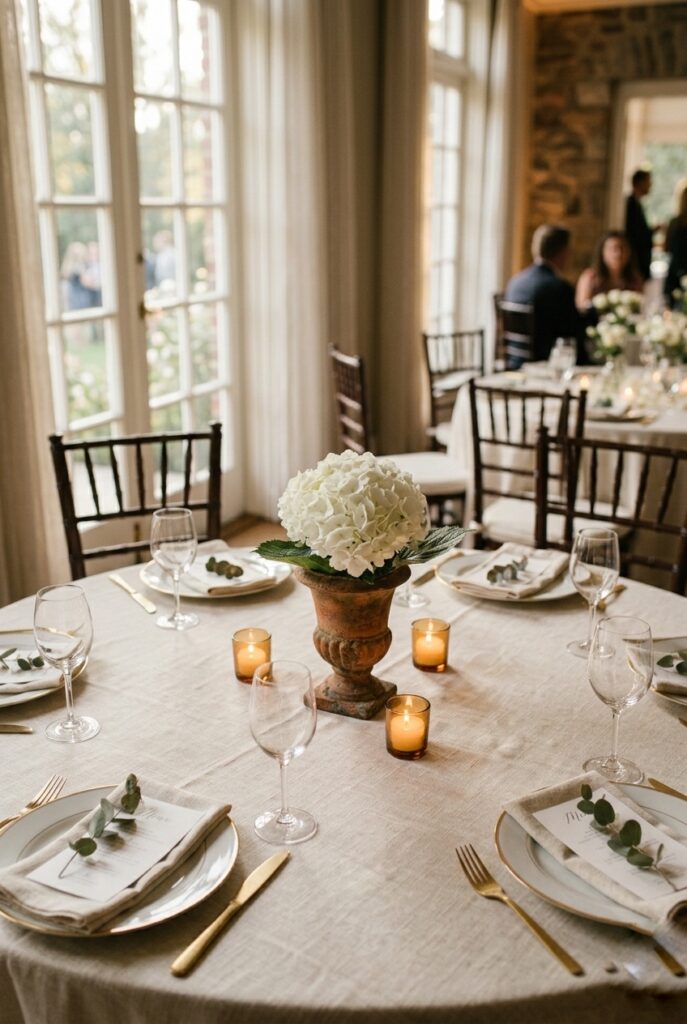
One hydrangea bloom in the right vessel is a finished centerpiece — not incomplete, not a placeholder, but finished — because hydrangeas naturally create fullness with almost no effort, and the critical detail is the vessel: a wide-mouth, low-profile urn with visual weight, never a tall cylinder that makes a single bloom look stranded.
At under $14 per table including the vessel and surrounding votives, this is the strongest low-cost option on the list and the one that reads as intentional rather than budget-limited.
8. Dried Pampas and Bleached Ruscus in a Matte Vessel
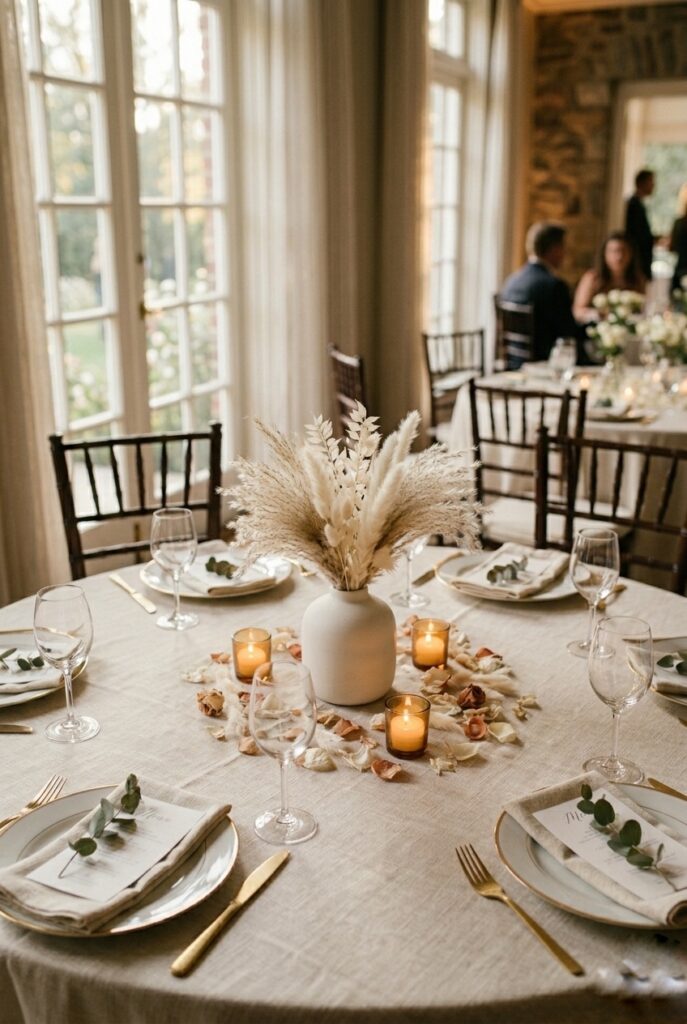
Dried centerpieces solve a problem fresh flowers never can — you can assemble them days ahead of time with no refrigeration, no wilting anxiety, and no emergency floral prep the morning of the wedding — and the arrangement should feel airy rather than compact, with the pampas plumes reaching upward rather than being pushed together.
If the clean, edited look of dried stems against a matte vessel appeals to you, the minimal centerpiece guide takes this approach even further with specific vessel and stem combinations that work at every price point.
9. Submerged Flower Bowl With Floating Candles
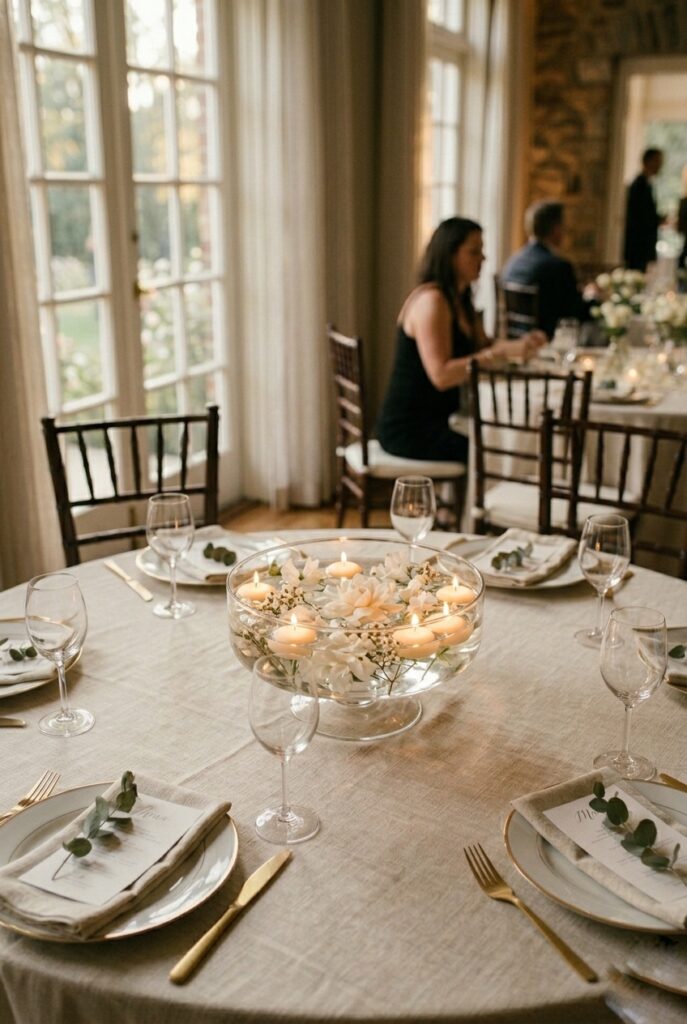
This format creates reflected candlelight that no standard arrangement can replicate — the water refracts the glow outward across the table surface and makes evening receptions feel dramatically softer — but it only works when the bowl stays wide, low, and open, because a tall submerged vase loses the horizontal light reflection entirely.
It is also the safest real-flame format available since a knocked-over bowl self-extinguishes, which makes it worth considering for any reception where guests will include children or where the candle policy limits open flame to enclosed formats.
10. Tiered Candle Cluster With Greenery Base
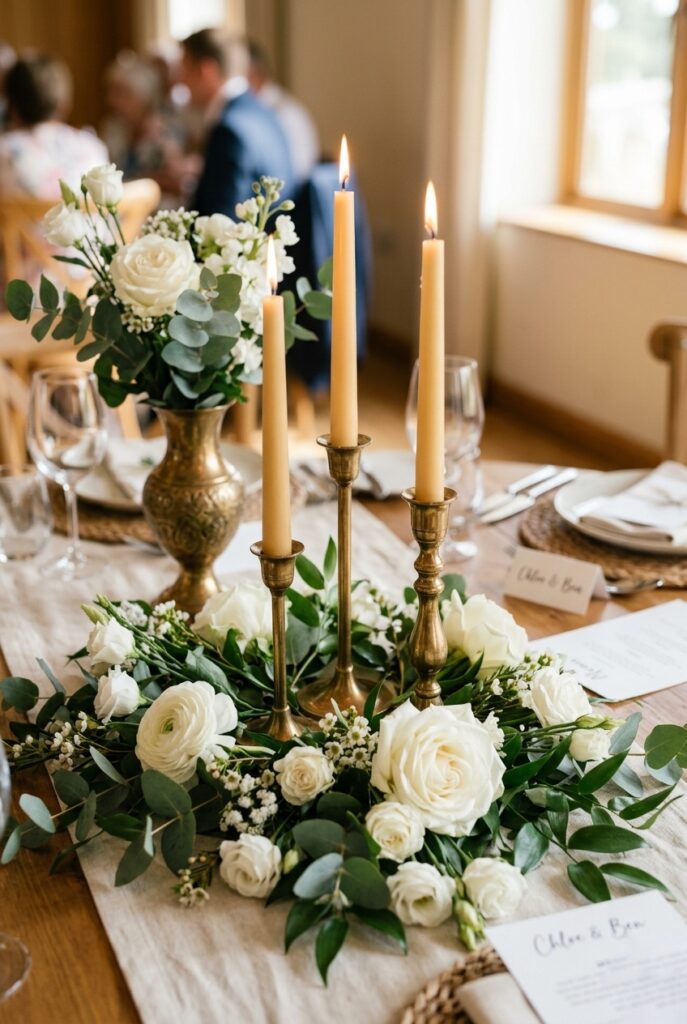
Three candle heights immediately create rhythm on a round table — the varying vertical lines prevent the surface from reading as flat while the loose greenery base keeps everything grounded — and the key detail is that the greenery sits directly on the tablecloth rather than being contained in a vase, because that looseness is what makes the arrangement feel editorial rather than assembled.
The full layering logic behind this approach — from linen selection through place setting — is covered in the wedding table decor guide, which is the natural next step once you’ve settled on a centerpiece style.
Pick your height category first — under 12 inches or over 24 inches — then choose your style from within that bracket, and the rest of the decision becomes straightforward.
For more inspiration across different seasons and venue types, the guides to fall wedding receptions and unique wedding decor ideas show how these same height and vessel principles translate across entirely different palettes and settings.