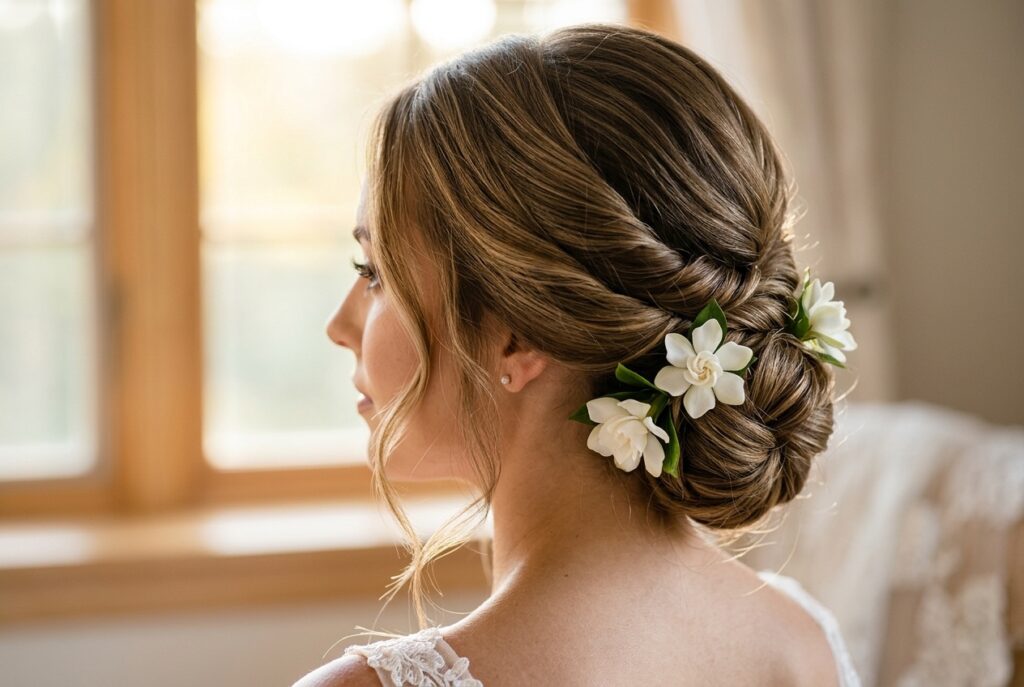
Spring gives you the widest flower calendar of any season, but that abundance also means more decisions — the wrong spring bouquet for your dress or venue is just as easy to land on as the right one.
Each of these ten styles is matched to a specific set of conditions: dress silhouette, venue scale, budget level, and which spring flowers are genuinely available at your wedding date.
Start with what you’re wearing and where you’re getting married, and the right style becomes much clearer.
1. The Loose Garden Bouquet: The Style That Photographs Best Right Now
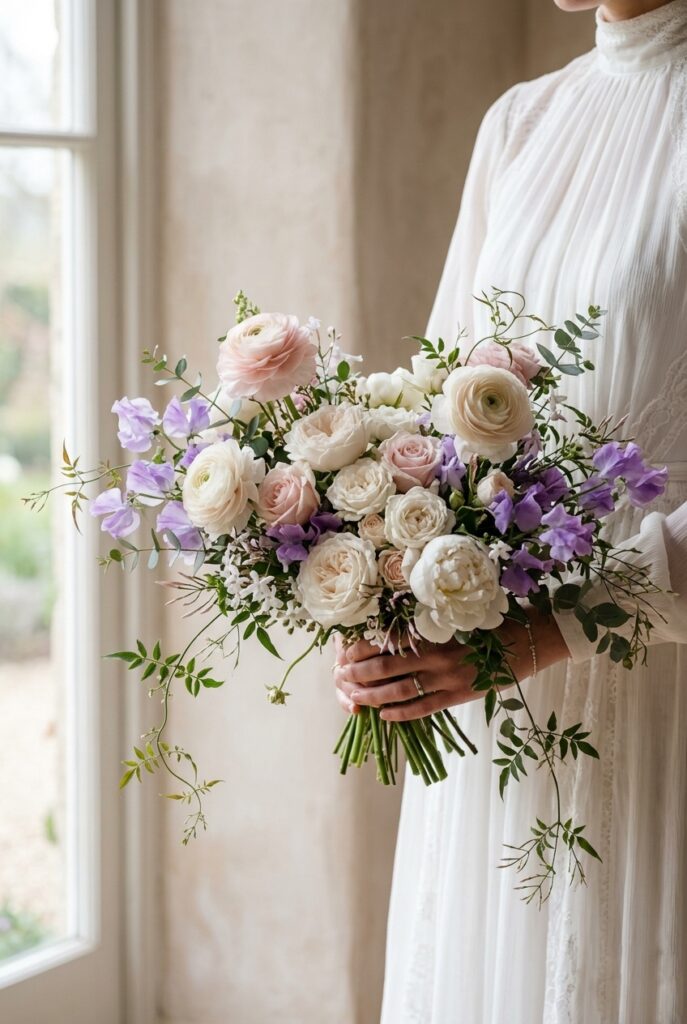
A tightly round, perfectly spherical bouquet loses all its individual flower detail the moment you step back more than six feet in photos — what reads as full and lush in person compresses into a solid mass of color on camera, which is why every editorial photographer prefers the loose garden style.
Stems at varying heights, intentional negative space between blooms, and some flowers pushed deeper into the arrangement than others are what make each flower readable, and this is the foundational approach behind nearly every current bridal flower bouquet that photographs well — ask your florist specifically for “conscious looseness,” where the arrangement looks studied, not haphazard.
2. The Peony-Led Statement Bouquet: Beautiful but Only in the Right Window
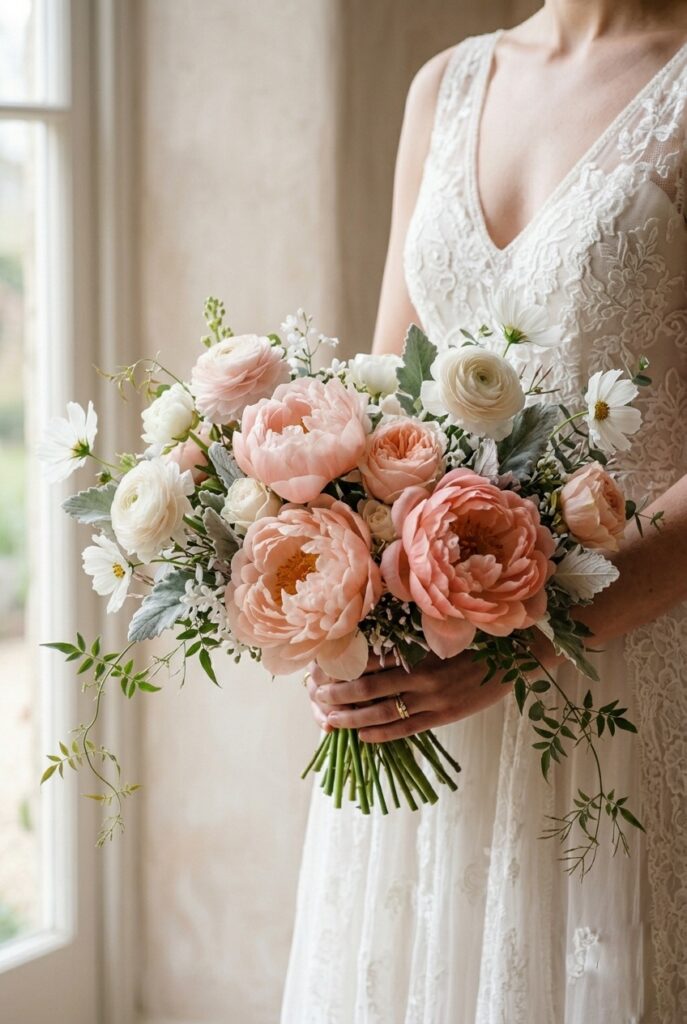
Peonies are the spring bridal flower — enormous, fragrant, and with a softness that no other bloom matches — but they carry a hard domestic availability window from roughly late April through mid-June, and outside that window your florist sources them internationally at double or triple the per-stem cost.
The more reliable approach is to give your florist a mood and a color palette rather than a specific flower list, which is the same strategy behind the best bridal bouquet ideas that let the florist source what’s freshest that week — ranunculus, garden roses, and anemones can all fill the same visual role as peonies when they’re at peak.
3. The Tulip Bouquet: The Underdog That Beats Everything for Under $200
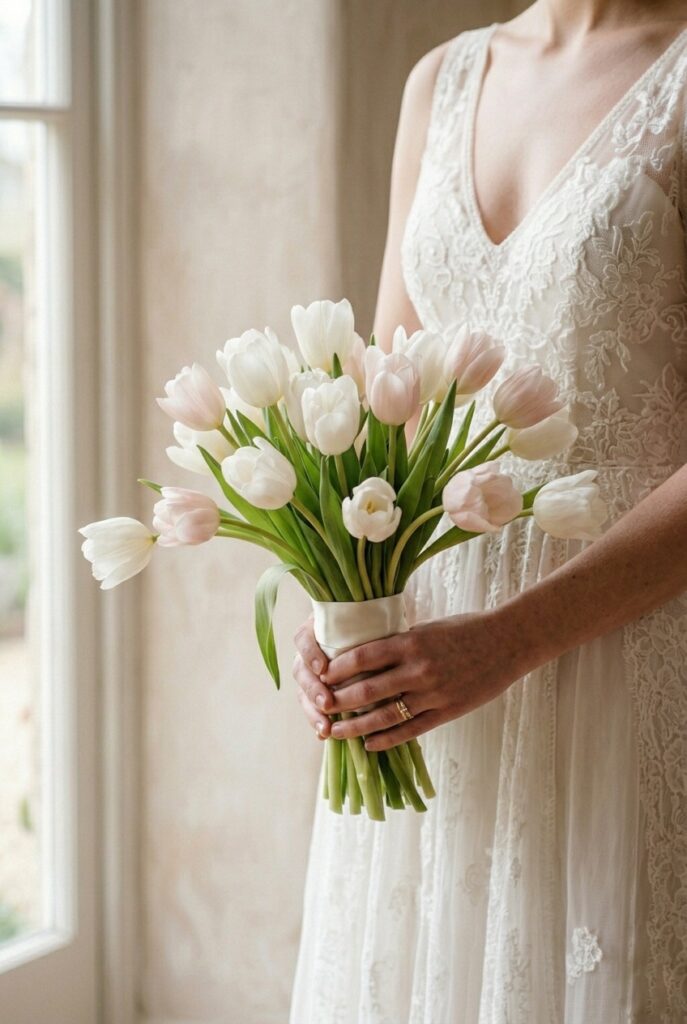
A mono-floral tulip bouquet is one of the most underused spring options — tulips peak from February through May, are genuinely affordable at retail, and when left to relax and open at room temperature rather than refrigerated, they develop a sculptural looseness that reads as intentional design.
The key is buying them one to two days before the wedding and letting them open fully, because a relaxed tulip looks entirely different from a tight bud — the same principle behind any strong single-bloom bouquet where showing the flower at its most open, not its most closed, is what makes the arrangement work.
💸 Budget Hack #1: Trader Joe’s stocks premium Dutch tulips for $4.99–$6.99 per bunch of 10 during peak spring. Buy three to five bunches, strip the leaves, let them stand in water for 24 hours before the wedding, and you have a 40–50 stem bridal bouquet for under $35 in flowers. No other retailer comes close to that price-to-quality ratio for a single spring bloom. Go Thursday morning — new stock typically arrives Wednesday night.
4. The Cascading Bouquet: Still Stunning, Still Totally Worth It
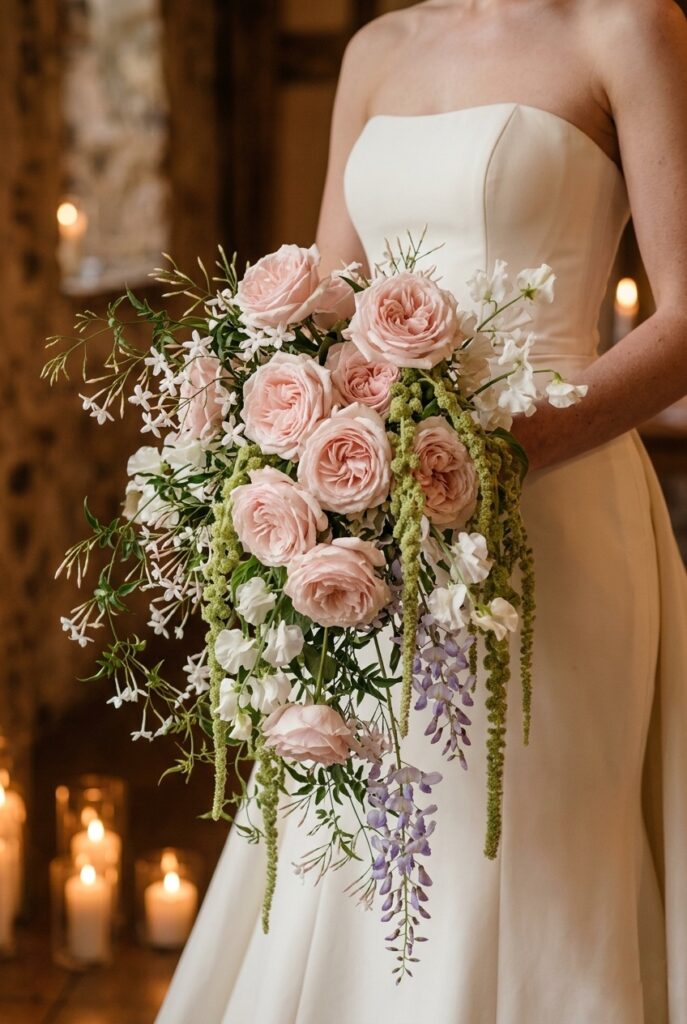
The rigid, heavy waterfall cascade has been replaced by something far more wearable — a loose-structured arrangement with delicate trailing jasmine, wisteria, or hanging amaranthus that extends naturally below the base rather than being forced into a V-shape.
It photographs with dramatic vertical line in outdoor spring ceremonies where most bouquets only add width, which is why it’s the centerpiece of every romantic spring cascade aesthetic — but it only works if your dress has a train or a full skirt, and it will read as oversized against a column or sleek minimalist gown.
5. Sweet Peas as the Star (Not the Filler): A Move Almost Nobody Makes
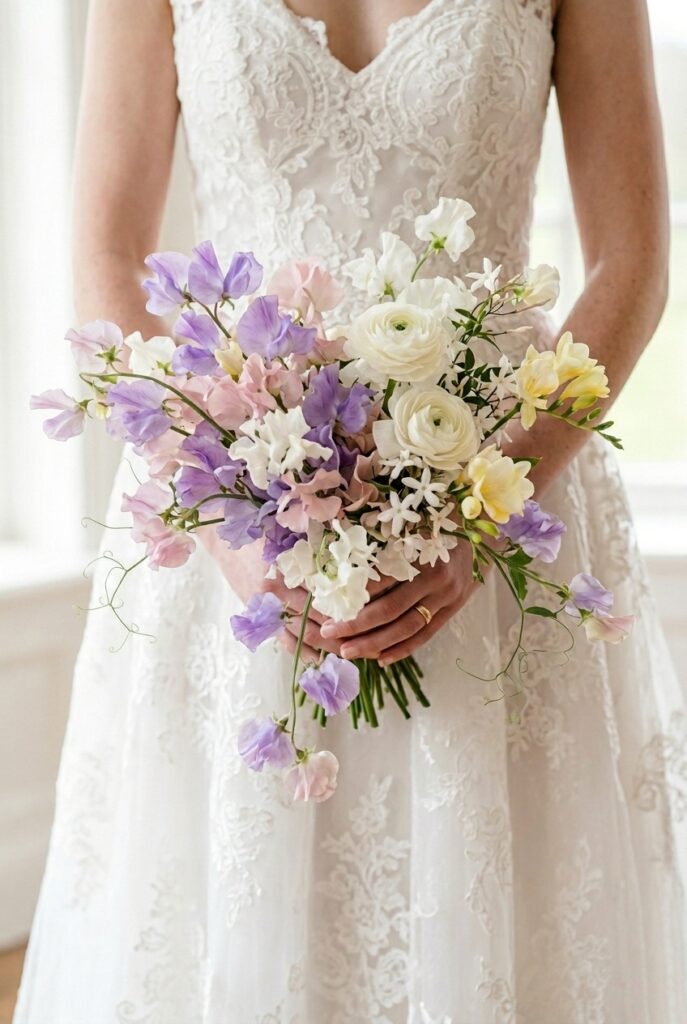
Sweet peas are almost universally treated as accent filler, but building a bouquet where they lead produces an effect — ruffled, ethereal, extraordinarily fragrant — that looks unlike anything on a standard florist’s sample board.
The natural tendrils left on sweet pea stems add movement in photos that staged arrangements can’t replicate, and confirming your chosen bouquet style with your florist ahead of time is critical here because sweet peas need proper conditioning — 24 hours in water in a cool room before the event — and availability drops sharply after late May in most US regions.
6. The Anemone-Forward Bouquet: The Spring Flower That Stops Photographers in Their Tracks
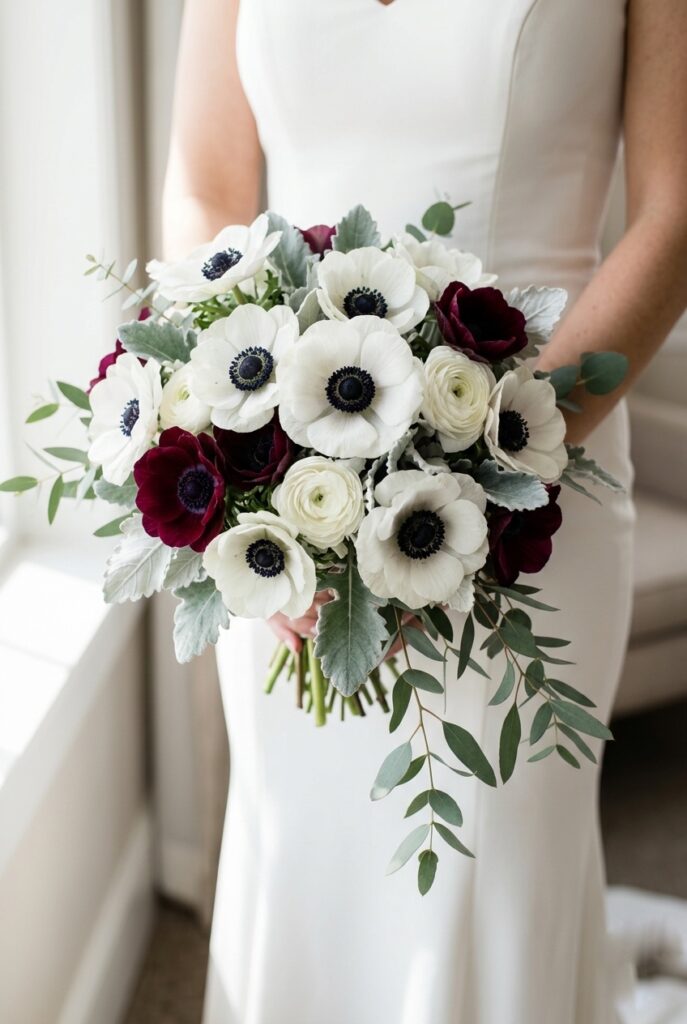
The black center of a white or blush anemone creates a natural focal point that draws the eye in photos, which is why photographers actively respond when they see them in a bouquet — your arrangement photographs distinctively even in a reception full of soft pink arrangements.
Anemones peak from late February through mid-April, making them the strongest choice for March and April weddings, and they work best against simple, airy gown silhouettes where that graphic dark center reads as sophisticated rather than competing with heavy beading — a pairing instinct at the core of any structural spring bouquet built for visual impact over romantic softness.
💸 Budget Hack #2: GrowersBox.com sells wholesale anemone bunches direct to consumers with no minimum order. A 10-stem bunch runs about $18–$22 during peak season. Compare that to a retail florist charging $4–$6 per stem individually. On a 40-stem bouquet, that’s a saving of $90–$120 in flowers alone. Pair with simple Italian ruscus greens (also available on GrowersBox at $15/bunch) and you have a complete base for a DIY arrangement without needing anything else. Order 10–12 days before your wedding to allow buffer shipping time.
7. Dried and Fresh Mixed Bouquets: Stop Being Afraid of This
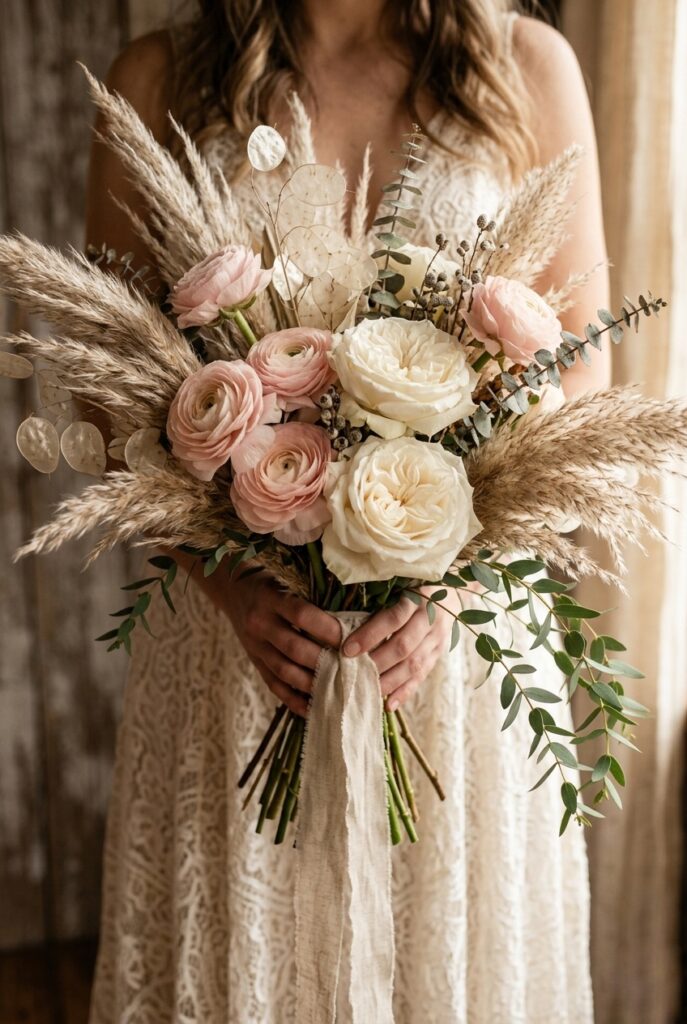
The version that fails is too many dried elements — pampas grass filling most of the volume reads as filler disguised as a concept rather than a deliberate design choice.
The version that works keeps one or two dried statement elements as texture and uses three or four fresh seasonal blooms as the undisputed focal point, which is especially valuable for outdoor spring weddings where humidity can wilt delicate stems — the same durability logic that makes this style overlap with the best summer bouquet builds for outdoor conditions.
8. The Herb-and-Bloom Bouquet: What Nobody’s Telling You About Scent Strategy
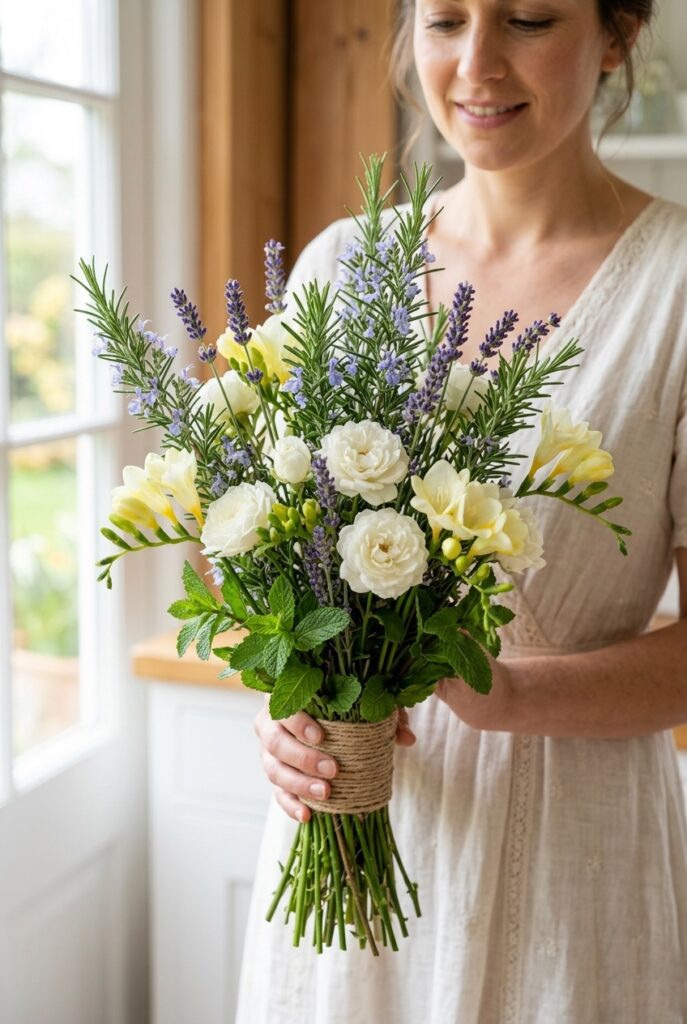
Heavily floral bouquets in small or enclosed ceremony spaces — a chapel, a tented garden venue — can overwhelm guests in the front rows, particularly with lilies, gardenias, and hyacinth, which all carry forceful fragrance.
Blending culinary herbs like rosemary, lavender, and mint with your blooms gives you a lighter, more pleasant scent profile and lower material costs, and it fits naturally into any outdoor spring ceremony setting where a cottage-garden aesthetic makes the unstructured, herb-forward look feel native to the space.
9. The All-White Bouquet: The Most Underrated Power Move in Spring
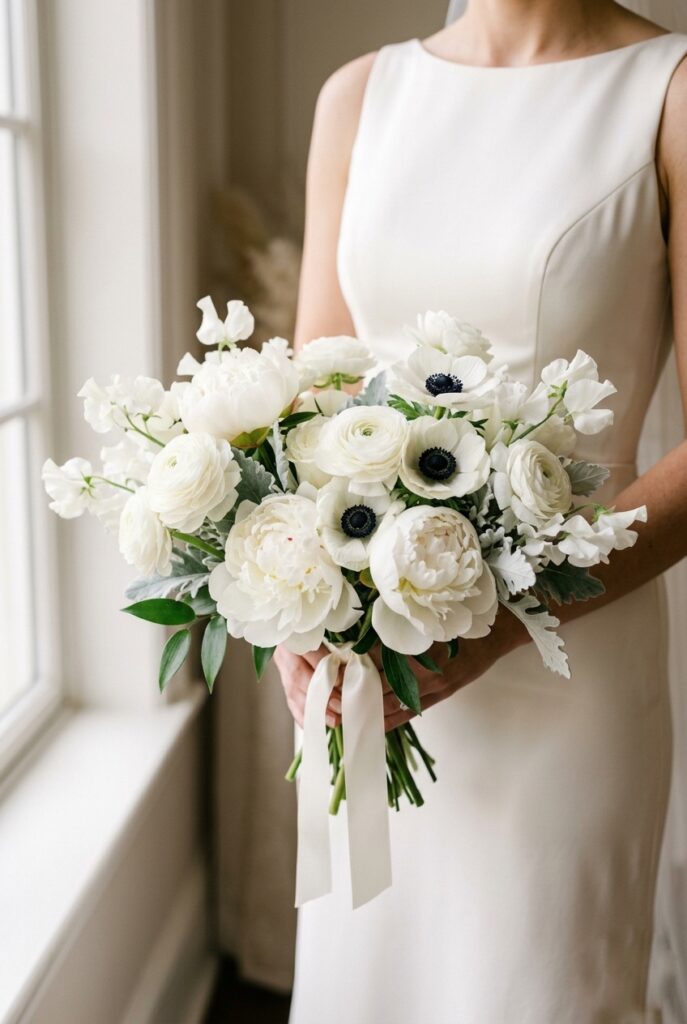
Everyone defaults to blush and pink for spring, which is exactly why an all-white bouquet reads as intentional and considered in a season full of pastel arrangements — white isn’t the absence of color, it’s the choice that makes each individual flower form legible and lets texture carry the visual interest.
The mistake is building it from one flower type, which flattens into a single uniform surface, so use at least four distinct bloom shapes at different stages of open bloom — the same construction principle behind every all-white flower palette where the forms differentiate while the color unifies.
💸 Budget Hack #3: Sam’s Club and Costco Business Center floral departments regularly stock bulk white ranunculus and white roses during spring for 30–50% below retail florist prices — typically $18–$25 for a 10–15 stem bunch. Call your local warehouse club on a Wednesday morning to ask what their current spring stems are; you can often buy the same quality a bridal florist uses, without the bridal markup. Combine with $12 worth of greenery from Trader Joe’s and you have the base of a stunning all-white bouquet for under $50 in materials.
10. The Single-Stem Bridal “Bouquet”: The High-Fashion Bride’s Secret Weapon
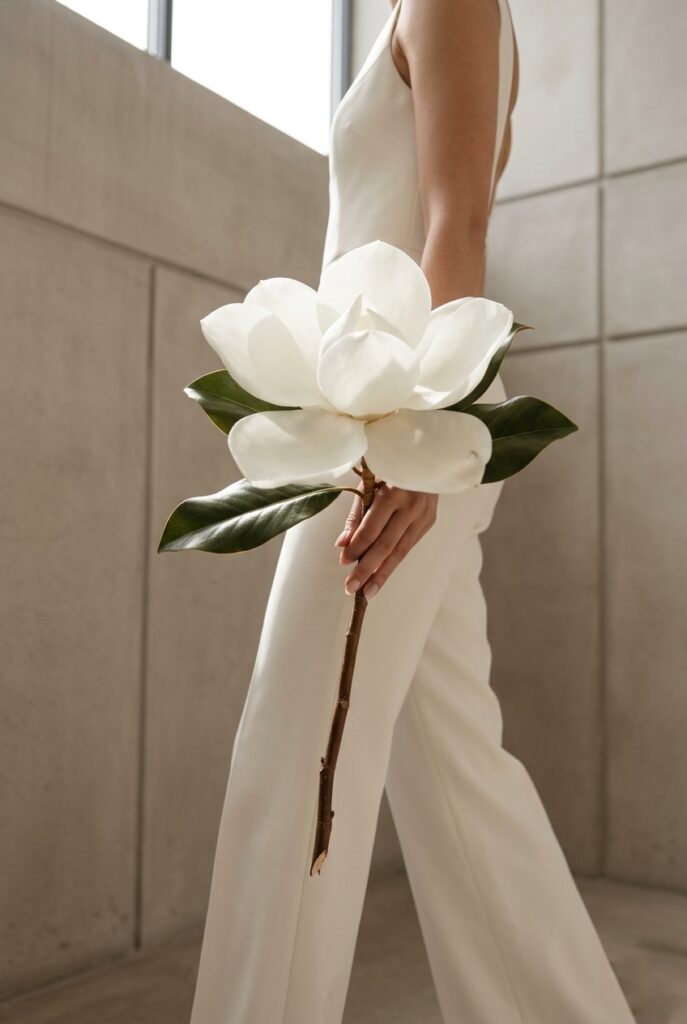
A single structural spring stem — one garden peony at full open bloom, a king protea, a large garden rose — carried with a wide ribbon wrap is one of the most distinctive choices available, and it works precisely because it’s unexpected in a season where maximalism is the default.
It’s specifically right for minimalist and modern dress silhouettes like crepe, structural satin, or a simple column gown, and it reads as an editorial statement rather than a budget decision — for the full case for when a single-stem bridal bouquet is the right call versus a full arrangement, that guide walks through every dress silhouette where it earns its confidence.
Once the bouquet style is confirmed, the supporting floral decisions come quickly — what the bridesmaids carry, the ceremony chair decorations, and the blooms on the reception tables all connect back to the spring flower at the center of your arrangement.
Browse the full range of spring bouquet styles for a closer look at how different spring flowers perform across dress silhouettes, and use the aisle flower plan to extend your chosen spring blooms naturally into the ceremony space.