A romantic bouquet is not simply soft flowers and pastel colors — it is a specific combination of bloom stage variation, controlled looseness, and tactile detail that photographs as romance rather than just looking pretty in person.
The version that fails is not ugly — it is forgettable, which for a bouquet you carry for six hours in every photograph of your wedding day is the same outcome.
1. The Garden-Gathered Rose Cluster
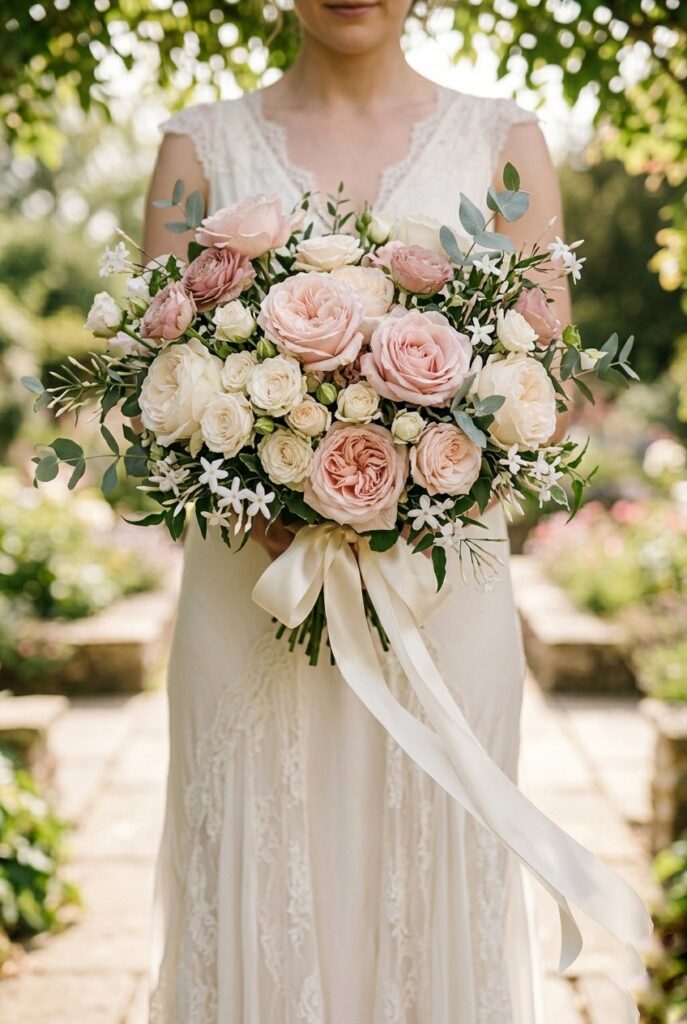
A garden rose cluster works because no other flower gives you layered petal density at the same price point — but only when you mix bloom stages deliberately: a few tight buds, several mid-open, and two or three fully open roses near the front center, because that variety is what creates visual depth rather than a flat circle of identical blooms.
Skip this if your florist only carries standard hybrid tea roses with the tight conical head — those give you the name without the look — and instead specify David Austin, O’Hara, or Juliet varieties by name at your consultation, starting from the bridal flower bouquet guide which covers every rose variety worth specifying and why the distinction matters on camera.
2. The Cascading Peony and Trailing Ivy Drop
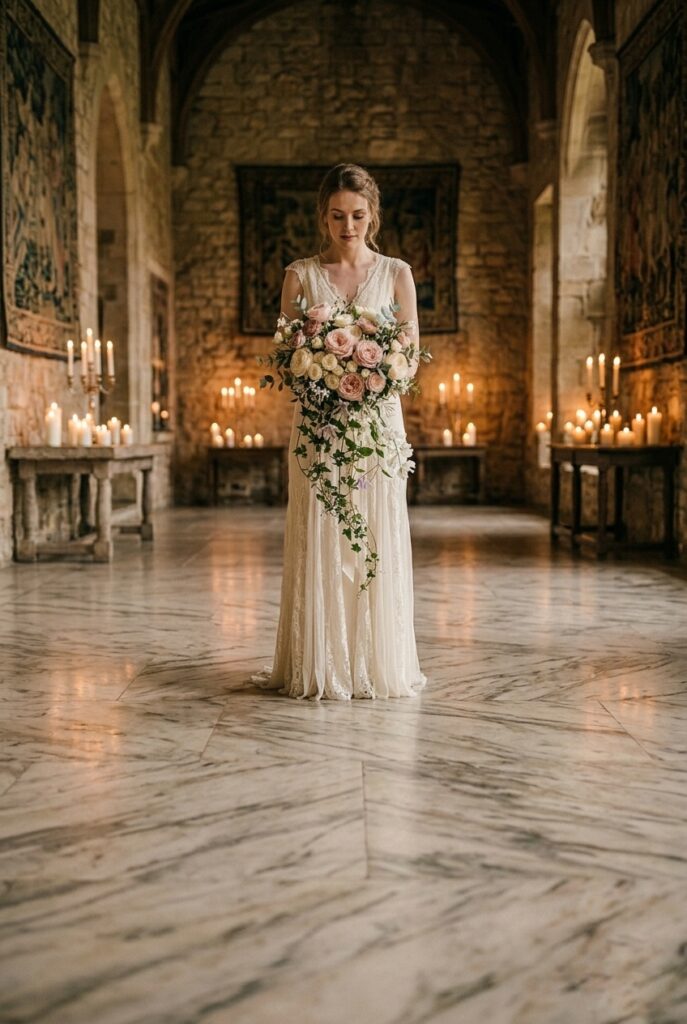
The cascade needs a dense crown of full-petaled blooms at the top — peonies are ideal, dahlias work too — with the trail made of genuinely trailing botanical material that moves naturally: trailing ivy, smilax vine, clematis tendrils, or delicate jasmine, not just stems pointed downward and held at an angle to fake the silhouette.
The cheap version collapses by hour three of the reception — ask your florist specifically for wired trailing botanical material built into the structure from the start rather than added as an afterthought at the handle — and for the full cascade silhouette context and how it relates to dress shape and venue scale, the bridal bouquet ideas guide covers every detail of when a cascade is the correct choice and when it overwhelms the look.
3. The Blush-to-Burgundy Ombré Blend
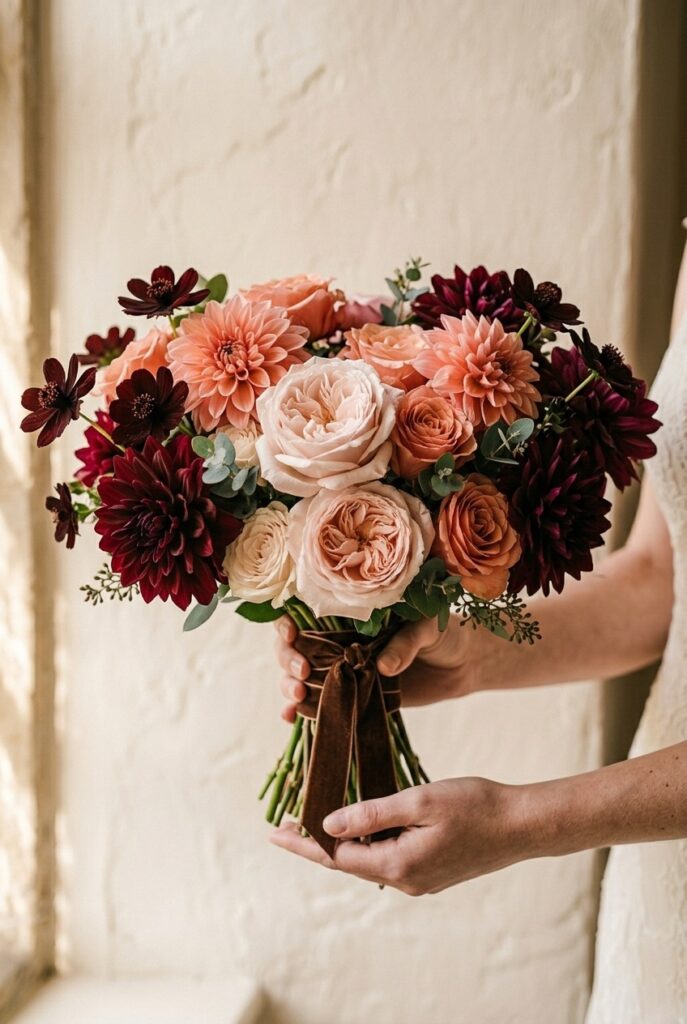
Build the gradient from the center out — palest tones at the heart, deepening toward the outer edge, with mid-tones as the bridge layer — because the mistake is asking for this color range without specifying the gradient needs to be intentional within each flower’s placement rather than just mixing colors randomly across the arrangement.
Blush-to-burgundy is the classic pairing, and for the autumn ceremony context where burgundy dahlias and chocolate cosmos are at their peak quality and price, the fall wedding centerpiece ideas guide covers how this same palette extends from your bouquet through every table in the room.
Budget Hack #1: Order your ribbon, floral tape, and stem wire from Amazon — not your florist. Florists typically mark up ribbon supplies 200–300%. A 10-yard roll of double-faced satin ribbon (the kind that photographs best) runs $6–$9 on Amazon versus $25–$35 sourced through your florist’s supply vendor. Buy at least two widths: a wide wrap ribbon and a thin trailing ribbon for the handle knot. For a romantic aesthetic, ivory, champagne, and dusty blush are the three colors that work across the most dress tones.
4. The Ranunculus-Led Soft Sphere
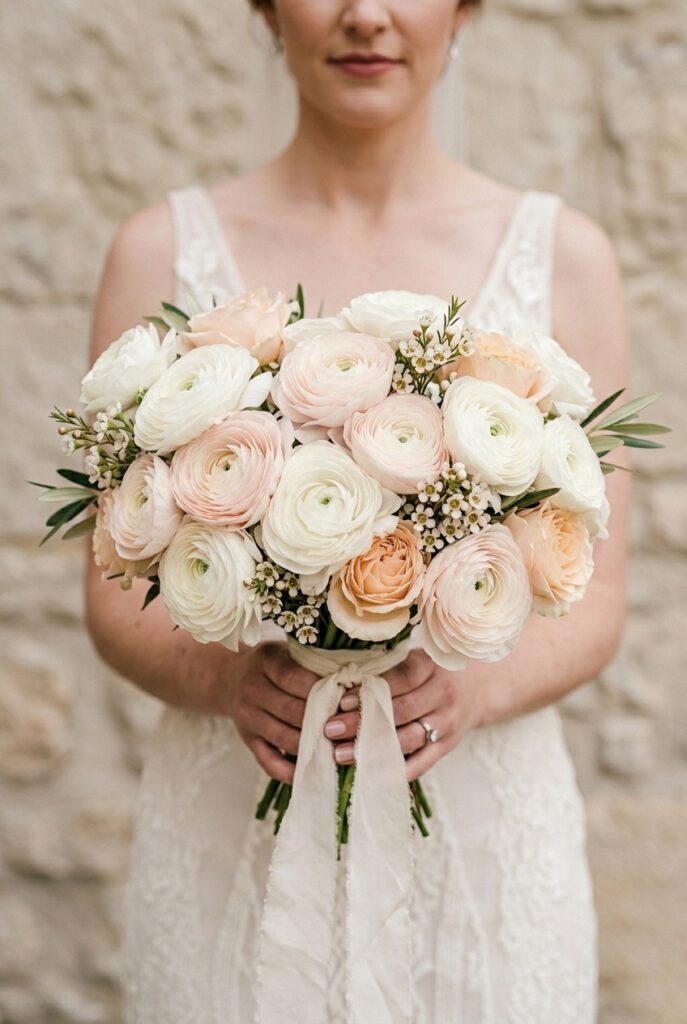
A ranunculus-led bouquet of 20–30 full blooms with minimal filler and a compact spherical silhouette reads as expensive and intentional in photographs — the key is density with no visible gap between blooms and greenery tucked rather than featured — and this only works if you are marrying between January and May, because out-of-season ranunculus costs three to four times more and arrives with smaller, less developed heads.
Ask your florist to specify California-grown ranunculus in Cloni or Elegance varieties for the most reliable petal count and size — and for how ranunculus compares to every other bouquet flower on longevity, heat tolerance, and photographic behavior, the wedding centerpiece flowers guide covers the same variety-level decisions applied to both your hands and your tables.
5. The Loose, Asymmetric Garden Posy
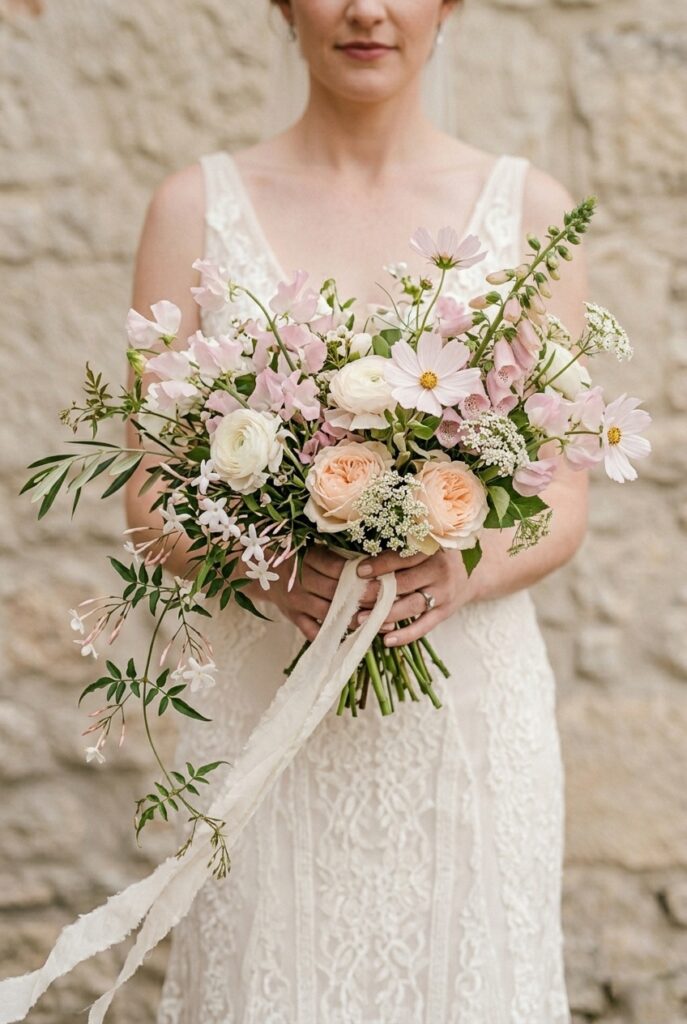
The difference between a romantic loose posy and a bouquet that looks unfinished comes down to controlled asymmetry — you extend one side (usually left) by two to four inches using a single trailing stem or branch, which creates visual movement without chaos, and without that intentional longer element “loose” reads as “not done.”
Tell your florist you want a dominant trailing element on the left side to anchor the asymmetry — sweet pea vines, a single olive branch, or jasmine sprigs are the right choices — and for how this natural, garden-gathered look connects to the outdoor ceremony and reception settings it suits best, the outdoor wedding decor ideas guide covers the venues and styling contexts where this bouquet reads most cohesive.
6. The Jewel-Toned Moody Romantic
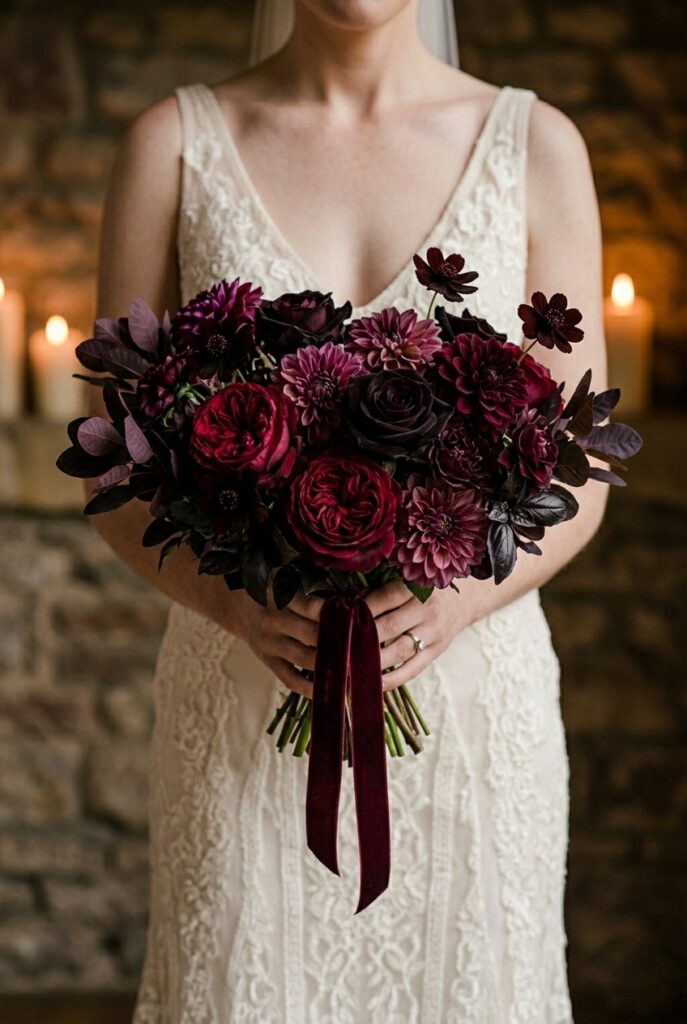
The key flower for this style is ‘Black Baccara’ rose — the deepest available burgundy-red, providing a dramatic anchor that makes lighter jewel tones read richer — paired with smoke bush foliage rather than just eucalyptus for an editorial result that photographs with depth and sophistication against an ivory gown.
Skip this if your venue is very bright and airy, because this bouquet was built for intimate, candlelit, and dramatic settings and flatttens completely in high ambient light — and for how to create the low-light, warm-toned ceremony environment where this bouquet comes alive, the indoor wedding decor guide covers the lighting, textile, and architectural choices that build the right surrounding atmosphere.
Budget Hack #2: Source your foliage separately from your florist. Greenery is where florists make some of their highest markups — eucalyptus can run $8–$15 per stem from a florist versus $22–$28 per 10-stem bunch wholesale through Trader Joe’s floral section or Sam’s Club, available the week of most weddings. Have your day-of helper or a bridesmaid pick up eucalyptus, olive branches, or Italian ruscus the morning before your bouquet is assembled. Hand it to your florist — most will incorporate it without additional charge if it’s pre-purchased. This move alone can save $60–$120 on a single romantic bridal bouquet.
7. The Monochromatic White-on-White
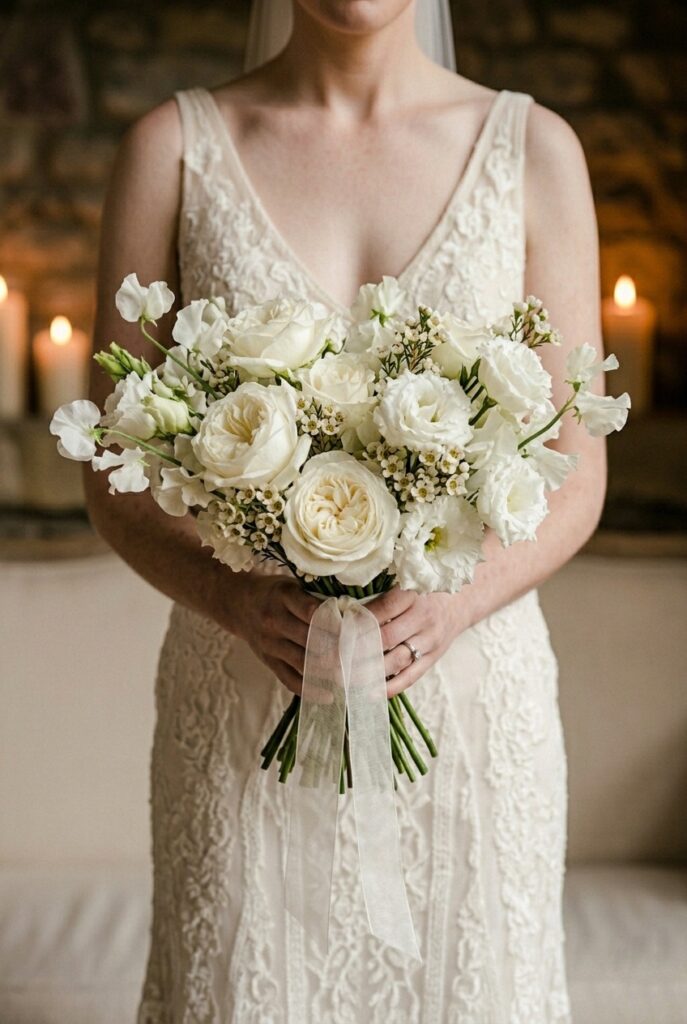
The white bouquet done well is the most sophisticated thing you can carry — and the secret is texture variation, not flower variety: the ruffled layering of lisianthus, the tight spiral of a garden rose, the papery simplicity of sweet peas, and the tiny starburst of waxflower all together in white read as visually complex even without a single color.
Use white lisianthus specifically — it photographs almost identically to a garden rose at one-third the price with enough ruffled texture to hold its own — and this style pairs with virtually any elegant wedding decor setting precisely because white contains and amplifies whatever palette surrounds it rather than competing with any of it.
8. The Wildflower and Herb Romantic
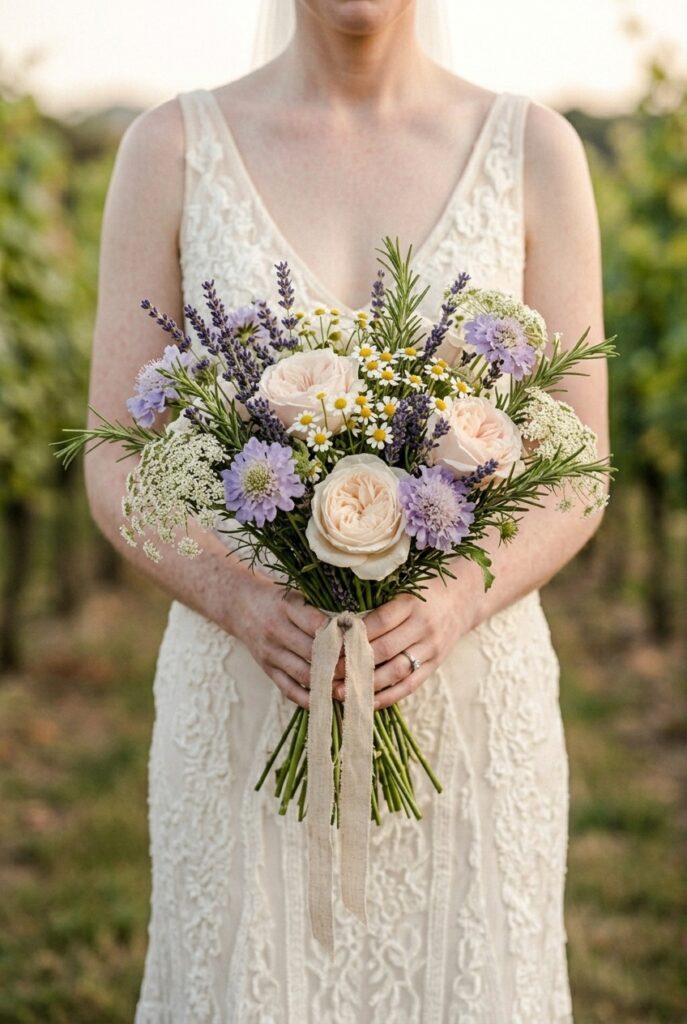
Fresh herbs woven into a romantic bouquet serve a functional purpose flowers alone cannot — rosemary, lavender, and sweet basil release scent when you move, creating a sensory moment in the ceremony that guests in the front rows experience rather than just see, and rosemary carries centuries of wedding tradition behind it as a symbol of fidelity that adds a meaning layer no peony can match.
Keep herb stems to no more than 30% of the total bouquet volume so they enhance rather than overpower the visual softness romanticism requires — this style is specifically right for garden, outdoor, or rustic venues — and for how to carry this same botanical language through the full ceremony and reception design, the rustic wedding decor ideas guide covers the settings, sourcing channels, and botanical elements that belong in the same aesthetic as a wildflower and herb bouquet.
9. The Ribbon-Wrapped Statement Handle
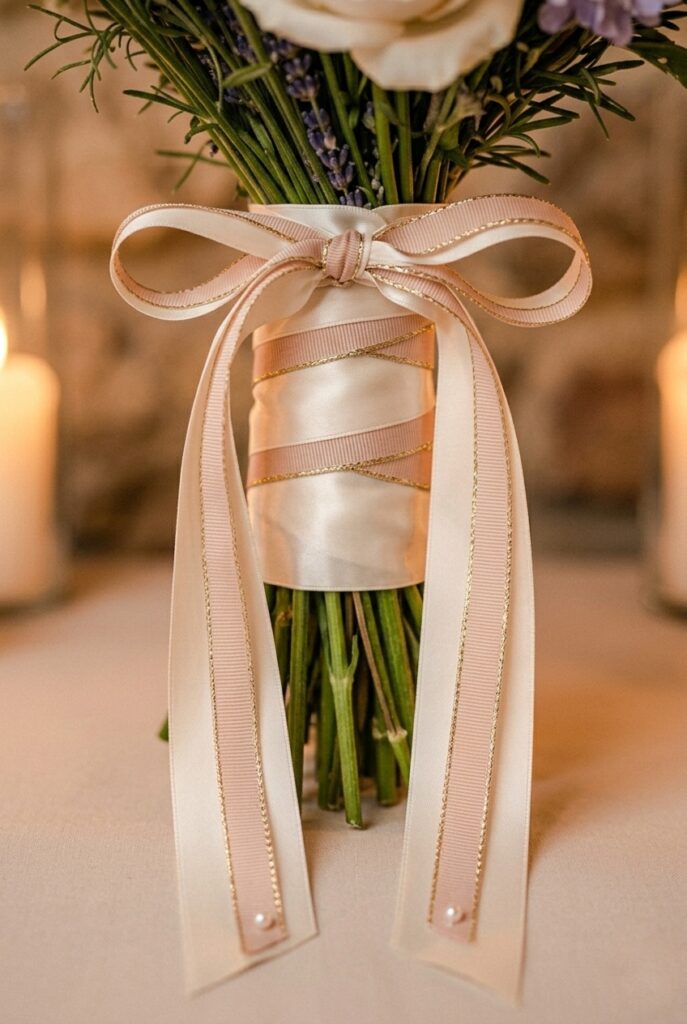
The ribbon handle is the detail that appears in every single close-up photograph of your bouquet and it is the one that most brides let their florist default on — the upgrade is almost free and takes ten minutes: a layered ribbon treatment using two or three complementary ribbons in different widths and textures (wide ivory satin as the base, thin blush grosgrain as an overlay, one thin gold metallic accent), finished with long trailing tails of at least 18 inches and pearl or gold pins at the knot.
Order all three ribbons on Amazon for under $15 total and hand them to your florist with the instruction — most will incorporate them without additional charge — and for how this same attention to the overlooked detail carries across your complete bridal look from nails to hair to accessories, the ultimate bridal look guide covers the philosophy of how small deliberate choices compound into a finished look that reads as designed rather than assembled.
Budget Hack #3: Book your florist consultation in January or February even if your wedding is in autumn. Florists offer their most flexible pricing and best availability outside peak booking season (March–June). Many experienced wedding florists give a 10–15% discount on contracts signed before March 1 — some explicitly advertise this, but most simply offer it if you ask. That’s a $50–$150 saving on a bridal bouquet alone, plus you lock in your florist before they fill their calendar. Use WeddingWire’s florist cost tool to benchmark fair pricing in your region before any consultation.
10. The Dried and Fresh Hybrid
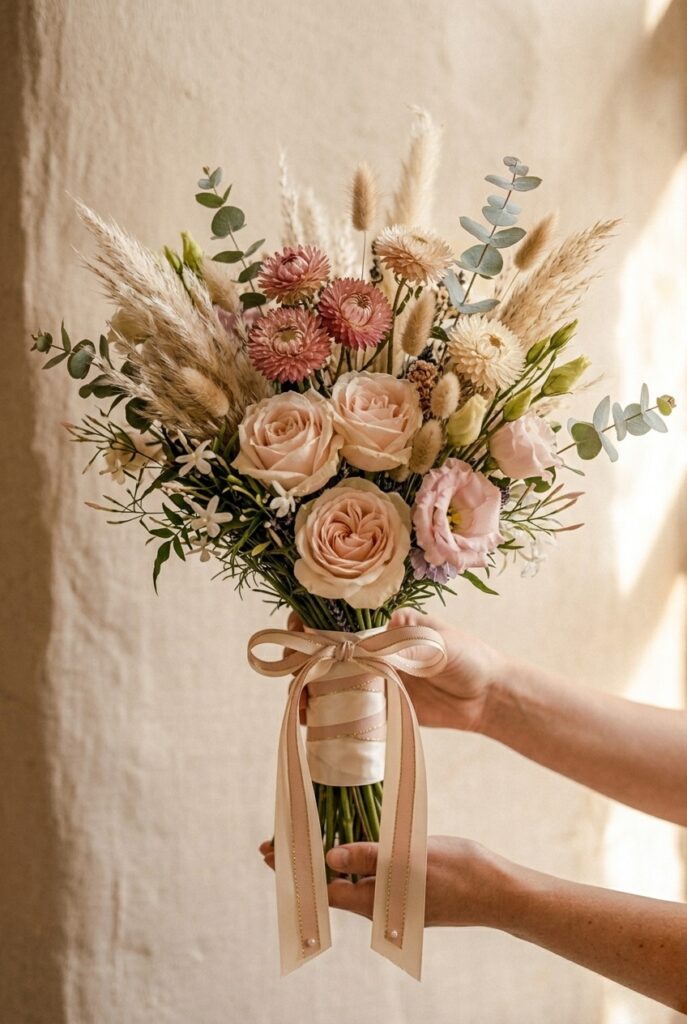
Fresh focal flowers paired with dried supporting elements give you the best qualities of both — fresh blooms for color and vibrancy in the photographs, dried elements for structural longevity, texture, and the ability to prepare parts of the arrangement days in advance without wilting risk, which means the dried-and-fresh hybrid is both more visually interesting and more logistically forgiving than either approach alone.
Two fresh garden roses and pale pink lisianthus alongside dried pampas grass plumes, strawflowers in dusty rose and cream, and a few bunny tail stems creates a complete bouquet with striking textural contrast — and for how the same dried botanical elements that anchor your bouquet integrate with the aisle markers and ceremony flower arrangements around you, the aisle flowers decoration guide covers how to connect every floral element from your hands through the full ceremony space.
The romantic bouquet earns its quality through bloom stage variation, structural intention, and the one finishing detail most brides never brief their florist on — the ribbon handle.
For the specific flower performance data that determines which of these styles holds up across a full wedding day, the bridal flower bouquet guide is already placed in Idea 1 above, and the budget wedding decor ideas guide covers the sourcing and ordering strategies that keep the romantic aesthetic achievable without the florist premium that the word “romantic” tends to add to any quote.