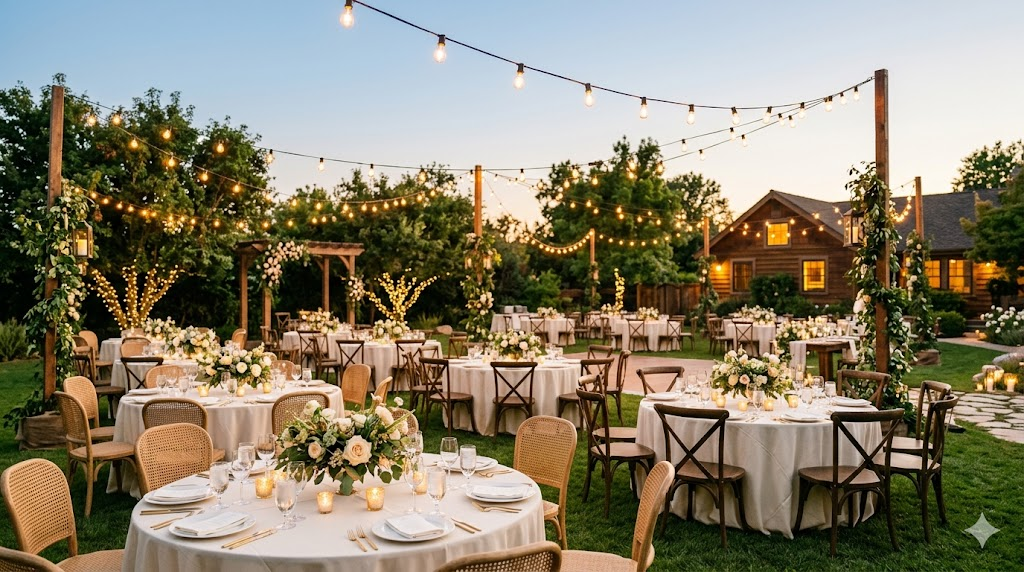
The florist quotes you $1,800 for your centerpieces, but the arrangement you’re looking at has five roses, some baby’s breath, and greenery.
You’re paying $90-150 per centerpiece, and you don’t understand why.
Then you research DIY and find out you can buy the same flowers wholesale for $15-25 per piece—but when you assemble them, something’s off. The roses look limp by 6 PM.
The ranunculus bruised when you touched them.
The peonies you splurged on (because they looked stunning on Instagram) started dropping petals before guests sat down.
The problem isn’t your skill. It’s that you chose flowers that don’t stay fresh long, didn’t understand which ones work together, or picked blooms that are three times more expensive because they’re out of season.
Here’s what actually matters: longevity, real cost, and which flowers actually last from ceremony to cake cutting.
Flowers are not all created equal.
Some open deeper as days pass; others wilt like shame.
Some bruise if you breathe on them; others last two weeks untouched. The ones that photograph best often die first.
The cheap ones stay fresh longest, if you know which ones to choose.
The Short Answer
Choose flowers based on two factors first: longevity (how long they actually stay fresh in a vase) and your wedding date (seasonal = affordable and fresher; out-of-season = wilts faster and costs 2-3x more).
Orchids and carnations last 3-4 weeks and cost $1-3 per stem year-round, making them the safest choice for all-day events.
Garden roses, dahlias, and hydrangeas last 5-8 days when fresh but cost 40-70% less during their peak season.
Never build a centerpiece from one expensive flower type; instead, use 2-3 focal flowers surrounded by cheap filler flowers (baby’s breath, waxflower, statice) and greenery (eucalyptus, ruscus). This cuts cost in half while making arrangements look fuller.
Avoid ranunculus, lisianthus, and peonies unless they’re in season—they bruise easily, wilt quickly when out of season, and cost $5-10 per stem during off months.
The centerpiece you envision at $150+ per piece can be built for $40-60 using the right flowers and technique.
1. Orchids: The Forever Flower (3-4 Weeks Fresh, Year-Round Affordable)
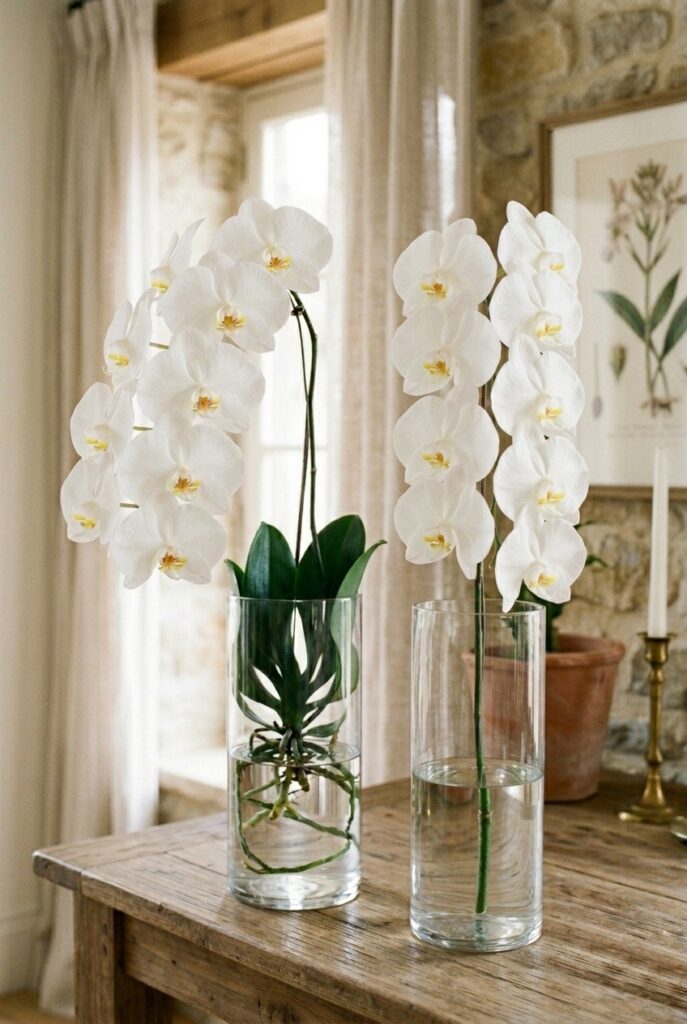
Orchids are the florist’s secret weapon.
They last longer than any other wedding flower (3-4 weeks in a vase), ship fresh, resist heat, and cost $1-3 per stem regardless of season—never spiking in price during off months.
They’re not romantic in the traditional sense (they’re architectural, structured, almost cool-looking), but they work in every wedding style: modern, tropical, elegant, rustic-with-polish.
White, cream, blush, purple, and even deep burgundy orchids exist.
The catch: orchids look best used sparingly or massed as a statement.
A single stem in a tall vase reads expensive.
Five stems in a compote reads sophisticated.
Pair them with greenery and filler flowers and no one will ever guess they cost $10 total for a full arrangement.
Where to buy: Trader Joe’s ($15-25 per stem, seasonal availability), FiftyFlowers.com ($1.50-3 per stem wholesale), local wholesale florist, or any grocery store with a floral section.
Budget: $1-3 per stem wholesale; $15-25 retail.
Taste Layer: Cheap grocery store orchids (weak stems, browning buds) wilted overnight in an arrangement because they weren’t treated.
Wholesale orchids from FiftyFlowers, ordered to arrive 3-5 days before the wedding, bloomed fuller and lasted through the entire event. Source matters more than flower type.
2. Garden Roses: Premium Look, Steep Price Tag (5-8 Days Fresh, Seasonal)
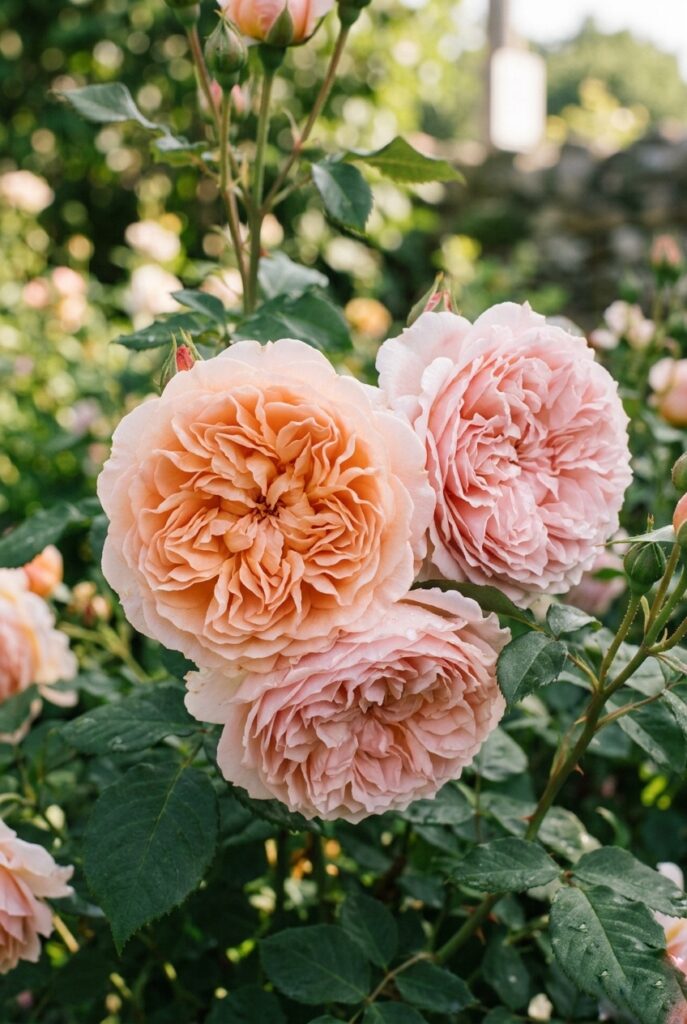
Garden roses—not standard florist roses—have ruffled petals, fuller heads, and a romantic, loose shape that reads expensive.
They photograph beautifully, last 5-8 days when fresh, and cost $2-4 per stem in season (April-July, September-October).
Out of season (especially December-February), the same rose costs $8-15 per stem and wilts faster due to long shipping.
A bouquet of 20 garden roses for a 20-piece centerpiece costs $40-80 in season; $160-300 out of season.
Use garden roses as your focal flower and build the rest of the arrangement with cheaper fillers (baby’s breath, waxflower, eucalyptus).
Never use garden roses alone in a centerpiece; the stems are expensive and you’d need 8-10 per piece. Instead, use 2-3 per centerpiece as the “wow” focal point.
Where to buy: Local florist (highest price), FiftyFlowers.com (wholesale, best value), Trader Joe’s (seasonal, mid-range). Budget: $2-4 per stem in season; $8-15 out of season.
3. Carnations: The Underrated Budget Superhero (3-4 Weeks Fresh, $0.50-1.50 per Stem)
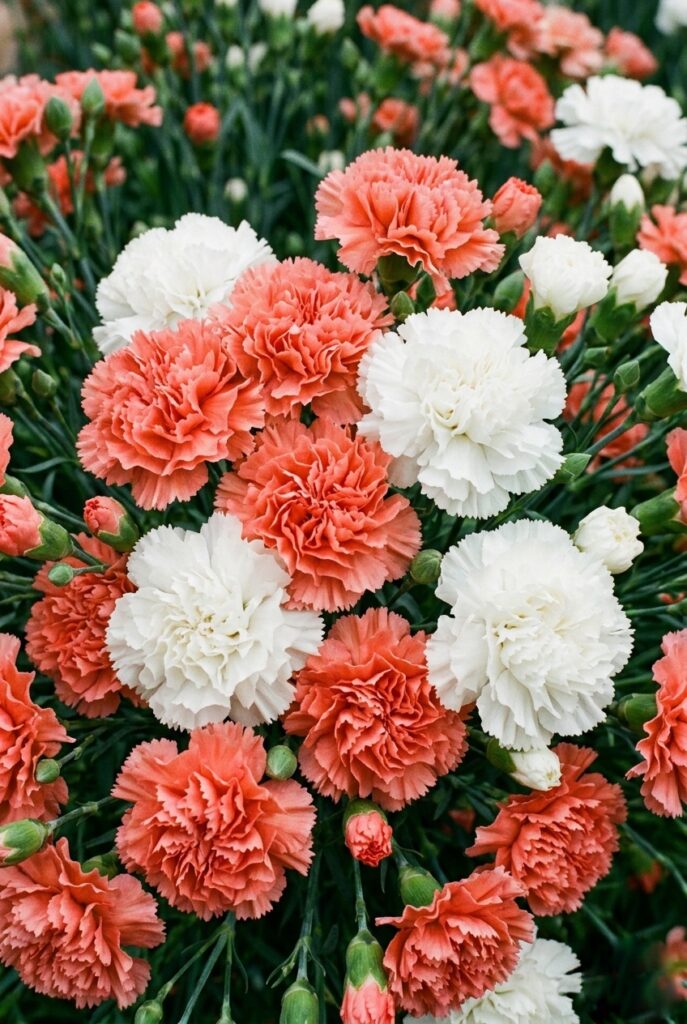
Carnations last 3-4 weeks (as long as orchids), cost $0.50-1.50 per stem even at retail, and come in every color except true blue.
They bruise less than most flowers, ship well, and actually improve in water for the first few days as buds open.
Brides skip carnations because they think they’re “cheap-looking,” but a fully open, high-quality carnation (not the thin, tight ones from grocery stores) looks full and romantic.
Use them as your base filler flower in every centerpiece, then add 1-2 premium focal flowers (a garden rose, dahlia, or ranunculus) on top.
Cost per centerpiece drops to $15-25 instead of $60-100 with roses alone.
Where to buy: Wholesale florist, FiftyFlowers.com ($0.30-0.80 per stem), any retail florist (usually $1-1.50 per stem). Budget: $0.50-1.50 per stem.
Budget Hack After Idea 3: A full, lush centerpiece with 5 carnations + 3 stems of filler (baby’s breath, waxflower) + 5 stems of eucalyptus costs $8-12 to assemble DIY. Add one garden rose or dahlia ($3-5 depending on season) and suddenly it looks like a $60-80 florist piece. Total cost: $15-18. Specific action: Buy carnations as your base (24-30 stems for $10-15), build all 15 centerpieces with them, then add one premium focal flower per piece. This technique cuts typical florist pricing by 70%.
4. Dahlias: Short-Lived Drama (3-5 Days Fresh, $2-8 per Stem, Summer-Only)
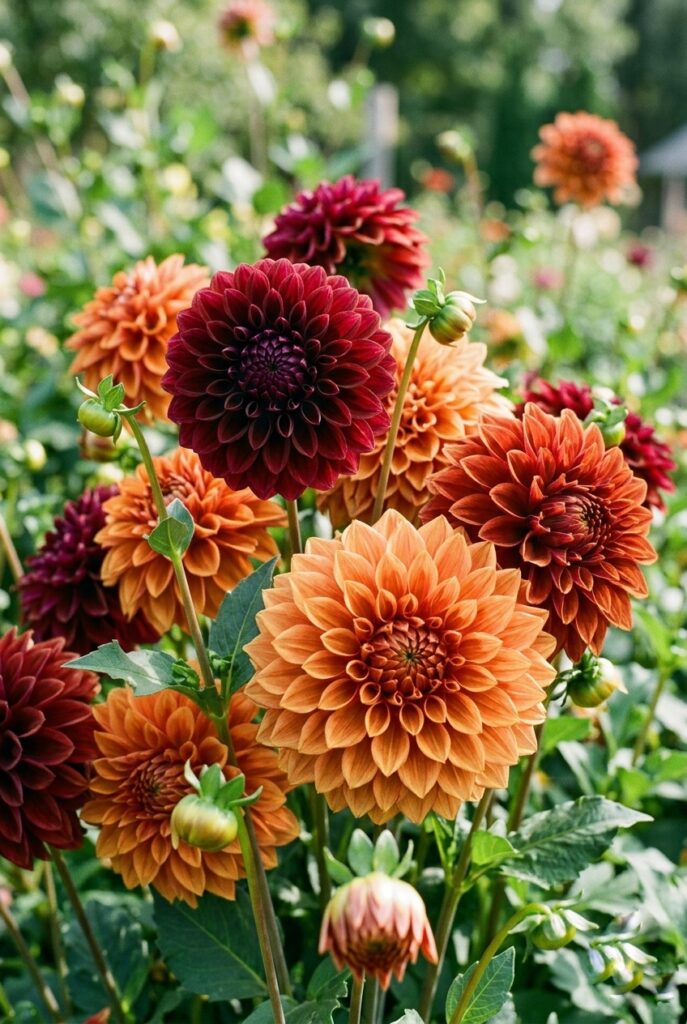
Dahlias are stunning—layered petals, bold colors, structural geometry. They last 3-5 days maximum in a vase (shorter than many flowers), bruise if you touch them, and are only affordable ($ 2-4 per stem) from June to September.
Out of season, a single dahlia costs $8-15 and still wilts fast. Use dahlias only if your wedding is in peak season and you’re using them as a 1-2 piece accent in a centerpiece, not as the main flower.
Never DIY with dahlias unless you’re experienced arranging delicate flowers—they bruise during transport and assembly.
Where to buy: Local florist (seasonal), FiftyFlowers.com (June-September only, best pricing), farmers markets (June-September, cheapest but inconsistent quality).
Budget: $2-4 in season; $8-15 out of season.
5. Hydrangeas: Full Bulk, Affordable (5-7 Days Fresh, $1.50-3 per Stem)
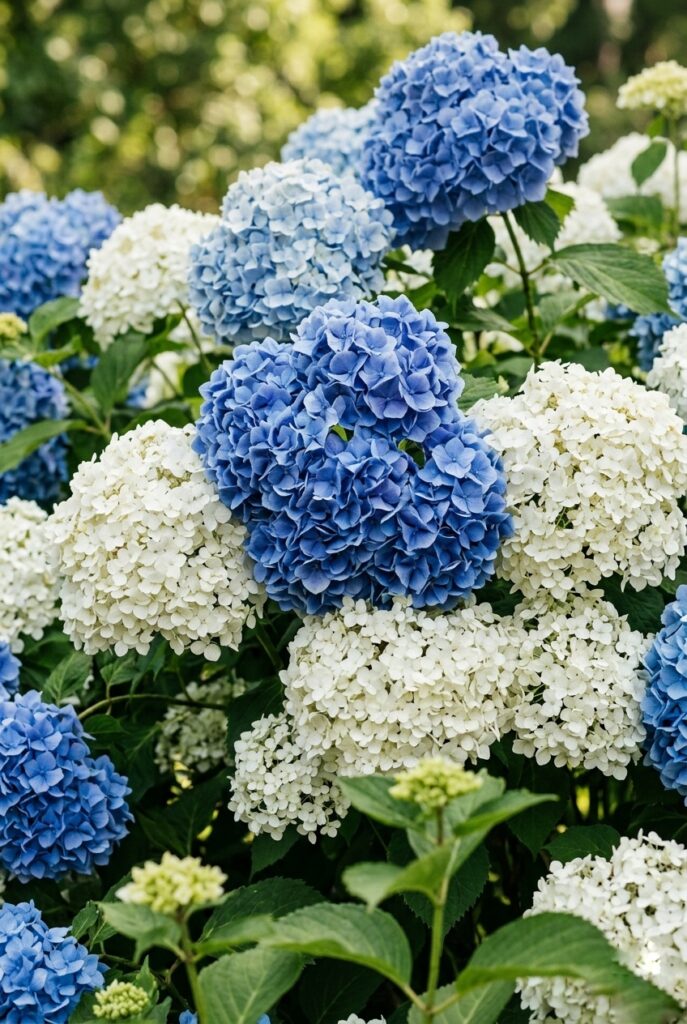
Hydrangeas are large-headed flowers that make arrangements look full with fewer stems.
One hydrangea can fill the space of five roses.
They last 5-7 days, cost $1.50-3 per stem even during peak season (April-October), and come in white, cream, light pink, dusty pink, blue, and purple.
The catch: they’re thirsty flowers that must be in water within 2-3 hours of cutting or they wilt permanently.
Never order hydrangeas more than 5-7 days before your wedding. They’re best used 2-3 days before the event.
Use 2-3 hydrangeas per centerpiece as your base, then add greenery and one statement focal flower if you want.
Where to buy: Local florist, FiftyFlowers.com (best value for DIY), farmers markets. Budget: $1.50-3 per stem.
6. Ranunculus: Beautiful But Fragile (3-4 Days Fresh, $3-10 per Stem, Spring-Only)
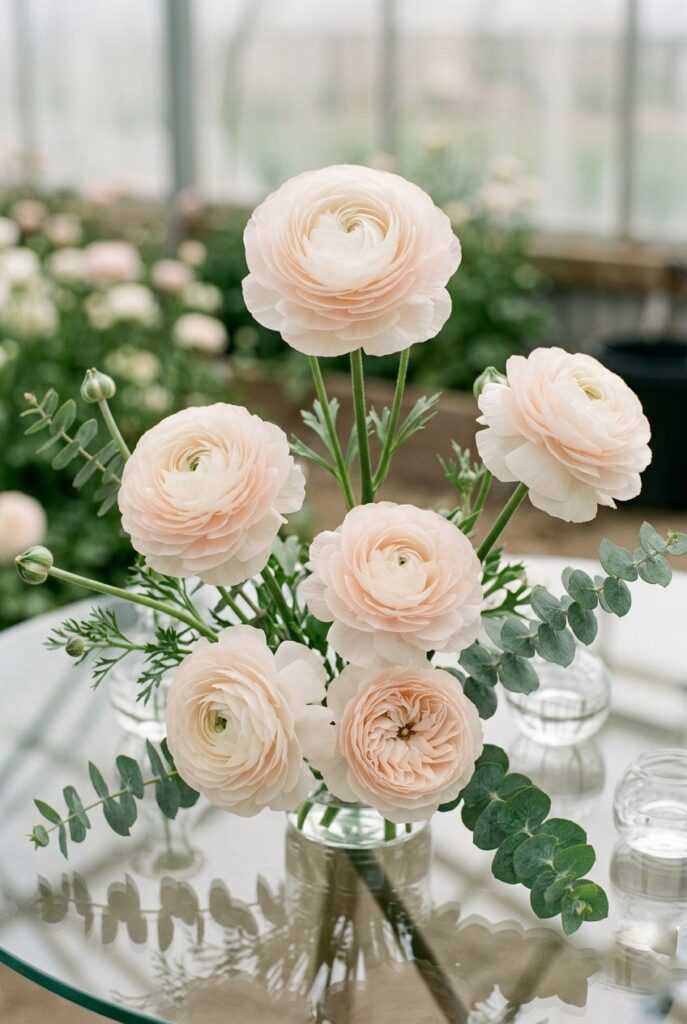
Ranunculus are exquisite—thin, layered petals like peonies but more delicate.
They last only 3-4 days once cut, bruise if you press them, and cost $3-5 per stem in spring (March-May).
Out of season, they cost $8-10 and wilt even faster. Never use ranunculus in a DIY centerpiece unless you’re extremely careful.
Never order them more than 4 days before your wedding.
If your wedding is spring and you love ranunculus, use them as a 1-2 piece accent in a larger, greenery-heavy arrangement, or skip them and use garden roses instead (same romantic look, much longer-lasting).
Where to buy: Local florist (spring only), specialty growers. Budget: $3-5 in spring; $8-10 out of season.
Taste Layer: An all-ranunculus centerpiece ordered two weeks early arrived with bruised petals and closed buds that never opened. Ranunculus from a local florist ordered three days before the wedding opened fully and lasted through the reception. The flower type is the same; timing and sourcing determine success.
7. Lisianthus: Elegant Alternative to Roses (5-7 Days Fresh, $2-4 per Stem)
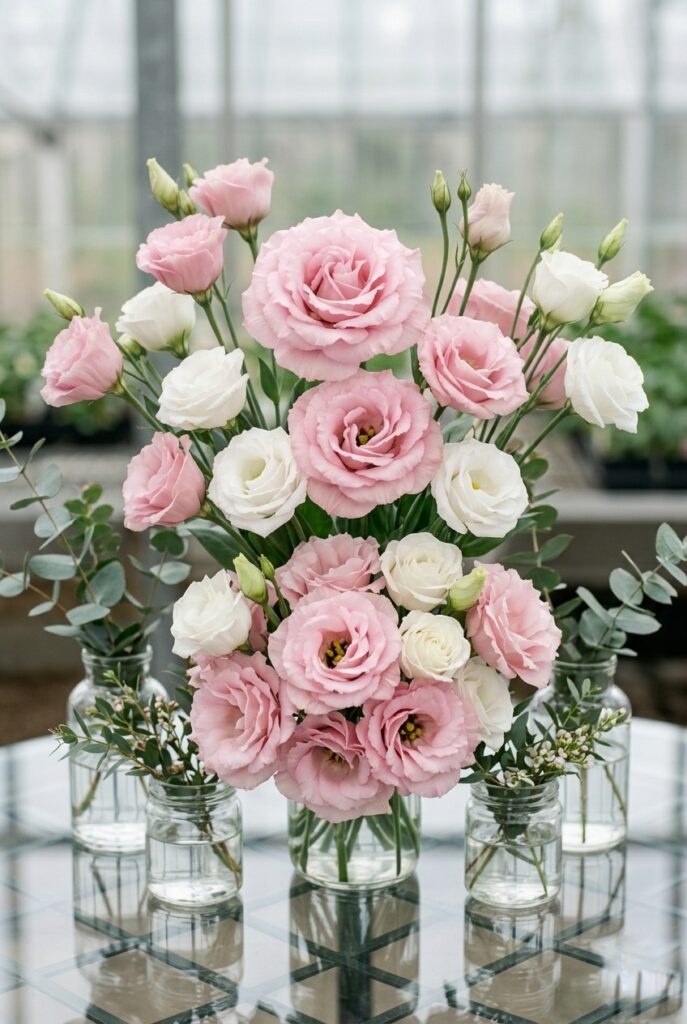
Lisianthus is like a softer, more romantic version of a rose. It lasts 5-7 days, costs $2-4 per stem, and comes in white, pink, purple, and bi-colors.
It’s less bruise-prone than ranunculus and more affordable than peonies.
It works year-round without massive seasonal pricing spikes. Lisianthus is underutilized in wedding centerpieces because brides don’t know it exists.
If you want a romantic, soft-petaled flower that actually lasts, choose lisianthus over ranunculus or peonies.
Use 3-5 per centerpiece. Where to buy: Local florist, specialty wholesalers. Budget: $2-4 per stem.
8. Baby’s Breath: The Essential Cheap Filler (3-4 Weeks Fresh, $0.15-0.50 per Stem)
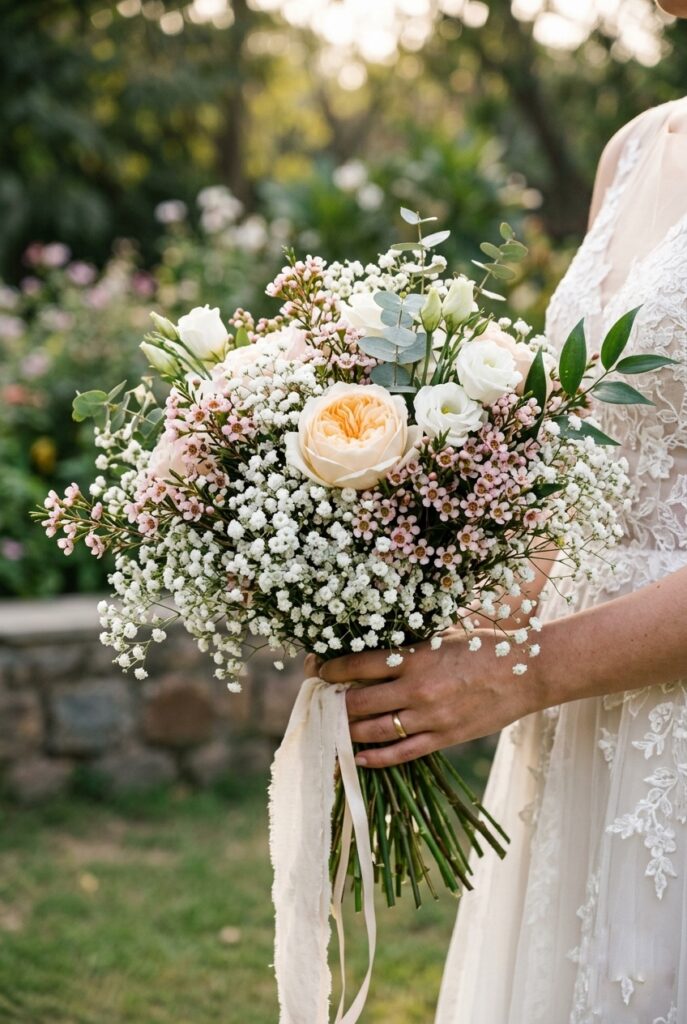
Baby’s breath (gypsophila) is the filler flower that makes arrangements look fuller without increasing cost.
It lasts 3-4 weeks, costs $0.15-0.50 per stem, and adds texture and airiness to any arrangement.
It’s not the main event—it’s supporting infrastructure. Every single centerpiece should have 3-5 stems of baby’s breath as a base texture layer.
This alone cuts the number of expensive focal flowers you need by 30-50%.
Where to buy: Every wholesale florist, FiftyFlowers.com ($0.10-0.40 per stem), any retail florist. Budget: $0.15-0.50 per stem.
9. Waxflower and Statice: Texture for Pennies (3-4 Weeks Fresh, $0.30-1 per Stem)
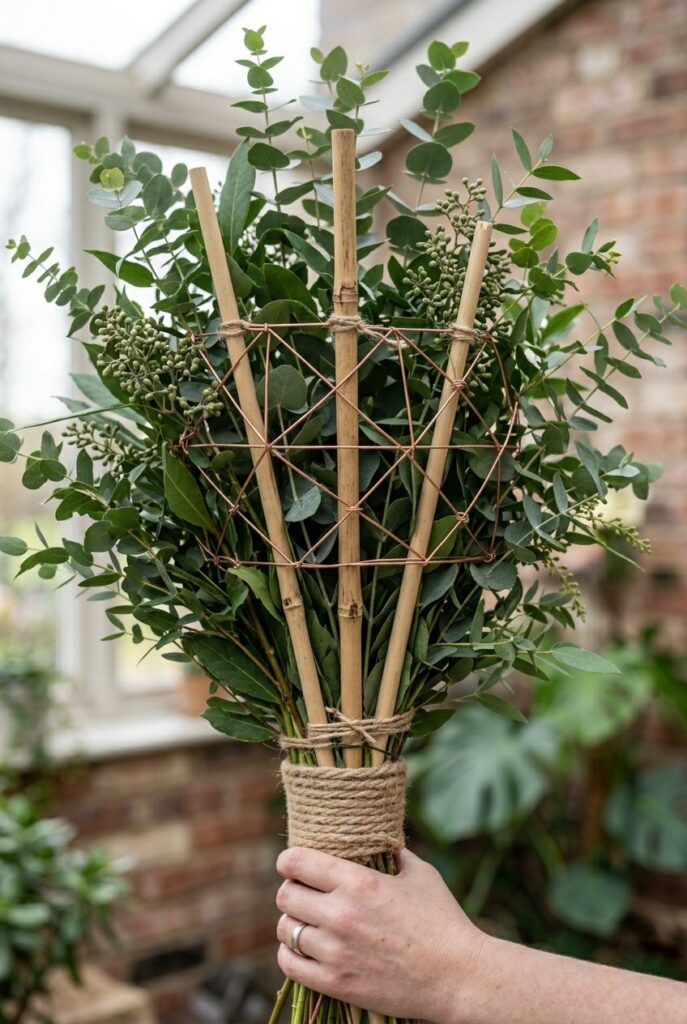
Waxflower and statice are small, delicate filler flowers that add texture without eating your budget.
They last 3-4 weeks, cost $0.30-1 per stem, and come in pink, purple, white, and yellow.
Use them exactly like baby’s breath—as texture layers supporting 1-2 premium focal flowers per centerpiece.
Where to buy: Wholesale florist, FiftyFlowers.com, any retail florist. Budget: $0.30-1 per stem.
Budget Hack After Idea 9: A professional-looking centerpiece structure is: 2 focal flowers (garden rose, dahlia, or ranunculus) + 3 carnations (base filler) + 3-5 baby’s breath/waxflower (texture) + 5 stems of eucalyptus (greenery). Total stems: 13-15. Total cost: $18-28 DIY. This same arrangement from a florist costs $80-150. Specific action: Buy in this ratio for every centerpiece. Don’t deviate. Two focal flowers is the magic number.
10. Seasonal Greenery: The Unsung Cost Saver
Eucalyptus, ruscus, salal, Italian leather leaf, and ferns are greenery, not flowers, but they’re essential to centerpiece structure and cost 50-80% less than flowers.
Eucalyptus costs $0.50-2 per stem wholesale, $3-5 at retail, and lasts 2-3 weeks.
Ruscus costs $0.30-1 per stem and lasts as long as orchids. Use 5-8 stems of greenery per centerpiece as your structural base.
This gives fullness and height for nearly nothing. Where to buy: Wholesale florist, FiftyFlowers.com, farmers markets.
Budget: $0.30-2 per stem depending on type.
Decision Filter
If your wedding is spring (March-May), use ranunculus and garden roses; they’re cheap and peak-fresh.
If your wedding is summer (June-August), use dahlias, garden roses, hydrangeas, and sunflowers—all affordable and abundant.
If your wedding is fall (September-November), use garden roses (still affordable), dahlias (last of the season), and start incorporating orchids for freshness.
If your wedding is winter (December-February), use orchids as your main focal flower (they’re never expensive and actually perform well in heated indoor venues).
For all seasons, build every centerpiece with the focal-filler-greenery model: one premium flower, 2-3 carnations, 3-5 fillers (baby’s breath, waxflower, statice), and 5-8 stems of greenery.
Never use more than one type of expensive flower per centerpiece.
If you’re hiring a florist, ask them to show you the same centerpiece three ways: all premium flowers (pricey), premium focal flowers + carnation filler (mid-range), and greenery-heavy with minimal flowers (budget-friendly).
Pick the version that aligns with your budget and wedding date.
The Real Reason
Florists mark up prices based on seasonality and flower rarity, not difficulty. A $1.50 garden rose in May becomes an $8 garden rose in December because the florist has to import them from South America in winter.
This isn’t greed; it’s supply and demand. But it means your flower choice on your wedding date matters more than the flower type itself.
A winter bride paying $150 per centerpiece with garden roses should have chosen orchids at $60 per centerpiece instead.
The second truth that florists see: couples who DIY with the wrong flowers spend more money and still end up with wilted arrangements.
A bride who buys $300 worth of peonies in February (wrong season, expensive, wilt-prone) and assembles them herself ends up with centerpieces that look droopy by 6 PM.
A bride who buys $150 worth of orchids and carnations and assembles them the same way has centerpieces that actually photograph better and stay fresh through midnight.
The third thing that changes everything: understanding that a “full” centerpiece doesn’t require 15 premium flowers.
It requires 2 premium flowers, 3 carnations, 3-5 texture fillers, and a healthy amount of greenery.
This exact structure costs $20-30 to assemble DIY, or $60-100 from a florist.
Neither is wrong; the difference is labor and overhead, not the flowers themselves.
Mistakes to Avoid
Mistake 1: Choosing flowers based on how they photograph on Instagram instead of how long they last in a vase.Peonies and ranunculus photograph beautifully but last 3-5 days once cut. Orchids and carnations photograph well and last 3-4 weeks.
If your centerpieces will sit on tables for 6+ hours (typical wedding day), durability beats aesthetics.
Mistake 2: Ordering out-of-season flowers and hoping they’ll be fresh. Garden roses in December cost 3x more than garden roses in May and actually wilt faster.
Peonies in fall cost $8-10 per stem and only last 3-4 days. If a flower isn’t naturally in season during your wedding month, don’t use it, or budget for the premium price and shorter lifespan.
Mistake 3: Building a centerpiece from one expensive flower type and running out of budget. Couples buy 8 roses per centerpiece ($32-56 per centerpiece), then run out of money for greenery, fillers, or candles. They end up with sparse-looking arrangements that scream “budget-conscious.”
Using 2 roses + carnations + greenery costs less and looks fuller.
Mistake 4: Mixing incompatible flowers without understanding why they wilt together. Roses release ethylene gas as they age, which causes carnations and some greenery to wilt faster if bunched tightly together.
Ranunculus bruise if placed next to thorny stems.
Orchids need less water than other flowers and can cause root rot if stored in the same bucket as water-hungry hydrangeas. Understand basic flower compatibility before arranging.
FAQ
How long do wedding centerpiece flowers actually stay fresh during the reception?
Most fresh flowers in a vase last 8-12 hours on a wedding reception table if placed 2-3 days prior.
Orchids and carnations stay fresh up to 24+ hours.
Ranunculus and dahlias wilt visibly after 6-8 hours, especially in warm venues. Hydrangeas wilt faster in dry air or direct heat.
Store centerpieces in a cool room until 1-2 hours before guests arrive to extend freshness.
What’s the cheapest wedding centerpiece flower that actually looks good?
Carnations. A high-quality carnation in full bloom costs $0.50-1.50 per stem, lasts 3-4 weeks, and paired with greenery and one focal flower, creates a full-looking, professional centerpiece for $15-25 to assemble.
Waxflower and statice (both under $1 per stem) are the next cheapest but work best as texture, not main flowers.
Should I DIY centerpiece flowers or hire a florist?
DIY saves 60-70% on cost if you source wholesale flowers, understand the focal-filler-greenery structure, and assemble arrangements 2-3 days before the wedding.
DIY fails if you order flowers too early, use delicate flowers like ranunculus, or underestimate time needed.
A florist saves 8-12 hours of your time and guarantees freshness, but costs $1,800-2,400 for a typical 15-20 piece order.
Can I use out-of-season flowers and expect them to look good?
Not reliably. Out-of-season flowers cost 2-3x more and wilt faster due to longer shipping and storage.
If you must use an out-of-season flower, order from a premium wholesaler with overnight shipping, assemble just 2-3 days before the wedding, and budget for potential wilting or backup blooms.
Budget Table
| Flower Type | Cost Per Stem (Wholesale) | Cost Per Stem (Retail) | Longevity (Days) | Best Seasons | Notes |
|---|---|---|---|---|---|
| Orchids | $1-3 | $15-25 | 21-28 | Year-round | Best value; never expensive |
| Garden Roses | $2-4 (in season) $8-15 (out) | $5-8 (in) $15-25 (out) | 5-8 | Apr-Jul, Sep-Oct | Expensive off-season; bruise easily |
| Carnations | $0.30-0.80 | $0.50-1.50 | 21-28 | Year-round | Budget superhero; use as base |
| Dahlias | $2-4 | $4-8 (in season) $8-15 (out) | 3-5 | Jun-Sep | Short lifespan; stunning but fragile |
| Hydrangeas | $1-2 | $1.50-3 | 5-7 | Apr-Oct | Thirsty flowers; order fresh |
| Ranunculus | $3-5 (spring) $8-10 (off) | $5-8 (spring) $12-15 (off) | 3-4 | Mar-May only | Bruise-prone; out-of-season waste |
| Lisianthus | $2-3 | $3-5 | 5-7 | Year-round | Underrated; less bruising than ranunculus |
| Baby’s Breath (Filler) | $0.10-0.40 | $0.15-0.50 | 21-28 | Year-round | Essential texture; use 3-5 per piece |
| Waxflower/Statice (Filler) | $0.25-0.80 | $0.30-1 | 21-28 | Year-round | Texture alternative to baby’s breath |
| Eucalyptus (Greenery) | $0.50-2 | $3-5 | 14-21 | Year-round | Structural base; use 5-8 stems per piece |
Sample Centerpiece Cost Breakdown (DIY):
- 2 focal flowers (garden rose + dahlia): $6-8
- 3 carnations (base filler): $1.50-3
- 3 baby’s breath (texture): $0.30-1
- 5 eucalyptus (greenery): $2.50-5
- Total: $12-17 per centerpiece to assemble
- Florist equivalent: $60-100 per piece
Stop assuming expensive flowers look better. Orchids cost less than garden roses and photograph identically.
Stop assuming a “full” centerpiece requires 12 stems of peonies.
It requires 2-3 stems of something premium, supporting cast of affordable flowers, and greenery.
Stop ordering flowers six weeks in advance expecting them to stay fresh.
Order wholesale flowers 5-7 days before; they’ll be fresher and cheaper than flowers ordered early.
Your centerpiece’s success depends on understanding your wedding date, sourcing the right seasonal flowers, and building intentional structure—not on spending the most money.
The flowers you choose matter less than the timing of when you order them and the structure of how you arrange them.
Start with your wedding month, identify what’s cheaply in season, then build around that.
Everything else is logistics.