The decision that determines whether your round-table centerpiece actually works isn’t the flower — it’s the height.
Stay under 12 inches, or go over 24 inches; anything in between blocks conversation without creating enough drama to justify it.
Get the height right first, and everything else on the table falls into place.
1. Full-Radius Cluster With Peripheral Votives
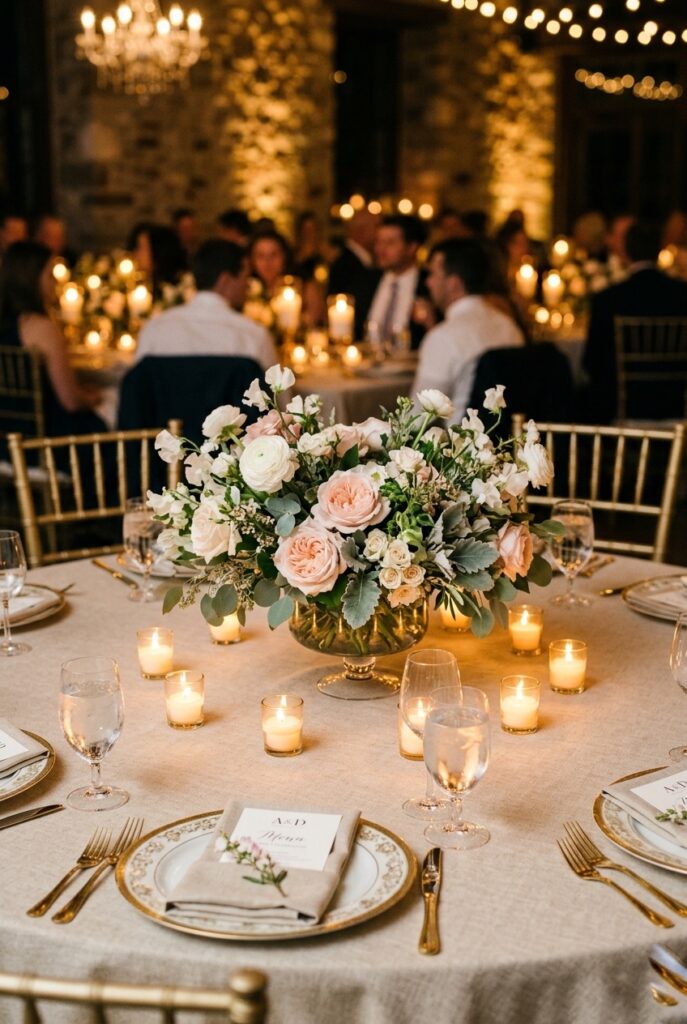
Instead of treating the centerpiece as a single object, this approach uses the entire table surface as the canvas — a low compote arrangement anchors the center while eight to ten votives radiate outward in a loose ring around it.
The candles do more visual work than adding more florals would, and if you want to explore centerpieces built around candlelight as a design strategy, this cluster format is one of the most versatile starting points.
2. Tall Trumpet Vase With Single-Variety Blooms

The advantage of a tall arrangement on a round table is that guests can still see each other underneath it — the key is a narrow trumpet vase over 24 inches tall with clear air beneath the blooms, not a wide, mid-height arrangement that becomes a wall between seats.
White orchids, gladiolus, or ivory roses in a single variety work best here, and this is one of the strongest elegant round table looks for ballrooms and formal venues with high ceilings.
3. Low Garden Rose Dome in a Compote Bowl

A low floral dome in a compote bowl is one of the easiest formats to execute well because the round vessel echoes the round table underneath it — that visual repetition is why it photographs cleanly from every angle.
The dome needs density: a sparse one reads as unfinished, while a tight, full sphere reads as sculptural, making it an ideal choice if you plan to build it yourself without a florist.
4. The Constellation Scatter: No Central Piece at All
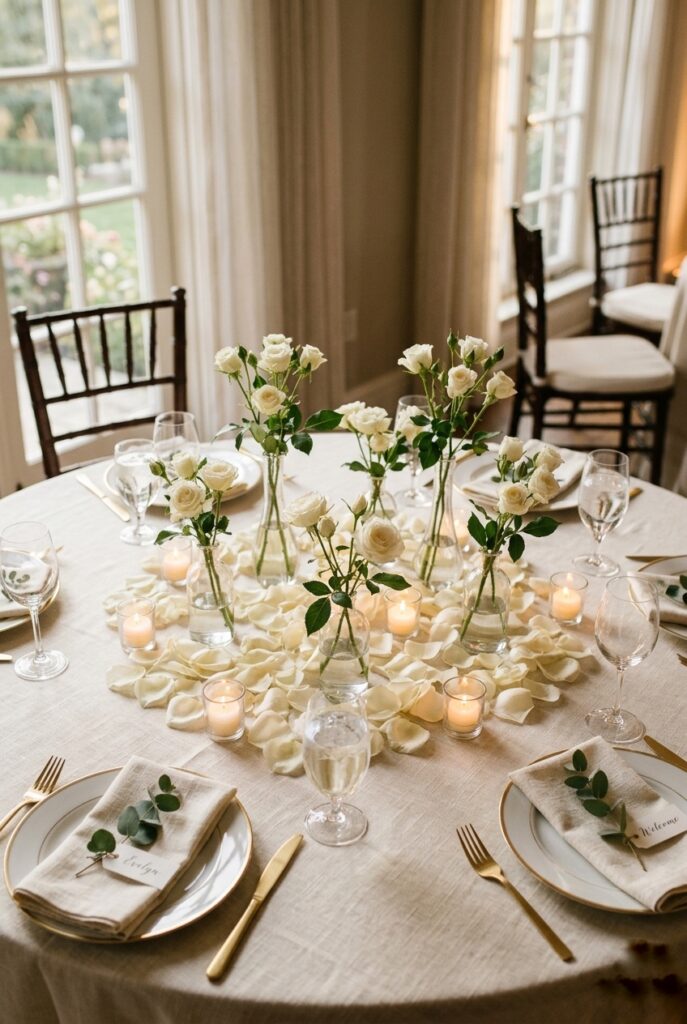
TRather than one fixed centerpiece, this approach distributes small bud vases, tea lights, petals, and greenery fragments across the table surface so the eye moves continuously around it instead of landing in one place.
It suits garden and outdoor receptions especially well and pairs naturally with a pared-back approach to table styling where the overall look feels effortless rather than constructed.
5. Greenery Wreath Surrounding a Lantern
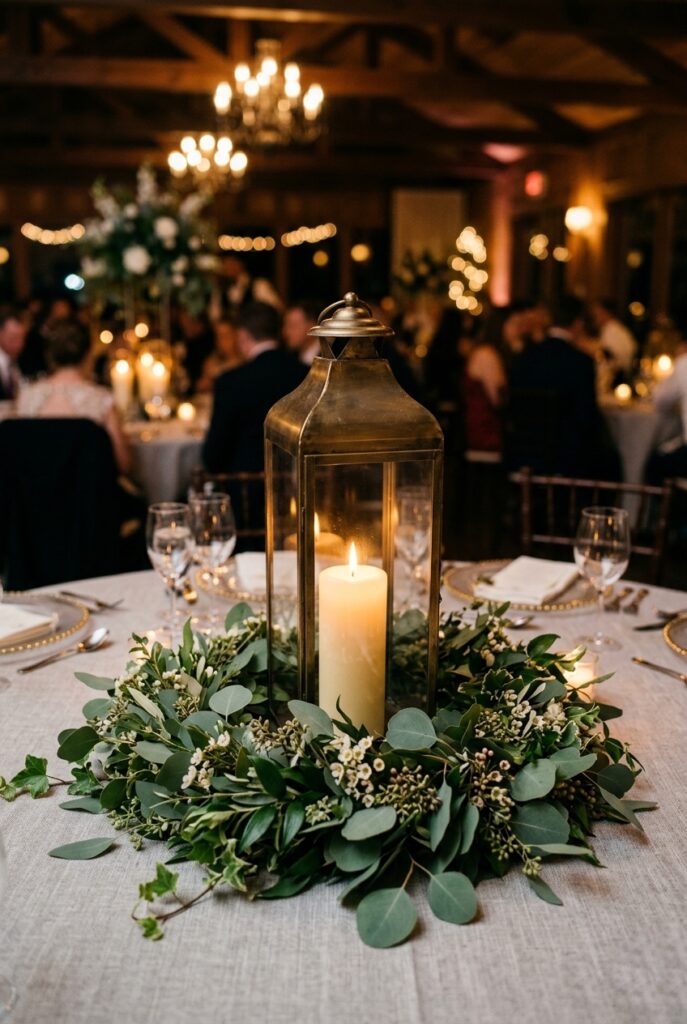
A flat wreath laid directly on the table integrates into the surface rather than sitting on top of it, and the circular shape mirrors the round table in a way that instantly feels considered.
The lantern at the center provides height, warmth, and evening glow without adding floral cost, making this a natural fit for rustic reception tables and outdoor or greenhouse celebrations.
6. Candelabra With Low Floral Collar
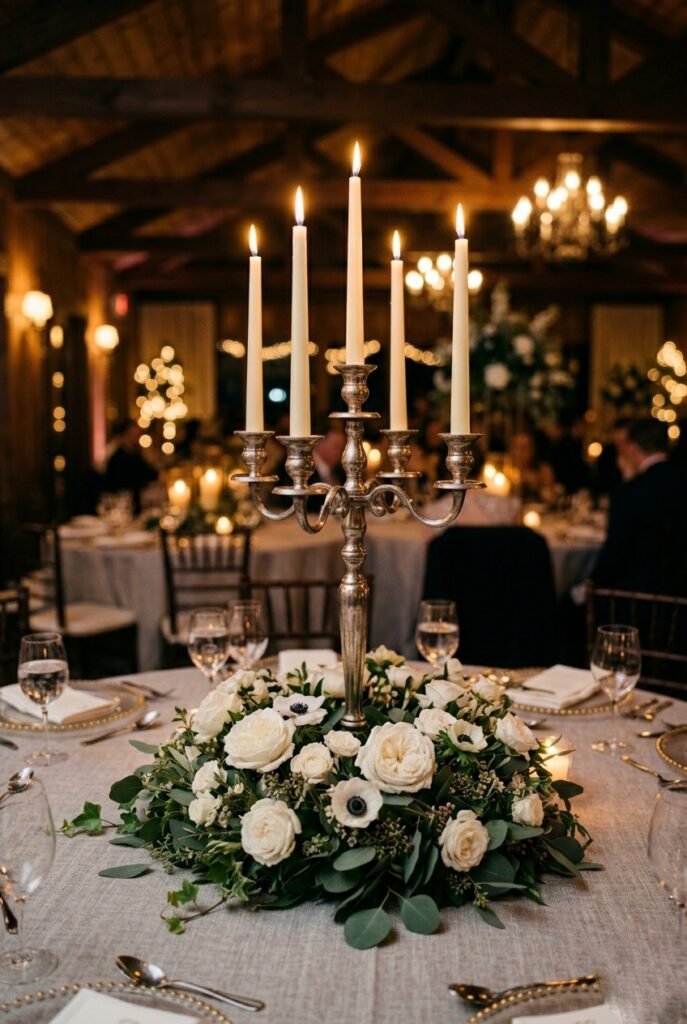
The candelabra supplies the architecture and structural height; the low floral collar at the base softens it — this division matters financially because structural height costs far less than floral height.
It reads as formal centerpiece styling at a fraction of the price of an all-floral installation, and it works best in candlelit evening receptions, ballrooms, and black-tie venues.
7. Single Hydrangea Head in a Low Urn
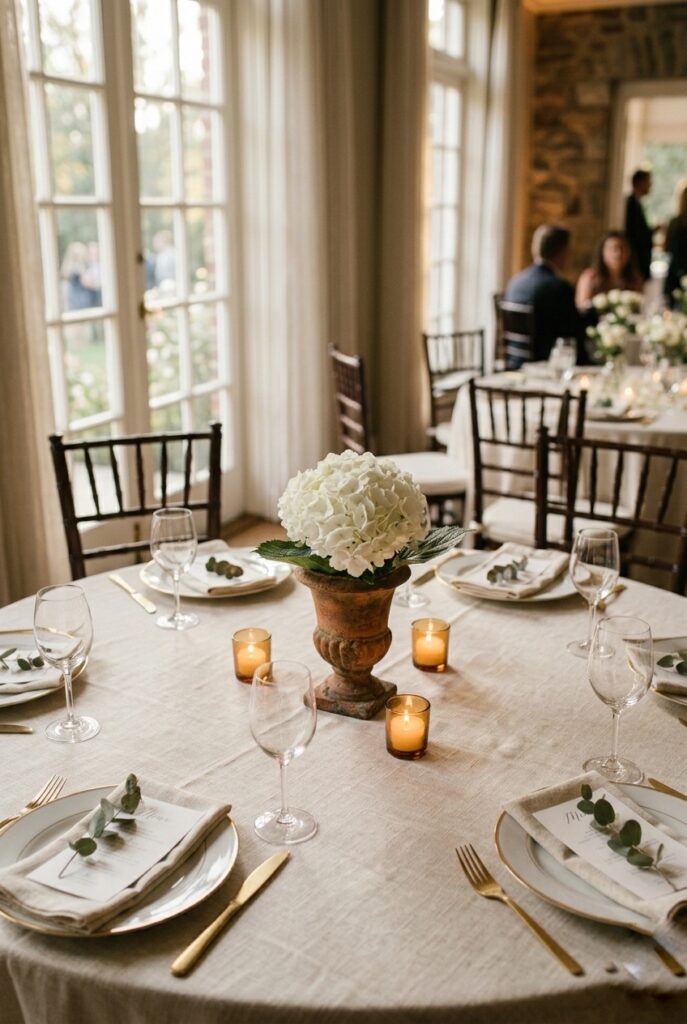
One hydrangea in a wide, low-profile vessel with a heavy visual weight is a finished centerpiece — not incomplete, finished — because hydrangeas naturally fill a wide mouth without effort.
It’s one of the most honest examples of keeping it intentionally simple while still looking like a deliberate design choice rather than a budget shortcut.
8. Dried Pampas and Bleached Ruscus in a Matte Vessel
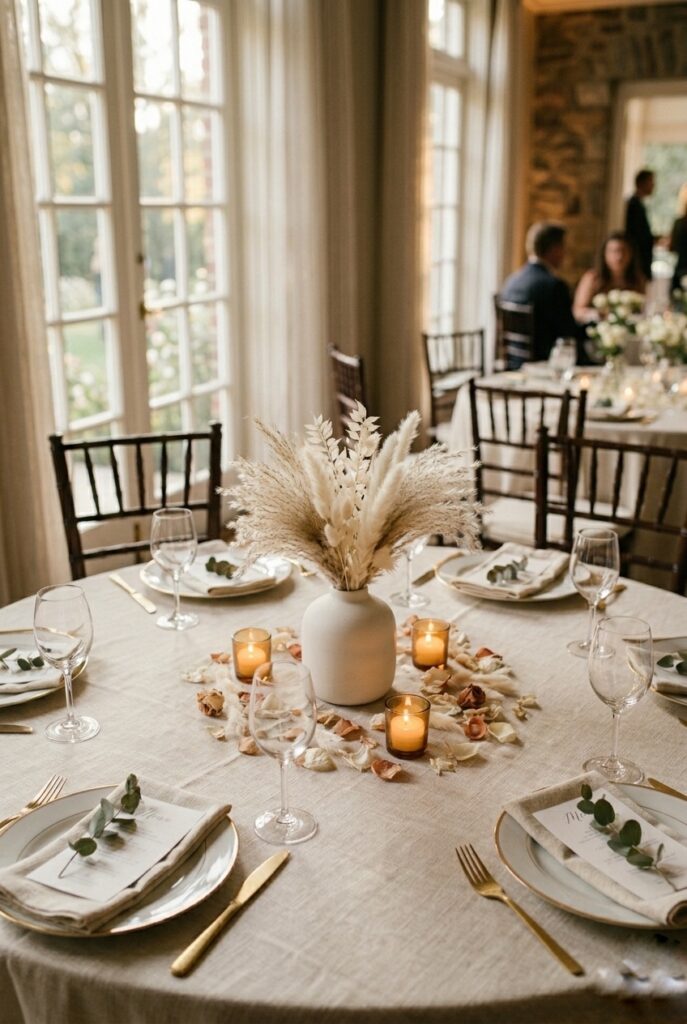
Dried arrangements solve the problem fresh flowers never can: you can assemble them days ahead with no refrigeration, no wilting anxiety, and no emergency floral prep on the morning of the wedding.
This works best when the arrangement feels airy rather than compact, and if you’re still deciding on your flower mix, it’s worth knowing which flowers hold up best before committing to any fresh-flower format.
9. Submerged Flower Bowl With Floating Candles
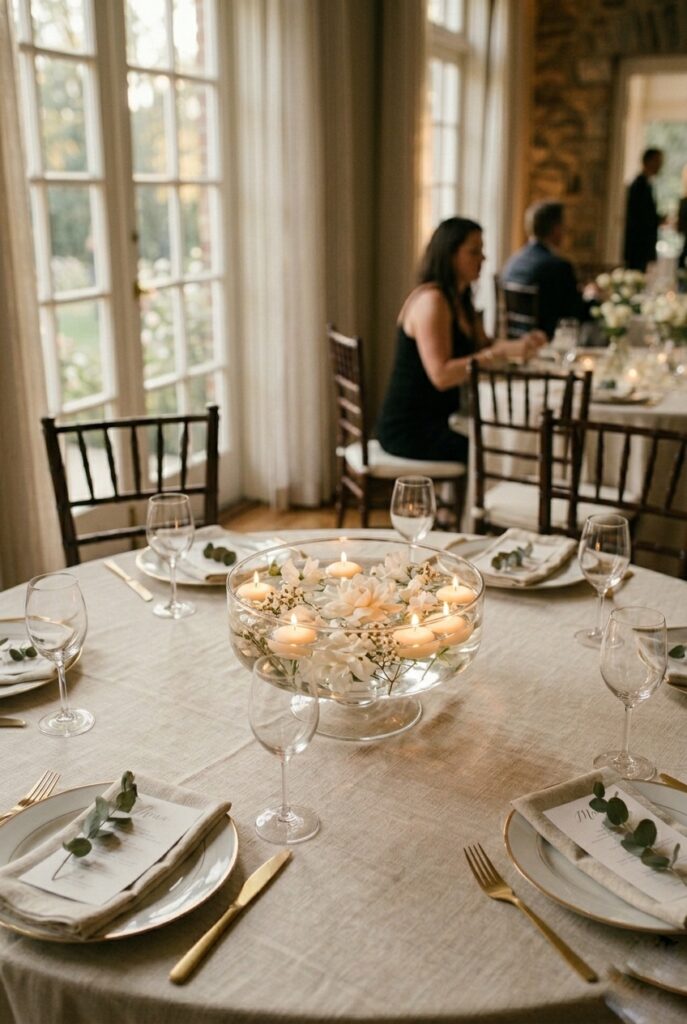
The water in a submerged bowl refracts candlelight outward across the table surface in a way that no standard arrangement can replicate, giving evening receptions a softer, more atmospheric glow.
Keep the bowl wide and low — a tall submerged vase loses the horizontal light reflection that makes this format special, and the whole effect depends on the candlelight spreading rather than rising straight up.
10. Tiered Candle Cluster With Greenery Base
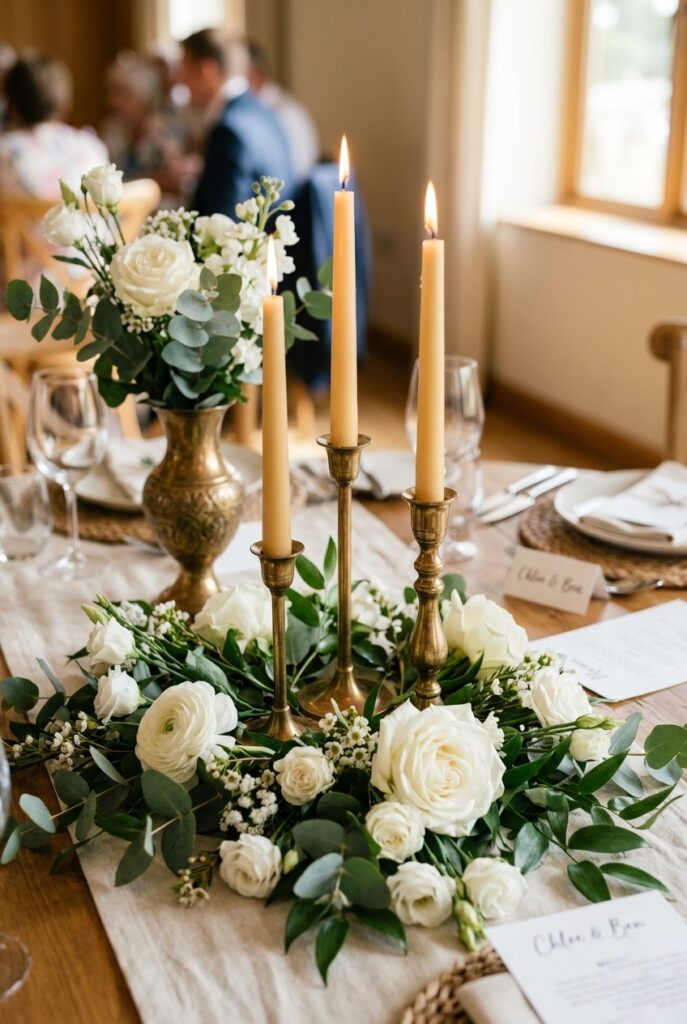
Three candle heights create rhythm on a round table immediately — the varying vertical lines prevent the table from reading as flat while the loose greenery sitting directly on the tablecloth keeps the whole thing grounded rather than rigid.
This is one of the most cost-effective formats on the list because the candles carry most of the visual weight, leaving you free to spend more on the vessel quality and less on flower quantity.
Once you’ve settled on a style, build the rest of your table from the centerpiece outward.
A full table decor plan helps you figure out how linen color, place settings, and the centerpiece work together as one system rather than separate decisions.
If you’re still comparing options, centerpiece ideas for every style covers a wider range of formats across different venue types and budgets.