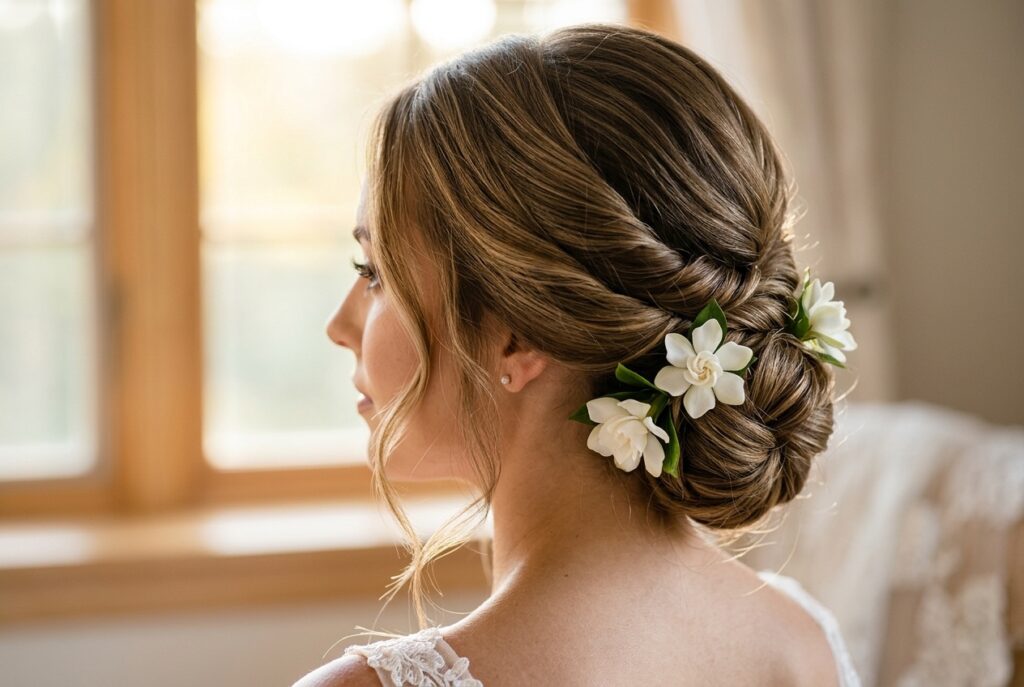
Every bridal bouquet article gives you a list of pretty flowers.
None of them tell you which ones will be soft and full at 2pm and which ones will be drooping by cocktail hour — and there is a reason your florist asks about your venue’s air conditioning before quoting a price.
1. Garden Roses: The Hero Flower You Actually Want
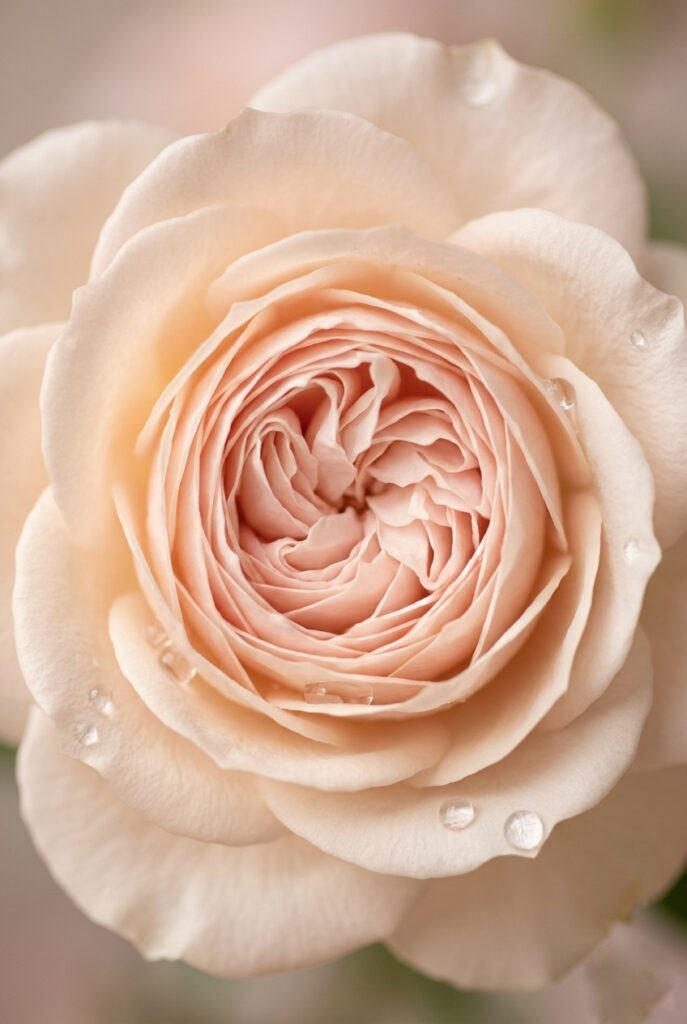
David Austin varieties — ‘Juliet,’ ‘Keira,’ ‘Miranda’ — are fuller than a standard hybrid tea rose, more fragrant than a spray rose, and hold open gracefully rather than dropping petals or collapsing in heat, which makes them the single most reliably excellent bridal bouquet flower on this list at $4–$8 per stem.
The version florists steer budget-conscious brides toward instead — a standard hybrid tea rose in a tight bud — opens into a flat, simple bloom with little character and almost no fragrance, so specify David Austin or garden roses by name at your consultation — and for how these same roses anchor a complete romantic look from bouquet to the overall bridal aesthetic, the romantic bridal bouquet guide covers every dimension of the romantic style and where garden roses sit within it.
2. Ranunculus: The Florist’s Favorite Secret
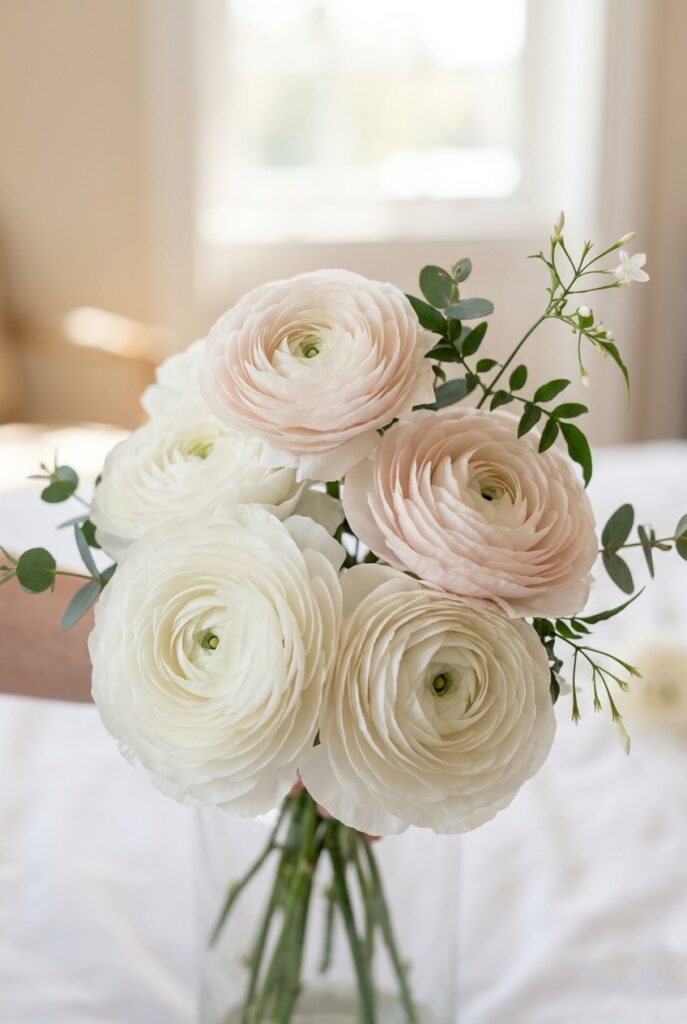
Ranunculus has more petal layers than a rose at a fraction of the price, holds well across an eight-hour wedding day when properly conditioned, and comes in a color range from pure white to deep burgundy — but it peaks from late winter through spring (January through May), and outside that window quality drops noticeably and price rises 30–50%.
If your wedding falls in spring, ranunculus should anchor every tier of your bouquet; if it falls in late summer or fall, substitute with lisianthus — nearly identical look, different bloom season, costs about 30% less than imported off-season ranunculus — and for how ranunculus and other spring blooms are used across both bouquet and table arrangements, the wedding centerpiece flowers guide covers the same sourcing and seasonality decisions applied to every flower in your ceremony space.
3. Peonies: Extraordinary When Right, Risky When Wrong
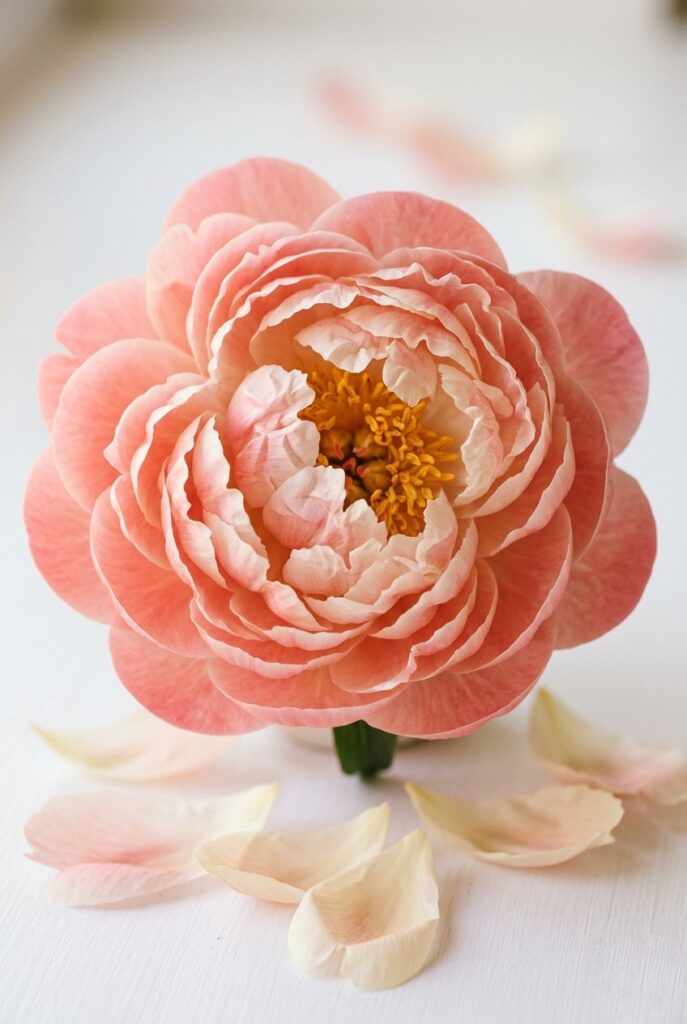
A fully open peony is the most visually dramatic bouquet flower on this list — and also the most temperature-sensitive: they arrive in tight bud and open over 24–48 hours, which means a warm venue can push them fully blown and dropping petals by the reception, while a venue chilled below 68°F can keep them stubbornly closed all day.
Only commit to peonies if you can confirm your venue temperature stays in the 65–72°F range, tell your florist the exact day to open them for your ceremony time, and skip them entirely for outdoor summer weddings in warm climates — and for how peony costs interact with overall floral budget strategy, the budget wedding decor guide covers peonies specifically as the single flower that most frequently pushes brides over their floral budget without warning.
💸 Budget Hack #1: Dahlias cost 40–60% less than peonies and read identically in photographs. A ‘Café au Lait’ dahlia at full bloom is almost visually indistinguishable from a peony in every medium-close photo — same ruffled form, similar color palette, comparable diameter. The difference is only visible at arm’s length. If your florist proposes peonies for a late summer or fall wedding, ask for dahlias instead and redirect the savings toward stem count. Available from your local florist or directly via FiftyFlowers.com’s bulk dahlia packs ($48–$65 for 30 stems, depending on variety).
4. Dahlias: The Seasonal Workhorse Nobody Oversells
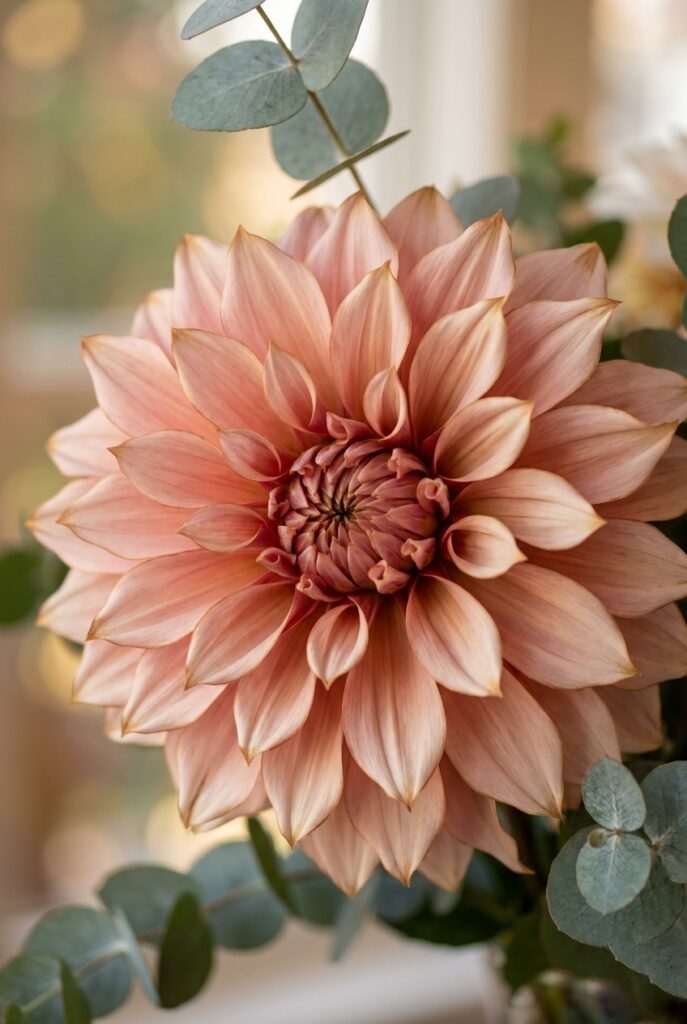
Late summer and fall brides who request peonies are consistently redirected to dahlias by experienced florists, and they are consistently satisfied — dahlias come in more forms than almost any other cut flower (ball, cactus, pompon, dinner-plate) and photograph with extraordinary depth due to their intricate petal structure at $3–$6 per stem from July through October.
The one thing competitors never mention: dahlias have hollow stems that dehydrate faster than most flowers, so if you are planning an outdoor ceremony with no refrigeration between ceremony and reception, tell your florist you know this so they can use aqua picks or water tubes on key stems — and for how dahlias look in the full autumn wedding context beyond the bouquet, the fall wedding centerpiece ideas cover how dahlia color palettes extend from your hands through every table in the room.
5. Lisianthus: The Best-Value Luxury Flower Nobody Talks About

Lisianthus looks like a peony-rose hybrid — ruffled, layered, soft-edged — photographs with the same depth as both, and costs roughly a third of the price of either, at $1.50–$3 per stem year-round in consistent quality, with each stem holding 3–5 blooms that open sequentially over several days so the overall bouquet appearance actually improves throughout the day.
The reason florists don’t lead with it is that brides don’t ask for it and florists tend to sell what brides ask for rather than what performs best — so ask for it by name, and for how lisianthus translates from bridal bouquet to bridal shower centerpiece when the same flower bridges the whole event season, the bridal shower flowers guide covers its value at both scales.
6. Sweet Peas: Fragrance, Fragility, and the Right Occasions
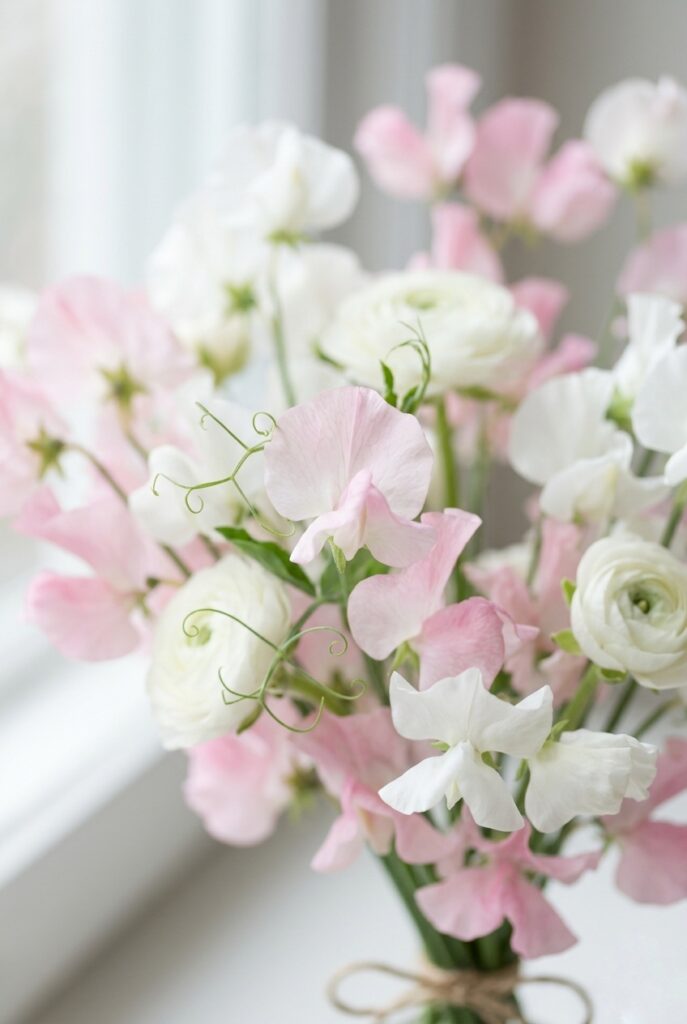
A sweet pea bouquet carried into direct sunlight will begin wilting within 20–30 minutes of being out of water at temperatures above 75°F, the petals bruise from any handling beyond the natural stem grip, and they are specifically right only for indoor spring weddings with controlled temperature — where their fragrance, unlike any other bouquet flower, fills the entire ceremony space memorably.
Skip them entirely for outdoor ceremonies, destination weddings with travel time, or any venue without reliable air conditioning — and for the full picture of which flowers hold up best in outdoor conditions specifically, the outdoor wedding decor ideas guide covers how venue temperature, airflow, and sunlight exposure affect every flower and floral element from the bouquet through the aisle arrangements.
💸 Budget Hack #2: Sweet peas are among the easiest flowers to grow yourself from seed, and a single packet of Spencer-type sweet pea seeds ($3–$5 from Renee’s Garden or Baker Creek Heirloom Seeds) planted 4–5 months before your wedding will yield 60–100 stems in a home garden. For a spring or early summer wedding with an indoor venue, this is a completely viable option that saves $120–$200 in florist sourcing costs. The cut stems keep for 4–5 days in water in a cool location, making the timing manageable. If you go this route, cut stems in the cool of early morning and immediately place them in cold water.
7. Anemones: The Graphic Flower That Earns Its Price
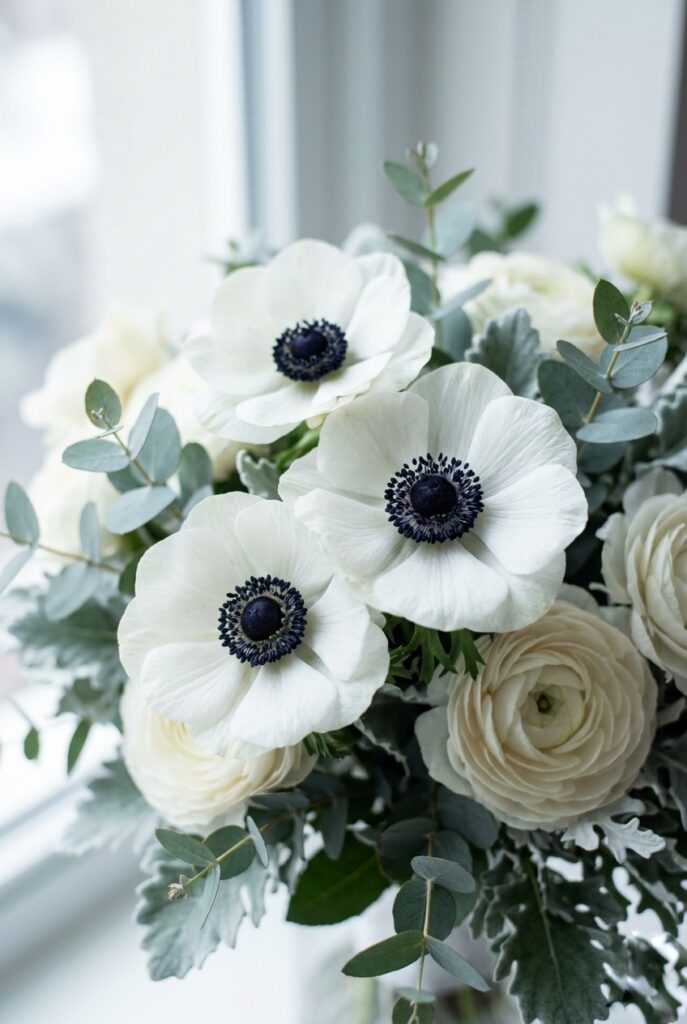
An anemone in full bloom has a quality almost no other flower matches — the contrast between its white petals and near-black center reads as graphic and deliberate in photographs — and used as accents rather than primaries, three to five anemones in a mixed bouquet pull the entire arrangement toward a more editorial aesthetic without requiring any change to the other flowers.
Use as accents specifically: an entire bouquet of anemones starts to look like a field of eyes rather than a refined arrangement — and for the formal, refined winter and early spring wedding settings where anemones perform best, the elegant wedding decor guide covers how the anemone’s graphic precision connects to the clean architectural aesthetic of formal venues.
8. Eucalyptus: The Foliage Framework Everything Else Needs
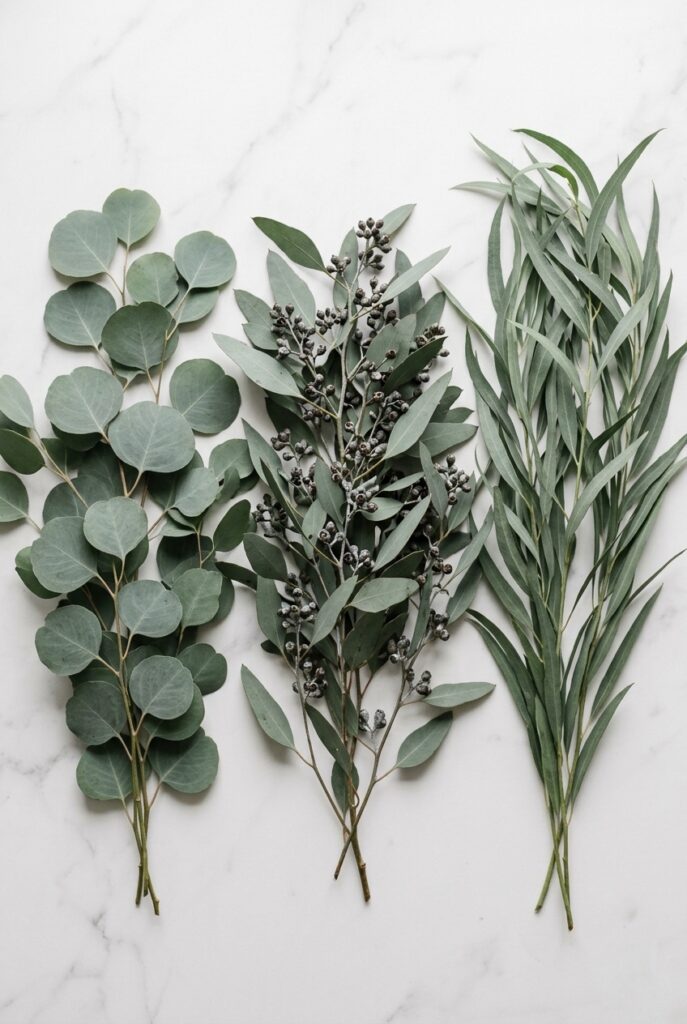
Eucalyptus provides the framework that holds other flowers in position, adds grey-green visual depth that photographs as sophisticated in every format, and costs significantly less per stem than any bloom it supports — with three distinct varieties worth knowing: silver dollar (round leaves, best for tight round bouquets), seeded (with small seed pods, adds texture), and willow (long trailing stems, perfect for cascade and garden-style arrangements).
Ask specifically for silver dollar or seeded eucalyptus rather than the thick woody baby eucalyptus from grocery stores, which smells strongly of menthol and whose leaves are too small and dense to read well in photos — and for how eucalyptus works as the primary structural element in ceremony aisle decoration alongside the bouquet it mirrors, the aisle flowers decoration guide covers how the same foliage bridges hand, aisle, and altar as a cohesive floral system.
💸 Budget Hack #3: Eucalyptus is the single best-value ingredient in any bouquet because it fills volume at roughly one-fifth the cost of the blooms it surrounds. A $15 bunch of silver dollar eucalyptus fills the same visual space as $65–$80 in supplementary flowers. If your florist is quoting you $350+ for your bouquet, ask specifically how many eucalyptus stems are in the build versus how many premium blooms. A well-built 22-stem bouquet with 10 eucalyptus stems and 12 garden roses will look identical in photographs to a 35-stem bouquet with fewer eucalyptus stems, and cost $80–$120 less. Request the breakdown before you sign.
9. The Hero / Supporting / Filler Framework — What Your Florist Actually Uses
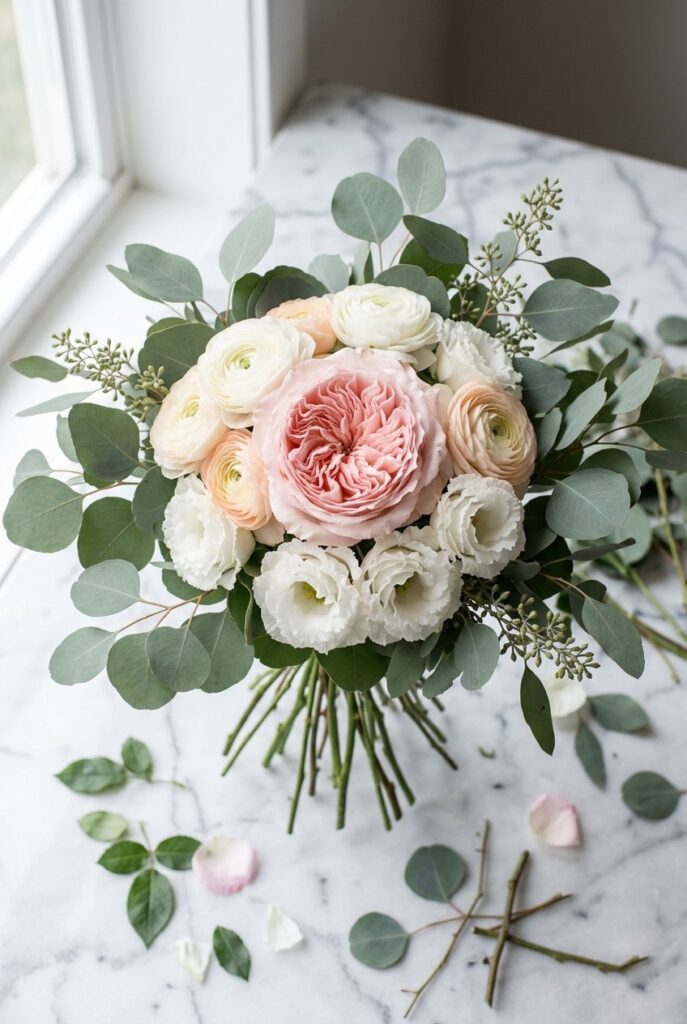
Every bouquet your florist builds uses three flower roles — hero, supporting, and filler — chosen deliberately in that order, and understanding this framework changes every conversation you have with a florist: the hero bloom does the primary visual work (3–7 stems of a garden rose, peony, or large dahlia), supporting flowers bridge the scale gap (ranunculus, lisianthus, sweet peas, anemones), and filler constitutes 30–50% of visual volume at a fraction of the price (eucalyptus, fern, astrantia, dusty miller).
When brides receive bouquets that disappoint them, it is almost always because the hero was under-represented and the filler was overdone — so name your hero first, name your supporting flowers second, and let your florist choose filler within your palette — and for how this hierarchy produces visually distinctive, unconventional arrangements, the unique wedding decor ideas guide covers how the same deliberate composition principles apply from the bouquet outward to every other element in the room.
10. What Never to Put in a Bridal Bouquet
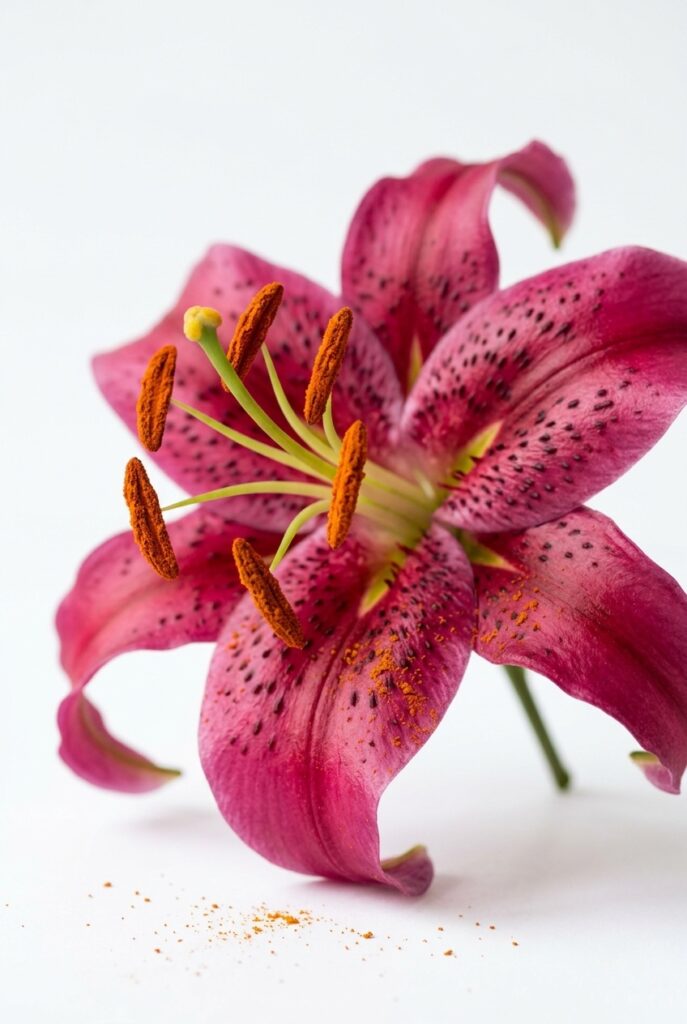
Stargazer lilies shed pollen from long anthers that stains white dresses and suit lapels with rust-orange pigment that does not wash out fully, and their fragrance in an enclosed ceremony space creates headache-triggering concentration within 20 minutes — both of these facts should be disclosed by any florist who proposes them, and if yours doesn’t, treat that as information about how they work.
Gardenias bruise from the slightest handling and turn brown within 2–3 hours in warm air, baby’s breath used as the primary filler reads as dated rather than considered, and carnations as hero blooms announce budget constraints in a way no bride should spend money doing — redirect to lisianthus immediately if your florist proposes carnations as a primary flower, and for the venue conditions where these fragile flowers cause the most problems, the indoor wedding decor guide covers how air circulation, temperature, and ceiling height in enclosed spaces affect both the flower performance and the guest experience.
Your florist knows the conditioning timeline, the ethylene sensitivity of each flower, and the temperature range of your venue — the five questions that separate a florist worth booking from one who will disappoint you are: what is at peak quality the week of my wedding, when will you begin building my bouquet, how will you condition the stems, what flowers perform worst in my venue’s temperature, and what would you choose if this were your own wedding.
For the bouquet shape and structure decisions that determine how all of these flowers are assembled once you have chosen them, the bridal bouquet styles guide covers every shape from round posy to cascade to single-stem statement and which dress silhouette each one flatters.