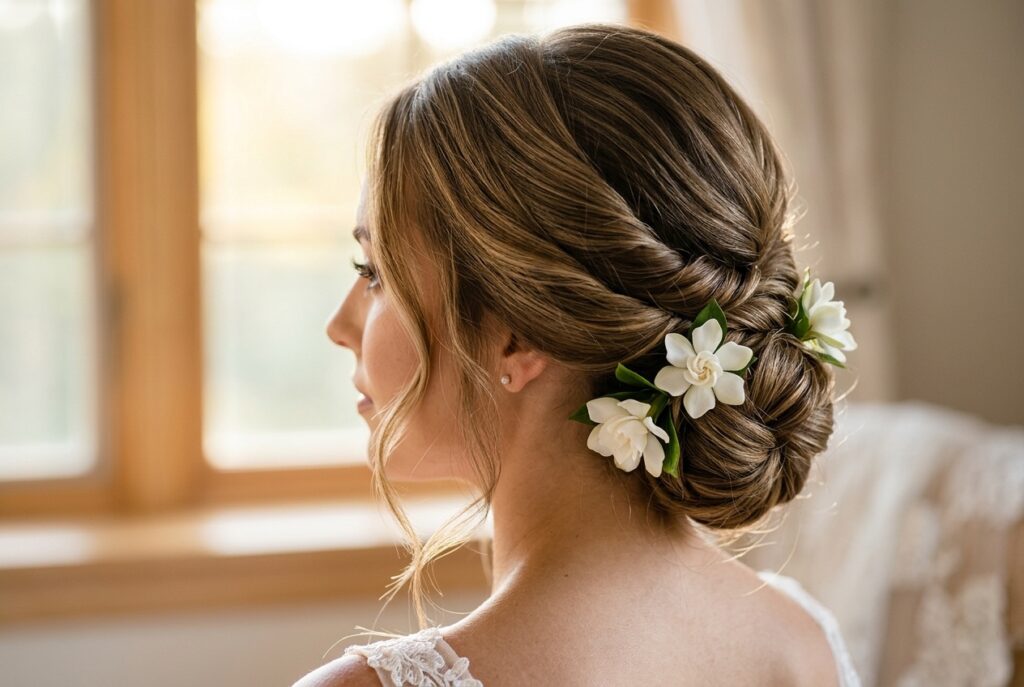
Your bouquet is the one element you carry into every photo — the ceremony, the portraits, the first dance.
Getting it right means matching it to your dress silhouette, your venue scale, and your budget, not just picking something that looks good on its own.
Here are the ten bouquet styles worth knowing before you sit down with your florist.
1. The Round Posy: The Dress-Agnostic Workhorse
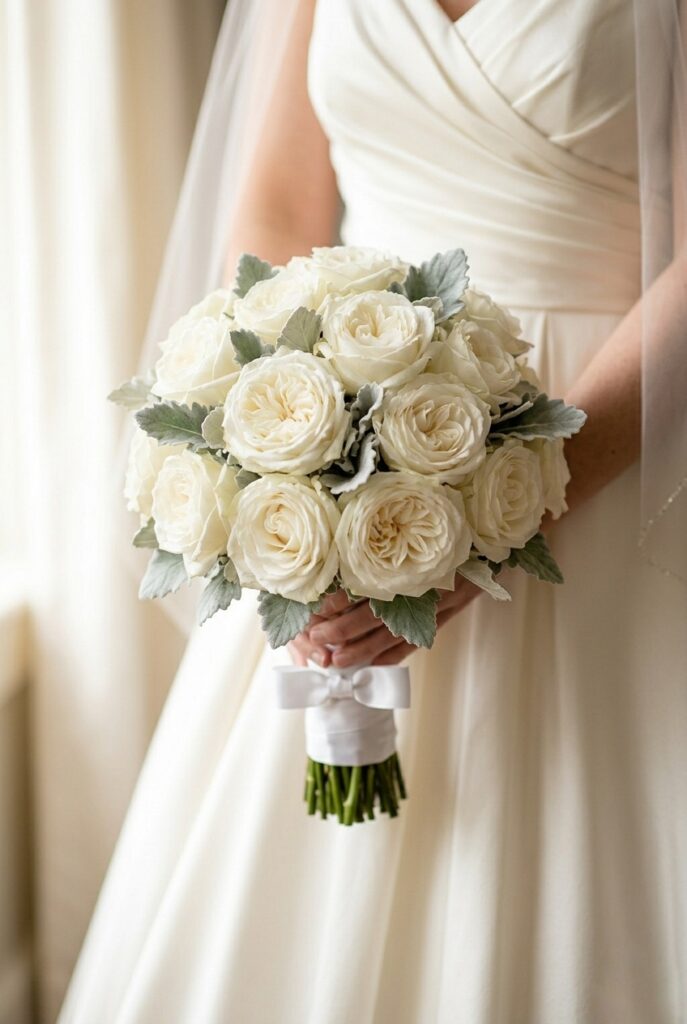
The round posy is the most reliably versatile bouquet shape — its defined edge creates a clean focal point that works against a ball gown, A-line, or column silhouette without competing with any of them.
The one dress it does fight with is heavily textured lace, where the posy’s circular geometry clashes with the organic pattern of the fabric, so if your gown has significant lace coverage, the garden-style options below will serve you better.
2. The Garden-Style Gathering: For Dresses That Need to Breathe
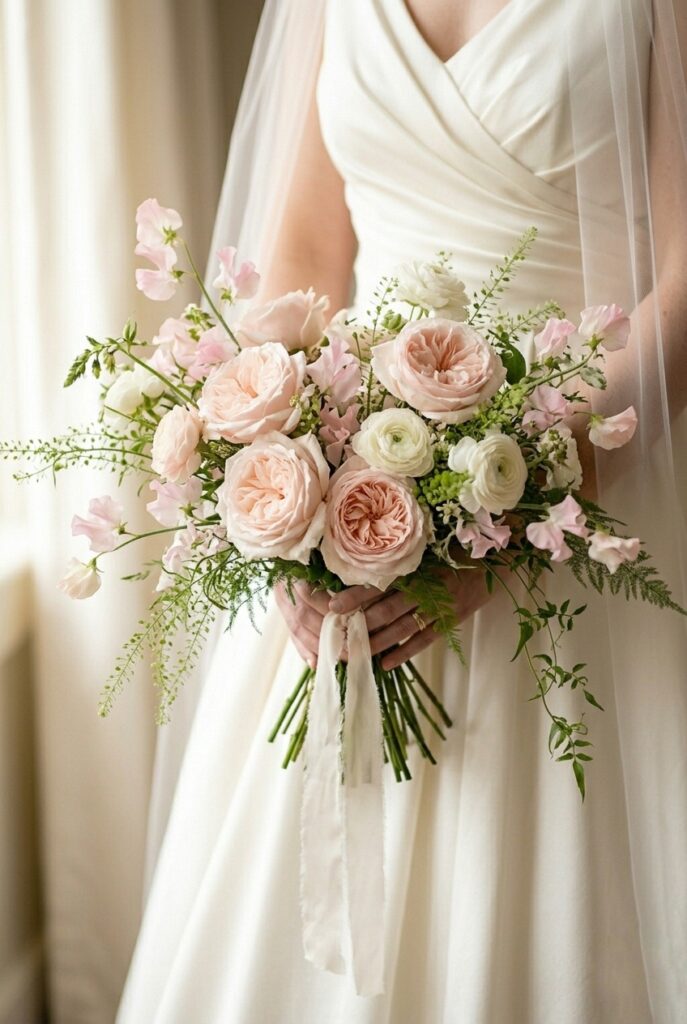
The garden-style bouquet — loose-handed, with stems at varying heights and flowers that haven’t been forced into a dome — is the right choice for lace gowns, bohemian dresses, and any silhouette with organic texture, because the bouquet’s looseness mirrors the dress and lets both read clearly.
When you explore bridal bouquet ideas for this style, ask your florist specifically for “conscious looseness” — the arrangement should look studied, not haphazard, and the difference between those two outcomes is real.
3. The Cascading Bouquet: Powerful, Earned, and Misused
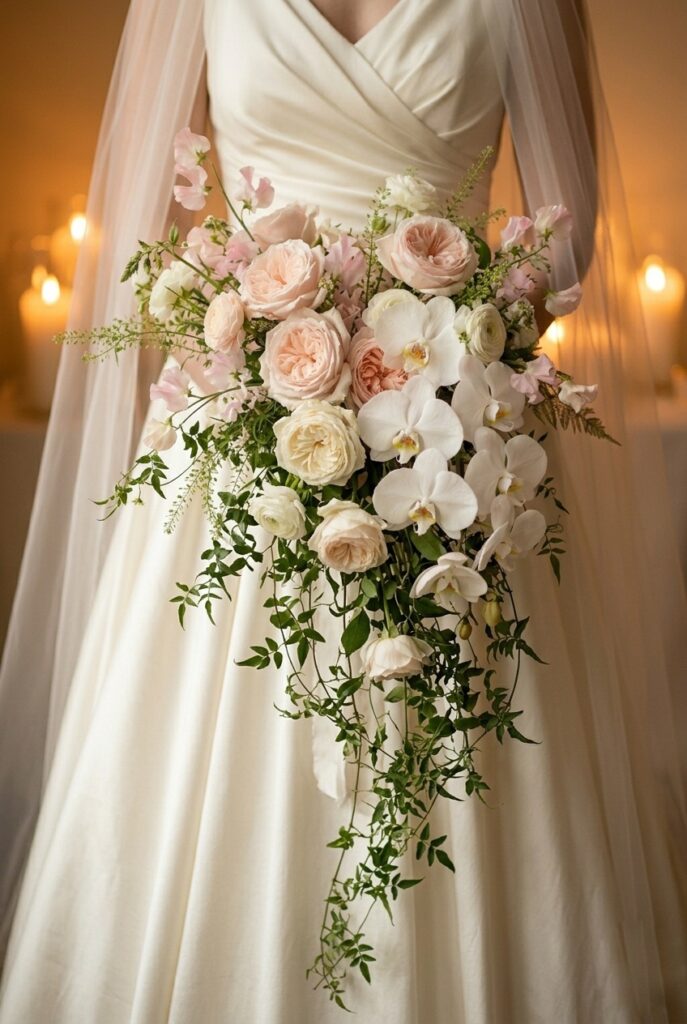
A cascade is the right choice in exactly two situations: a ball gown with a full sweeping skirt that needs the vertical line of the cascade to balance the horizontal volume at the hem, or a cathedral-length train where the drama of the dress calls for equal visual weight in the bouquet.
If you’ve been drawn to the lush aesthetic of a romantic bridal bouquet, the cascade delivers it most powerfully — but skip it entirely for column, sheath, or minimalist silhouettes, where it overwhelms rather than complements.
💸 Budget Hack #1: Cascading bouquets cost more because of labor, not just flowers — the trailing elements require wire armature and significant construction time. You can cut 30–40% of the cost by asking your florist to do a “half-cascade” or “waterfall posy”: a full round top with 8–10 trailing ivy or smilax stems below, rather than a full structured trail. The photos read as a cascade; the price doesn’t. This saves roughly $120–$200 on average versus a full constructed cascade.
4. The Single-Stem Statement: A Bold Opinion
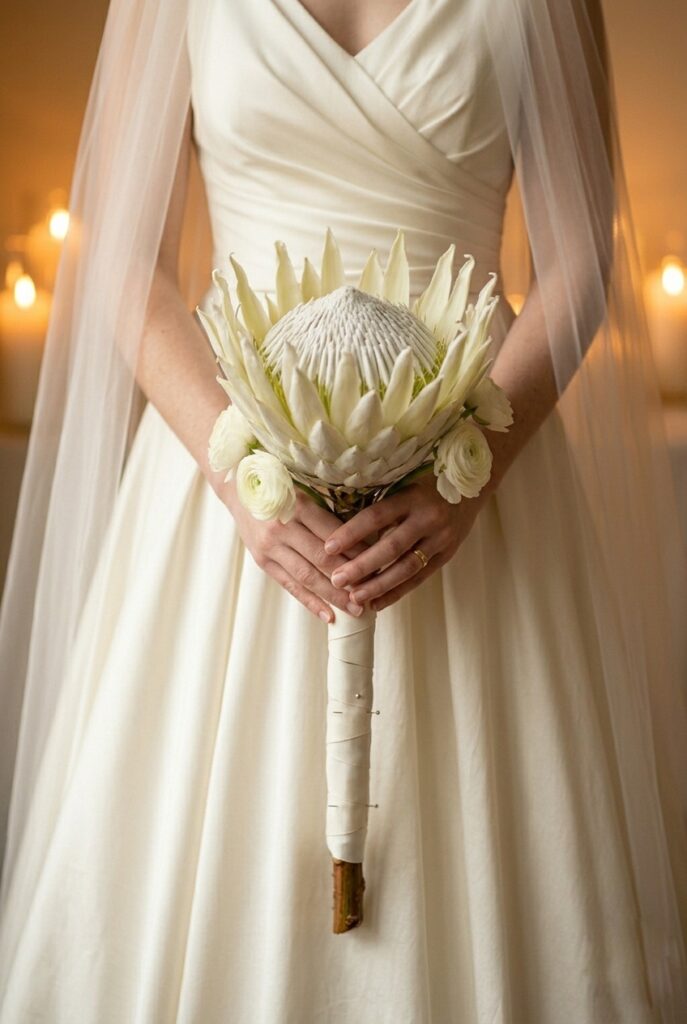
A single structural stem — a king protea, a garden peony at full open bloom, a single calla lily — carried with a wide ribbon wrap is one of the most distinctive choices you can make, and it works precisely because it’s unexpected.
It’s specifically right for minimalist, modern, and architectural dress silhouettes like crepe, structural satin, or a simple column, and it falls flat immediately on romantic or heavily embellished gowns where the single bloom reads as incomplete rather than intentional.
5. Dried and Preserved Flowers: The Enduring Alternative
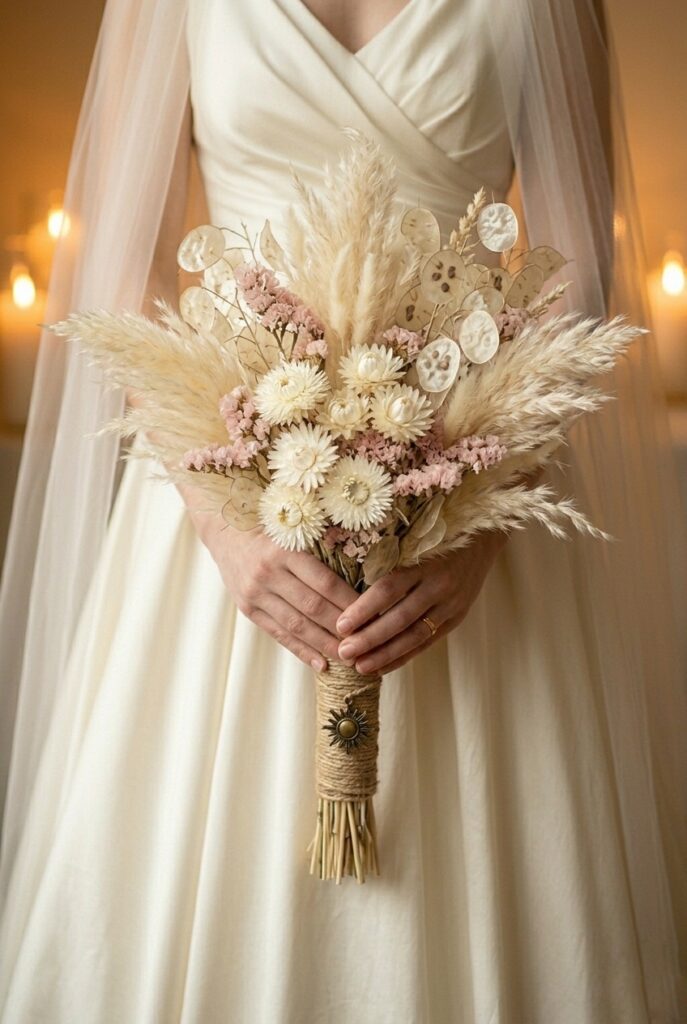
Dried and preserved bouquets can be ordered months ahead, don’t wilt in outdoor heat, and can be kept permanently afterward — advantages that fresh flowers simply can’t match.
The style fits naturally alongside different bouquet styles suited to rustic, boho, and vintage weddings, but the version to avoid is any arrangement built from poorly stored stems that read as dead rather than preserved — always source from a specialist who uses color-fast, properly dried materials.
6. The Monochromatic Bouquet: Color Theory You Can Carry
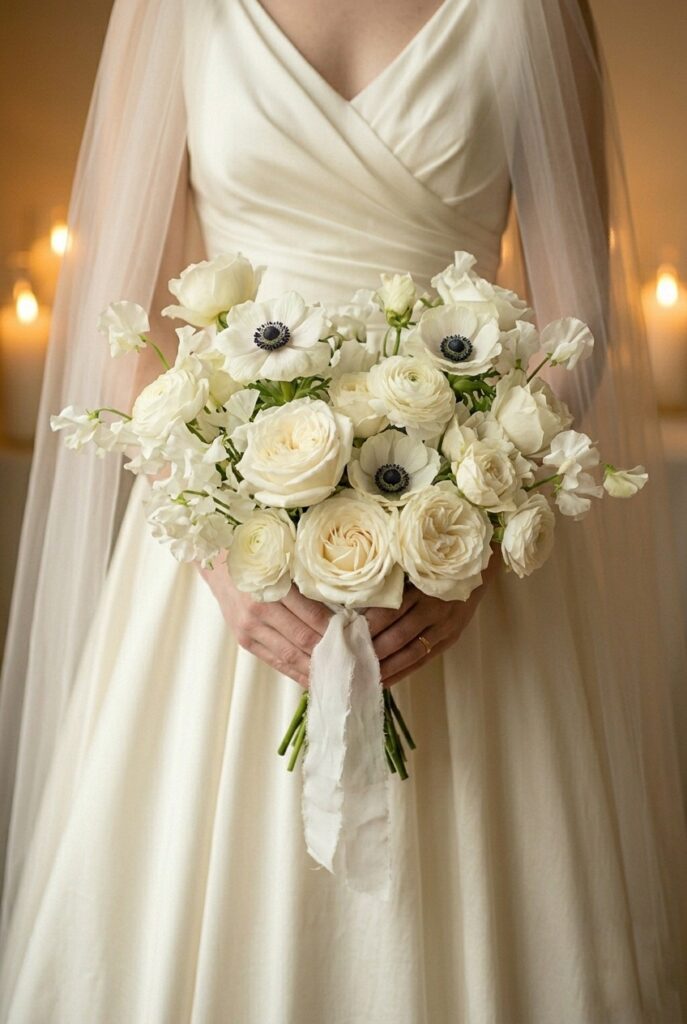
Monochromatic doesn’t mean boring — it means all the visual interest must come from texture and form variation within a single color family, which is the hardest thing to execute well and the most photogenic result when done right.
An all-white bouquet built from five distinct bloom types at five different stages of open bloom reads as intentional and layered, while the same palette built from uniform spray roses and baby’s breath looks like a grocery store arrangement — so when you’re looking at all-white wedding bouquets, ask your florist to use at minimum four distinct bloom shapes with different petal structures.
💸 Budget Hack #2: An all-white monochromatic bouquet is significantly cheaper to build yourself than any colorful arrangement because white blooms are the most widely available, year-round flower category. White spray roses from Sam’s Club or Costco run $15–$20 for 40 stems. Add white anemones from FiftyFlowers.com ($28 for 25 stems) and white lisianthus from your local wholesale flower market. Total material cost for a full-sized bouquet: $55–$80. The visual result, with proper stem-gathering technique (spiral method, rubber band tightened, then ribbon-wrapped), is indistinguishable from a $300 florist build.
7. Greenery-Forward: When the Foliage Is the Feature
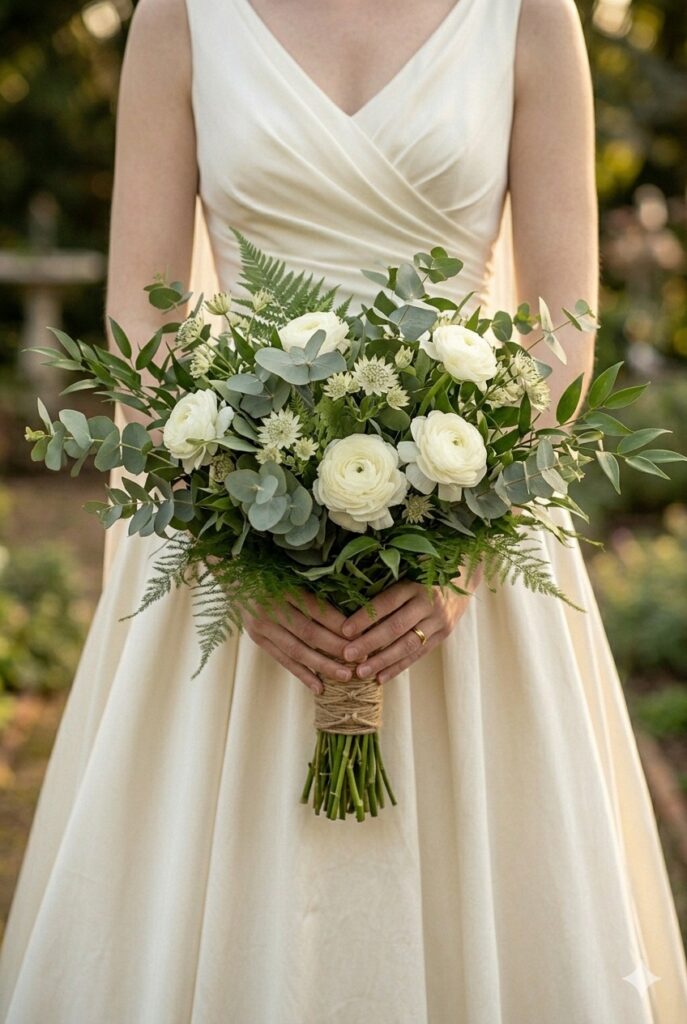
A greenery-forward bouquet — where foliage is the majority and flowers play supporting roles — has the best cost-to-impact ratio of any style on this list, because quality eucalyptus, fern, and olive branches cost significantly less than premium blooms while photographing with more depth and texture than a flower-heavy arrangement of similar size.
It works for outdoor venues and natural aesthetics, much like the approach behind this bridal flower bouquet guide, but it reads as incomplete in ultra-formal ballroom settings where the scale calls for more structured florals.
8. The Architectural Bouquet: Geometry Over Romance
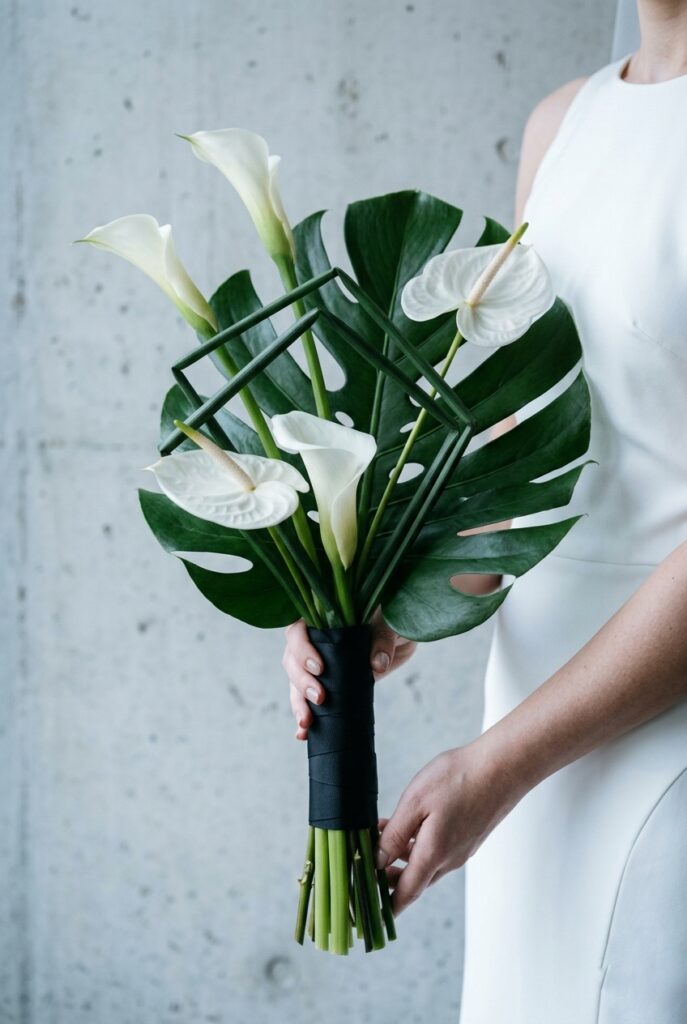
This style builds on structural logic rather than romantic abundance — calla lilies arranged at deliberate angles, proteas paired with monstera leaves, anthuriums positioned above maidenhair fern — and it’s the right answer for modern weddings and industrial venues where a garden-style bouquet would feel misaligned with the aesthetic.
If calla lily arrangements appeal to you, the architectural bouquet is the fullest expression of that instinct: it photographs with striking graphic clarity against a clean backdrop, which matters on a day when close-up bouquet shots make up a significant part of your portrait set.
9. The Heirloom-Added Bouquet: Making It Personal Without Making It Cluttered
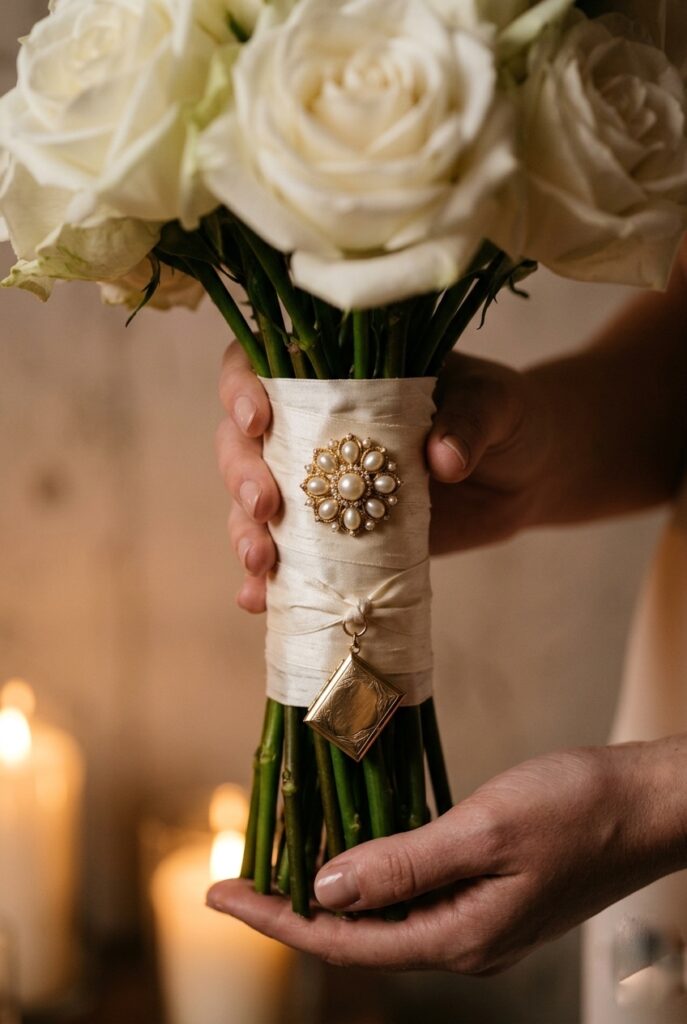
The right way to personalize your bouquet is a single meaningful piece — a grandmother’s pearl brooch, a locket with a small photo, a charm from a childhood bracelet — wrapped into the ribbon stem of your actual flower arrangement, where it’s invisible in full-length shots and becomes the detail everyone asks about in close-ups.
What it isn’t is a brooch bouquet where the entire arrangement is constructed from brooches and silk flowers: that version weighs more than fresh flowers, photographs with metallic glare rather than organic warmth, and, combined with a classic rose bouquet, the fresh flowers will always read with more warmth.
💸 Budget Hack #3: The single biggest variable in bouquet price is not the flower variety — it’s the stem count. A lush-looking bouquet can be built from 18–22 stems at the right size and with the right supporting greenery, but most brides over-order at their florist consultation because they’re seeing loose stems in a bucket rather than a finished arrangement. Before finalizing your order, ask your florist to show you a mock assembly with 18 stems, then 25, then 35. You’ll almost always find that 22 stems looks full and finished. Cutting from 35 to 22 stems can save $60–$120 on a mid-range bouquet without any visible change to the finished product.
10. The Seasonal Committed Bouquet: The Professional Shortcut to a Better Bouquet
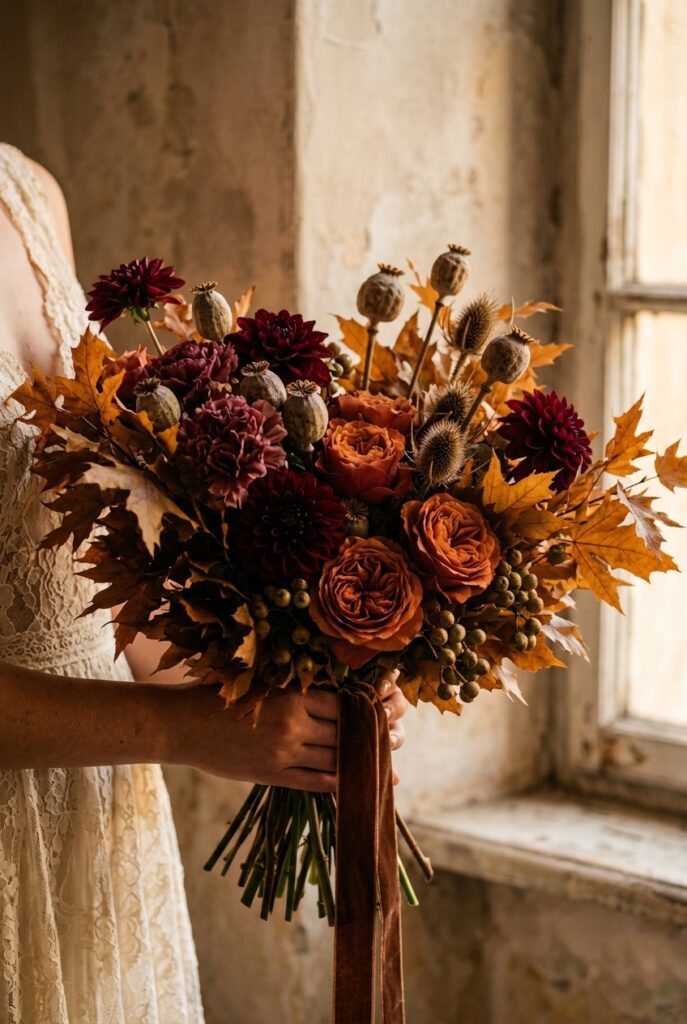
Telling your florist “I want whatever is at peak quality for my wedding date” is the single most efficient way to get a better bouquet for less money, because in-season blooms are fresher, less expensive, and more available than anything forced out of season by the cut-flower supply chain.
A spring bridal bouquet built around ranunculus, sweet peas, and garden roses in late April will outperform the same flowers ordered in January — and the seasonal commitment also hands your florist creative latitude to suggest combinations you wouldn’t have thought to ask for.
Once you’ve landed on your bouquet style, the next decisions flow naturally from it: the flowers carried by your bridesmaids, the florals along the ceremony aisle, and how the arrangements on your reception tables connect to the palette you’ve chosen.
Start with the aisle flower decoration guide to see how your bouquet choice can anchor the full ceremony floral plan, and explore spring bridal bouquet ideas if your date falls in the spring season for a closer look at exactly which blooms will be working in your favor.