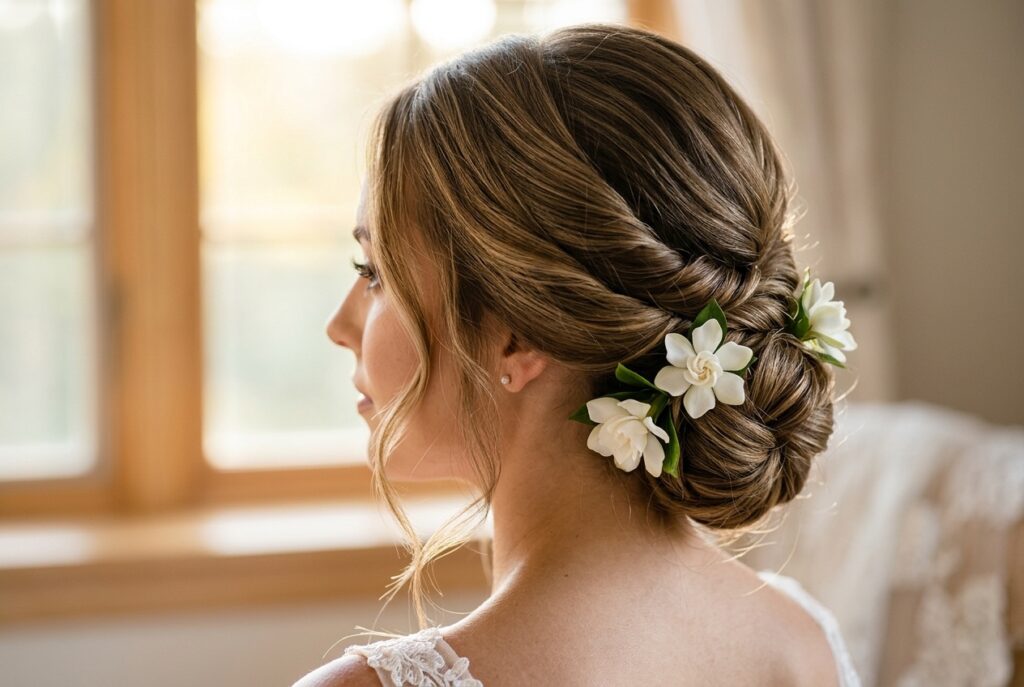
Roses are the default wedding flower for a reason — they’re available year-round, they come in every color from pure white to near-black burgundy, and they hold up well across a full wedding day.
But a rose bouquet built from the wrong variety, the wrong color choice for your gown, or the wrong size for your silhouette can underperform every other option at the same price point.
These eleven ideas address the decisions that actually determine whether your rose bouquet photographs like a florist’s portfolio piece or a grocery store arrangement.
1. Garden Roses: The One Upgrade Worth Every Extra Dollar
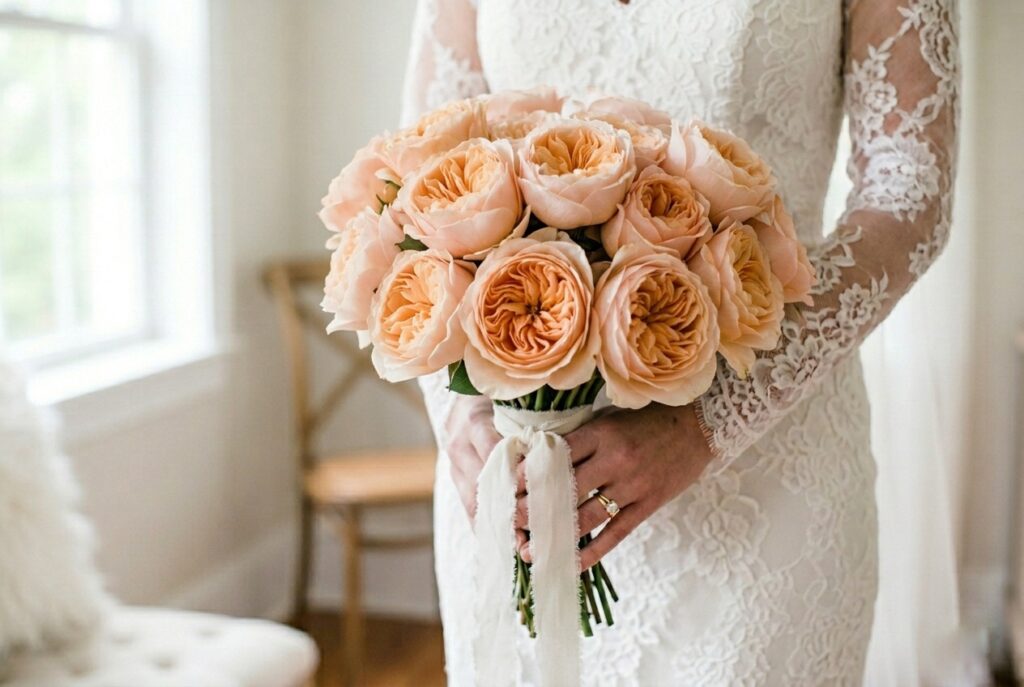
Standard hybrid tea roses — designed for supermarket longevity — arrive with stiff, pointed petals that rarely open fully before your wedding day ends, and the resulting bouquet reads flat and uniform in photos.
Garden roses (David Austin varieties like Juliet, Patience, or O’Hara) are the opposite: wide, deeply petaled blooms with visible centers and natural fragrance — and while the per-stem cost is higher, you need fewer stems to achieve the same visual volume, which is why they dominate the bridal bouquet ideas of photographers who shoot in natural light.
2. The Single-Variety Bouquet: The Move Most Florists Won’t Suggest (But Should)
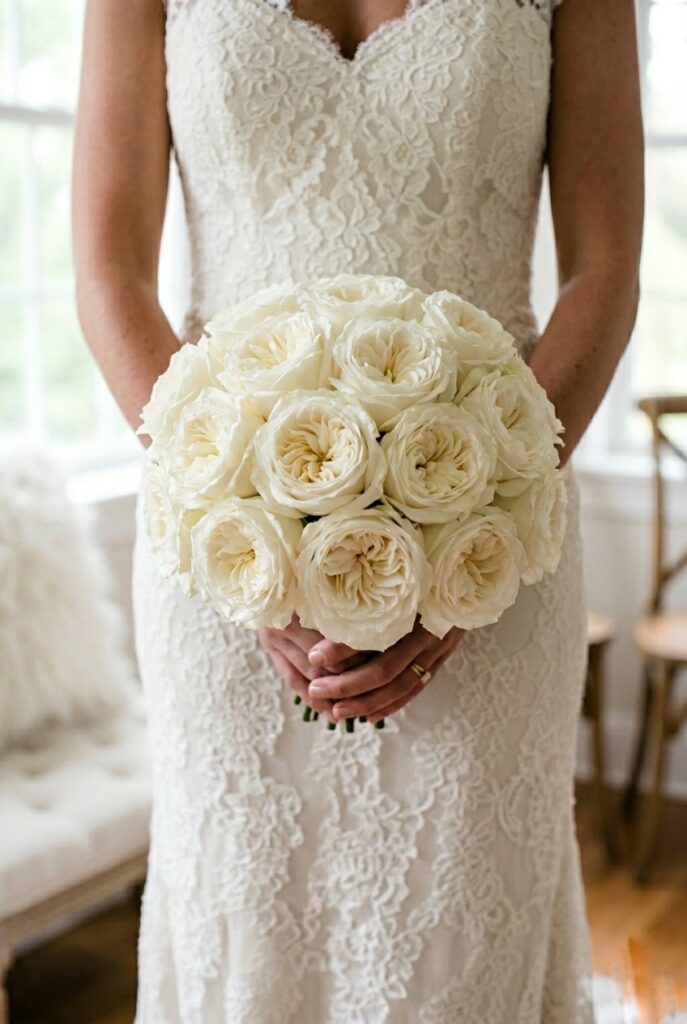
When you mix five flower types at different price points, your florist has no choice but to dilute the expensive blooms to stay in budget — you end up with three garden roses surrounded by lisianthus doing all the visual work.
A single-variety bouquet built from one rose and nothing else forces the volume and quality into the same bloom, producing something more cohesive and more architectural, which pairs naturally with effortlessly elegant decor where the styling is strong enough to carry a single, confident material choice.
3. Blush vs. White vs. Ivory: The Color Decision That Actually Matters
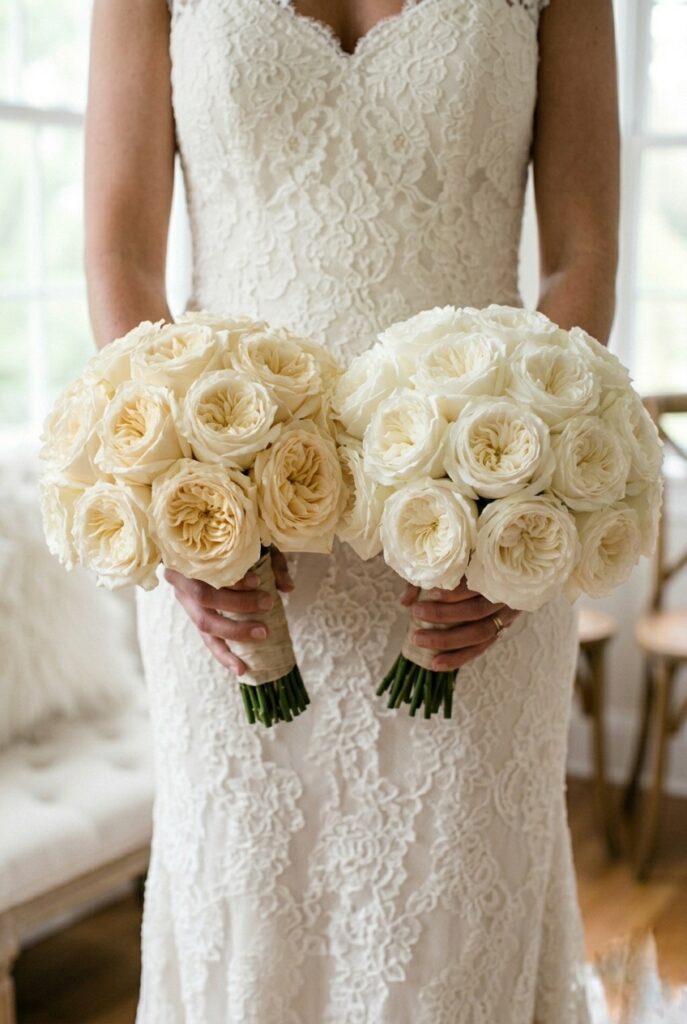
Cool-white roses can read as slightly blue or grey in photos — especially against warm-toned skin or a warm ivory gown — while blush roses add warmth to the frame and give your photographer something that doesn’t compete with the dress.
The rule: if your gown is pure cold white, cool-white roses work fine; if your gown has any warmth or creaminess, ivory or blush will photograph better — and the best way to confirm this before committing is to hold both options next to your gown fabric in natural daylight, which is exactly the approach outlined in the all-white bouquet guide.
Budget Hack #1: Order your rose color swatches from FiftyFlowers for around $15–$20 total — they sell small sample bundles of cut roses so you can physically hold your shortlisted color next to your gown fabric at home in natural light before placing any large order. This eliminates the color-mismatch problem entirely and takes under a week.
4. The Round Bouquet vs. The Cascade: One Ages Better Than the Other
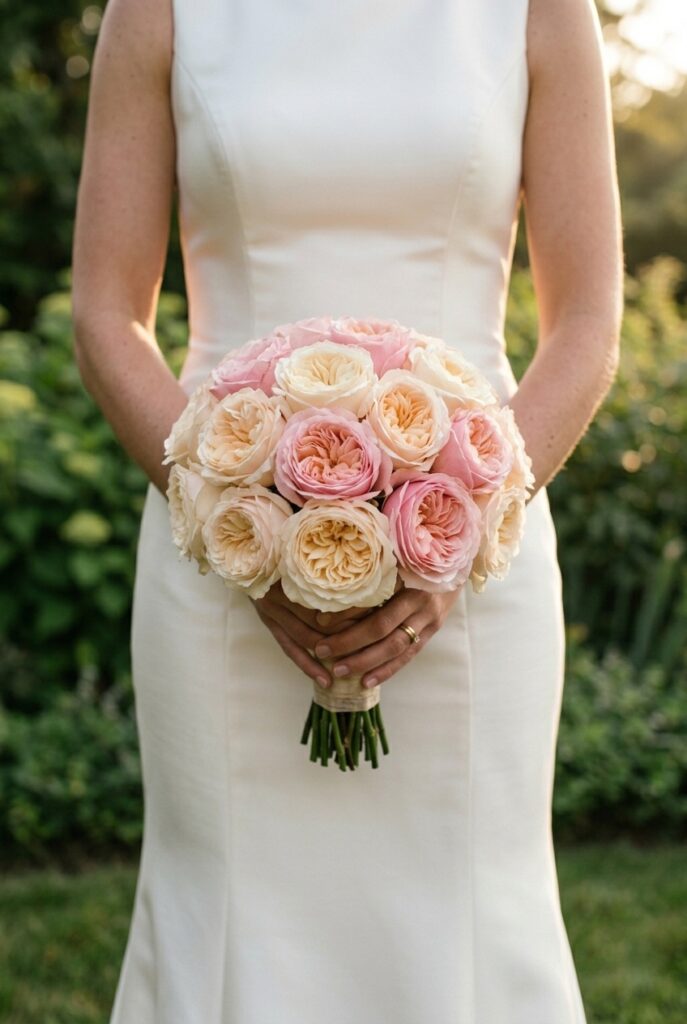
Cascading bouquets photograph dramatically in the right setting — a grand staircase, a cathedral entrance, a ballroom with thirty-foot ceilings — but they’re not versatile: at a garden wedding or smaller venue they look visually heavy and physically awkward to carry for four hours.
More critically, a cascade elongates downward, which can make a shorter bride appear even shorter in ceremony photos, while a round or domed bouquet creates a focal point at waist height that flatters every body type and venue — and for a full breakdown of when each call is right, the cascade versus round bouquet guide walks through exactly which silhouettes earn which shape.
5. Greenery Choices: What Adds Depth vs. What Drags the Price Down
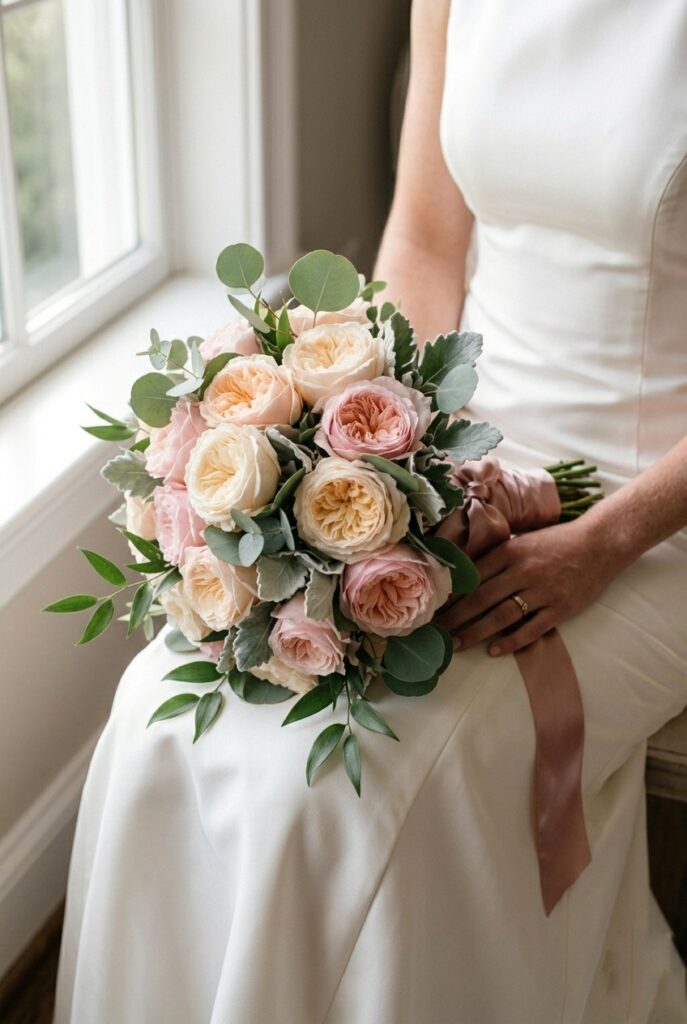
Boxwood and standard salal — the flat, dark green filler on most basic bouquets — reads exactly like what it is: padding bought to increase stem count without increasing visual quality.
Switch to eucalyptus (silver dollar or seeded), Italian ruscus, or soft fern instead, and you get a grey-blue tone that photographs beautifully alongside blush or ivory roses with natural fragrance that carries through the ceremony — the same layering logic behind every thoughtfully built bridal flower bouquet that mixes three greenery textures for depth.
6. Stem Wrapping: The Detail Photographers Notice Even If Guests Don’t
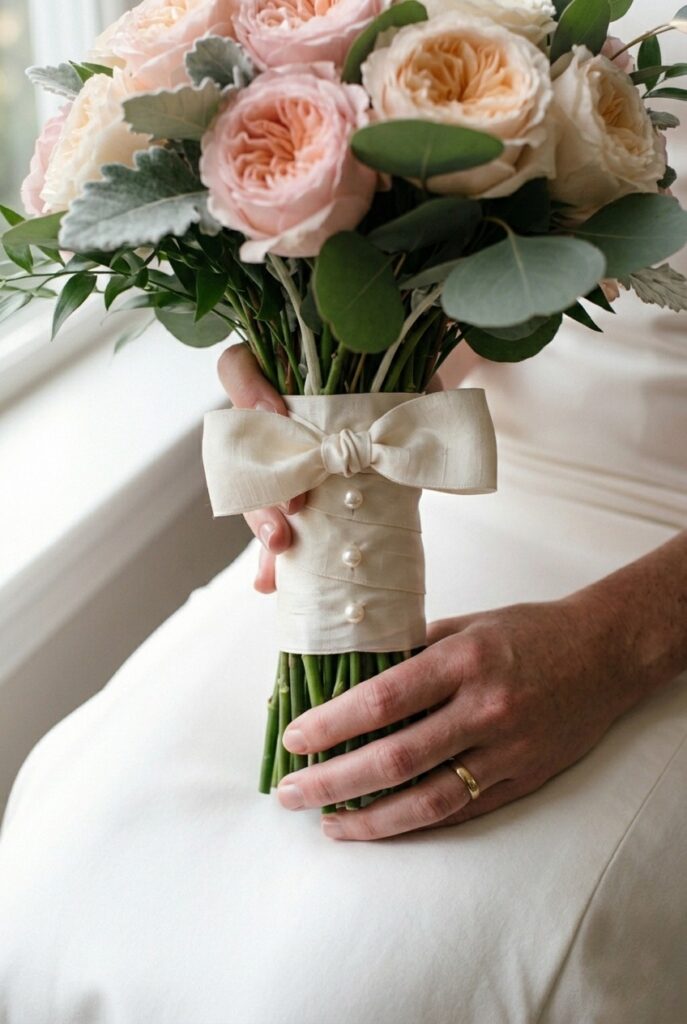
Floral tape left exposed reads as a florist running out of time; standard satin ribbon is fine, but the details that actually elevate a bouquet in close-up photos are ribbon width (wider reads more expensive), knot placement, and pin detail — three pearl-tipped corsage pins placed vertically below the bow cost under $8 for a full pack and give a finish that reads as a deliberate design decision.
The ribbon material itself — dupioni silk, raw-edge linen, or velvet — transforms the feel of the entire arrangement, which is why it appears consistently in every romantic bouquet that photographs with warmth and polish rather than as an afterthought.
Budget Hack #2: Buy your own stem ribbon and pins and bring them to your florist. Florists typically charge $15–$30 to source premium ribbon; a full yard of dupioni silk from Etsy costs $6–$9. Buy ivory, blush, or champagne velvet ribbon — 2.5 inches wide — from an Etsy ribbon seller like HauteCoutureBridal for under $12, and tell your florist you’re supplying it. You’ll get a higher-quality wrap for one-third the cost.
7. How Bouquet Size Affects Your Photographs (and Not in the Way You Think)
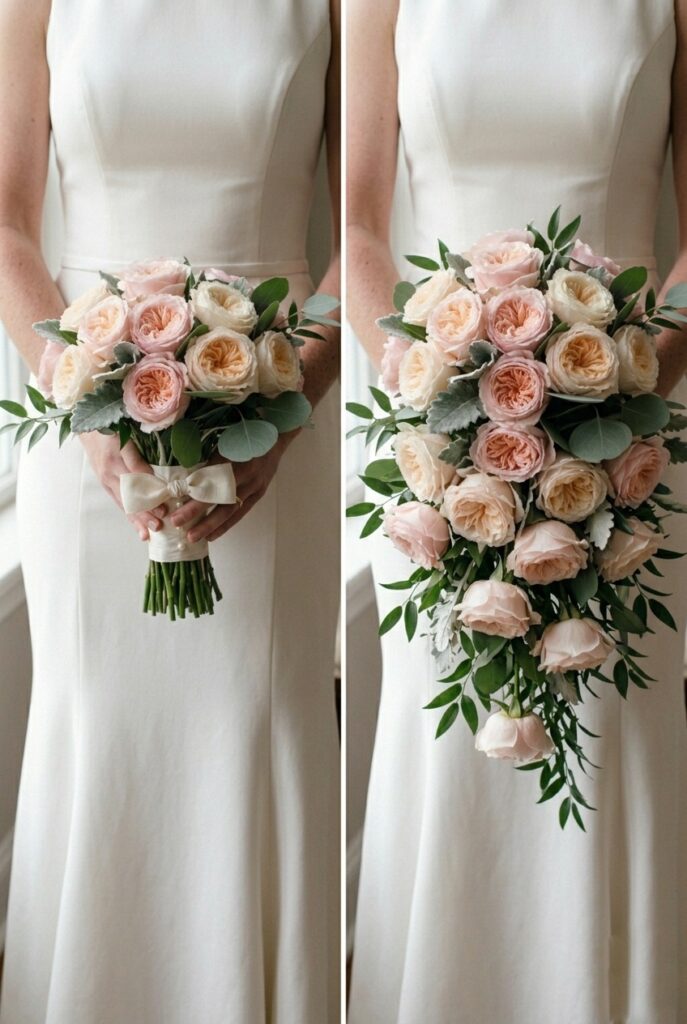
An oversized bouquet covers the dress — if you spent real money on a fitted silhouette with a corseted back or detailed waist beading, a bouquet wider than twelve inches hides all of it from the front, and you end up photographed from the back more than the front because that’s where the dress actually shows.
The editorial guideline is that your bouquet diameter should not exceed the width of your natural waist, making eight to eleven inches the sweet spot for most brides — and this holds whether you’re planning an outdoor ceremony or an indoor reception, so give your florist a maximum diameter, not just a style.
8. Rose Colors for Non-Traditional Brides: The Combinations That Actually Work
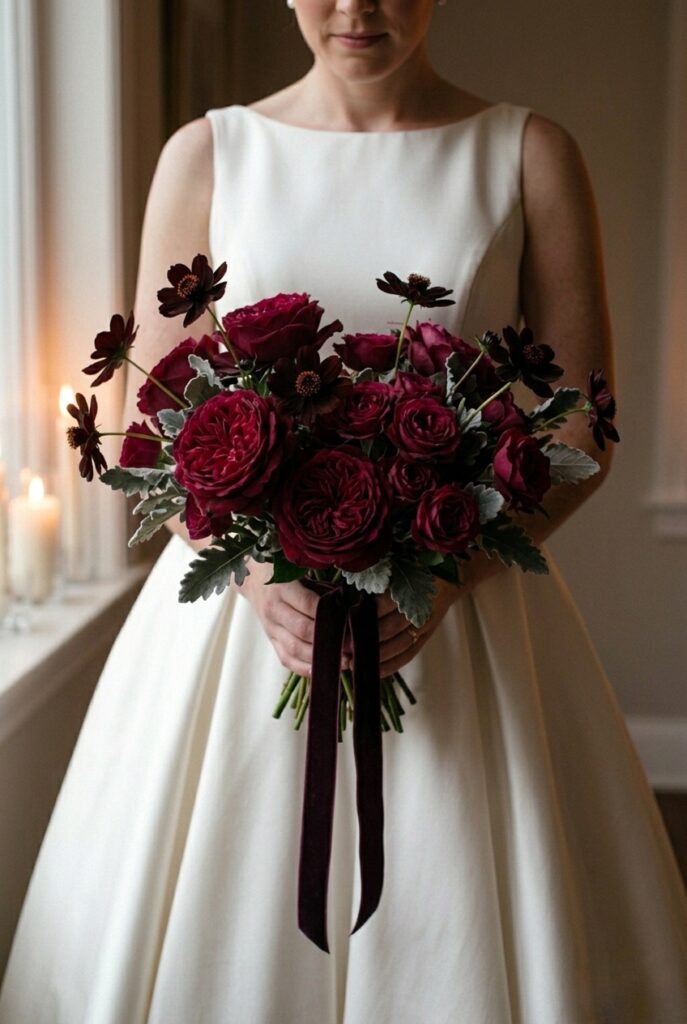
The mistake with dark rose bouquets is uniformity — a fistful of identical deep-red grocery-store roses reads as Valentine’s Day, not a wedding.
The right approach is tonal layering: deep burgundy garden roses with marsala spray roses at a slightly lighter value, plus one or two dark accent blooms for depth, a combination that looks editorial rather than accidental and works especially well in a rustic wedding setting where warm amber lighting can be tested against the palette before committing.
9. DIY Rose Bouquets: When It’s Worth It and When It Isn’t
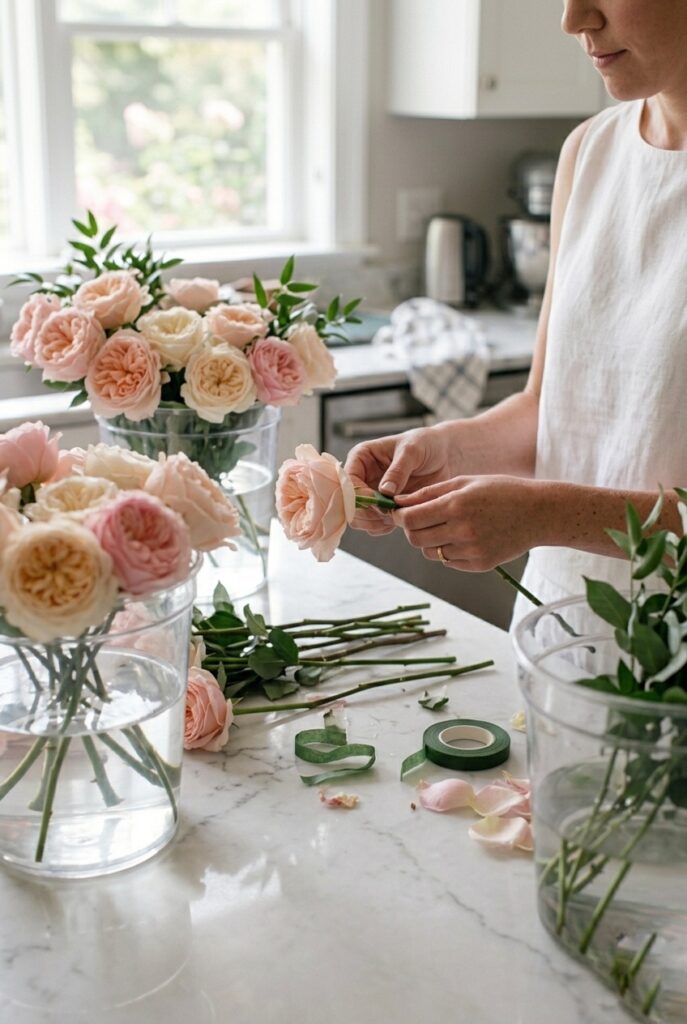
DIY makes sense for one specific scenario: you have a helper doing the mechanical work, you’re ordering from a wholesale source, and you’re not building anything the morning of your wedding.
Roses need to be conditioned — re-cut at 45 degrees and placed in warm water with floral preservative in a cool dark room — for a minimum of 24 hours before arranging, so order three days before your wedding and condition for 24 to 48 hours; understanding the full range of bouquet styles before you start will help you commit to a shape that’s achievable within your build time and skill level.
Budget Hack #3: Order your roses from Whole Blossoms or FiftyFlowers on a Tuesday or Wednesday delivery for a Saturday wedding — Thursday delivery is popular and farms are often allocated out by then. Ordering mid-week gets you first-pick of fresh cuts, and both platforms offer a 20–30% discount on bulk orders of 50+ stems versus per-stem pricing. A bundle of 50 blush garden roses from Whole Blossoms runs approximately $85–$110 wholesale — compared to the same quantity from a retail florist at $300+.
10. The Boutonniere Match: What Gets Forgotten Until the Morning Of
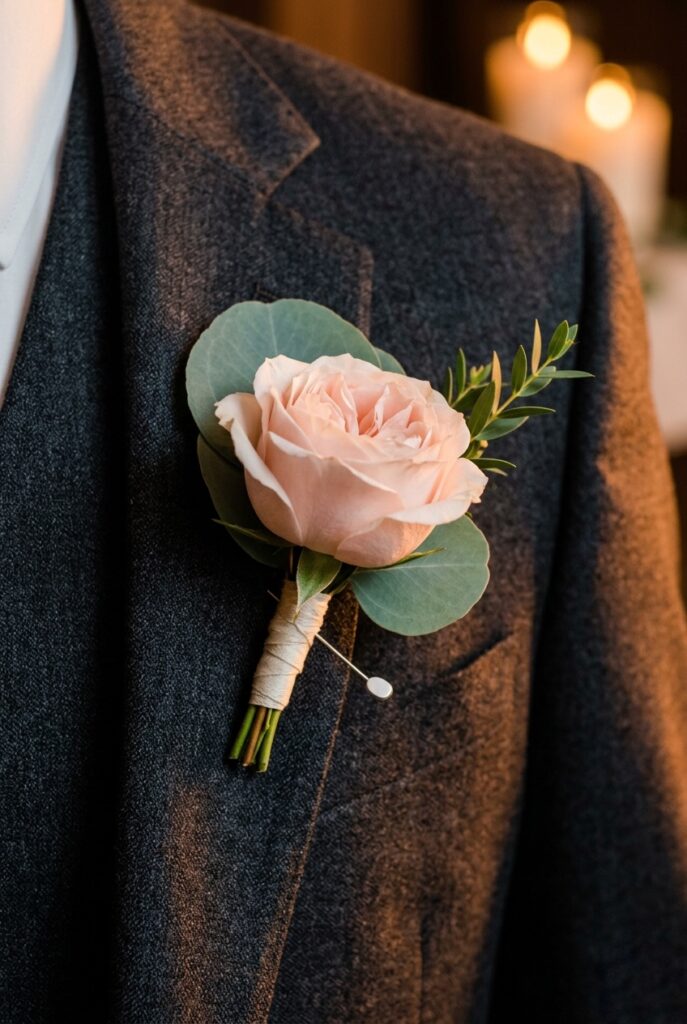
The boutonniere appears in every photo of you and your partner together, and most couples forget to coordinate it with the bridal bouquet until the last minute — the rule is simple: it should contain the exact same rose variety as your bouquet, not a complementary one, because when your florist uses the same Juliet garden rose in both pieces, every photo reads as intentional.
Order the boutonniere and bouquet simultaneously from the same source for the closest color and bloom match, and while you’re planning that coordination, note that a few loose rose blooms in bud vases on the sweetheart table centerpiece tied with the same ribbon as your bouquet creates a visual thread across the full wedding.
11. Preserving Your Bouquet: The Silica Gel Method That Actually Works
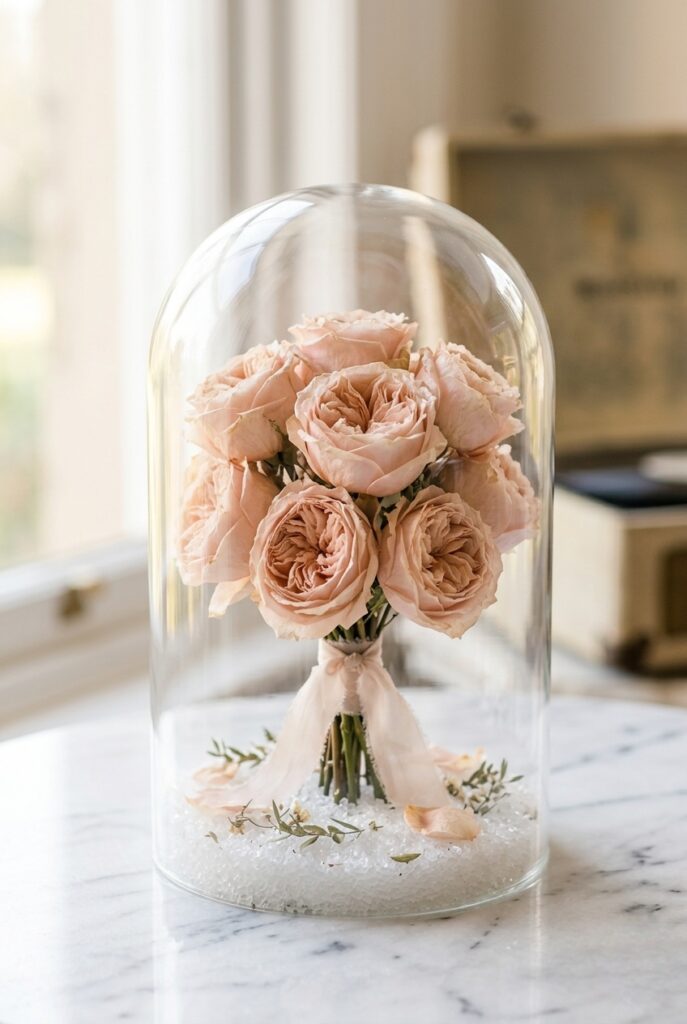
Silica gel is the most accessible and reliable method for preserving a rose bouquet at home: bury the blooms face-up in a container of silica gel crystals, seal the lid, and leave them undisturbed for four to six days — the crystals draw moisture out of the petals while maintaining the flower’s original shape far better than air-drying, which causes petals to shrink and curl.
Garden roses preserve particularly well with this method because their dense petal layers hold their structure through the drying process, making them a better candidate for preservation than the loose-petaled spring bridal bouquet varieties like sweet peas or tulips, which lose their form quickly once cut.
When the bouquet decisions are settled, the rest of the floral plan tends to fall into place quickly — the same rose variety in your hand connects naturally to the flowers on the ceremony chairs, the arrangements on the reception tables, and what your bridesmaids carry.
Use the aisle flower plan guide to see how your chosen rose translates to ceremony florals, and if your wedding is in the warmer months, the summer bouquet guide covers which rose varieties hold up best in heat and which ones need to stay in water right up until the moment you walk out.