10 Summer Bouquet which Are Never Going to Wilt — You Should Make These Choices!


HERO IMAGE / FEATURED IMAGE Alt text: Summer bridal bouquet of dahlias, ranunculus, and dried pampas grass held against a white lace wedding dress outdoors in natural sunlight Image prompt: Photorealistic close-up of a summer bridal bouquet featuring coral dahlias, creamy ranunculus, dusty miller, and wisps of dried pampas grass, held at waist height against a white lace wedding gown. Soft natural window light filtering from the left, creating gentle shadows across the petals. Warm golden tones, slightly sun-drenched atmosphere. No text overlays. Generate in horizontal landscape orientation, 3:2 aspect ratio, optimized for desktop display.

Most brides pick their summer bouquet from a photo taken in February inside a florist’s cooler — and that is exactly why it looks nothing like the dream by cocktail hour.

Summer heat doesn’t care how much you spent; it will wilt a $600 peony arrangement faster than you can say “golden hour.”

What follows is a category-by-category breakdown of what actually holds, what photographs beautifully, and what to skip entirely when the temperature tops 85 degrees.


1. Dahlias as the Foundation Bloom

IMAGE 1 HERE Alt text: Cafe au lait and coral dahlia summer bridal bouquet with eucalyptus and ivory ribbon wrap Image prompt: Photorealistic portrait of a summer bridal bouquet centered around large cafe au lait and coral dahlias, accented with seeded eucalyptus and small white lisianthus, wrapped tightly in ivory silk ribbon with a knot and trailing tails. Soft natural window light from above and left, warm daylight feel. No text overlays. Generate in vertical portrait orientation, 2:3 aspect ratio, optimized for mobile display.

Dahlias are the most underused summer bouquet flower and the single best decision you can make for an outdoor ceremony.

Their dense, layered petals hold moisture efficiently, they peak mid-to-late summer when your wedding is most likely happening, and a single café au lait dahlia has more visual weight than three garden roses at a fraction of the cost.

The cheap version of this idea is buying grocery store dahlias the week before — they’re grown for shelf life, not fullness, and the blooms sit flat and tight.

Go to a local farm stand or order café au lait or dinner plate dahlias direct from Floret Flower Farm or your regional wholesale market; $45–$80 for a full mixed bouquet worth of stems.

Only do this if your florist knows how to properly condition dahlias — ask them directly before booking.


2. Garden Roses Over Hybrid Tea Roses
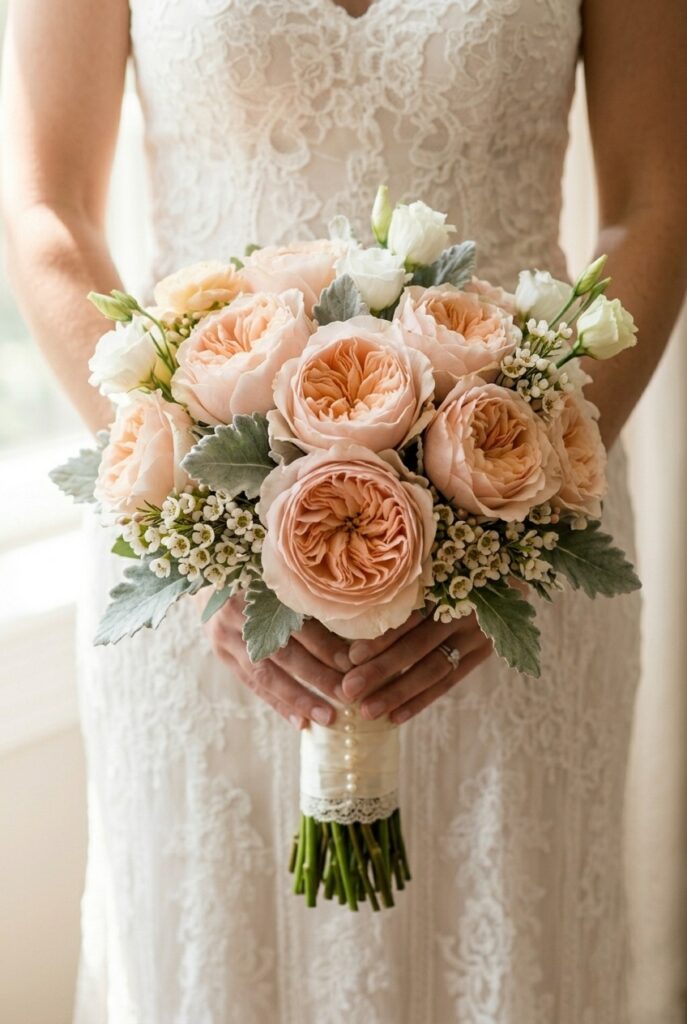
IMAGE 2 HERE Alt text: Antique garden roses in blush and apricot tones forming the center of a summer bridal bouquet Image prompt: Photorealistic close-up of a summer bridal bouquet featuring antique blush and apricot garden roses with soft, many-petaled blooms, surrounded by dusty miller foliage and small white wax flowers. Soft natural window light, airy daytime atmosphere. No text overlays. Generate in vertical portrait orientation, 2:3 aspect ratio, optimized for mobile display.

Standard hybrid tea roses — the long-stemmed dozen you think of on Valentine’s Day — have stiff, uniform petals that read as generic and corporate in wedding photos.

Garden roses like Juliet, Kiera, and Patience have 60–100 petals per bloom, a cupped shape that photographs with incredible depth, and significantly better heat tolerance because of their tight petal density.

They cost more: $4–$9 per stem versus $1–$2 for hybrid teas. Worth every dollar when one bloom does the work of five.

Source from local florists or order wholesale through Mayesh Wholesale Florist or FiftyFlowers.com, where a box of 25 garden roses runs $85–$130.

Skip this if you’re working with a tight budget and can’t afford the premium — spend those dollars on dahlias instead.


3. Lisianthus — the Secret Volume Flower
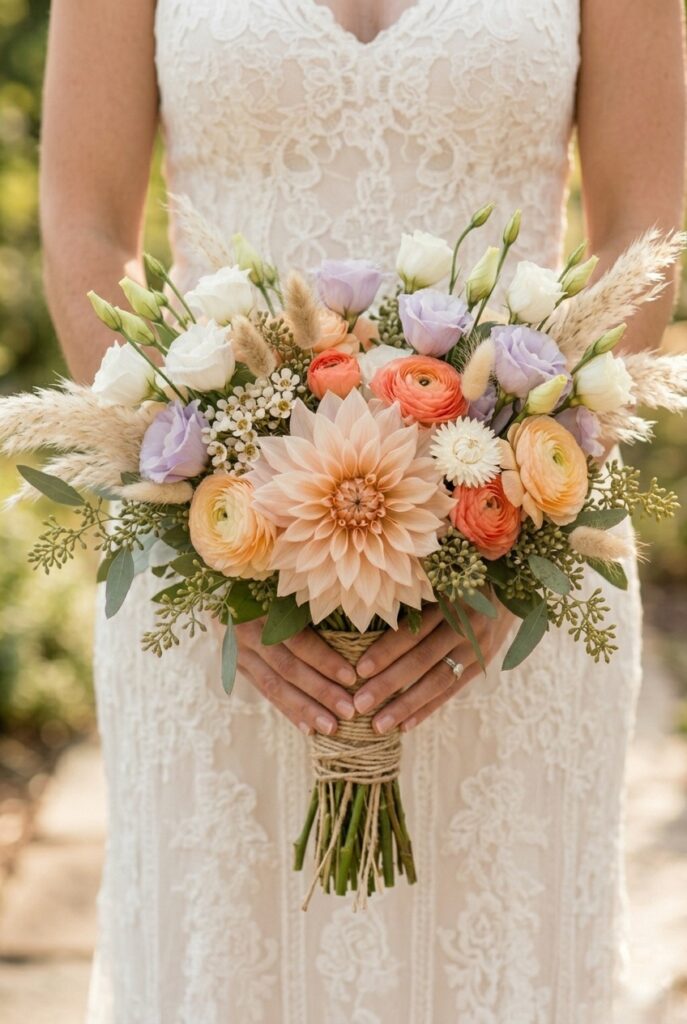
IMAGE 3 HERE Alt text: White and pale purple lisianthus flowers mixed into a summer bridal bouquet with eucalyptus stems Image prompt: Photorealistic portrait of a summer bridal bouquet featuring white and pale lavender lisianthus blooms alongside seeded eucalyptus and small coral ranunculus, bound with a sage green velvet ribbon. Soft natural daylight from a nearby window, clean and airy atmosphere. No text overlays. Generate in vertical portrait orientation, 2:3 aspect ratio, optimized for mobile display.

Lisianthus looks like a peony or a garden rose from three feet away — ruffled, layered, full — but costs a fraction of the price and holds up in summer heat far better than either.

Most guests won’t know what it is, which is exactly the point. A bunch of lisianthus fills visual space in a bouquet the way no filler flower can, and it comes in white, cream, blush, dusty lavender, and deep plum.

Order a bundle of 10 stems from Whole Blossoms or your local wholesale supplier for around $18–$28 — and use it to stretch a budget of higher-cost focal flowers further without the bouquet reading as cheap.

This is the trick florists use when a bride wants a “peony look” on a modest budget.

💸 Budget Hack #1: Lisianthus bundles at Trader Joe’s and Whole Foods are often stocked during peak summer — walk the floral section the Thursday before your wedding and you can grab a bundle of 10 stems for $10–$14. That same lisianthus from a florist under the label “wedding flowers” runs $22–$35 per bunch. Same flower. Buy it Thursday, condition stems in cool water for 24 hours, and hand to your florist Friday.


4. Dried Elements for Heat-Proof Texture
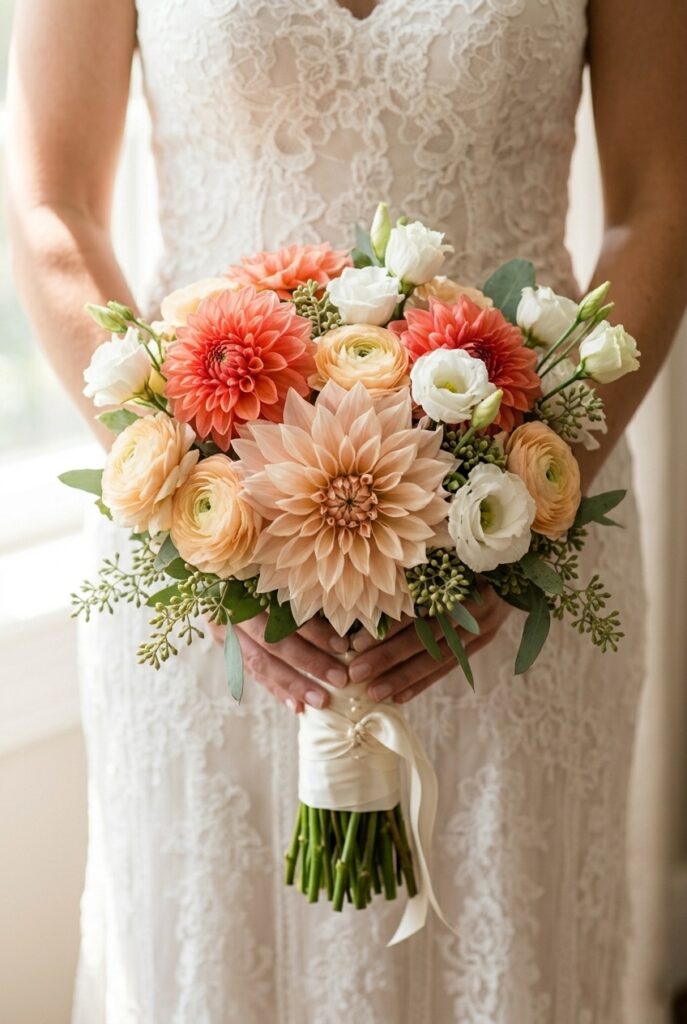
IMAGE 4 HERE Alt text: Dried pampas grass, preserved bunny tail grass, and fresh ranunculus combined in a modern summer bridal bouquet Image prompt: Photorealistic portrait of a modern summer bridal bouquet combining creamy fresh ranunculus with dried pampas grass plumes, dried bunny tail grass, and preserved white strawflowers, all loosely gathered and wrapped with natural twine. Warm soft natural daylight, boho outdoor atmosphere. No text overlays. Generate in vertical portrait orientation, 2:3 aspect ratio, optimized for mobile display.

The most heat-proof component of any summer bouquet is one that’s already dry.

Mixing dried elements — pampas grass, bunny tails, dried lunaria, preserved amaranth — with 60–70% fresh blooms gives you a bouquet that photographs with incredible texture and simply cannot wilt.

This is the trend that crossed over from editorial into real weddings and stayed, because it solves a real problem.

The bad version of this is buying a craft store dried arrangement that looks stiff and dusty.

Source dried elements from an Etsy shop like WildBlooms or DryingFlowerShop, where a curated mix of dried stems runs $25–$45 shipped, or from local dried flower farms.

Your florist combines them with fresh focal flowers for a look that’s genuinely original.


5. Protea for a Statement Summer Bouquet
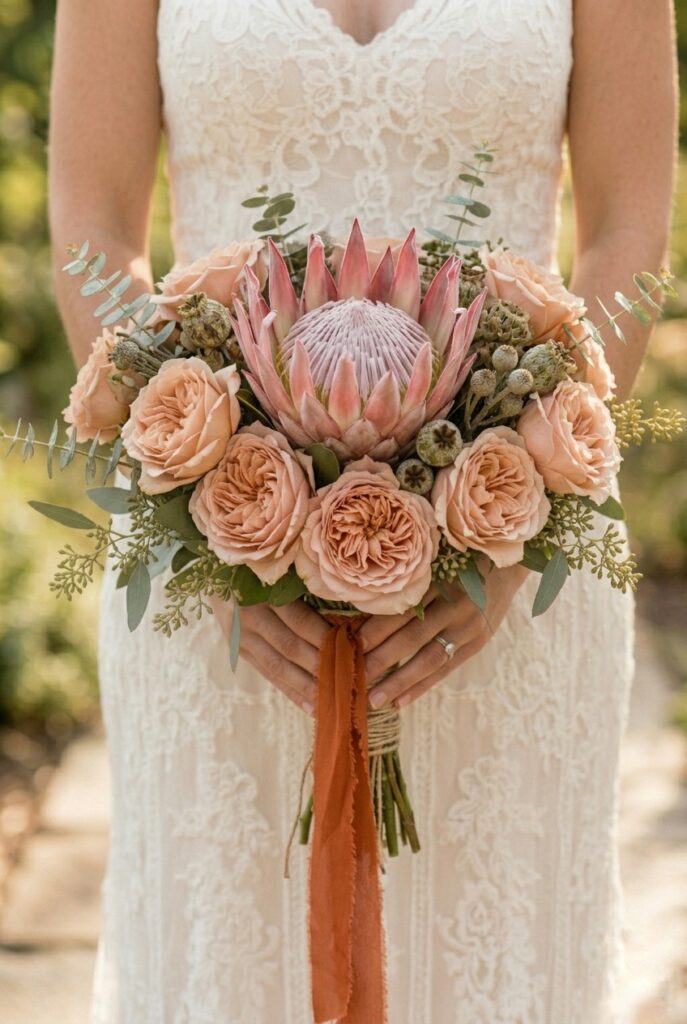
IMAGE 5 HERE Alt text: King protea and garden roses summer bridal bouquet in terra cotta and blush tones Image prompt: Photorealistic portrait of a dramatic summer bridal bouquet featuring a large king protea bloom as the centerpiece, surrounded by dusty peach garden roses, eucalyptus, and seeded pods, wrapped in rust-orange silk ribbon. Warm natural sunlight, outdoor garden atmosphere. No text overlays. Generate in vertical portrait orientation, 2:3 aspect ratio, optimized for mobile display.

Protea is native to South Africa and Australia — it evolved to survive extreme heat and dry conditions, which makes it the single most heat-tolerant bold flower available.

A king protea as the centerpiece of a summer bouquet is a statement that reads luxury, earthy, and completely original.

Pair it with dusty miller, ranunculus, and eucalyptus in terra cotta or blush tones for a summer color story that photographs unlike any roses-and-baby’s-breath arrangement you’ve ever seen.

Order through Mayesh or FiftyFlowers; a single king protea runs $12–$18 per stem, and you only need one as the focal point.

If protea feels too bold, pincushion protea is smaller, softer, and still completely heat-resistant — available in cream, coral, and deep red for $8–$12 per stem.


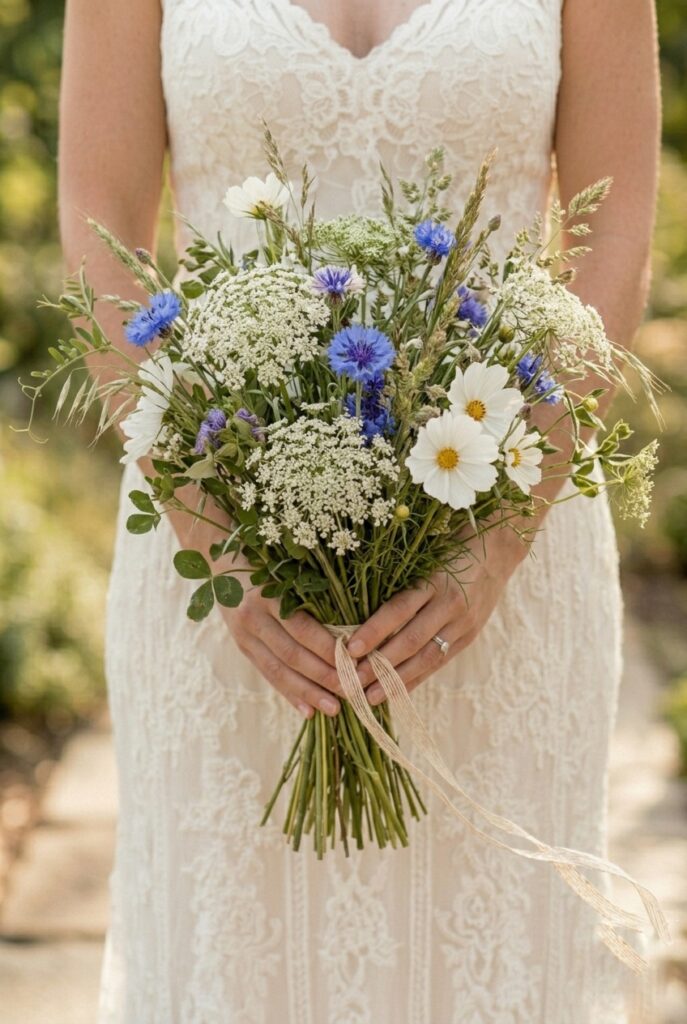
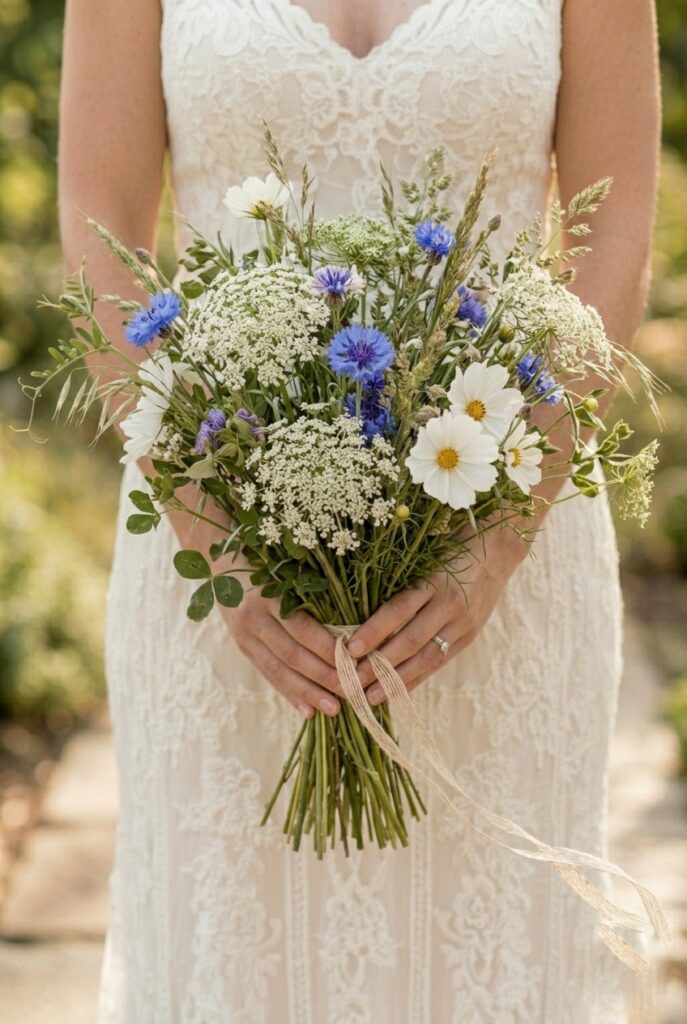
6. The Wildflower Garden Bouquet

IMAGE 6 HERE Alt text: Loose wildflower summer bridal bouquet with Queen Anne's lace, blue cornflowers, and green foliage Image prompt: Photorealistic portrait of a loose, unstructured summer wildflower bridal bouquet featuring Queen Anne's lace, blue cornflowers, white cosmos, delicate grasses, and green foliage stems, held loosely without tight wrapping, bound with pale twine. Soft natural daylight, meadow-like atmosphere. No text overlays. Generate in vertical portrait orientation, 2:3 aspect ratio, optimized for mobile display.

A wildflower bouquet done right is one of the most photographically interesting choices for a summer wedding — but most florists execute it badly.

The wrong version is a generic mixed bunch from the wholesale market tightly bound until it looks like every grocery store arrangement.

The right version is loose, asymmetrical, and built around flowers that actually grow in summer fields: Queen Anne’s lace, cornflower, cosmos, daucus, scabiosa, and native grasses.

The asymmetry and movement are the entire point — this bouquet should look like you gathered it on the way to the ceremony.

Ask your florist specifically for a “garden-gathered” or “unstructured” hand-tied style.

Source locally if possible; for a DIY bouquet approach, check what’s blooming at your regional farmers’ market in July and August.

Cost varies: $120–$250 from a florist, or $40–$70 in raw stems for DIY.

💸 Budget Hack #2: Order a “mixed seasonal wildflower” bulk box from Whole Blossoms — they ship directly from their California farm, and a medium bulk box (around 200 stems of mixed wildflowers and greenery) costs $89–$140. That’s enough flowers for a bridal bouquet, two bridesmaid bouquets, and a ceremony arrangement. Divide the stems strategically, condition overnight in cool water, and assemble the morning of. This approach saves 50–60% compared to a florist-assembled wildflower package.


7. Tropical Blooms for Destination and Beach Weddings
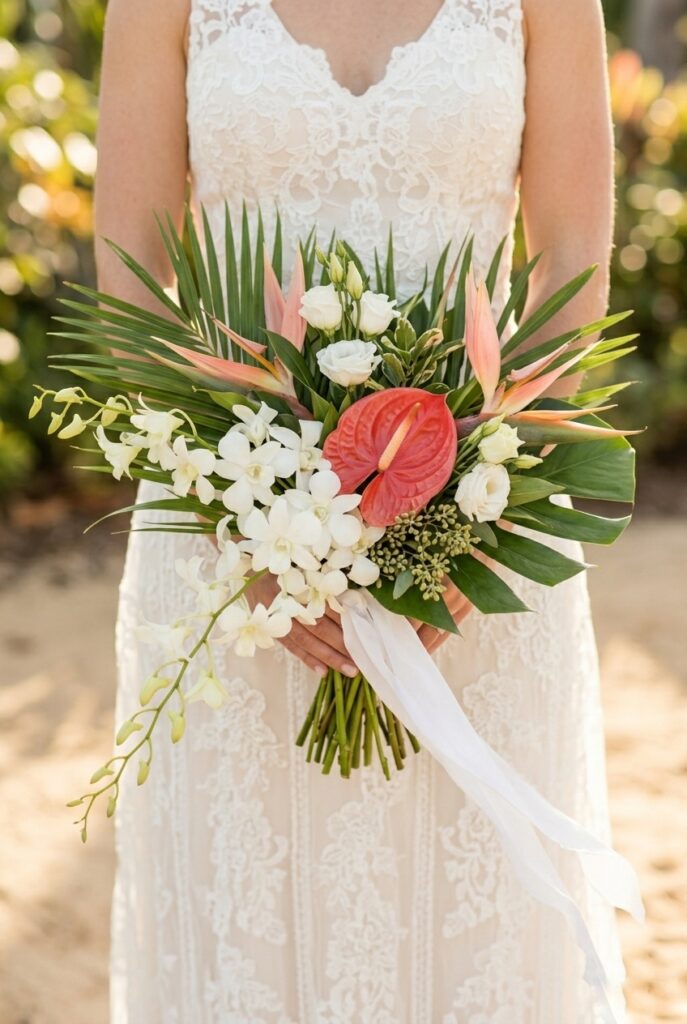
IMAGE 7 HERE Alt text: Tropical bridal bouquet with anthuriums, orchids, and bird of paradise for a beach summer wedding Image prompt: Photorealistic portrait of a tropical summer bridal bouquet featuring white dendrobium orchids, a small red anthurium, tropical foliage, and a single bird of paradise bloom in blush and orange, loosely bound in white silk. Bright natural daylight with warm golden tones, tropical outdoor atmosphere. No text overlays. Generate in vertical portrait orientation, 2:3 aspect ratio, optimized for mobile display.

Tropical flowers — orchids, anthuriums, heliconia, bird of paradise — evolved in hot, humid climates, which makes them virtually indestructible at a summer outdoor wedding.

Their waxy petals don’t dehydrate, they hold color for days after cutting, and they photograph with incredible graphic impact against white wedding dresses.

Only do this if your aesthetic leans toward modern, tropical, or destination — these blooms land awkwardly at a traditional ballroom wedding.

For a beach or outdoor summer wedding, there’s no better choice.

Orchid stems cost $3–$8 each at wholesale; a tropical bouquet composed primarily of orchids and foliage runs $80–$180 from a florist depending on scale.

Check Zola’s heat-tolerant flower guide for a complete list of which tropical varieties work best by region.


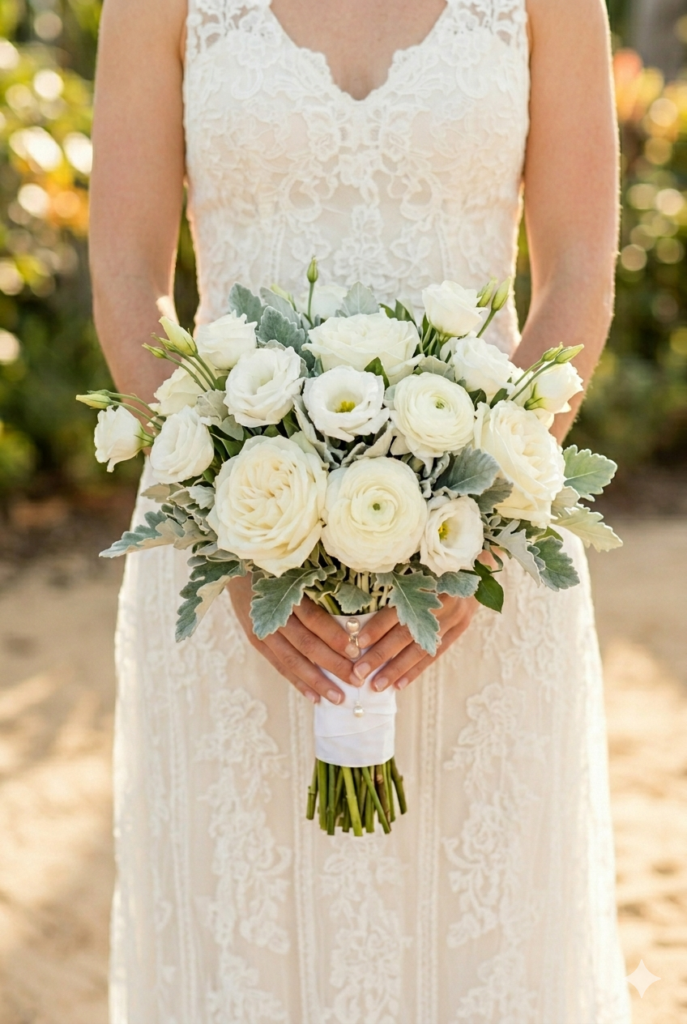
8. The All-White Summer Bouquet

IMAGE 8 HERE Alt text: All-white summer bridal bouquet with white garden roses, white ranunculus, and silver dusty miller Image prompt: Photorealistic portrait of a clean, structured all-white summer bridal bouquet featuring white garden roses, white ranunculus, white lisianthus, and silver-green dusty miller leaves, wrapped in white satin ribbon with a pearl pin detail. Soft natural window light, clean elegant atmosphere. No text overlays. Generate in vertical portrait orientation, 2:3 aspect ratio, optimized for mobile display.

Bold opinion: an all-white bouquet in summer is more striking than any colorful arrangement, because it photographs clean against literally every backdrop — garden, beach, barn, ballroom — and the whites pop against a summer tan in a way that pink or peach bouquets simply don’t.

Build it in layers of texture rather than one flower type: white garden roses for fullness, white ranunculus for the ruffly center, white lisianthus for airy volume, silver dusty miller for contrast, and a single trailing stem of white jasmine if your florist can source it.

The scent of jasmine in a summer bouquet is something guests notice from six feet away.

Cost: $200–$380 from a full-service florist; $80–$120 in wholesale stems for a skilled DIY approach.

For inspiration on how an all-white palette works across your entire summer wedding decor, build the bouquet first and let the rest of the palette follow it.


9. Succulents and Greenery-Forward Minimalist Bouquets
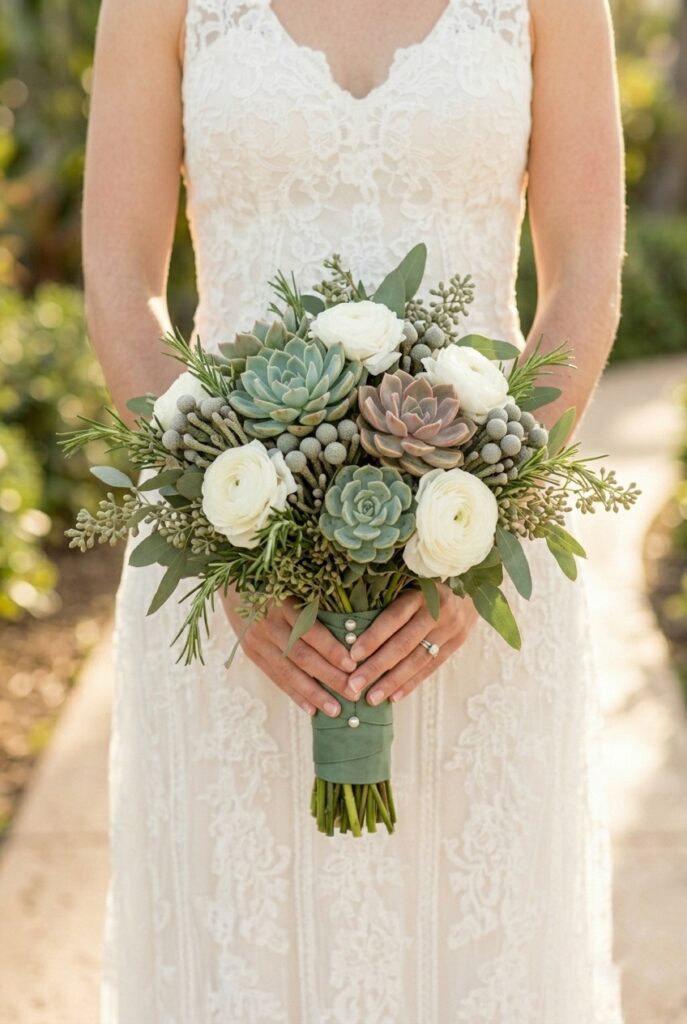
IMAGE 9 HERE Alt text: Minimalist summer bridal bouquet with succulents, eucalyptus, and white ranunculus Image prompt: Photorealistic portrait of a minimalist summer bridal bouquet featuring three varieties of small succulents nestled among seeded eucalyptus, trailing rosemary sprigs, and three white ranunculus blooms, wrapped tightly in dark sage green grosgrain ribbon. Soft natural window light, clean modern atmosphere. No text overlays. Generate in vertical portrait orientation, 2:3 aspect ratio, optimized for mobile display.

Succulents are the most heat-tolerant botanical material available, full stop.

A bouquet built around them — with eucalyptus, rosemary, sage, and minimal blooms — is impossible to wilt, photographs with extraordinary texture, and works for garden, outdoor, and backyard weddings especially well.

This approach costs significantly less than a full floral bouquet: $60–$120 from a florist, and succulents can even be planted after the wedding.

The risk is that it can read as “Pinterest craft project” if the varieties aren’t chosen carefully.

Stick to echeveria, sedum, and aeonium in muted green, purple-grey, or dusty blue for an elevated look.

Skip the hot-glued succulent bouquets sold on Amazon — the glue damages the plant and they look exactly as cheap as they are.

Source loose succulents from Succulent Gardens (succulentgardens.com) or Mountain Crest Gardens, where you can buy a mixed tray of 32 rosette succulents for around $40–$55.

💸 Budget Hack #3: Mountain Crest Gardens sells individual echeveria rosettes for as little as $1.50–$3.50 each — the same variety a floral designer would charge $6–$10 per succulent for in a boutique arrangement. Order 15–20 mixed rosettes ($30–$50), combine with $20 worth of eucalyptus from a farmers’ market, and have a florist bind it for a one-hour assembly fee ($50–$75). Total cost: $100–$145 for a succulent bouquet a florist would price at $225–$300.


10. The Cascading Bouquet, Done Right for Summer
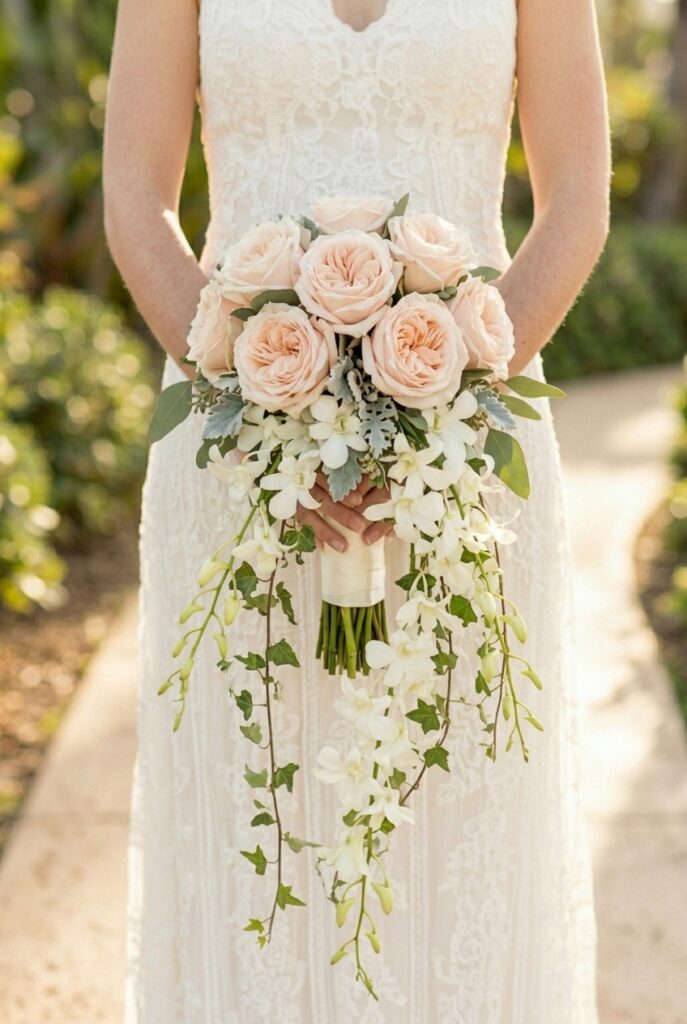
IMAGE 10 HERE Alt text: Elegant cascading summer bridal bouquet with trailing orchids, ivy, and garden roses flowing downward Image prompt: Photorealistic portrait of an elegant cascading summer bridal bouquet featuring blush garden roses at the top, trailing dendrobium orchids and English ivy vines flowing downward, with dusty miller accent leaves, bound in ivory satin. Soft natural light with warm golden undertones, formal yet natural atmosphere. No text overlays. Generate in vertical portrait orientation, 2:3 aspect ratio, optimized for mobile display.

Cascading bouquets went quiet for years because the over-the-top 80s version looked dated.

What’s coming back now is a refined cascade — not armful-of-flowers-and-ivy, but a structured round bouquet with three to five trailing stems of orchid, jasmine vine, or amaranth falling 12–18 inches below.

This works especially well at elegant outdoor weddingswhere the trailing elements catch the breeze and look extraordinary in motion on camera.

The key: those trailing elements must be heat-tolerant (orchids and jasmine hold well; trailing roses do not).

Cost for a custom cascade: $280–$450 from a specialty florist. Reference The Knot’s heat-resistant wedding flower list when briefing your florist on which stems to build the cascade from.


Decision Filter

If your ceremony is outdoors in direct sun and your guest count is over 100, make durability your first filter — build around dahlias, protea, garden roses, and lisianthus, and treat any other flowers as accents.

If you’re working with a budget under $200 for the bridal bouquet, the wildflower approach sourced wholesale plus the lisianthus-as-peony-substitute strategy is your clearest path to a full, beautiful arrangement without compromise.

If your venue is a simple, intimate setting — backyard, garden, or beach — lean toward the loosely gathered wildflower or the tropical bouquet; structured, wired designs look stiff against natural environments and photograph worse, not better.


The Real Reason

The real reason summer bouquets fail isn’t flower choice — it’s timing.

Here’s the insider observation most brides never hear: your florist builds your bouquet the morning of your wedding, but most photographers capture your getting-ready shots, the ceremony, and the first hour of reception within a four-hour window.

After that, the bouquet goes on a table under venue lighting, and no one photographs it again. This means you only need your bouquet to look perfect for about 90 minutes of direct camera time.

The contrarian insight this reveals: you can use flowers with moderate heat tolerance as focal pieces — even peonies, even hydrangeas — if your florist uses the hydration wrap method (water-soaked cotton wrapped at the base of stems, hidden under ribbon), you keep the bouquet in a cooler until twenty minutes before the ceremony, and your outdoor time is limited to the ceremony and a 30-minute portrait session.

The mistake is treating the bouquet like it needs to survive all day in open air, when in reality it only needs to survive an hour and a half on camera.


Mistakes to Avoid

Mistake 1: Listening to florists who say “peonies are fine for summer.” This directly contradicts what most wedding blogs and even some florists will tell you — that peonies work in summer with “proper care.”

They can work, conditionally, with the hydration wrap technique described above.

But if your florist doesn’t proactively mention stem conditioning and cooler storage, they are not planning for the reality of a 90-degree outdoor ceremony.

Peonies without that protocol will look visibly past-peak within two hours in full sun.

Ask the direct question: “How are you conditioning the stems the morning of?” If they hesitate, reconsider the flower choice.

Mistake 2: Paying for a bouquet that includes hydrangeas as a volume filler. Hydrangeas are the cheapest-to-wholesale volume flower, which is exactly why florists love them — they make a bouquet look full for less money.

But in summer heat, hydrangeas wilt faster than almost any other cut flower, and florists often charge the same as if they’d used lisianthus, which holds four times longer.

Couples routinely spend $50–$80 on what amounts to filler that looks wilted by cocktail hour.

Ask specifically: “What are you using to add volume, and how does it hold in heat?” Swap hydrangeas for lisianthus or wax flower and insist on it.

Mistake 3: Not accounting for bouquet weight in the heat. This is one nobody talks about until after the wedding.

A large bridal bouquet can weigh 1.5–3 pounds. Holding that weight for a 25-minute ceremony and a 30-minute photo session in summer heat causes hand fatigue, sweating, and constant adjusting — all of which shows in photos.

Ask your florist to keep the handle tight and compact (not fanned out wide at the stems), wrap with non-slip ribbon rather than silk, and keep the overall diameter under 12 inches unless you specifically want a dramatic statement piece.

Mistake 4: Matching your bouquet perfectly to your bridesmaid dresses. This is uncomfortable to say, but: matching your bouquet color to your bridesmaids’ dress color almost always makes the bouquet disappear visually in group photos.

The bouquet is in your hands, centered in the frame, and if it reads the same color as the dresses around you, the whole image flattens.

Your bouquet should contrast your dress and complement the overall palette without being a direct color match to the party around you.

A bride in white holding blush ranunculus surrounded by blush-gowned bridesmaids holding white blooms is always more visually interesting than the reverse.


FAQ

What flowers are best for a summer wedding bouquet?

Dahlias, garden roses, lisianthus, ranunculus, protea, and orchids are the most reliable choices for summer.

These flowers combine heat tolerance with strong visual impact and photograph well in natural light.

Dried elements like pampas grass and bunny tails add texture without any wilting risk. Avoid hydrangeas and anemones outdoors in direct summer sun.

How do I keep my bridal bouquet from wilting in summer heat?

Keep the bouquet in a cooler or cool water until 20 minutes before the ceremony.

Ask your florist to apply hydration wraps — water-soaked cotton at the base of stems under the ribbon binding — for any heat-sensitive blooms.

Pat stems dry before handing off to avoid water on the dress, and keep it out of direct sunlight during portraits whenever possible.

How much should a bridal bouquet cost for a summer wedding?

A summer bridal bouquet typically costs $150–$450 depending on flower choice, size, and florist market.

Wildflower and lisianthus-based bouquets run on the lower end; protea, garden roses, and cascading designs push toward the top.

Ordering wholesale and having a florist assemble cuts cost by 40–60%. Check Blooms by the Box for current wholesale pricing by flower type.

Can I use peonies in a summer wedding bouquet?

Peonies can work in summer with specific conditions: florist stem-conditioning the night before, hydration wraps applied at the stem base, cooler storage until ceremony time, and limited outdoor exposure.

Without those protocols, peonies in direct summer sun will look visibly stressed within 60–90 minutes.

They are a risk, not a given. Build around more durable focal flowers and use peonies as accents if you love them.


Budget Table

Bouquet StyleDIY Cost (Stems Only)Florist-Assembled CostHeat Tolerance
Dahlia focal bouquet$45–$80$175–$280High
Garden rose bouquet$85–$130$220–$380Medium-High
Lisianthus volume bouquet$30–$55$140–$220High
Wildflower bouquet$40–$70$120–$250Medium
Tropical orchid bouquet$50–$95$150–$280Very High
Dried + fresh mixed$35–$75$130–$240Very High
Succulent greenery bouquet$50–$90$120–$200Excellent
All-white layered bouquet$80–$120$200–$380Medium-High
Cascading statement bouquet$90–$140$280–$450Varies

Your Next Move

The flower that lasts the longest in summer heat is the one you chose because it was built for the conditions, not because it looked good on someone else’s wedding day in October.

Pull up your ceremony start time, check the forecasted temperature, and then use this guide to filter your florist consultation — not the other way around.

If you’re still building out the rest of your visual picture, the garden wedding decor ideas on this site will show you how to carry the bouquet’s color story through your entire ceremony and reception space without starting from scratch.

Leave a Comment

Your email address will not be published. Required fields are marked *

Scroll to Top