
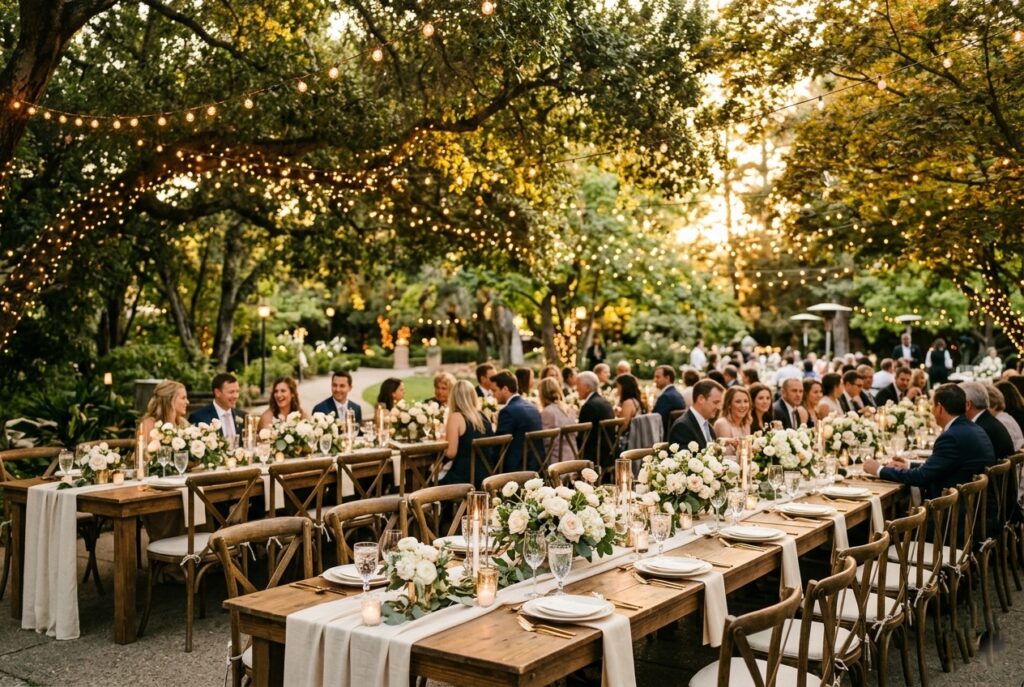
Most garden weddings look like a lot of effort was made. Few of them look considered. That is the gap this article closes.
Petals pressed into the path, jasmine threading through the gate, the guests breathe in before they speak — the garden chose the date.
The Short Answer
The best garden wedding decor works with what is already growing there, not against it. Choose 2–3 anchor elements — an arch, tablescapes, and lighting — and let the venue’s natural texture fill in the rest. Trying to cover every inch of a garden with decor is the fastest way to make it look crowded, not curated.
- A Lush Asymmetrical Floral Arch
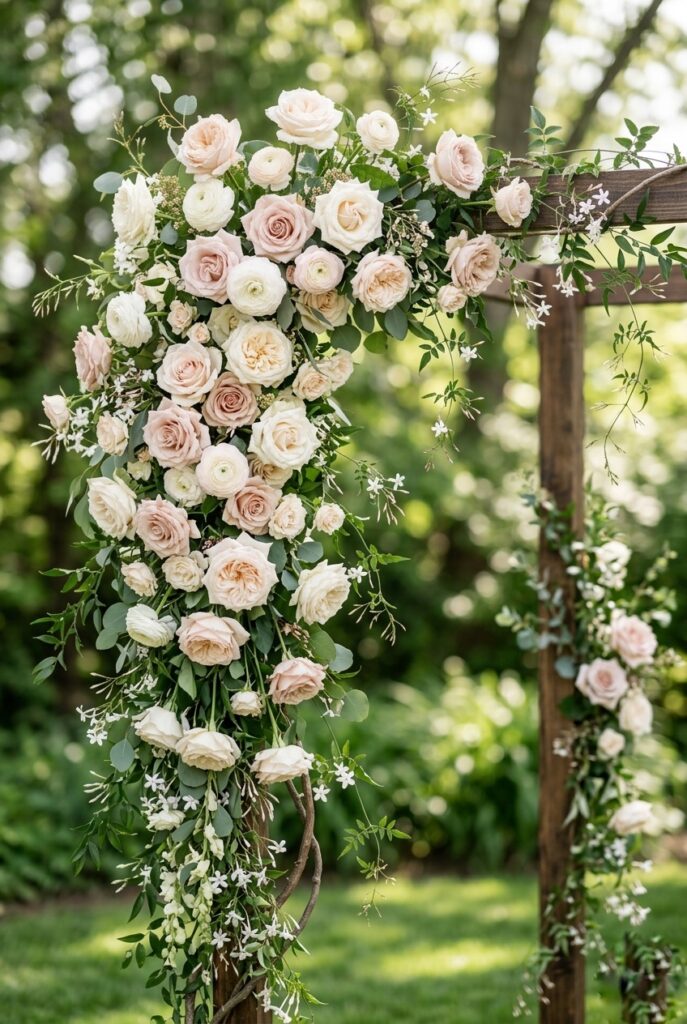
Forget the perfectly mirrored arch. An asymmetrical arrangement — heavy blooms on one side cascading into loose greenery on the other — photographs dramatically and looks intentional rather than stiff.
Use garden roses, ranunculus, and trailing jasmine for a soft, layered effect.
Skip this if your venue already has a dramatic entryway or pergola; doubling up looks cluttered.
Source from a local florist for freshness, or find silk alternatives on Etsy for $80–$180. A fully custom fresh floral arch runs $300–$900 depending on bloom choice and size.
- Herb and Wildflower Centerpieces Instead of Roses
This is where most garden weddings miss a huge opportunity.
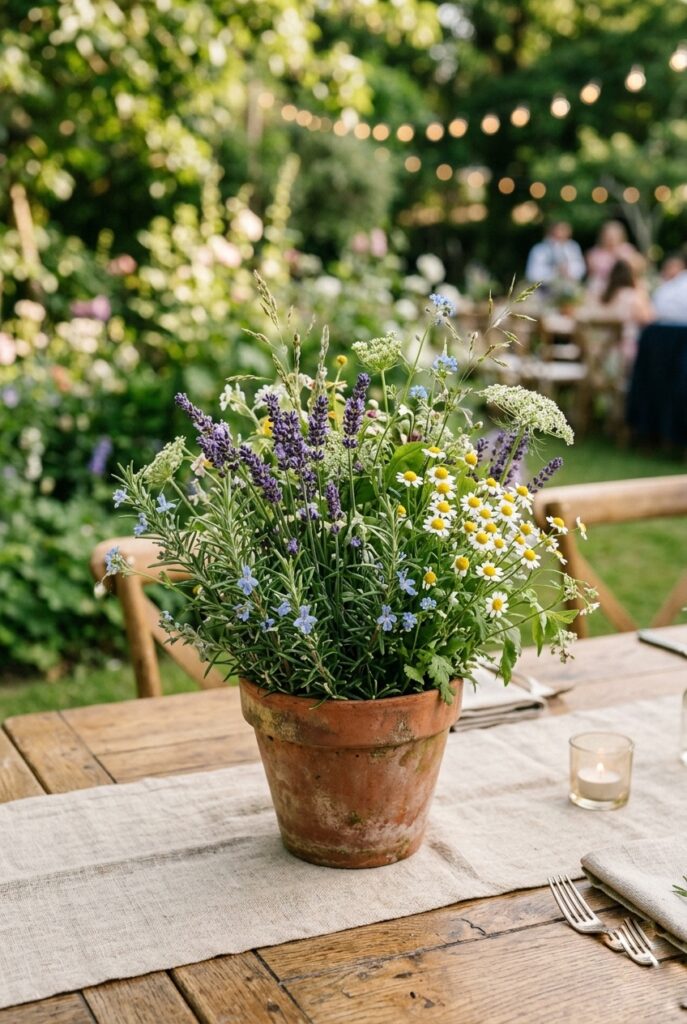
A low centerpiece of rosemary sprigs, lavender, chamomile, and wild fennel in a terracotta pot smells extraordinary, costs a fraction of rose arrangements, and feels genuinely garden-grown rather than florist-fabricated.
Guests will lean in, touch them, and remember them.
Expect $15–$35 per table versus $65–$130 for traditional florals.
Source terracotta pots from Walmart or Amazon in bulk — a 10-pack runs about $22.
💡 Budget Hack: Before ordering any florals for your tables, walk your ceremony site and ask your florist to repurpose the aisle arrangements directly onto reception tables after the ceremony. This single move can save $200–$500 and is standard practice at well-organized weddings. Our outdoor wedding decor ideas guide covers more repurposing strategies worth bookmarking.
3. Ground-Level Candle Clusters at Ceremony Aisles
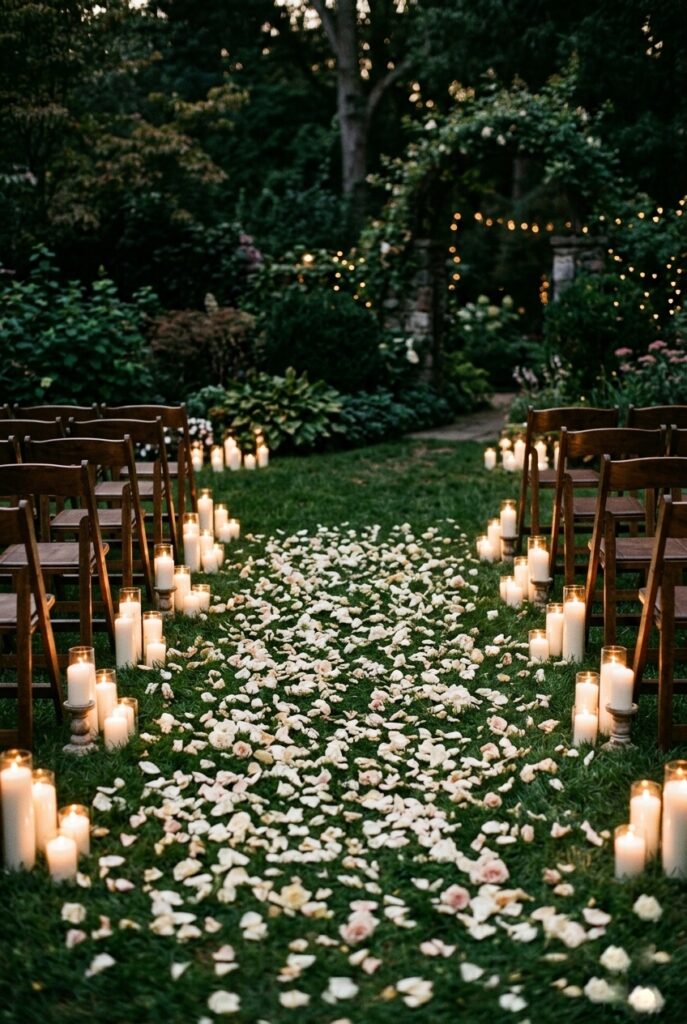
Every guide shows candles on tables. Almost none suggest placing them on the ground.
A dense cluster of pillar candles in varying heights — 4 inch, 6 inch, 9 inch — grouped at the base of aisle chairs or at the foot of your ceremony space creates a moody, editorial quality that reads expensive in photos.
Use wide-base flameless pillars outdoors so wind does not become your enemy; Luminara brand flameless pillars ($18–$45 each) flicker realistically and are worth every cent.
Only do this if your ceremony is in late afternoon or evening; in bright midday sun the effect disappears entirely.
4. Vintage Mismatched China for the Sweetheart or Head Table
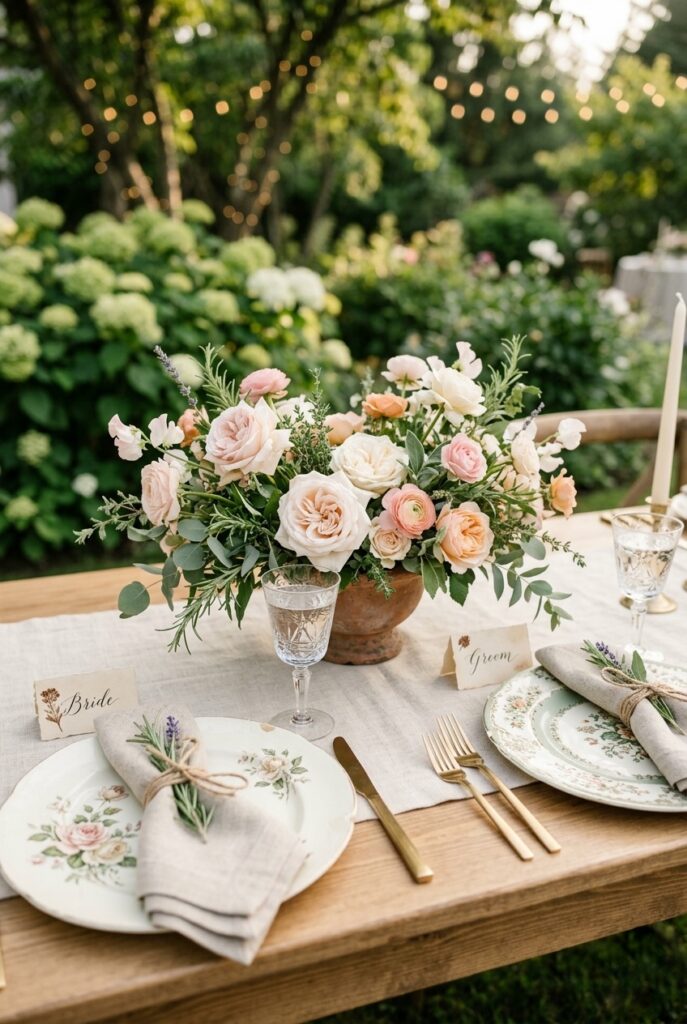
This idea gets mentioned but never explained well. The key is intentional mismatch — same color family (ivory, cream, or sage green), different patterns.
Never mix warm whites with cool whites; it looks like you ran out of plates, not like a curated tablescape.
Source sets from Facebook Marketplace, Goodwill, or specialty rental companies like Archive Rentals (operating in multiple US cities).
Budget $3–$8 per plate through thrift sourcing, or $12–$22 per plate through rental.
Pair with linen napkins from H&M Home or Crate & Barrel and the table reads genuinely editorial.
5. A Living Herb Wall as a Photo Backdrop
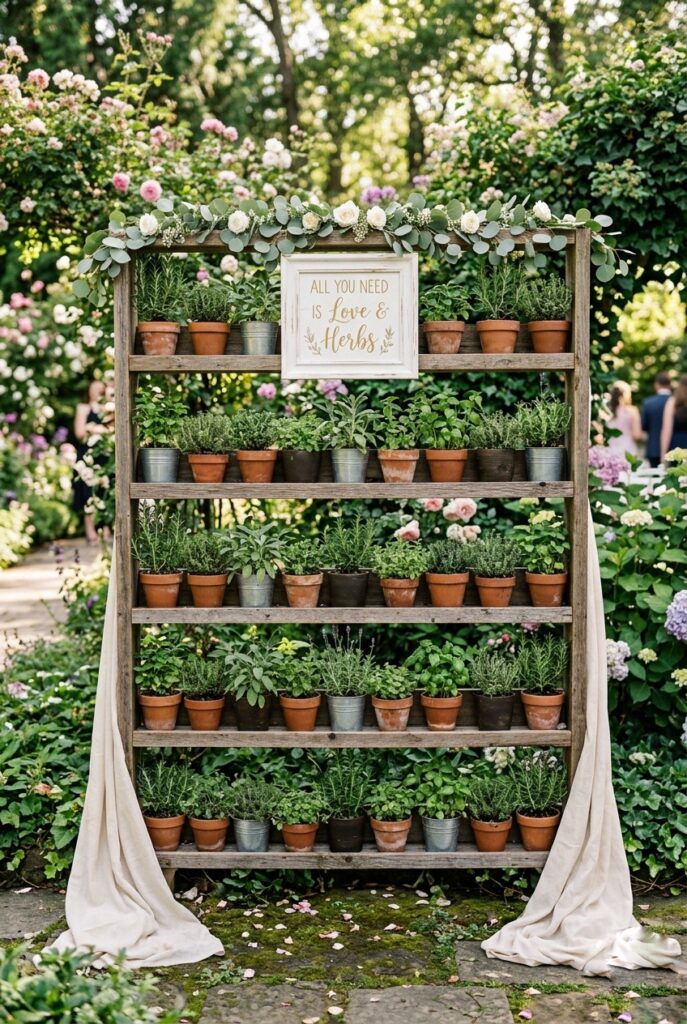
Most couples rent a flower wall. A living herb wall — real potted rosemary, thyme, oregano, and sage in stackable planters — is something competitors almost never suggest and yet it is stunning, fragrant, deeply photogenic, and fully repurposable after your wedding as gifts to guests or donations to a community garden.
Tiered planter systems on Amazon run $45–$85. Fill with 3-inch herb pots from Home Depot or your local nursery at $2–$4 each. A 4-foot by 4-foot display costs roughly $120–$200 total.
After the wedding, wrap individual pots in kraft paper with a ribbon and send them home with guests as the most memorable favor you have ever seen at a garden wedding.
💡 Budget Hack: Skip buying floral foam entirely. It is toxic, non-biodegradable, and a secret cost most couples don’t realize they are paying for through florist markups. Ask your florist specifically to use chicken wire, flower frogs, or sustainable Agra Wool foam alternatives. You may actually pay less, and your florals will stay hydrated longer outdoors.
6. Woven Rattan Lanterns on Shepherd’s Hooks
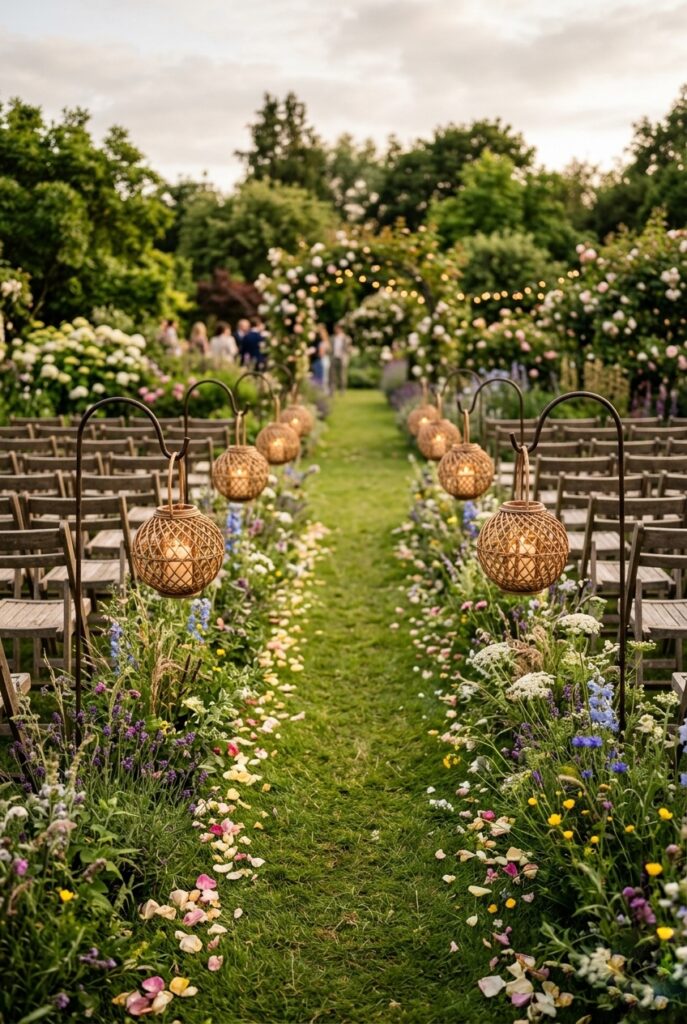
Metal shepherd’s hooks with hanging lanterns are everywhere. Woven rattan lanterns are not.
The texture difference matters enormously in a garden setting — rattan reads natural and intentional, metal reads purchased-from-a-party-supply-store.
Line your ceremony aisle or reception entrance with shepherd’s hooks ($8–$14 each at Amazon or HomeGoods) hung with rattan ball lanterns from World Market ($12–$28 each).
Only do this if your aesthetic is organic and warm; rattan looks wrong at a formal or black-tie garden event — stick with clear glass hurricanes instead.
7. Potted Citrus Trees as Reception Anchors
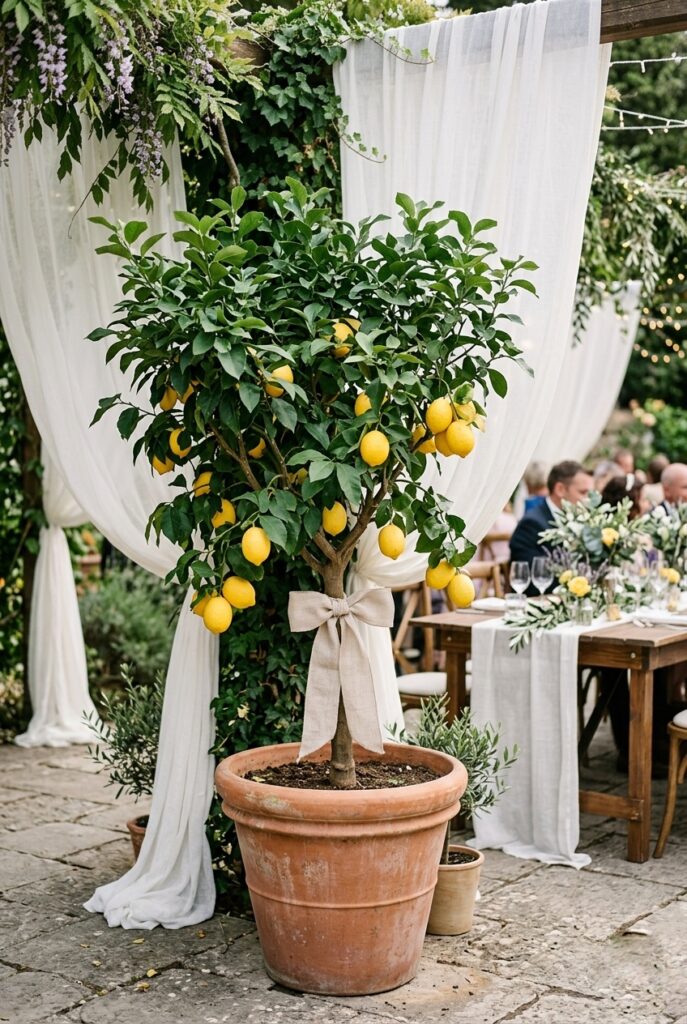
Nobody puts this in a garden wedding article.
Lemon, lime, or kumquat trees in large terracotta pots placed at the four corners of your reception tent or open-air space serve as living architectural anchors.
They are lush, fragrant, seasonal, and after the wedding you take them home.
Nursery-grade lemon trees in 14-inch pots run $45–$80 at Home Depot or local nurseries.
Add a simple ribbon or jute bow at the base for wedding styling.
This is especially effective if your venue has a Mediterranean or Tuscan garden feel — it makes the whole space look designed rather than decorated.
8. Pressed Wildflower Name Cards
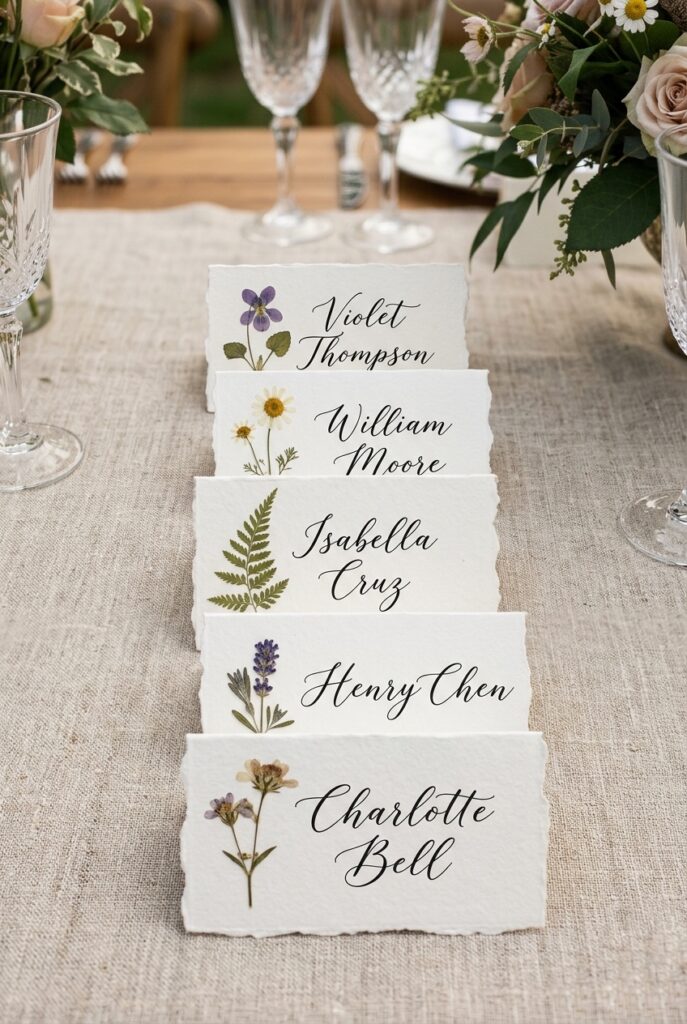
Every guest place card guide shows calligraphy cards or acrylic tags.
Pressed wildflower cards are different in texture and memory — guests take them home.
The look is specific: a small rectangle of thick watercolor paper with a single pressed flower (viola, daisy, or fern frond) adhered with archival glue and the guest name in simple black ink.
You can press flowers yourself two weeks before the wedding by sandwiching them between parchment and heavy books, or purchase pre-pressed sets on Etsy for $18–$30 per 25 cards.
Total cost for 80 guests runs about $55–$95, which is competitive with printed acrylic alternatives at $1.50–$3 per card.
💡 Budget Hack: If your venue permits it, wild-pick from your own property or a friend’s meadow two to three weeks before the wedding. Clover, lavender, chamomile, and Queen Anne’s lace press beautifully, cost nothing, and mean something. A foraged floral story is a genuine design choice, not a compromise. Our wedding decor ideas on a budgetguide has a full breakdown of which DIY projects actually save money versus which ones eat your time.
9. Ribbon Streamers From Existing Tree Branches
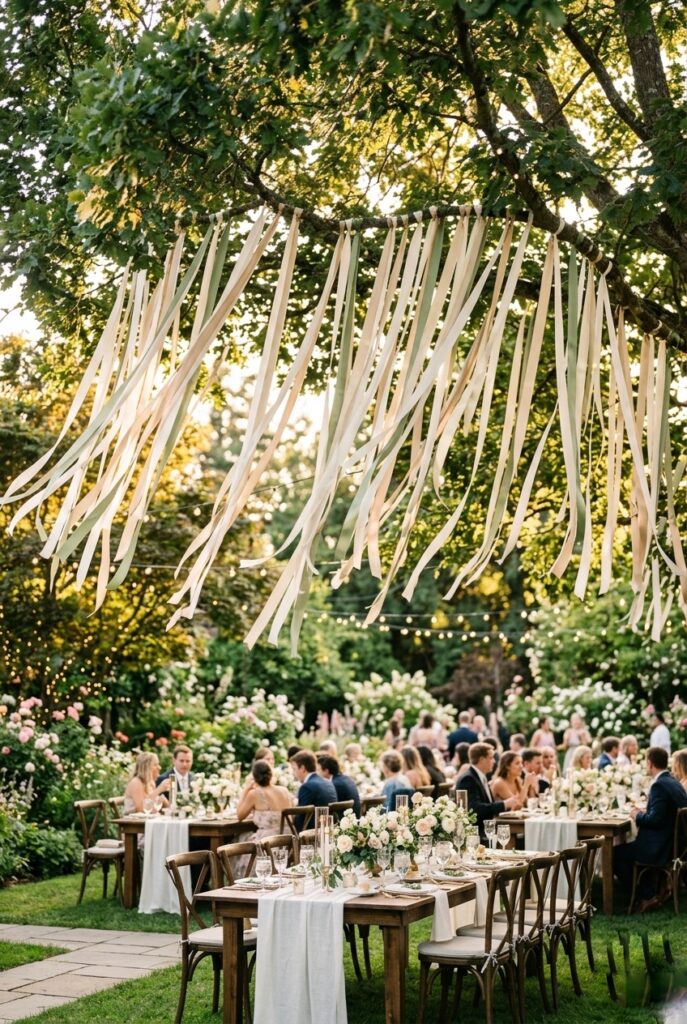
Take the trees you already have. Hang 3–5 foot lengths of satin, silk, or raw silk ribbon in 3–4 coordinating colors directly from branches at varying heights.
Move in the breeze. Catch light. Cost almost nothing. This specific idea rarely appears in competitor guides even though it photographs exceptionally well and takes 30 minutes to execute.
Ribbon from Hobby Lobby or Amazon runs $3–$8 per spool; you need roughly 6–10 spools for a moderate canopy of trees.
Stick to ivory, champagne, sage, and one deeper accent tone — dusty rose or terracotta — and the effect is sophisticated rather than celebratory.
10. A Single Long Harvest Table Instead of Rounds
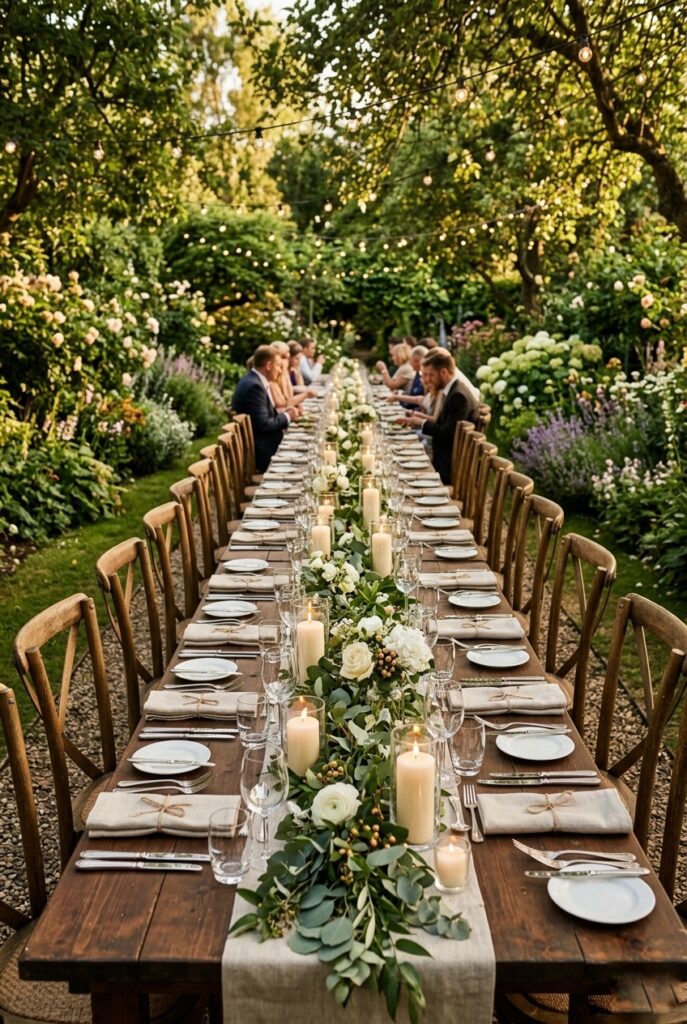
This is a design decision, not just a furniture choice. One long harvest table — or two parallel ones — changes the entire energy of a garden reception.
It forces conversation across the table rather than between eight people facing inward. It photographs like a feast. It works with the irregular shapes that gardens create instead of fighting them.
Rental rates vary: expect $8–$14 per linear foot from party rental companies, or check Facebook Marketplace for local rentals.
Pair with mismatched wooden cross-back chairs ($3–$6 each to rent) and a simple greenery runner for a result that looks like it belongs in an Italian garden and costs less than most floral centerpiece budgets.
Decision Filter
If your venue has mature trees and natural shade, spend on the details guests interact with up close — centerpieces, place cards, and table linens — rather than overhead structures.
If your garden is mostly flat and open, one architectural focal point (arch or draped canopy) earns its cost.
If your wedding is midday, skip candles and invest in florals instead; candlelight disappears in full sun.
For couples watching every dollar, our cheap wedding decor ideas guide is the fastest way to identify where to cut without the result looking cut.
The Real Reason Garden Weddings Fail to Look Like the Photos
Here is what nobody in the top 10 search results tells you: most garden weddings look worse than the couple imagined because they decorated for photos rather than for the actual guest experience.
They spent $600 on a floral arch that appears in 40 photographs and was invisible to guests seated beyond the second row.
They skipped scent — the single most powerful sensory element available in a garden setting — and put it all into visual display.
A garden wedding that smells like nothing is missing its own most primal feature.
The real priority is sensory layering.
Your guests should smell jasmine near the entrance, feel the cool shadow of draped muslin overhead, and hear the specific quiet of a garden — birds, wind through leaves — rather than HVAC hum.
Decor that supports sensory experience is design. Decor that merely looks good in a vendor portfolio is staging.
Bold opinion: pampas grass in a garden wedding is a mistake.
It is a dried product placed inside a living environment, and the visual contrast between dead beige feathers and fresh green growth reads as wrong even when people cannot articulate why. It belongs in an industrial loft. Let it stay there.
Mistakes to Avoid
Matching your florals to the venue’s existing flowers incorrectly. If your venue has deep fuchsia bougainvillea climbing the walls, and you bring in blush pink roses, the clash will ruin every wide-angle photo.
Either match the venue’s existing palette exactly or go deliberately complementary — cool sage and ivory against warm terracotta walls, for example.
Your florist should see the venue before quoting you. If they have not visited, that is a red flag.
Ignoring the ground surface. Most garden venues have mixed surfaces — grass, pavers, gravel — and guests in heels will spend the reception in misery on soft grass with no support.
Aisle runners on grass look immediately deflated. Either provide heel protectors (sold in bulk on Amazon for $12–$20 per 50 pairs) or be explicit in your invitations that footwear should be garden-appropriate.
Neither is glamorous advice, but both prevent the slow disaster of uncomfortable guests who leave early.
Overdoing the number of decor elements. A garden is already a complete visual environment.
When you add 12 separate decor ideas to a space that is already growing, blooming, and textured, guests stop seeing any of it.
Choose 3–4 elements and execute them at high quality.
The couples whose garden weddings I remember most clearly had one extraordinary thing — a long living table, a specific scent, a light installation — not 15 average things.
Renting furniture that does not match the garden’s architectural style. Ghost chairs in a cottage garden look absurd.
Ornate gold Chiavari chairs in a wildflower meadow look like a mistake.
Match the material and era of your furniture to the character of your specific outdoor space — natural wood for organic settings, wrought iron for formal European gardens, simple folding chairs with linen tie covers for everything in between.
FAQ
What decorations do you need for a garden wedding?
The essentials are a ceremony arch or backdrop, aisle decor, table centerpieces, and lighting for evening.
Beyond these anchors, a garden venue provides most of its own decor through natural greenery and texture.
Focus your budget on what guests see up close — place settings, florals, and candles — rather than large-scale installs the environment already provides.
How can I make a garden wedding look elegant without spending a lot?
Invest in linen — tablecloths, napkins, and draped fabric — before florals. Linen reads premium at a fraction of floral cost and ages beautifully in photos.
Add tapered candles in simple brass or terracotta holders, choose one statement centerpiece item per table, and keep color to a tight palette of 3 tones.
Restraint is elegance. For more ideas, see our full budget wedding decor ideas guide.
What colors work best for garden wedding decor?
Sage green, ivory, dusty rose, and terracotta are the most reliably beautiful garden palette right now — they read naturally against living foliage without competing.
Avoid pure white (it washes out in outdoor light), highly saturated jewel tones (they fight the garden’s own colors), and anything neon.
If you want a bolder palette, go with rich burgundy, deep forest green, and antique gold for a more formal garden aesthetic.
How far in advance should I order garden wedding decor?
Order any custom or Etsy-sourced items — place cards, signage, personalized pieces — 8–10 weeks before your wedding date.
Rental furniture and linens should be reserved 3–6 months out, especially for popular summer and spring dates. Fresh florals are typically ordered 4–6 weeks ahead.
Living plants, potted herbs, and nursery items can be sourced 2–3 weeks before the event and kept watered until the day.
Budget Table
| Item | Budget Option | Mid-Range | Premium |
|---|---|---|---|
| Floral arch | $80–$150 (silk, Etsy) | $300–$600 (fresh, local florist) | $700–$1,400 (full floral installation) |
| Centerpieces per table | $15–$35 (herb/wildflower DIY) | $55–$95 (mixed fresh florals) | $120–$250 (high-end florals) |
| Candles (ceremony + reception) | $30–$60 (bulk pillar candles) | $80–$160 (flameless Luminara mix) | $200–$400 (full candle design) |
| Linen draping (trees/structures) | $50–$120 (DIY muslin) | $150–$300 (rental) | $400–$900 (stylist installed) |
| Seating (per chair) | $3–$6 (cross-back rental) | $8–$16 (farm chair rental) | $18–$35 (designer chair rental) |
| Aisle decor | $20–$50 (petal/lantern DIY) | $80–$180 (shepherd’s hooks + lanterns) | $250–$600 (full floral aisle) |
Garden weddings reward the couples who plan them with specificity rather than generality.
Know your venue’s bones before you add a single decoration, let the existing environment guide your palette, and spend where guests actually experience your choices — at the table, in the scent of the air, in the quality of the fabric under their hands.
According to The Knot’s wedding planning data, outdoor ceremonies account for a significant share of modern US weddings — and garden venues consistently rank among the highest-satisfaction choices couples report post-wedding.
The venue does a great deal of the work. Your job is to not undo it.