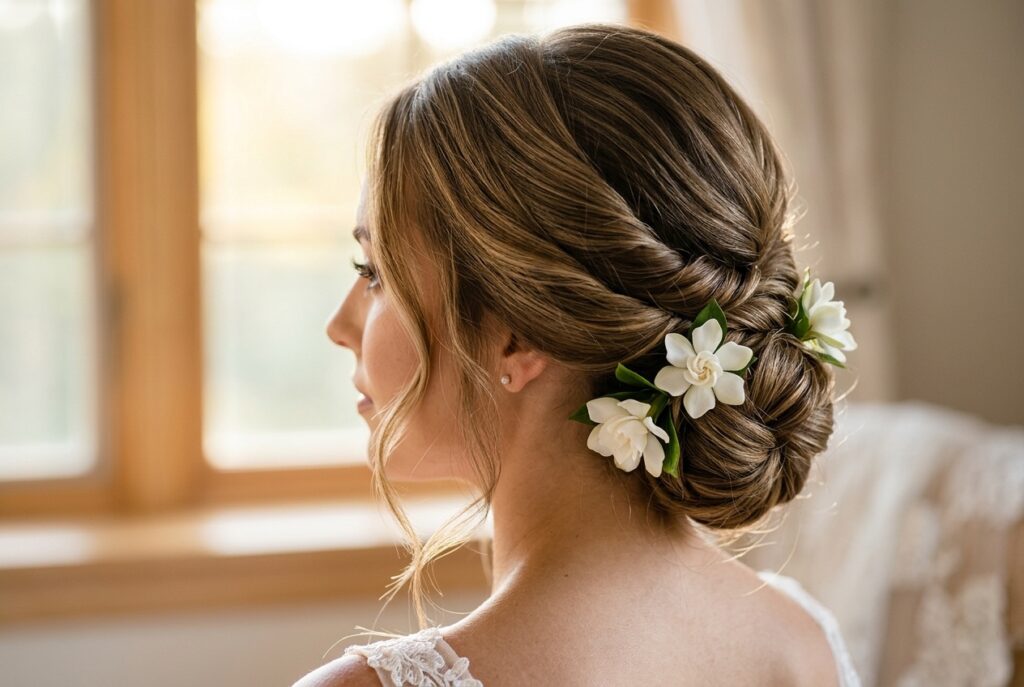
Summer weddings come with a real floral challenge: heat wilts the wrong flowers fast, and a bouquet that looked full and fresh at noon can look spent by the reception.
The ten styles here are built around flowers that actually perform outdoors in summer — either because their structure holds moisture well, they evolved for heat, or they don’t rely on fresh petals at all.
Choosing with heat tolerance in mind first, and aesthetics second, is the decision that keeps your bouquet looking right in photos all day.
1. Dahlias as the Foundation Bloom
Dahlias are the most underused summer bouquet flower and the single best decision for an outdoor ceremony — their dense, layered petals hold moisture efficiently, they peak mid-to-late summer, and a single café au lait dahlia has more visual weight than three garden roses at a fraction of the cost.
The version to avoid is grocery store dahlias bought the week before, which are grown for shelf life rather than fullness and sit flat and tight — sourcing from a local farm stand or regional wholesale market is what gets you the dinner plate variety that drives every strong summer bridal bouquet idea.
2. Garden Roses Over Hybrid Tea Roses
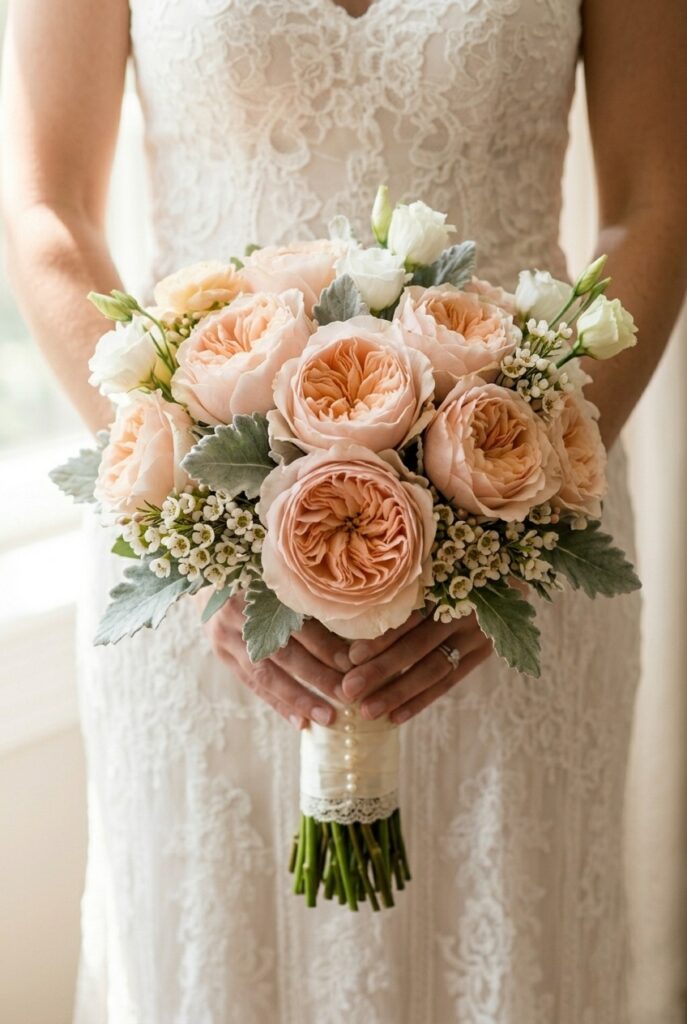
Standard hybrid tea roses — the long-stemmed kind associated with Valentine’s Day — have stiff, uniform petals that read as generic in wedding photos, while garden roses like Juliet, Kiera, and Patience have 60 to 100 petals per bloom, a cupped shape that photographs with remarkable depth, and significantly better heat tolerance because of their tight petal density.
They cost more per stem, but one bloom does the visual work of five, making them more economical than they appear — the same case made in the garden rose bouquet guide for why variety selection matters more than stem count.
3. Lisianthus — the Secret Volume Flower
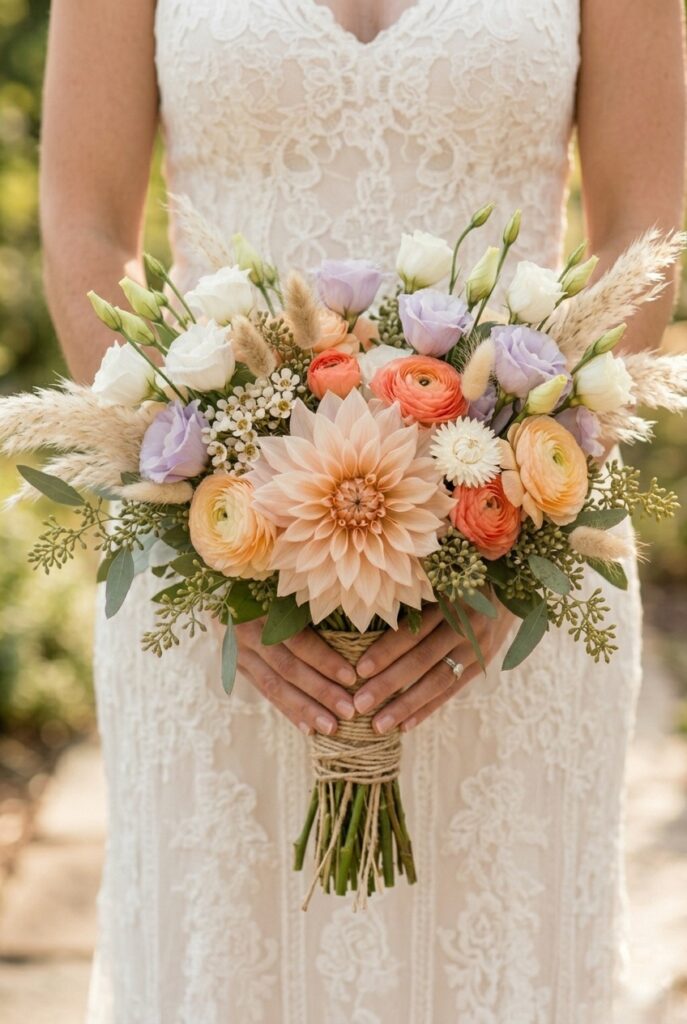
Lisianthus looks like a peony or garden rose from three feet away — ruffled, layered, full — but costs a fraction of the price and holds up in summer heat far better than either, making it the most useful stretch flower in any florist’s summer toolkit.
It comes in white, cream, blush, dusty lavender, and deep plum, and using it to extend a budget of higher-cost focal flowers is the same principle behind any well-built bridal flower bouquet that achieves a lush look without a lush price.
💸 Budget Hack #1: Lisianthus bundles at Trader Joe’s and Whole Foods are often stocked during peak summer — walk the floral section the Thursday before your wedding and you can grab a bundle of 10 stems for $10–$14. That same lisianthus from a florist under the label “wedding flowers” runs $22–$35 per bunch. Same flower. Buy it Thursday, condition stems in cool water for 24 hours, and hand to your florist Friday.
4. Dried Elements for Heat-Proof Texture
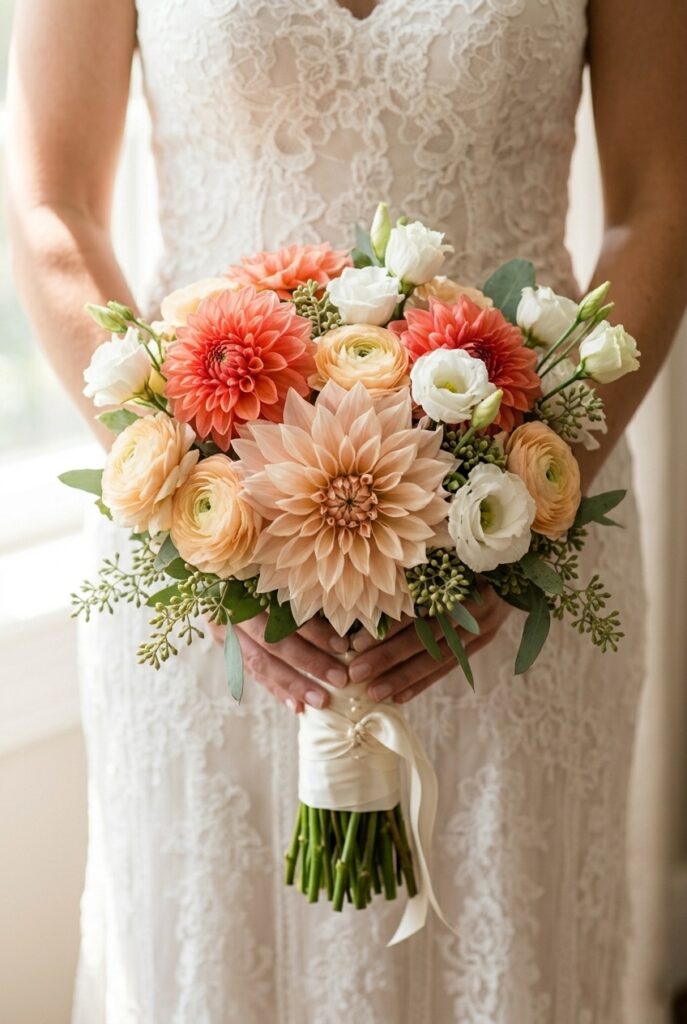
The most heat-proof component of any summer bouquet is one that’s already dry — mixing dried elements like pampas grass, bunny tails, and preserved amaranth with 60 to 70 percent fresh blooms gives you a bouquet that photographs with significant texture and simply cannot wilt regardless of temperature.
The poor version of this is a craft store arrangement that looks stiff and dusty rather than considered, so source dried stems from a specialty supplier where curation matters, and ask your florist to combine them with fresh focal flowers — understanding which bouquet style the dried-and-fresh combination suits will help you brief the florist accurately.
5. Protea for a Statement Summer Bouquet
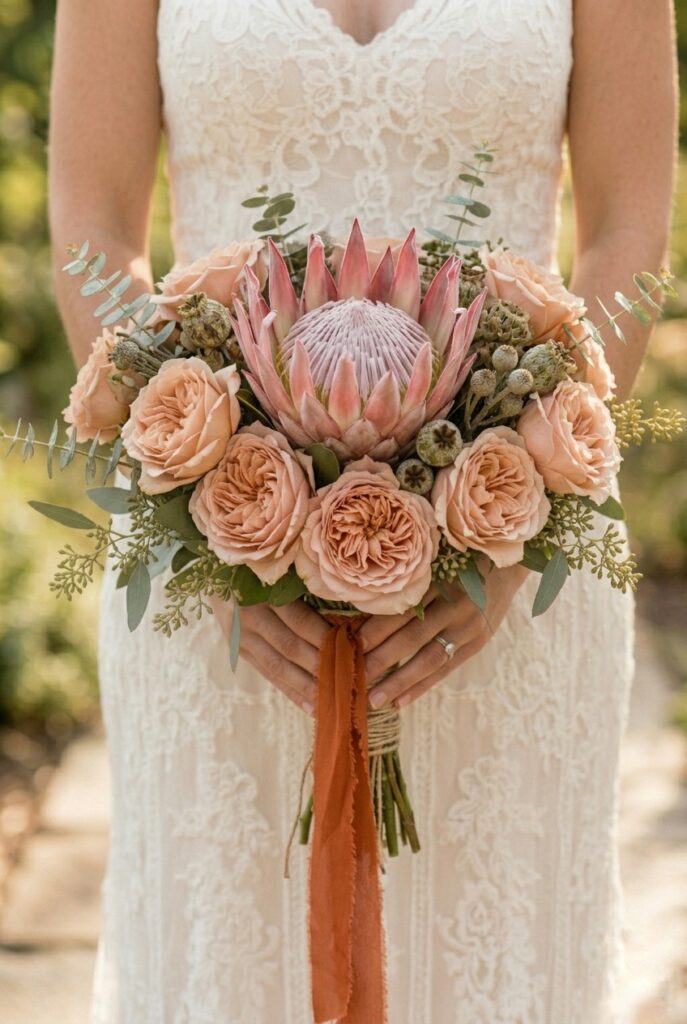
Protea evolved in extreme heat and dry conditions, making it the single most heat-tolerant bold flower available — a king protea as the centerpiece of a summer bouquet reads as luxurious and completely original, and you only need one as the focal point.
Pair it with dusty miller, ranunculus, and eucalyptus in terra cotta or blush tones for a color story that photographs unlike any conventional arrangement, and if one king protea feels too bold, pincushion protea is smaller and softer while sharing all the same heat-resistant qualities — the kind of distinctive choice at the heart of every romantic summer bouquet that doesn’t look like anyone else’s.
6. The Wildflower Garden Bouquet
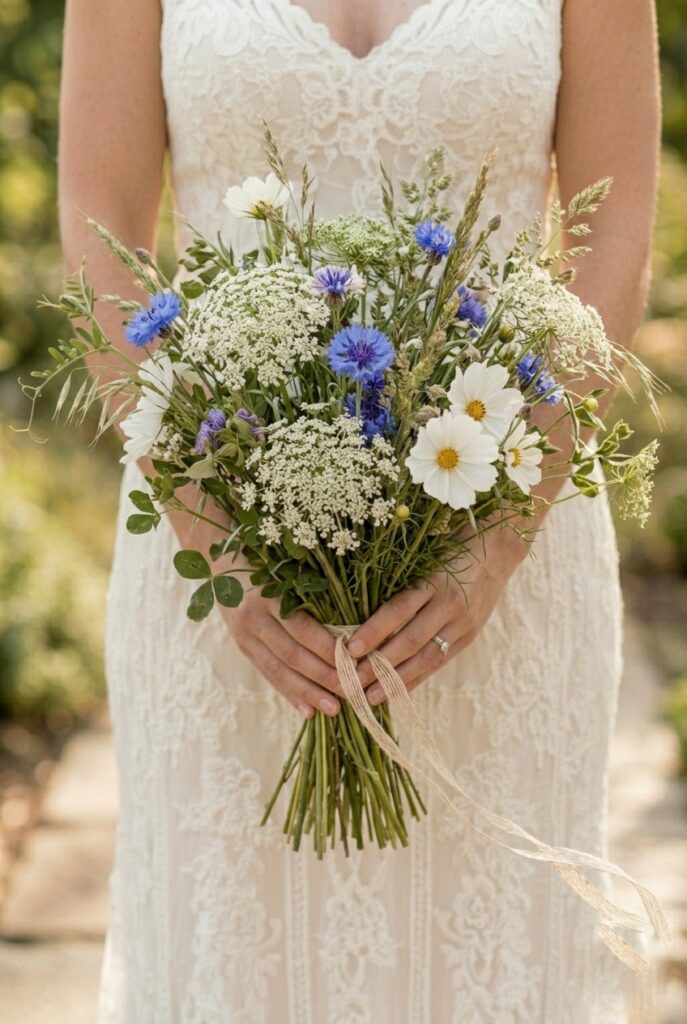
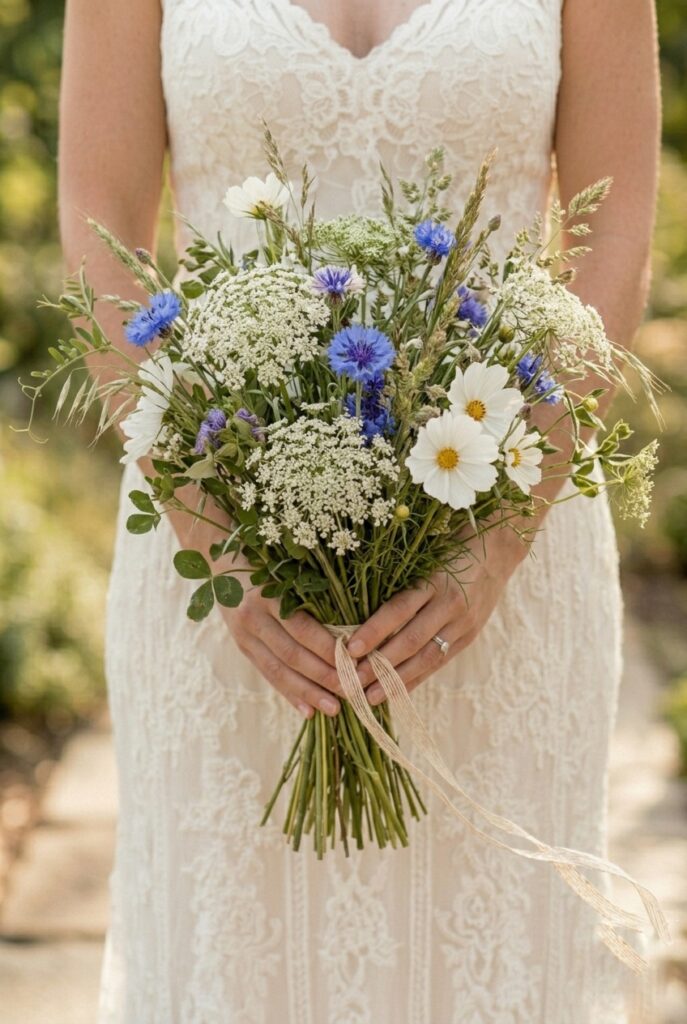
A wildflower bouquet done well is one of the most photographically interesting choices for a summer wedding, but the wrong version is a generic mixed bunch tightly bound until it looks like every grocery store arrangement — the right version is loose, asymmetrical, and built around flowers that actually grow in summer fields: Queen Anne’s lace, cornflower, cosmos, scabiosa, and native grasses.
The asymmetry and movement are the entire point, so ask your florist specifically for a “garden-gathered” or “unstructured” hand-tied style, and check your regional farmers’ market in July and August for what’s blooming locally — the same sourcing approach used for spring and summer wildflower bouquets that feel native to the season.
💸 Budget Hack #2: Order a “mixed seasonal wildflower” bulk box from Whole Blossoms — they ship directly from their California farm, and a medium bulk box (around 200 stems of mixed wildflowers and greenery) costs $89–$140. That’s enough flowers for a bridal bouquet, two bridesmaid bouquets, and a ceremony arrangement. Divide the stems strategically, condition overnight in cool water, and assemble the morning of. This approach saves 50–60% compared to a florist-assembled wildflower package.
7. Tropical Blooms for Destination and Beach Weddings
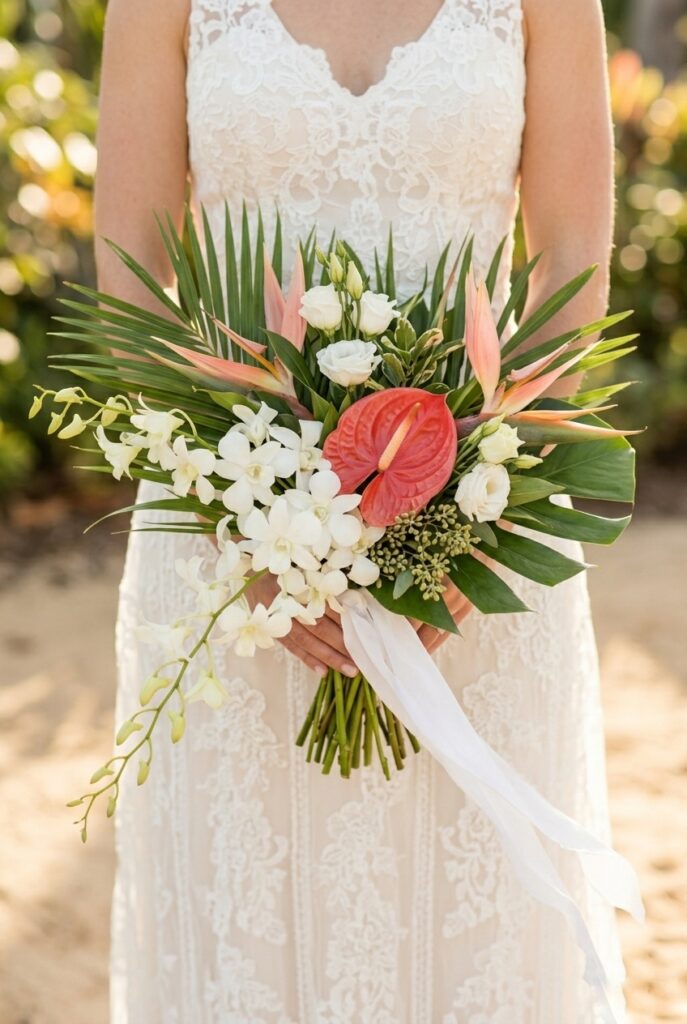
Tropical flowers — orchids, anthuriums, heliconia, bird of paradise — evolved in hot, humid climates, which makes them virtually indestructible at a summer outdoor wedding: their waxy petals don’t dehydrate, they hold color for days after cutting, and they photograph with strong graphic impact against a white wedding dress.
This is the right choice for a beach or outdoor summer wedding where the aesthetic leans modern or destination, but it lands awkwardly at a traditional ballroom event where the tropical forms read out of context against a formal setting.
8. The All-White Summer Bouquet
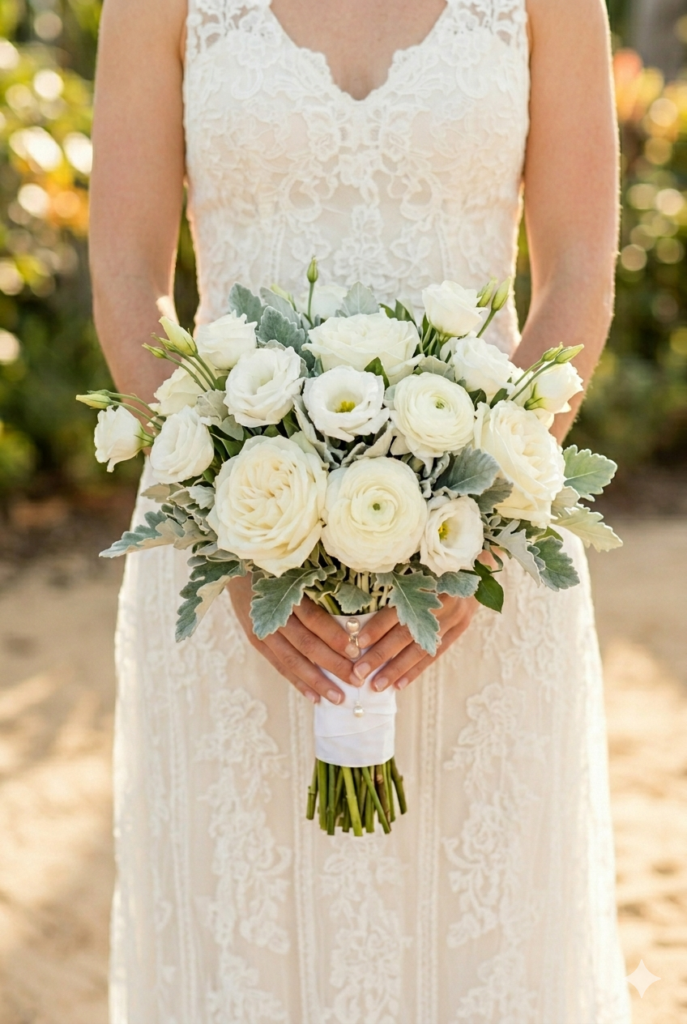
An all-white bouquet in summer is more striking than a colorful one because it photographs cleanly against every backdrop — garden, beach, barn, ballroom — and white tones pop against a summer tan in a way that pink or peach arrangements simply don’t.
Build it in layers of texture rather than one flower type for depth — the same principle behind every all-white bouquet palette that reads as designed rather than default, where the forms differentiate within the single color and white jasmine adds fragrance that guests notice from several feet away.
9. Succulents and Greenery-Forward Minimalist Bouquets
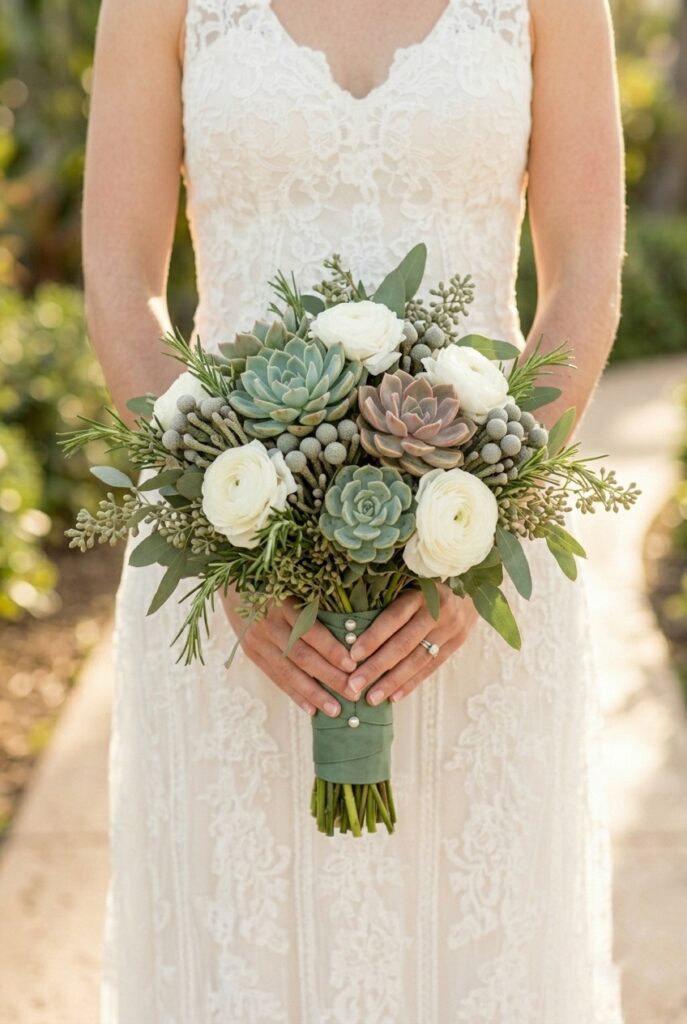
Succulents are the most heat-tolerant botanical material available — a bouquet built around echeveria, sedum, and aeonium with eucalyptus, rosemary, and minimal blooms is impossible to wilt, photographs with substantial texture, and costs significantly less than a full floral bouquet.
The risk is that the wrong variety choices make it read as a craft project rather than a considered arrangement, so stick to muted greens, purple-grey, and dusty blue rosette succulents and skip any hot-glued succulent bouquets that damage the plant and look exactly as cheap as they are — a level of restraint that connects to the simple outdoor wedding aesthetic where less material with better selection always outperforms volume.
💸 Budget Hack #3: Mountain Crest Gardens sells individual echeveria rosettes for as little as $1.50–$3.50 each — the same variety a floral designer would charge $6–$10 per succulent for in a boutique arrangement. Order 15–20 mixed rosettes ($30–$50), combine with $20 worth of eucalyptus from a farmers’ market, and have a florist bind it for a one-hour assembly fee ($50–$75). Total cost: $100–$145 for a succulent bouquet a florist would price at $225–$300.
10. The Cascading Bouquet, Done Right for Summer
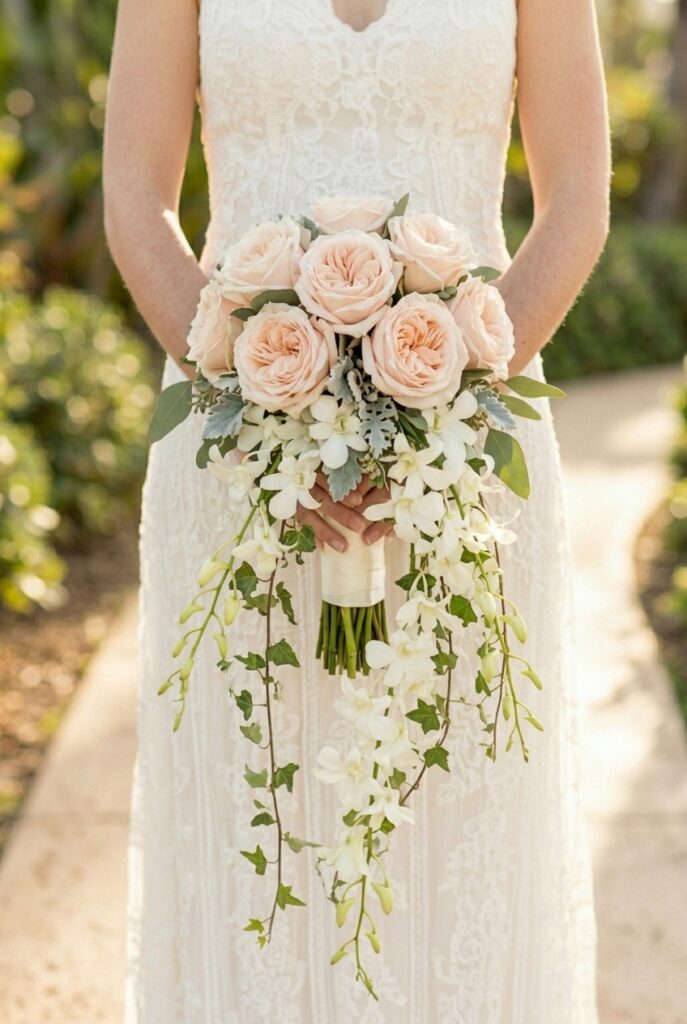
A summer cascade works when you build it from flowers that can handle the weight and the heat — blush garden roses at the top, trailing dendrobium orchids and English ivy flowing downward, with dusty miller holding the structure throughout.
The critical mistake is building a summer cascade from flowers like peonies or sweet peas that wilt under their own weight in heat, so choose blooms with structural stems and waxy petals for the trailing elements, the same approach used in every cascading bridal bouquet that photographs dramatically without falling apart before the reception.
Once you’ve settled on a summer style, the florals on your ceremony aisle and at your reception tables should speak the same language as what’s in your hands.
The calla lily bouquet guide is worth reading if your summer aesthetic leans architectural and modern, and the aisle flower plan covers how to carry your chosen blooms from the bouquet down the full ceremony space.