10 Wedding Backdrop Design That Looks Explict!

14-15 min read

HERO IMAGE / FEATURED IMAGE Alt text: A romantic wedding ceremony backdrop featuring a wooden circle arch draped with soft blush chiffon fabric and cascading white floral garland with eucalyptus greenery, photographed from guest perspective with venue lighting visible. Image prompt: A professional wedding ceremony photograph of a romantic circular wooden arch backdrop, 12-14 feet tall and 10 feet wide, draped with flowing blush-toned chiffon fabric swaging gently on either side. The arch is adorned with a dense cascading floral garland featuring white garden roses, blush ranunculus, and trailing eucalyptus greenery that drapes down the sides. The backdrop is set up in an indoor venue with soft warm candlelight and architectural columns visible behind it. Captured from a guest's seated perspective (approximately 20 feet away) to show how the backdrop reads in the ceremony context. The lighting is warm and romantic. Generate in horizontal landscape orientation, 3:2 aspect ratio, optimized for desktop display.

Your wedding backdrop sounds simple until you’re standing at the altar realizing it photographs beautifully from your photographer’s position but looks completely different from the guest’s perspective 20 feet back.

Most couples pick backdrops from inspiration photos without understanding the fundamentals: backdrop size relative to your venue, distance from the subjects, how different lighting changes the entire impact, and whether a design that stuns in photos will feel cramped or overwhelming in person.

The gap between “gorgeous on Instagram” and “looked right standing there” costs thousands and creates regrets nobody talks about until after the wedding.

Here’s how to choose a backdrop that works from every angle—not just the photographer’s angle.

A frame within the frame, archway or not— the backdrop steps back when you step forward, letting light decide its own drama. It should not whisper. It should hold silence.

The Short Answer

Your backdrop’s primary job is framing you, not replacing you.

This means it must be sized proportionally to your bodies (ideally 1.5 to 2 times your combined height), positioned far enough from you that the photographer can fit both you and the design in the frame without stepping back so far that you become tiny figures, and designed in a style that reads intentionally at 20+ feet away—not just up close.

Most backdrops fail because couples obsess over details visible only from 3 feet away while ignoring whether the overall shape and color read from the back of the ceremony space. Build for distance first, detail second.

Then test it in your actual venue during the actual lighting time of your ceremony before finalizing anything.

1. Circular Metal Arch with Draped Fabric
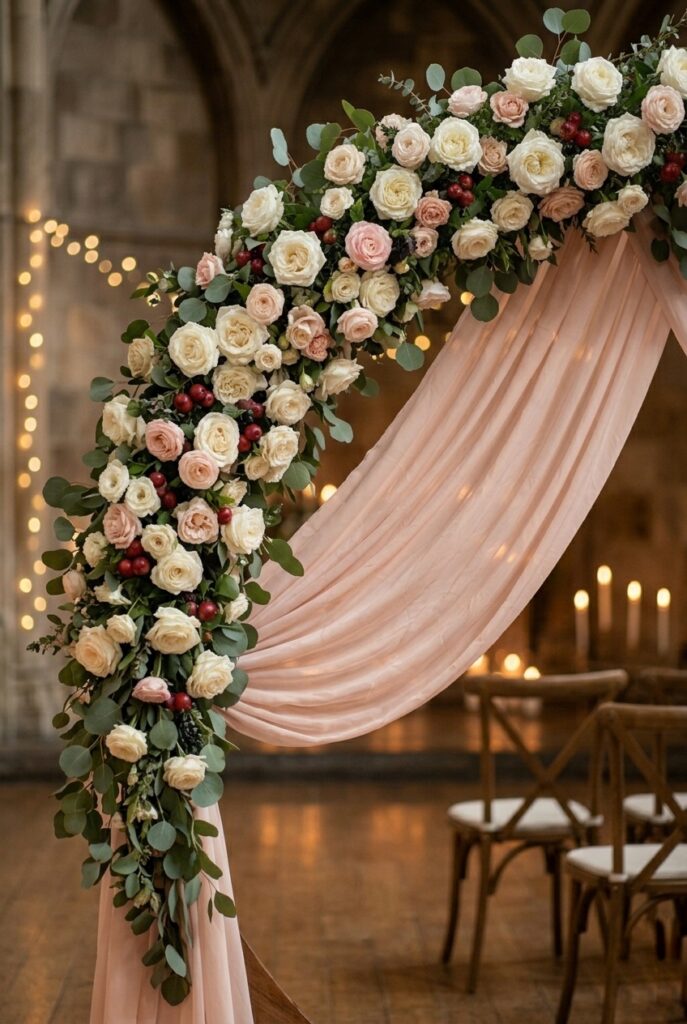
A circle arch (8–12 feet in diameter) is the most photographically forgiving backdrop because the shape frames the couple naturally without blocking sightlines for seated guests.

The circle reads instantly from any distance.

Drape it with flowing chiffon or linen in your wedding color (blush, ivory, sage, dusty blue), keeping the fabric soft and asymmetrical rather than formal and structured.

The fabric should move slightly with air currents, adding dimension and romance without requiring florals.

Price: $150–$400 to rent (metal arch alone); $50–$150 for fabric draping rental.

Where to buy: Wedding rental companies (search “circle arch rental” in your city), Abundant Designs, or locally-owned event rental shops.

TASTE LAYER: A circle arch wrapped tightly in fabric or completely covered in flowers reads costume-like and blocks the couple.

A circle arch with fabric swags on just two sides and open space in the middle reads intentional, lets guests see the couple clearly, and photographs better because the openness creates depth.

2. Geometric Frame (Triangle, Hexagon, or Rectangle)
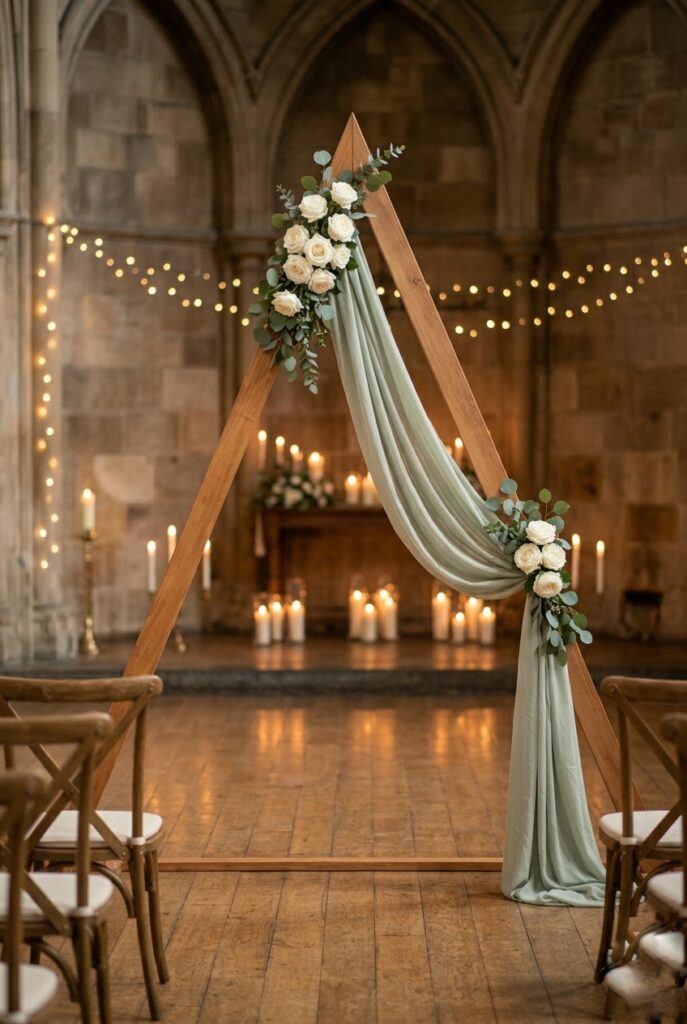
IMAGE 2 HERE Alt text: Modern geometric wooden triangle arch with soft sage-colored linen fabric and minimal white floral accents, set against neutral venue background. Image prompt: A geometric wooden triangle wedding arch (approximately 10 feet tall, 8 feet wide at the base) with clean lines and natural wood finish. Soft sage-colored linen fabric drapes lightly from the top point down one side, and the arch is accented with minimal floral details—a few white roses and trailing eucalyptus greenery positioned at the apex and one side. The arch is photographed from approximately 20 feet away to show how the geometric shape reads from guest perspective. Warm natural or warm venue lighting. Modern, minimalist aesthetic. Generate in vertical portrait orientation, 2:3 aspect ratio, optimized for mobile display.

Clean geometric shapes—triangles, hexagons, or rectangles—create a modern frame that reads from across the room because the shape itself is the design.

A wooden triangle arch or a metal rectangular frame works beautifully with minimal embellishment: just greenery, one or two floral accents, or draping that complements the inherent geometry.

The angle or straight lines guide the eye to the couple without distraction.

Price: $200–$600 to rent a premade geometric arch; DIY costs $150–$300 for wood or metal materials if building yourself.

Where to buy: Major wedding rental companies, or order premade from Etsy vendors (search “triangle wedding arch” or “geometric arch”).

BUDGET HACK: A simple wooden triangle arch from Etsy (rented or purchased for $180–$300) costs less than a metal circular arch rental and often photographs better in modern or minimalist venues because the geometry is the statement.

Pair with just greenery ($50–$100 worth) and skip expensive floral installations.

3. Full Floral Wall with Architectural Support
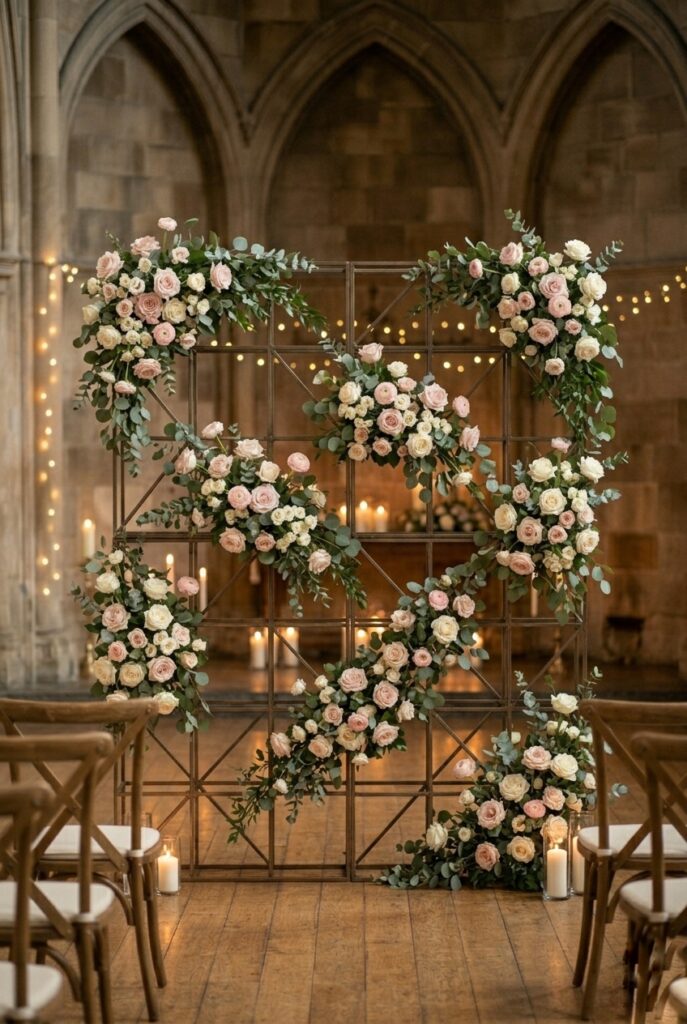
IMAGE 3 HERE Alt text: Monochrome blush floral wall with architectural metal frame, showing negative space between flower clusters and greenery layers. Image prompt: A professional photograph of a blush-toned floral wall backdrop (approximately 8 feet wide and 8 feet tall) built on an internal metal grid structure. The design features clusters of blush roses, pale pink ranunculus, and white spray roses with trailing greenery (eucalyptus, ruscus) intentionally spaced to show the metal frame and negative space between flower groupings. The wall appears dimensional and high-end rather than solid and flat. Photographed from approximately 18 feet away to show how the overall design reads from guest distance. Warm venue lighting. Generate in vertical portrait orientation, 2:3 aspect ratio, optimized for mobile display.

If flowers are your focal point, build them on a structure, not a flat wall.

A floral wall needs an internal frame (metal grid, wood frame, or purchased floral wall structure) behind it—not just florals attached to a vinyl or fabric backdrop.

This creates depth and dimension that reads beautifully on camera.

Monochrome florals (all white, all blush, all sage) read more intentional than multi-colored arrangements.

The wall should be 8–10 feet wide and 7–9 feet tall so it frames the couple without overwhelming them.

Price: $1,200–$3,500 if hiring a florist to build and install; $400–$800 if using a prefab faux floral panel system (Ling’s Moment, BloomsByTheBox).

Where to buy: Contact local florists for fresh floral walls, or order prefab systems online for DIY installation.

TASTE LAYER: A floral wall that’s all one tight, compact block of flowers looks dense and costume-like.

A floral wall with intentional negative space (areas where you can see through or gaps between clusters) reads as high-end and photographs more interestingly because light plays through it.

4. Draped Fabric Backdrop (No Arch)

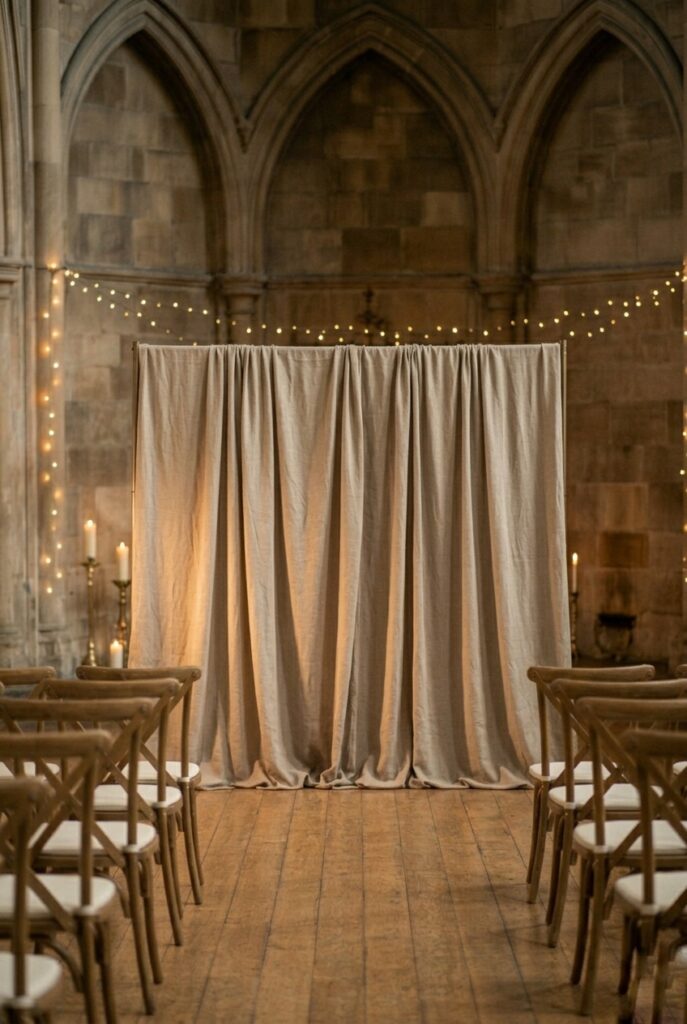
IMAGE 4 HERE Alt text: Neutral linen fabric backdrop in warm taupe tone, draped with subtle texture, minimal side lighting creating dimensional folds. Image prompt: A professional photograph of a simple, elegant fabric wedding backdrop made of heavyweight warm taupe linen (approximately 12 feet wide and 9 feet tall) hung on a sturdy frame stand. The fabric drapes naturally with intentional folds creating dimensional texture. Soft warm side lighting highlights the fabric's texture and creates subtle shadows in the folds. The backdrop is photographed from approximately 20 feet away (guest perspective) and appears spacious and intentional rather than bare. No florals or additional elements—pure fabric. Modern, minimalist aesthetic. Generate in vertical portrait orientation, 2:3 aspect ratio, optimized for mobile display.

A simple large fabric backdrop (10–14 feet wide, 8–10 feet tall) can be stunning if the fabric and color are right.

Use substantial fabric (linen, canvas, heavyweight cotton) that drapes with weight rather than thin chiffon that looks insubstantial.

A single solid color or two-tone ombré reads intentional; busy patterns or textures often photograph poorly unless very carefully chosen.

Pair with minimal florals or architectural elements positioned in front (like a branch arrangement or a small arch) so the focus is still the couple, not the fabric wall.

Price: $100–$400 to rent plain fabric backdrop; $300–$800 if custom-printed or using premium fabrics.

Where to buy: Wedding rental companies (search “fabric backdrop rental”), or purchase fabric from fabric stores and have a rental company install it.

BUDGET HACK: Buy plain muslin or canvas fabric from a fabric store ($40–$80 total), rent a simple frame stand ($50–$100), and create your own backdrop.

Costs $100–$180 total versus $300+ for rented backdrops.

5. Greenery Wall with Integrated Lighting
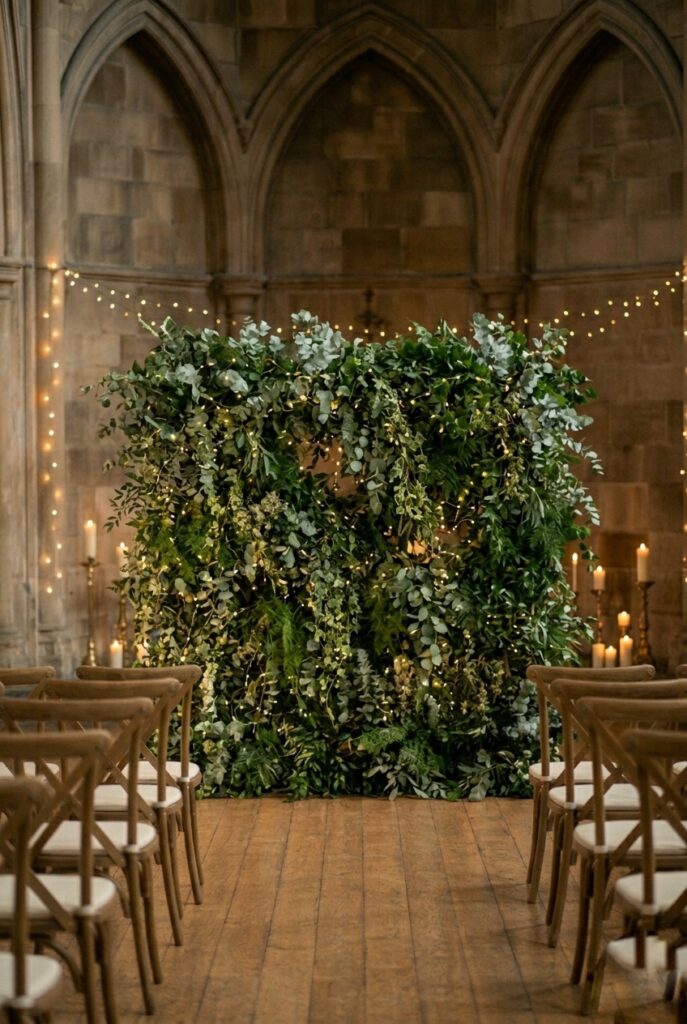
IMAGE 5 HERE Alt text: Lush eucalyptus and ivy greenery wall backdrop with soft warm string lights woven throughout, creating depth and organic texture. Image prompt: A professional photograph of a full greenery wedding backdrop (approximately 10 feet wide and 9 feet tall) composed of layered eucalyptus branches, ivy vines, fern fronds, and ruscus greenery attached to an internal frame structure. Warm white string lights are woven throughout the greenery at varying depths, creating a magical, dimensional effect. The wall has intentional gaps and varying heights of greenery, not a solid block. Photographed from approximately 18 feet away showing how the overall organic design reads from guest perspective. Warm evening lighting activating the string lights subtly. Generate in vertical portrait orientation, 2:3 aspect ratio, optimized for mobile display.

A living wall of greenery (eucalyptus, ivy, ferns, ruscus) on a frame creates an organic backdrop that photographs beautifully and doesn’t require florals.

Add string lights or uplighting behind or within the greenery for nighttime magic, or leave it unlit for a daytime ceremony.

Greenery walls read “garden” rather than “floral,” giving couples an elevated look without the cost of premium florals.

Price: $300–$800 if hiring a designer to build and install; $100–$300 DIY with loose branches, vines, and floral foam on a rented frame.

Where to buy: Local florists (ask for “greenery wall”), or DIY by renting a wooden frame and purchasing greenery from wholesale suppliers like FiftyFlowers.

6. Suspended Floral Installation (Hanging Overhead)
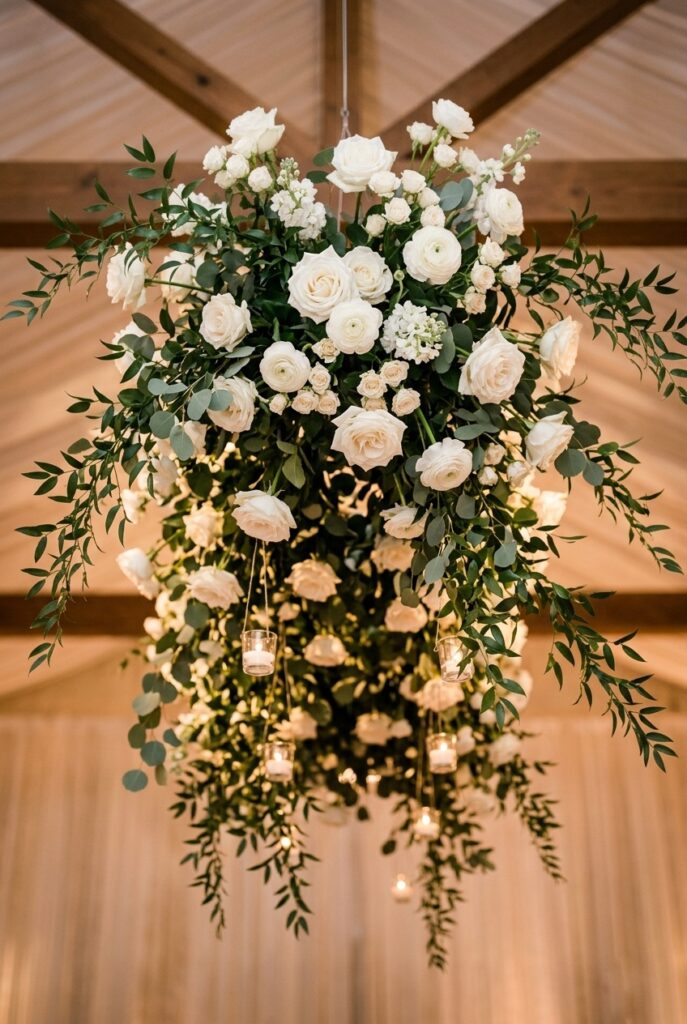
IMAGE 6 HERE Alt text: Suspended floral canopy overhead featuring hanging arrangements of white flowers and cascading eucalyptus, photographed from below looking upward. Image prompt: An overhead perspective photograph of a suspended wedding ceremony floral installation: a carefully arranged canopy of hanging floral elements suspended approximately 8 feet above the ground, featuring white garden roses, ranunculus, spray roses, and long trails of cascading eucalyptus greenery. The flowers are arranged asymmetrically to create visual interest and depth. Photographed from directly below looking upward, showing how the bride and groom would experience standing beneath the installation, with soft warm ceremony lighting creating a romantic glow on the flowers. Generate in vertical portrait orientation, 2:3 aspect ratio, optimized for mobile display.

Instead of a traditional arch, hang floral arrangements or a floral canopy from the ceiling above the couple.

This creates a dramatic, unexpected focal point that photographs uniquely and doesn’t obstruct guest views.

A suspended installation requires venue support (confirm your venue can handle hanging installations) and professional installation, but the impact is worth it for couples who want something memorable.

Price: $1,500–$3,500 for professional hanging floral installation; requires structural support and professional installation.

Where to buy: Contact high-end florists in your area who specialize in installations, or check with your venue for preferred vendors.

7. Neon Sign with Minimal Backdrop

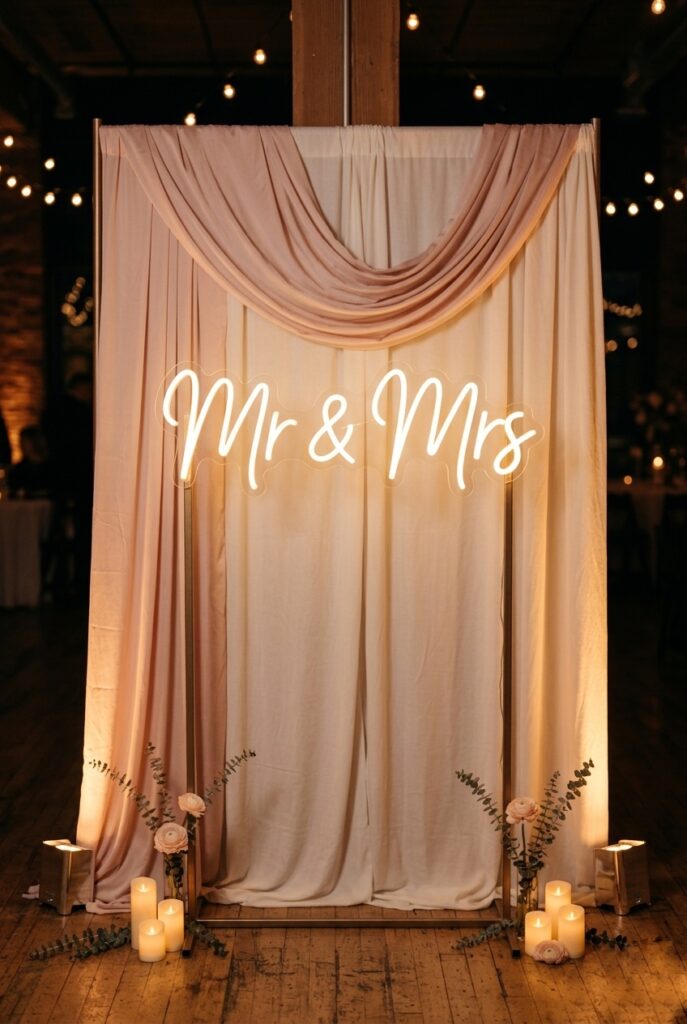
IMAGE 7 HERE Alt text: Custom neon sign reading "Mr & Mrs" glowing softly against a simple blush fabric backdrop with warm ambient lighting. Image prompt: A professional wedding photograph of a custom neon sign backdrop setup: a pink or warm white custom neon sign reading "Mr & Mrs" (approximately 3 feet tall) mounted on a sturdy stand, positioned in front of a soft blush or ivory fabric backdrop. The neon glows softly with warm ambient evening lighting illuminating the scene. The backdrop is simple and neutral so the neon sign reads as the focal point. Photographed from approximately 15 feet away showing how the sign and backdrop read together. Romantic evening lighting. Generate in vertical portrait orientation, 2:3 aspect ratio, optimized for mobile display.

A custom neon sign (your names, a short phrase, a shape) with a simple fabric or greenery backdrop behind it creates a modern, playful focal point.

The neon reads from distance, photographs brilliantly with evening lighting, and works for both ceremony and reception.

Pair with a neutral backdrop so the neon sign is the star, not competing with other design elements.

Price: $300–$800 for a custom neon sign (colors matter—full color is pricier than single-color); can be rented from some vendors for $150–$400.

Where to buy: Custom neon makers on Etsy, Yellowpop (online custom neon), or local neon artists in your area.

BUDGET HACK: Couples often rent neon signs for just ceremony photos, then move them to the reception for guest photos. Negotiate a rental price that covers both uses ($200–$300 for the day) rather than paying per use. Ensure the sign works in daylight photos (it won’t “glow,” but the shape reads well) and evening photos (the glow activates).

8. Structural Element Backdrop (Staircase, Fireplace, Architecture)
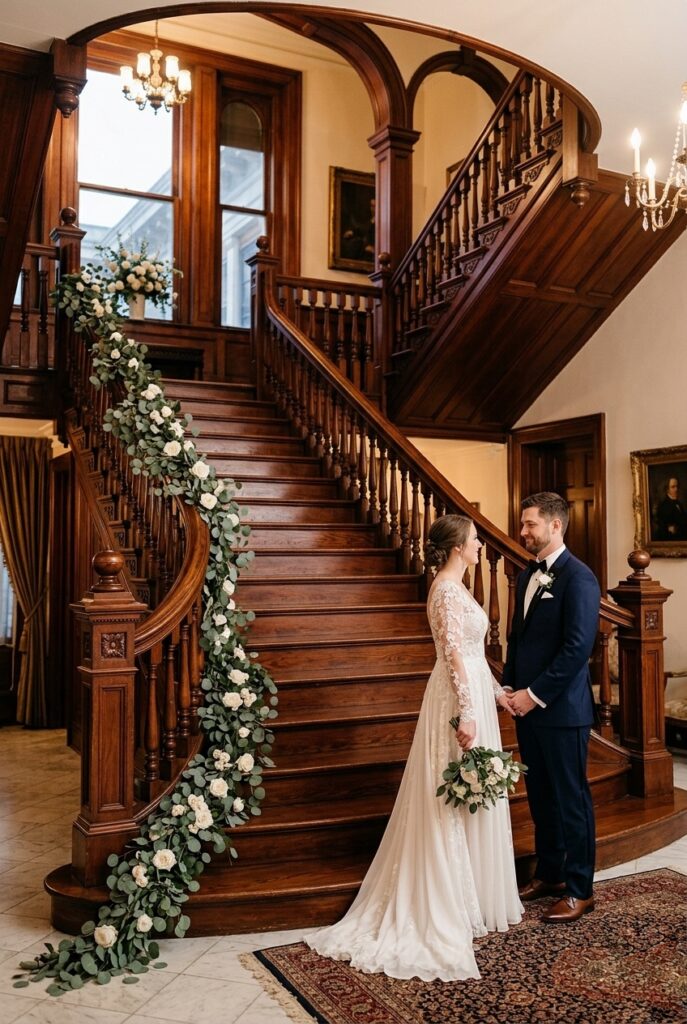
IMAGE 8 HERE Alt text: Grand wooden staircase as natural wedding backdrop, enhanced with trailing eucalyptus garland and white roses positioned on the bannister. Image prompt: A professional wedding photograph of a grand wooden staircase in an elegant venue, serving as a natural backdrop. White roses and trailing eucalyptus greenery are positioned delicately along the bannister and newel post, creating minimal floral accents that enhance without overwhelming the architectural feature. The staircase structure itself is the primary design element. The couple stands at the base of the stairs for ceremony or photos. Warm venue lighting illuminates the wood tones and creates elegant shadows. Photographed from approximately 20 feet away showing the full staircase and couple together. Generate in vertical portrait orientation, 2:3 aspect ratio, optimized for mobile display.

Some venues have built-in architectural features—grand staircases, fireplaces, dramatic columns, exposed brick walls.

Use these as your backdrop instead of building a separate structure.

Enhance the existing architecture with florals or draping that complement rather than compete.

This approach is economical, looks intentional, and honors your venue’s unique character.

Price: $0–$300 if enhancing existing architecture with minimal draping or florals; no structural rental needed.

Where to buy: Work with your florist or venue coordinator to add modest enhancements to existing features.

9. Multi-Use Backdrop (Ceremony to Reception Transition)
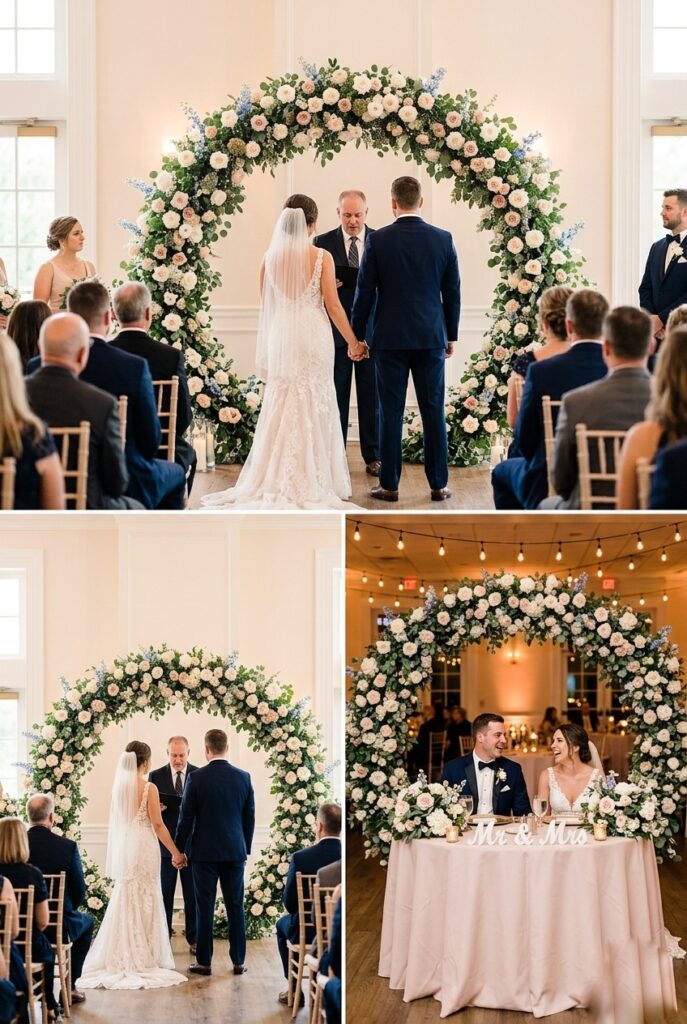
IMAGE 9 HERE Alt text: Circular arch backdrop positioned at ceremony altar, showing how it could be relocated to frame a sweetheart table in the reception space. Image prompt: Two sequential professional wedding photographs: (1) The circular arch positioned as the ceremony focal point at the altar, with the couple standing before it and ceremony guests seated in front. (2) The same circular arch repositioned behind a sweetheart table in the reception space, decorated with fresh linens and flower arrangements. The series shows how the same backdrop design works in both contexts. Warm ceremony and reception lighting respectively. Generate in vertical portrait orientation, 2:3 aspect ratio, optimized for mobile display.

Design your ceremony backdrop so it can be repurposed for the reception—either positioned behind the sweetheart table or moved to a guest photo area.

This requires choosing a design that works in multiple contexts.

Avoid single-use elements (oversized floral arrangements that work only at the altar) and instead choose modular designs: an arch can move from ceremony to entranceway; draping can go from ceremony backdrop to sweetheart table frame; a greenery wall can become a guest photo booth.

Price: Same as your primary backdrop choice, but requires planning how to reposition it.

Where to buy: Choose designs from rental companies that explicitly offer repositioning for no additional fee, or confirm with your florist that floral installations can be adapted post-ceremony.

INSIDER OBSERVATION: Experienced planners design backdrops with repositioning in mind from the start.

A 10-foot floral arch rented for $300 is worth more if it works for both ceremony (primary focal point) and reception (behind sweetheart table or near the exit for guest photos).

Couples often don’t think about this until the ceremony is over and the backdrop sits dormant during dinner.

10. Statement Fabric or Pattern Backdrop
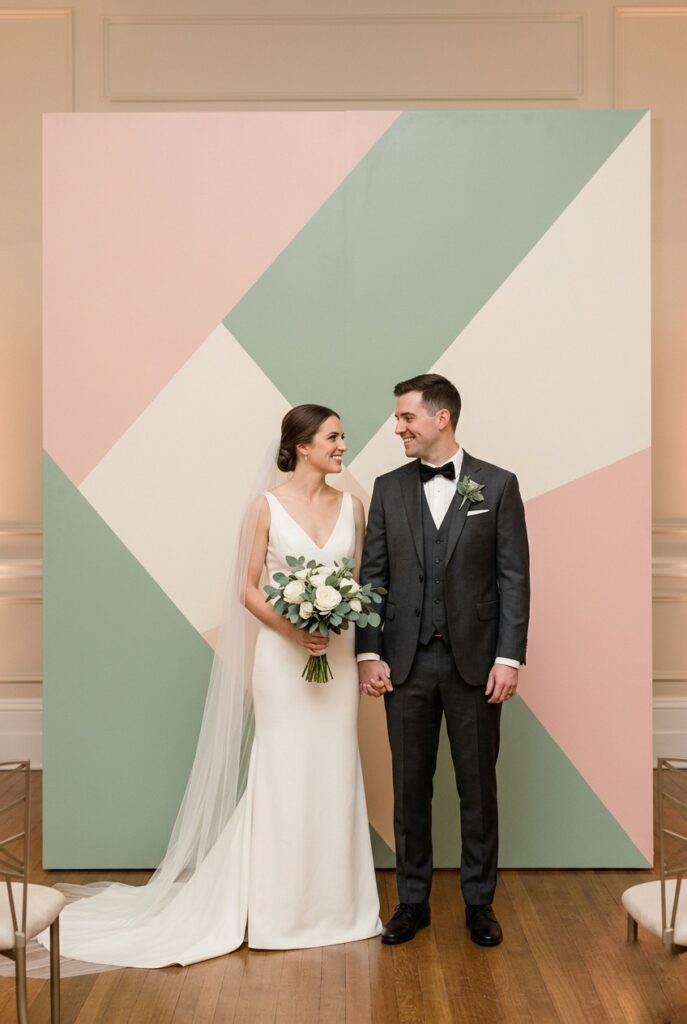
IMAGE 10 HERE Alt text: Bold geometric color-blocked backdrop in blush, sage, and cream tones, with couple in ivory and dark suit creating clear visual contrast. Image prompt: A professional wedding photograph of a modern, color-blocked geometric backdrop featuring sections of blush pink, sage green, and cream arranged in angular shapes (approximately 10 feet wide and 8 feet tall). The couple poses before it: the bride in an ivory gown and the groom in a dark charcoal suit. The contrast between the couple's attire and the patterned backdrop creates visual clarity and interest. The backdrop's geometric shapes create depth and don't compete with the couple's presence. Photographed from approximately 18 feet away. Modern, artistic aesthetic. Warm venue lighting. Generate in vertical portrait orientation, 2:3 aspect ratio, optimized for mobile display.

A bold, patterned backdrop—color-blocking, geometric patterns, or a custom-printed design—makes a fearless statement.

This requires confidence in your design choice and must be tested in your venue’s lighting (colors shift dramatically under warm vs. cool lighting).

The backdrop should complement your wedding colors but not match your dress or the couple’s attire, which could create visual confusion in photos.

Price: $300–$1,000 for custom-printed or patterned fabric backdrop rental; less if using pre-designed patterns from rental companies.

Where to buy: Custom printing companies (Etsy vendors, print shops), or order from wedding rental companies that stock patterned options.

TASTE LAYER: A color-blocked or patterned backdrop works when the couple’s attire contrasts with it (dark suit against light backdrop, or vice versa).

If the couple’s wedding clothes blend into the backdrop colors, they visually merge and read poorly in photos.

Test your dress and suit colors against the backdrop in your venue’s lighting before finalizing.

Decision Filter

If your venue has high ceilings (12+ feet), a suspended or overhead installation makes sense; if ceilings are low (under 10 feet), stick with ground-based arches or walls.

If your ceremony is outside, choose a backdrop that reads from distance (geometric shapes, arches, large installations) rather than detailed florals that lose impact in natural light; if your ceremony is indoors with theatrical lighting, florals and intricate details photograph beautifully.

If you’re working with a professional florist, prioritize their design recommendations over Pinterest photos—they understand your venue’s specific lighting and space.

If you’re on a tight budget, commit to one impactful backdrop element (a single arch, a simple draping, or a neon sign) rather than spreading your budget across multiple mediocre elements.

The Real Reason

Backdrop design is taught backward in most wedding blogs.

They show finished, professionally-lit photos from optimal angles without explaining the measurements, distances, and lighting conditions that made them work.

Here’s what actually matters that nobody tells you:

Distance fundamentally changes backdrop design. A floral wall that’s absolutely stunning 3 feet away might read as a “blob of flowers” from 20 feet back.

This is why couples obsess over tiny details (specific flower varieties, ribbon colors, minute arrangements) that literally nobody in the ceremony space will see.

Build for the 20-foot view first. The close-up details matter for photography, not for being there.

Your venue’s lighting is not your Pinterest board’s lighting. That gorgeous floral backdrop you pinned? It was photographed with professional lighting, likely backlit or with a reflector to make the flowers glow.

Your venue probably has standard warm ceiling lights, cool fluorescent areas, or nothing but natural daylight.

Your backup needs to be tested in your actual venue during your actual ceremony time before finalizing.

A blush-colored floral wall looks romantic at sunset; it might look washed-out or sickly under fluorescent ceiling lights. Test it.

The photographer’s perspective and the guest’s perspective are not the same angle. Your photographer will position themselves 15–30 feet away to fit you and the backdrop in one frame.

A guest seated in the back row sees the same view. But someone in the front row sees it very differently—closer, at a steeper angle, and the backdrop might block their view of certain moment.

The best backdrop works for all three perspectives simultaneously.

Arches work better than walls for this reason (less sight obstruction); tall, narrow designs work better than wide, squat ones.

Backdrop cost has nothing to do with impact. Some of the most photographed wedding backdrops are the simplest (a single arch with flowing fabric).

Some of the most expensive (intricate floral installations) create photos that look busy or dated within months.

Spend money on proportion, fit to your venue, and quality construction—not on filling every inch with florals or embellishment.

Mistakes to Avoid

Mistake 1: Building a backdrop that’s too small. Couples often default to undersized arches (6–7 feet) thinking they’re saving money or space.

From a guest’s perspective, a small arch looks dwarfed and insubstantial.

From the couple’s perspective, they feel crowded.

A properly proportioned arch should be 1.5–2 times the combined height of the couple standing side by side.

For an average couple, that’s 9–12 feet tall.

Budget accordingly instead of compromising size.

Mistake 2: Renting a backdrop without understanding the setup and breakdown fees. Some rental companies charge $50–$100 extra for delivery, setup, and breakdown.

If your backdrop rental is $300 but setup fees are $150, the true cost is $450.

Confirm all-in costs before booking. Sometimes buying is cheaper than renting if you’re getting married near peak season when rental demand drives up prices.

Mistake 3: Choosing a backdrop that photographs beautifully but feels awkward to stand in front of. Some designs are stunning on camera but incredibly uncomfortable in person: they block air circulation, they’re too narrow for comfortable positioning, or they require awkward poses.

Stand in front of your backdrop design (or a photo of it at full size) before finalizing. Does it feel generous, or cramped?

Mistake 4: Not confirming venue structural limitations before investing in a backdrop. Not all venues allow permanent installation.

Some don’t allow anything nailed, glued, or affixed to walls.

Some can’t support suspended installations.

If you’ve bought or committed to a specific backdrop design, finding out post-order that your venue can’t accommodate it is expensive regret.

Confirm structural requirements and venue rules before designing.

FAQ

How far away should the backdrop be from the couple?

The photographer needs 15–25 feet of shooting distance to fit both the couple and a substantial backdrop in one frame.

Your backdrop should be positioned 8–12 feet behind where the couple stands (or where they’ll stand for photos), which gives the photographer adequate depth and distance.

If your space is tighter (small ceremony space), choose a narrower backdrop or a transparent arch so the photographer can position closer without the backdrop feeling cramped.

What size backdrop do I actually need?

A properly proportioned backdrop should be 1.5–2 times the combined height of the couple standing together.

For an average couple (combined height roughly 11 feet), a 9–12 foot tall backdrop is appropriate.

Width should be 8–14 feet depending on whether you want narrow (arch) or wide (wall) format.

Measure your ceremony space before finalizing; an undersized backdrop in a large venue reads insignificant.

Can I use the same backdrop for ceremony and reception?

Yes, if you choose a design that works in multiple contexts.

A simple arch or draping is versatile and can move from ceremony to sweetheart table or guest photo area.

A highly specific installation (a wall perfectly sized for ceremony positioning) might not work behind a table or in a different space. Plan for repositioning when designing.

Should my backdrop match my wedding colors or contrast with them?

Your backdrop should complement your overall color palette but not be identical to your dress or attire colors (blurs the visual separation in photos).

If your wedding colors are blush and sage, a blush backdrop might wash out the bride in a blush dress.

A sage or neutral backdrop with blush florals or accents creates better visual contrast. Test your dress and suit colors against the backdrop in your venue’s lighting.

Budget Table

Backdrop TypeBasic CostMid-Range OptionSplurge Option
Circular arch (rental)$150–$250$250–$400$400–$600 with premium fabric
Geometric frame$150–$300$300–$500Custom-built premium materials
Floral wall (prefab)$400–$800$1,000–$1,800$2,000–$3,500 fresh flowers with florist
Simple fabric backdrop$100–$300$300–$600Custom-printed premium fabric
Greenery wall (DIY)$150–$300$400–$700$800+ professional installation
Suspended installationN/A (professional only)$1,500–$2,200$2,500–$3,500+
Neon sign$300–$600 rental$400–$800 custom$800–$1,200+ premium colors
Architectural enhancement$0–$200$200–$400$400–$800 with florals
Multi-use repositioning+$0 (plan ahead)+$50–$150 setup fees+$200–$400 for design adaptation

One final point: the best backdrop is one you forget about within five minutes of the ceremony starting.

It should frame the moment, not become the moment.

The most memorable backdrops are the ones that made your photos stunning and then disappeared from your mind because you were too focused on your partner, your vows, and the reality of the day happening around you.

Your backdrop is not the point. You are. Choose something that honors that.

Leave a Comment

Your email address will not be published. Required fields are marked *

Scroll to Top