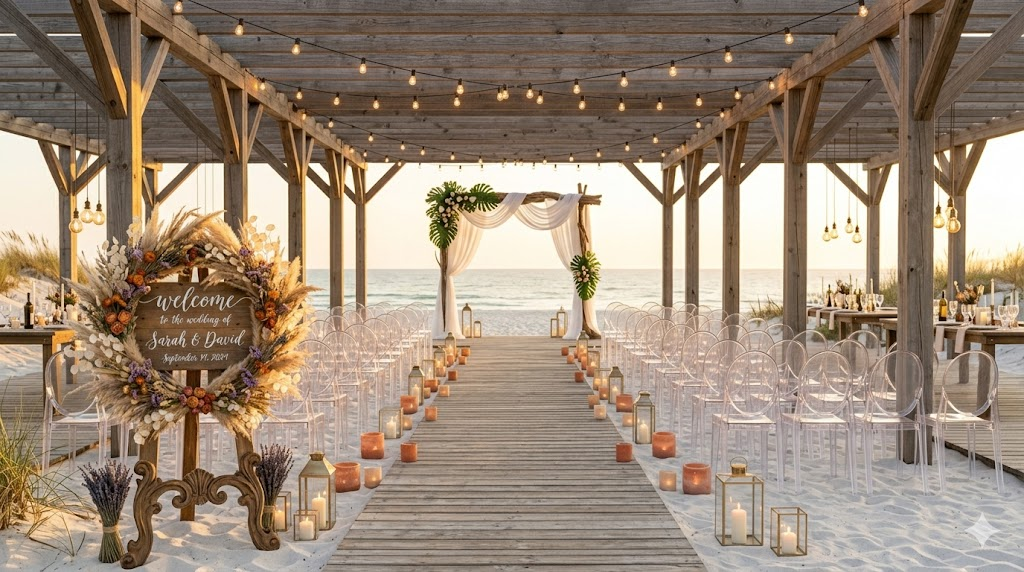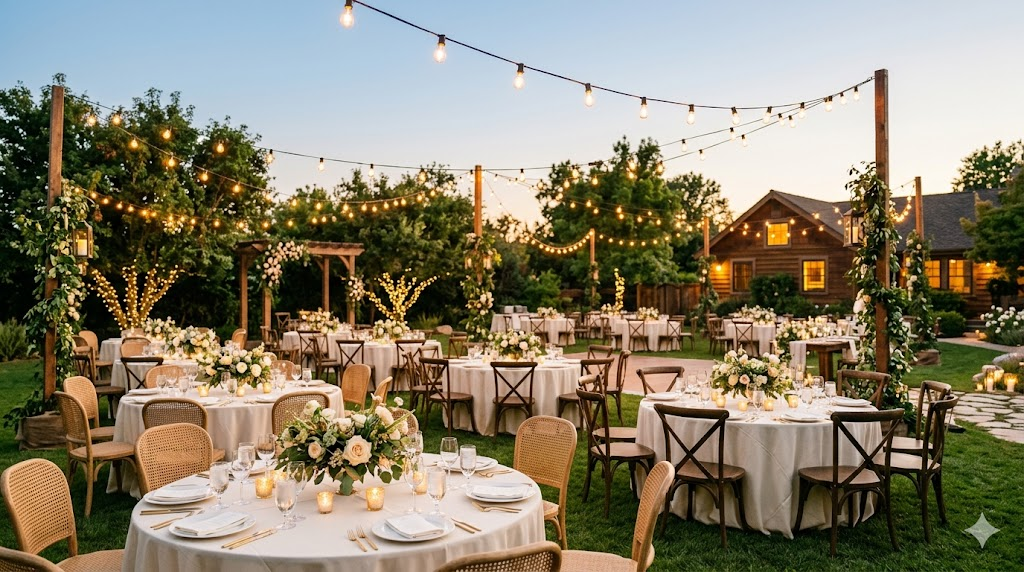
The difference between a $400 backdrop and a $4,000 one is rarely the design — it’s the materials and how they’re installed.
Knowing which materials photograph as professional, which ones wilt or shed before the reception ends, and how lighting changes everything about how a backdrop reads in photos is what separates a backdrop that looks intentional from one that looks improvised.
For the full structural decisions that come before the decoration layer — frame type, size, positioning — see the DIY backdrop installation guide before committing to any materials.
1. High-Quality Silk Flowers vs. Craft Store Alternatives
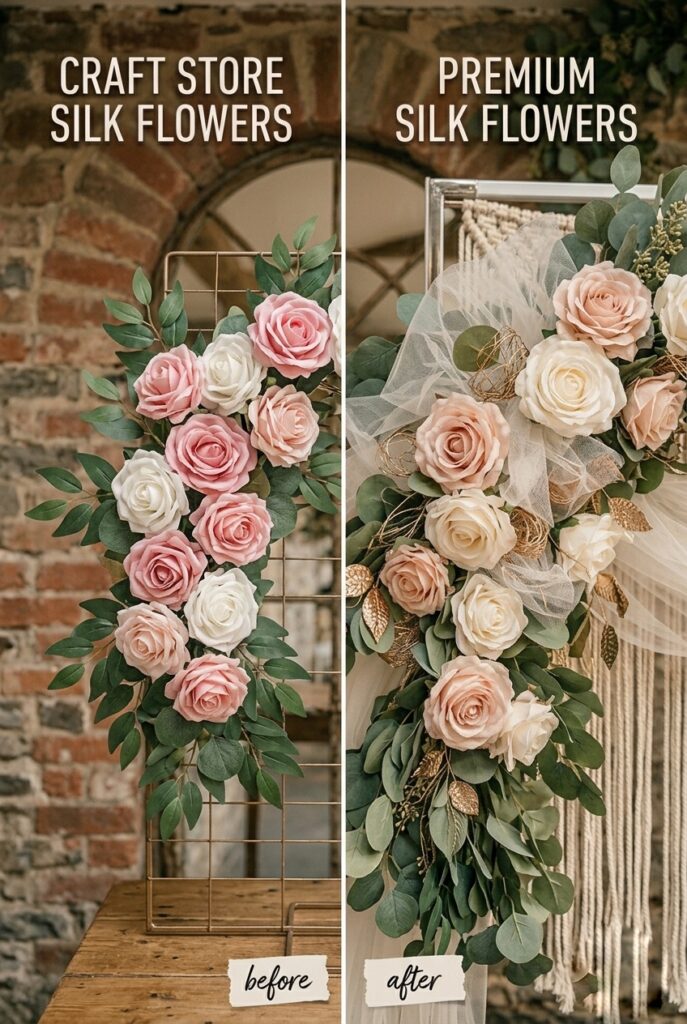
Craft store silk flowers — thin polyester with flat color gradients and identical petals — photograph with a visible plastic sheen that no amount of lighting corrects, while premium silk from specialty makers uses densely layered petals with hand-painted color variations that are virtually indistinguishable from fresh in photographs.
The cost difference runs $2–$5 per stem at craft stores versus $8–$20 per stem for premium, but a properly designed backdrop only needs 40–80 stems, which means the total upgrade from budget to premium is $200–$600 — not thousands. A simple backdrop using 40 premium stems with layered tulle and correct lighting will outperform 150 budget stems installed flat every time.
Budget Hack: Mix premium focal flowers ($8–$12/stem) for the central visible area with quality-but-budget greenery ($2–$4/stem eucalyptus, ruscus) for the backdrop base. Guests’ eyes focus on the flowers, not the filler. One couple spent $200 on premium roses and ranunculus for their focal cluster, then $80 on wholesale greenery to fill around it, for $280 total. All the impact, quarter the cost of fully premium.
2. Fresh Flowers for Backdrops (When Quality Matters, Timeline Doesn’t)
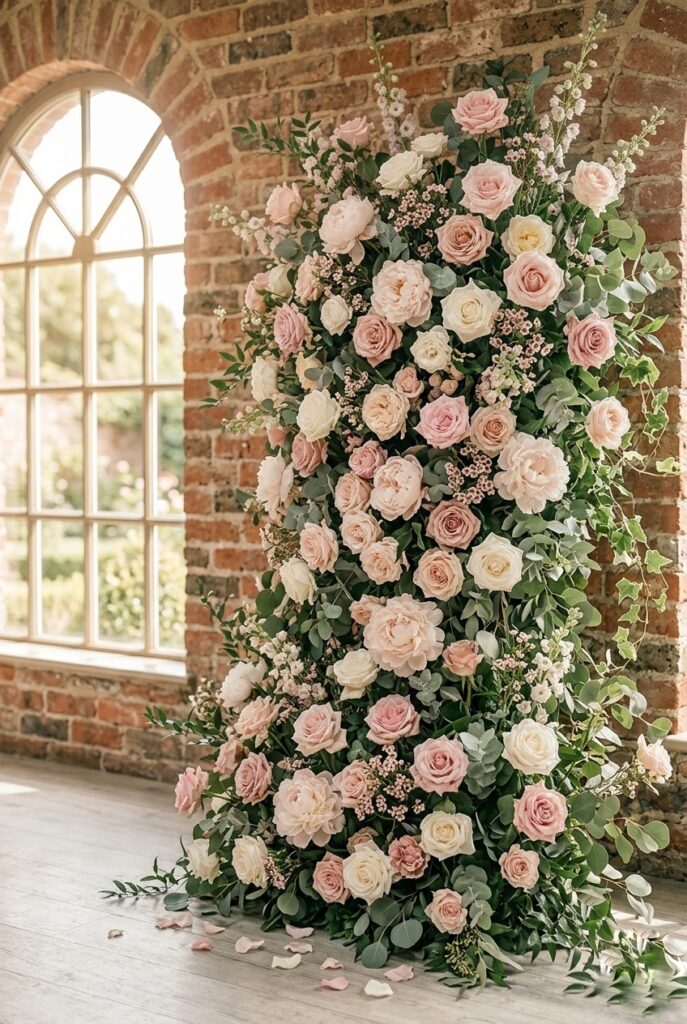
Fresh flowers deliver luminosity in photos that premium silk cannot fully replicate — but they only work if your florist delivers within six hours of your ceremony and your venue maintains controlled temperature throughout.
Skip fresh entirely for outdoor summer ceremonies, venues with limited cooling, or ceremonies starting later than 2pm where extended family photo sessions will push the backdrop past peak condition; after two hours under venue heat, fresh installations visibly tire and the difference between a fresh backdrop at hour one versus hour four is significant.
3. Tulle and Lightweight Fabrics (The Underrated Decorator’s Secret)
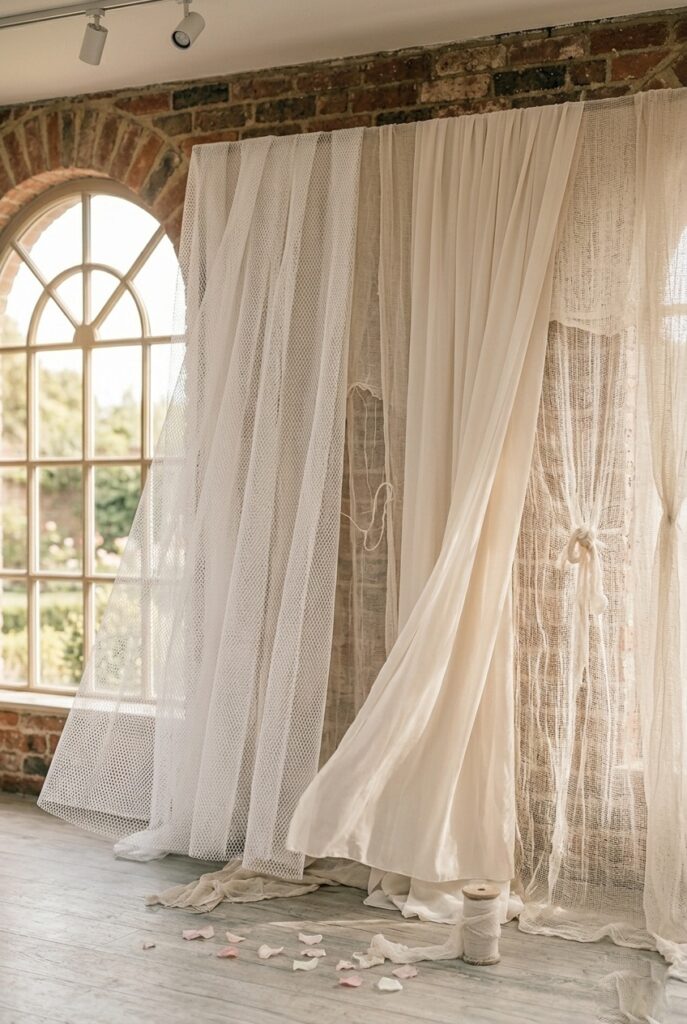
Tulle, chiffon, muslin, and voile are structural decoration elements, not filler — tulle alone on a frame costs $15–$40 and photographs with texture and movement that reads as intentional when it’s layered and gathered, not when it’s stretched flat.
The professional approach layers different weights — stiff tulle front, soft chiffon middle, voile or gauze at back — and gathers the fabric at strategic points such as the center top and both sides so light catches the folds and creates dimension. For how this layering principle works specifically in indoor installations where side lighting is controllable, the distinction between good and flat comes entirely from where the light source hits the gathered folds.
4. Metal vs. Wooden Frames (Structural Reality)
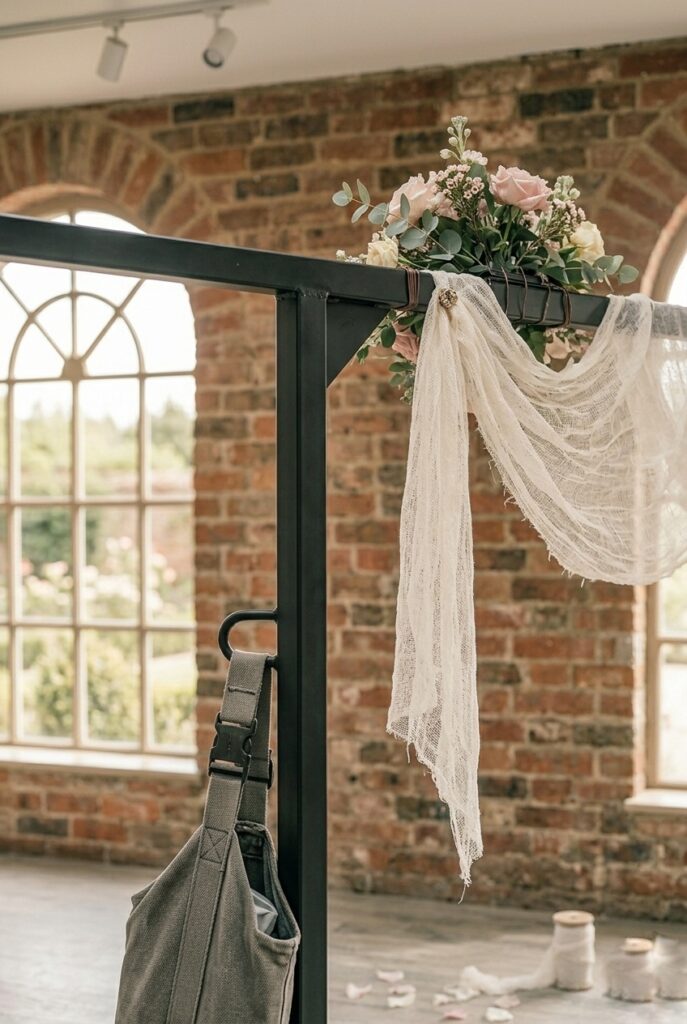
Your frame determines whether your flowers and fabric stay upright through the entire ceremony or tip partway through — thin metal pipe at half-inch diameter bends under tension and absolutely will move outdoors, while heavy-gauge metal at three-quarter inch or heavier with proper cross-bracing holds any decoration weight without movement.
Wooden frames are heavier and read as rustic regardless of what you put on them, so if your aesthetic is modern or elegant, heavy-gauge metal is the correct choice — but it requires proper anchoring, particularly outdoors, and DIY wooden arches without cross-bracing have a documented history of toppling. The backdrop structure guide covers proportions, weight limits, and anchoring requirements for each frame type.
5. Faux Eucalyptus and Greenery (Where Artificial Actually Wins)
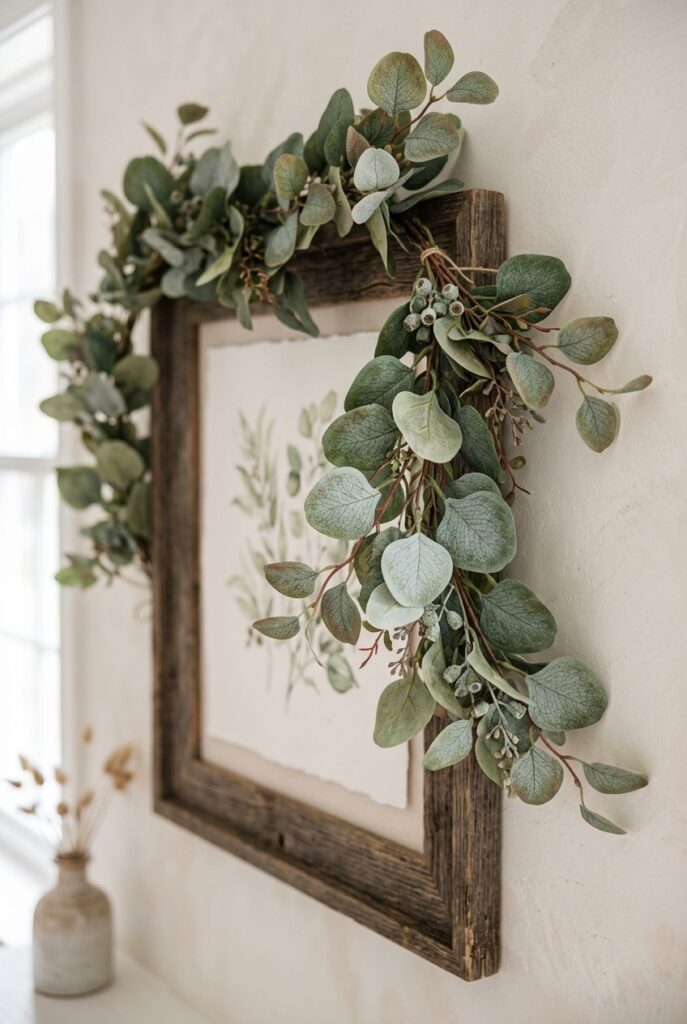
Fresh eucalyptus starts shedding leaves within 24–48 hours and becomes brittle under heat, while premium faux eucalyptus from specialty suppliers holds its color, texture, and fullness for months — which means you can set up the greenery layer of your backdrop days before the wedding with zero maintenance.
The distinction that matters is premium faux versus craft store faux: premium faux from Afloral, Floral Home, or equivalent specialty suppliers has the weight and leaf texture of the real plant; craft store plastic garland photographs as obviously synthetic regardless of lighting. For how faux greenery performs across different ceremony contexts, the full backdrop guide covers material sourcing for each style.
6. Lighting Fixtures (Fairy Lights, Uplights, Spotlights)

Warm white fairy lights positioned six inches behind your backdrop fabric — never in front — create a glow through the fabric that transforms a simple backdrop into something atmospheric in photographs, while lights placed in front of the backdrop create harsh flat shadows that eliminate all the dimension the fabric draping creates.
The positioning rule applies to uplights too: position them at the base angling upward into the flowers and fabric, never aimed straight at the surface, because angled light creates the shadow and highlight variation that reads as dimension and depth in photographs. Two strings of battery-powered warm white fairy lights at $40 total, positioned correctly, add more to a backdrop’s photographic impact than $500 in additional flowers. For ceremony setup specifically, confirm whether your venue has accessible power points near the altar before deciding between battery-powered and corded lighting.
Budget Hack: Two strings of battery-powered fairy lights ($40 total) positioned strategically behind your backdrop do more for visual impact than $500 in additional flowers. Battery-powered means zero electrical installation—just velcro them in place.
7. Floral Foam vs. Hanging Installation (Application Matters More Than Material)
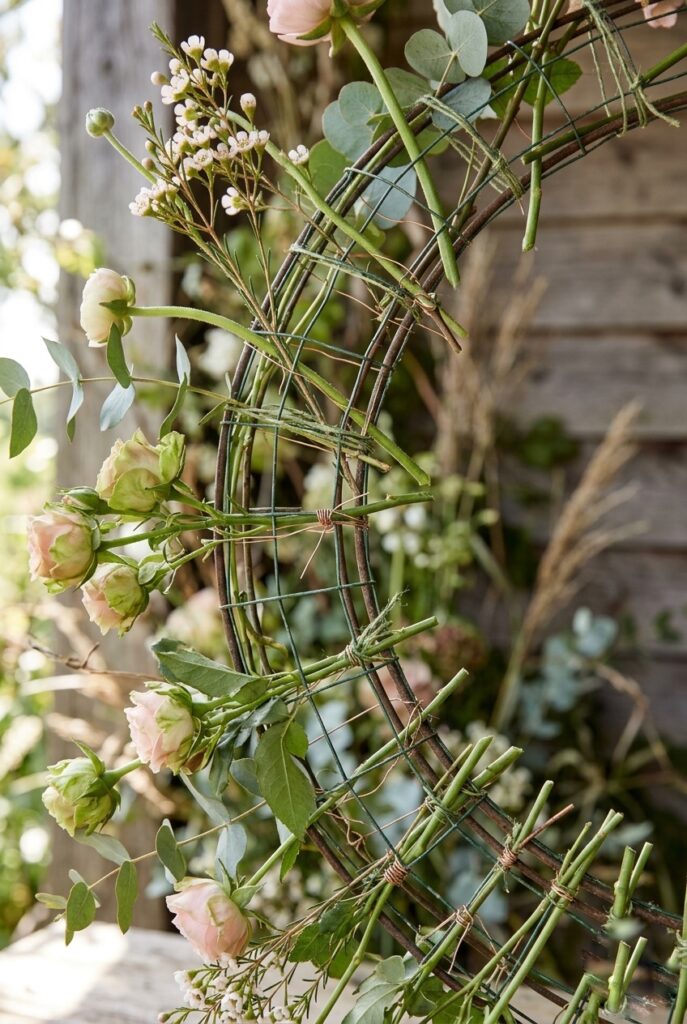
Floral foam requires fresh flowers — it becomes visible as it dries and photographs as an obvious rectangular block through any gaps in coverage — while chicken wire netting stretched across the frame and floral wire for individual stem attachment works cleanly with silk flowers and disappears completely once covered.
If you are using silk flowers, skip foam entirely; stretch floral netting (chicken wire) across your frame, attach stems through the mesh with floral wire, and the installation holds full weight, requires no water, and leaves no visible substrate in close-up photography. For a reception backdrop that needs to move from ceremony to sweetheart table position, wire-attached netting also holds through repositioning in a way that foam-based installations cannot.
8. Sola Wood Flowers (The Sustainable Middle Ground)

Sola flowers — made from thin wood shavings pressed into flower shapes — are lighter than silk, compostable, and read as genuinely handmade and artisanal rather than as a substitute for fresh, which makes them a stronger choice than budget silk for weddings where the handcrafted aesthetic is intentional rather than incidental.
They work best for boho or rustic aesthetics and outdoor ceremonies where weight is a concern; skip them for traditional or formal weddings where a full lush floral look is the goal, because sola flowers are architectural and delicate rather than dense. For approaches that use materials like sola flowers to create something genuinely distinctive rather than a recombination of standard backdrop elements, that guide covers the full range.
Quality of material and precision of installation determine whether a backdrop photographs as professional — not the quantity of flowers or the total spend. Settle your frame, choose materials one tier above what you think you need for the visible focal area, and position your lighting behind or below rather than in front.
For the full range of backdrop styles that these decoration decisions apply to, the wedding backdrop ideas guide covers every approach from minimal fabric to full floral installation.