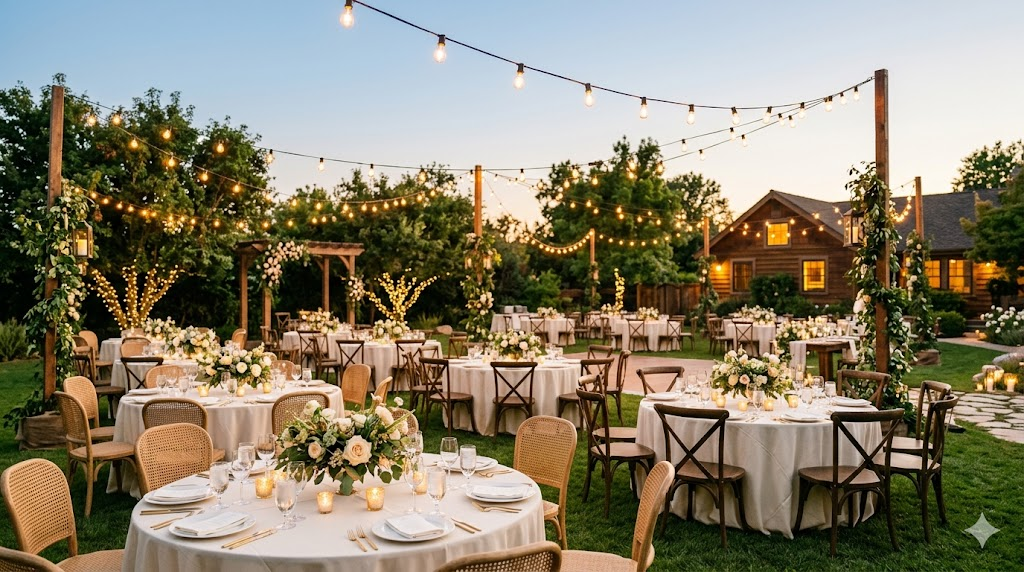
Spring table decor comes with a catch nobody warns you about: abundant light during ceremony hour means your carefully chosen candlelight doesn’t register until 8pm hits, and bright daylight through the windows will wash out anything pale you’ve pinned.
You’ve planned around winter darkness and summer heat extremes, but spring’s unpredictable glow—and variable bloom availability—requires different choices.
Most spring wedding tables fail not because of bad ideas, but because couples apply year-round rules to a season that deserves its own logic.
Here’s what actually works in spring, and where the gaps in standard advice live.
Petals release their perfume on warm afternoons, a teacup holds two stems of ranunculus, the napkin folded sharp, linen cool against the palm. Small gestures, witnessed by no one, make the table real.
The Short Answer
Spring tables often default to “pale pastels and lots of flowers” because florists and Pinterest make it look effortless—but pastel without contrast reads flat in bright spring daylight, and overloading tables with tall florals blocks the only thing that matters at dinner: conversation with the person across from you.
Instead, build your spring table on depth of texture and color, keep centerpieces genuinely low and narrow (under eight inches wide, max), and choose bloom types that hold their shape through dinner service, because spring temperatures spike unpredictably and can wilt delicate arrangements faster than you’d expect.
1. Low Meadow Centerpieces with Mixed Greenery
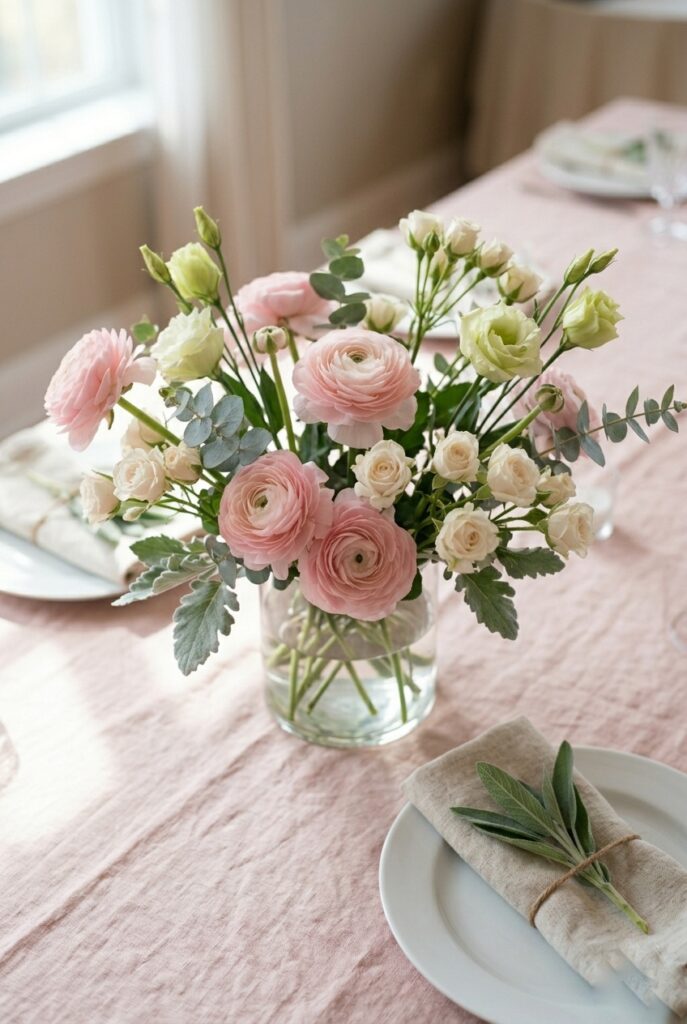
Skip the single-flower centerpiece look—meadow arrangements pull multiple stem types (ranunculus, tulips, spray roses, and lisianthus) mixed into loose, sprawling groupings that look abundant without height.
The secret is keeping everything under six inches tall and letting greenery do half the visual work.
Use eucalyptus, ruscus, and locally-sourced springtime foliage (pussy willow branches add texture without cost).
Group three to five stems per arrangement, then cluster these small bunches across the table rather than one centerpiece.
This reads as intentional, not sparse.
Price: $35–$65 per table if sourcing through a florist; $15–$25 if you buy stems from a farmers market or wholesale supplier like Whole Foods or local nurseries. Where to buy: Whole Foods bulk flowers, local farmers markets (wildflower and greenery bunches), or order online from FiftyFlowers or BloomsByTheBox.
TASTE LAYER: Tight, overly-dense florals from wedding supply rental companies look expensive and formal but often feel plastic-y and wilt visibly.
Meadow arrangements with loose spacing and varied stem heights read as naturally gathered and actually photograph better. The looseness is the luxury.
2. Alternating Flower and Candle Tables
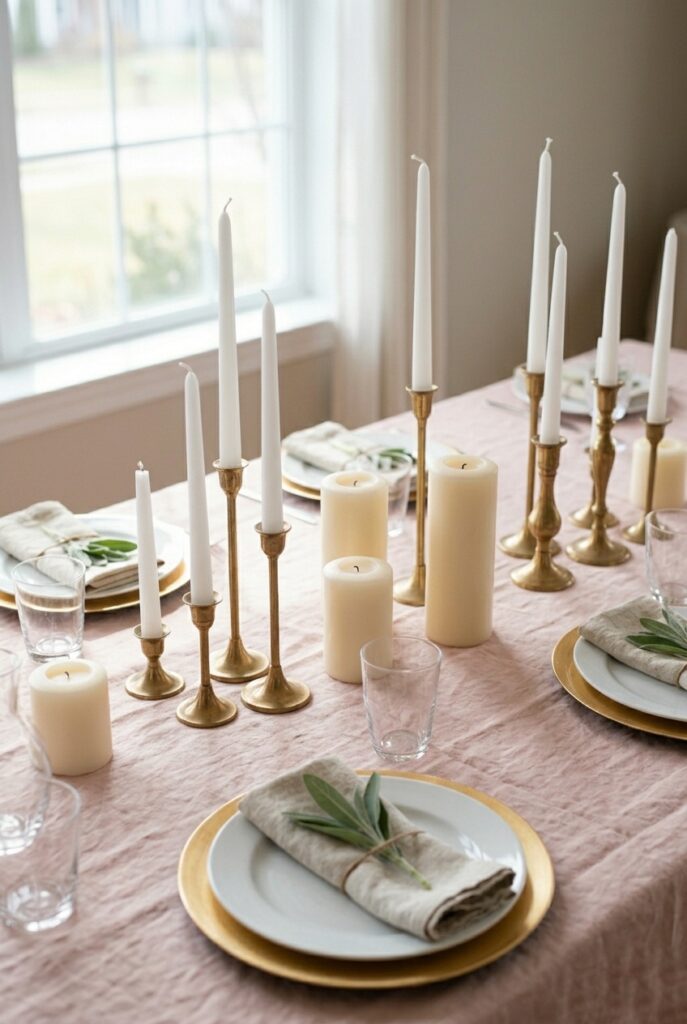
Instead of florals on every table, do florals on every other table and swap the others for clusters of votives and pillar candles at varying heights—some tall, some short.
In spring daylight (especially 4-6pm ceremonies), the candles won’t glow, but they read as elegant and break up the visual repetition.
By evening, the effect is romantic without the cost of florals on every single table.
Tall tapers (18–24 inches in candlestick holders) work better than short votives in spring because they create vertical interest, and candlelight will finally activate after sunset.
Price: $8–$15 per table for candles (buying bulk pillar and taper candles from Costco or Amazon, not from wedding rental companies); candlestick holders rent for $2–$4 per piece.
Where to buy: Costco, Amazon (search “taper candles bulk”), or wedding rental companies like Abundant Designs or local event rental shops.
BUDGET HACK: Buy unscented pillar candles in bulk from Costco ($0.50–$0.75 per candle) instead of through wedding vendors ($3–$5 each). A table of 10 candles at Costco costs $7–8 instead of $40–50 through a rental company. Set them in groupings of 3–5 of varying heights, and they look intentional, not like you’re cutting costs.
3. Single Stem Place Settings with Ribbon
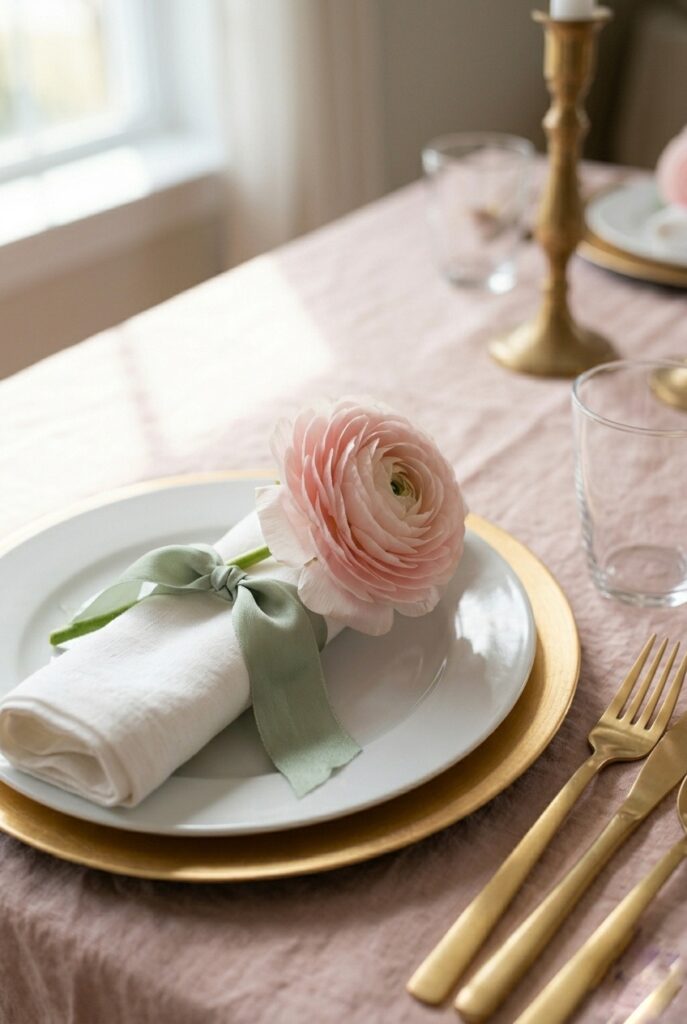
One bloom per place setting tied with a soft ribbon tucked into the napkin or leaning against the water glass requires minimal florals but makes each guest feel seen.
Choose ranunculus, garden roses, or a single stem of lisianthus—flowers that look complete on their own and don’t require greenery.
Tie with a ribbon in your wedding color (soft sage, dusty blue, blush, or ivory work beautifully in spring).
This works especially well if your centerpieces are minimal or all candles, because it pulls the flower color onto each plate.
Price: $0.75–$2 per bloom for wedding-quality stems.
If you’re feeding 100 guests, expect $75–$200 for place flowers. Where to buy: Buy loose stems from FiftyFlowers, BloomsByTheBox, or order 2-3 days before from a local florist with wholesale pricing.
TASTE LAYER: Tiny filler flowers or baby’s breath tied with ribbon read as fussy and dated.
A single substantial bloom (the size of a quarter or larger) with one ribbon detail reads as designer-level.
The bigger the bloom, the more expensive it looks.
4. Textured Vessels in Gradient Colors
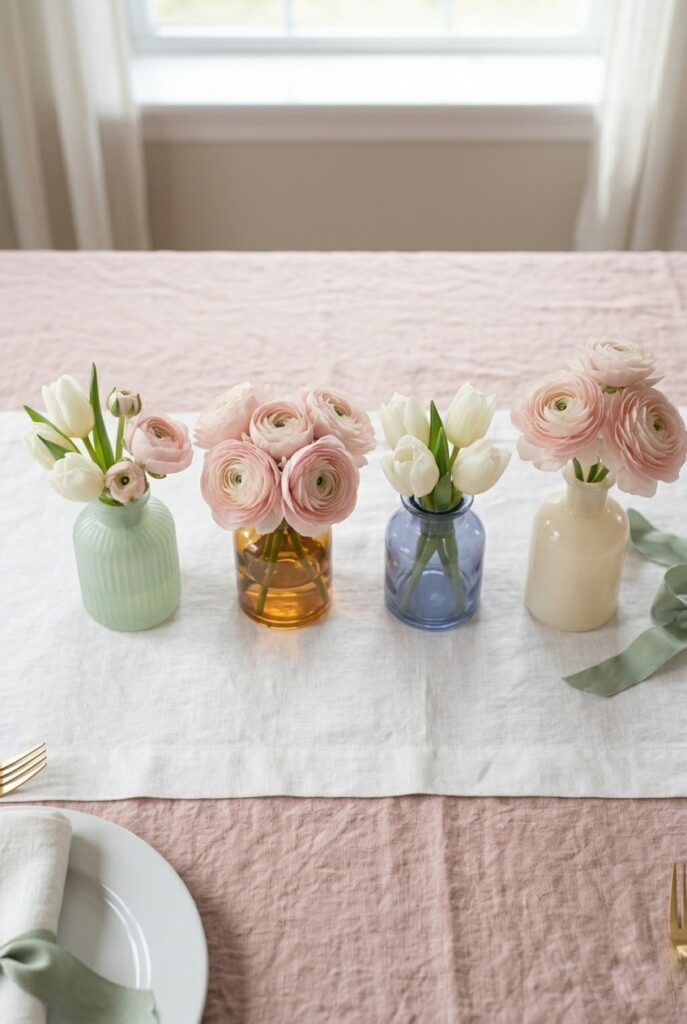
Instead of matching vases, use a mix of glass vessels in soft, related colors: pale green, soft amber, dusty blue, and cream—all in the same color family but different tones.
Fill each with simple stems (tulips, ranunculus, or lisianthus) in white or blush, so the vessels become the design focus.
This approach uses fewer stems and works beautifully for long tables because the variety reads as curated, not cluttered.
Price: $40–$80 for a collection of quality small glass vases if buying new; $15–$30 if renting from a wedding rental company. Where to buy: Anthropologie, West Elm, or online from Etsy vintage sellers; rental companies like Abundant Designs.
5. Floating Flowers in Shallow Bowls

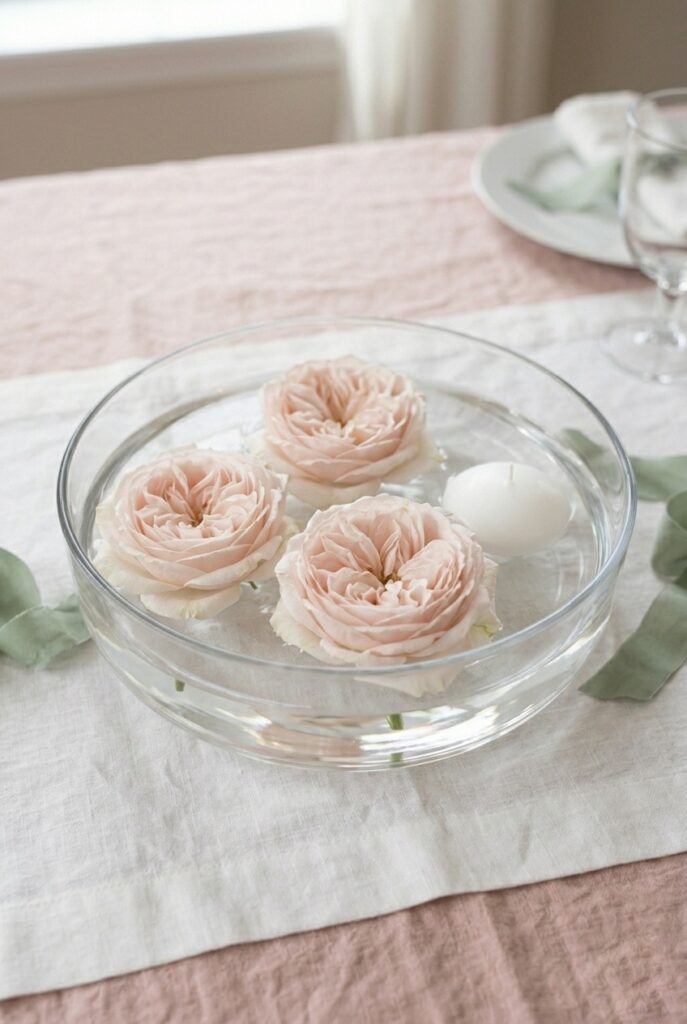
White or blush roses, garden roses, or ranunculus floated in low wide bowls of water with floating candles create a romantic, photograph-friendly look with minimal effort.
Use one flower type per bowl and repeat the same arrangement across tables for visual continuity.
The candlelight reflects off the water for extra glow, and the flowers stay fresh through a long reception because they’re hydrated.
Price: $3–$5 per flower x the number of tables, plus shallow bowls (can rent for $1–$2 per bowl or buy cheap from HomeGoods for $8–$15).
Where to buy: Rent bowls and floating candles from local wedding rental companies; buy flowers from FiftyFlowers or a local florist.
BUDGET HACK: Shallow bowls from HomeGoods cost $8–$15 but you own them after the wedding—no rental fee, no pickup logistics.
For 10 tables, one bowl per table costs $80–$150 one-time instead of $20–$30 rental fee that forces you into a specific color/style.
6. Herb and Bloom Combinations

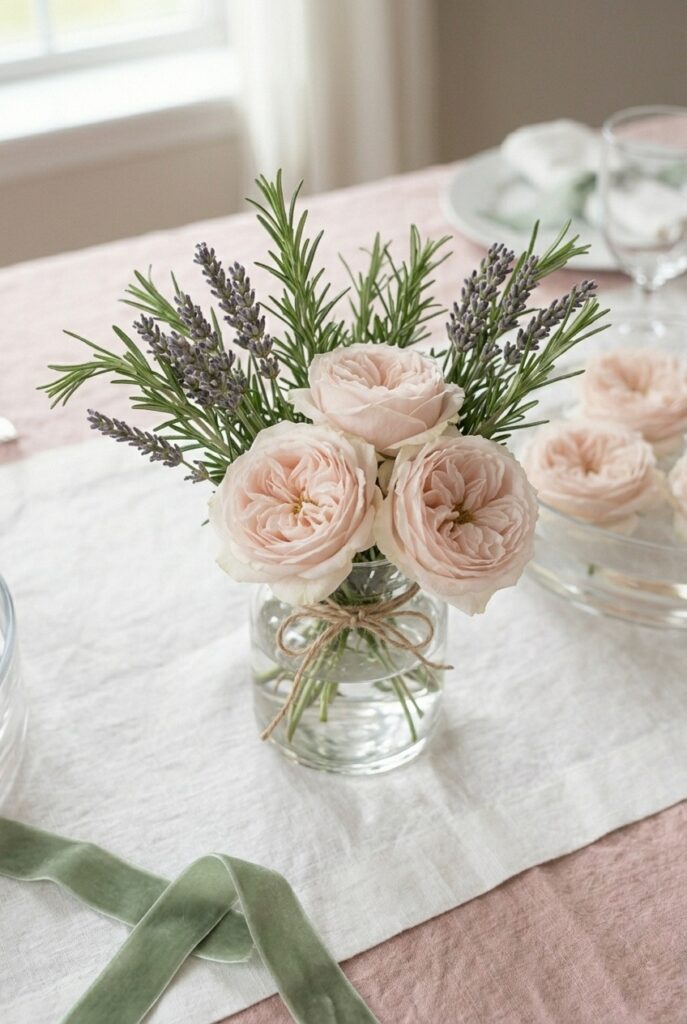
Rosemary sprigs, lavender, mint, or oregano mixed into shallow arrangements add fragrance, texture, and a fresh, intentional feel without requiring expensive florals.
Pair a small bunch of herbs (tied loosely with twine) with 3–4 garden-variety blooms in a low vase.
The herbs anchor the look and smell beautiful—guests will notice the scent as they sit down.
Price: $2–$5 per arrangement if using local farmers market herbs and grocery store flowers.
Where to buy: Farmers markets (herb bunches), grocery store flowers (grocery store roses are often cheaper than florist roses), or grow herbs yourself if planning ahead.
TASTE LAYER: Plain herb bundles without flowers read as incomplete or like table decor for a garden party, not a wedding.
Adding just three substantial blooms elevates the look significantly and signals intentionality.
7. Long Table Runners with Distributed Flowers
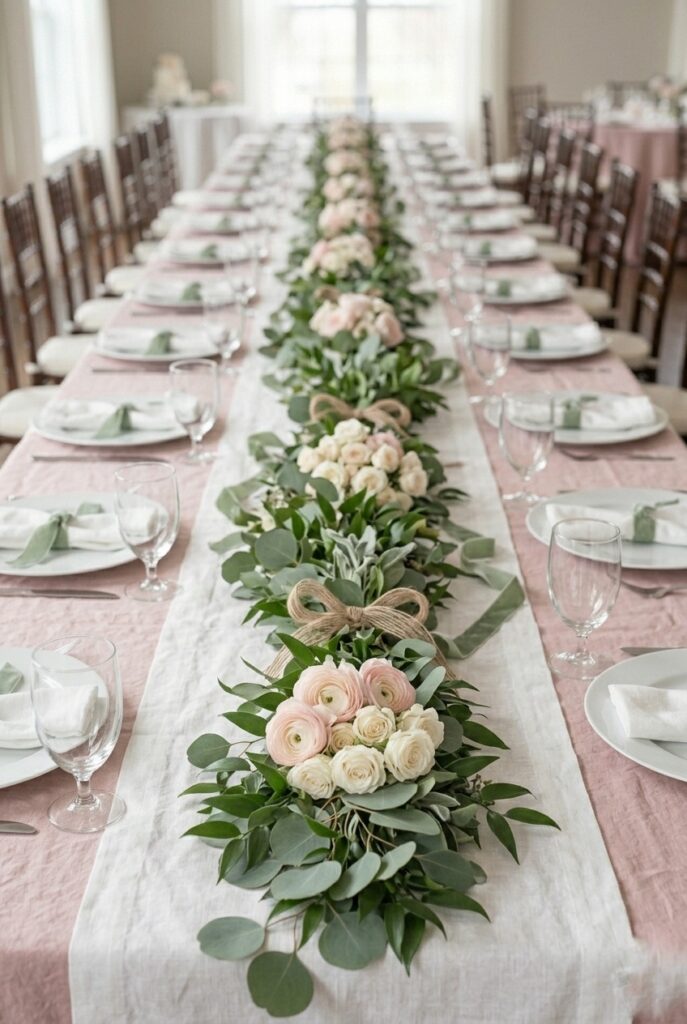
For long communal tables, run fresh greenery (eucalyptus, ruscus, or foraged branches) down the entire length and tuck small clusters of flowers at intervals—one cluster every two feet instead of one massive center arrangement.
This creates rhythm, stays narrow so guests can see and talk across the table, and uses fewer total stems than traditional centerpieces.
Price: $40–$80 for the greenery runner (buying from a florist) plus $30–$50 for small flower clusters to tuck in.
Where to buy: Local florists (ask for greenery-only runners), or order a pre-made runner from BloomsByTheBox and supplement with small flower bunches.
BUDGET HACK: Greenery runners are 60% cheaper than floral runners from traditional wedding florists.
Ask your florist specifically for “greenery only” or “greenery with accent blooms” rather than “floral runner”—the wording change saves $200+ on a long table.
8. Monochrome Layered Textures
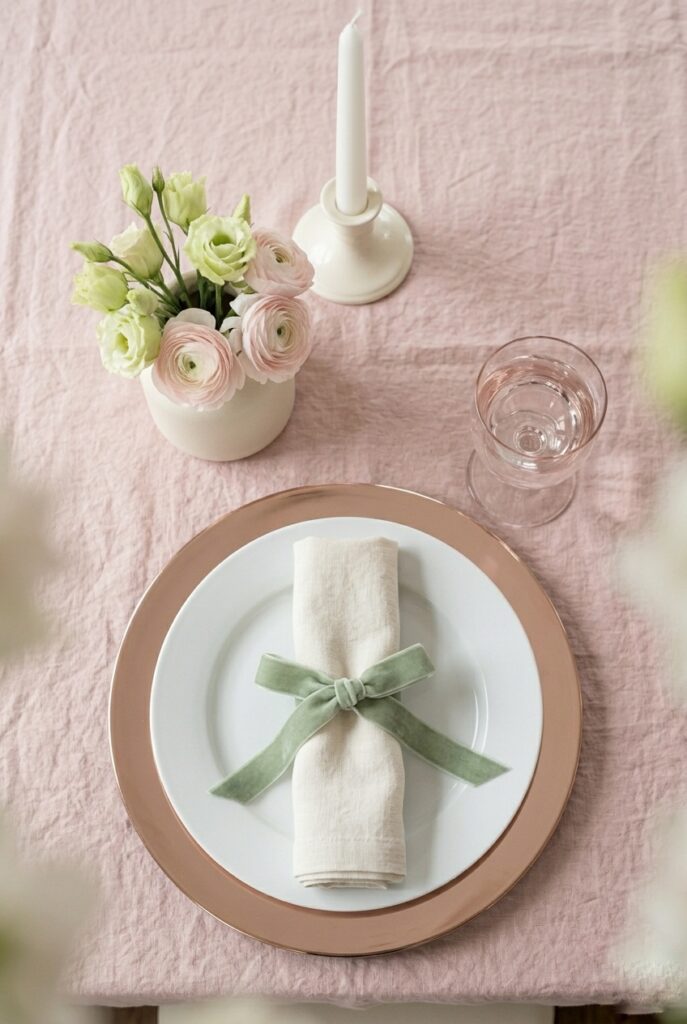
Choose one color (blush, soft sage, cream, or pale blue) and layer different textures within that color family: linens, florals, candles, glassware, and place cards all in related tones but different materials.
A blush tablecloth with cream napkins, pale pink flowers, rose gold chargers, and crystal glasses in pale pink-tinted glass creates depth without complexity.
Spring light will catch each texture differently, creating visual interest.
Price: Linens $8–$12 per table to rent; flowers $35–$50; candles and chargers $10–$15. Total per table: $60–$90.
Where to buy: Rent linens from wedding rental companies or Rent the Runway; buy or source flowers as noted in previous ideas; chargers from wedding rental companies or Etsy.
9. Edible Centerpiece Elements

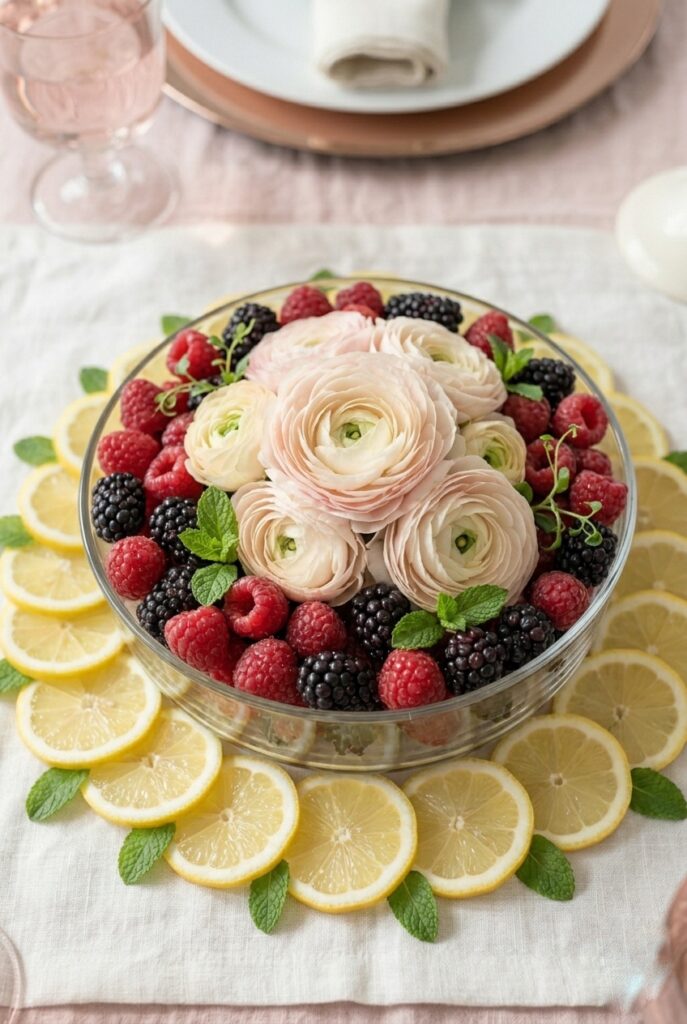
Small citrus fruits (lemons, limes, or small oranges), berries in small glass bowls, or sprigs of edible flowers (violas, nasturtiums) mixed into centerpieces add color, fragrance, and a memorable tactile element.
Guests can eat or admire them—either way, they spark conversation.
This is especially effective for spring brunch or daytime weddings where the natural colors pop in daylight.
Price: $15–$25 per table depending on fruit sourcing.
Where to buy: Farmers markets for fresh local fruit; specialty grocers like Trader Joe’s for edible flowers; some florists sell edible flowers specifically.
BUDGET HACK: Buy fruit from a farmers market the morning of your wedding and arrange it yourself in shallow bowls.
Farmer’s market berries cost 40% less than ordering through a florist, and the fruit stays fresh longer because it’s never refrigerated until hours before guests sit down.
10. Vintage Glassware and Mixed Vessels
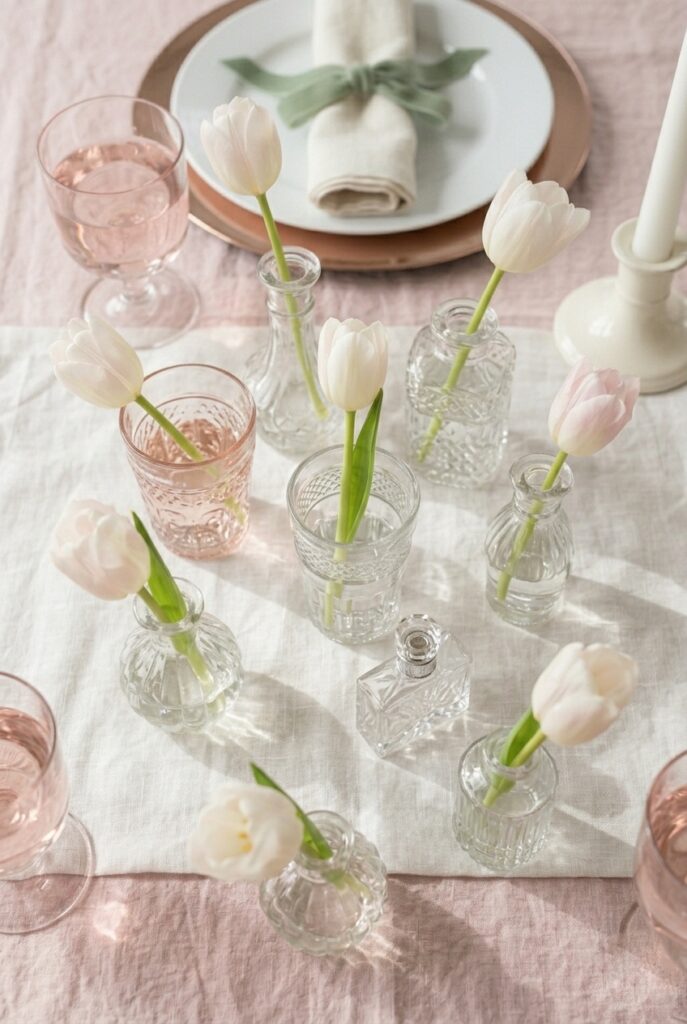
Instead of matching vases, collect vintage glasses, small vintage vases, or mismatched glassware (estate sale finds, Etsy, local antique shops) and fill each with single stems or small clusters.
The mixed aesthetic reads as curated and works beautifully for intimate, non-formal weddings.
Each table can be slightly different, or you can repeat the same mix for consistency.
Price: $2–$8 per vintage piece if buying secondhand; total $20–$60 per table for a collection of 8–10 pieces.
Where to buy: Local antique shops, Etsy (search “vintage wedding glassware”), estate sales, or thrift stores like Goodwill.
TASTE LAYER: Mismatched clear glass looks intentional and editorial.
Mismatched colored glassware (ruby red, cobalt, amber all together) reads as random unless intentionally curated—stick to one color story if mixing.
A collection of 8–10 small clear vintage glasses with white tulips reads expensively curated; a random collection of different colored pieces without a color plan reads like you raided someone’s cabinet.
Decision Filter
If your guest count is under 75, focus your budget on centerpieces for tables where guests will actually eat (skip the cocktail table or use simple greenery there).
If your venue has abundant natural light (outdoor garden, lots of windows), go bold with color in your centerpieces because spring daylight will enhance saturation; if your venue is dim (indoor ballroom, evening-only), lean into candles and pale blooms that read well in warm light.
If your budget is under $500 total, use the alternating flowers-and-candles approach (every other table), buy herbs and affordable blooms from farmers markets, and rent or buy vessels once rather than renting them.
The Real Reason
Here’s what florists know that couples almost never do: spring flower availability isn’t linear.
Late March through early April, spring blooms (tulips, ranunculus, peonies) are expensive because greenhouses are still supplying early demand and local farms aren’t producing yet.
Mid-May onward, prices drop 30–40% as local farms come online.
If you’re getting married in early spring, use local greenery, herbs, and a smaller volume of flowers.
If you’re getting married in late May or early June, go bold with florals—you’ll save money and have better selection.
Don’t assume spring automatically means cheap flowers.
Second insight: spring daylight is your tables’ enemy until 7pm.
Every flower color you choose will look different at 3pm outdoor ceremony lighting versus 8pm reception under warm indoor lights.
Test your flower color at the actual venue during the actual time of day of your reception before committing to 100 stems.
What looks soft and romantic in a florist’s studio under cool fluorescent light might look washed out or too pale in your venue’s warm evening glow.
Mistakes to Avoid
Mistake 1: Buying all your flowers from wedding florists. Most wedding florists mark up blooms 200–400%.
Farmers market tulips and roses cost one-third the price and often look fresher.
If you’re buying ranunculus or spray roses in volume, a wholesale flower supplier (FiftyFlowers, BloomsByTheBox) will save $300+ on a 100-person wedding.
This contradicts florist-heavy advice from most wedding blogs, but the math is undeniable—and your guests won’t know the source.
Mistake 2: Overestimating spring bloom availability before late April. Couples booking early spring weddings (March, early April) often plan around peonies, garden roses, and ranunculus expecting low prices, then panic in February when florists quote $60+ per stem.
Late-spring blooms (tulips, daffodils) are genuinely abundant and cheap, but early-spring options are limited and expensive.
If your wedding is in March or early April, plan florals around what’s actually available—branches, greenery, and focused use of early bloomers. Don’t count on affordable peonies.
Mistake 3: Discovering after the wedding that your chosen bloom wilts visibly during a 4-hour reception. Certain spring flowers (garden roses, some varieties of ranunculus, lisianthus) are stunning but fragile in warm venues.
If your reception is in a heated ballroom or outside on a 70°F+ day, stick with sturdier blooms: tulips, spray roses, carnations, and hypericum berries.
Test arrangements in your actual venue temperature 24 hours before the wedding if possible.
Wilted centerpieces in photos ruin the memory.
Mistake 4: Going all-in on pale pastels because it’s “spring.” Soft pastels are beautiful, but they photograph poorly in bright spring daylight and look washed out in candlelight.
If you love pastels, add one bold accent color (deep sage, dusty burgundy, or rich navy) to anchor the palette and photograph better.
All-blush tables read as one-note and actually look cheaper than intended.
A blush and sage combination reads elevated; blush alone reads generic.
FAQ
What flowers are in season in spring and actually affordable?
Tulips, daffodils, ranunculus, spray roses, lisianthus, and branches (pussy willow, quince) are genuinely abundant and priced fairly in mid-to-late spring.
Early spring (March–early April) is expensive for anything beyond tulips and daffodils.
Peonies, garden roses, and specialty blooms remain pricey year-round.
Check with local farms or wholesale suppliers about what’s actually in season in your specific region before planning.
How do I keep spring flowers from wilting during a long reception?
Keep centerpieces out of direct sunlight before guests arrive, mist arrangements lightly 1–2 hours before reception start, ensure water in vases is fresh and filled to the brim, and keep the reception space cool if possible.
Avoid placing arrangements near heat sources, candles, or direct sunlight streaming through windows.
Sturdier blooms (tulips, spray roses) hold up better than delicate types (garden roses, lisianthus) in warm conditions.
Should I use real flowers or faux for a spring wedding?
Real flowers photograph better, smell better, and communicate effort.
Faux flowers save money and don’t wilt, but they often photograph poorly in natural spring light because synthetic materials don’t reflect light the way real petals do.
If budget is tight, mix real focal flowers (ranunculus, garden roses) with faux greenery rather than going 100% faux.
The hybrid approach is often undetectable in photos.
What’s the cheapest way to fill a spring wedding table without looking cheap?
Farmers market flowers ($2–$4 per stem) + wholesale greenery runners ($30–$50) + your own vessel collection (or budget rental) + DIY arrangement (30 minutes per table) = $15–$25 per table in flowers.
Add candles, linens, and place details you control, and your tables read expensive without the cost.
The labor is the investment, not the materials.
Budget Table
| Approach | Cost Per Table | Budget-Friendly Option | Splurge Option |
|---|---|---|---|
| Meadow centerpieces (multiple small clusters) | $35–$65 | Farmers market/wholesale flowers + rented vessels | Premium florist arrangement |
| Alternating flowers & candles | $8–$15 flowers, $2–$4 candles | Costco bulk candles | Event rental candlesticks |
| Single stem place settings | $0.75–$2 per stem | Grocery store flowers | Premium florist stems |
| Textured gradient vessels | $40–$80 | Etsy vintage + DIY arrangement | Curated rental collection |
| Floating flowers | $3–$5 per flower + $1–$2 bowl rental | HomeGoods bowls (own after) | Premium floral rental bowls |
| Herb & bloom combos | $2–$5 | Farmers market herbs + grocery flowers | Florist herbs + premium blooms |
| Long table runners | $40–$80 | Greenery-only runner + scattered blooms | Full floral runner with all accents |
| Monochrome layered | $60–$90 | Mix rental & owned pieces | Premium rental collection |
| Edible elements | $15–$25 | Farmers market fruit | Specialty florist edibles |
| Vintage glassware mix | $20–$60 | Thrift stores + DIY | Curated estate sale finds |
One final detail: the only table elements your guests genuinely remember are whether they could talk to their neighbors and whether the flowers smelled good.
Everything else—vessel shapes, color gradients, candle heights—registers as “nice” or “forgettable.”
Invest in conversation-friendly layouts and fragrant blooms, and you’ve won.
Invest in tall, blocking arrangements and scentless flowers, and you’ve lost.
The best spring table decor isn’t the most beautiful in photos.
It’s the one where guests laughed, heard their neighbor’s story, and left feeling like they celebrated something real—not scrolled through a styled photo shoot.
Build for people first, Instagram second, and spring tables become exactly what the season promises: fresh, open, and genuinely connected.
Start by visiting your actual venue during the actual time of day your reception happens.
Bring sample flowers. Sit in a guest chair. See what blocks your sight line and what opens it.
That 15-minute test will teach you more than 100 Pinterest boards.