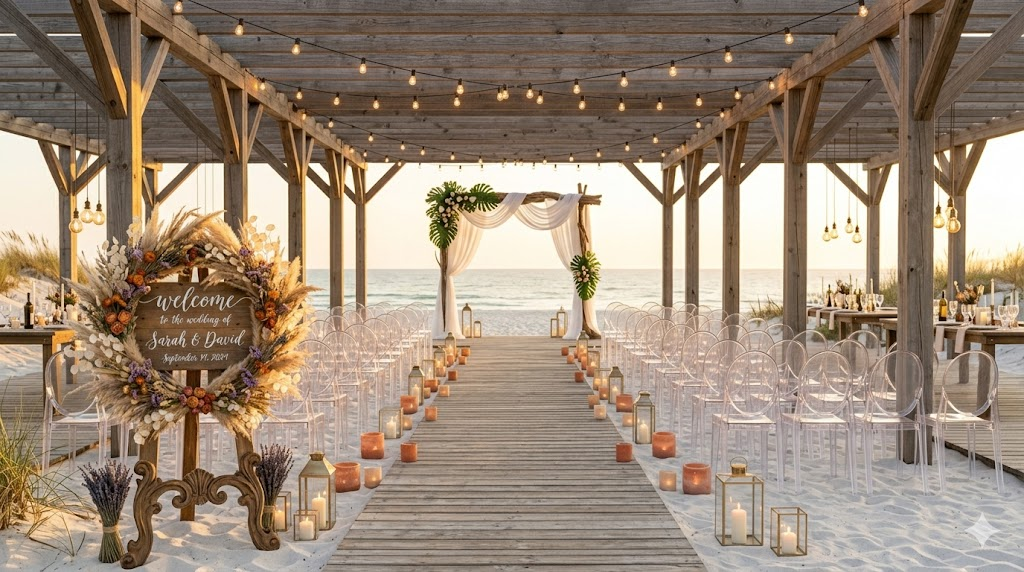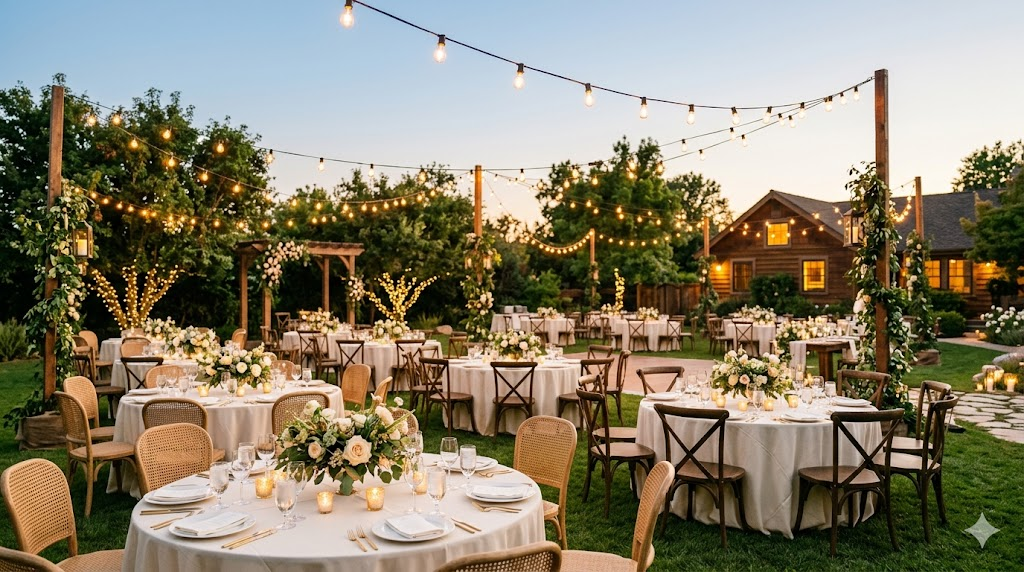
The most-photographed backdrops at weddings are rarely the most expensive.
What makes a backdrop read as expensive is texture, scale, and how light hits it — not how many flowers are attached to it.
These 8 ideas are built on that principle, from fully simple backdrop approaches at under $60 to one bold statement piece that does all the visual work on its own.
1. Cascading Fabric with Minimal Florals
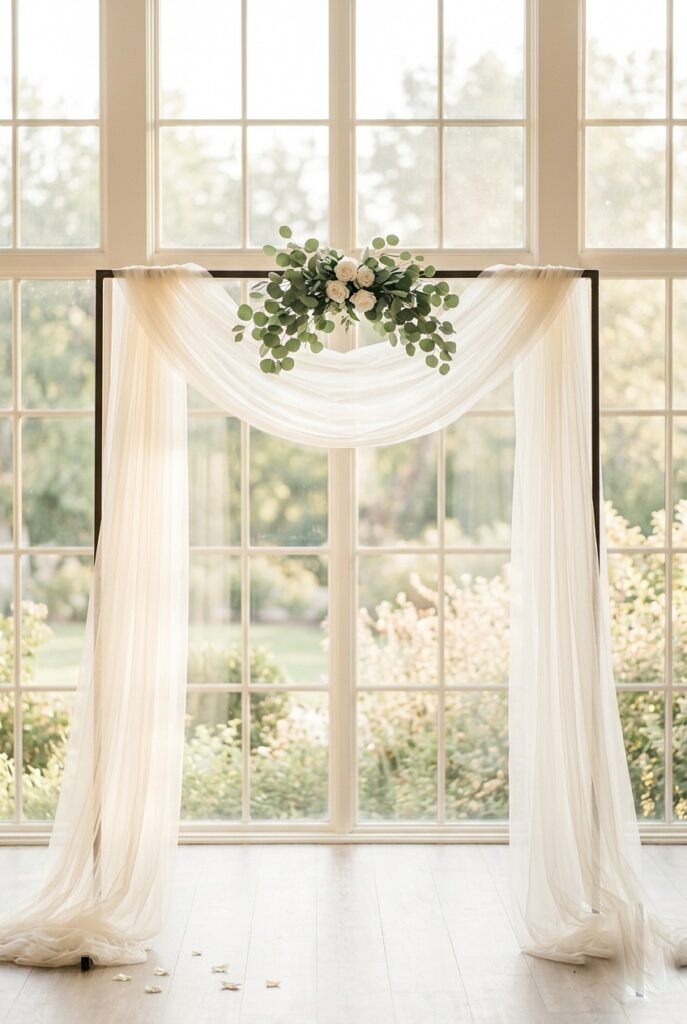
Drape two to three panels of lightweight ivory, blush, or champagne fabric from a simple metal arch or PVC frame and let them flow to the ground, then add a single garland cluster about twelve inches wide at the center top — eucalyptus and a handful of spray roses — so the fabric carries the look and the flowers answer the question of where to look.
The cascading fabric does the visual heavy lifting here; tulle from a fabric store photographs identically to wedding-specific fabric at a fraction of the cost, and three rolls draped generously with excess pooling at the ground creates more movement than a neatly hemmed panel ever does. If you want to build it yourself rather than rent, that guide covers frame options, hanging methods, and what to avoid structurally outdoors.
Budget Hack: Tulle from Amazon ($12 for 54 inches × 40 yards) costs 90% less than wedding-specific fabrics and photographs identically. Buy three rolls, drape generously, and let the excess pool on the ground for movement. One bride I worked with spent $18 on tulle, added $20 in string lights, and got “How much did you spend on flowers?” from three separate guests.
2. Geometric Metal Frame with Sheer Draping (Gap Idea #1)
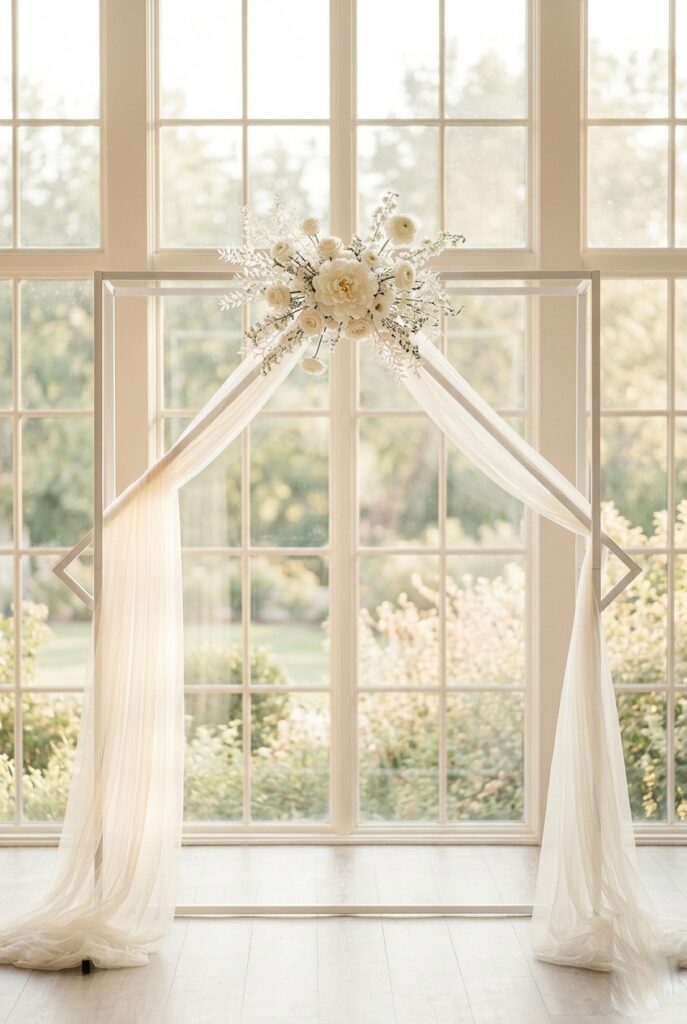
A well-proportioned metal frame — gold, black, or white, never chrome — with semi-sheer fabric draped loosely so it catches light and moves reads as more intentional than a frame loaded with florals, because a bare geometric shape with one focal accent signals a design decision rather than a coverage strategy.
Leave the frame itself visible; the geometry does the visual work, and the open negative space is what separates this from a standard covered arch. This approach performs best in indoor ceremony spaces where controlled lighting can skim the fabric and activate the sheer glow effect that makes it photograph so distinctively.
3. Wooden Arch with Rope and Garland
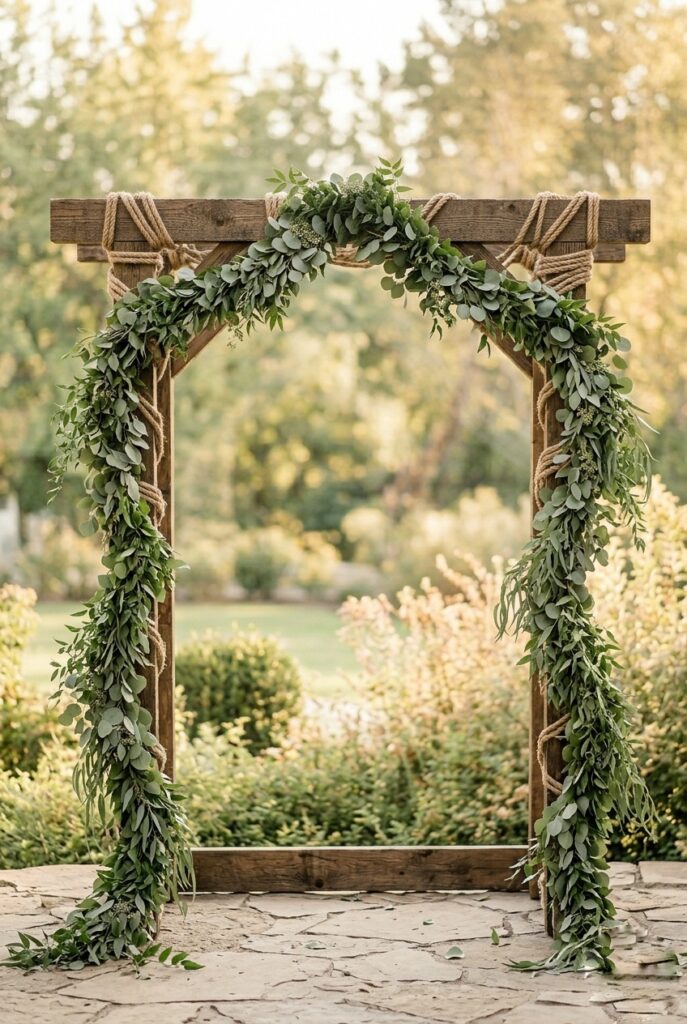
A wooden arch wrapped in cream or natural jute rope with a garland of mixed greenery — eucalyptus, ruscus, trailing smilax — requires no florals and no florist, because the rope texture and layered greens create enough visual depth on their own.
Order foliage-only garland from a wholesale supplier rather than floral garland, which costs 40% more for the same visual result; a six-foot mixed greenery garland runs $35–$45 wholesale versus $80–$120 from a traditional florist. This combination works equally well for outdoor settings with natural light and indoor barn or ballroom venues where the wood and rope tones anchor the palette.
Budget Hack: Order foliage-only garland from wholesale suppliers (not “floral” garland, which costs 40% more). A 6-foot mixed greenery garland from FiftyFlowers costs $35–$45 versus $80–$120 from a traditional florist. Same visual, half the cost. Wrap it yourself with zip ties—zero skill required.
4. Fairy Lights and Fabric Panel (Gap Idea #2)
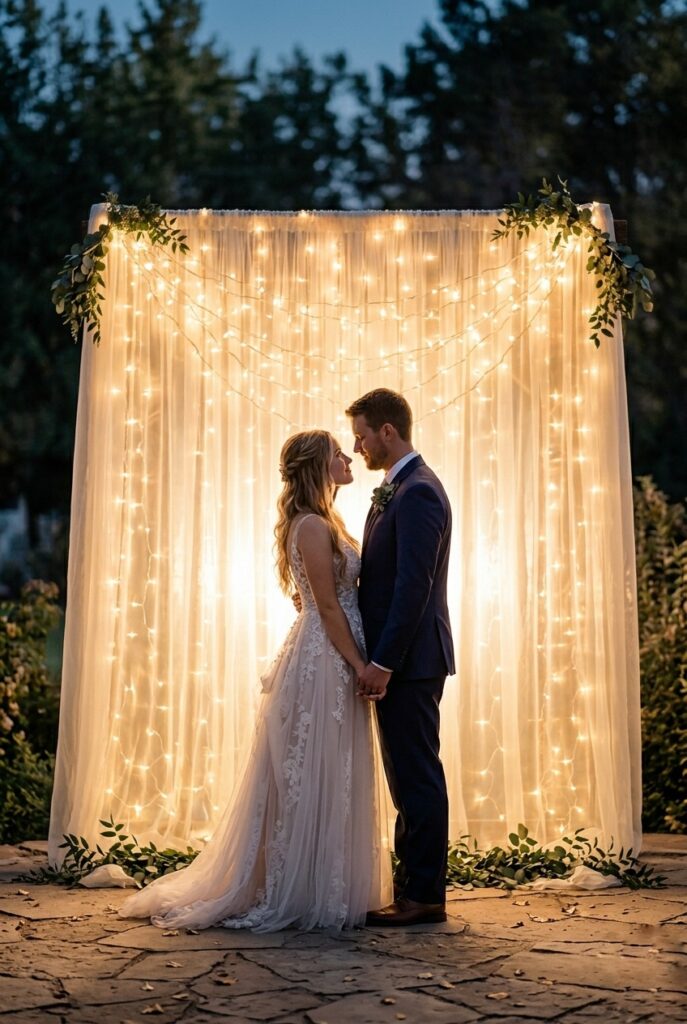
String warm white fairy lights six inches behind a single large fabric panel in ivory, blush, or white — the lights create a glowing effect through the fabric that photographs as atmospheric in both daylight and evening without requiring any structural arch or florist involvement.
Hang the fabric from tree branches, a PVC pipe frame, or fishing line strung between two posts; no purchased frame is necessary, which keeps the total cost under $60 for the combination of fabric panel and light strings. For context on how this backdrop background approach adapts to different venue shapes and ceiling heights, that guide covers the structural variations.
5. Floral Statement Piece (Not Full Coverage)
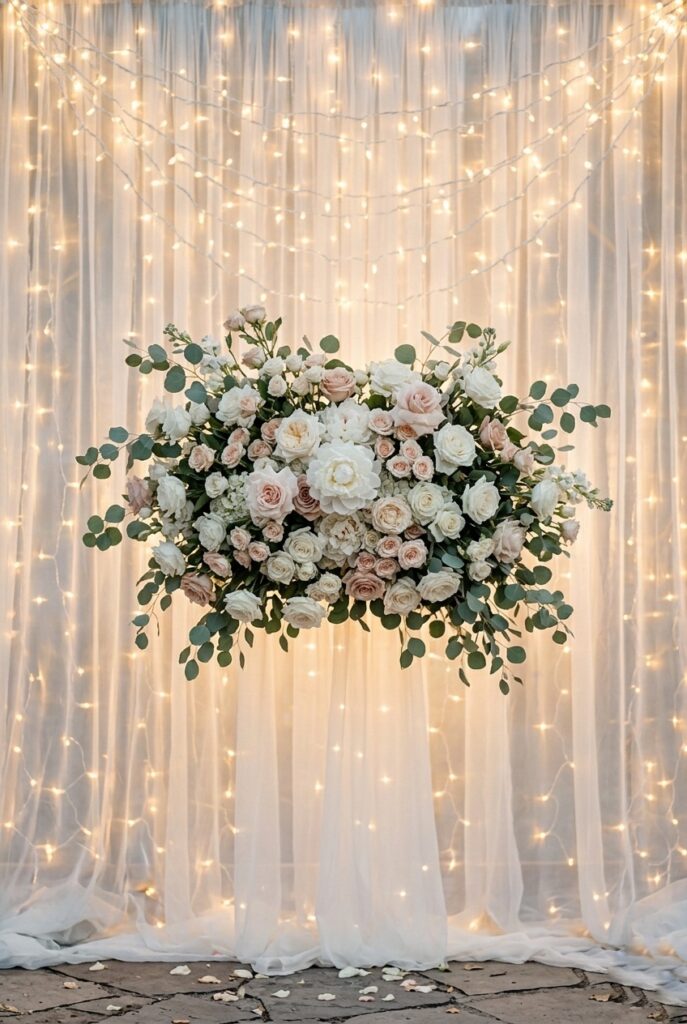
A densely packed floral arrangement eighteen to twenty-four inches wide mounted at center height — roses, peonies, ranunculus in your palette — with the rest of the backdrop left in plain fabric or bare frame costs $200–$400 and photographs with the same impact as a fully covered arch at three to four times the price.
Guests see the flowers and read the backdrop as expensive; the plain surround reads as restraint rather than economy, which is exactly the effect intentional design creates. When briefing your florist, ask specifically for a two-foot by three-foot focal installation quote rather than a full arch quote — that framing alone changes the conversation about cost. For what a ceremony focal point like this looks like across different arch and frame shapes, that guide covers the full range.
6. Neon or Wood Sign Backdrop
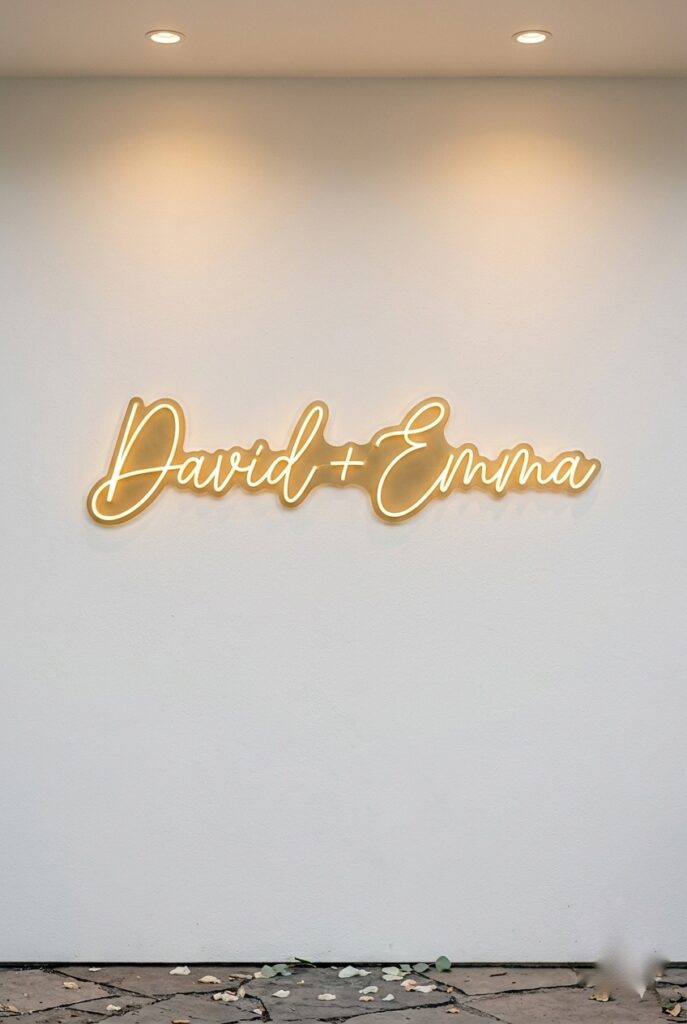
A custom neon sign — your names, a short phrase, a meaningful shape — on a plain white, black, or wood wall needs zero additional decoration because the sign is the entire design statement.
It reads from any distance, photographs distinctively in evening lighting, and costs $150–$400 from Etsy makers, which is less than most rental arch fees before fabric and florals are added. Marquee letter rentals from party supply stores at $25–$40 deliver the same statement effect for couples who want the look without the permanent piece. Browse backdrop decorations for ways to combine a sign with minimal fabric or greenery if you want to add one supporting layer without overbuilding it.
Budget Hack: Marquee letter rentals from party supply stores ($25–$40) give you the same “statement piece” effect as a custom neon sign without the permanent cost. Return them after the wedding. One couple rented gold marquee numbers for $35 and got the same “luxury” vibe as couples spending $300 on custom neon.
7. Natural Venue Backdrop (Use What You Have)
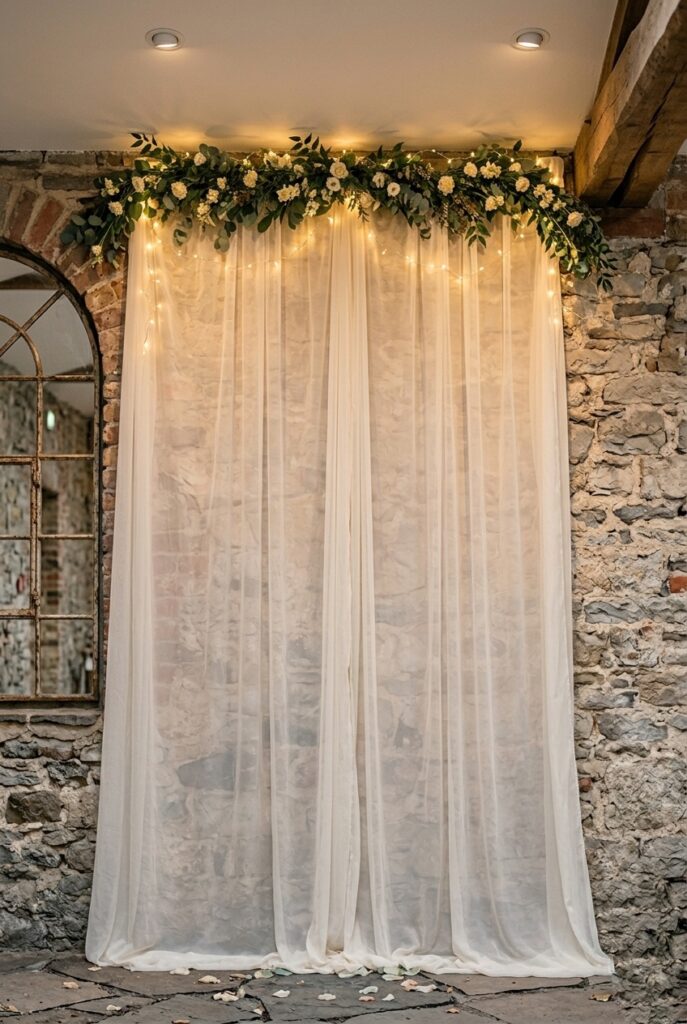
If your venue has a stone wall, wooden beams, large windows, mature trees, or a grand staircase, using the existing architecture as your backdrop costs nothing in rental fees and photographs more distinctively than any installed frame, because the material is real and the scale is already proportioned to the space.
Drape a single fabric panel or run a garland in front of it and add one string of warm lights — the venue’s structure does the heavy lifting and your addition signals that the choice was intentional rather than incidental. The full backdrop design guide covers how to enhance architectural features across every venue type and what minimal additions work for each material — stone, brick, wood, and glass.
8. Macramé + Eucalyptus (Boho-Modern Read)
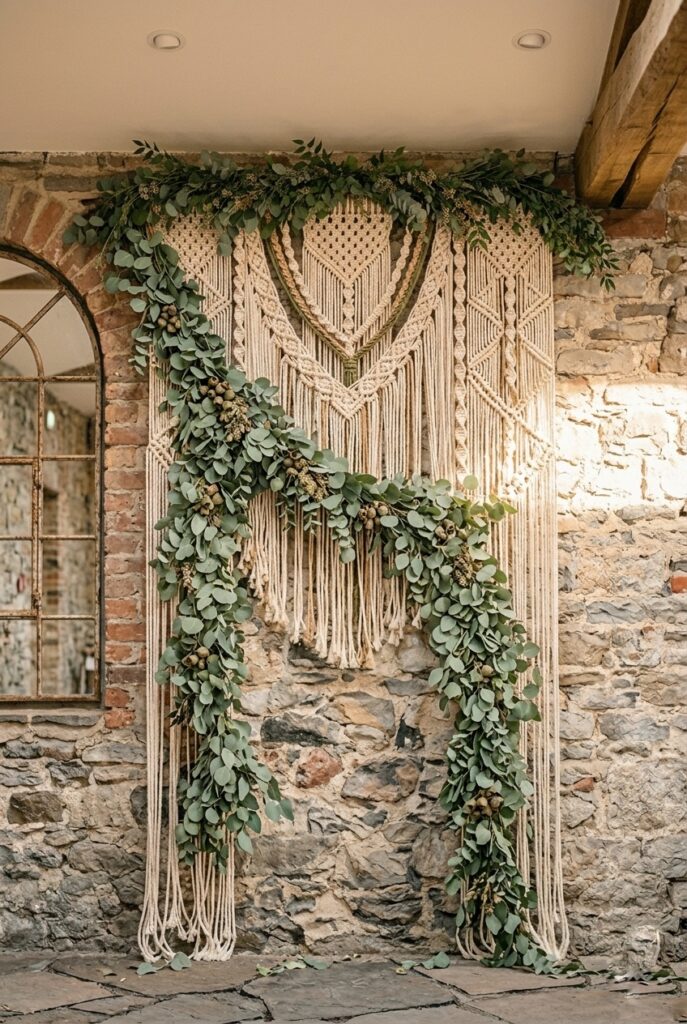
One or two macramé panels with eucalyptus garland layered across them read as artisanal and deliberate in a way that a standard floral arch does not — the woven texture and flowing greenery combine two distinct materials that create visual depth without a single premium flower.
The total cost of macramé panels from Etsy plus wholesale eucalyptus runs $80–$200, which is less than half a traditional floral arch, and both elements are fully reusable after the wedding for your home or resale.
The single bold move that makes a backdrop work — statement lighting, a focal floral piece, interesting texture, or your venue’s own architecture — is always more effective than six moderate elements layered together. Decide on your one commitment first, then build everything else as support around it. For the full picture of what each of these approaches looks like across ceremony and reception spaces, the reception backdrop ideas guide covers how to carry your backdrop choice from the altar through the rest of your venue.