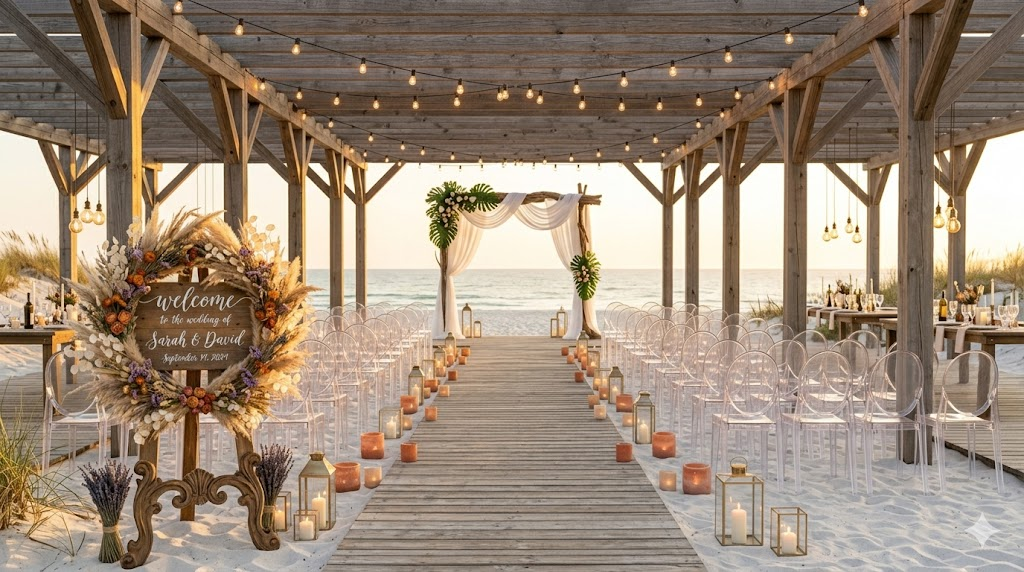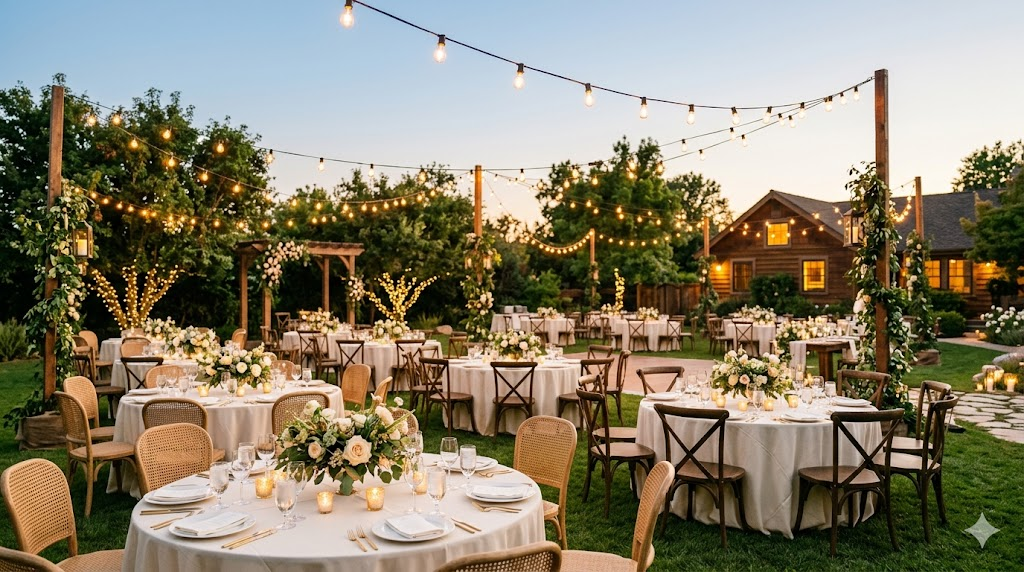
Your backdrop’s primary job is framing you — not replacing you.
That means it needs to be sized proportionally to your bodies, positioned far enough back that the photographer can fit both you and the design in one frame, and built for how it reads from 20 feet away, not from three feet away where you chose it.
Every wedding backdrop type below is explained by what it does from the guest’s perspective — because that’s the view that matters most on the day itself.
1. Circular Metal Arch with Draped Fabric
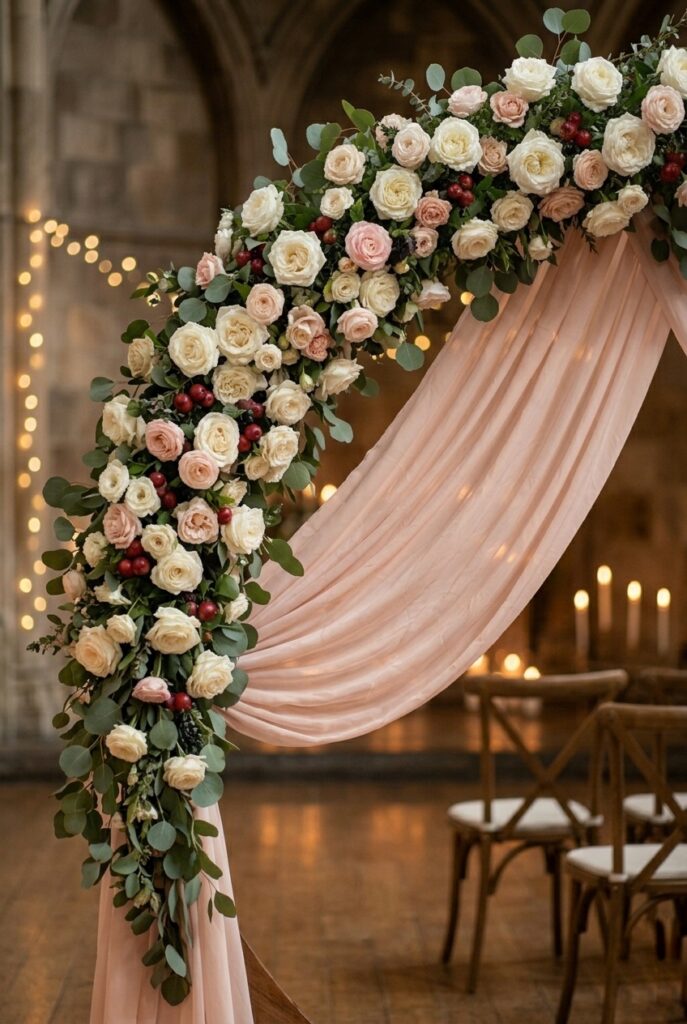
A circle arch — eight to twelve feet in diameter — is the most photographically forgiving backdrop shape because it frames the couple naturally from any distance without blocking guest sightlines, and the open center keeps the focus on you rather than the structure.
Drape it with flowing linen or chiffon in your wedding color and keep the fabric asymmetrical and soft rather than tightly wrapped; a circle arch with fabric swags on just two sides and open space in the middle reads as intentional and photographs with more depth than a fully covered arch. For simple backdrop options that use this principle with less budget, that guide covers lightweight fabric draping approaches.
2. Geometric Frame (Triangle, Hexagon, or Rectangle)
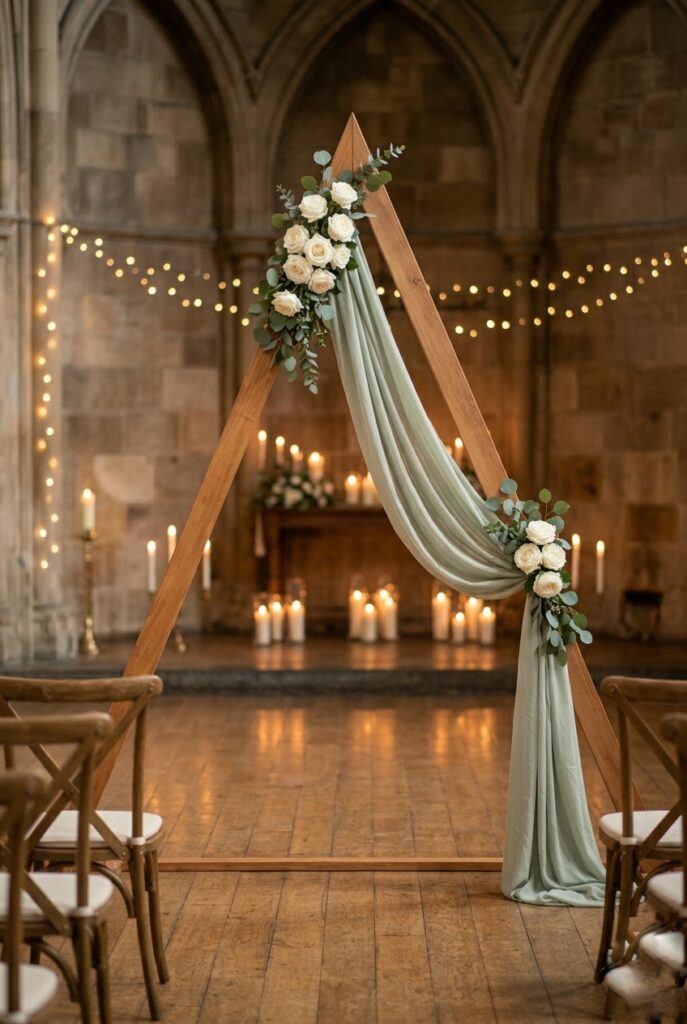
Clean geometric shapes — triangles, hexagons, rectangles — work as backdrops because the shape itself is the design, which means it reads clearly from across the room with minimal embellishment.
Pair a wooden triangle arch or metal rectangular frame with a handful of greenery and one or two floral accents rather than covering it in flowers; the geometry guides the eye to the couple without competing for attention.
BUDGET HACK: A simple wooden triangle arch from Etsy (rented or purchased for $180–$300) costs less than a metal circular arch rental and often photographs better in modern or minimalist venues because the geometry is the statement.
3. Full Floral Wall with Architectural Support
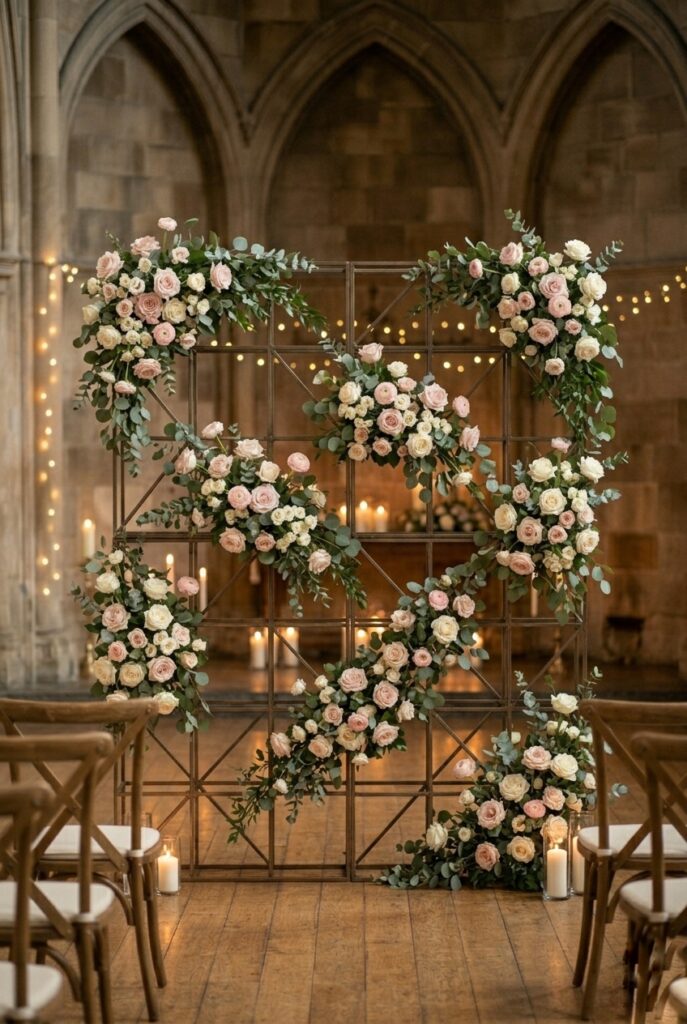
A floral wall needs an internal frame behind it — a metal grid, wood frame, or purchased floral wall structure — because florals attached to a flat surface read as a dense, dimensionless block in photographs rather than a layered, lit installation.
Monochrome florals (all white, all blush, all sage) read more deliberately than multi-color arrangements, and intentional negative space between clusters gives the design depth and keeps it from photographing as a solid mass. For indoor ceremony spaces specifically, that guide covers how floral walls perform under different venue lighting conditions.
4. Draped Fabric Backdrop (No Arch)
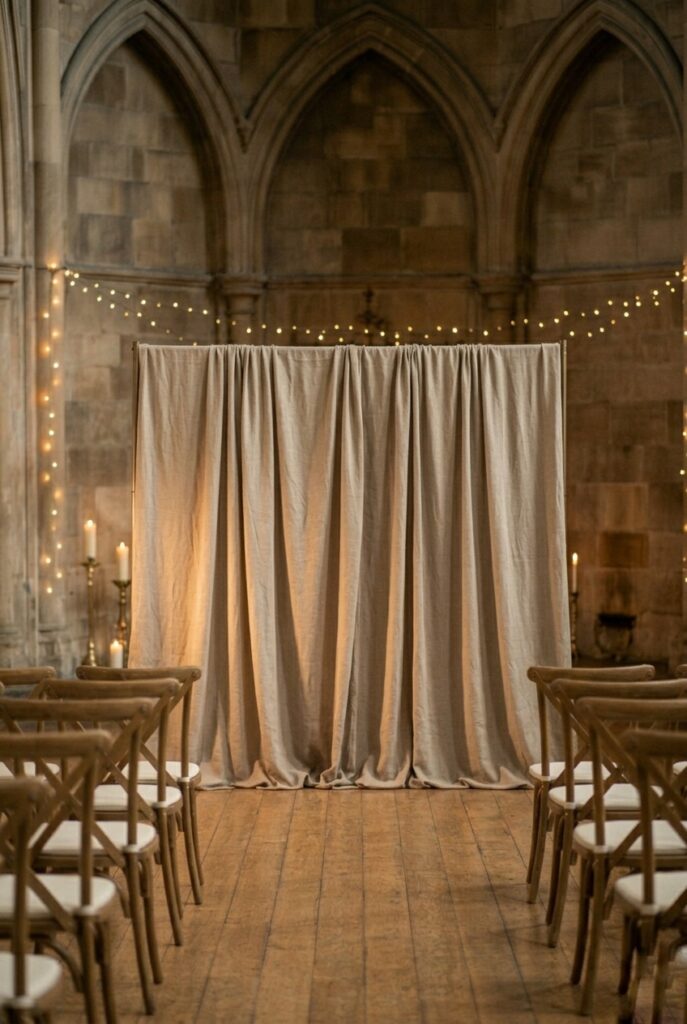
A ten to fourteen foot wide fabric backdrop in heavyweight linen, canvas, or heavyweight cotton — fabrics that drape with real weight — can anchor a ceremony space without a single floral element if the color and scale are right.
Use a solid color or two-tone ombré and pair with one architectural element in front (a small branch arrangement or a low floral cluster) so the fabric becomes the frame rather than the focal point. The full DIY build for this approach — including frame rental, fabric sourcing, and hanging methods — costs $100–$180 total versus $300 or more for a rented backdrop.
BUDGET HACK: Buy plain muslin or canvas fabric from a fabric store ($40–$80 total), rent a simple frame stand ($50–$100), and create your own backdrop.
5. Greenery Wall with Integrated Lighting
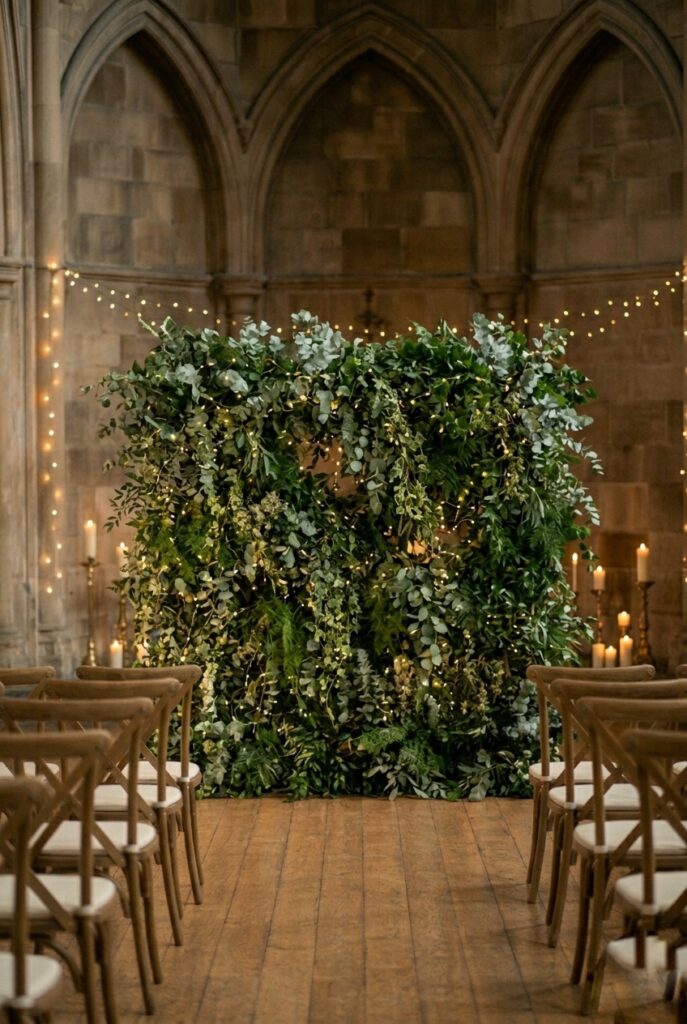
A greenery wall — eucalyptus, ivy, ferns, ruscus layered on a frame with varying heights and intentional gaps — reads as “garden” rather than “floral,” which gives you an elevated look at a fraction of the cost of premium blooms.
String lights woven into the greenery at different depths create the most dimensional evening effect of any DIY backdrop approach; for a daytime or outdoor ceremony setting the unlit wall is equally strong in natural light because the layered green tones hold texture without any light enhancement.
6. Suspended Floral Installation (Hanging Overhead)
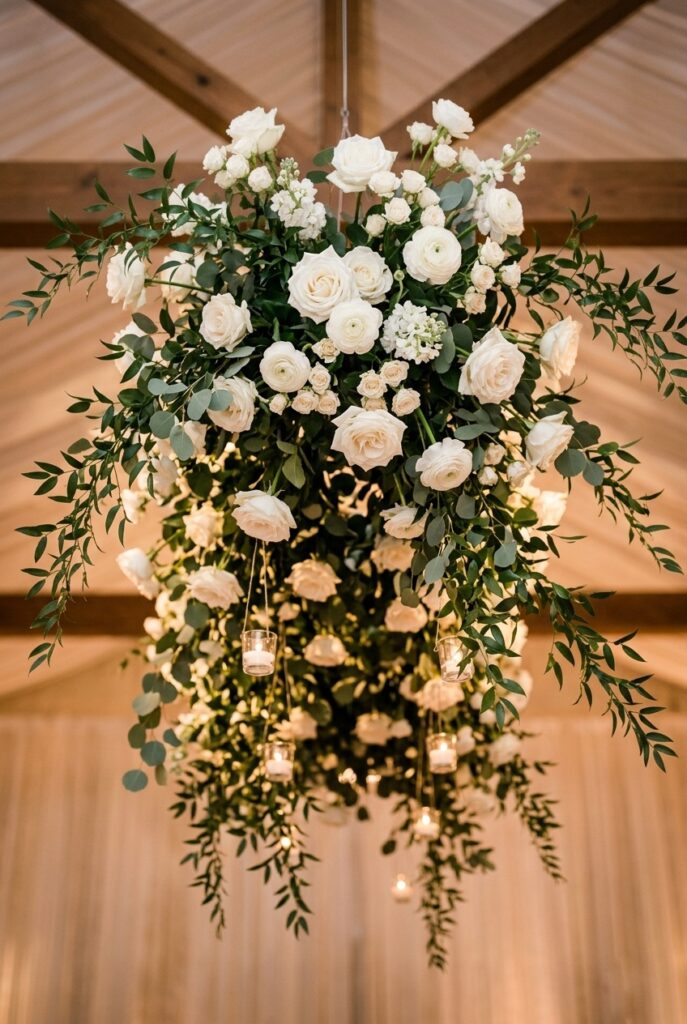
A floral canopy hung from the ceiling above the couple — rather than positioned behind them — creates an overhead focal point that guests see without any obstruction of their sightlines, and it photographs from angles no ground-based arch can replicate.
Confirm your venue allows hanging installations before committing to this approach, and budget for professional installation; the structural requirements are non-negotiable. For the full scope of what a hanging installation involves in a ceremony backdrop context, that guide covers venue requirements and structural planning.
7. Neon Sign with Minimal Backdrop
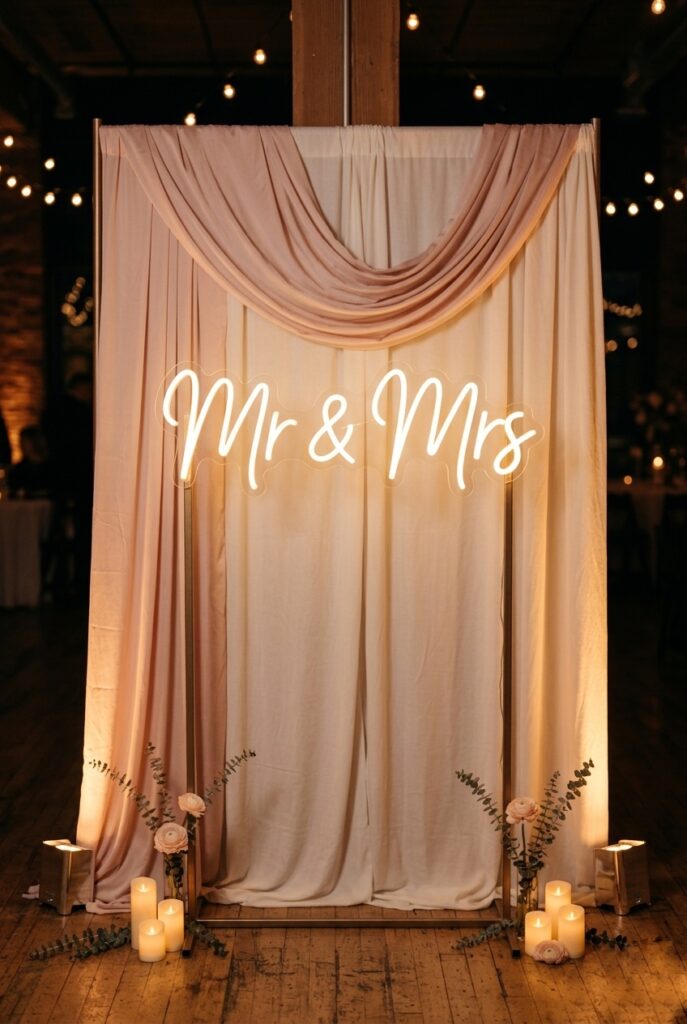
A custom neon sign — your names, a short phrase, a simple shape — with a neutral fabric or greenery backdrop behind it reads from any distance, photographs brilliantly in evening lighting, and works for both ceremony and reception without any repositioning complication.
Keep the backdrop it hangs against plain and neutral so the neon is the single focal point; a neon sign competing with a patterned or highly textured backdrop reads as cluttered rather than modern.
BUDGET HACK: Couples often rent neon signs for just ceremony photos, then move them to the reception for guest photos. Negotiate a rental price that covers both uses ($200–$300 for the day) rather than paying per use. Ensure the sign works in daylight photos (it won’t “glow,” but the shape reads well) and evening photos (the glow activates).
8. Structural Element Backdrop (Staircase, Fireplace, Architecture)
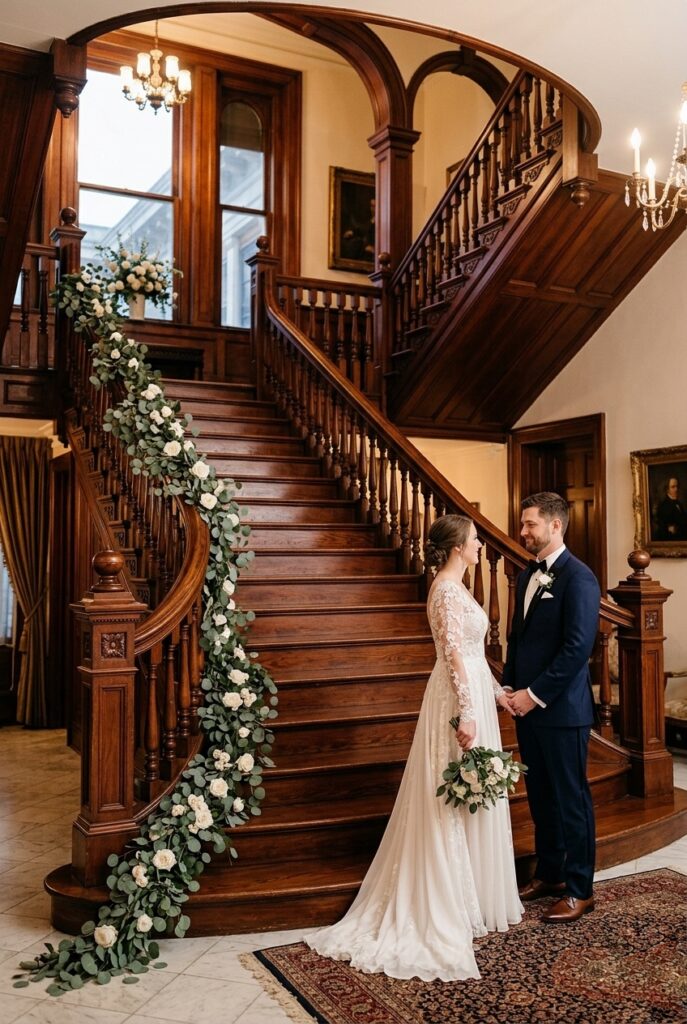
If your venue has a grand staircase, a fireplace, dramatic columns, or exposed brick, using the existing architecture as your backdrop costs nothing in rental fees and often photographs more distinctively than any installed structure.
Enhance what’s there with modest florals or draping that complements the existing material — eucalyptus along a stair bannister, a floral cluster at a column base — rather than competing with it. The full range of ways to work with existing venue features is covered in the backdrop decorations guide.
9. Multi-Use Backdrop (Ceremony to Reception Transition)
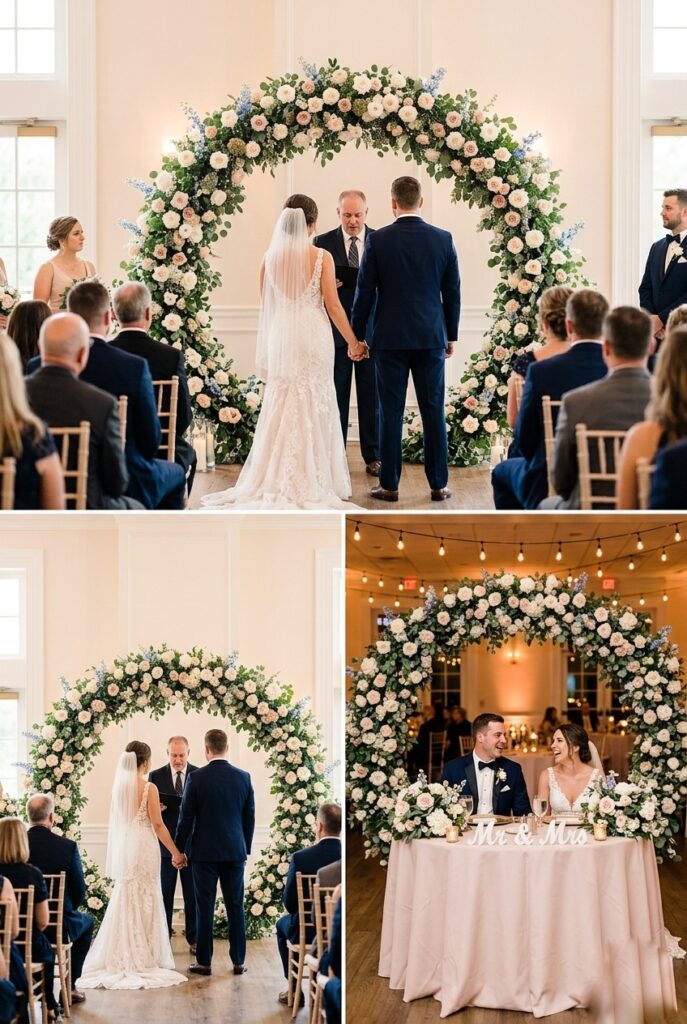
Design your backdrop to move — from ceremony altar to sweetheart table frame to guest photo area — so you get three uses from one rental fee rather than one.
An arch or fabric draping repositions easily; a highly specific floral wall sized for a single ceremony position usually cannot, so factor moveability into the design decision from the start rather than treating it as an afterthought. The full approach to planning a reception backdrop that complements your ceremony backdrop is covered there.
10. Statement Fabric or Pattern Backdrop
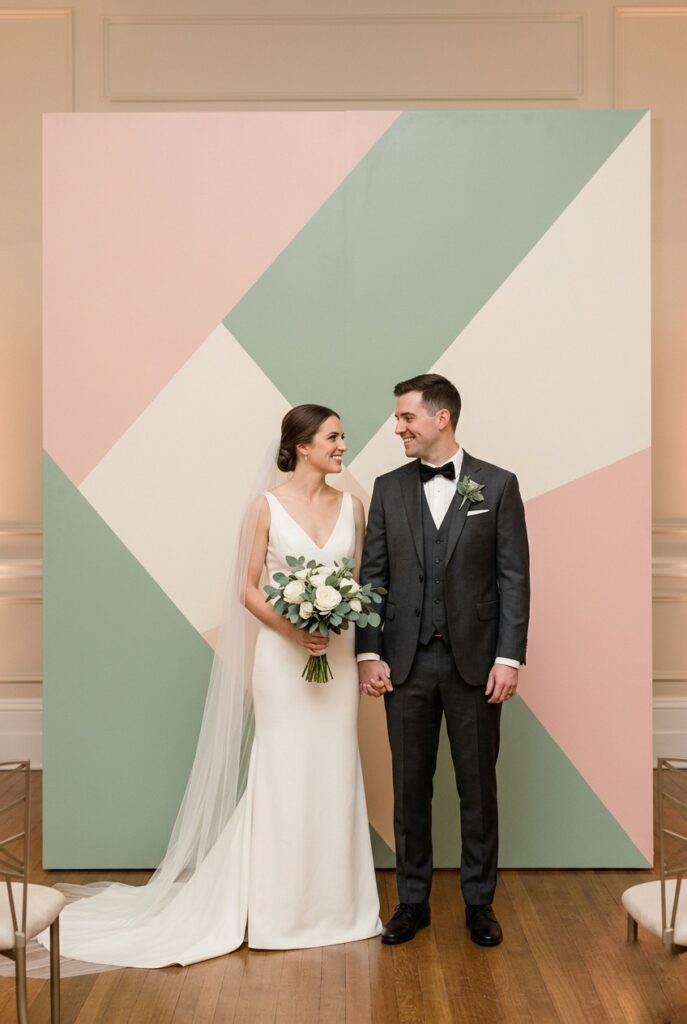
A bold color-blocked or patterned backdrop makes a deliberate design statement but requires one non-negotiable test: your attire must contrast with the backdrop, not match it.
A bride in a blush gown standing before a blush color-blocked backdrop disappears into it; a bride in ivory against blush and sage geometry creates the visual separation that makes the photo work, so confirm the contrast under your actual venue lighting before finalizing anything.
The single most effective thing you can do before booking any backdrop is visit your venue during your ceremony time and evaluate the space at actual scale — what reads as substantial in a photo often looks undersized standing inside the room. For the full range of approaches across every budget and venue type, more wedding backdrop ideas covers what each design option actually costs and how to negotiate rental terms.