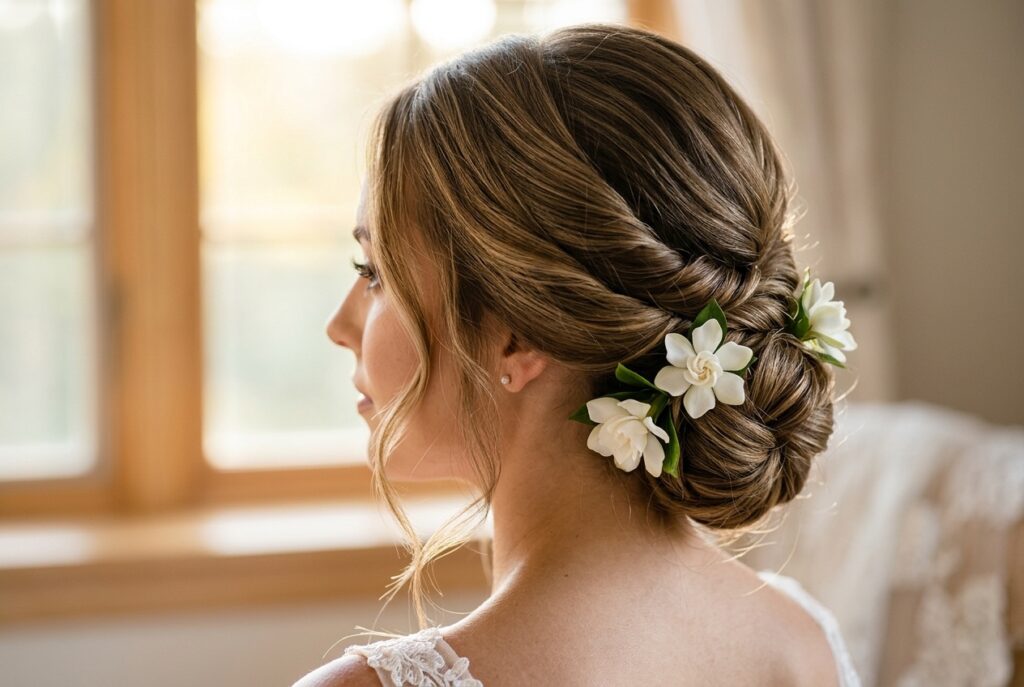
Most brides spend months picking the right rose color and then hand their florist a budget that forces cheap substitutions everywhere it counts.
The result looks fine in person and forgettable in photos.
What you actually carry down the aisle is a design decision, not just a flower order — and getting it right comes down to a handful of specific choices, not a bigger stem count.
1. Garden Roses: The One Upgrade Worth Every Extra Dollar
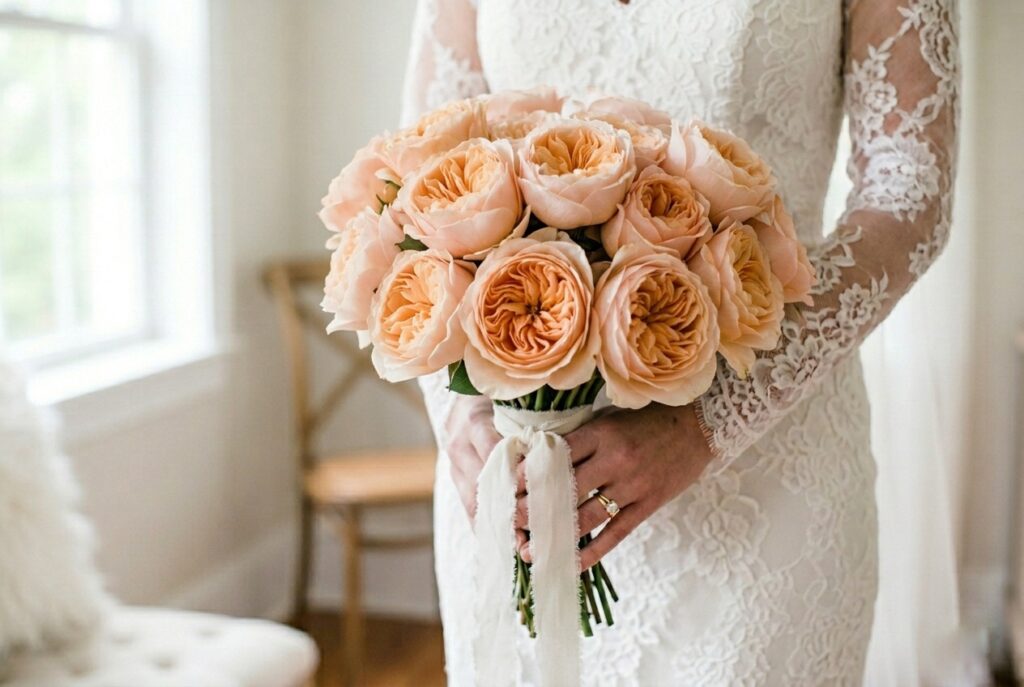
Standard hybrid tea roses — the ones that arrive with stiff, pointed petals and a waxy surface — are designed for longevity in supermarkets, not for looking expensive in photographs.
Their tight buds rarely open fully before the day ends, and the resulting bouquet reads uniform and flat. Garden roses (David Austin varieties like Juliet, Patience, or O’Hara) are the opposite: wide, deeply petaled blooms with visible centers, natural texture, and a fragrance you’ll actually notice.
The per-stem cost is higher — expect $4–$8 per stem wholesale versus $1–$2 for standard roses — but you need fewer stems to achieve the same visual volume because each bloom is physically larger.
Source garden roses through FiftyFlowers, which ships wholesale direct to your door, or order through your florist and ask specifically for David Austin or Ecuadorian garden rose varieties.
Budget for 20–30 stems for a medium round bouquet; $150–$280 total.
Only do this if your photographer is shooting in natural light — garden roses really earn their price in light-filled images. In dark church ceremonies with flash photography, the difference is less dramatic.
2. The Single-Variety Bouquet: The Move Most Florists Won’t Suggest (But Should)
[GAP IDEA 1 — competitors missed this] Every competitor article pushes mixed bouquets — roses plus ranunculus plus eucalyptus plus pampas grass plus dusty miller.
The problem is that when you mix five flower types at different price points, your florist has no choice but to dilute the expensive blooms to stay in budget.
You get three garden roses surrounded by lisianthus doing all the work.
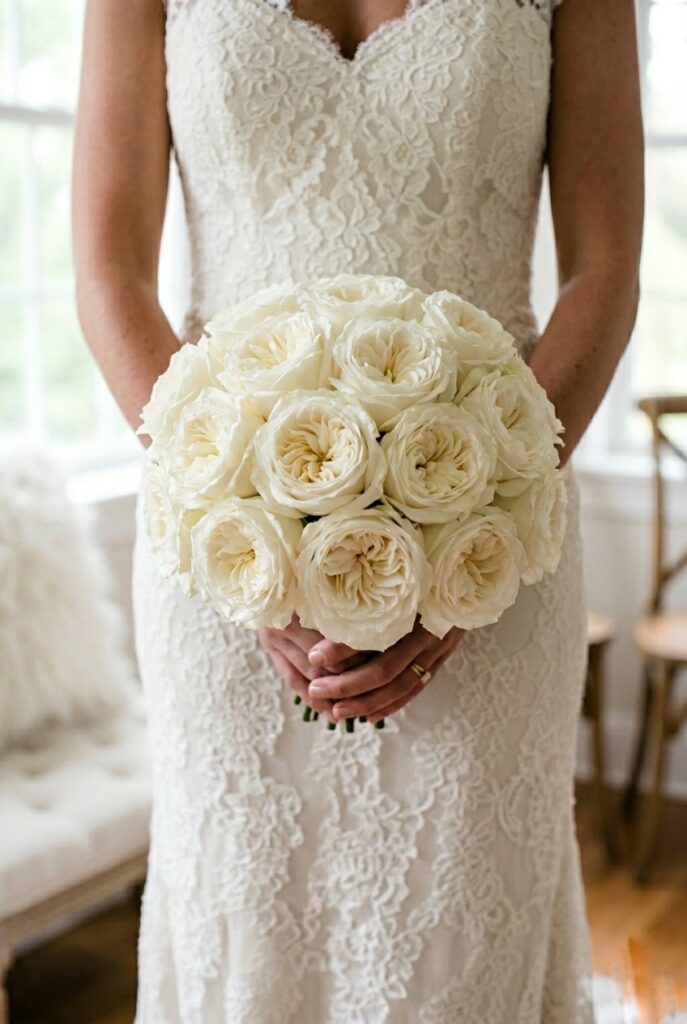
A single-variety bouquet — all one rose, nothing else — forces the volume and quality into the same bloom.
The result is more cohesive, more architectural, and in photos it reads as an intentional design choice rather than a budget patch.
Ask your florist for a mono-botanical arrangement using one variety of garden rose.
For a bride who wants the decor to feel effortlessly elegant, this is the most underused move in floristry.
Pricing: 25–35 stems of a single garden rose variety, $180–$320 via a local florist or FiftyFlowers.
3. Blush vs. White vs. Ivory: The Color Decision That Actually Matters
This is where brides make an expensive mistake: choosing bouquet colors in a florist’s shop under fluorescent lights.
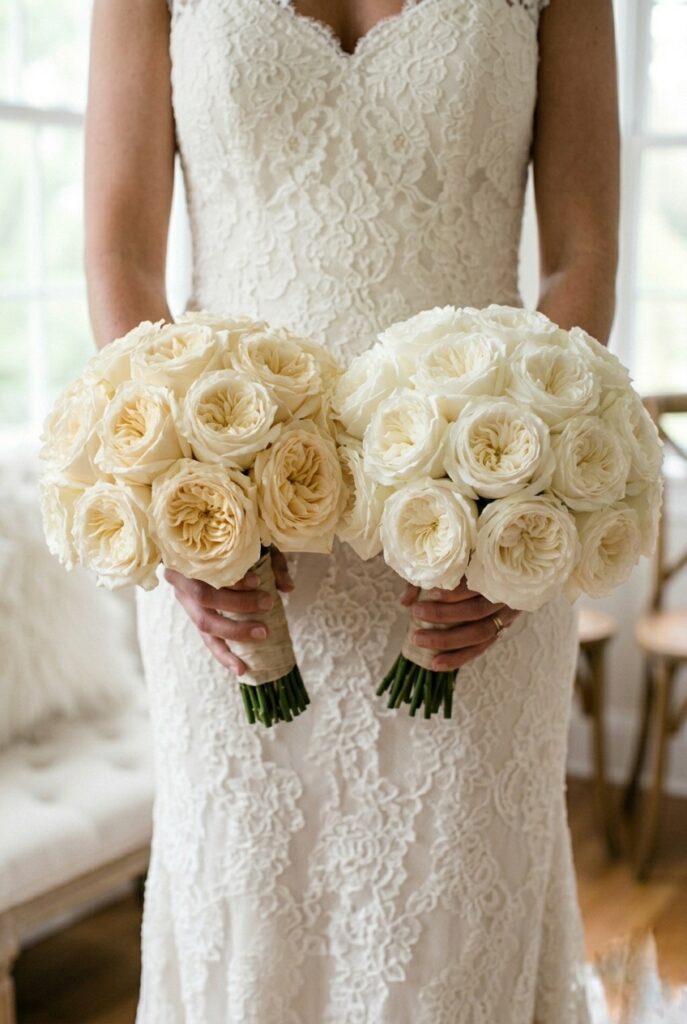
Cool-white roses can read as slightly blue or grey in photos, especially against warm-toned skin or a warm ivory gown.
Blush roses — think pale pink, peach-blush, or dusty rose — add warmth to the frame and give the photographer something to work with that isn’t competing with the dress.
Ivory roses sit comfortably between the two and almost always work.
If your gown is pure white (a cold, bright white), cool-white roses are fine. If your gown has any warmth or creaminess to it, ivory or blush will photograph better.
Ask your florist to show you stems in natural daylight, not shop lighting. Budget: color doesn’t change pricing significantly.
Roses in these shades run the same $1–$8 per stem depending on variety.
Budget Hack #1: Order your rose color swatches from FiftyFlowers for around $15–$20 total — they sell small sample bundles of cut roses so you can physically hold your shortlisted color next to your gown fabric at home in natural light before placing any large order. This eliminates the color-mismatch problem entirely and takes under a week.
4. The Round Bouquet vs. The Cascade: One Ages Better Than the Other
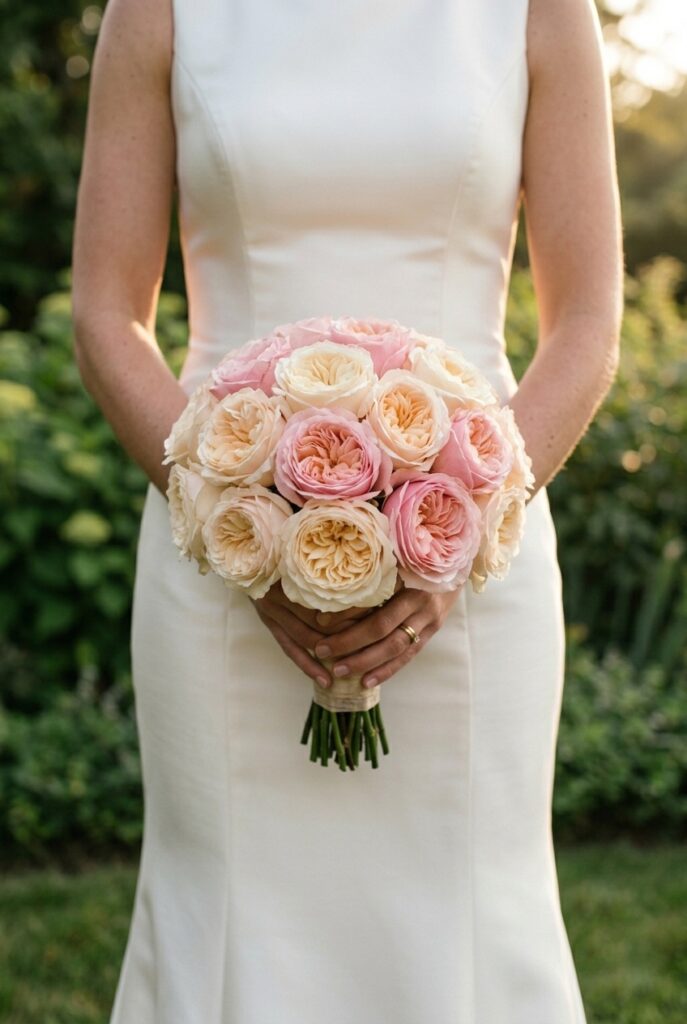
Cascading bouquets — the long, trailing arrangements with roses dripping toward the floor — photograph dramatically in the right setting: a grand staircase, a cathedral entrance, a ballroom with 30-foot ceilings.
They are not versatile.
At a garden wedding, a barn, or a smaller venue, a cascade looks visually heavy and physically awkward to carry for four hours.
More critically, cascades visually elongate downward, which can make a shorter bride look even shorter in photos.
The round or domed bouquet — which almost every editorial florist defaults to — creates a visual focal point at waist height that flatters every body type and works in every venue. It’s also significantly less expensive to build.
Skip the cascade unless your venue and aesthetic genuinely call for it — not just because you’ve seen it on another bride.
A medium round bouquet of garden roses sits at $150–$350 with a florist; a comparable cascade starts at $400.
5. Greenery Choices: What Adds Depth vs. What Drags the Price Down
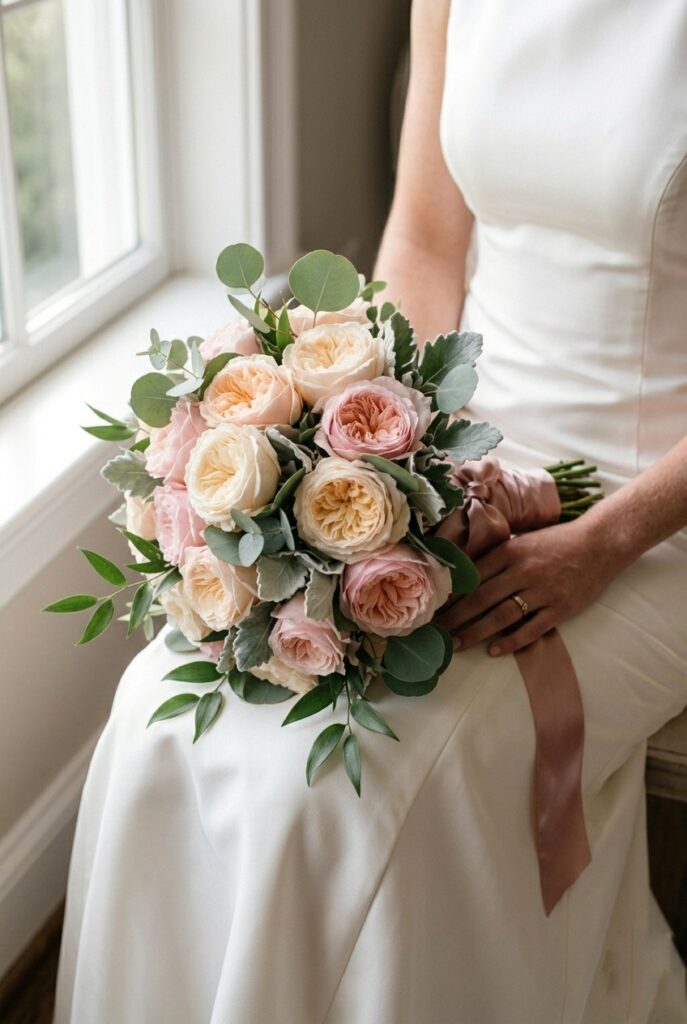
The cheap version of greenery is boxwood or standard salal — the flat, dark green filler that looks like it came off a supermarket floral wrap.
It reads exactly like what it is: filler bought to pad the stem count. Switch to eucalyptus (silver dollar or seeded), Italian ruscus, or soft fern for a completely different result.
Eucalyptus has a grey-blue tone that photographs beautifully alongside blush or ivory roses, and the natural fragrance is worth the slightly higher cost.
For a garden-inspired wedding, mixing three greenery textures — something trailing, something flat, something silvery — creates the layered depth that makes a bouquet look florist-designed rather than assembled.
Etsy sellers under “wholesale wedding greenery” offer bundles of mixed eucalyptus for $25–$45 shipped; Amazon also carries fresh eucalyptus bundles from $18–$35.
6. Stem Wrapping: The Detail Photographers Notice Even If Guests Don’t
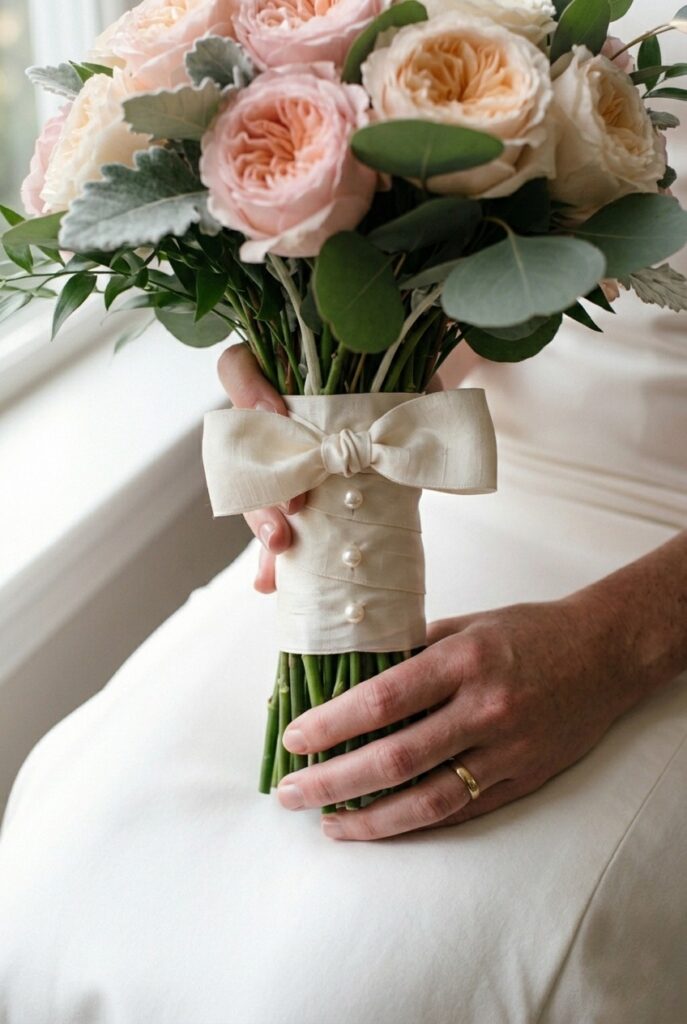
The cheapest stem wrapping is floral tape left exposed — it looks exactly like what happens when a florist runs out of time. Satin ribbon is standard and fine.
But the details that actually elevate a bouquet in close-up photos are the ones no competitor article ever mentions: ribbon width (wider reads more expensive), knot placement (front-tied knot vs. bottom tie), and pin detailing.
Three pearl-tipped corsage pins placed vertically below the bow give a clean finish that photographs like a design decision.
Pearl pins are $4–$8 for a pack of 36 on Amazon. Ask your florist to use them, or do it yourself in the bridal suite the morning of.
The ribbon itself — dupioni silk, raw-edge linen, or velvet — costs $8–$20 per yard and transforms the feel of the entire bouquet.
For an elegant aesthetic where every close-up counts, this is the cheapest upgrade in floristry.
Budget Hack #2: Buy your own stem ribbon and pins and bring them to your florist. Florists typically charge $15–$30 to source premium ribbon; a full yard of dupioni silk from Etsy costs $6–$9. Buy ivory, blush, or champagne velvet ribbon — 2.5 inches wide — from an Etsy ribbon seller like HauteCoutureBridal for under $12, and tell your florist you’re supplying it. You’ll get a higher-quality wrap for one-third the cost.
7. How Bouquet Size Affects Your Photographs (and Not in the Way You Think)
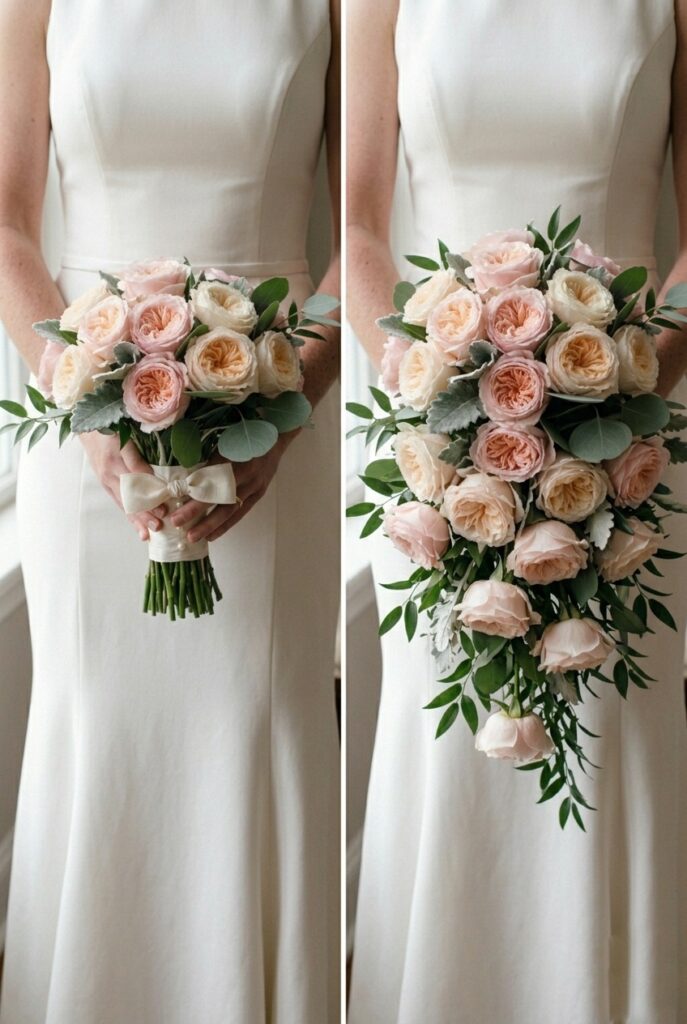
Photographers have a private frustration they rarely tell brides: an oversized bouquet covers the dress.
If you spent real money on a fitted silhouette with a corseted back or detailed beading at the waist, a bouquet wider than 12 inches hides all of it from the front.
The bride ends up photographed from the back more than the front because that’s where the dress actually shows.
The rule most editorial photographers use — though almost never say out loud — is that your bouquet diameter should not exceed the width of your natural waist.
A bouquet 8–11 inches wide is the sweet spot for most brides.
This is true regardless of whether you’re having an outdoor ceremony or a grand ballroom event. Tell your florist the maximum diameter you want, not just the style.
8. Rose Colors for Non-Traditional Brides: The Combinations That Actually Work
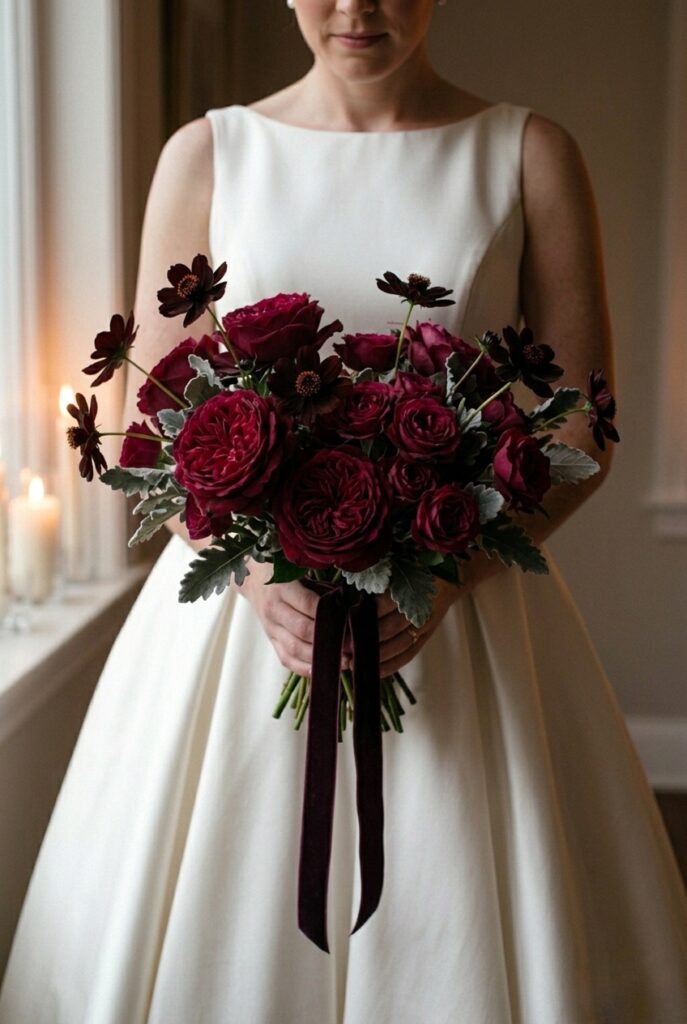
Burgundy, oxblood, and dusty mauve rose bouquets are having a sustained moment in modern weddings, but the execution is where brides get it wrong.
The cheap version is a fistful of uniform red grocery-store roses — they look like Valentine’s Day, not a wedding.
The right move is layering deep burgundy garden roses with marsala spray roses at a slightly lighter value, then adding one or two dark accent blooms (chocolate cosmos, dark dahlias) for depth.
The tonal layering within a single color family is what makes a dark bouquet look editorial instead of accidental.
This approach works especially well for rustic settings or fall ceremonies.
Burgundy garden roses are available through FiftyFlowers and Whole Blossoms; expect $3–$6 per stem wholesale, or $180–$320 for a florist-built bouquet.
Skip this if your venue has very warm amber lighting (burgundy reads almost black in golden light — test with your photographer if in doubt).
9. DIY Rose Bouquets: When It’s Worth It and When It Isn’t
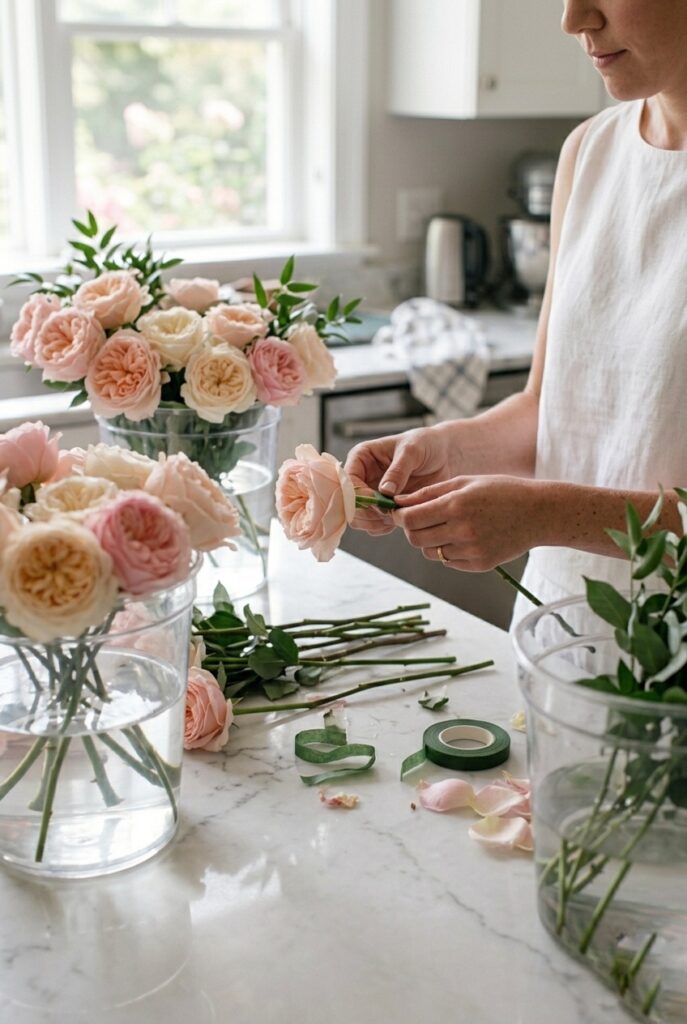
DIY makes sense for one specific scenario: you have a helper doing the mechanical work, you’re ordering from a wholesale source, and you’re not building anything the morning of your wedding.
The problem with most DIY rose bouquet guides is that they skip the timing.
Roses need to be conditioned — re-cut at 45 degrees, placed in warm water with floral preservative in a cool dark room — for a minimum of 24 hours before arranging.
Roses arranged the same day they’re unboxed will visibly wilt within 4–6 hours. Order from FiftyFlowers or Whole Blossoms three days before the wedding; condition them for 24–48 hours before arranging.
The actual build — a round hand-tied bouquet — takes 30–45 minutes with basic floral tape and rubber band technique.
For a DIY wedding approach, this is one of the more achievable projects as long as the timeline is non-negotiable. Budget: $60–$130 in wholesale roses versus $200–$400 for the same florist-built bouquet.
Budget Hack #3: Order your roses from Whole Blossoms or FiftyFlowers on a Tuesday or Wednesday delivery for a Saturday wedding — Thursday delivery is popular and farms are often allocated out by then. Ordering mid-week gets you first-pick of fresh cuts, and both platforms offer a 20–30% discount on bulk orders of 50+ stems versus per-stem pricing. A bundle of 50 blush garden roses from Whole Blossoms runs approximately $85–$110 wholesale — compared to the same quantity from a retail florist at $300+.
10. The Boutonniere Match: What Gets Forgotten Until the Morning Of
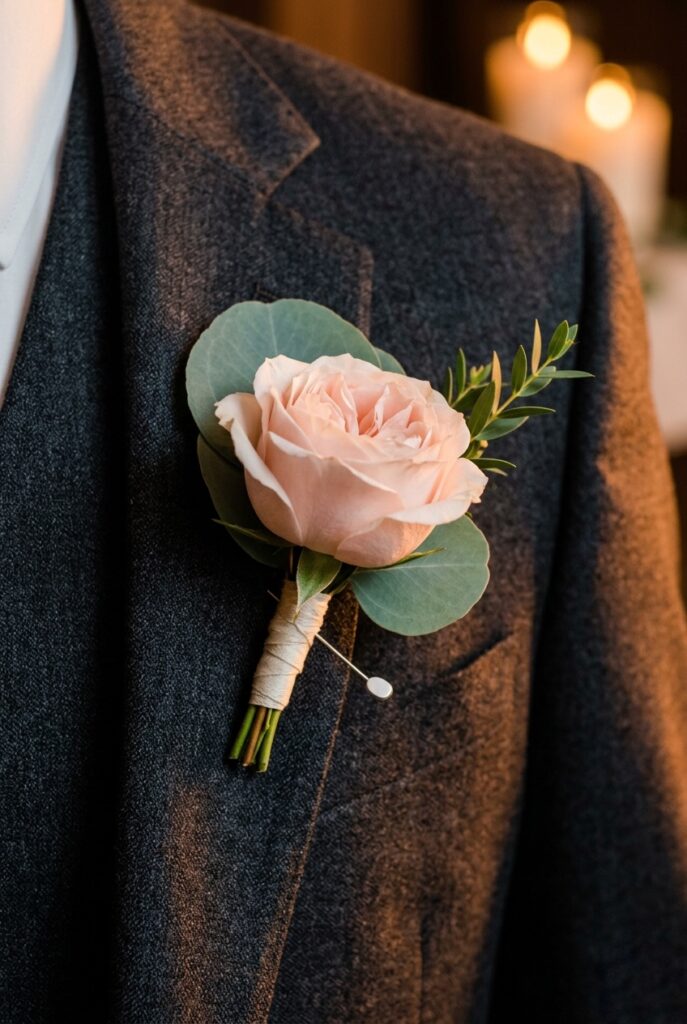
The boutonniere is the only other flower that appears in every photo of you and your partner together — and most couples completely forget to coordinate it with the bridal bouquet until the last minute, when the florist ends up using whatever’s left.
The rule is simple: the boutonniere should contain the exact same variety of rose as your bouquet, not a complementary one.
When your florist uses the same Juliet garden rose in both the boutonniere and the bridal bouquet, every photo reads as intentional and designed.
A single garden rose boutonniere with one greenery accent costs $18–$35 with a florist; solo rose stems for DIY are $2–$5 each.
The bouquet and boutonniere should be ordered at exactly the same time from the same source for the closest color and bloom match.
This is also the moment to consider the table centerpiece coordination — a few loose rose blooms in bud vases on the sweetheart table tied with the same ribbon as your bouquet creates a visual thread across the whole wedding.
11. Preserving Your Bouquet: The Silica Gel Method That Actually Works
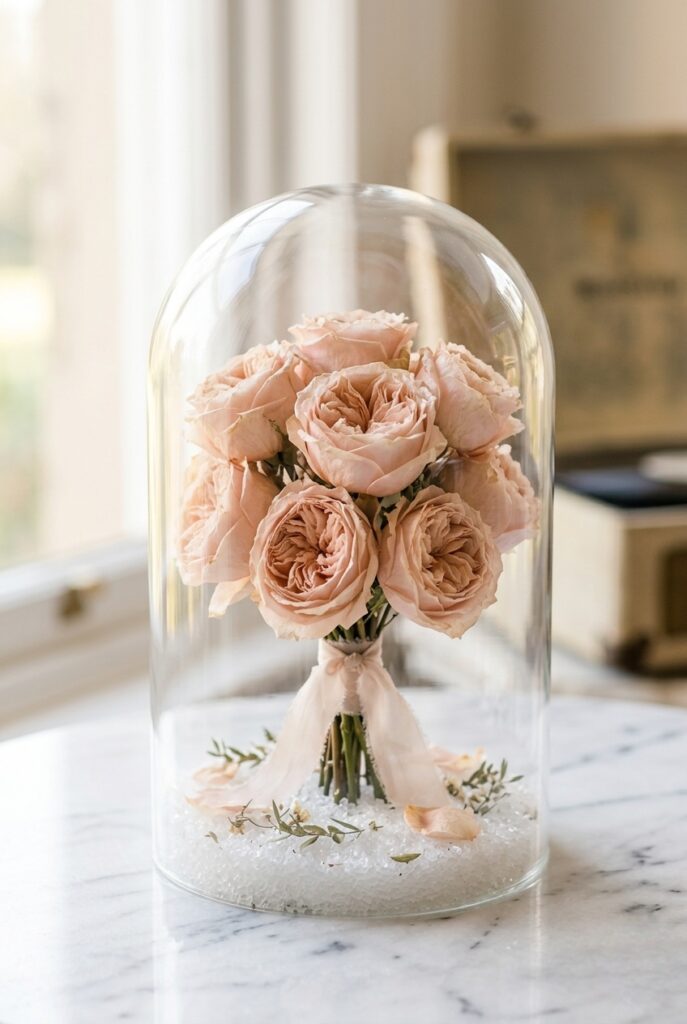
Every competitor article shows you how to build a bouquet. None of them tell you how to keep it.
If preservation matters to you, the decision has to be made before the wedding — not after.
Professional freeze-drying is the gold standard and costs $200–$600 depending on the studio; book it before your wedding date, not after.
The DIY alternative that actually works is silica gel burial: place your bouquet face-down in a sealed container of silica gel crystals (available in 5-pound bags on Amazon for $18–$25) within 24 hours of the ceremony, seal the container completely, and leave undisturbed for 7–10 days.
Garden roses preserve better than standard roses because their thicker petals hold their shape.
The result isn’t museum-perfect, but it’s genuinely displayable — especially under a glass cloche ($15–$30 on Amazon or Etsy).
For brides who want unique keepsake decor for their home, a preserved bouquet under glass is more interesting than a framed photo.
Only do this if you can delegate the silica burial task to someone on the wedding day — you will not be doing it yourself. Give the task and the supplies to your maid of honor in advance.
Decision Filter
If you’re working with a florist budget under $300 for your bridal bouquet, put all of it into a single-variety garden rose design rather than a mixed bouquet — you’ll get a better result with fewer, more expensive blooms.
If your guest count is over 150 or your venue is a grand ballroom, a slightly larger round bouquet (12–14 inches) will read proportionally correct in wide reception shots, but stay at that size — don’t go bigger.
If you’re DIYing with a budget under $150, order only from a wholesale source like FiftyFlowers, stick to one rose variety, and condition for a full 48 hours before the ceremony — this single step separates a DIY bouquet that photographs well from one that wilts by cocktail hour.
The Real Reason
Most brides overspend on bouquet volume and underspend on bouquet variety, because florists quote by stem count — that’s how they invoice — not by visual impact.
A 40-stem bouquet sounds more impressive than a 25-stem bouquet, so that’s what sells.
But the stems driving the final look are never the filler stems; they’re the hero blooms.
When a florist builds a 40-stem bouquet on a $250 budget, roughly half those stems are eucalyptus, ruscus, or standard greenery you could source yourself for $20.
You’ve paid $250 for 20 garden roses doing all the work and 20 filler stems doing none of it.
The contrarian take: Stop asking your florist for their most popular bouquet and start asking for their most photogenic one. Those are two different things.
Popular sells; photogenic is what you’ll want to look at for the next 40 years.
The insider observation photographers almost never tell brides: Your bouquet will appear in approximately 30–40% of your final edited gallery.
Your florist knows your name for one conversation; your photographer lives with these images in post-production for weeks.
When a wedding photographer winces at a bouquet, it’s almost always one of three things: standard roses that haven’t opened (they photograph as tight, waxy bullets), greenery that’s gone translucent under flash (boxwood and salal do this), or a ribbon that’s come undone and the florist used clear tape to fix it (visible in macro shots).
Ask your photographer what they’d order if it were their own bouquet — you’ll get an honest answer that no florist will give you.
Mistakes to Avoid
Mistake 1: Ordering based on rose color names, not actual samples Every article tells you to “match your color palette.” What they don’t say is that rose color names are completely non-standardized across growers.
One florist’s “blush pink” is another’s “deep antique rose.” The fix: request a single stem in the exact variety before committing to a full order, or use FiftyFlowers’ sample bundle service.
Brides who skip this step routinely receive bouquets in a noticeably different color than planned.
Mistake 2: Paying a florist to source your ribbon and pins The average florist charges $15–$30 for premium stem wrapping supplies that cost $6–$12 to source yourself. On a single bouquet this feels minor. Across a full bridal party with six bridesmaid bouquets, you’ve spent $90–$180 on markup for ribbon you could have ordered on Etsy in 10 minutes. Supply your own ribbon — 2.5-inch dupioni silk or velvet, in your exact color — and bring it to your florist. They will use it without complaint.
Mistake 3: Not realizing your flowers need conditioning time Almost no bride knows this until it’s too late: roses that aren’t conditioned for a minimum of 24 hours before use will begin wilting before dinner.
Florists who receive poorly conditioned flowers from their suppliers pass the problem to you.
Ask your florist explicitly when they’re receiving your stems and how long they’ll be conditioning them before building your arrangements.
The answer should be “48 hours minimum.” If they say “morning of,” find a different florist or build your timeline around receiving flowers two days early.
Mistake 4: Letting your maid of honor hold the bouquet during cocktail hour You will find your bouquet on a random chair or cocktail table by the time the first dance starts, stems sitting in a puddle of condensation, ribbon soaked.
Nobody is managing your bouquet for you at cocktail hour.
Designate one person — not the maid of honor, who has her own responsibilities — whose job is specifically to keep your bouquet in water during the reception.
This is the single most common reason bouquets look deflated in end-of-night photos, and nobody warns brides about it until after.
FAQ
How many roses do I need for a bridal bouquet?
A medium round bridal bouquet typically requires 20–30 stems depending on the rose variety.
Garden roses are larger and need fewer stems — 20 garden roses create the same visual volume as 35–40 standard hybrid tea roses.
Size the bouquet to your body and venue, not to an arbitrary stem count.
What is the most popular rose color for bridal bouquets?
White and blush remain the most widely chosen, but ivory has quietly become the preferred choice among florists and photographers.
Ivory reads warmer in photos, complements most skin tones, and works with both warm and cool gown colors without the starkness that cool white can produce under certain lighting conditions.
How far in advance should I order my bridal bouquet?
Book a florist 6–12 months ahead for peak wedding season dates (May–October).
For wholesale DIY orders, place your flower order 2–3 weeks before the wedding to lock in pricing, and confirm delivery timing for 3 days before the ceremony — this gives you conditioning time without the flowers aging.
Can I mix roses with other flowers in a bridal bouquet?
Yes, but the mix works best when you treat roses as the primary bloom rather than one element among equals.
A bouquet that’s 70–80% roses with one complementary accent (ranunculus, lisianthus, or anemone) photographs more cohesively than a five-flower mix where budget forces each variety into a supporting role.
Check The Knot’s wedding flower seasonal guide for which accent blooms are in season at your wedding date.
Budget Table
| Bouquet Type | DIY Wholesale Cost | Florist Cost | Notes |
|---|---|---|---|
| Standard rose round bouquet (35 stems) | $45–$75 | $150–$250 | Hybrid tea roses; less impressive in photos |
| Garden rose round bouquet (20–25 stems) | $90–$140 | $250–$380 | David Austin or Ecuadorian variety; best photographically |
| Single-variety garden rose bouquet | $85–$120 | $220–$350 | Most cohesive look; reduces filler costs |
| Cascade/trailing bouquet | $130–$200 | $400–$650 | Requires structural wire work; venue-dependent |
| Dark/moody bouquet (burgundy, marsala) | $75–$120 | $200–$350 | Tonal layering essential; test under venue lighting |
| Boutonniere (single garden rose) | $4–$8 per stem | $25–$45 | Must match bridal bouquet variety exactly |
| Bouquet preservation (silica gel DIY) | $18–$25 | $200–$600 (freeze-dry) | Decide before the wedding, not after |
Bring Your Rose Bouquet Together
The bouquet you carry tells the story of every specific decision you made: the variety over the stem count, the conditioned bloom over the emergency order, the ribbon you sourced yourself over the florist’s markup.
None of these decisions require a bigger budget — they require a different sequence of choices.
Start at David Austin’s wedding rose guide to pick your variety before you have a single florist conversation, and then read our guide to budget wedding decor ideas — because the money you don’t spend on filler roses goes a long way in every other corner of the wedding.