10 Bridal Heels with Your Wedding Dress: The Pairing Logic That Actually Works!


Four gown-hem-and-shoe pairings flat lay on marble with ranunculus petals

Most brides choose their dress first, then hunt for a shoe that doesn’t clash — and that is the exact backwards approach that produces mediocre pairings and wasted money. The shoe is not an afterthought to the gown.

It is the architectural base that determines hem length, posture, and whether your whole look reads as one deliberate outfit or a well-dressed woman who grabbed the shoes on the way out.

This guide gives you the pairing logic by gown silhouette, fabric weight, and hem length — so you stop guessing and start buying once.


1. The Ballgown + Classic Pointed-Toe Pump
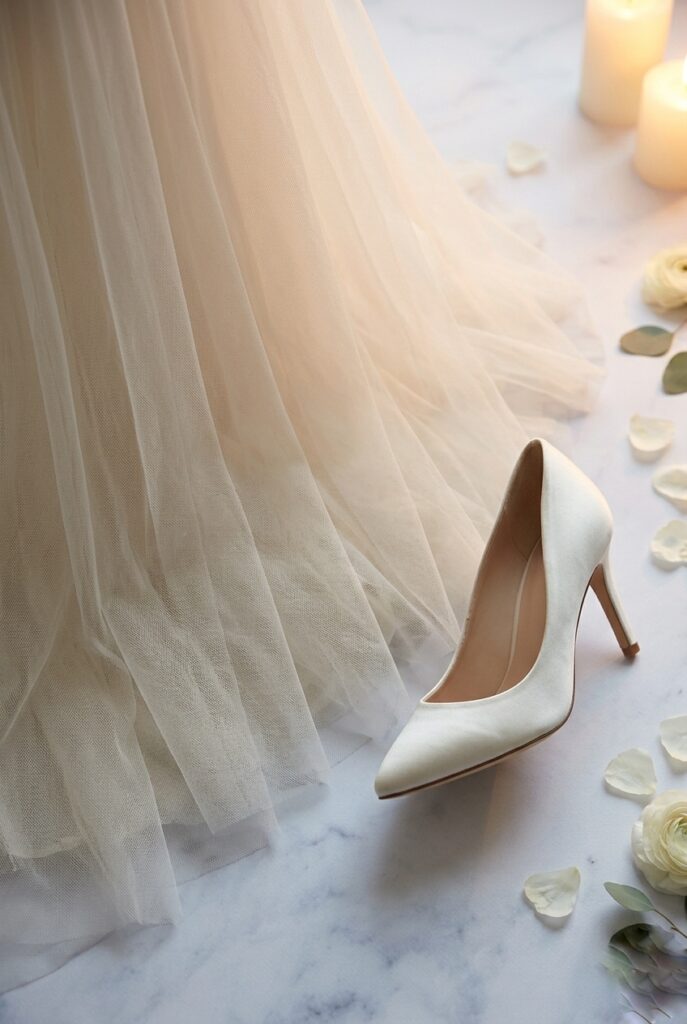
Full tulle ballgown hem beside pointed-toe ivory satin pump, candlelight

A full ballgown with structured tulle or horsehair hem shows exactly one thing consistently: the toe of your shoe at the forward step.

Nothing else.

Which means the heel height, the embellishment, and the ankle strap are all essentially irrelevant — the toe shape and material of the upper are the only variables that matter.

A pointed toe reads as finished and precise beside heavy tulle.

A rounded toe reads as blunt.

The bold opinion here: you are overpaying for anything on a ballgown shoe that isn’t the toe.

Skip embellished heels, skip ankle straps, skip crystals across the upper — buy the cleanest pointed-toe satin pump you can find and put the money you saved toward your reception decor instead.

Sam Edelman pointed-toe pumps ($55–$80 at DSW) or Vince Camuto ($90–$130 at Nordstrom) are entirely sufficient. The more you spend on a ballgown shoe, the less you get back for it photographically.


2. The Sheath or Column Gown + Strappy Sandal
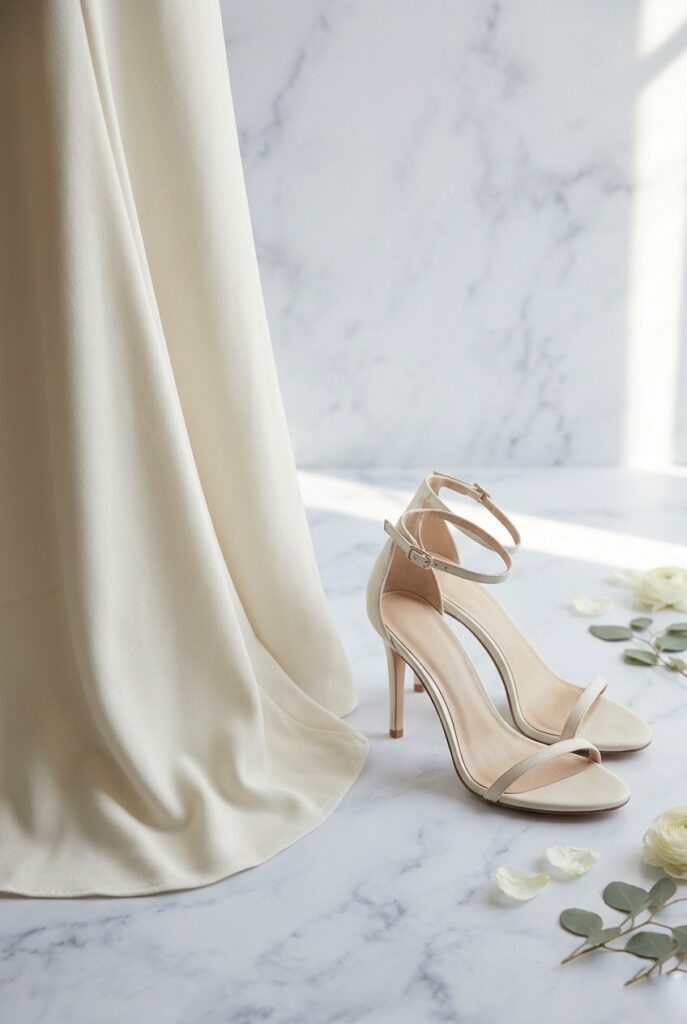
Ivory crepe column gown hem beside barely-there strappy sandal, window light

A sheath or column gown has the highest shoe visibility of any bridal silhouette — the clean, body-skimming line with minimal volume means the shoe shows on every step, in every photo.

This is where shoe investment actually pays off because the shoe is genuinely part of the look at all times.

The pairing logic: a column gown’s clean line is continued and finished by a barely-there sandal, which provides a visual transition from leg to floor rather than cutting it off.

A chunky or heavily embellished shoe at a column gown’s hem creates a heavy landing that breaks the vertical line.

Two to four thin straps maximum, a heel between 2.5 and 3.5 inches, and as little coverage as the occasion allows.

Vince Camuto ($90–$125 at Nordstrom), Sarah Flint ($180–$280 at sarahflint.com), and Reformation ($145–$195 at thereformation.com) all make clean strappy versions that hold the line of a column gown correctly.

For elegant reception settings built around a clean aesthetic, this pairing photographs with the most visual coherence of any combination in bridal.


3. The A-Line + Low Block Heel

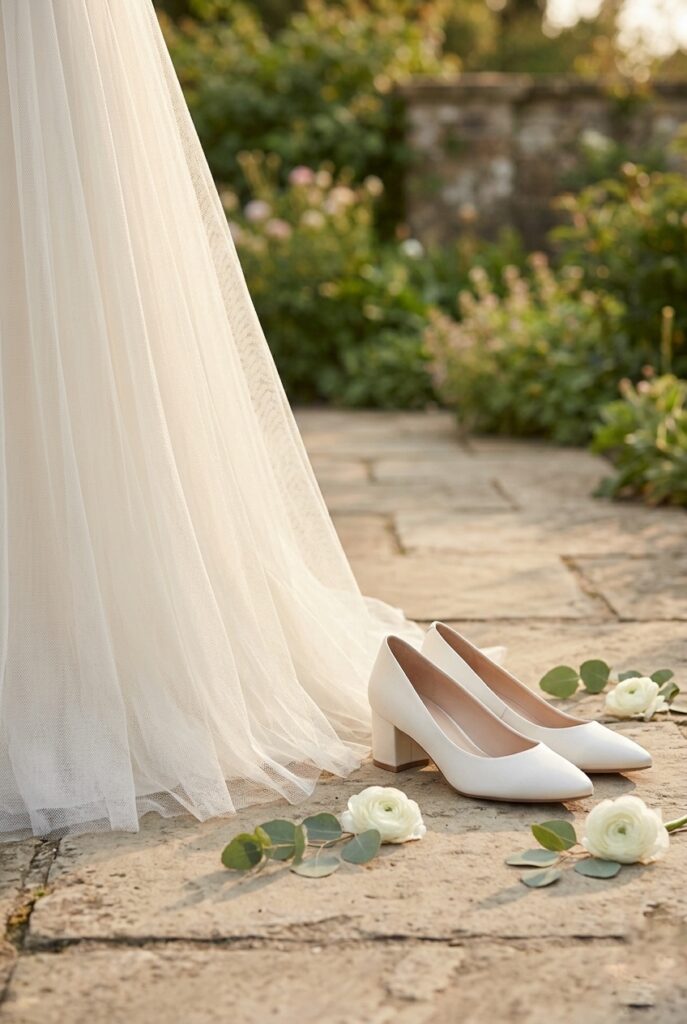
Soft tulle A-line hem beside ivory low block heel pump on stone, outdoor daylight

The A-line is bridal footwear’s most forgiving silhouette — it works with almost every heel height, style, and material — which is exactly why it deserves a more strategic approach than just “anything goes.”

The A-line flares from the hip, which means there’s moderate volume at the hem without the full weight of a ballgown.

The shoe peeks at roughly mid-stride on a floor-length A-line, which means the whole shoe — not just the toe — is occasionally visible in candid movement shots. This gives you more shoe to work with than a ballgown, but not the full canvas of a sheath.

A low block heel at 2 to 2.5 inches is the intelligent investment here: stable enough for outdoor garden terrains that A-line brides often favor, and visible enough in the hem-peek shots to justify a small detail like a pearl or a strap.

This is also the pairing that rewards outdoor garden wedding aesthetics most naturally — the soft, slightly undone quality of an A-line over a modest block heel reads as genuinely considered rather than assembled.

ASOS Bridal ($55–$80), Dolce Vita ($85–$110 at DSW), and Badgley Mischka ($120–$165 at Nordstrom) all carry appropriate options.


💡 Budget Hack #1: The smartest money in shoe-dress pairing is buying the shoe material to match the gown’s undertone — warm ivory vs. cool white — rather than matching embellishment style. Undertone mismatch is the most visible mistake in bridal photos and the easiest to make. To test before buying online: order a fabric swatch from your dressmaker ($5–$10 for most bridal designers) and hold it against the shoe’s product photo in natural window light. Warm-undertone gowns (candlelight ivory, warm champagne) need warm ivory or champagne shoes. Cool-undertone gowns (bright white, pure ice) need cooler white or silver shoes. This $5 swatch test eliminates a $100+ return and reorder. Do it before placing any order.


4. The Mermaid or Fit-and-Flare + Statement Stiletto
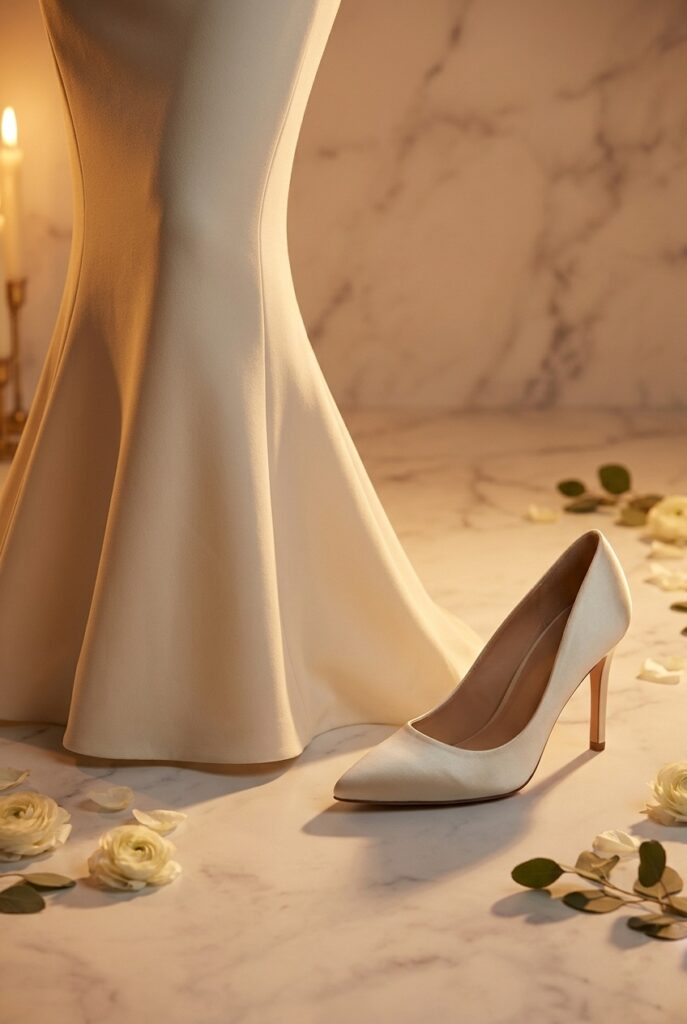
Fitted mermaid gown hem beside ivory stiletto pump on polished marble, candlelight

The mermaid and fit-and-flare are the only gown silhouettes where a genuine stiletto is the architecturally correct pairing — and here’s the reason: both silhouettes are body-fitted through the hips and thighs, which means the bride’s walk is naturally shorter and more deliberate than in any other gown.

A shorter stride paired with a stiletto’s posture — the slight forward pitch, the elevated calf — actually photographs more elegantly than it feels, because the controlled movement aligns with the gown’s form-fitted intention.

The shoe shows clearly from mid-calf down with every step in both silhouettes, which means this is the pairing where heel quality is most visible and worth the investment.

Badgley Mischka ($130–$180 at Nordstrom), Bella Belle’s stiletto collection ($195–$280 at bellabelleshoes.com), or Loeffler Randall ($150–$225 at Nordstrom) all produce stilettos with the material quality this visibility level demands.

Only do this if you are experienced in heels — the constrained stride of a mermaid gown amplifies any instability in a heel you’re not comfortable in.


5. The Lace Gown + Matching vs. Contrasting Shoe
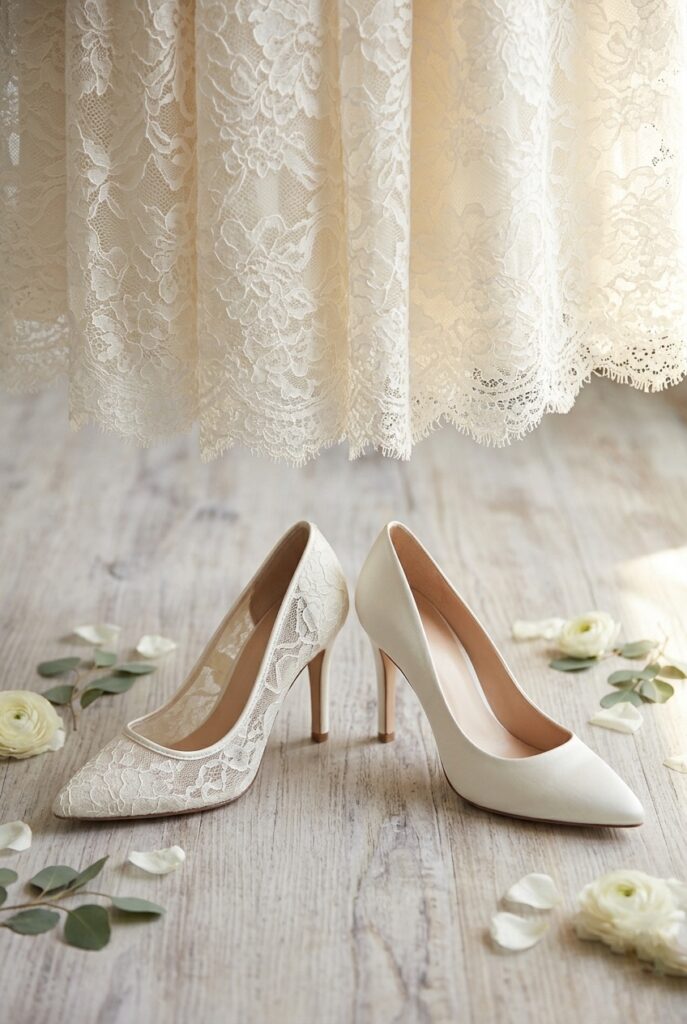
Chantilly lace hem beside lace pump and satin pump side by side for comparison, warm window light

Lace gowns offer a genuine choice that most guides avoid committing to: match the shoe’s texture to the lace, or contrast it with a clean material.

Both work.

Neither is default.

The matching route — a lace-overlay pump where the lace pattern echoes the gown — creates a continuity that reads as deeply considered but only works when the lace quality of the shoe matches the quality of the gown.

Cheap nylon lace on a shoe beside Chantilly lace on a gown creates a visible hierarchy that makes the shoe look like a knockoff version of the dress.

The contrasting route — a clean ivory satin pump beside a lace gown — creates a deliberate break that lets the gown hold all the texture and the shoe read as its quiet anchor.

This is the lower-risk, better-value approach for most budgets.

For vintage-inspired wedding aesthetics where the lace is a period-correct statement, contrast in the shoe keeps the overall look from tipping into costume.

A plain ivory satin pump from Sam Edelman ($55–$80 at DSW) beside a quality lace gown photographs more expensively than a budget lace-overlay shoe at twice the price.


6. The Crepe or Minimalist Gown + Metallic or Architectural Shoe
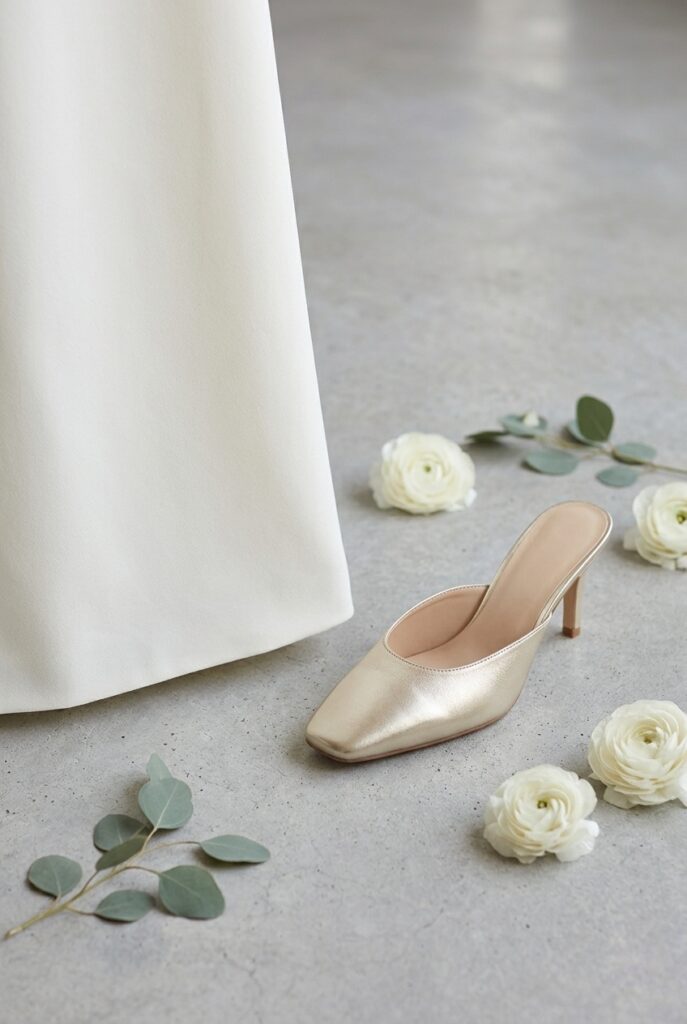
Clean crepe minimal gown hem beside champagne metallic mule on concrete, cool daylight

A minimalist crepe or mikado gown is the one silhouette where the shoe earns the right to have a personality of its own — because the gown’s deliberate restraint creates a visual invitation for the shoe to contribute something.

This is the pairing where a champagne metallic mule, a sculptural block heel, or a grosgrain bow pump stops being a detail and starts being a statement.

The budget logic: because a clean, minimal gown often costs less per yard of complexity than a beaded or lace gown, you can reallocate a portion of that budget difference toward a more interesting shoe and produce a stronger overall image.

Reformation’s metallic square-toe heels ($165–$215 at thereformation.com) and Schutz’s sculptural mules ($110–$150 at Nordstrom) are built for exactly this pairing.

For simple weddings with a modern aesthetic, the minimalist gown plus architectural shoe combination photographs with more editorial power than any beaded ballgown at three times the cost.


💡 Budget Hack #2: If your gown is floor-length and a ballgown silhouette, spend no more than $80 on your ceremony shoes. The shoe visibility at a floor-length ballgown hem is so limited — effectively only the toe at the forward step — that spending $200+ on heel embellishment and material quality produces zero visible return in photographs. Take that $120+ difference and spend it on your reception shoes, which will be visible all evening after you bustle the gown. Two targeted shoe purchases — a $65 simple pump for ceremony and a $110 embellished sandal or statement mule for reception — always outperform one expensive shoe that does both jobs poorly.


7. The Boho or Flowing Chiffon Gown + Strappy Flat or Minimal Sandal
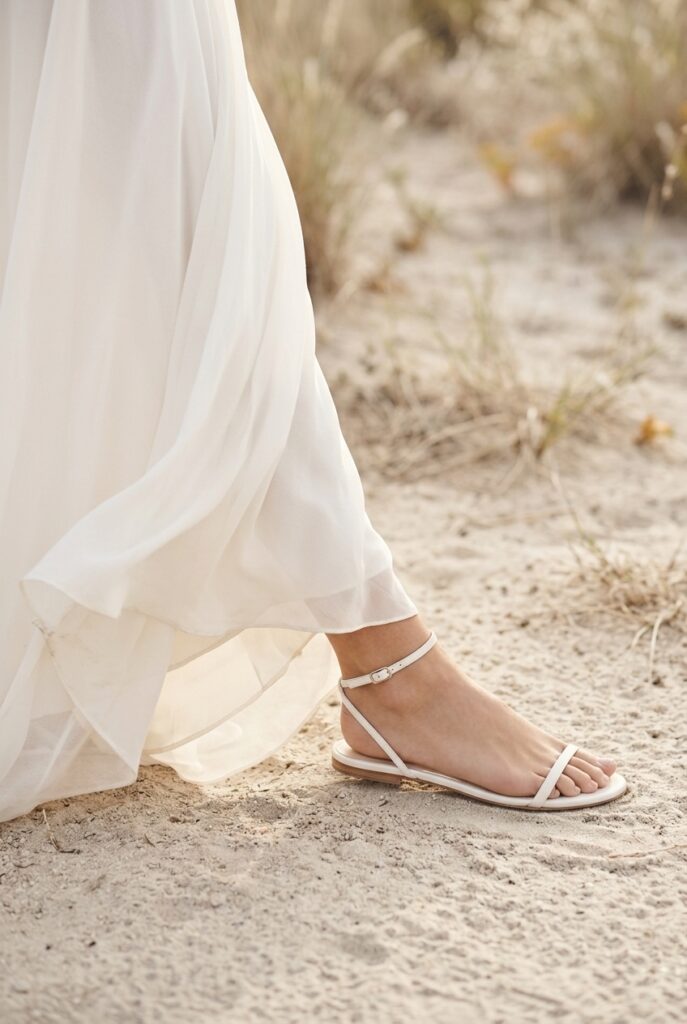
IMAGE 7 HERE Alt text: Flowing ivory chiffon boho bridal gown hem beside a barely-there ankle-strap flat bridal sandal on pale sandy outdoor ground, soft warm natural outdoor light Image prompt: Photorealistic close-up portrait on pale sandy dry ground with fine texture. A flowing ivory chiffon boho gown hem drifts loosely across the lower left of the frame, the sheer lightweight fabric catching a soft breeze. Beside it, a delicate barely-there bridal sandal with minimal thin ankle strap and a flat or near-flat sole in ivory leather. Soft warm natural outdoor light from above creates an airy, relaxed atmosphere. Background is softly blurred pale sandy ground and hints of dry grass. No text overlays. Generate in vertical portrait orientation, 2:3 aspect ratio, optimized for mobile display.

Here is the contrarian call: a boho chiffon gown with a high stiletto heel is an aesthetic contradiction, not a style choice. Chiffon moves, flows, and drapes — it is a fabric built on the principle of softness and lack of structure.

A rigid, high stiletto heel underneath it creates a visual tonal mismatch: the formal architecture of the heel fighting the relaxed freedom of the fabric above it.

The right pairing for any flowing chiffon or georgette gown is a flat or near-flat sandal — a single-strap style with minimal hardware, in soft leather or suede.

This is also the most cost-effective pairing in all of bridal because quality flat sandals start at $45–$70 and photograph beautifully against chiffon’s movement.

Ancient Greek Sandals ($95–$145 at various US stockists) and Tkees ($55–$80 at tkees.com) make the right version.

For rustic or outdoor summer wedding settings, this pairing is not a fallback — it is the correct answer.

Skip this if your ceremony floor is polished stone or marble — a completely flat sole on a smooth indoor surface is the most slip-prone combination in bridal footwear.

Even a 1-inch kitten heel provides meaningful traction improvement over a true flat on hard indoor floors.


8. The Fabric Weight Visibility Rule (Competitor Gap Idea #1)

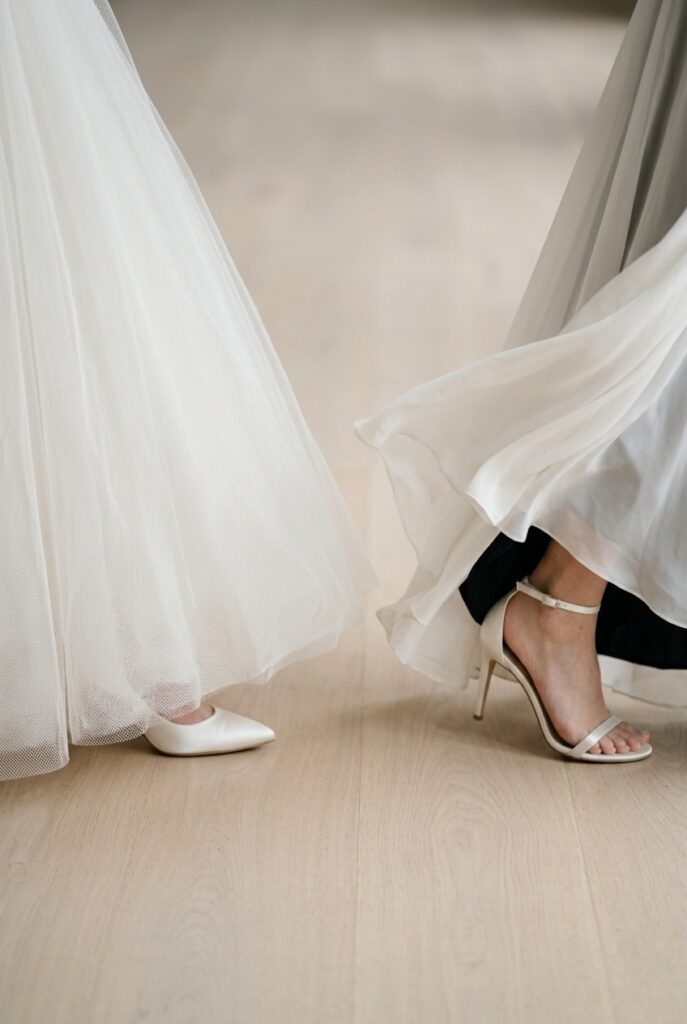
Image prompt: Photorealistic close-up portrait on pale smooth wood floor. Two gown hem cross-sections shown side by side for comparison. Left: a heavyweight structured ivory tulle ballgown hem at mid-stride, the dense layers of netting lifting slightly from the floor, showing only the very toe of an ivory pump beneath. Right: a lightweight ivory chiffon hem in mid-stride, the fabric billowing upward and showing the complete shoe and lower ankle clearly. Soft natural window light from above illuminates both hems equally. Background is blurred pale wood floor. No text overlays. Generate in vertical portrait orientation, 2:3 aspect ratio, optimized for mobile display.

No competitor article explains this and it changes how you shop: the visibility of your shoe while you walk is determined by fabric weight, not hem length.

Two gowns at identical floor-length hems show completely different amounts of shoe in motion.

A structured ballgown with multiple layers of stiff tulle and horsehair hem trim creates a fabric wall that lifts minimally as you walk — you see approximately one inch of shoe toe at the forward step, nothing more.

A floor-length lightweight chiffon gown, by contrast, floats upward with body movement and can reveal the entire shoe plus several inches of ankle with each stride.

Practically: if your gown is lightweight fabric — chiffon, georgette, soft silk charmeuse — treat it like a mid-length gown for shoe selection purposes and invest in a shoe you’re proud to see fully.

Use The Knot’s wedding dress style guide to identify your gown’s fabric weight category if you’re not sure where your dress falls.


9. The Tea-Length or Short Dress + Statement Heel
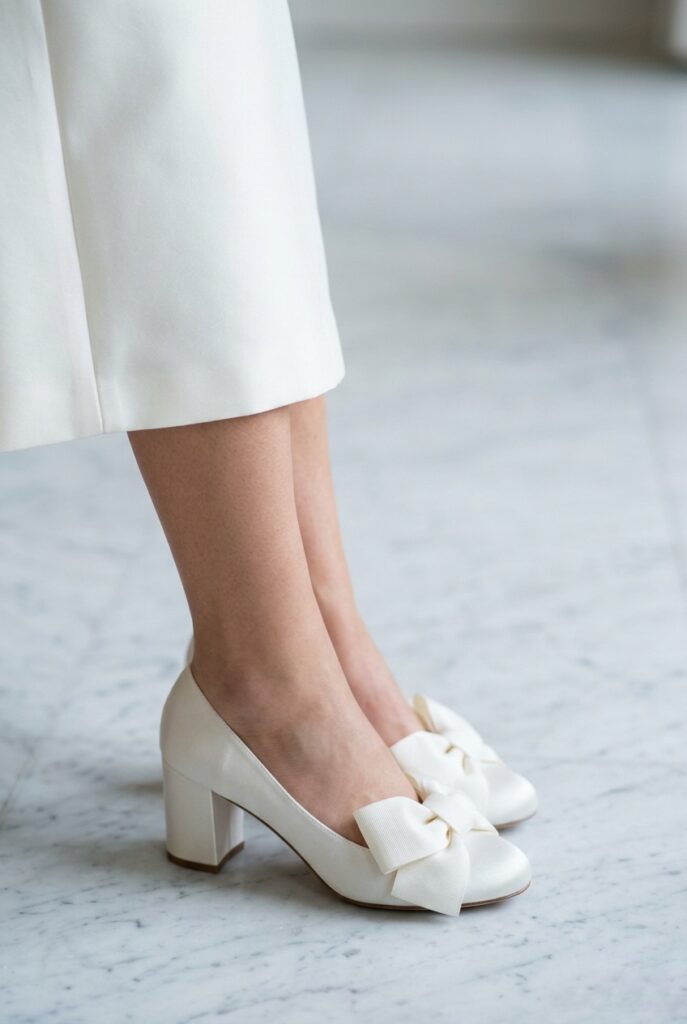
IMAGE 9 HERE Alt text: Ivory tea-length bridal dress hem ending below the knee beside a bold ivory grosgrain bow pump with block heel on pale marble, soft natural window light Image prompt: Photorealistic close-up portrait on pale cool marble. An ivory tea-length bridal dress hem ends cleanly below the knee on the left side of the frame, the hem finishing in a clean line with visible calf below. Beside it, an ivory satin pump with a large stiff grosgrain bow at the vamp and a 3-inch block heel. Soft natural window light from above creates a clean, airy atmosphere. The shoe's bow detail and the clean dress hem are both clearly visible. Background is softly blurred pale marble. No text overlays. Generate in vertical portrait orientation, 2:3 aspect ratio, optimized for mobile display.

A tea-length or short bridal dress changes the pairing equation entirely: the entire shoe, ankle, and calf are visible in every single photo, from every angle, for the whole day.

This is the gown that demands the most intentional shoe decision of any silhouette, because the shoe is not an accessory to the look — it is half the look.

The good news: tea-length and short bridal dresses are the one situation where a genuinely bold shoe choice photographs correctly.

A grosgrain bow pump, a Mary Jane block heel, a pearl-cluster sandal, an architectural sculptural heel — any of these works because the gown’s shorter length creates space for the shoe to speak without shouting over anything.

The mistake with short bridal dresses is choosing a plain, understated shoe out of habit when the whole point of the silhouette is that the shoe shows.

BHLDN carries statement-worthy short-wedding-dress-appropriate shoes at $90–$145.

Loeffler Randall’s bow heels ($150–$225 at Nordstrom) are the specific investment worth making here for a short dress that will be in every photograph.

For uniquely styled weddings where the dress already makes a non-traditional statement, this is the pairing that makes the whole editorial come together.


💡 Budget Hack #3: Zappos’s bridal section and WeddingWire’s shoe planning guide together form the most useful free research stack for gown-shoe pairing. Use WeddingWire to identify which shoe styles are recommended for your silhouette, then go to Zappos, filter by that style in ivory or champagne, sort by customer rating, and use their free overnight shipping and 365-day free returns to order three candidates simultaneously at home. Try them on with your actual dress in your actual home lighting. Return two. Pay for one. The total out-of-pocket cost is usually $65–$120 for a shoe that genuinely works, and the return process takes under five minutes online. No bridal boutique shoe experience — where you’re trying on a display shoe in store lighting in a different size — comes close to this level of certainty before buying.


10. The Two-Dress Shoe Strategy (Competitor Gap Idea #2)
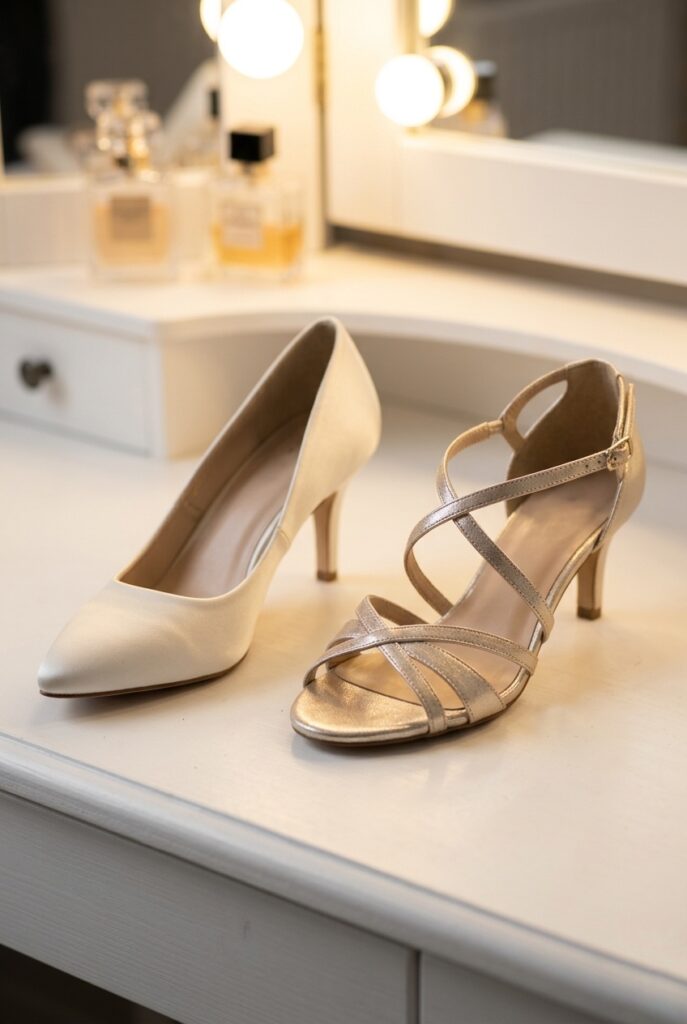
IMAGE 10 HERE Alt text: Two bridal shoes side by side — a classic ivory pointed-toe pump for ceremony and a metallic champagne strappy sandal for reception — on a white dressing table, warm vanity light Image prompt: Photorealistic close-up portrait on a white painted dressing table. Two bridal shoes placed side by side. Left: a clean ivory satin pointed-toe pump with a 3-inch slim heel, modest and classic. Right: a champagne metallic strappy sandal with delicate crossed vamp straps and a slim 2.5-inch block heel. Warm vanity light from above illuminates both shoes. The contrast between the modest ceremony shoe and the more expressive reception shoe is clear. Background is softly blurred white dressing table and vanity mirror. No text overlays. Generate in vertical portrait orientation, 2:3 aspect ratio, optimized for mobile display.

No competitor covers this as a deliberate strategy, and it is one of the smartest moves in the entire bridal shoe decision: if you are wearing two outfits — a ceremony gown and a reception second dress — plan both shoes at the same time, treating them as a set rather than two independent decisions.

The ceremony shoe should pair correctly with the gown’s silhouette and fabric weight as described above.

The reception shoe should pair correctly with the second dress’s hemline and be the shoe where you let yourself have more fun — more color, more embellishment, a bolder detail — because the shorter, less formal reception dress makes bold shoes read as intentional rather than mismatched.

The visual coherence rule: keep the toe shape consistent across both shoes. Pointed-toe ceremony pump, pointed-toe reception sandal.

Rounded-toe ceremony block heel, rounded-toe reception mule.

Matching toe shapes across two completely different shoes creates a narrative thread that makes your whole day look designed rather than assembled. 

Bella Belle’s gown-to-shoe pairing guide is useful for locking in both pairings side-by-side before buying either.


Decision Filter

If your gown is floor-length and structured — ballgown, full A-line, heavy tulle — invest in toe shape and material quality only, keep the price under $100, and spend your remaining budget elsewhere.

If your gown is body-fitted or short — sheath, column, mermaid, tea-length — treat the shoe as a genuine half of the look and spend accordingly, because every photo will include it.

If your gown is lightweight and flowing — chiffon, georgette, soft silk — match the shoe’s formality to the gown’s relaxed quality and choose a flat or near-flat sandal rather than fighting the fabric’s movement with a rigid stiletto.

If you’re wearing two dresses, plan both shoes together and keep the toe shape consistent.


The Real Reason

The reason gown-and-shoe pairing goes wrong so consistently is not taste — it is timing. Brides shop for shoes after they’ve said yes to the dress, often months later, from a completely different reference point than the one in which they made the gown decision.

By the time the shoe shopping happens, the gown is hanging somewhere else, the specific fabric weight and movement are not in the room, and the decision gets made based on photos of the dress rather than the dress itself.

The contrarian truth: your shoe purchase should happen in the same appointment as — or immediately following — your dress selection.

Bring the shoe shopping mindset to the bridal salon, not to a separate appointment six months later.

The strong opinion: the single most common gown-shoe pairing mistake is overinvesting in the shoe when the gown is doing all the visual work, and underinvesting when the dress is simple and the shoe is the only detail visible.

Brides have this exactly backwards with notable consistency.

The insider observation that comes up in fitting room conversations that brides almost never hear framed this way: your seamstress sees your shoes at every fitting and can tell immediately if the pairing is working because she watches the hem move against the shoe as you walk across the fitting room floor.

If your seamstress has never volunteered a comment about your shoe pairing — positive or negative — ask her directly.

She has seen your specific dress move against your specific shoe at your specific heel height more times than you have, and her opinion is more informed than any online guide including this one.

She will tell you. Most brides never think to ask.


Mistakes to Avoid

Mistake 1: Choosing your shoes after your dress fitting rather than before it. Every competitor article lists this, but none of them explain the downstream damage clearly enough: your hem alteration is calibrated to a specific heel height.

If you make that alteration to a store shoe you borrowed for the fitting and then buy a different shoe later, your hem is wrong for your actual wedding shoe.

Wrong by even half an inch translates to a dragging gown or a flashing ankle in photos.

This is not a minor visual issue. It is a $75–$150 re-alteration that typically cannot be scheduled in the final two weeks before the wedding.

Mistake 2: Assuming that because your dress is floor-length, shoe quality doesn’t matter. Floor-length gowns create the getting-ready flat-lay, which is usually the first image in every wedding gallery.

The shoe is the centerpiece of that flat-lay — it is not hidden. It is prominently featured.

Spending $50 on a generic ivory pump and then watching it anchor every getting-ready photo for the rest of your life is the specific regret that shows up in wedding review forums more than any other shoe decision.

Buy a shoe you’re proud of even if the gown is floor-length.

Mistake 3: Matching embellishment style instead of material undertone. Brides who spend considerable time finding a shoe whose crystal details match their beaded bodice and then discover that the shoe’s ivory is a different undertone than the gown’s ivory are making the more expensive mistake.

Embellishment style coordination is visible in close-up shots only. Undertone mismatch is visible in every single photo that shows both the shoe and the gown simultaneously — which is all of them.

Match undertone first. Embellishment style is secondary.

Mistake 4: Buying the shoe that works for the ceremony and ignoring the reception entirely. The ceremony shoe, under a floor-length gown, is visible for approximately forty-five minutes of the day — the processional, a few portrait sessions, and the first dance.

The reception shoe, worn with a bustled or changed outfit in bright ambient light in front of all your guests, is visible for three to five hours.

Most brides spend three times as long choosing the ceremony shoe. The allocation of attention is completely inverted from how the day actually works.


FAQ

Should bridal heels match the wedding dress exactly?

Bridal heels don’t need to match the dress exactly — but the undertone must coordinate.

The shoe’s ivory, champagne, or white tone should match the warm or cool undertone of the gown. Embellishment style can contrast intentionally.

The worst pairing mistake is two pieces with mismatched undertones, not mismatched textures.

What heel height works with a floor-length wedding dress?

Any heel height from 1.5 inches upward works with a floor-length gown, provided the hem is altered to that specific height.

The hem must be set to the exact shoe you’ll wear on the day — not to a store shoe or an approximate height.

Buy your shoe before your first fitting and wear it to every alteration appointment.

What shoes work best with a ballgown wedding dress?

A clean pointed-toe pump in ivory satin is the most reliable choice for a ballgown because only the toe is visible at the hem.

Heel height, embellishment, and ankle straps are largely irrelevant since the tulle volume conceals them.

Invest in toe shape and material quality only, and keep the budget modest since the visual return on a ballgown shoe is proportionally low.

Can I wear different shoes for the ceremony and reception?

Yes — and for most brides with two outfits, this is the strategically smarter choice.

Plan both shoes simultaneously and keep the toe shape consistent across both pairs to create visual coherence across the full day.

Use the ceremony shoe for the formal silhouette pairing and the reception shoe for a bolder, more personal expression.


Budget Table

Gown SilhouetteBest Heel StyleVisibility LevelBudget GuidanceBest Source
Ballgown / full tullePointed-toe satin pumpToe onlySpend ≤$80Sam Edelman, DSW
Sheath / columnStrappy sandalFull shoe alwaysWorth investing $120–$280Sarah Flint, Vince Camuto
A-lineLow block heelMid-stride toe + ankle$65–$165ASOS, Badgley Mischka
Mermaid / fit-and-flareSlim stilettoMid-calf down fullyWorth investing $130–$280Bella Belle, Badgley Mischka
Lace gownClean satin pump (contrast)Depends on length$55–$130Sam Edelman, J.Crew
Crepe / minimalistMetallic or architecturalModerate to high$110–$215Schutz, Reformation
Boho chiffonFlat or minimal sandalFull shoe in motion$45–$145Tkees, Ancient Greek Sandals
Tea-length / shortStatement heelEntire shoe + ankleWorth investing $90–$225BHLDN, Loeffler Randall

Start with the Dress in the Room, Not in a Photo

The pairing decision that actually works is made standing in your dress, in your shoes, walking ten steps on a hard floor with someone watching your hem from behind.

That is the only test that accounts for your specific fabric weight, your specific hem height, and your specific stride — the three variables that no online guide can substitute for.

Use the framework above to narrow your choices to two or three candidates, then book a fitting appointment with the shoes in hand and make the final call with your dress moving in real time.

If you’re still planning the broader look for your day, start with the elegant wedding decor guide to lock in your overall visual direction before the shoe decision — because the venue, florals, and palette are the larger context in which your shoes will ultimately be photographed.

Leave a Comment

Your email address will not be published. Required fields are marked *

Scroll to Top