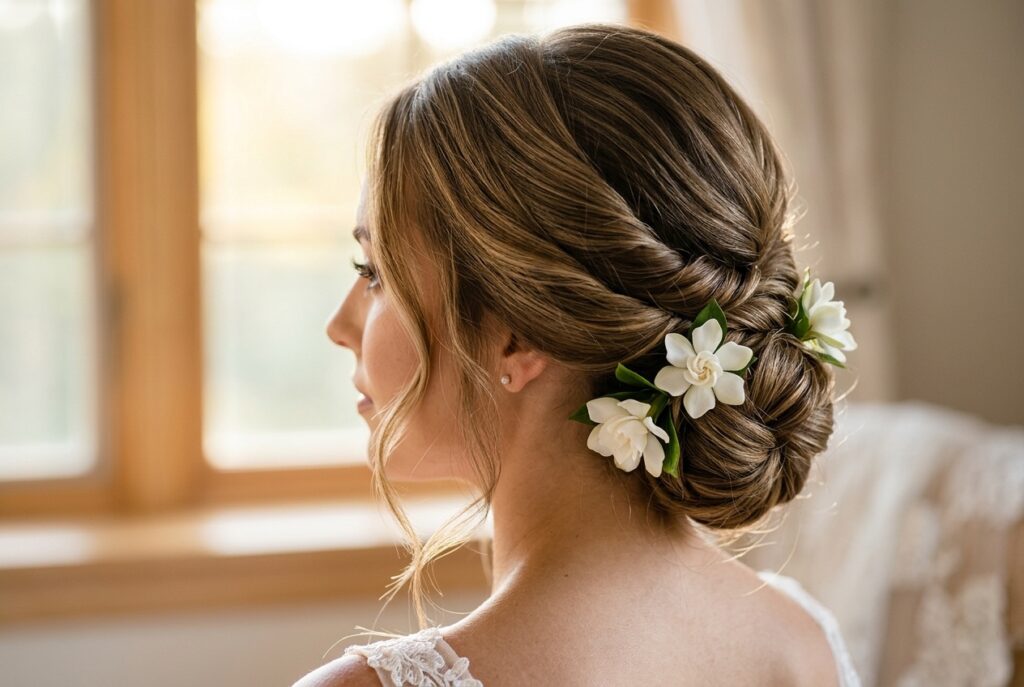
The heel you choose on your wedding day will be photographed more than your centerpieces, your cake, and possibly your veil — and the decision that matters most is not the height, the color, or the brand, but whether you can walk in it naturally enough that the shoe disappears and you appear.
1. The Slim Pointed-Toe Pump
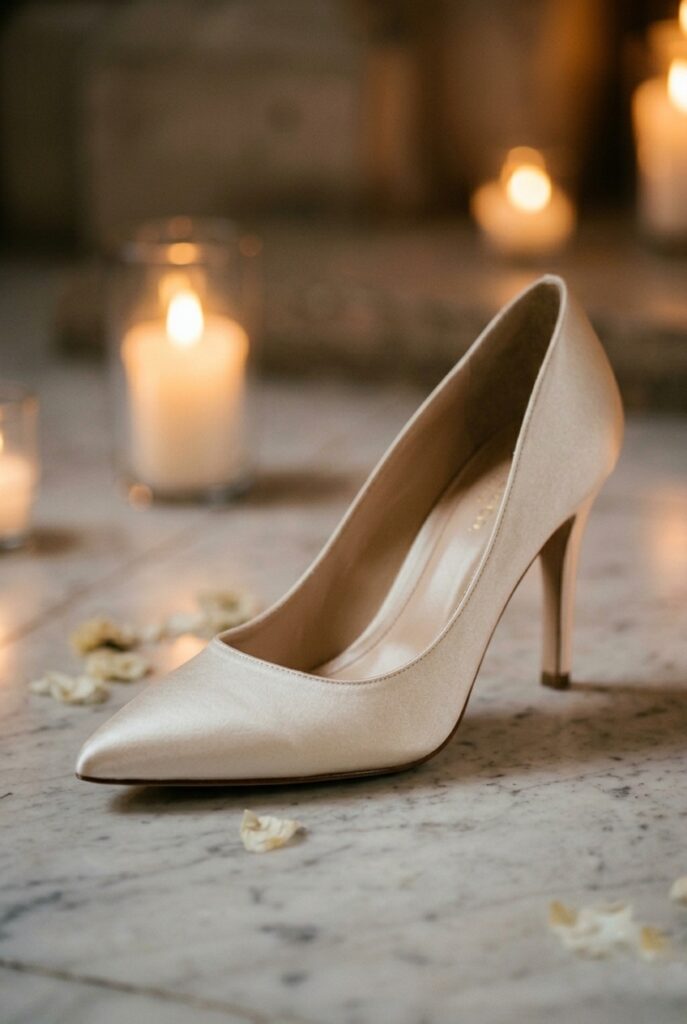
The slim pointed-toe pump photographs cleanly in every condition — flat-lay, candid dance shot, processional close-up — because the narrow elongated toe draws the eye upward and makes the leg read longer even when your gown covers everything except the tip.
Look for a heel between 3 and 3.5 inches (below that reads casual, above that requires serious experience walking in heels for ten hours), only attempt this on smooth indoor flooring because a stiletto heel on cobblestone or grass sinks and seizes within the first hour, and the bridal heel aesthetic guide covers every silhouette in this family across different aesthetic directions if you want to compare before committing.
2. The Barely-There Strappy Sandal
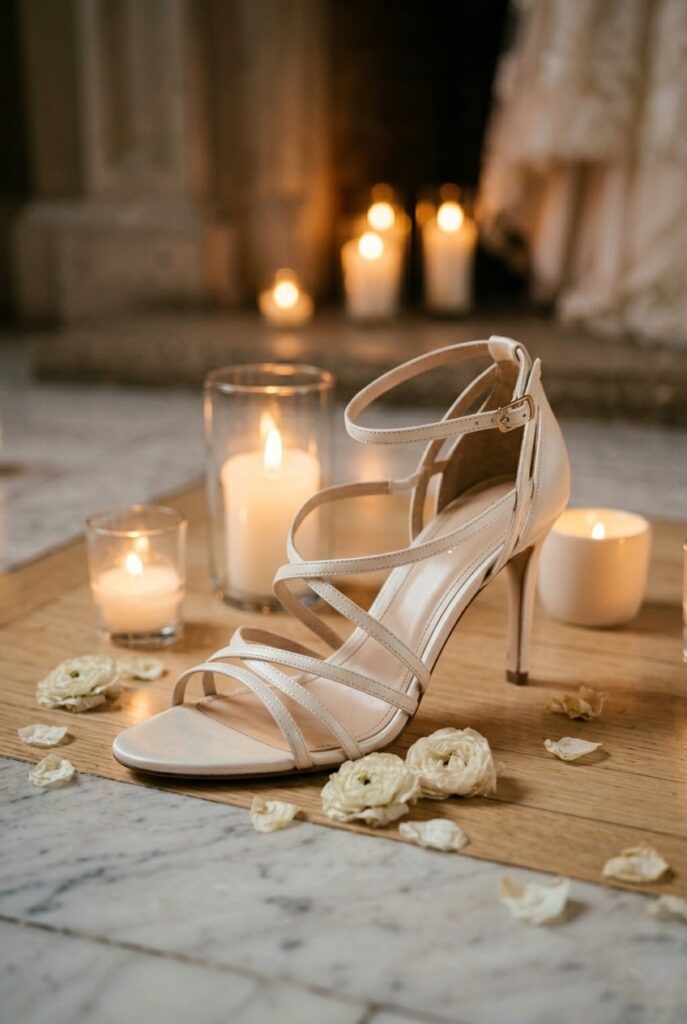
Thin straps signal refinement only when the leather is substantial enough to stay flat — plastic-feeling vamp straps from mass-market wedding shoe listings curl and buckle within three hours and photograph in close-up as exactly what they are: packing tape wrapped around your foot.
The right version uses full-grain leather or Italian silk straps that remain taut all day — Sarah Flint or Rothy’s bridal line at $180–$350 for the quality tier, Vince Camuto’s bridal styles at $90–$130 for the accessible version that consistently holds its shape better than comparable price-point alternatives — and the full breakdown of which sandal construction types survive which floor surfaces is in the bridal shoe guide.
3. The Satin Block Heel
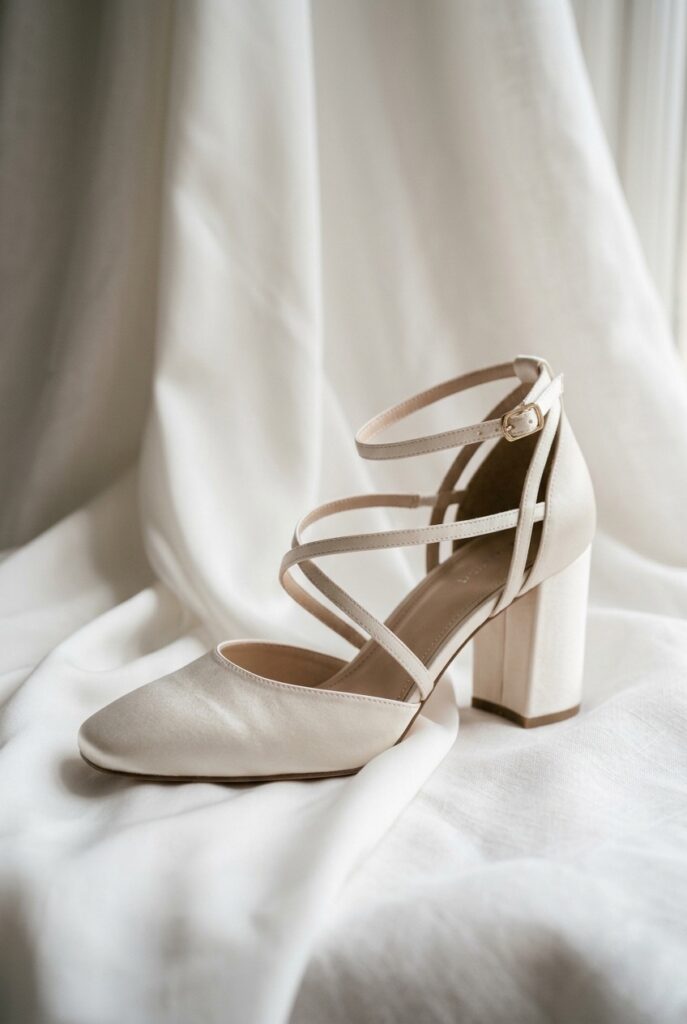
The block heel is the most forgiving architecture in bridal footwear — it works on mixed terrain, photographs well in every light, and does not require months of heel-walking practice — but the version that fails is a block that is too wide and too short, which reads as a shoe from a 1990s wedding in every photograph for the next thirty years.
Go narrow enough that the block reads as modern and keep the height at 2.5 inches minimum — ASOS Bridal at $65–$95, Dolce Vita at $85–$110, and Betsey Johnson for embellished styles at $75–$120 are all reliable sources at a budget-conscious bridal approach that does not require compromising on construction quality.
💡 Budget Hack #1: Nordstrom Rack’s online clearance section refreshes every Tuesday. Filter by “bridal” and “ivory/white” and sort by lowest price — you will regularly find Vince Camuto and Steve Madden bridal heels marked down 40–60% off retail, often $45–$75 for shoes that sell for $110+ full price. Set a reminder and check weekly starting three months before your wedding.
4. The Embellished Mule
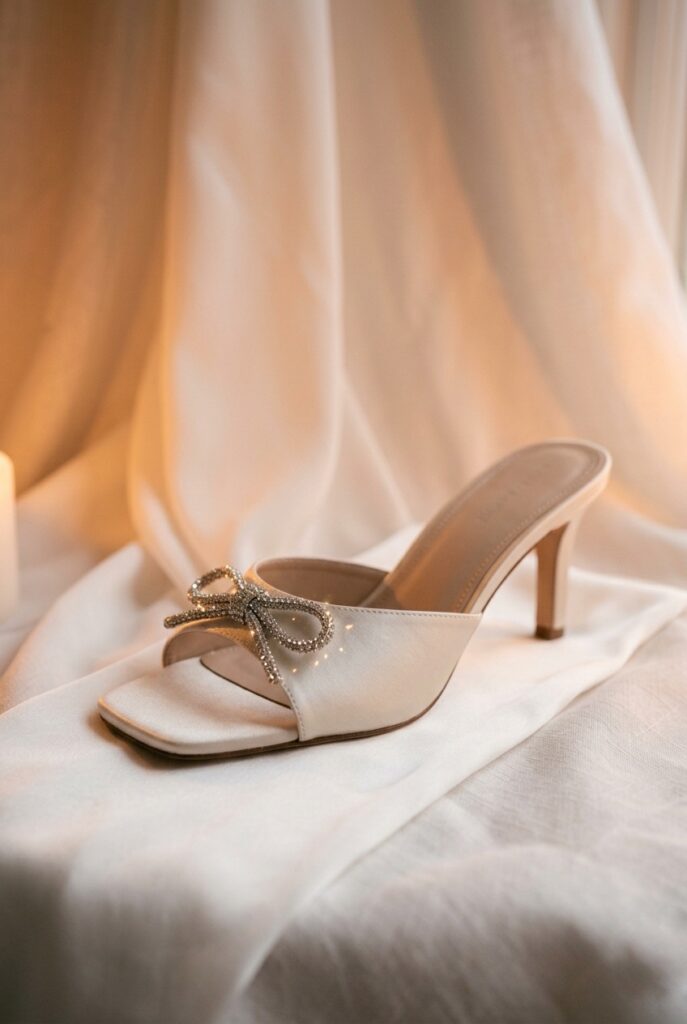
The mule is underused in bridal — which is exactly why it photographs as distinctively as it does — and a sculptural bow or crystal cluster at the toe band gives the shoe a focal point that reads as intentional design rather than the generic bridal that results from adding embellishment everywhere.
Skip this entirely if your gown has a heavily beaded skirt or deeply textured lace bodice because the embellishment at the toe competes for visual attention in exactly the wrong way, and it works best with a clean minimal wedding look where the shoes become the detail — Schutz at $115–$160 on Nordstrom and Sam Edelman’s occasion line at $70–$95 at DSW are the right sourcing points.
5. The Kitten Heel Slingback
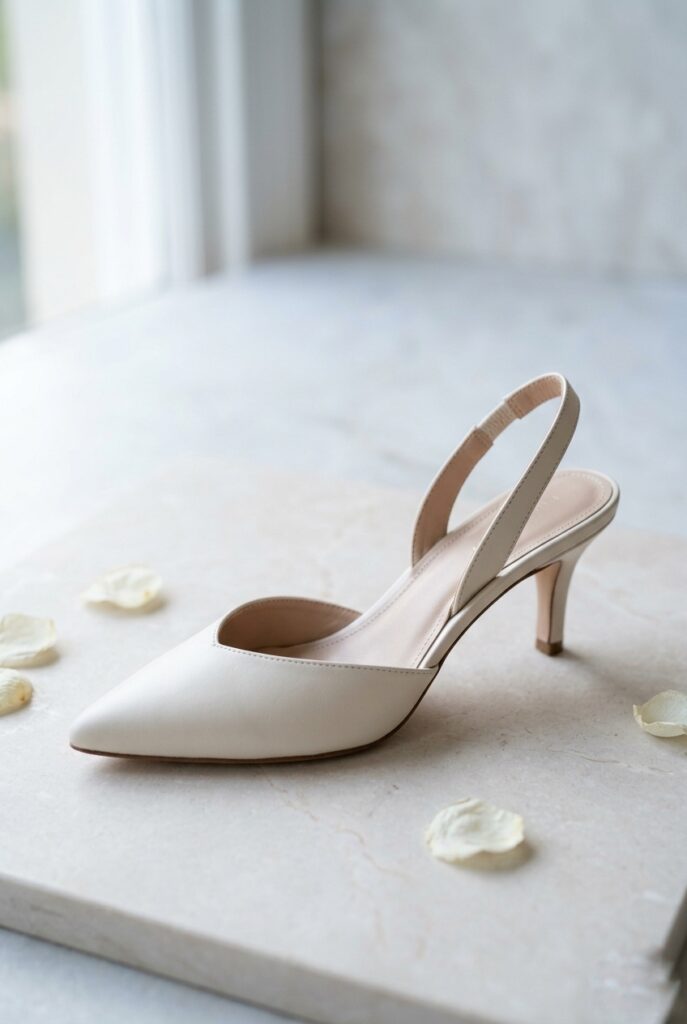
At 1.5–2 inches, the kitten heel slingback sits at the height most women can walk in elegantly without practice — and a heel that lets you move naturally will always photograph better than a four-inch heel that causes you to grip the floor with your toes, shift your weight visibly, or hold your partner’s arm for balance in every wide shot.
This is the heel for garden ceremonies, historic estates, and any venue with mixed flooring or unpredictable surfaces — available from Sam Edelman at $55–$80, J.Crew’s wedding shop at $90–$130, and vintage-inspired Etsy bridal sellers at $75–$150, and the outdoor and garden venue guide covers why heel architecture is part of the venue compatibility conversation rather than a separate decision.
6. The Square-Toe Strappy Heel
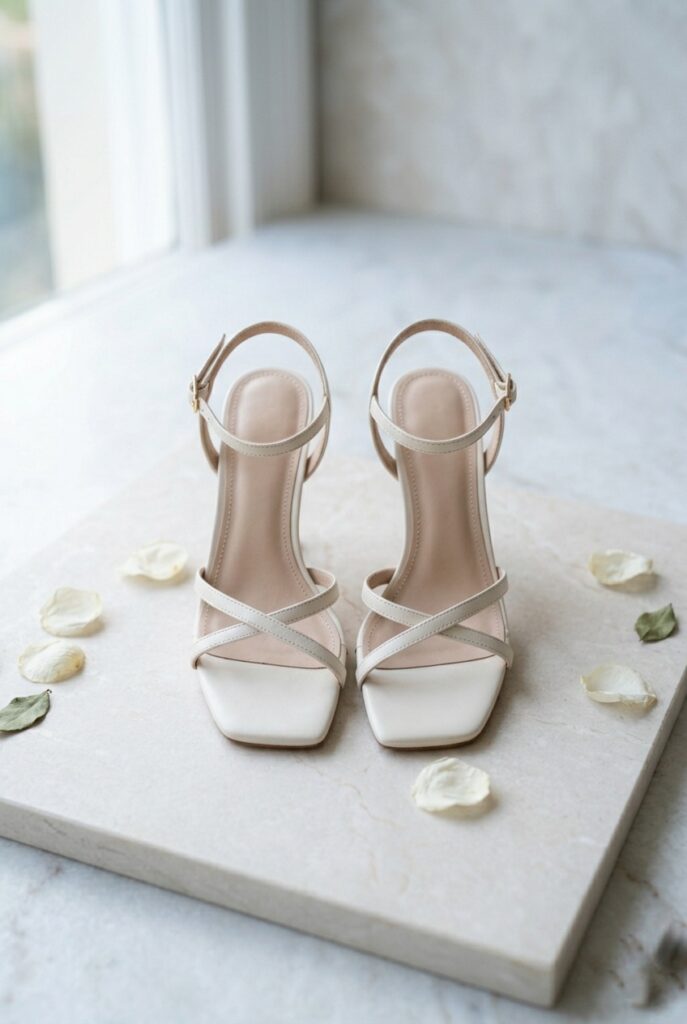
The square toe reads as a deliberate contemporary choice rather than a passing trend — it has staying power in photographs you will look at for decades — and paired with a minimal crepe sheath or structured mikado gown, it creates a fashion-aware look that positions the bride as someone who thought about her shoe rather than defaulting to the standard bridal pump.
The version that fails is a blunt square that is too broad, which shortens the foot visually in photographs — the correct version has a square that narrows just slightly before the cut so the toe tapers barely before the edge — Steve Madden at $65–$90 at Zappos and Reformation’s shoe line at $160–$210 are the reliable sources for a contemporary minimal aesthetic that holds up across every photograph taken that day.
💡 Budget Hack #2: Etsy sellers in the Philippines and Brazil produce luxury-finish satin bridal heels at $40–$70 shipped — search “custom satin bridal heels” with your size and color and filter by sellers with 500+ reviews and a 4.8-star rating minimum. Request a photo of the insole stitching before buying. These frequently arrive with the same construction quality as $150 domestic brands because they use the same Taiwanese satin rolls. Order 10 weeks before your wedding to allow for any adjustments.
7. The Insole Lining Upgrade
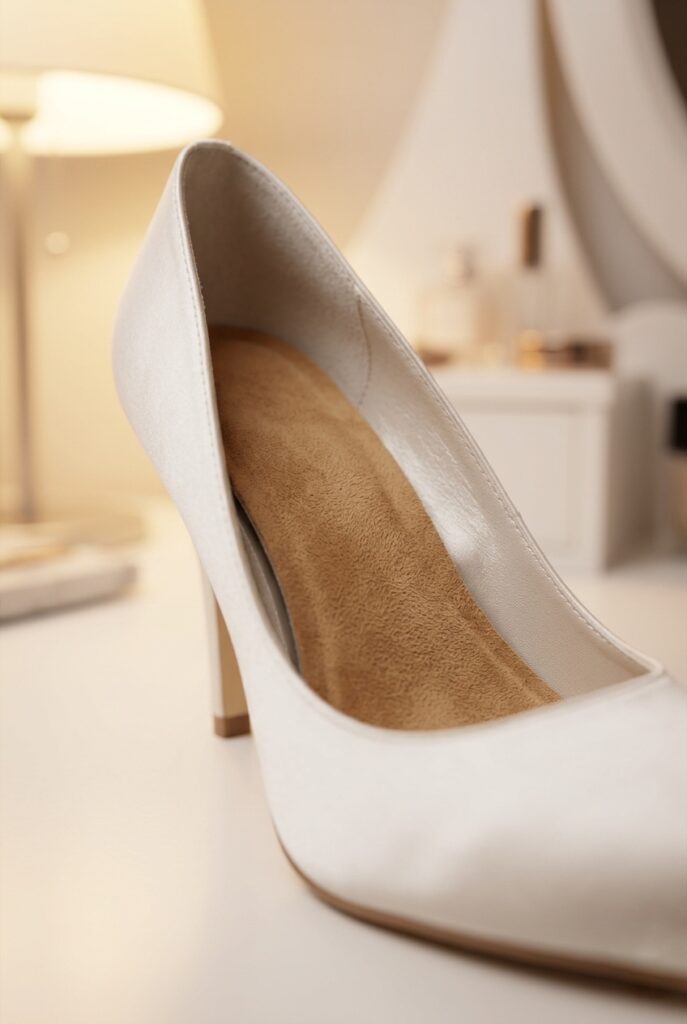
The reason most brides end up barefoot at the reception is not the heel height — it is the smooth synthetic insole that causes the foot to slide forward with every step, compressing the toes and creating pressure points within two hours — and the fix takes fifteen minutes and costs $12–$25.
Have a cobbler glue a thin suede or full-grain leather insole liner into your heels before the wedding (a cobbler charges $15–$25 for this service) or use Pedag’s Viva Insole at $12–$18 on Amazon as a self-adhesive version that works in most heel shapes, and the same attention-to-detail philosophy that the bridal nail and accessory guide applies to nail preparation applies here: the interventions that make the biggest difference on the day are almost always the ones that happen in the weeks before it.
8. The Metallic Satin Heel
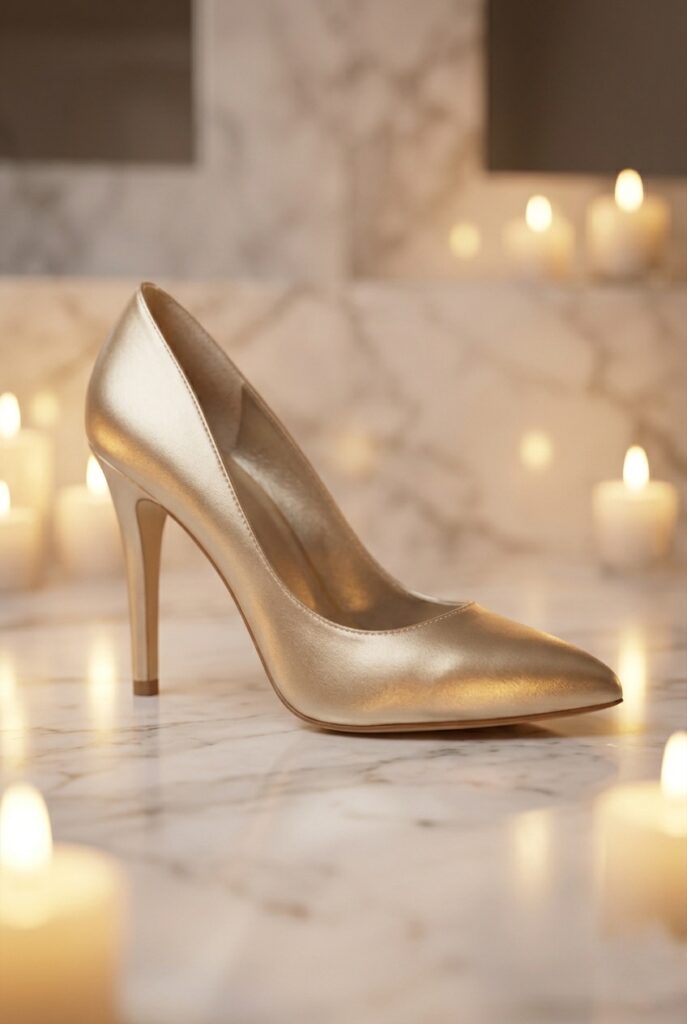
Champagne and pale gold metallics are the one departure from ivory that photographs genuinely richer than white — they catch light in a way that flat ivory satin does not, they pair with both cool and warm gown tones, and the metallic finish does the work that would otherwise require added embellishment.
The version that fails is the plastic-sheen metallic from fast-fashion bridal sites — it reads as costume in every photograph — while metallic satin or metallic suede with a soft, light-shifting sheen is the correct material, available from Badgley Mischka at $95–$175 at Nordstrom or BHLDN at $80–$140, and the metallic color coordination context from the skin-tone nail guide applies directly: warm champagne reads differently against warm skin than against cool skin, and checking both together before ordering prevents the most common metallic bridal accessory regret.
9. The Pearl-Detail Heel
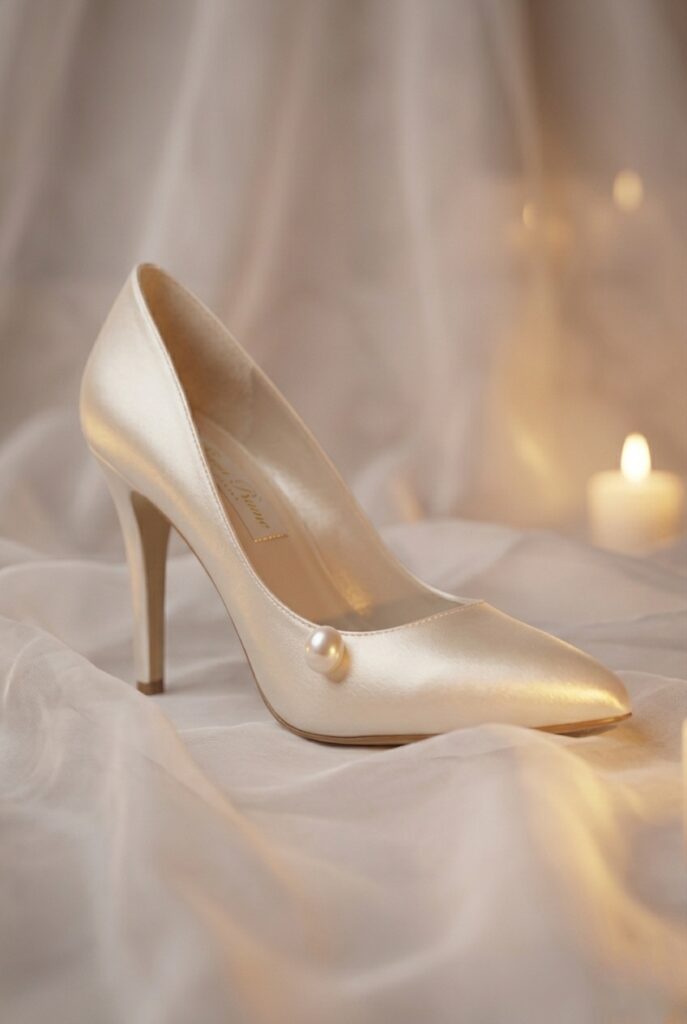
A single statement pearl at the heel counter or along the vamp strap is the most refined current embellishment in bridal shoes because it scales proportionally with every look rather than competing with it — but the wrong version is the shoe covered entirely in pearl clusters, which photographs as textured noise.
The right version is restraint: one elongated pearl or a small asymmetric cluster of three placed where the eye lands naturally — Freya Rose at $220–$320 via freyarose.com and Anthropologie’s bridal accessories at $85–$150 both carry versions that consistently photograph above their price point, and this is the shoe for the bride building a classic elegant wedding look where every detail signals deliberateness rather than decoration.
💡 Budget Hack #3: The Knot’s wedding shoe finder tool lets you filter by heel type, color, and price. Set the maximum to $100 and filter for “ivory” and “stiletto” — then open a separate tab and search the exact shoe name on Google Shopping. In a significant number of cases, the same shoe is listed 20–35% cheaper directly through the brand’s own site or via Zappos with their free returns policy, compared to the affiliated link price on The Knot. Always check both.
10. The Sole-Scuffing Technique for Polished Floors
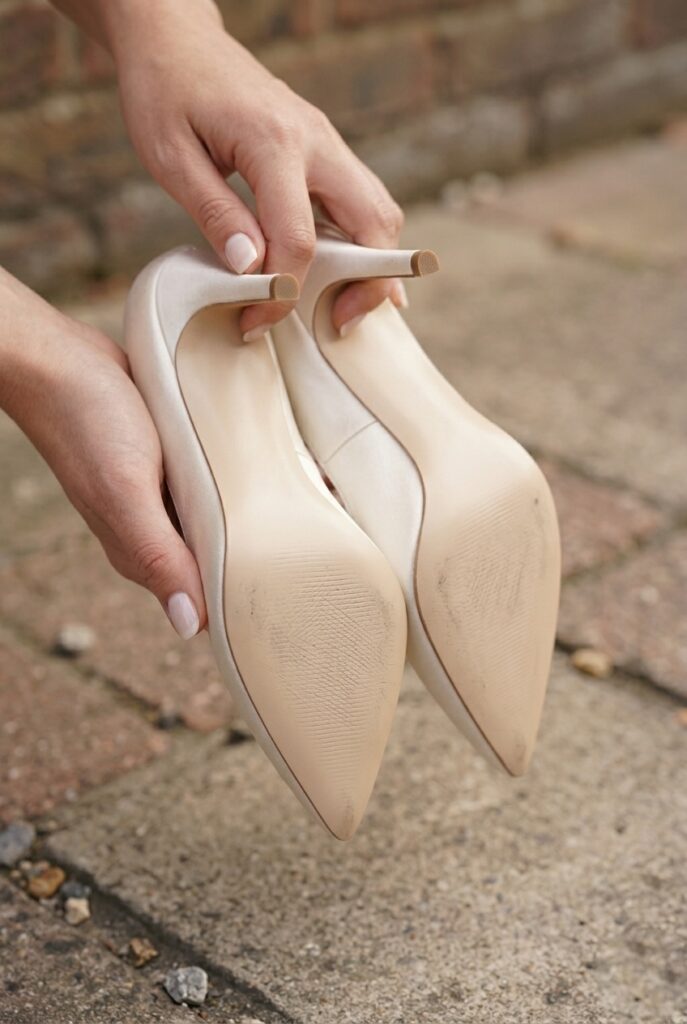
A smooth leather or satin-covered sole on a polished ballroom or marble floor creates a skating risk — and the fix takes three minutes before you leave the house: scuff both soles on exterior concrete or brick pavement until the surface has a visible, even texture across the heel and ball of the foot.
You are creating friction between the sole and the floor without altering the shoe’s appearance or structure, and if you prefer a more controlled version, sandpaper at 60-grit rubbed ten strokes across the sole produces the same result — this technique is the foundation of everything covered in the low bridal heel guide for brides who are concerned about stability across different floor surfaces throughout the day.
Your heel decision comes down to three things: the floor surface at your venue, how many hours you will genuinely be on your feet, and which silhouette photographs cleanly alongside your gown.
For the full picture of how different heel heights and silhouettes perform across every venue type, the elegant bridal heels guide covers every format with durability ratings, and the indoor reception venue guide is worth reading alongside heel selection because floor type — marble, hardwood, carpet — is a venue question as much as a shoe question.