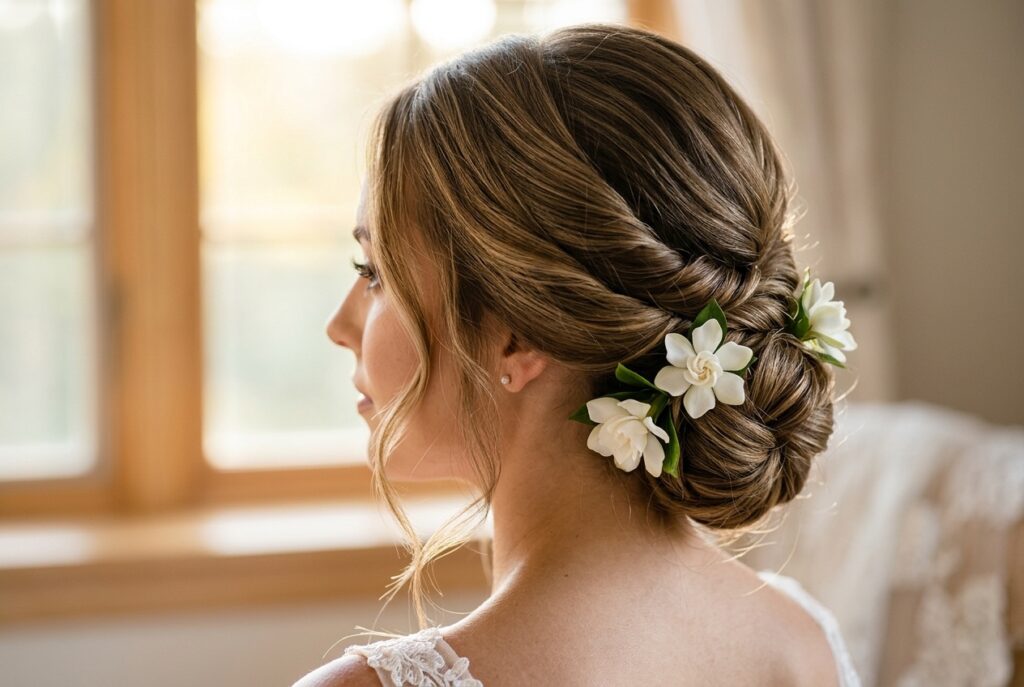
Most brides spend six months choosing a dress and six minutes choosing their nails — and it shows in every photo taken after the first dance.
Your hands appear in more frames than your centerpieces, your shoes, and probably your cake combined: the ring exchange, the bouquet grip, the toasting flutes, the signed certificate, every table interaction.
Here is what actually photographs well and why some of the popular options fail on camera.
1. Glazed Milky White
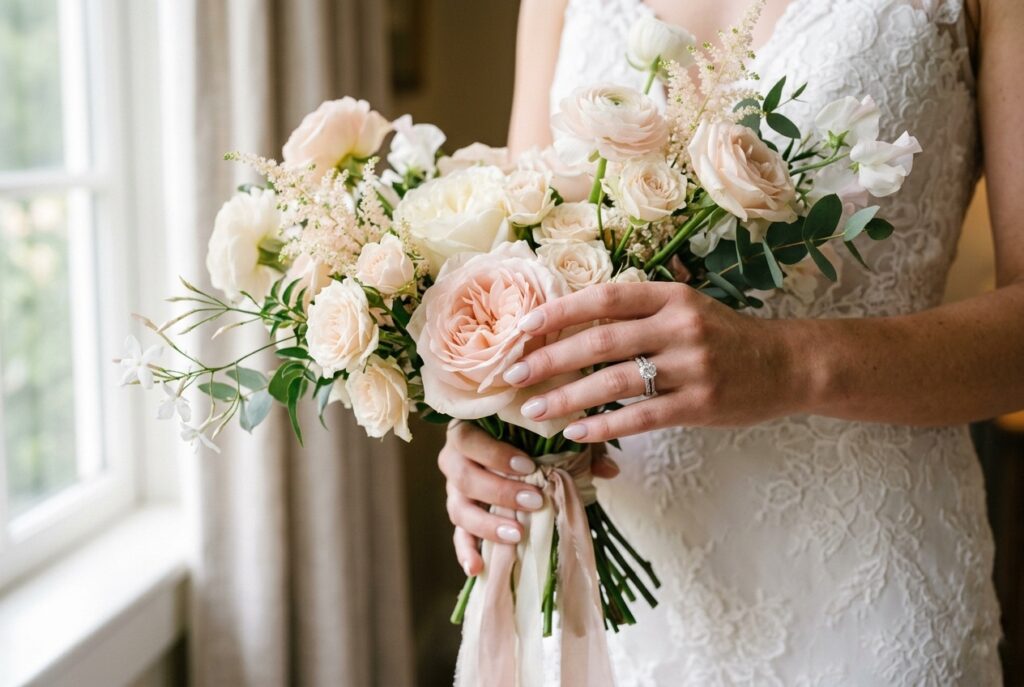
Glazed milky white is the single most requested bridal nail look right now because it reads as clean and luminous at every focal length — from macro ring shots to candid wide shots across the reception — and it works on every skin tone and nail length, which almost nothing else does as consistently.
The version that fails is a flat white cream polish applied in two thick coats, which reads chalky and shows every surface ridge under flash; what you want instead is a gel marketed specifically as “milky” or “glazed” such as OPI Bubble Bath layered under a high-gloss topcoat, and for the full picture of how this finish interacts with different skin undertones, the bridal nail color guide covers every skin-tone-specific variation of this look.
2. Micro-French with a Chrome Tip
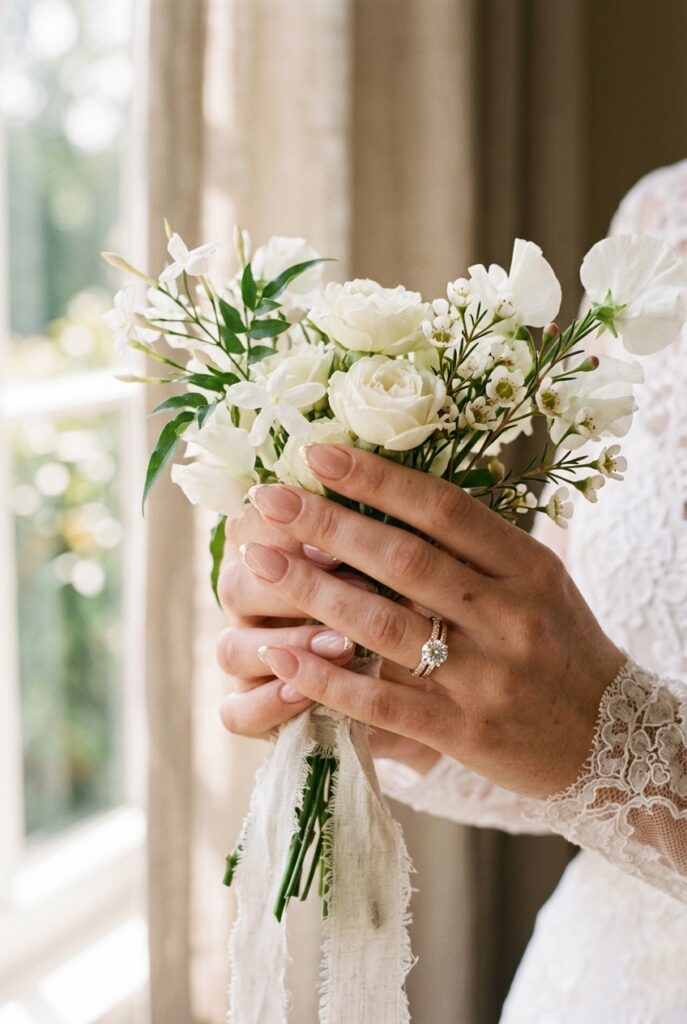
The thick white band of a classic French tip reads as a salon choice from more than a decade ago when you look back at your images — the micro-French solves this with a line barely 1–2mm wide on a sheer nude base that gives dimension without announcing itself, and a champagne chrome dust on that thin line instead of matte white catches light every time your hand moves.
Ask your nail tech specifically for a “rose gold chrome tip” or “champagne mirror tip” and show a reference photo, expect to pay $70–$95 at a specialty nail studio, and if a custom press-on set from Etsy fits your timeline better, sellers like NailsByLori offer chrome micro-French sets at $18–$26 — a legitimate option for a tight bridal budget that does not want to compromise on visual quality.
3. Soft Pearl Chrome
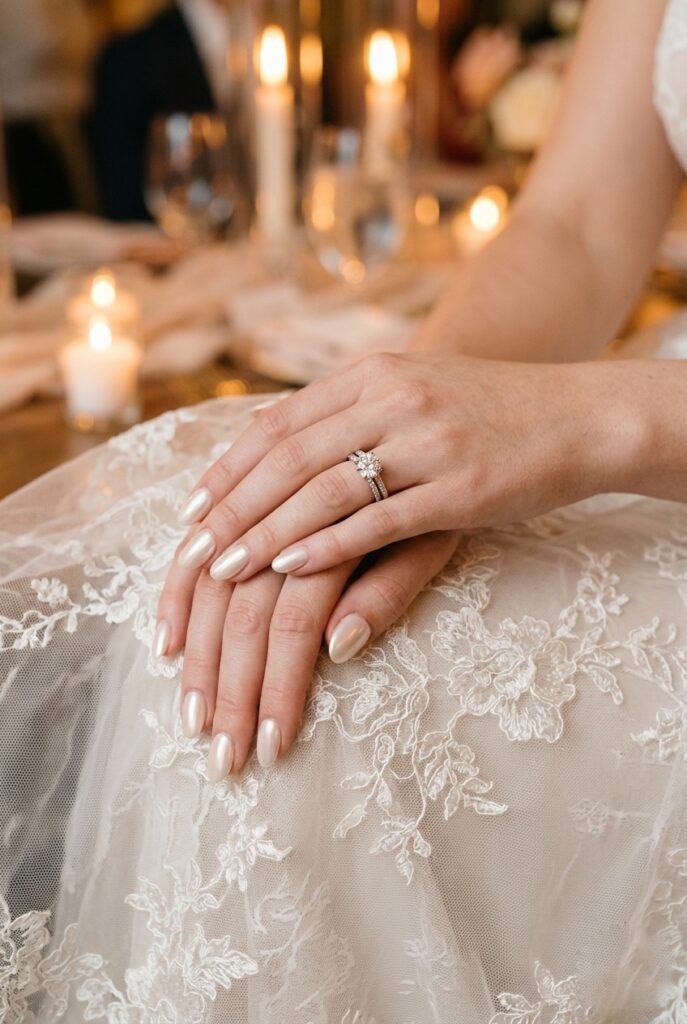
Pearl chrome shifts color slightly with every angle, which means it never reads flat in any lighting condition — natural window, reception candlelight, or photographer’s flash — and it suits brides whose dress has lace, crystal, or beading detail because the nail finish picks up that texture without competing with it.
The key principle most nail content misses is that nail finish should echo dress fabric rather than match nail color to palette — matte crepe dresses suit sheer soft finishes, satin dresses can carry high-gloss chrome, and lace and organza dresses are best paired with pearl or iridescent finishes, which is exactly the same layering logic behind an indoor candlelit reception where every texture in the room is working together rather than competing.
BUDGET HACK #1: Skip the bridal nail appointment at a wedding-specific salon, which charges a 20–30% markup simply for writing “bridal” in the booking notes. Book the identical service — gel polish, same topcoat — at a non-bridal nail studio for $45–$65 instead of $90–$120. The same OPI Bubble Bath gel applied at a neighborhood nail bar is identical to what the bridal studio charges double for. Search Vagaro for nail studios in your zip code, filter by gel polish, and ask specifically for the shade at booking.
4. Almond Shape with Nude Sheer
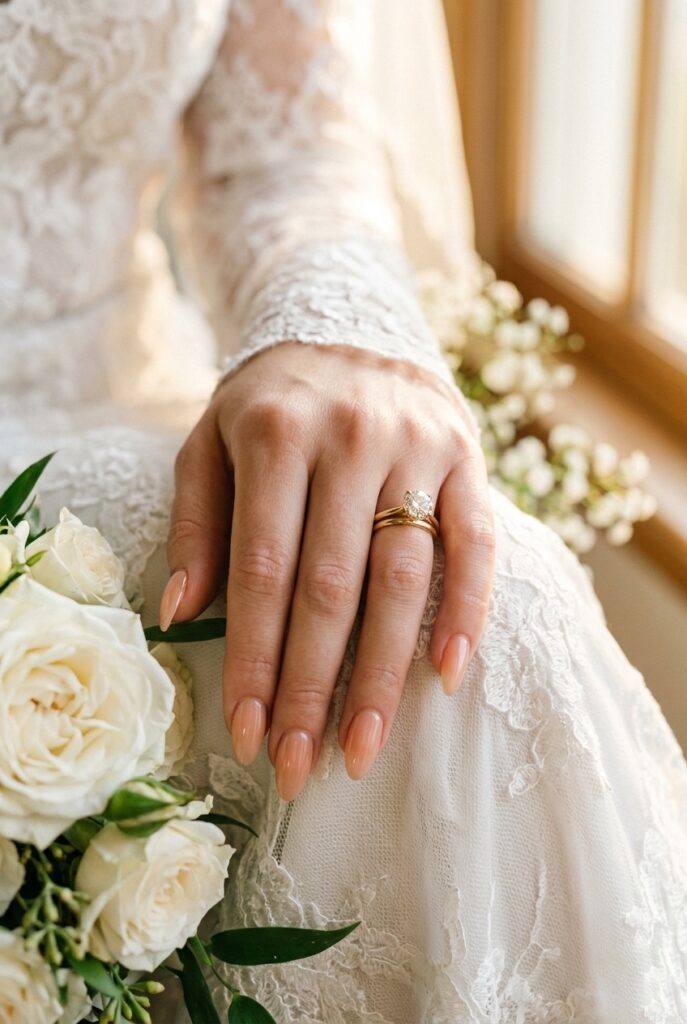
Almond shape elongates the finger in photographs without requiring additional length, and a sheer peachy nude or warm beige on an almond shape is the most universally flattering option across skin tones because it photographs as healthy, polished skin rather than a specific nail color — which means it never distracts from the ring or bouquet regardless of the distance the photographer is shooting from.
For medium-to-deep skin tones, look for shades described as “honey nude” or “caramel sheer” such as Sally Hansen Bare It All or Essie Topless and Barefoot; for fair skin, Essie Ballet Slippers is the industry standard — and this is the nail look that coordinates most naturally with bridal shoes and accessories that are already doing visual work, since the nail recedes rather than adds.
5. Baby Boomer Gradient
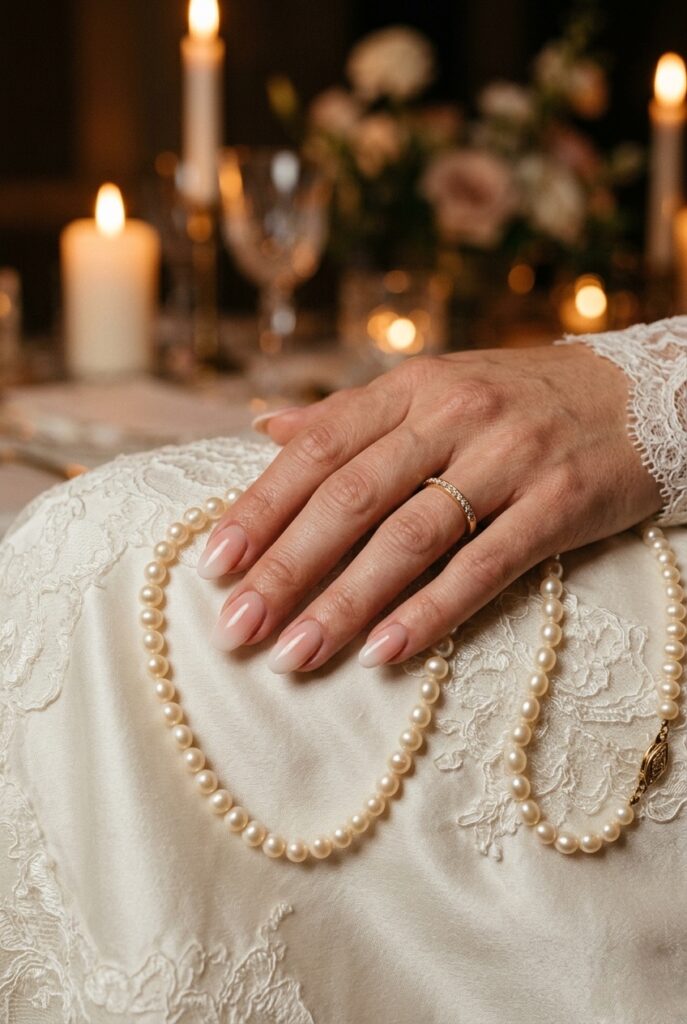
Baby boomer nails — the ombre fade from pink to white — have survived multiple trend cycles because the gradient reads as dimensional in photographs, more interesting than a flat nude but softer than a graphic French, and it suits vintage, classic, and garden wedding aesthetics particularly well because the fade feels organic rather than designed.
The version that fails is applied too quickly, leaving the pink and white sitting as distinct stripes rather than blending — a skilled tech uses a sponge gradient method with three to four passes, so ask to see their previous baby boomer work before booking, and if your venue is an outdoor garden wedding with natural light, this is one of the few nail styles that reads beautifully in both golden-hour daylight and indoor evening flash.
6. Personalized Ring Finger Accent
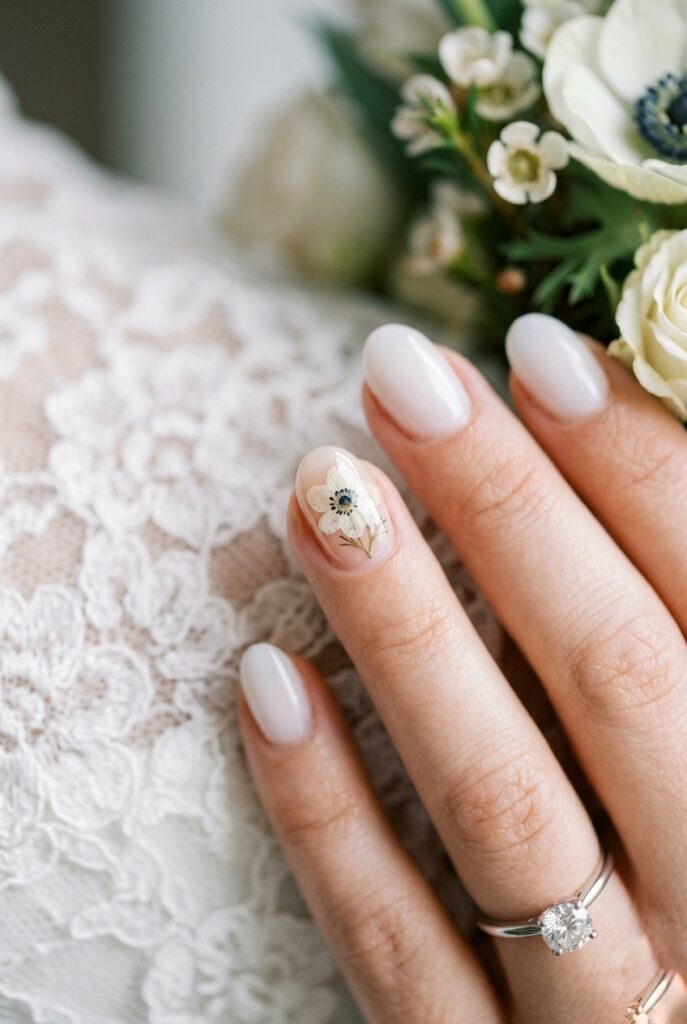
If you want one personalized detail without committing to nail art across all ten fingers, the ring finger is where to place it — a single freshwater pearl near the cuticle, a tiny dried flower embedded under clear gel, or a hand-lettered initial on the inside of the nail tip that only reveals itself in macro shots gives your close-up ring photographs a detail that surprises without overloading the composition.
The nail trial — booked 6–8 weeks before the wedding, not the same week — is how you confirm this technique works with your specific nail chemistry before your wedding day, because gel that lifts within 72 hours due to natural nail oil content is something you can correct at a trial and not at 6am on a wedding morning, and the bridal nail art guide covers the full range of techniques and artists to look for when sourcing someone who can work at this fine detail scale.
BUDGET HACK #2: Press-on nails have genuinely crossed into bridal territory — not because they look cheap, but because the custom handmade sets on Etsy now rival salon work. Search Etsy for “custom bridal press-on nails” and filter by 4.8+ stars. Sellers like NailsByLori and AlmaHandcrafted charge $20–$45 for a full custom set including your nail measurements. Order 6–8 weeks in advance, request a sizing kit first ($5–$8, usually refunded toward the order), and apply the morning of with nail glue tabs rather than adhesive for easier removal. You save $50–$80 compared to salon pricing and have backup nails for travel or a destination wedding.
7. Short Square with Matte Blush
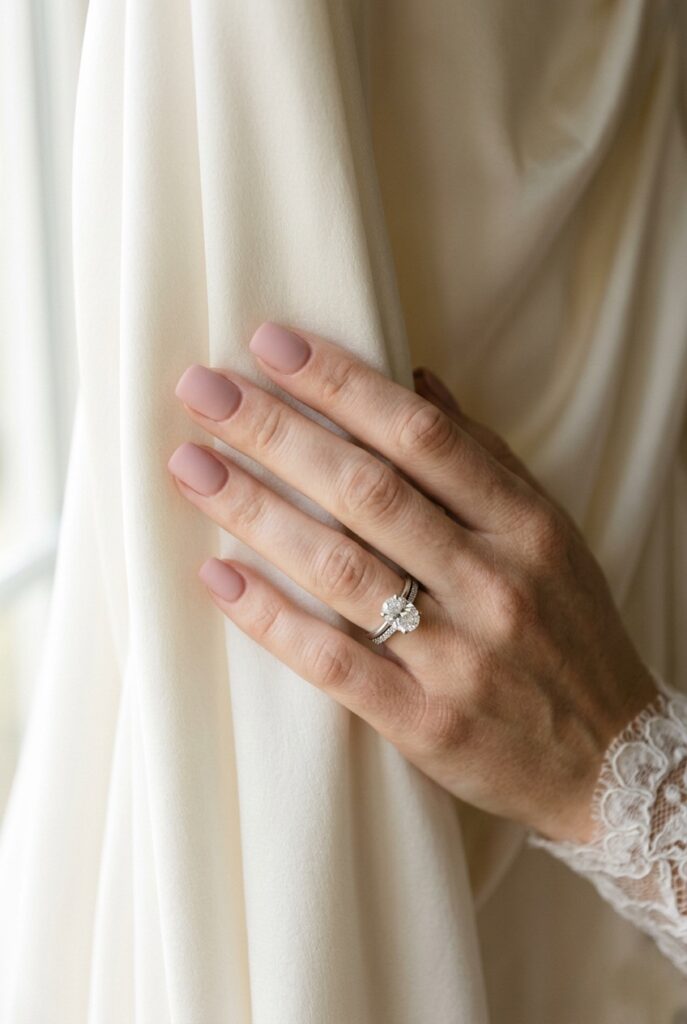
Matte finish is the move for brides who want their nails to read as intentional and modern without any shimmer or gloss — short square with a matte blush has a graphic quality at close range but completely disappears in wide shots, which is exactly what you want when your dress or accessories are already doing the visual work.
The dusty rose tone photographs warmer than a flat pink and cooler than a nude, landing in a photogenic middle zone that suits a minimalist wedding aesthetic particularly well — ask your nail tech for a matte topcoat over any blush gel, Kiara Sky’s Matte Me Over topcoat at $12 on Amazon converts any cured gel instantly, and total salon cost runs $40–$65.
8. Something Blue — Subtle Lavender Milk
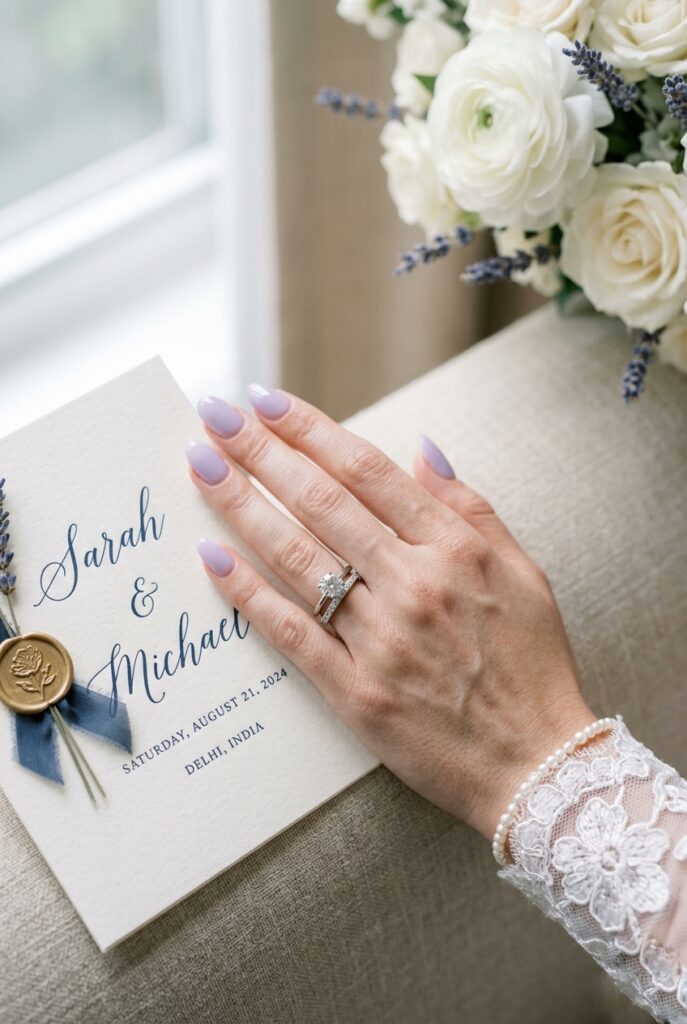
Lavender milk is the most wearable cool-toned pastel in bridal nails right now — it reads as a pale neutral in wide shots and reveals its color in close-up, which is precisely why it works as a “something blue” without committing to a statement shade.
This look only works when your wedding palette already has a cool-toned anchor — a navy tie, dusty blue bridesmaid dresses, a silvery floral arrangement — because without that context it reads as random rather than intentional, and for a modern statement wedding where the full palette is deliberate, lavender milk nail ties into the cool-toned design story in a way that feels considered rather than coincidental.
9. Floral Nail Art on a Short Round Shape
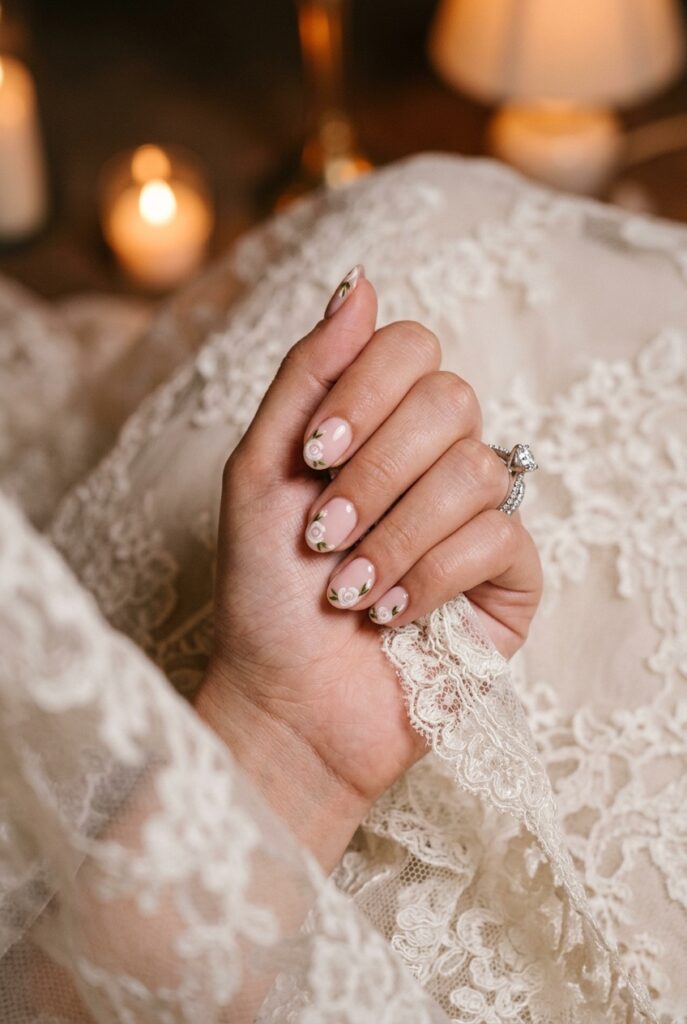
Floral nail art is only worth doing when the flowers are small, soft-edged, and echo something real in your wedding — your bouquet flowers, the lace on your dress, the centerpiece blooms — because the version that reads as prom rather than bridal is large, graphic, and applied to a long square acrylic shape rather than a short round natural nail.
The version that works is hand-painted white or blush miniature roses or anemones on a soft pink base by a tech who can paint at that scale — find them on Instagram searching #bridalflowernails rather than through a generic salon, expect $85–$150 for a full artistic set, and the visual register you want is the same kind of quiet detail that makes an elegant wedding look cohesive: every element considered, nothing shouting.
BUDGET HACK #3: Gel removal is where most brides quietly waste $20–$35 right before the wedding. Salons charge for removal as a separate service when you’re switching from your regular polish to your bridal set. Buy an acetone nail soak kit from Amazon — Beetles Gel Polish Remover Kit runs $14 — and remove your existing gel at home two nights before the wedding. Soak, wrap in foil, 15 minutes. Your nail beds are prepped and clean by the time you walk into the salon for your bridal appointment, and the tech starts fresh with zero removal fee on the invoice.
Your nails are part of your jewelry, not part of your beauty routine — treat the decision the same way you would your ring, your earrings, and your bracelet, and you will never look at your wedding photographs wishing you had made a different choice.
Book your nail trial now, confirm your finish works in your venue’s lighting before the wedding week, and when you are ready to look at the full visual picture your wedding is building, the wedding table decor guide covers how the same principle of finish-over-color applies to every surface in the room.