10 Block Heel Bridal Heels: What Wedding Stylists Know That Most Brides Don’t!


Flat lay of three block heel bridal shoes — ivory satin square-toe block heel pump, pearl-embellished open-toe block heel sandal, and a low stacked leather block heel mule — arranged on a pale linen surface with dried white garden roses and eucalyptus sprigs Image prompt: Photorealistic flat lay of three block heel bridal shoes arranged artfully on a textured pale warm linen surface. Left: an ivory satin pointed-toe block heel pump with a clean 3-inch square heel. Center: a pearl-embellished open-toe block heel sandal with an ankle strap. Right: a cream stacked leather low block heel mule with a square toe. Between the shoes, two dried white garden roses and three loose eucalyptus sprigs are scattered naturally. Soft natural window light from the upper left creates gentle warm shadows across the linen texture. No text overlays. Generate in horizontal landscape orientation, 3:2 aspect ratio, optimized for desktop display.

Every bride who has ever cried on a dance floor because her feet gave out at 8pm made the same decision: she chose height over heel architecture.

Block heels exist precisely to solve this — but most brides who switch to them land on the wrong version and end up with a shoe that reads as chunky rather than chic, chosen for survival rather than style.

The difference between a block heel that photographs beautifully and one that photographs like a compromise comes down to three things nobody tells you upfront: width ratio, material, and toe shape. This guide covers all three.


1. The Pointed-Toe Satin Block Heel Pump
This is the block heel that most closely bridges the visual gap between a stiletto and a comfort shoe — and the pointed toe is entirely responsible for that.

The elongated toe narrows the shoe’s visual footprint, making the block heel look proportionally slender even when the heel itself is quite wide.

Stylists reach for this combination specifically when brides want block heel stability but worry about looking “too sensible” in photos.

The satin upper keeps it unambiguously bridal. Look for a heel between 2.5 and 3 inches — below that reads casual; above 3.5 inches starts to feel more evening-shoe than wedding-shoe at this width.

Find this silhouette at Vince Camuto ($90–$130 at Nordstrom), Badgley Mischka ($120–$165 at Nordstrom), or Bella Belle’s block heel collection ($195–$265 at bellabelleshoes.com).

For brides planning elegant indoor wedding settings, this shoe holds its own in polished formal spaces without the instability of a stiletto on smooth stone floors.


2. The Open-Toe Block Heel Sandal

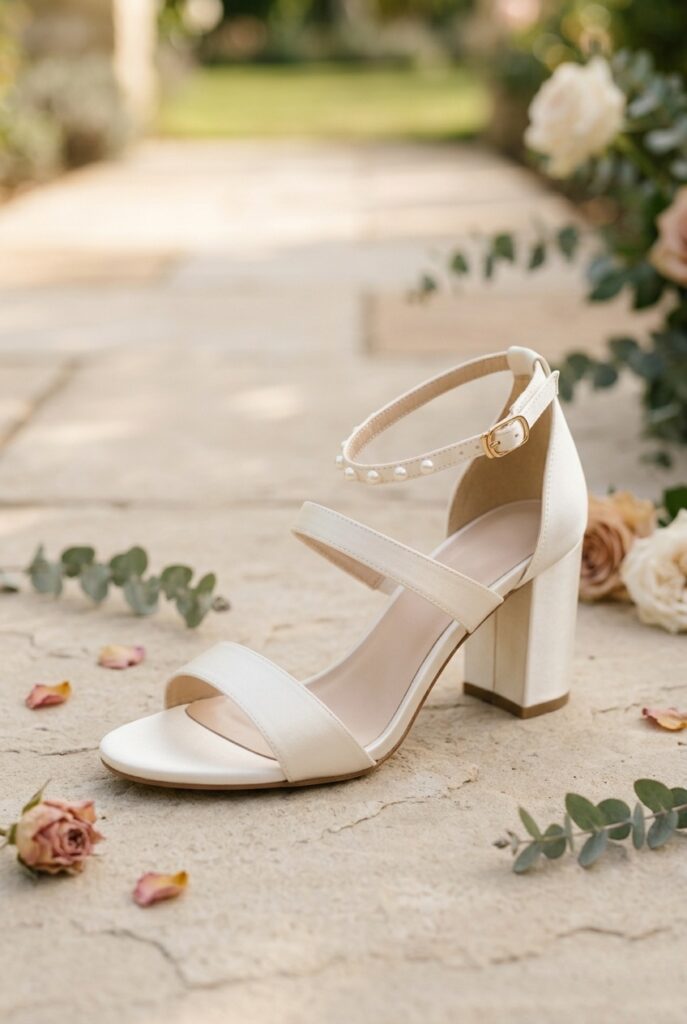
Ivory open-toe block heel bridal sandal with thin vamp straps and 3-inch heel on pale outdoor stone surface, soft warm natural daylight Image prompt: Photorealistic close-up portrait of an ivory open-toe block heel bridal sandal with two thin vamp straps and a slim ankle strap on a clean 3-inch block heel, placed on smooth pale flat stone outdoor surface. Soft warm natural daylight from above illuminates the ivory straps and shows the toe box opening cleanly. The heel is clean ivory satin-wrapped. Background is softly blurred pale stone with hints of green garden. No text overlays. Generate in vertical portrait orientation, 2:3 aspect ratio, optimized for mobile display.

Open-toe block heel sandals are the workhorse of outdoor wedding footwear, and most wedding stylists have seen at least two brides per season arrive in them with zero regret.

The open construction keeps the foot cooler, the block heel handles uneven terrain, and the open toe photographs with more visual lightness than a closed pump at the same heel width — making the whole shoe feel more refined and less clunky.

The version that fails is a sandal with too many crossing straps on the vamp, which creates visual noise that photographs as busy and breaks the clean line of the foot.

Two thin straps maximum is the rule.

Schutz ($95–$145 at Nordstrom), Steve Madden’s occasion line ($65–$90 at Zappos), and Sam Edelman ($70–$100 at DSW) all carry clean two-strap versions consistently.

These perform beautifully at outdoor garden weddings where the terrain shifts between stone paths, grass, and paved courtyard.


3. The Square-Toe Block Heel Pump
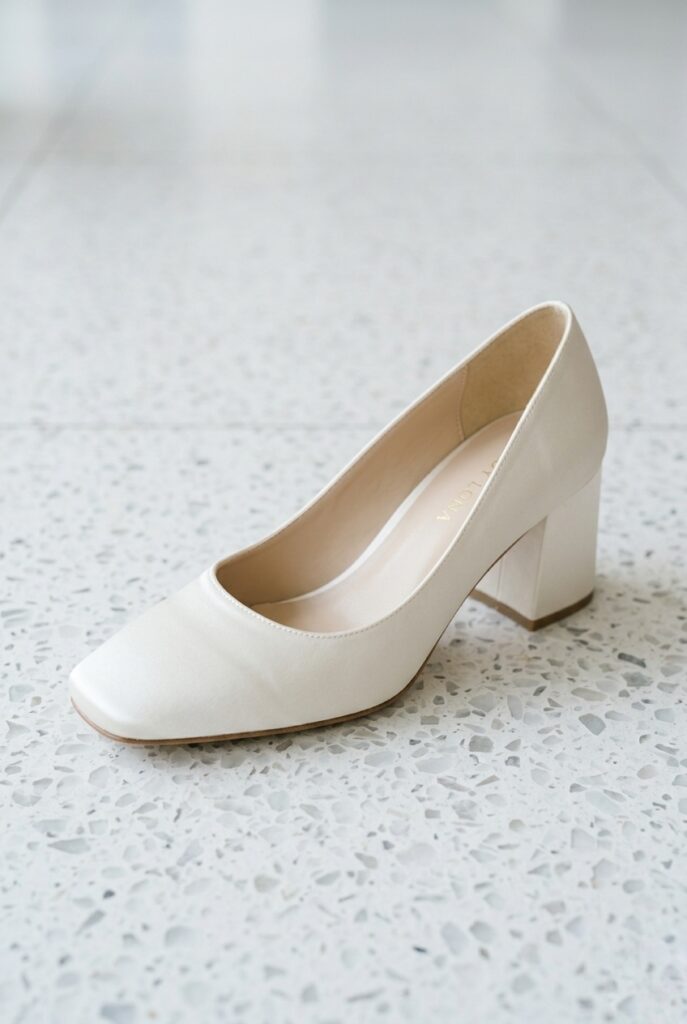
Modern ivory square-toe block heel bridal pump with clean squared-off toe on white terrazzo floor surface, cool bright natural daylight Image prompt: Photorealistic close-up portrait of a contemporary ivory satin square-toe bridal block heel pump with a blunt squared-off toe and a clean 3-inch heel, placed on white and pale grey terrazzo floor. Cool bright natural daylight from above creates a clean modern atmosphere. The squared toe creates a deliberate architectural line. No embellishment on the upper. Background is blurred terrazzo. No text overlays. Generate in vertical portrait orientation, 2:3 aspect ratio, optimized for mobile display.

Square-toe block heels are the insider choice for brides building a minimalist or contemporary wedding look, because the combination of block heel and squared toe removes every soft, romantic, traditional bridal cue from the shoe — leaving something that photographs as fashion-intentional rather than bridal-convention.

It is a deliberate choice, not a default.

The risk: pairing a square-toe block heel with a heavily romanticized gown creates a style conflict that reads as the bride borrowed two different wardrobes.

It works best with sleek crepe, sharp mikado, or a clean column silhouette. Steve Madden ($65–$90 at Zappos) and Reformation ($165–$215 at thereformation.com) both carry architectural square-toe block heels that hold this aesthetic cleanly.

For unique, modern reception spaces where the aesthetic commitment runs all the way through, this shoe closes the look intentionally.

Only do this if your gown has minimal embellishment and a clean silhouette. A square-toe block heel fighting a heavily ruffled skirt creates an incoherent visual argument that neither wins.


💡 Budget Hack #1: DSW runs a “Buy One Get One 50% Off” promotion on women’s heels approximately six to eight times per year, including during major holidays and back-to-school season. If you are buying your own bridal block heels and purchasing shoes for a bridesmaid or yourself as reception backup, timing your purchase to coincide with this promotion saves $35–$65 on a second pair. Sign up for DSW’s email list and watch for the promotion — it is rarely advertised more than 48 hours in advance. Pair this with DSW’s free returns policy and you can order multiple styles simultaneously at no shipping risk.


4. The Block Heel Mule
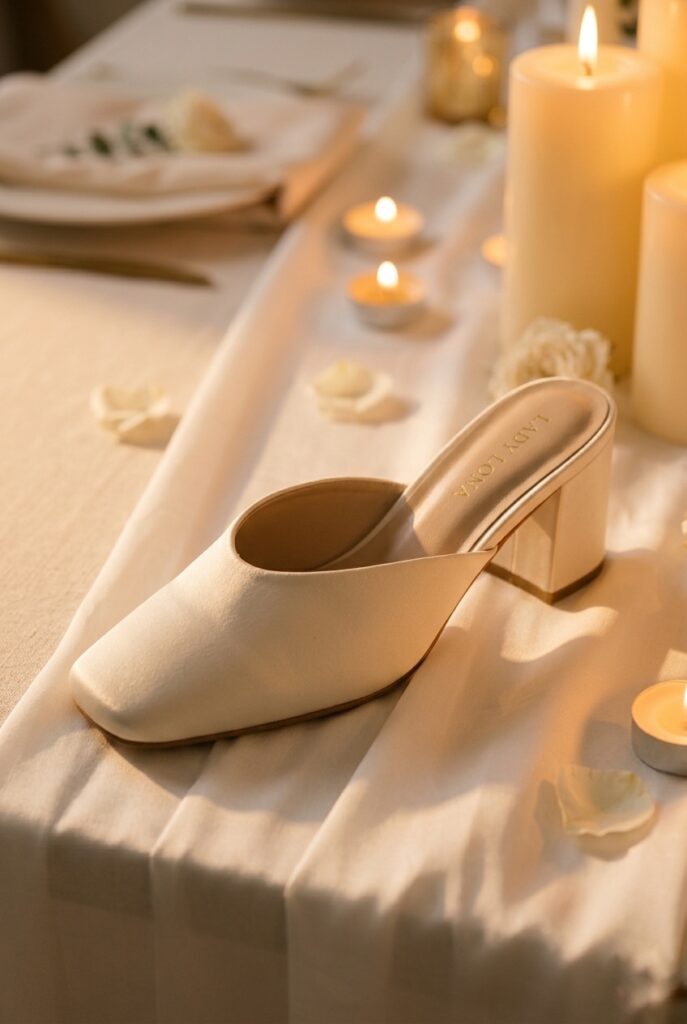
Ivory satin block heel bridal mule with open back and square toe on a white silk runner, warm romantic candlelit reception setting Image prompt: Photorealistic close-up portrait of an ivory satin open-back block heel mule with a slightly squared toe and clean 2.5-inch heel, placed on a white silk runner. Warm romantic candlelight from the right illuminates the satin upper and creates a golden glow around the shoe. The open back of the mule is visible, showing the clean backless silhouette. No embellishment. Background is softly blurred pale fabric and warm candlelight. No text overlays. Generate in vertical portrait orientation, 2:3 aspect ratio, optimized for mobile display.

The block heel mule is a surprisingly strong reception shoe because the open back allows natural heat dissipation across a long evening while the block heel keeps the shoe stable without requiring an ankle strap.

Where a kitten heel mule can slip off with every step, the block heel’s weight anchors the front of the shoe so the foot doesn’t have to grip.

What brides miss about mules: without a back strap, the shoe is only as secure as the vamp strap’s fit across the widest part of the foot.

Order true to size and test the vamp fit specifically — if there is any gap between the strap and the top of your foot, size down or the shoe will slap with every step.

Find block heel mules from Sam Edelman ($65–$85 at DSW), Schutz ($110–$150 at Nordstrom), or ASOS Bridal ($55–$75 for clean satin versions).

Pairs naturally with a simple, pretty reception aesthetic where the shoe reads as a considered final detail.


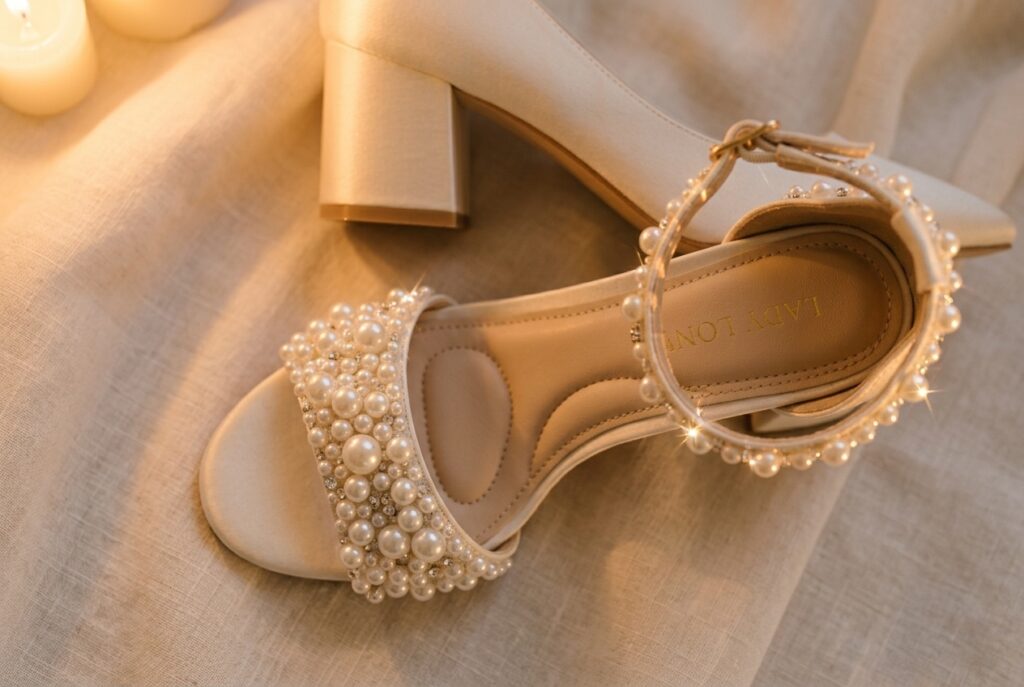
5. The Embellished Block Heel Sandal

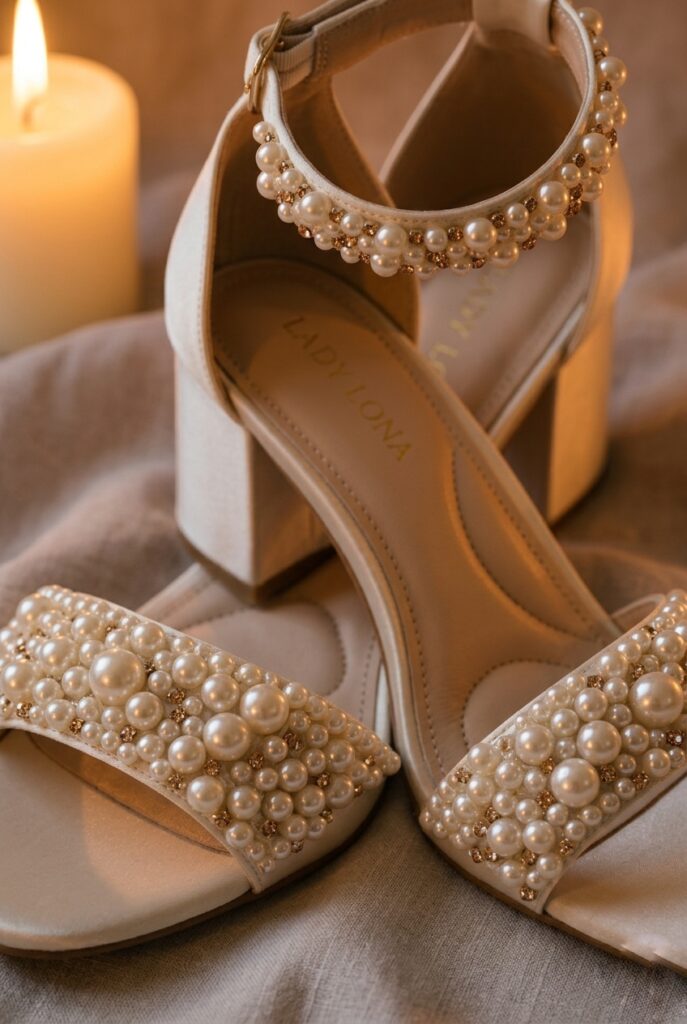
Ivory block heel bridal sandal with pearl and crystal embellishment across ankle strap and vamp on pale linen fabric, warm romantic candlelight Image prompt: Photorealistic close-up portrait of an elegant ivory block heel bridal sandal with dense seed pearl and small crystal embellishment across the ankle strap and thin vamp straps, on a clean 3-inch block heel. Placed on soft pale linen fabric. Warm romantic candlelight from the upper left illuminates the pearls and creates soft sparkle across the crystal details. Background is softly blurred pale linen. No text overlays. Generate in vertical portrait orientation, 2:3 aspect ratio, optimized for mobile display.

An embellished block heel sandal is the shoe that gets the most compliments in the receiving line, and experienced wedding coordinators will tell you it’s because guests see the shoe while the bride is standing still — at the altar, at the sweetheart table, in the greeting line.

A pearl and crystal-embellished ankle strap at a 3-inch block heel sits right at eye level as guests approach, and the detail reads as jewelry worn on the foot.

The mistake here is choosing a shoe where the embellishment is glued rather than set — glued crystals begin departing within the first three hours of dancing, and finding a crystal on the dance floor is how you end up picking up pieces of your own wedding shoes at midnight.

Check for settings rather than adhesive on any embellished bridal shoe before purchasing.

Badgley Mischka ($130–$185 at Nordstrom) consistently uses properly set stones. BHLDN carries pearl-detail block heels at $95–$145 that hold up well across a full day.


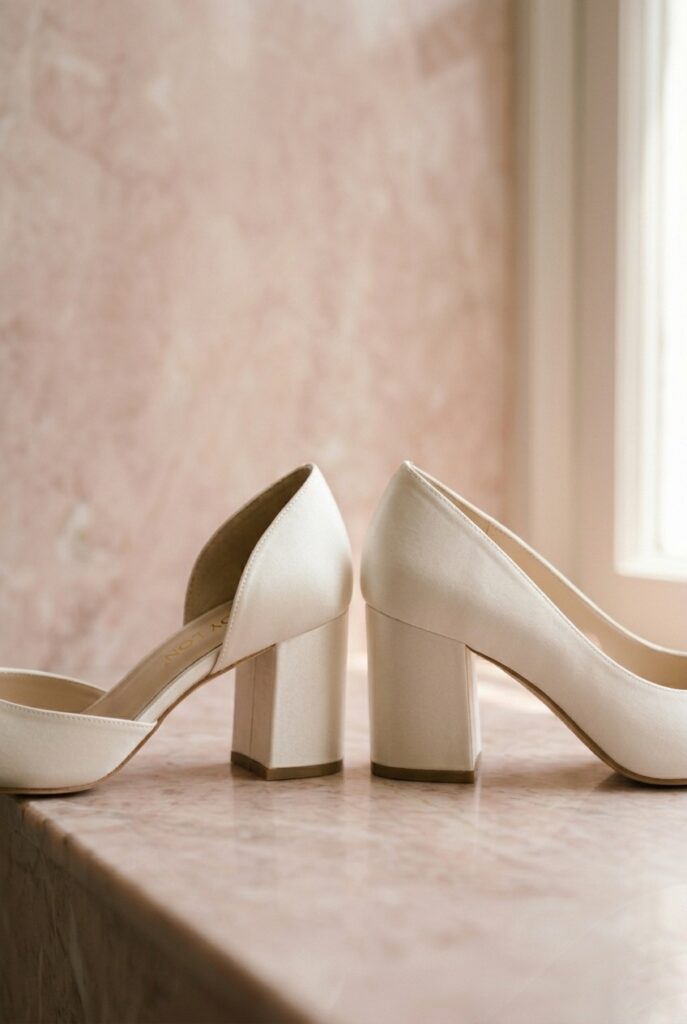
6. The D’Orsay Block Heel

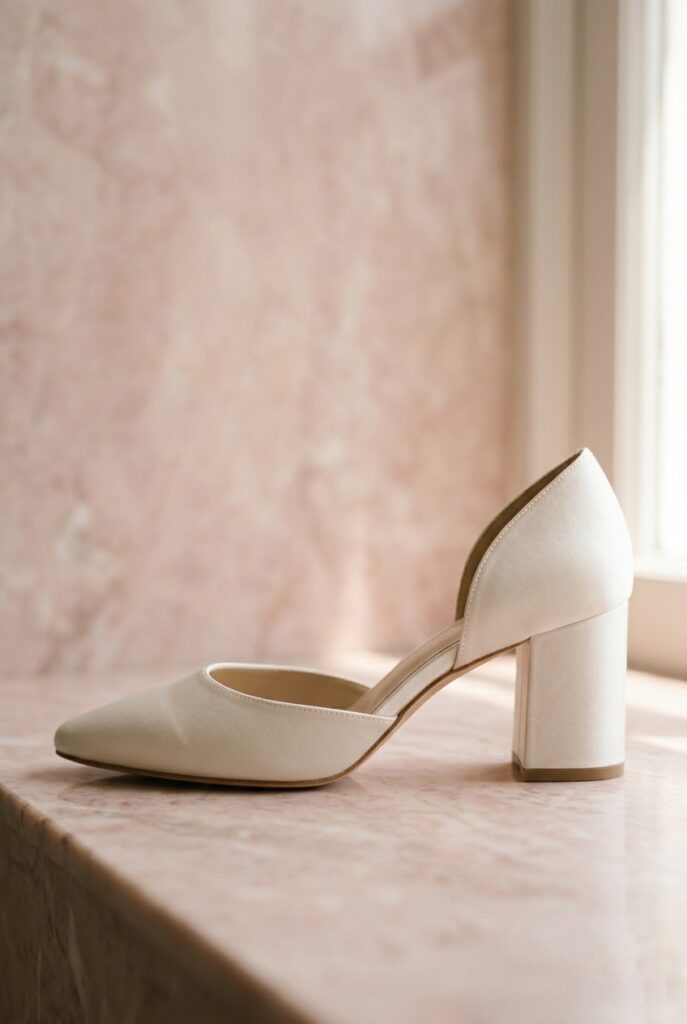
Ivory satin D'Orsay block heel bridal pump with side cutout revealing arch on a pale rose marble surface, soft natural window light Image prompt: Photorealistic close-up portrait of an ivory satin D'Orsay block heel bridal pump with an elegant curved side cutout exposing the arch of the foot, clean 2.5-inch block heel, and a pointed toe. Placed on pale rose-toned marble. Soft natural window light from the right illuminates the satin and the exposed arch curve. The cutout creates a refined negative space on the side of the shoe. Background is softly blurred rose marble. No text overlays. Generate in vertical portrait orientation, 2:3 aspect ratio, optimized for mobile display.

The D’Orsay cutout — the curved side opening that exposes the arch — does something very specific for block heels: it removes visual mass from the thickest part of the shoe, creating a negative space that makes the heel read as lighter and more refined than a fully enclosed pump at the same width.

This is the insider trick for brides who want block heel stability but are genuinely concerned about the shoe appearing heavy in photographs.

The exposed arch also elongates the leg in full-length photos more effectively than a closed shoe at the same heel height. Vince Camuto carries this silhouette regularly ($90–$125 at Nordstrom), and Badgley Mischka makes a clean D’Orsay block heel in ivory satin ($130–$155) that pairs beautifully with traditionally elegant reception settings.

If you are specifically worried about block heels reading as chunky, this is your answer before you abandon the category entirely.


💡 Budget Hack #2: Amazon’s return window on shoes is 30 days with free returns for Prime members — longer and more flexible than most bridal boutiques. For block heel bridal shoes specifically, search “ivory block heel wedding pump” and sort by 4 stars and above with a minimum of 300 customer reviews. The three brands that consistently deliver above their price point for block heel construction are Allegra K ($35–$55), Journee Collection ($45–$70), and IDIFU ($40–$60). Order two or three styles at once, try them on with your actual dress at home, and return the ones that don’t work. You pay only for what you keep, and you will have spent under $60 for a shoe that works. The only caution: read the photo reviews specifically, not just star ratings — photo reviews from actual brides or event attendees tell you far more than written text.


7. The Heel-Width-to-Height Ratio Rule (Competitor Gap Idea #1)
Side-by-side comparison of two block heel shoes — one with proportionally narrow refined heel, one with overly wide chunky heel — on a marble surface, clean natural daylight for comparison Image prompt: Photorealistic close-up portrait showing two ivory block heel bridal pumps placed side by side for direct comparison. Left shoe has a refined block heel approximately 1.25 inches wide and 3 inches tall, with a pointed toe — the proportions read as polished and modern. Right shoe has an oversized chunky block heel approximately 2 inches wide and 2.5 inches tall with a rounded toe — the proportions read as heavy and casual. Both shoes on smooth pale marble surface. Clean cool natural daylight from above illuminates both shoes equally. Background is blurred pale marble. No text overlays. Generate in vertical portrait orientation, 2:3 aspect ratio, optimized for mobile display.

No competitor guide mentions this and it is the single most useful rule in block heel bridal shopping.

There is a visual tipping point where a block heel stops reading as “modern and stable” and starts reading as “orthopedic and heavy” — and it is determined by the width-to-height ratio of the heel column itself.

A block heel that is wider than it is tall reads as a platform shoe.

A block heel where the width is roughly half to two-thirds of the height reads as a proper heel with a stable base. Specifically: a 3-inch block heel should be no wider than 1.5 inches at its base.

A 2.5-inch block heel should be no wider than 1.25 inches.

When shopping online, look for a side-profile image specifically — if the heel appears as a near-perfect square or wider-than-tall rectangle in the side view, it will read as heavy in photos. 

The Knot’s block heel guideincludes a useful range of side-profile images that let you compare these proportions across current styles.


8. The Block Heel Ankle-Strap Sandal for Wide Feet
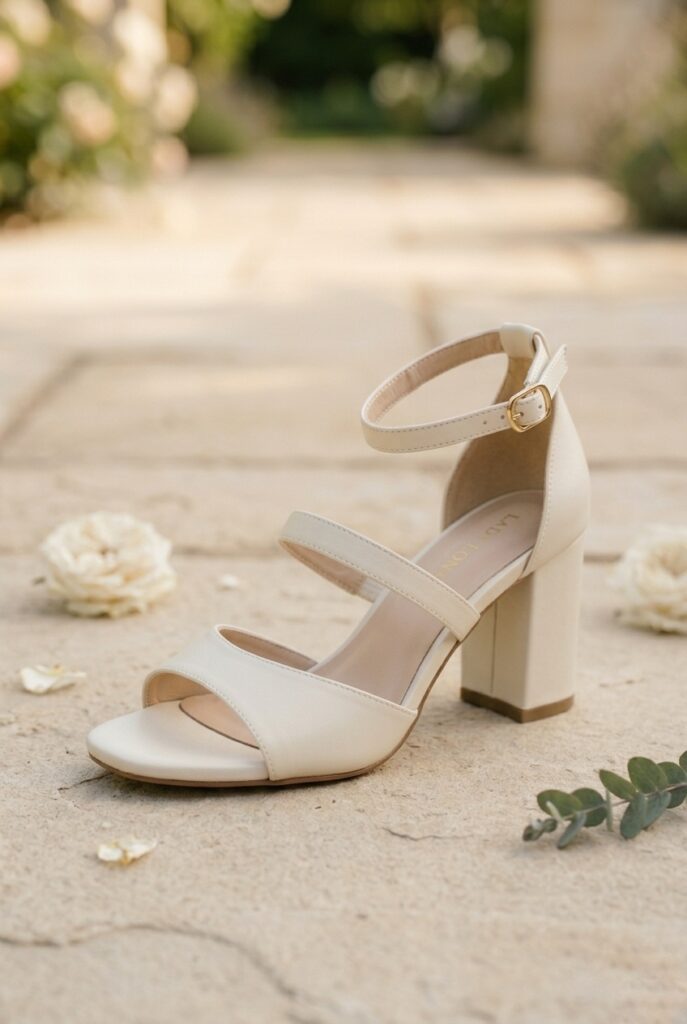
IMAGE 8 HERE Alt text: Ivory wide-fit block heel bridal sandal with padded ankle strap and soft leather upper on a pale stone path, warm natural garden light Image prompt: Photorealistic close-up portrait of an ivory soft leather wide-fit block heel bridal sandal with two vamp straps, a padded comfortable ankle strap with a gold buckle, and a clean 3-inch block heel. The shoe has a slightly wider toe box visible from the front. Placed on a smooth pale stone garden path. Warm natural outdoor light from above creates a soft, romantic garden atmosphere. Background is softly blurred stone path and garden greenery. No text overlays. Generate in vertical portrait orientation, 2:3 aspect ratio, optimized for mobile display.

Block heels are the only bridal heel category that genuinely accommodates a wider foot without visual compromise — because the stable base allows a slightly wider toe box without throwing off the shoe’s overall proportion the way it would on a stiletto.

Wide-fit bridal block heels exist as a real category and are worth seeking out specifically if you are a size 7 or above with a wide or extra-wide foot, or if you find that most bridal heels create pressure at the fifth metatarsal joint (the outer edge of the foot) by mid-day.

Naturalizer’s occasion heels ($75–$105 at DSW) are specifically engineered for wider feet and hold their refinement well.

Cloudsteppers by Clarks ($65–$95) also carries wedding-appropriate block heels in wide fittings.

For backyard or outdoor summer weddings where you’ll be on your feet for eight-plus hours on mixed terrain, a properly fitted wide block heel makes the difference between dancing at midnight and sitting at 9pm.

Only do this if you have been diagnosed with a genuinely wide foot or consistently find standard-width heels painful across the forefoot.

Ordering wide-fit as a general “more comfortable” measure without needing it can cause the shoe to be loose, which creates its own instability.


9. The Pearl-Covered Block Heel — The One to Avoid
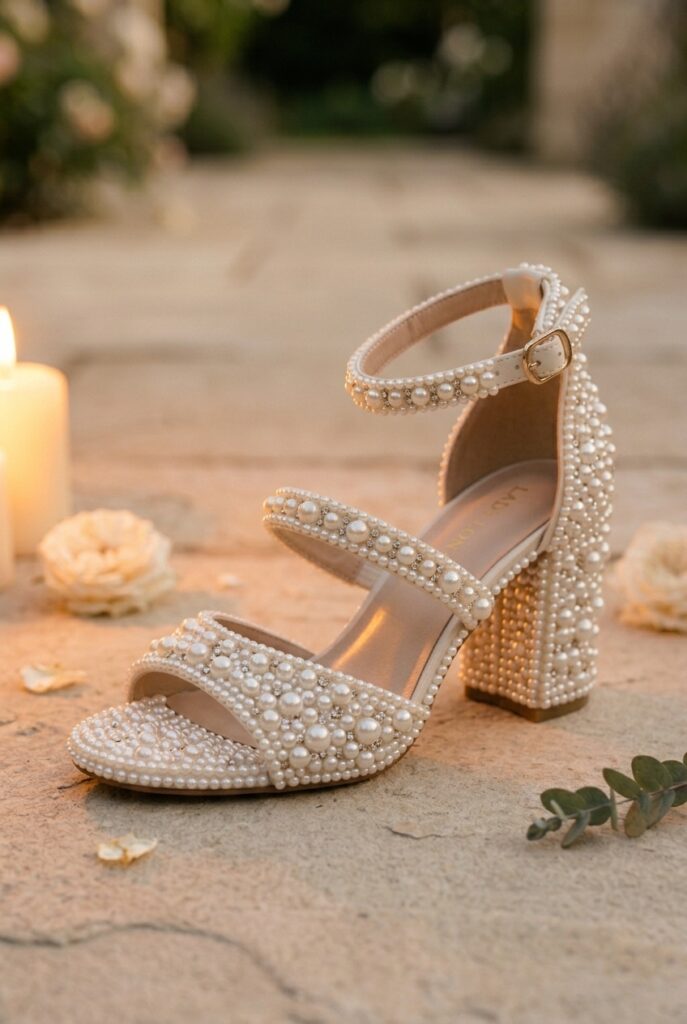
IMAGE 9 HERE Alt text: Ivory block heel bridal sandal with dense pearl coverage across entire upper and heel column on pale marble, warm candlelit glow showing the visual heaviness Image prompt: Photorealistic close-up portrait of an ivory block heel bridal sandal with dense pearl embellishment covering the entire upper, vamp straps, and heel column surface. Placed on pale marble. Warm candlelight from the left illuminates the pearls across every surface of the shoe. The overall effect is heavy and ornate — pearls covering every visible surface with no negative space. Background is softly blurred pale marble. No text overlays. Generate in vertical portrait orientation, 2:3 aspect ratio, optimized for mobile display.

This is the skip-this call that most wedding stylists will make quietly behind closed doors: a block heel covered entirely in pearl embellishment across the upper, vamp, and heel column photographs as visually impenetrable.

The block heel already carries more visual mass than a stiletto; adding dense embellishment across every surface removes all negative space from the shoe and creates a chunky, ornate result that reads as heavy in photos regardless of price point.

The version that works is a restrained pearl detail — a scattered cluster at the vamp, a pearl-studded ankle strap, or a single pearl bar across the toe — against a clean satin or leather upper.

The embellishment-to-material ratio should be approximately 20–30% embellished surface to 70–80% clean material. When the ratio flips, the shoe loses its elegance.

This is the rule that separates a $350 designer block heel that reads as polished from a $350 block heel that reads as overdone.


💡 Budget Hack #3: WeddingWire’s wedding shoe planning tool lets you filter by style and read vendor-level pricing guides — use it to establish your baseline price expectations before opening any retailer. Then visit the outlet section of Nordstrom Rack’s website, filter by “ivory/white/cream” and “heels,” and sort by customer rating. Block heel bridal pumps from Vince Camuto, Jessica Simpson, and Nine West regularly appear at 40–55% off their original retail price — often $38–$65 for shoes that sold at $85–$120. The key is refreshing this filter weekly; inventory changes constantly and the best sizes sell within 48 hours of being listed.


10. The Stacked Leather Block Heel (Competitor Gap Idea #2)
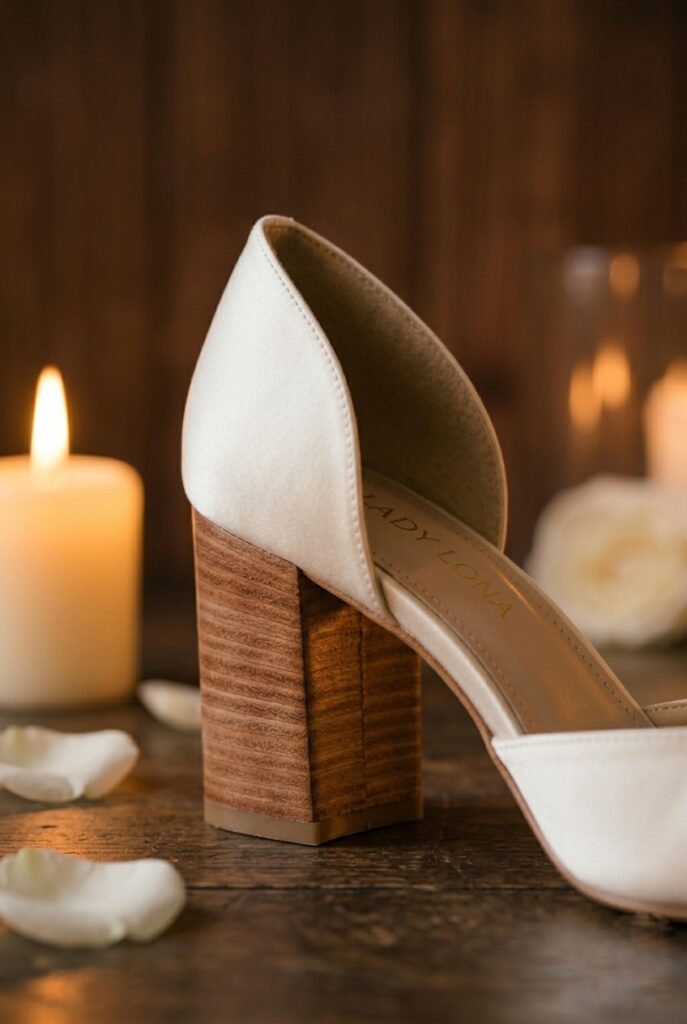
IMAGE 10 HERE Alt text: Ivory block heel bridal pump with visible stacked natural leather heel layers on a dark wood surface, warm intimate candlelit light showing heel construction detail Image prompt: Photorealistic close-up portrait of an ivory satin bridal pump with a block heel constructed from visible stacked layers of natural tan leather, the layered grain clearly visible on the exposed edges of the heel column. The contrast between the ivory satin upper and the natural tan layered leather heel is clearly visible. Placed on a dark aged wood surface. Warm intimate candlelight from the left illuminates the heel construction and makes the leather grain of each layer visible. Background is softly blurred dark timber. No text overlays. Generate in vertical portrait orientation, 2:3 aspect ratio, optimized for mobile display.

Nobody talks about this distinction and it shows clearly in photographs: a stacked leather block heel — where the heel column is built from compressed layers of real leather rather than moulded foam or wrapped plastic — photographs with visible grain, warmth, and artisan character that a standard wrapped heel simply cannot replicate.

The layered edges of each piece of leather catch light at slightly different angles, creating depth and texture in close-up shots.

In practical terms, stacked leather is also significantly more durable — it does not compress under weight the way foam-core heels do, which means the shoe maintains its height and posture all day rather than gradually flattening.

Most mass-market block heels use moulded foam or plastic cores wrapped in matching fabric; the tell is looking at the heel edge directly — foam looks smooth and unbroken, stacked leather has visible horizontal lines where each layer meets the next.

For vintage-inspired wedding settings in particular, a stacked leather heel adds a handcrafted quality that synthetic heels never achieve.

Seek these from Sarah Flint ($250–$350 at sarahflint.com) or from independent shoemakers on Etsy’s bridal section ($120–$200) who specialize in traditional construction.


Decision Filter

If your venue involves any outdoor terrain — grass, gravel, cobblestone, garden paths — block heel is almost certainly the right call over a stiletto, and you should look specifically at the open-toe sandal or ankle-strap styles that allow terrain flexibility and heat management.

If your venue is entirely smooth indoor flooring — hotel ballroom, gallery space, church — a pointed-toe or D’Orsay block heel will give you stability without reading as the practical choice. If your gown is minimalist and architectural, lean toward the square-toe block heel or mule.

If your gown is romantic and embellished, let the gown hold the detail and choose a clean satin pump with no competing embellishment.

If budget is the primary constraint, the Nordstrom Rack and Amazon strategies in the Budget Hacks above will get you to a quality block heel for under $65 without sacrificing material or construction.


The Real Reason

Here is what stylists discuss at industry events but rarely put in writing: the bride who is visibly comfortable moves differently in photographs.

Not just better — differently.

Her weight shifts naturally, her hands are relaxed, her face is not managing pain below the frame.

Photographers can tell within the first thirty minutes of a wedding which brides are fighting their shoes. The resulting portraits look fine.

But the candid photos — the ones most couples end up printing — have a looseness and ease in them that only comes from a body that is not managing discomfort.

Block heels are the most reliable way to produce that ease at any height above two inches.

The contrarian truth most bridal guides will never say: comfort in a wedding shoe is not a female vanity.

It is a direct determinant of photo quality.

Every hour you spend fighting your shoes is an hour the camera is recording the physical evidence of that fight in your posture, your face, and your movement.

Choosing block heels for photographs is not settling. It is craft.

The strong opinion: the floor-length gown is not the excuse to choose uncomfortable shoes.

It is the reason. You will stand in those shoes for three to four hours before the reception starts.

The insider observation that brides almost never hear before the wedding day: your florist or coordinator will pick up a dropped petal or a piece of decor from the floor during setup, crouch down beside your shoes, and see the underside of your heel from three inches away.

If your heel cap — the small plastic tip at the bottom of the heel post — has cracked, worn through, or separated from the heel by any portion, every step on a hard floor produces a faint clicking or dragging sound that is inaudible to you but clearly audible to guests in a quiet ceremony space.

Replace heel caps on any block heel that has been worn more than twice before the wedding, or buy fresh shoes entirely.

A cobbler replaces heel caps for $10–$15 per pair. This takes ten minutes and eliminates an embarrassing sound nobody will mention to you until after.


Mistakes to Avoid

Mistake 1: Choosing a block heel because it’s “safer” and then buying the wrong width. Most block heel guides celebrate the stability of the wide heel base without telling you that a heel base wider than 1.5 inches at a 3-inch height starts to read as a platform wedge rather than a proper heel in photographs.

The stability benefit plateaus at roughly 1.25–1.5 inches of heel width — beyond that, you are adding visual heaviness without adding meaningful stability improvement.

Buy the narrowest block heel that still feels stable when you walk. That is the intersection of comfort and elegance.

Mistake 2: Spending $180 on a block heel with a foam-core heel post, then wondering why the heel compressed by mid-reception. Foam-core block heels — the majority of mass-market options — compress measurably under sustained body weight across a six-to-eight hour day.

The compression is typically 3–5mm, which is enough to slightly alter your hem length and foot pitch by evening.

If you paid full price for a foam-core shoe, you overpaid. Either choose stacked leather, hard resin, or solid wood heel cores — visible at the heel edge — or accept the compression and have your seamstress build a tiny additional hem allowance at the front of your gown to account for it.

Mistake 3: Discovering at the reception that the vamp of your block heel mule slaps with every step. This is the mistake that announces itself loudly and was entirely preventable. A block heel mule with a vamp strap that does not fit snugly across the top of the foot creates an audible slapping sound on hard floors with every step.

It happens when the shoe is the right length but slightly too wide in the forefoot. Most brides discover this on the dance floor rather than at home during a proper fit test.

Test mule fit specifically by walking fast across a hard surface — if you hear any sound, the fit is wrong. Size down or switch to a style with an ankle strap before the wedding.

Mistake 4: Assuming a block heel that “feels fine” in the store will feel fine after four hours. The store test is done standing on carpet for four minutes.

The wedding test is done standing on stone or wood for four hours.

A block heel that is slightly too narrow in the toe box, slightly too snug in the vamp strap, or has insufficient arch support will be bearable in the store and unbearable by cocktail hour.

The only reliable test is wearing your shoes for a minimum of two consecutive hours on a hard floor at home — not a quick walk around the bedroom.

If you cannot get two hours in without significant discomfort, the shoes are wrong regardless of how they look.


FAQ

Are block heels good for outdoor weddings?

Block heels are the best heel option for outdoor weddings involving grass, stone, gravel, or mixed terrain.

The wide heel base distributes weight over a larger surface area and significantly reduces sinking compared to stilettos or kitten heels.

For specifically grassy outdoor ceremonies, a 2.5 to 3-inch block heel with a heel base of 1 to 1.5 inches provides stability without sinking under most soil conditions.

What height block heel is most comfortable for a wedding?

Two and a half to three inches is the sweet spot where most brides find the ideal balance of height and comfort in a block heel.

Below 2 inches provides comfort but can photograph as flat in full-length images.

Above 3.5 inches begins to reduce the stability advantage of the block architecture.

Choose the height you can walk in naturally without shortening your stride.

Do block heels look formal enough for a wedding?

Yes, when the material and silhouette are bridal-appropriate. An ivory satin pointed-toe or D’Orsay block heel at 3 inches reads as fully formal and photographs as refined as any comparable stiletto.

The determining factor is the material and heel proportion, not the heel type.

A wide-based foam-wrapped block heel in a rounded-toe pump reads casual; a satin-wrapped tapered block heel in a pointed-toe silhouette reads formal.

How do I stop block heels from sinking in grass?

Choose a heel base of at least 1 inch in width — narrower block heels and all stilettos will still sink on soft ground.

For maximum security on grass, add stick-on heel stoppers ($8–$12 on Amazon, search “heel protectors for grass”) to the underside of the heel before the ceremony.

These distribute weight even further and prevent sinking entirely on all but the most waterlogged ground.


Budget Table

StyleHeel HeightHeel WidthPrice RangeBest Source
Pointed-toe satin block pump2.5–3 in1–1.25 in$90–$265Vince Camuto, Bella Belle
Open-toe block heel sandal2.5–3 in1–1.25 in$65–$145Schutz, Steve Madden, Zappos
Square-toe block pump2.5–3 in1–1.5 in$65–$215Steve Madden, Reformation
Block heel mule2–2.5 in1–1.25 in$55–$150Sam Edelman, ASOS Bridal
Embellished block heel sandal2.5–3 in1–1.25 in$95–$185BHLDN, Badgley Mischka
D’Orsay block heel2–3 in1–1.25 in$90–$155Vince Camuto, Badgley Mischka
Wide-fit block heel sandal2.5–3 in1.25–1.5 in$65–$105Naturalizer, Clarks
Stacked leather block heel2.5–3.5 in1–1.25 in$120–$350Etsy bridal, Sarah Flint
Budget block heel (Amazon)2–3 in1–1.5 in$35–$70Allegra K, Journee Collection

The Block Heel Was Never the Safe Option. It Was Always the Smart One.

Every bride who dismisses a block heel as the practical fallback is operating on a myth — that height is elegance, and that choosing comfort is choosing less.

The best wedding photographers and stylists quietly know the opposite.

Ease of movement is the most photographically compelling thing a bride can bring to her wedding day, and it cannot be faked when your heel architecture is fighting you.

Pick the silhouette that fits the heel-width rule above, buy in satin that matches your gown’s undertone, and get the heel caps replaced if needed.

Then read through the outdoor wedding decor guide to match your shoe to your venue’s specific surface realities — because the best block heel in the world still needs to be matched to where you’re actually standing.

Leave a Comment

Your email address will not be published. Required fields are marked *

Scroll to Top