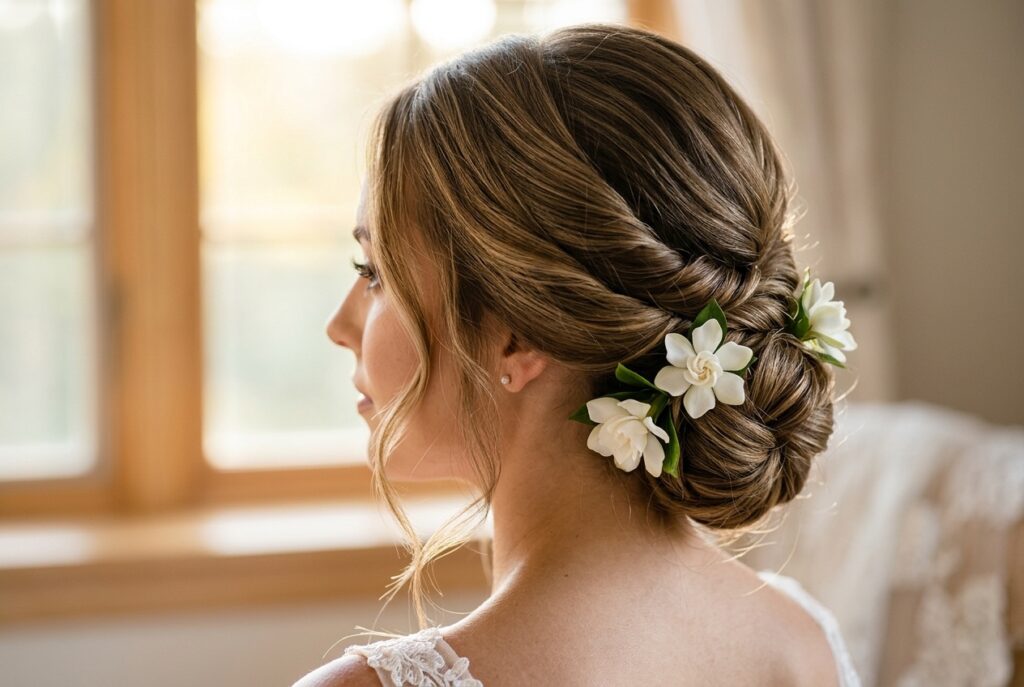
Your bouquet will either complete your dress or fight it — and the difference is not the flowers you choose but the shape, the stem count, and the honest assessment of what your gown actually needs.
Most brides choose their bouquet from a reference photo they love rather than from their specific dress silhouette, which is why so many wedding photos have a bouquet that looks like it was carried in by someone else.
1. The Round Posy: The Dress-Agnostic Workhorse
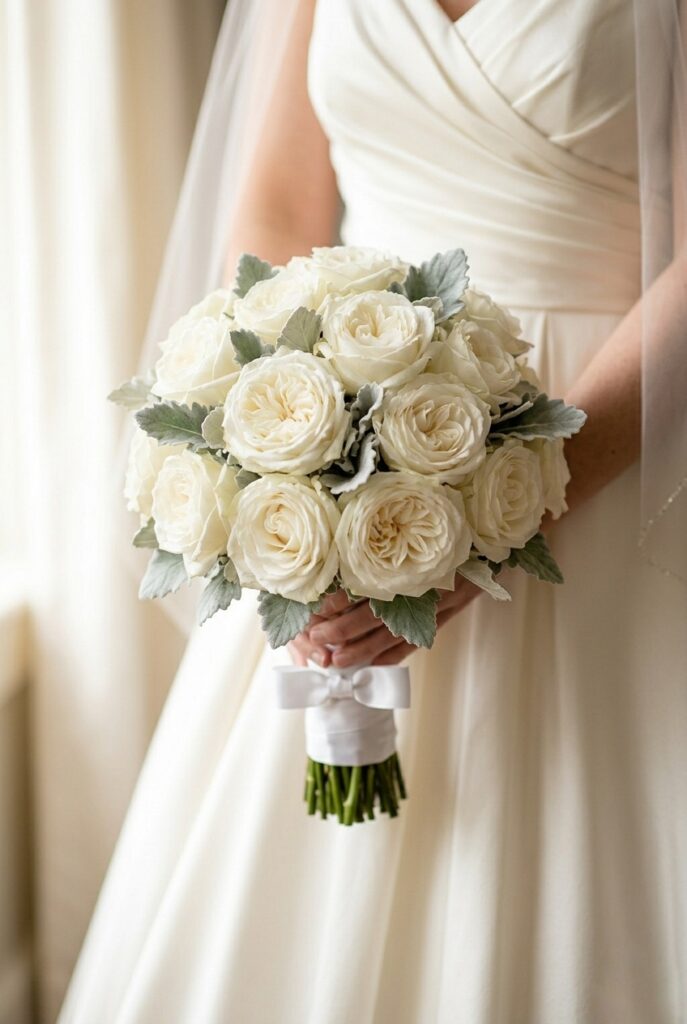
A round posy is the most reliably flattering bouquet shape because its defined circular edge creates a clean focal point against any dress silhouette — ball gown, A-line, column — without competing visually with any of them.
It falls down specifically against lace-heavy gowns, where the hard circular geometry competes with the organic texture of the fabric and makes neither look deliberate — and if your dress is heavily textured or patterned, the garden-style shapes below are the stronger call, while the romantic bridal bouquet guide covers the full range of round and gathered shapes and which dress silhouettes each one flatters in practice.
2. The Garden-Style Gathering: For Dresses That Need to Breathe
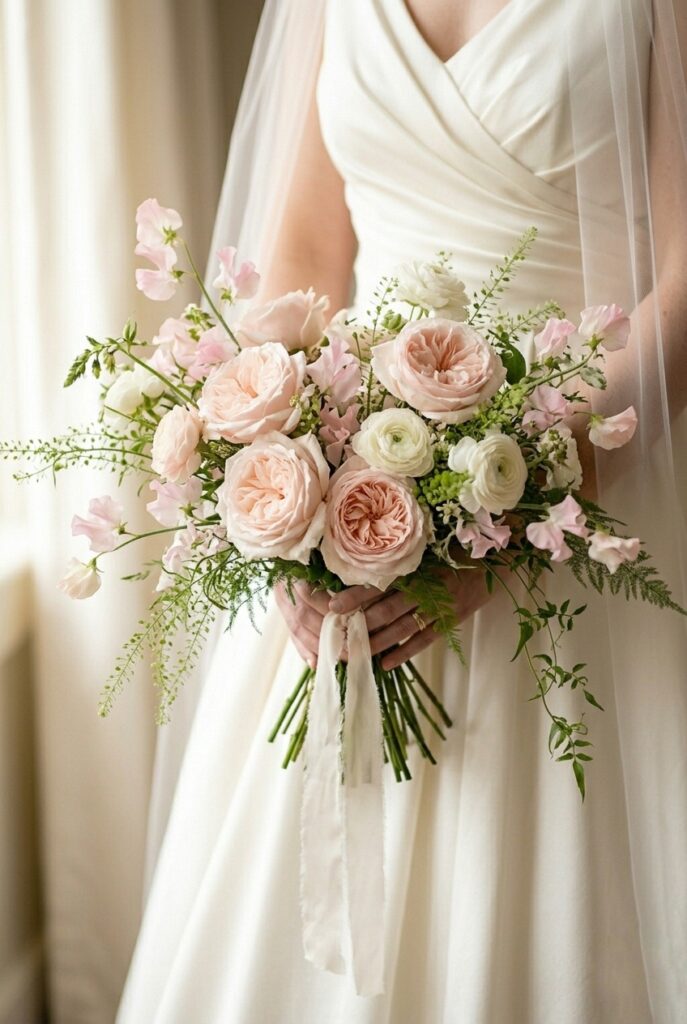
A garden-style bouquet — loose-handed, with stems at varying heights and flowers that haven’t been forced into a dome — is the correct call for lace gowns, bohemian dresses, soft tulle, and any silhouette with organic texture because the bouquet’s looseness mirrors the dress and lets both breathe.
Ask your florist specifically for “conscious looseness” — meaning the arrangement should look studied rather than haphazard, because a truly loose bouquet is a tight-discipline skill — and for how this same loose, natural-gathering aesthetic extends from the bouquet through the ceremony space, the outdoor wedding decor ideas guide covers how garden bouquet choices connect to ceremony and reception settings with the same organic visual language.
3. The Cascading Bouquet: Powerful, Earned, and Misused
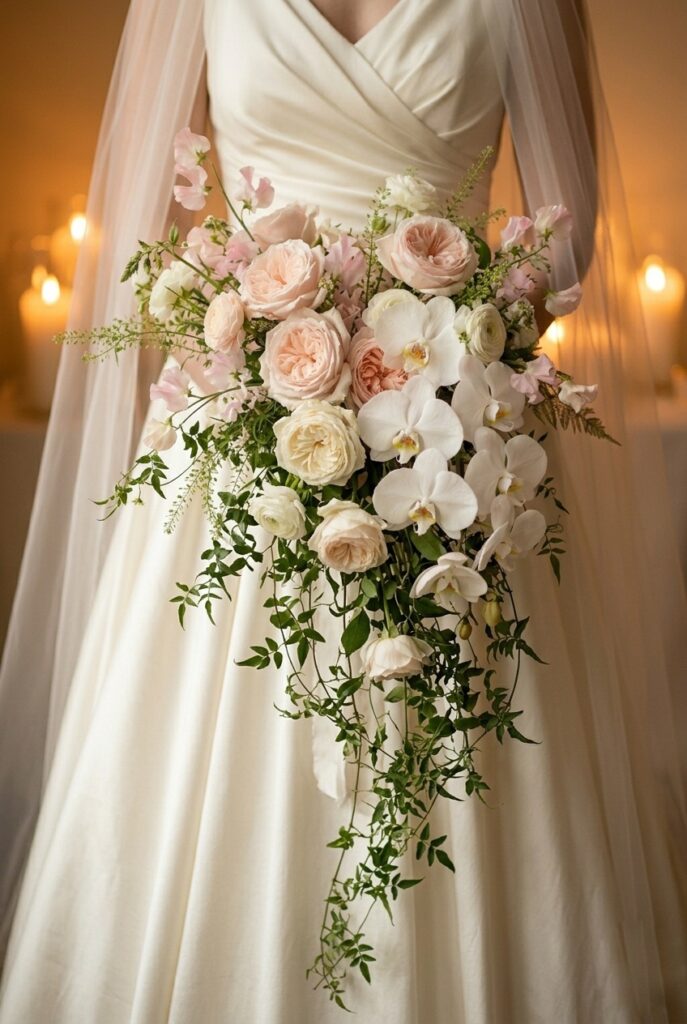
A cascade is specifically correct in two situations: a ball gown with a full sweeping skirt that needs the cascade’s vertical line to balance the horizontal volume at the hem, and a cathedral-length train where the drama of the dress requires equal visual weight in the hands.
Skip it if your dress is a column, sheath, or minimalist silhouette — the cascade overwhelms restraint — and skip it if your venue has tight aisle spacing where a 24-inch trailing cascade reads as cramped — and for how grand ceremony florals, architecture, and lighting work together as a coordinated system, the indoor wedding decor guide covers the scale and proportion decisions that determine whether a cascade bouquet belongs in a given ceremony space.
💸 Budget Hack #1: Cascading bouquets cost more because of labor, not just flowers — the trailing elements require wire armature and significant construction time. You can cut 30–40% of the cost by asking your florist to do a “half-cascade” or “waterfall posy”: a full round top with 8–10 trailing ivy or smilax stems below, rather than a full structured trail. The photos read as a cascade; the price doesn’t. This saves roughly $120–$200 on average versus a full constructed cascade.
4. The Single-Stem Statement: A Bold Opinion
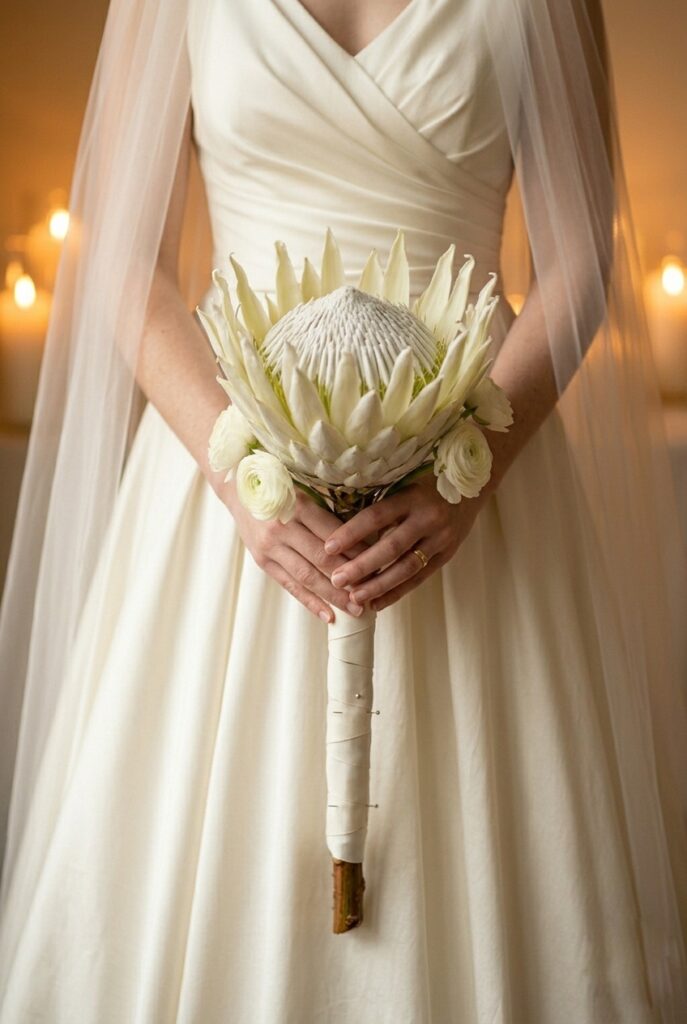
A single structural stem — a king protea, a giant garden peony at full open bloom, a single calla lily — carried with a wide ribbon wrap is one of the most distinctive choices a bride can make, and it also happens to be the most affordable at $40–$90 total, which makes it right for brides whose budget belongs in the dress and the venue rather than the florals.
It works for minimalist, modern, and architectural silhouettes — crepe, structural satin, clean column — and fails immediately on romantic, lace-heavy, or heavily embellished gowns where a single bloom reads as incomplete rather than deliberate — and for how the single-stem aesthetic extends across a complete visual system from the bouquet through the tablecloths and ceremony styling, the elegant wedding decor guide covers the same disciplined restraint applied to every element in the room.
5. Dried and Preserved Flowers: The Enduring Alternative
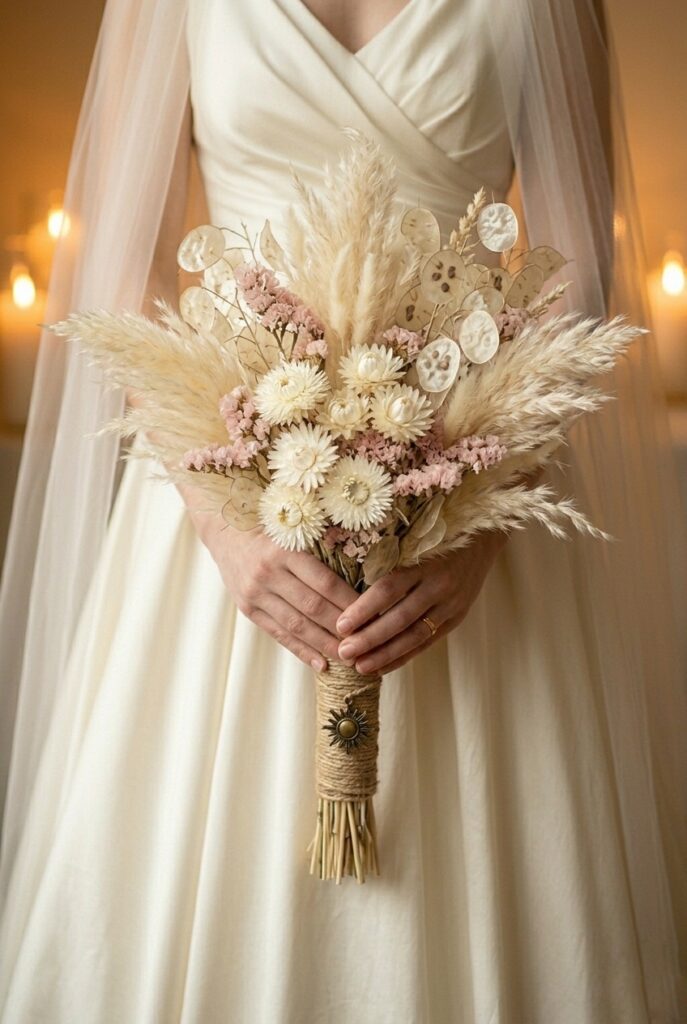
Dried and preserved bouquets survive outdoor summer ceremonies without wilting, can be ordered months ahead without rush fees, and can be kept permanently afterward without freeze-drying — which makes them a genuinely practical choice rather than just an aesthetic one.
Source from a specialist — Etsy shops using properly dried, color-fast stems rather than brown-tipped poorly stored ones — and for the rustic, boho, or vintage wedding setting where a dried bouquet feels native rather than alternative, the rustic wedding decor ideas guide covers how dried botanical elements translate from the bouquet through centerpieces, table runners, and aisle decorations.
6. The Monochromatic Bouquet: Color Theory You Can Carry
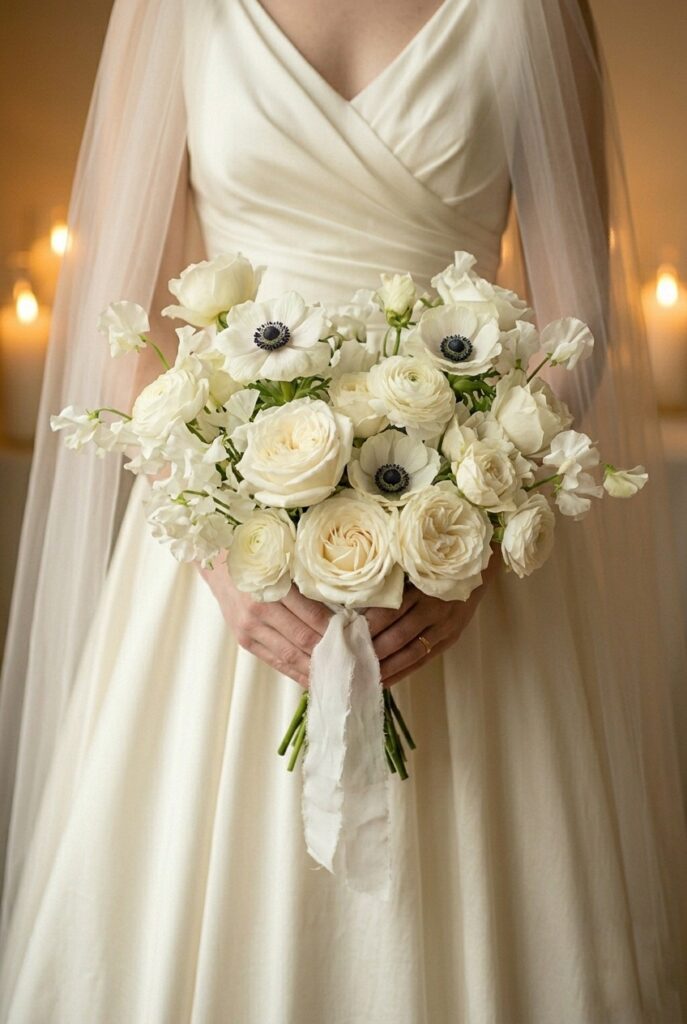
The design principle that makes a monochromatic bouquet either sophisticated or forgettable is the same one most guides miss: interest must come entirely from texture and form variation within a single color family, which means an all-white bouquet with five different bloom varieties at five different stages of openness reads as intentional and editorial while the same concept built from uniform spray roses and baby’s breath reads as a grocery store arrangement.
When briefing your florist on a monochromatic build, ask specifically for a minimum of four distinct bloom types with different petal shapes and at least two stages of bloom openness — and for the centerpiece flowers that echo this same textural-variation principle across your tables, the wedding centerpiece flowers guide covers which blooms produce the most visual variety when grouped by single color.
💸 Budget Hack #2: An all-white monochromatic bouquet is significantly cheaper to build yourself than any colorful arrangement because white blooms are the most widely available, year-round flower category. White spray roses from Sam’s Club or Costco run $15–$20 for 40 stems. Add white anemones from FiftyFlowers.com ($28 for 25 stems) and white lisianthus from your local wholesale flower market. Total material cost for a full-sized bouquet: $55–$80. The visual result, with proper stem-gathering technique (spiral method, rubber band tightened, then ribbon-wrapped), is indistinguishable from a $300 florist build.
7. Greenery-Forward: When the Foliage Is the Feature
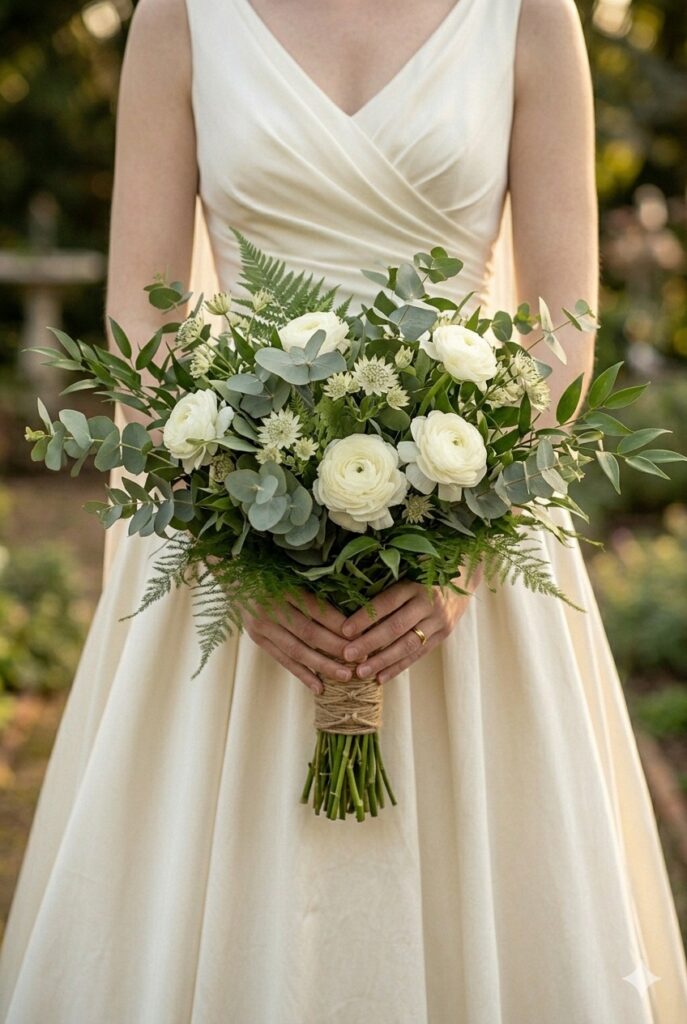
Eucalyptus, fern, Italian ruscus, and olive branches cost 40–60% less than premium blooms and produce a bouquet with more depth and texture than a flower-heavy arrangement of similar size — which makes greenery-forward the best cost-to-impact option on this list.
This works for outdoor venues, garden settings, and minimalist aesthetics; it fails at ultra-formal hotel ballroom weddings where it reads as incomplete — and for how the same natural-texture restraint applied to your bouquet translates to the complete ceremony and reception styling, the simple wedding decor ideas guide covers the design language your room should share with your flowers.
8. The Architectural Bouquet: Geometry Over Romance
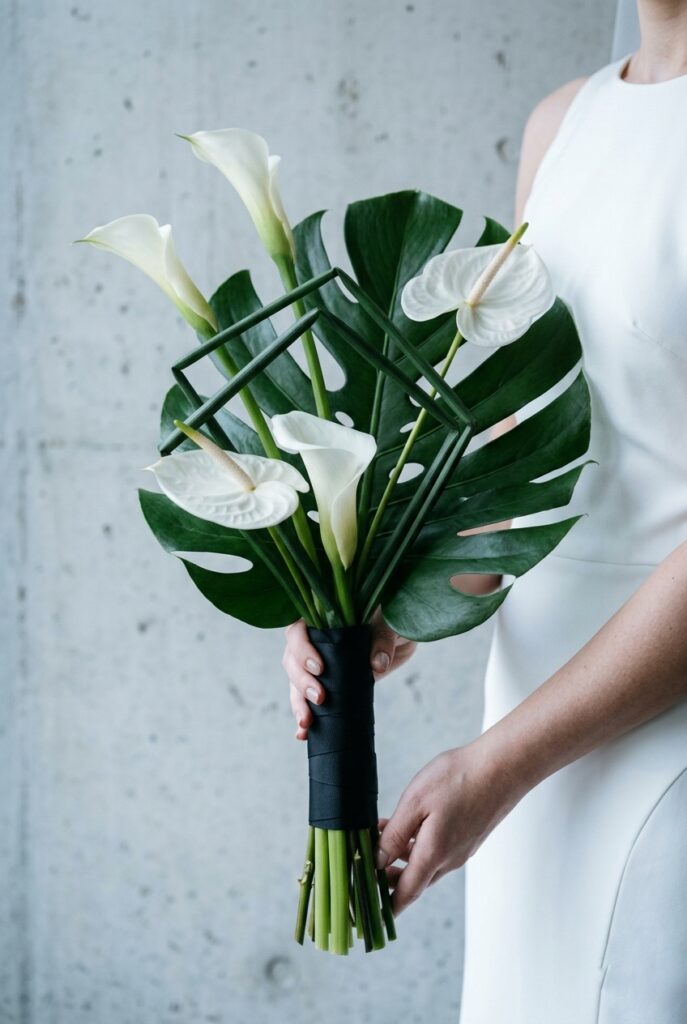
Architectural or sculptural bouquets are built on structural logic rather than romantic abundance — calla lilies at deliberate angles, king proteas paired with monstera leaves, anthuriums stacked above maidenhair fern — and they are specifically correct for modern and minimalist weddings, industrial venues, and couples who find romantic garden bouquets misaligned with their actual aesthetic.
This style photographs with striking clarity against a clean backdrop and reads as intentional art direction rather than just flowers — and for how your bouquet choice connects to your complete bridal look from hair to accessories to the dress itself, the bridal look for reception guide covers how the visual register of your bouquet should inform every other look you carry across the wedding day.
9. The Heirloom-Added Bouquet: Making It Personal Without Making It Cluttered
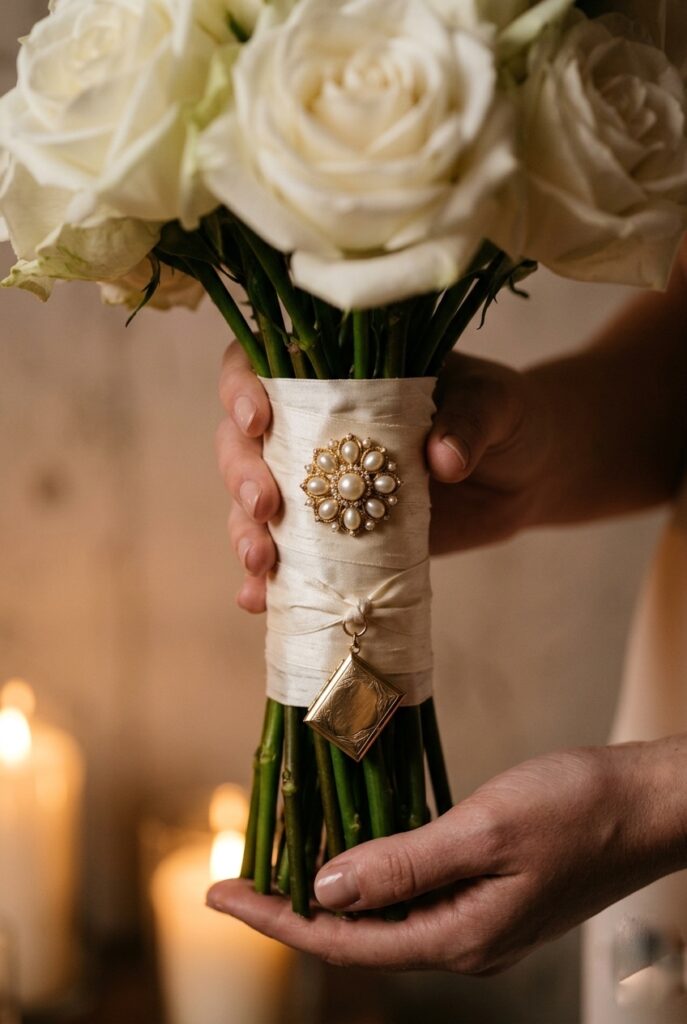
A single meaningful piece — a grandmother’s pearl brooch, a locket with a small photo, a charm from a childhood bracelet — wrapped into the ribbon stem of your actual flower bouquet is the version of bouquet personalization that lasts, because it is invisible in full-length shots and intimate in close-ups, which is exactly where you want the detail to appear.
What it is not: a brooch bouquet where the entire arrangement is constructed from brooches and silk flowers instead of real blooms — a version that weighs significantly more, photographs with metallic glare rather than organic warmth, and skips entirely — and for how this same attention to personal, meaningful detail extends across your complete getting-ready and bridal look, the ultimate bridal look guide covers how each visual element from nail choice to bouquet to accessories connects into one cohesive picture.
💸 Budget Hack #3: The single biggest variable in bouquet price is not the flower variety — it’s the stem count. A lush-looking bouquet can be built from 18–22 stems at the right size and with the right supporting greenery, but most brides over-order at their florist consultation because they’re seeing loose stems in a bucket rather than a finished arrangement. Before finalizing your order, ask your florist to show you a mock assembly with 18 stems, then 25, then 35. You’ll almost always find that 22 stems looks full and finished. Cutting from 35 to 22 stems can save $60–$120 on a mid-range bouquet without any visible change to the finished product.
10. The Seasonal Committed Bouquet: The Professional Shortcut to a Better Bouquet
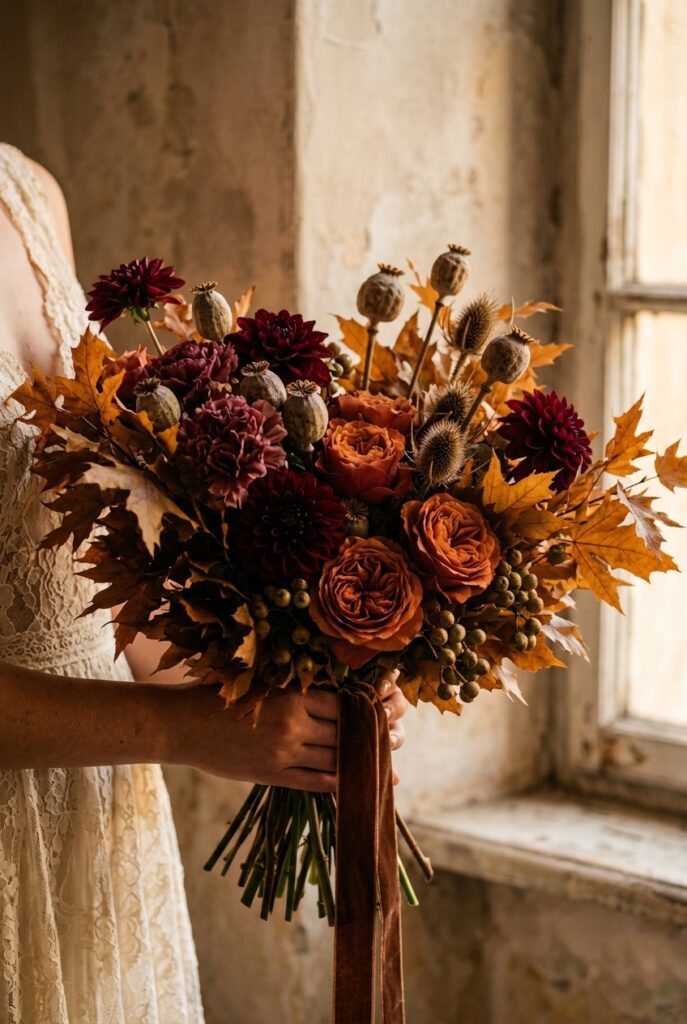
Committing to seasonally appropriate flowers produces a better bouquet at a lower cost because in-season blooms are at peak condition without being forced or flown, and your florist is sourcing them as staples rather than imports — which drops your total cost by 20–35% while delivering flowers in better shape than an out-of-season order at the same budget.
Ask your florist what is at the absolute top of quality that specific week and build around the answer rather than against it — and for how the autumn palette of dahlias, rust garden roses, and dried grasses connects to a full fall ceremony and reception vision, the fall wedding centerpiece ideas cover how seasonal flower choices extend from the bouquet through every table in the room.
11. The Dried-and-Fresh Mix: The Real Alternative to “All or Nothing”
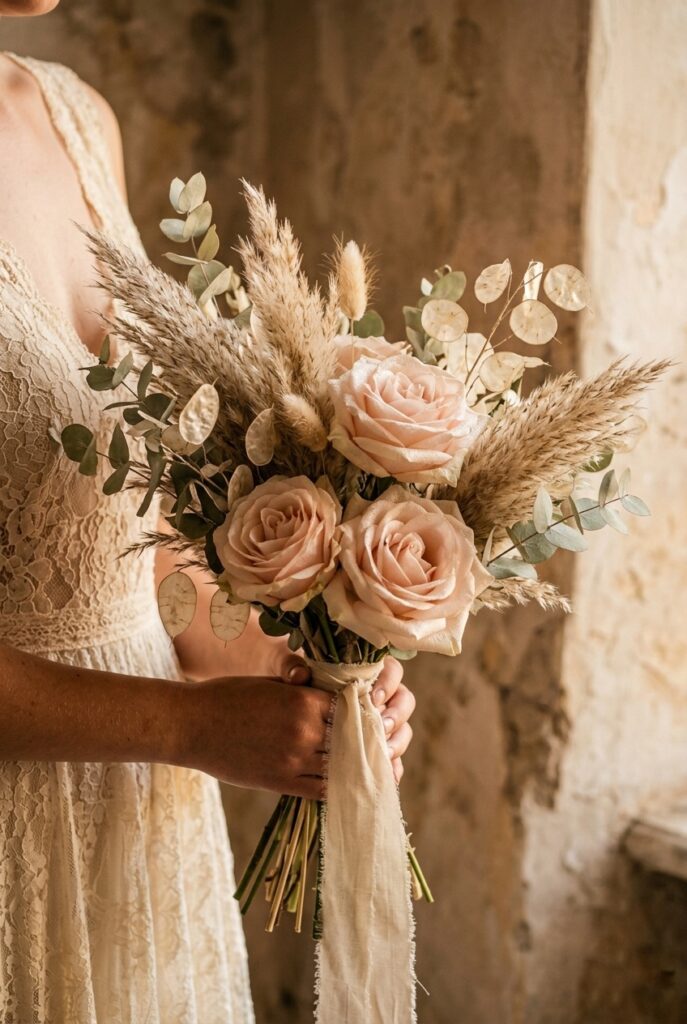
Mixing fresh focal flowers with dried supporting elements gives you the best qualities of both — fresh blooms for color and vibrancy in the photographs, dried elements for structural longevity, texture, and the ability to prepare parts of the arrangement days in advance without wilting risk.
Two fresh garden roses alongside dried pampas grass, preserved eucalyptus, and a few dried lunaria pods is a complete bouquet with striking textural contrast — and for the specific flower-by-flower decision-making that determines which fresh blooms and dried stems work together in this format, the bridal flower bouquet guide covers every stem choice, how each one photographs, and how to brief your florist so the final result matches what you envisioned.
Your bouquet choice is a dress decision more than a flower decision — start from your silhouette, narrow to the shapes that work with it, then choose your flowers within that shape.
Once your bouquet style is confirmed, the natural next step is how it connects to your ceremony flowers as a complete picture — the aisle flowers decoration guide covers how bridal bouquet choices inform every other floral element from the aisle markers through to the altar arrangement.