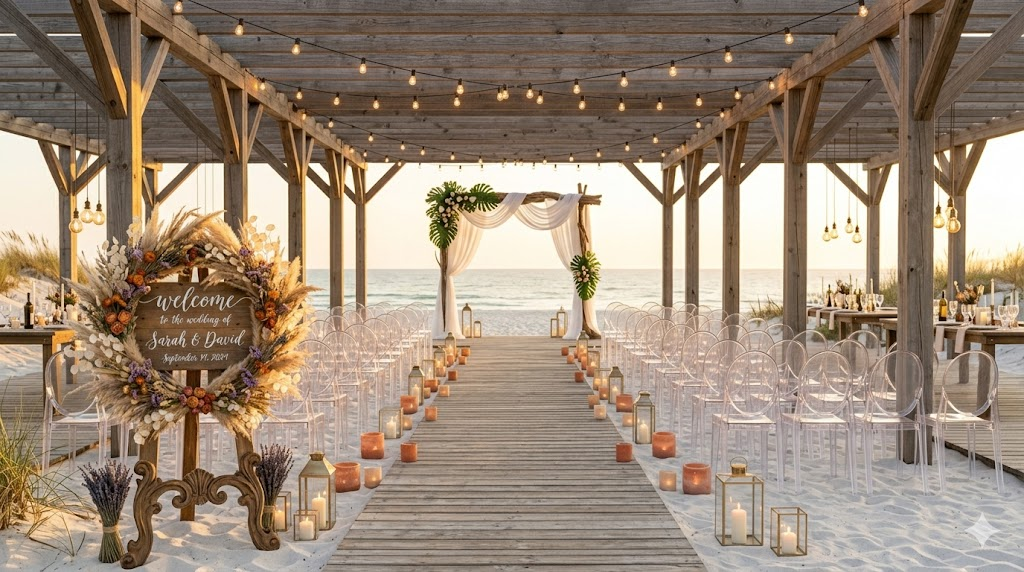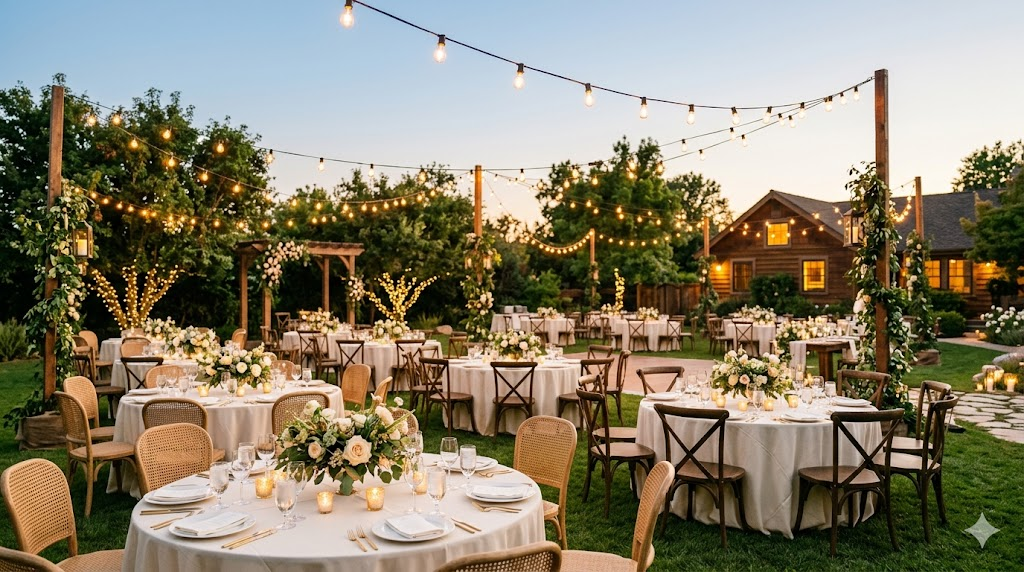
Most couples spend everything on flowers and forget that the table is a complete visual system — not just a surface to put a vase on.
The wrong linens, the wrong height, the wrong layering order will undermine even an expensive centerpiece.
Get the table right first, then add the flowers.
1. Charger Plates as Your Secret Weapon
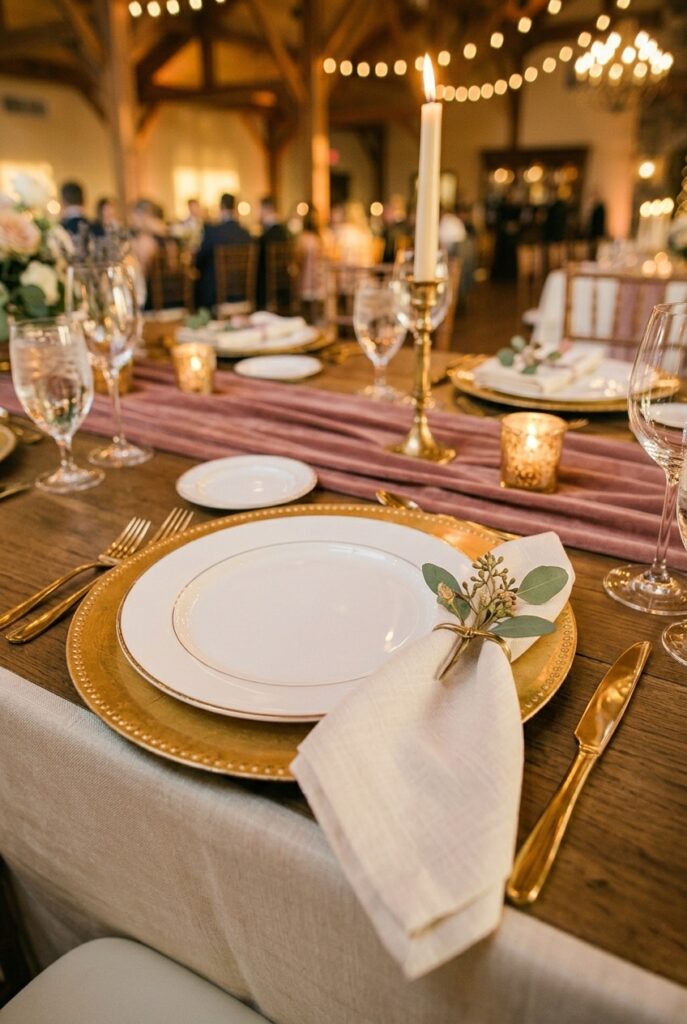
A gold, silver, acrylic, or rattan charger plate placed under standard rental china instantly makes the table look intentional and considered — they take ten seconds to place, photograph beautifully at every zoom level, and at $1.50–$4 per unit in bulk from Amazon or eFavormart, you’re spending under $400 for 100 guests to transform how the entire room reads.
That single per-table investment does more for elegant table decor than any floral addition at the same price point — skip it only if your venue already supplies chargers with a strong design, because layering two charger styles reads as cluttered.
2. Linen First, Flowers Second
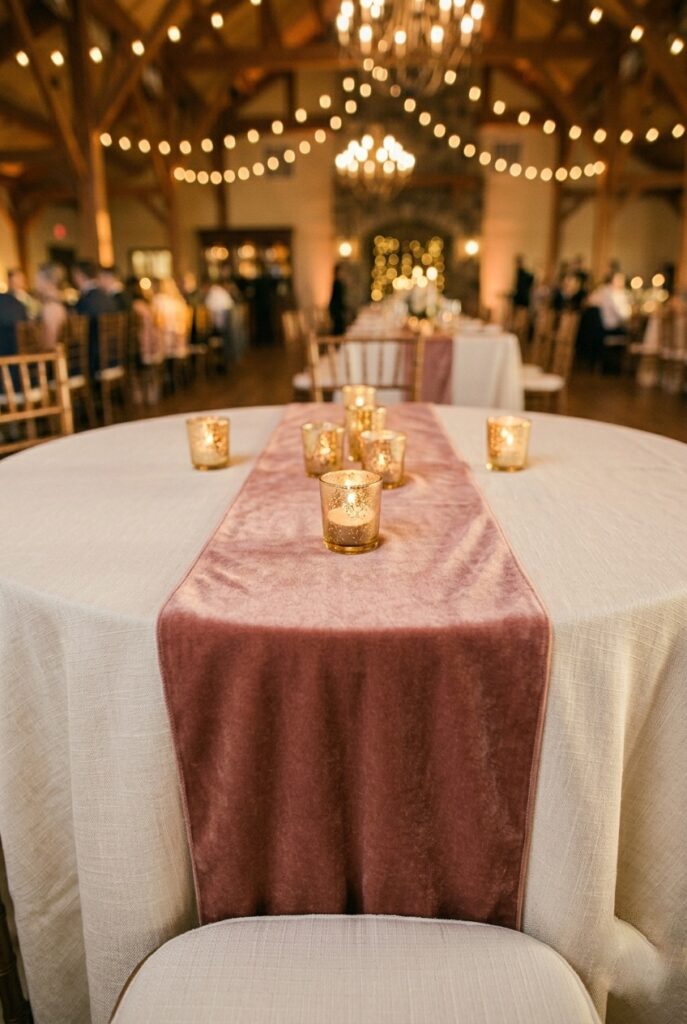
Your tablecloth and runner are the largest visual surface at every table — a dusty rose velvet runner over ivory linen creates warmth and depth before you place a single stem, while a standard poly tablecloth makes even a $300 centerpiece read as a hotel banquet.
This is the foundation of every piece of simple wedding decor advice worth reading: the textile decision is made first and everything else is layered on top of it, because no amount of florals corrects a flat linen base.
3. Taper Candles in Clusters, Not Rows
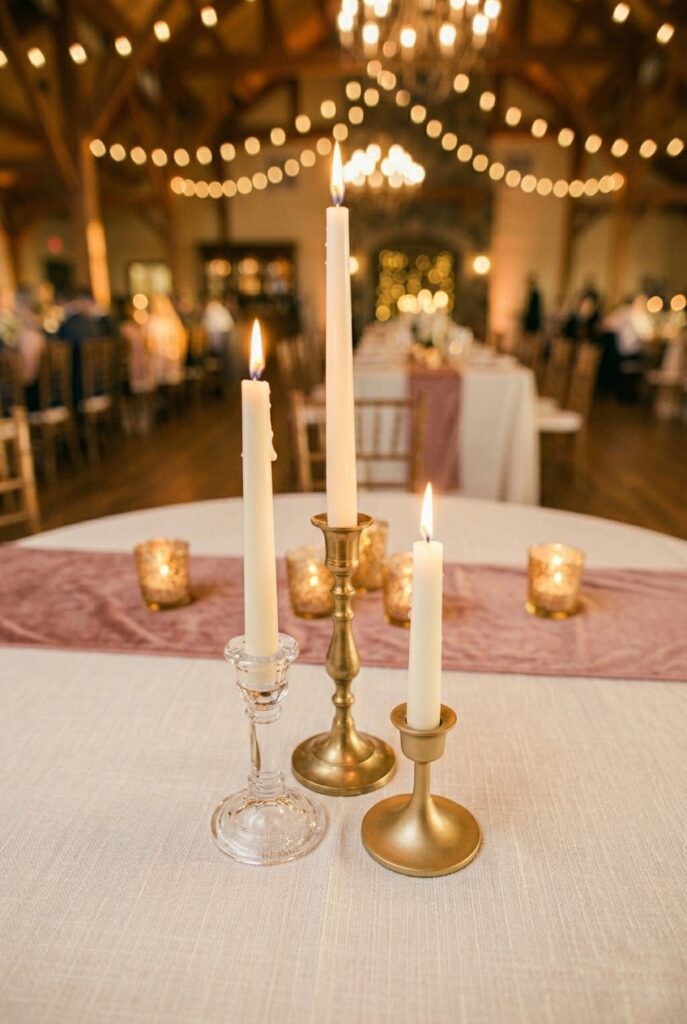
Three to five taper candles in holders of genuinely different heights — 4 inches, 8 inches, 12 inches — clustered rather than lined makes the light cascade across the table at multiple levels and creates the kind of warmth and movement that a uniform row at matching heights never produces.
Renting mixed-height holders by the case at $80–$120 for 50 holders is one of the strongest wedding decor on a budget moves on this list — buying that same quantity costs $200-plus, and you return them clean after the wedding.
Budget Hack after Idea 3: Rent taper candle holders by the case from local event rental companies rather than buying. A set of 50 mixed-height holders rents for $80–$120 total — buying the same quantity costs $200+. Return them clean and you’re done.
4. Low Floral Centerpieces That Let Guests Talk
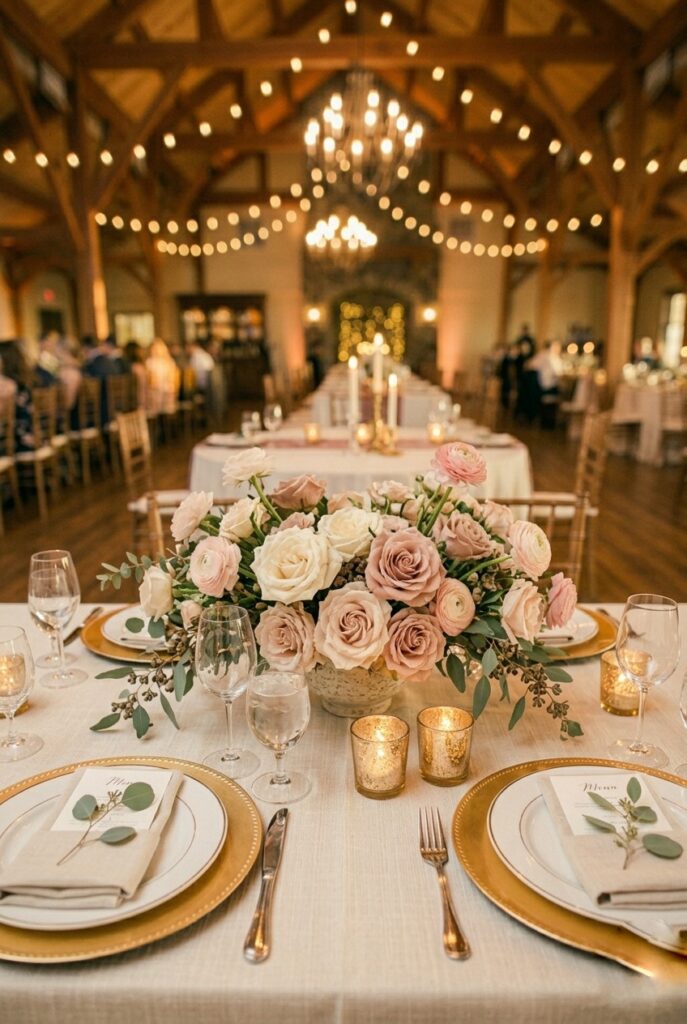
A wide, rounded garden arrangement sitting 10–14 inches tall keeps the table looking full and beautiful while allowing every guest to see and speak to the people seated across from them — tall centerpieces make striking photos and genuinely difficult dinners, and the 90 minutes your guests spend seated at those tables is a long time to talk past a 30-inch floral tower.
Garden roses, dahlias, ranunculus, and eucalyptus all work at this height and deliver the same lush quality as garden wedding decor centerpieces at their best — full, abundant, and entirely conversation-friendly.
5. The Scented Herb Runner (Competitors Completely Miss This)
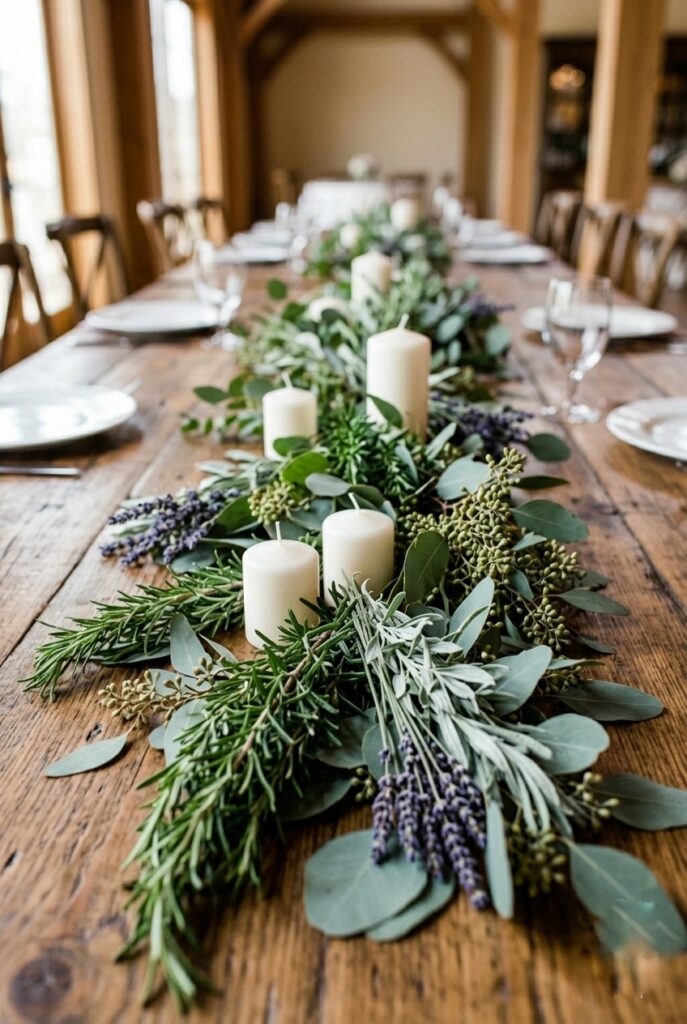
Loose rosemary, eucalyptus, and lavender stems laid directly on the table between place settings, mixed with small pillar candles or votive holders, fills the room with a gentle clean scent that makes the entire space feel more alive — guests touch it, smell it, take stems home, and remember it in a way no visual-only element produces.
At $30–$60 per table sourced from Trader Joe’s or a wholesale market the morning of the wedding, it’s the most sensory easy wedding decor investment on this list, requiring no arrangement skill and zero advance preparation beyond the purchase.
6. Napkin Styling as a Design Element
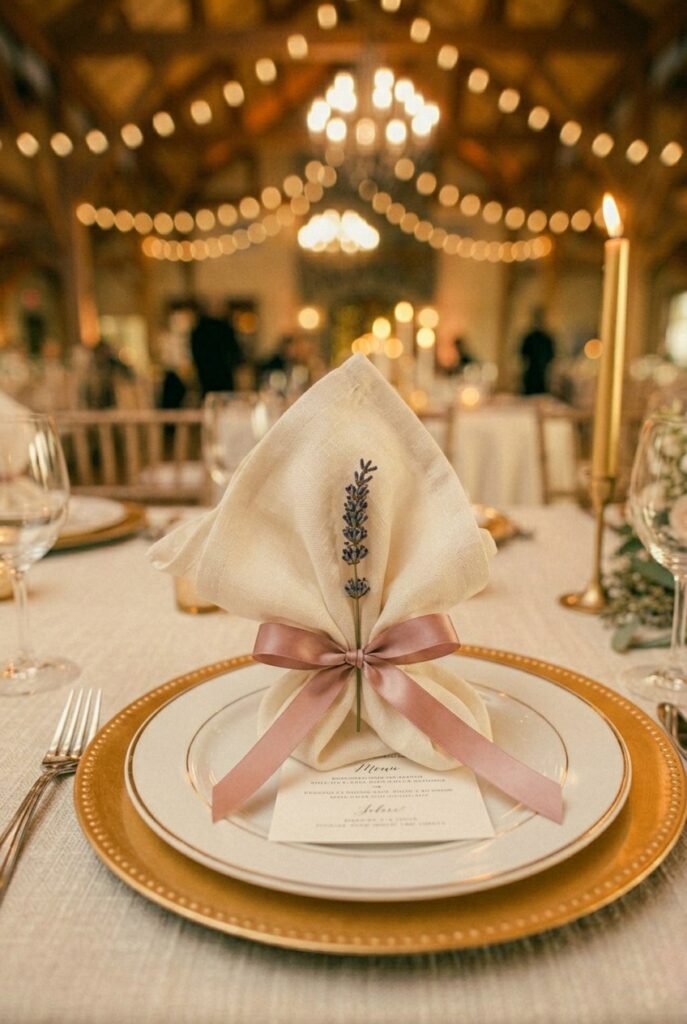
A linen napkin knotted loosely around a sprig of dried lavender, folded into a fan through a rattan ring, or gathered and tied with a 12-inch length of satin ribbon in your wedding color costs $0–$15 per table in additional materials and photographs as a genuine style detail rather than an overlooked placeholder.
Buy satin ribbon in a 100-yard bolt at $8–$14 rather than pre-cut lengths — one bolt covers 80–100 napkins, and the leftovers cross over into thrifted wedding decor territory where nothing is wasted and everything is repurposed.
Budget Hack after Idea 6: Buy your satin ribbon in a 100-yard bolt from Michaels or Amazon for $8–$14 instead of pre-cut lengths. One bolt covers 80–100 napkins and you’ll have ribbon left for other decor.
7. Mixed-Height Votive Clusters
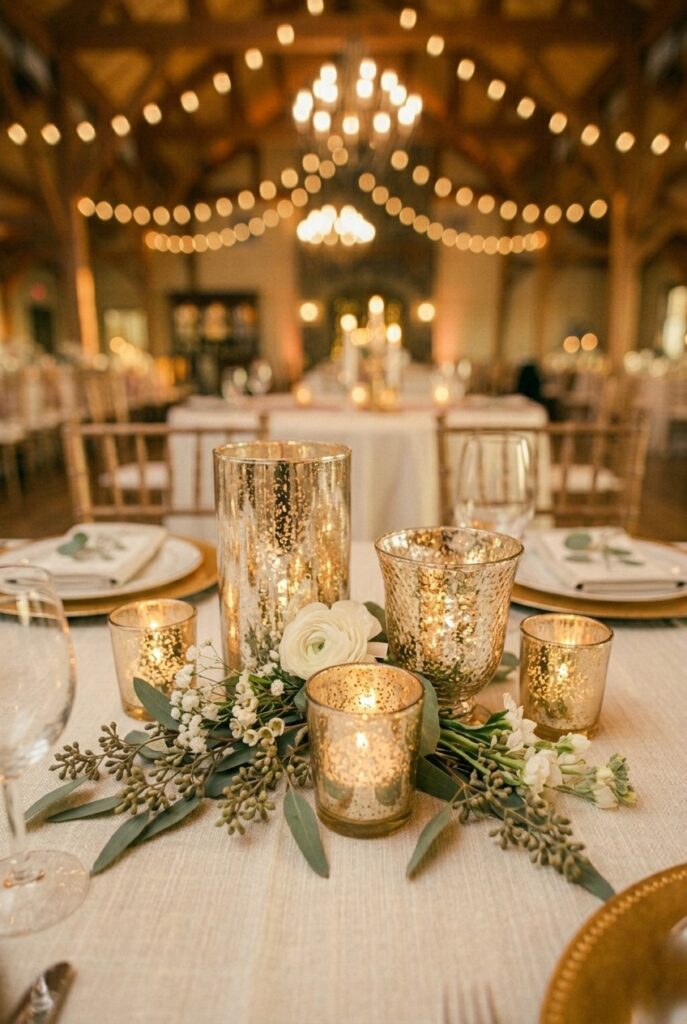
Three to five glass votives in varied sizes — mercury glass at $18–$35 for a set of 12 — grouped down the center of each table with tea lights or flicker-mode LED candles and a few greenery stems tucked between them creates a layered, intentional look that works at both rustic and elegant weddings based purely on material choice.
It’s the foundational approach behind every piece of simple table decor advice: group objects of different heights within the same material family, and the cluster does the visual work that a single centerpiece attempts at five times the cost.
8. Personalised Table Numbers That Work as Decor
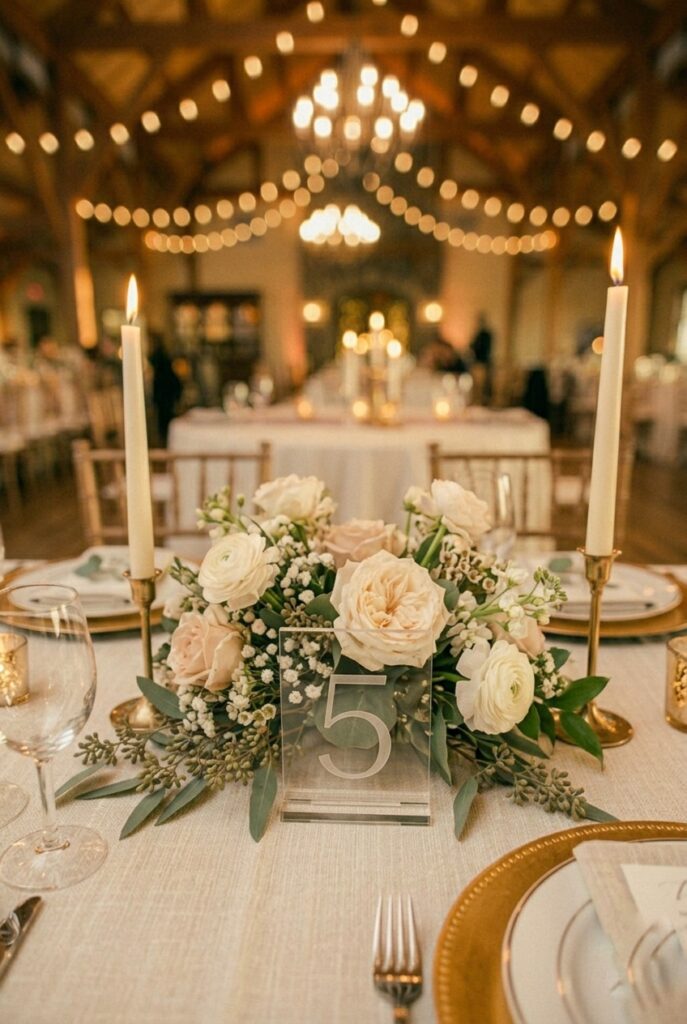
Laser-engraved acrylic table number signs at $2.50–$5 each from Etsy photograph cleanly, catch candlelight, and look like a considered design choice rather than a logistical placeholder — and a handwritten number on a smooth river stone or a small framed watercolor botanical print used as the number reads as DIY wedding decor done well: a personal touch that integrates into the tablescape rather than sitting on top of it.
Your table decor always feels more complete when the number is part of the aesthetic, not fighting it.
9. The Negative Space Rule (Nobody Teaches This)
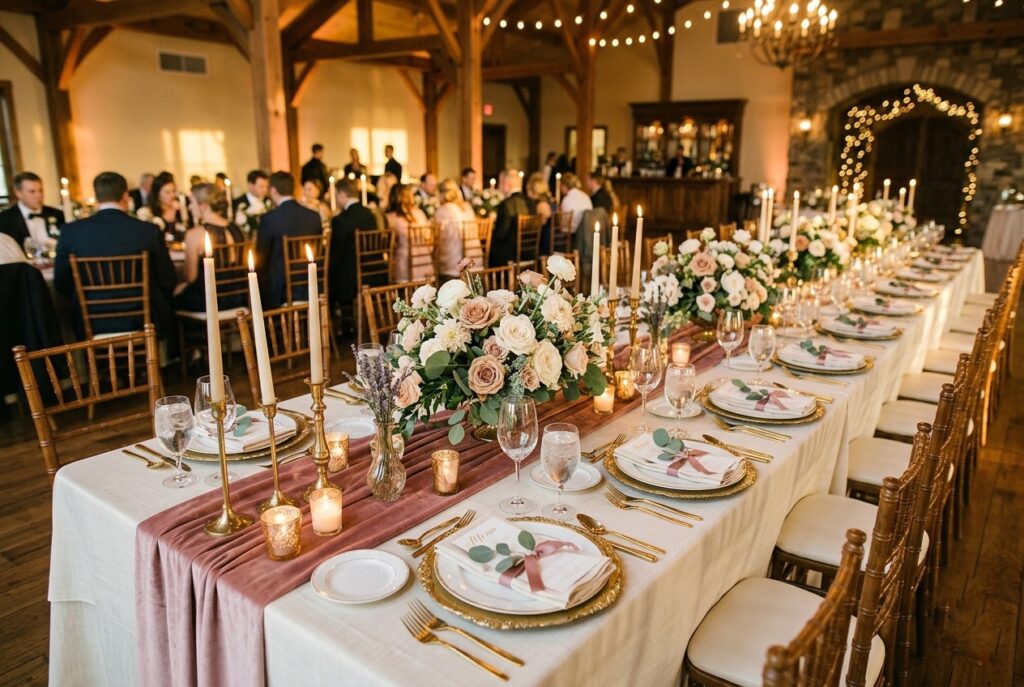
The most visually striking tablescapes in professional wedding photography have deliberate negative space — bare sections of linen or runner that allow the eye to rest between elements, because when every inch of a table is covered, nothing stands out and everything competes.
Decorate 60% of the table surface intentionally and let 40% breathe, and if the table looks full but still not finished, the right move is to remove two votives and pull back the greenery — the edit almost always makes it better, which is the central thesis behind simple wedding decor that works.
Budget Hack after Idea 9: If your table looks full but not finished, remove elements rather than add them. Take away two votives, pull back the greenery, and look again. Nine times out of ten the edit makes it better and saves you money.
10. Textured Linen Napkins over Paper
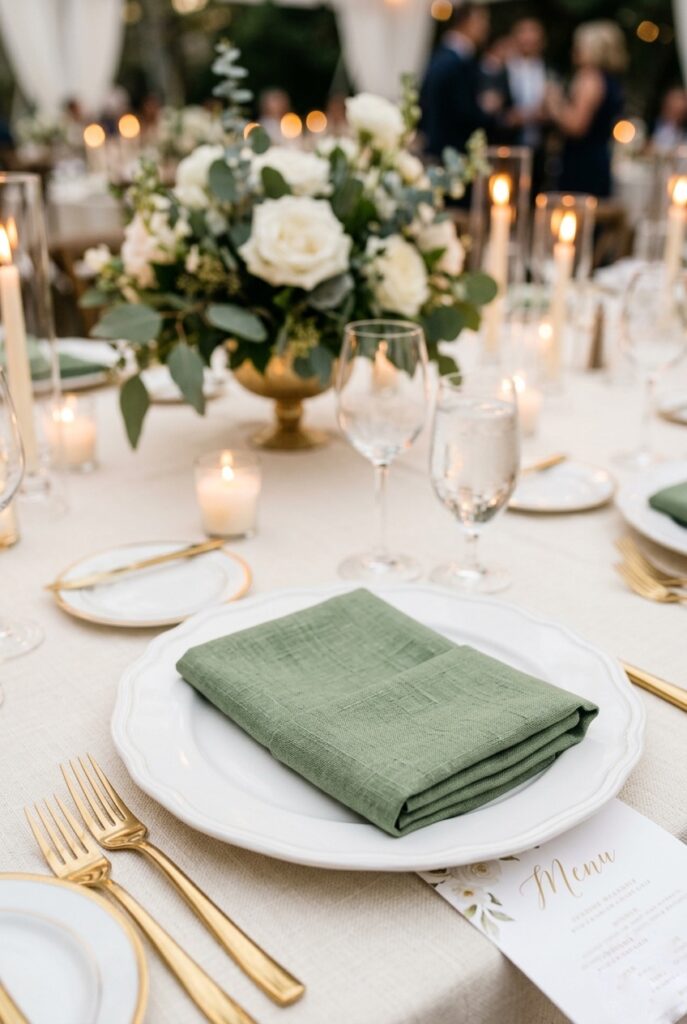
Textured linen or waffle-weave cotton napkins — even affordable bulk options at $18–$35 for a set of eight — feel completely different in your hands than polyester and photograph as premium at every table regardless of what else surrounds them, because texture is something guests feel as well as see.
A sage green, terracotta, or dusty blue napkin introduces your wedding color most naturally at the place setting level — which is the specific geometry that round table decor principles lean on hardest, because at a circular table the napkin is one of the first things a seated guest sees.
The table is where your guests spend most of the reception — and the difference between a table that photographs well and one that actually holds attention for three hours is the same difference: intentional layering, a clear focal point, and enough empty space to let each element read.
For the full philosophy on why table decisions carry the whole event, your tables are the wedding is the piece worth reading before any vendor meetings.
And for how these table elements connect to the first complete treatment of this topic on BlessedVows, wedding table decor ideas build the same layered approach across a different set of looks.