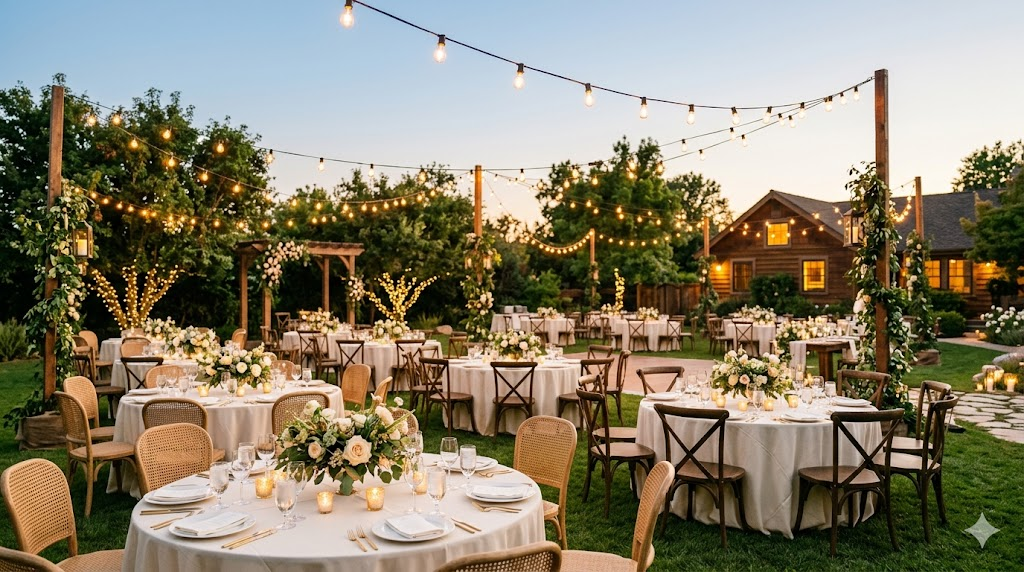
11.Simple Wedding Table Decor Ideas That Don’t Look Boring!


Single rose, white linen, taper candle, white plate, minimal setup — landscape 3:2 — placed after reading time before intro

The word “simple” scares couples. They think it means unfinished. It doesn’t.

It means intentional. An empty table with five scattered items looks unfinished.

An empty table with three items in conversation with each other looks designed.

The difference isn’t what you add — it’s understanding that negative space is not a failure.

It’s the breathing room that makes everything else matter. Most couples overthink simple tables.

They see blank space and panic. They add more candles, more flowers, more stuff.

Then it stops being simple and starts being cluttered. Simple is harder than complex because there’s nowhere to hide.

White napkin folded sharp. The silence of a vase with one stem.

Candlelight touching nothing but air. This is when less stops being a limitation and becomes a choice.

The Short Answer

Don’t confuse simple with sparse.

Simple is intentional. Spare is just empty.

A simple table has three to five design elements max, each placed where guests actually see them, each doing a job.

If an element doesn’t change how the table feels, take it off.

The best simple tables look like they took hours to design but only minutes to execute — because they actually did take hours to design.

1. Choose One Texture and Own It

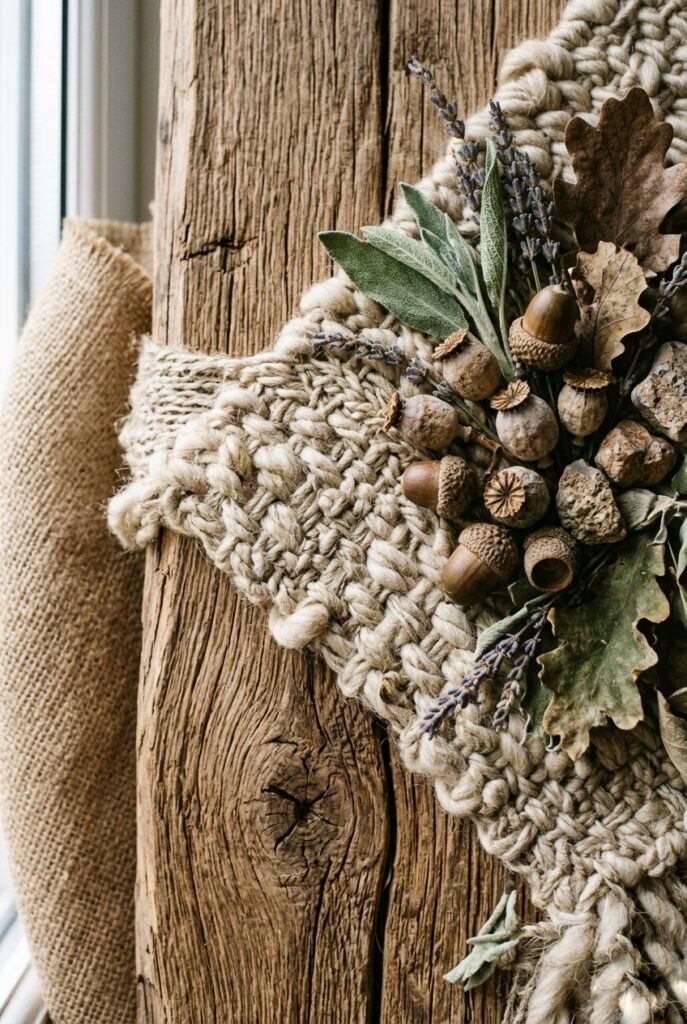
Close-up of one texture story (all natural or all refined materials), portrait 2:3

Simple breaks down when you mix too many materials. Linen tablecloth + wooden charger + silver candlestick + ceramic plate + crystal vase = visual noise.

That’s not simple, that’s confused. A simple table commits to a texture story.

Either all natural (linen + wood + greenery + unglazed ceramic) or all refined (crisp cotton + white plates + crystal + polished silver).

You can have one accent outside this story, but only one.

The texture you choose broadcasts your table’s entire personality.

Natural materials read as relaxed and intentional. Refined materials read as organized and clean.

Mixed materials read as “we couldn’t decide.” Pick your story before you order a single thing.

$15–$40 linen tablecloth from Etsy or Wayfair. Wood chargers: $3–$8 each from Amazon. Ceramic plates: usually included in venue rentals or $2–$4 each from rental companies.

Budget Hack: Use your venue’s existing linens and plates (they’re already paid for), then upgrade one texture element only — either the charger or the napkin.

A $20 linen napkin upgrade on white plates costs nothing extra because you’re already renting white plates.

That one change makes the whole table read as intentional instead of default.

2. Understand Negative Space as Your Second Centerpiece
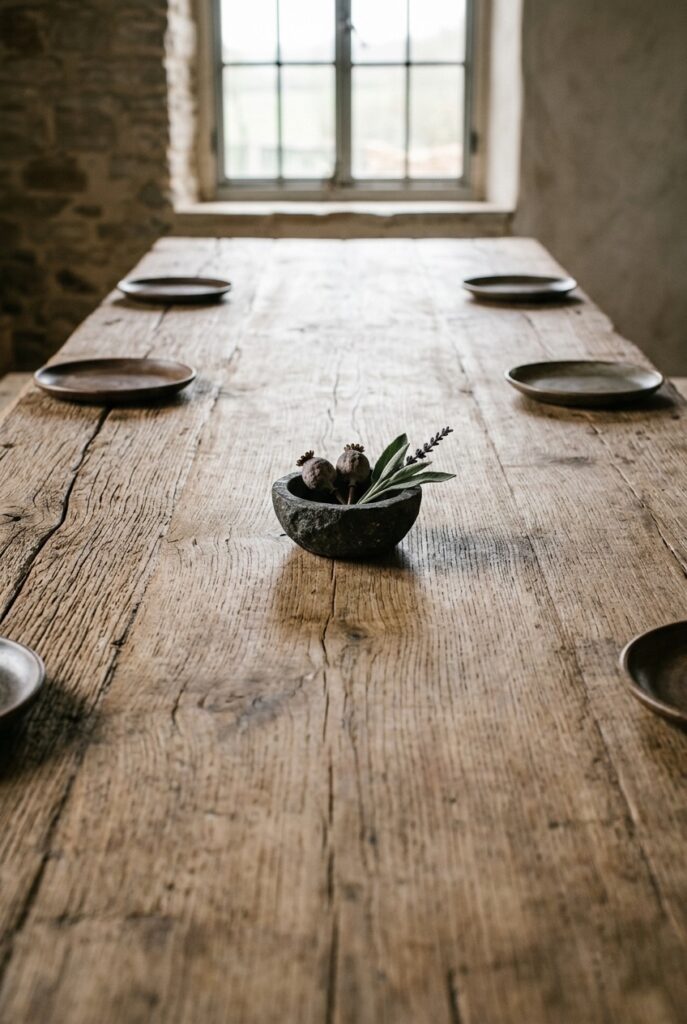
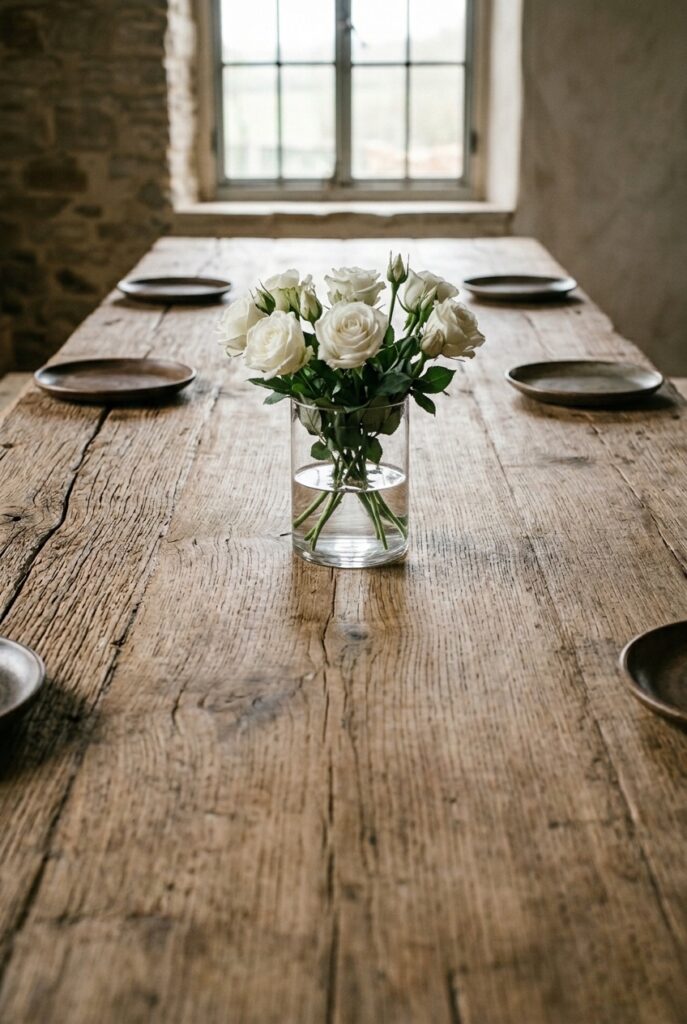
Wide table shot showing intentional empty space around minimal centerpiece, portrait 2:3

This is the insight that separates professional designers from couples guessing.

On a simple table, empty space is not wasted space — it’s working space.

A table with one small floral arrangement in the center and everything else empty reads as minimal and intentional.

A table with one floral arrangement, three candles, a runner, a small greenery accent, and place card holders reads as scattered and overly decorated.

Here’s how to test it: photograph your table setting from guest height (sitting down).

If you can see the plate and glassware, and the centerpiece doesn’t block sightlines, you’re simple.

If the centerpiece or decor elements are the only thing guests see, you’re cluttered, no matter how few items there are.

Skip this if your venue is naturally bland and needs visual anchoring. Only do this if your venue has interesting architecture, natural light, or a view — let the space do some of the work.

This costs nothing — it’s a composition choice.

3. Pick One Flower Type (Or None)

Single flower variety (white roses or eucalyptus) in clear vase, portrait 2:3

The minute you use three different flowers in one arrangement, you’ve stopped being simple.

One flower type in multiple quantities reads as intentional. Three different flowers read as “we gathered whatever was available.”

Stick to one: white roses, white peonies, white ranunculus, or greenery only.

If you use two colors (white + blush, for example), they must be the same flower type in different shades.

Greenery-only arrangements are genuinely elegant, especially with candles.

You don’t need a single flower. You need intention.

A vase of eucalyptus with three taper candles reads as sophisticated.

A vase with one rose, two carnations, three sprigs of baby’s breath, and some salal reads as cluttered.

Couples often push back on this because they’re afraid one flower type will look sparse. It doesn’t. It looks designed.

Spend less on flowers and invest in better vases instead.

A $20 arrangement of twelve stems of the same flower in a beautiful clear vase beats a $50 “mixed arrangement” every single time.

Single-flower bunches: $15–$30 from grocery store floral departments or wholesale florists like FiftyFlowers. High-quality clear vases: $8–$20 from IKEA or Wayfair.

Taste Layer: Cheap vases look cheap under candlelight. They catch light unevenly and create visual distraction.

Spend $15 on one high-quality clear vase and fill it with $20 of grocery-store roses, and it reads as more expensive than a $40 “wedding arrangement” in a thin, cloudy vase.

The vase quality matters more than the flower cost at this price point.

4. White Everything Is a Choice, Not a Cop-Out
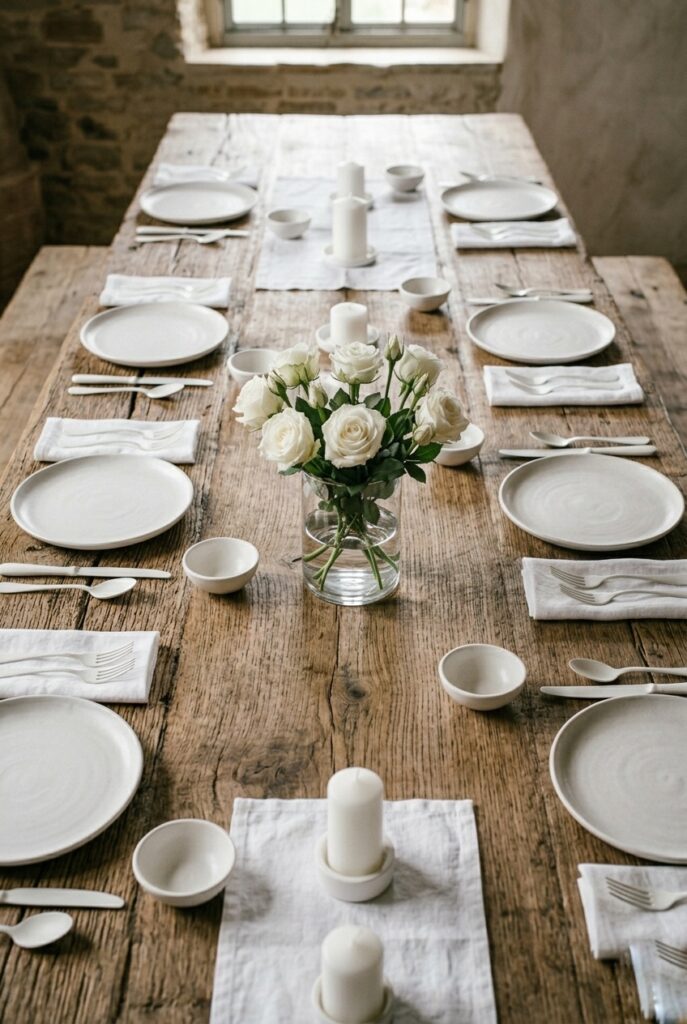
All-white monochromatic table setting from above, portrait 2:3

A table with white tablecloth, white plates, white napkins, white flowers, and white candles is not boring — it’s bold.

It’s a design statement that says “we’re committing to one color.”

White-on-white tables photograph cleanly, read as intentional, and actually cost less because you don’t have to worry about color matching.

Every element works with every other element by default.

The mistake couples make: they do white everything but add “interest” with patterns or metallics, which breaks the simplicity.

Commit fully to white (including metallics if you use them) or commit to a color. Halfway commitments read as indecisive.

White linen: $20–$40 from rentals. White dishes, glassware, napkins: usually included in venue rental packages. White candles: $0.50–$1 each in bulk.

5. Negative Space on Long Tables Works Differently Than Round Tables
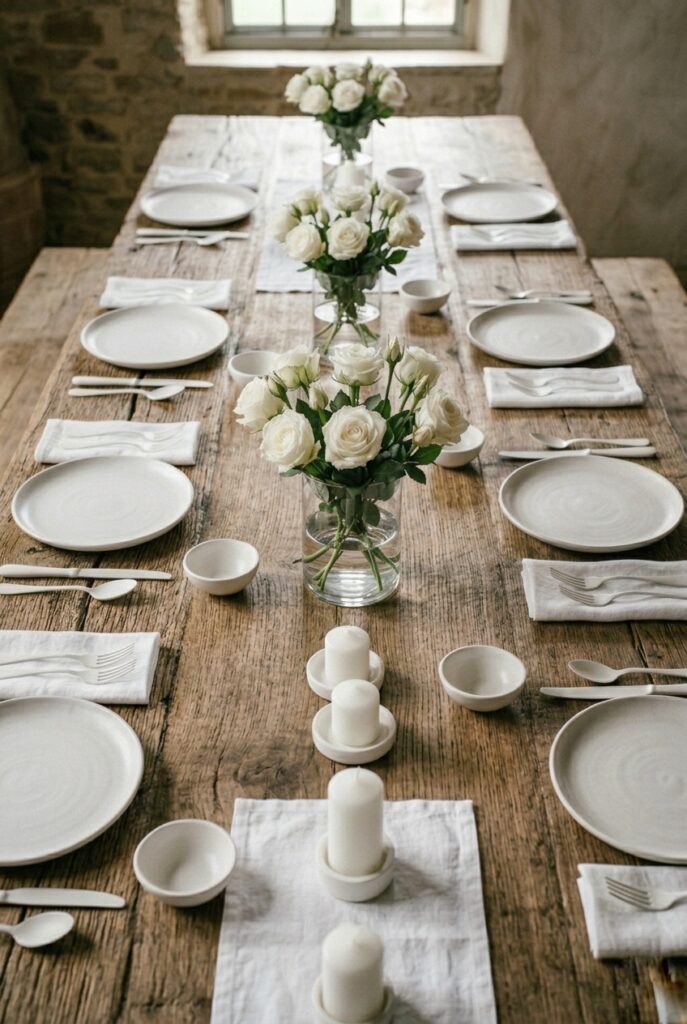
Long head table with candles and centerpieces spaced 2-3 feet apart, portrait 2:3

Long tables need more visual density than round tables because guests view them from one side.

A round table with a single centerpiece in the middle and empty space around it reads as intentional.

A long table with the same setup reads as unfinished.

On a long table, you need either a continuous element (a garland or runner down the center) or repeating small elements (candles or small vases) spaced evenly.

Space them about 2–3 feet apart instead of filling every foot.

The gaps matter. They prevent the table from reading as crowded while still providing visual anchoring points.

Garland or runner rental: $30–$60 for a 6-foot table from rental companies.

6. Candlelight Creates Simplicity (Not More Clutter)
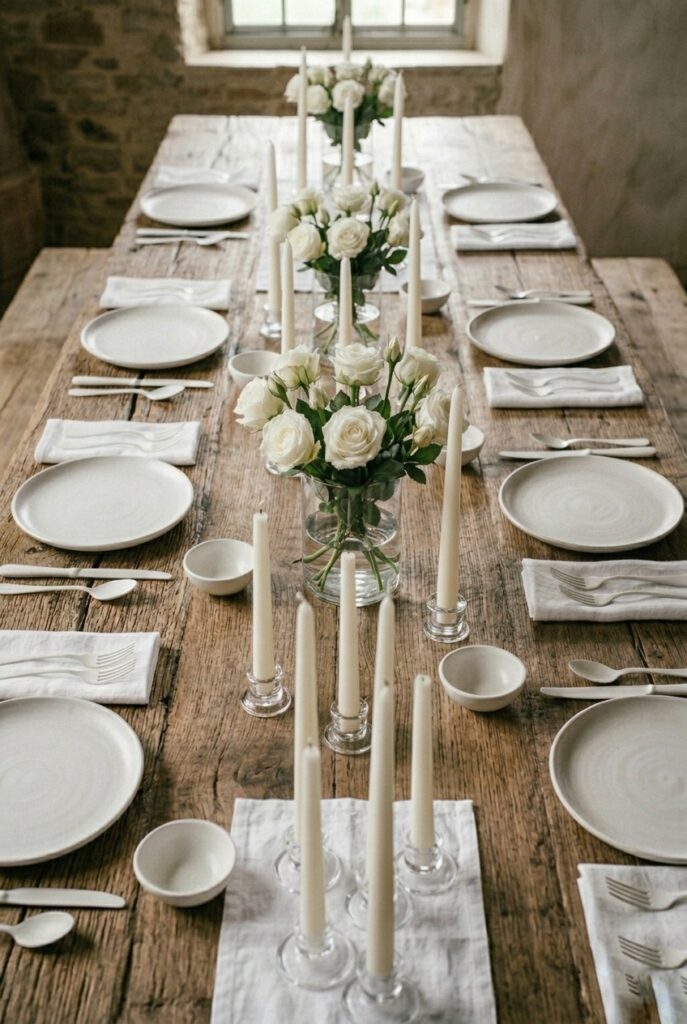
Taper candles in clear holders at varying heights, portrait 2:3

Candles are the single easiest way to make a simple table feel complete without adding visual complexity.

They’re simple because they serve a function (light the table) and create atmosphere.

Unscented taper candles in clear glass holders work with any table. Votives create gentle pools of light without the visual weight of tall centerpieces.

The key: use candlelight to fill the visual space, not more objects.

Three taper candles in different heights create the same visual impact as three separate decor pieces, but they read as simpler because candles are functional.

Taper candles: $0.50–$1 each. Clear glass holders: $3–$8 each from Amazon or IKEA. Bulk from CandleSupply.com: $0.30–$0.50 per candle.

Budget Hack: Buy unscented taper candles in bulk for under $50 total for a 50-table wedding instead of $300 from a florist. Use the money you save to upgrade linen or vases instead.

7. Greenery Is Its Own Centerpiece (Flowers Optional)
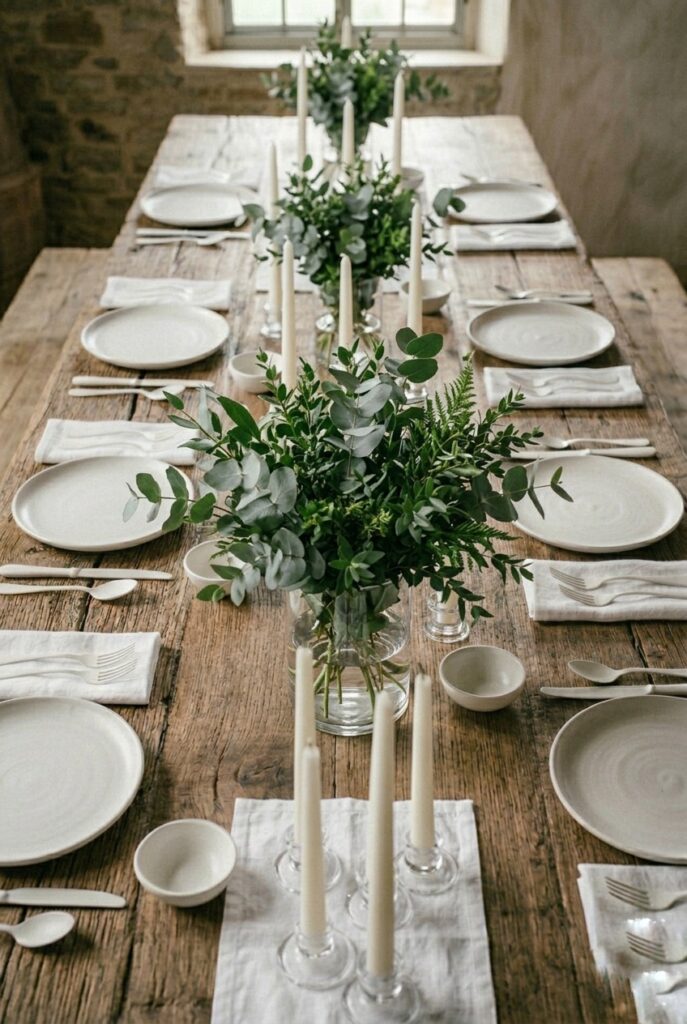
Eucalyptus or greenery arrangement in clear vase (no flowers), portrait 2:3

You don’t need flowers to have an interesting table. Eucalyptus, dusty miller, or ruscus in a clear vase with candles reads as modern and intentional.

A vase of only greenery costs $10–$20, looks fresher than flowers (no wilting), and commits you to “simple” without question.

Greenery-only tables also solve the “what color should my flowers be” problem.

Greenery goes with any color palette, any napkin color, any lighting. It’s the ultimate simple choice.

Fresh eucalyptus bundles: $10–$15 from grocery store florists or wholesale florists.

8. Place Cards Are Optional (Or Minimal)
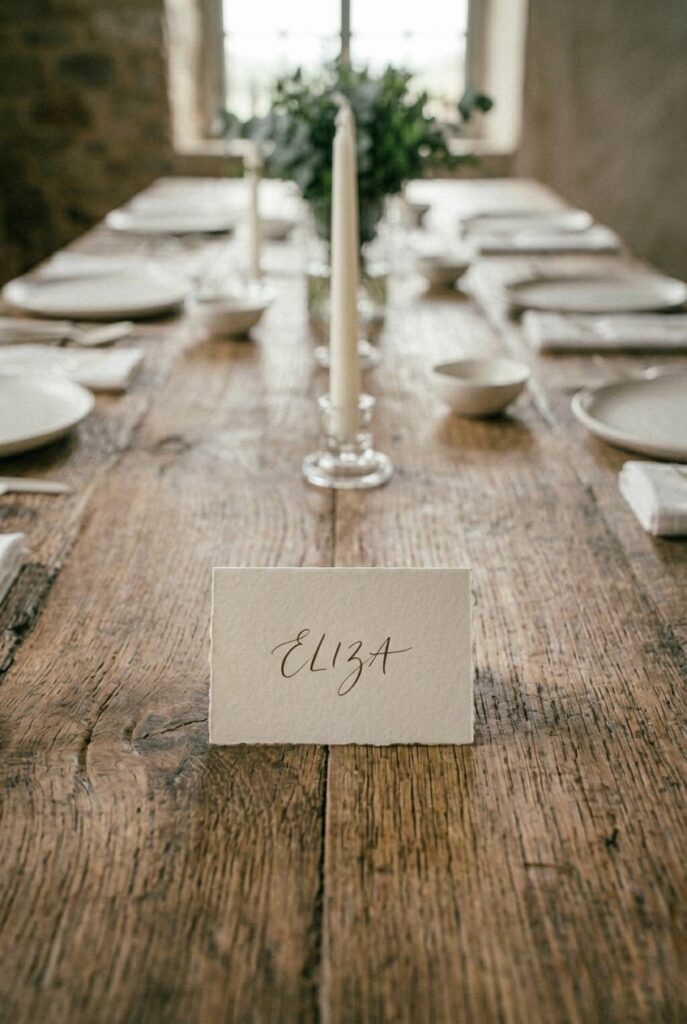
Handwritten place card on blank cardstock, minimalist styling, portrait 2:3

A simple table might skip place cards entirely and use a board at the entrance instead.

If you use place cards, make them actually minimal — a small cardstock rectangle with a name hand-written on it, nothing else.

No printed borders, no embellishments, no stands. Just a card. This reduces visual clutter significantly.

Or skip both and let guests find their seats however they want (if your guest count allows).

Some of the simplest weddings have no assigned seating at all.

That’s the ultimate simple move — no decor serving a decor function.

Blank cardstock: $0.05–$0.10 per card. Hand-write names yourself.

Taste Layer: Printed place cards with borders or fancy fonts read as trying-too-hard on a simple table.

A handwritten name on a blank card looks intentional.

The handwriting adds personal warmth that printing erases.

9. Table Numbers Don’t Have to Exist (If You Don’t Have Assigned Seating)
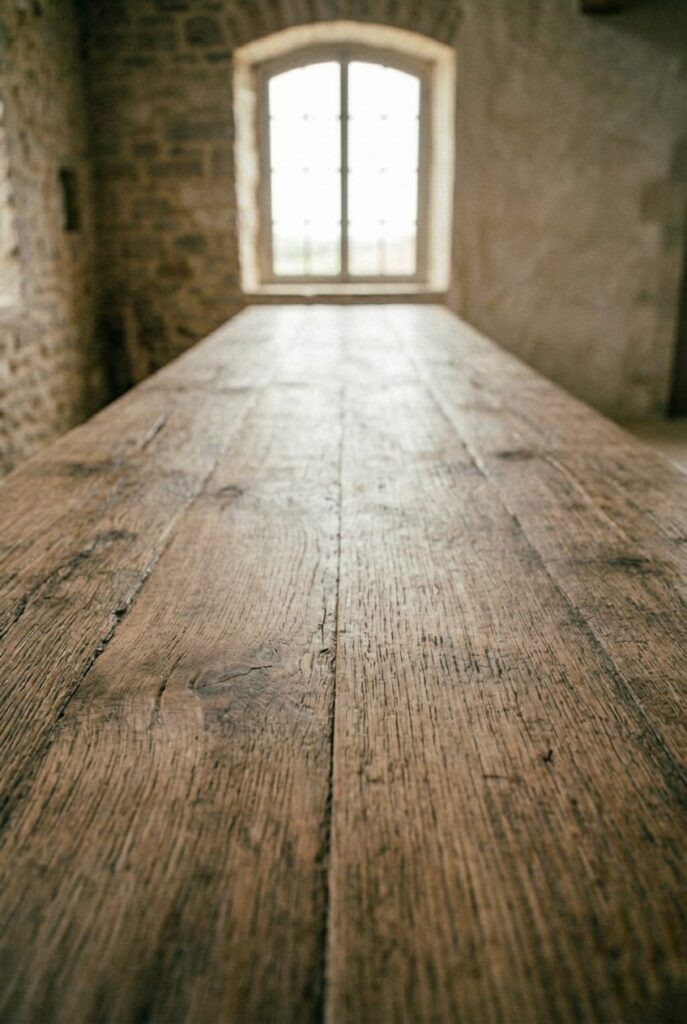
Table without numbers or elements, showing cleanliness, portrait 2:3

Speaking of simplification: if guests aren’t assigned to specific tables, you don’t need table numbers.

Sounds obvious, but it’s the move that makes simple tables actually achievable.

One fewer element to design, source, place, and photograph.

If you do use table numbers, use the same minimal approach — a single number, nothing else, on a small card or wooden stand.

Skip entirely: saves $50–$200.

10. Mix Your Texture, Not Your Color

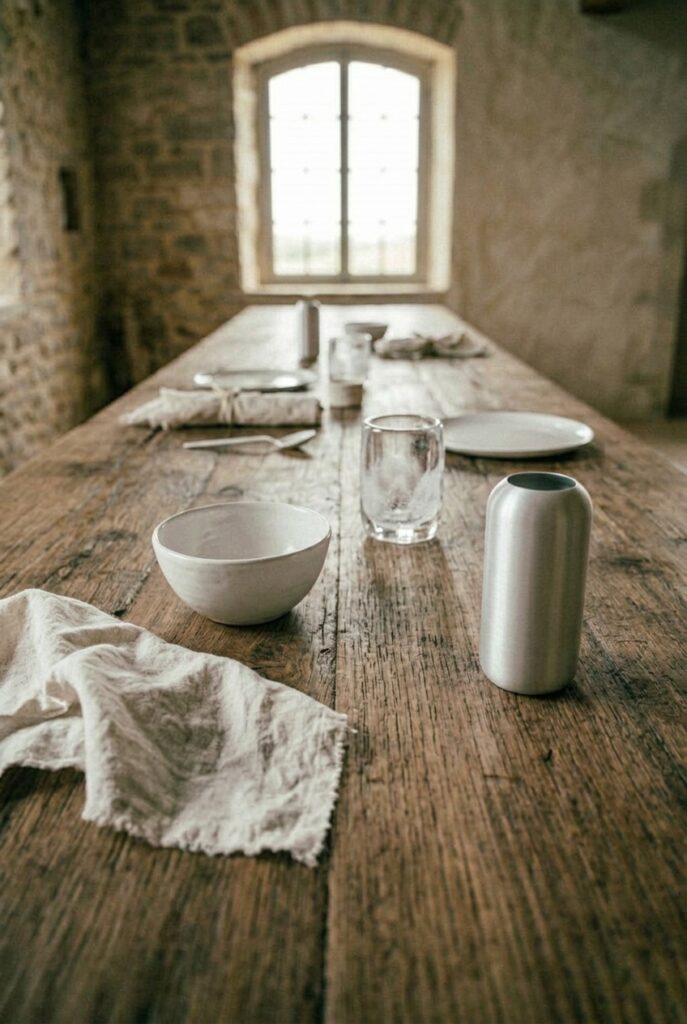
White materials with different textures (linen, ceramic, glass, metal) in white/cream palette, portrait 2:3

If you want subtle variety on a simple table without breaking simplicity, vary texture within a single color.

A white linen napkin next to a white ceramic plate next to a white candle in a clear glass holder gives you visual interest through material difference (soft/hard/clear) without color variation.

The eye reads this as intentional texture play, not clutter.

The mistake: mixing color AND texture (white linen + blush napkin + ivory plate + cream candle + champagne accent). That’s chaos disguised as variety.

All materials already discussed in previous ideas.

11. Decide: Is This Table Set for Eating or Viewing?

Here’s a question couples don’t ask but should: Are people sitting at this table to eat and talk, or are they walking past it for photos? Simple design changes based on the answer.

If guests are sitting: prioritize negative space and clear sightlines. Make it easy to have conversation.

If guests are viewing: prioritize what reads well in photos.

Lower arrangements so faces are visible, but ensure the table has enough visual anchor points that it photographs as intentional.

A simple table designed for dining looks completely different from a simple table designed for photographs. Don’t assume they’re the same.

This costs nothing — it’s a functional decision.


Decision Filter

If your wedding is under 75 guests and you’re not doing assigned seating, you can go truly minimal (no place cards, no table numbers, just one centerpiece and candles).

If you’re 75–150 guests with assigned seating, add table numbers and place cards but keep everything else simple.

If you’re over 150 guests, add a subtle runner or repeated small elements to guide the eye, but do NOT add more stuff — just space the existing elements more strategically.

If your venue is a blank ballroom, you’ll need more visual anchoring than a garden setting — increase your candlelight and add a runner.

If your venue is naturally beautiful, you can go even more minimal because the architecture/view is your backup design.


The Real Reason

Here’s what photographers and venue coordinators know: simple tables photograph better than decorated tables.

In photos, your eye lands on the table, not on thirty different decor elements fighting for attention. Also, and this matters: your guests will spend 2+ hours at these tables.

A table loaded with stuff makes eating awkward, conversation difficult, and guests feel rushed.

A simple table gives them room to be comfortable.

The couples with the most regrets always say the same thing: “I wish we’d decorated less and left more space for people to actually enjoy themselves.”

Simple is also more budget-friendly not because items cost less, but because you buy fewer items.

One good vase beats five cheap vases. One high-quality linen beats three medium linens.

Simple forces you to spend money on things that matter instead of spreading a small budget across too many ideas.

Also: simplicity scales. A simple design works for 50 guests and 250 guests.

An overly decorated design either looks empty at 50 or looks cluttered at 250.

If you might need to adjust your guest count last-minute (which many couples do), simple is more forgiving.


Mistakes to Avoid

Mistake 1: Confusing “simple” with “no effort.” Competitors will tell you simple means grab whatever is cheap and call it minimal.

But simplicity requires more intentionality, not less.

A simple table takes more planning because every element has to earn its place.

If you’re actually doing simple, be prepared to say no to 80% of decor ideas and commit fully to the remaining 20%.

Mistake 2: Mixing textures and colors under the assumption variety = interest. Couples add “texture” by mixing linen + silk + burlap + wood + metal + glass, and it reads as a craft fair, not a wedding. Interest comes from variation within a decision (all white, varying textures) not from indiscriminate mixing.

Mistake 3: Leaving visual gaps without realizing they look unfinished instead of intentional. A table with one tiny centerpiece and massive empty space reads as sparse, not simple.

A simple table still has visual anchoring points. They’re just fewer and more purposefully placed.

The gap between simple and sparse is about composition, not quantity.

Mistake 4: Not testing your simple design at the actual venue with actual lighting. A simple white table might look crisp and clean in daylight, then turn grayish or yellow under bad venue lighting.

A simple table with green elements might look gorgeous in natural light but muddy under uplighting.

Always test. One centerpiece rental for a walkthrough costs $30–$50 and saves you from a design that doesn’t work in reality.


FAQ

Can a simple table look elegant?

Absolutely. Elegant is about restraint and intention, which are core to simplicity.

A simple white table with high-quality linens, one perfect white rose per table, taper candles, and empty space reads as more elegant than a table overloaded with decorations.

Simplicity and elegance often go together because both require discipline.

How do I make sure a simple table doesn’t look cheap?

Upgrade two things: linens and flowers (or greenery). Skip everything else.

High-quality linen makes even minimal decor read as expensive.

A single beautiful rose in a high-quality vase costs less than a cheap mixed arrangement in a thin vase.

Spend your money where it shows — materials, not quantity.

What’s the minimum number of elements a simple table needs?

Three: a table covering (linen or venue tablecloth), a centerpiece (flowers, greenery, or just candles), and candlelight.

Everything else is addition, not requirement.

You can do a wedding with just those three elements and it will read as intentional.

Does simple mean no color?

No. Simple means color commitment.

You can have a blush table with blush flowers and blush candles (all blush, varying materials).

You can have a white table with white flowers and white candles.

You can have a green table with green runners and green-toned flowers.

The key is committing to one color story, not variety for variety’s sake.


Table Decor Budget Breakdown

ElementSimple BudgetMid-Range SimpleInvested Simple
Linens (per table)Venue default$15–$25 rental upgrade$35–$50 quality rental
Centerpiece (per table)Greenery only, $10–$15Single flower type, $25–$40Premium single arrangement, $60–$100
Candles (per table)Bulk votives, $15–$25Taper candles with holders, $30–$50High-quality glass holders, $50–$80
Place cardsHand-written, $0Minimal cardstock, $0.10 eachCalligraphy, $1 each
Table runners/numbersSkip entirelySmall wooden numbers, $2–$5 eachMinimal runner, $15–$20
Total per table$45–$70$90–$145$180–$300

Simple doesn’t mean boring. It means every single thing on your table has a reason to be there.

Before you add anything, ask: what does this add? If the answer is “visual interest,” that’s not enough.

It has to serve a function (light the table, hold flowers, keep napkins clean) or it has to be so beautiful that its existence alone justifies taking up space.

Most decor fails this test. The items that pass are the ones your guests will actually notice.

Start with your linens. Invest in quality. Then add one centerpiece — flowers, greenery, or nothing.

Then add candles. Then step back and photograph it from guest height.

If it reads as complete and intentional, you’re done. If it feels sparse, add one more small element.

But honestly, you’re probably done before you think you are. That’s the whole point of simple.

Read more about what makes elegant table design work if you want to understand the design principles underneath simplicity.

Or explore DIY decor approaches that work within a simple framework. If budget is driving your simplicity, check out cheap table decor strategies that still look intentional.

Leave a Comment

Your email address will not be published. Required fields are marked *

Scroll to Top