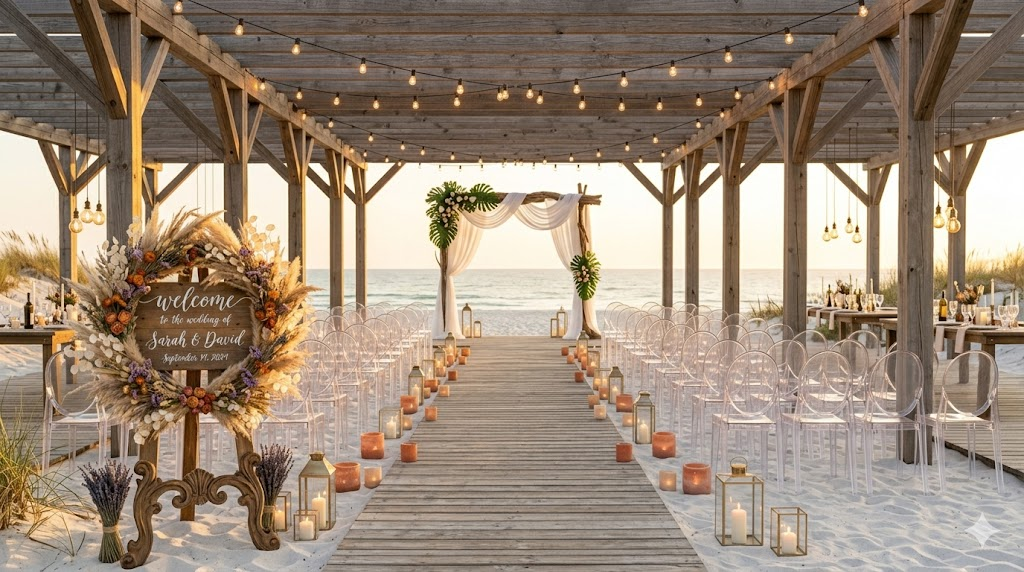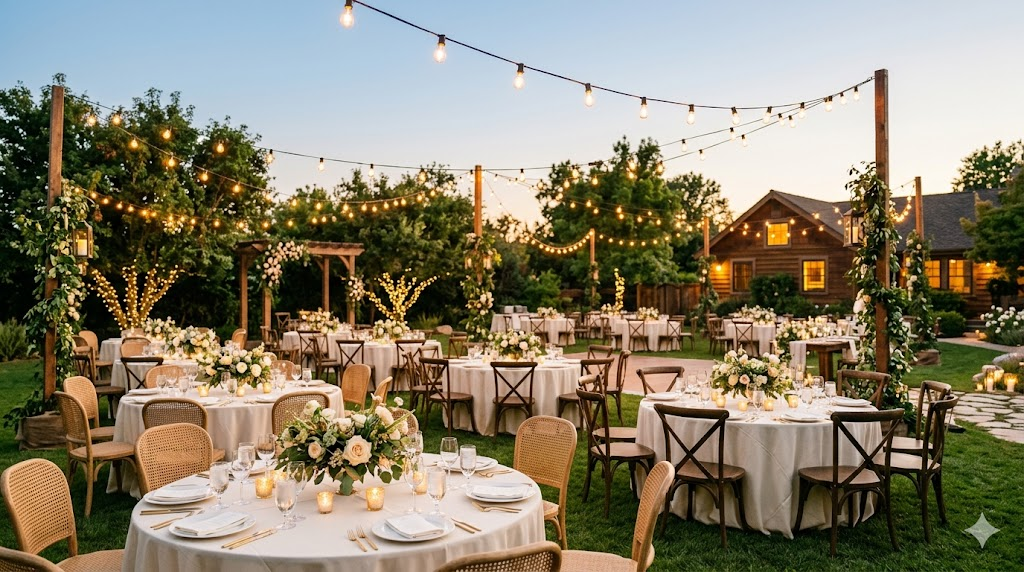
The aisle is the only part of your ceremony every single guest sees before you do — and it is the setting for every processional photograph your photographer takes.
Most couples spend ninety percent of their ceremony decor budget on the arch and leave the aisle as an afterthought, when the aisle is where your guests form their very first impression of the day.
Less decoration placed with more intention almost always outperforms more decoration placed without a plan.
1. Alternating Lanterns and Floral Clusters on Shepherd’s Hooks
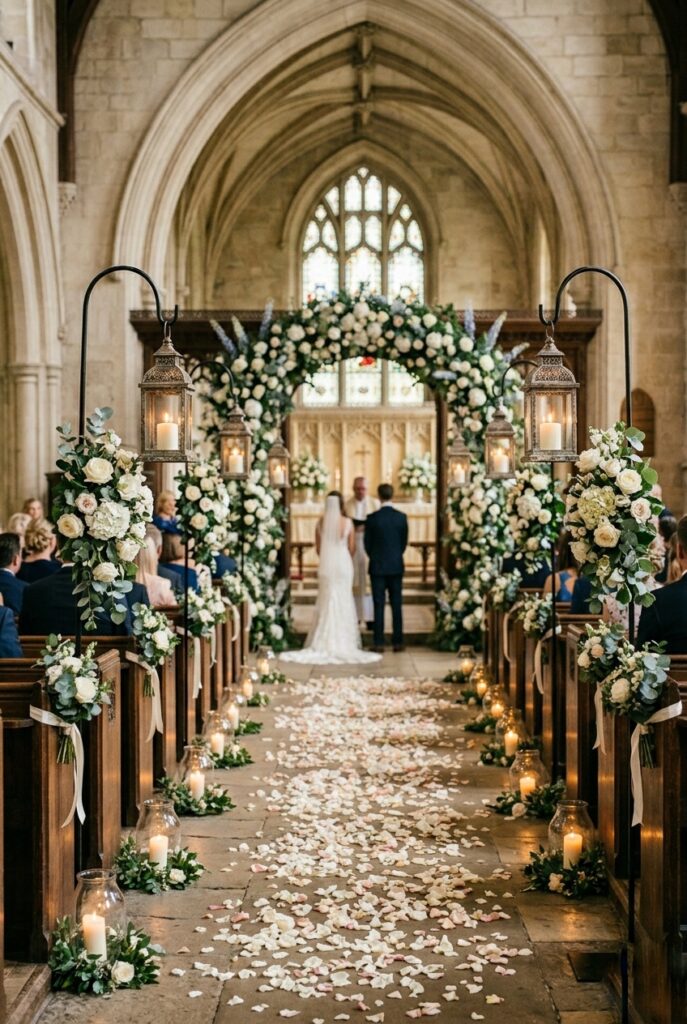
Shepherd’s hooks are the most versatile aisle tool because they lift floral arrangements to standing height — which photographs cleanly at mid-frame in processional shots — without blocking sightlines or requiring any attachment to chairs, and the alternating pattern of one lantern then one floral cluster creates visual rhythm without the aisle reading as a matching set from a rental catalog.
Metal hooks in matte black or antique brass run $2–$4 each on Amazon, small floral clusters use three to five stems each and can be assembled the morning of the wedding, and the full framework for outdoor ceremony framing from entry arch to altar covers how shepherd’s hooks fit into the broader ceremony design.
2. Pew Markers — The Spacing Rule Nobody Tells You
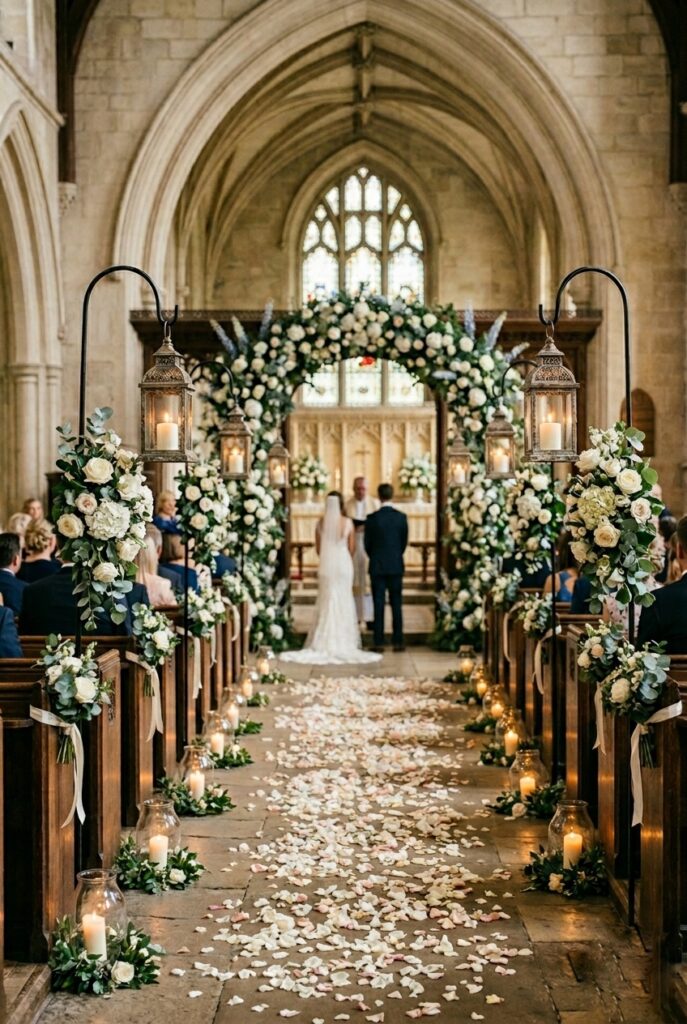
Decorating every other row rather than every single chair actually photographs better, costs half as much, and makes the aisle feel longer and more expansive — when you pack a marker on every chair the aisle reads as a wall of florals, but when you alternate, each arrangement has the breathing room to read as a distinct moment and your photographer gets clean sight lines down the full processional frame.
A four to six stem cluster tied with ribbon to the end chair costs $4–$9 per marker in materials, and the complete breakdown of attachment methods, ribbon types, and foam versus water tube options is in the pew decoration guide.
3. Glass Hurricane Lanterns Along the Floor — Done Right
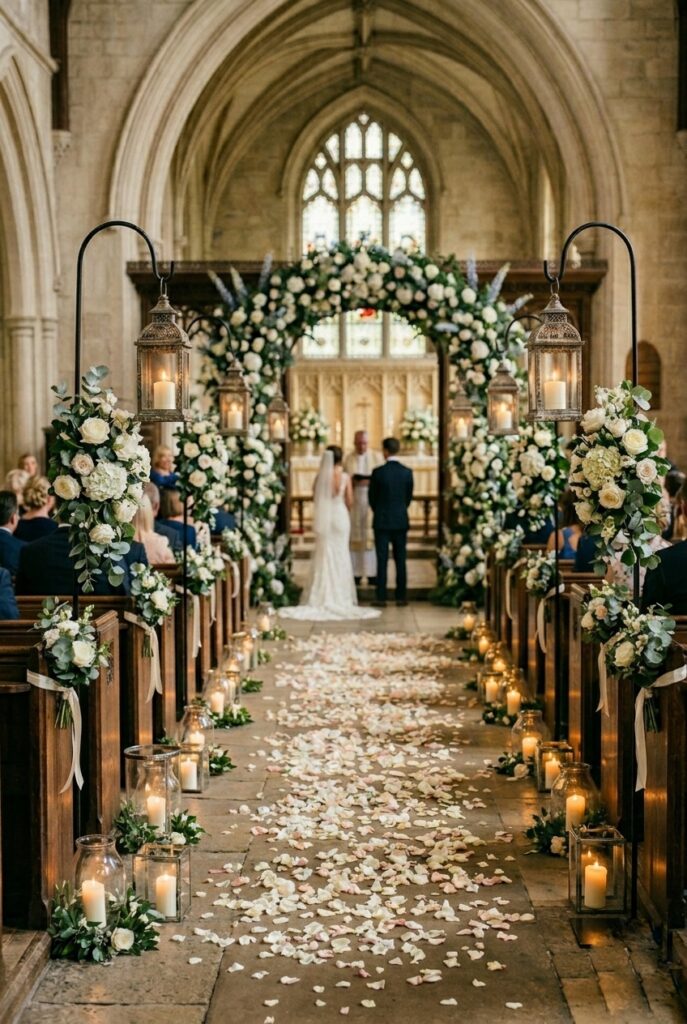
Floor lanterns create a low, warm light source that glows at the level of guests’ legs and flower petals — visible in every shot from the rear of the aisle — but the version that ruins this look is matching lanterns of identical height in a perfectly straight line, which reads as hotel lobby rather than ceremony space.
Buy three heights (8″, 12″, and 16″) and alternate in irregular groupings of two or three, then check both the wedding candle centerpiece guide for flame format and venue permission guidance and the rustic centrepiece guide if you want the lanterns to anchor a broader wood-and-candle table scheme at the reception too.
BUDGET HACK #1: Clear glass hurricane lanterns at wedding rental companies typically run $6–$12 per lantern per day, which adds up fast. Instead, check Facebook Marketplace and local wedding resale groups — couples sell lanterns after their weddings for $1–$3 each because they have nowhere to store them. Search “wedding lanterns” in your area with a location filter and buy four to six weeks before your date. For a 20-lantern aisle, you can frequently source the entire set for $30–$60 versus $120–$240 retail or rental.
4. An Aisle Runner That Actually Works
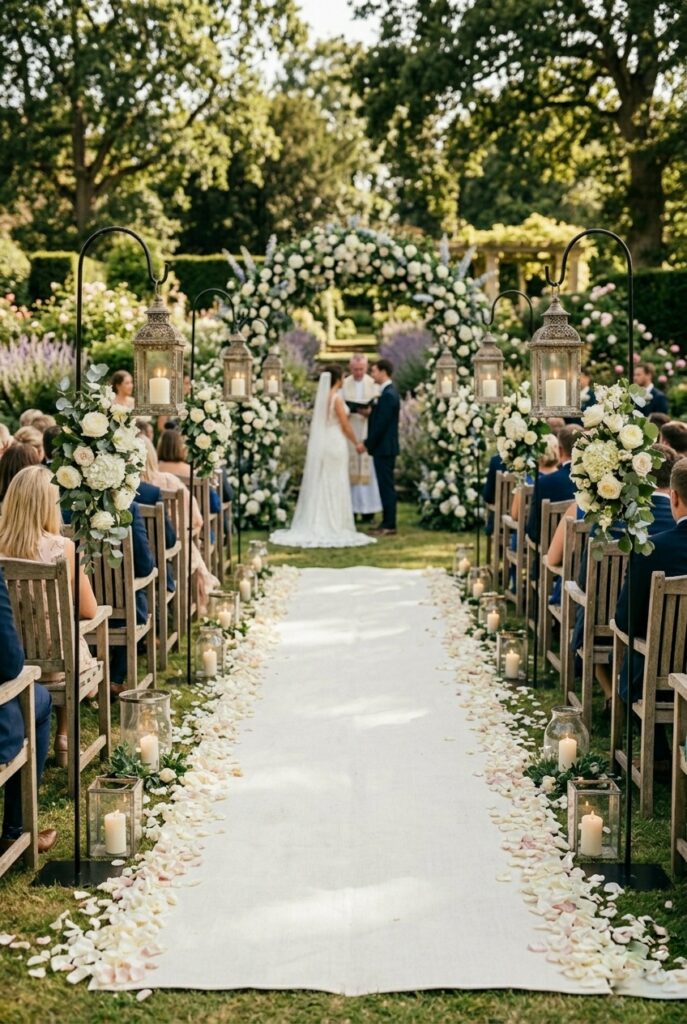
A white polyester runner from a wedding supply site wrinkles in transit, bunches under foot traffic, catches on heels, and photographs as plasticky — while a natural linen or unbleached muslin runner at $2–$4 per yard from Fabric.com creases organically and reads as intentional.
Any runner on an indoor hard floor must be taped down at the edges with white gaffer tape to prevent bunching, test this at your venue before the wedding day rather than during the processional, and if adhesives are prohibited, a weighted fabric like canvas or cotton duck will lay flat without tape.
5. Floral Petal Carpet — The One Competitors Always Underprice
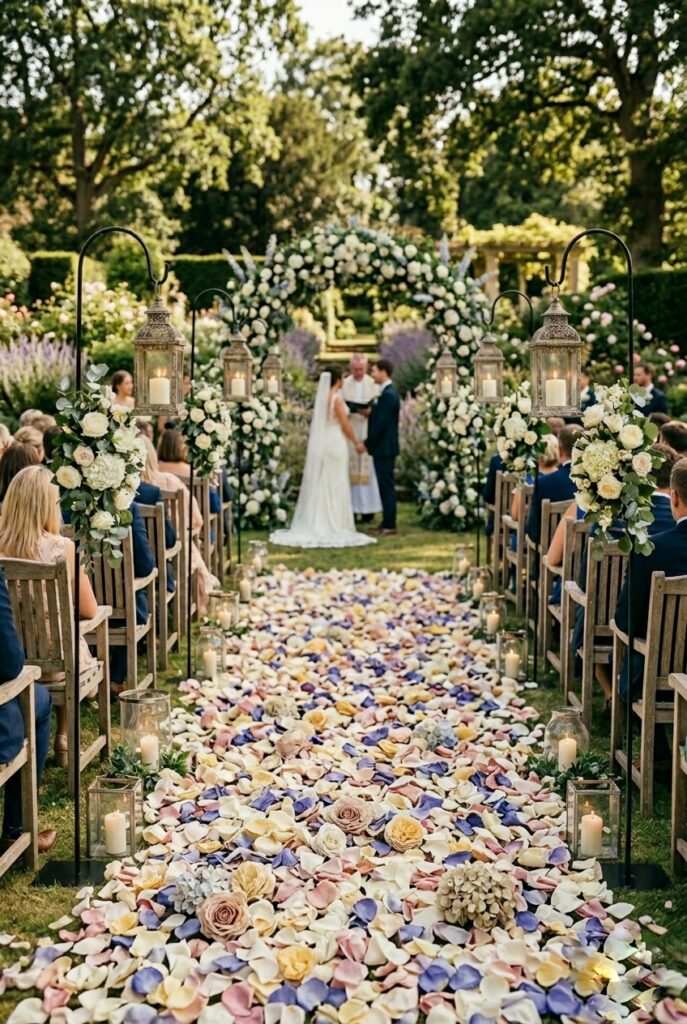
A properly dense petal carpet — continuous coverage, not scattered petals — requires 15–25 pounds of fresh roses for a 50-foot aisle at $20–$40 per pound from a florist, which puts the real cost at $300–$1,000 rather than the budget-friendly figure most aisle articles cite.
Freeze-dried petals from a wholesale supplier cost $40–$80 for a full aisle, hold their color, don’t wilt, photograph identically to fresh, and hold position far better in any outdoor breeze — everything you need to calculate the right quantity for your specific aisle length is in the aisle flower carpet guide.
6. Draped Fabric Along Chair Rows — Chiffon vs. Tulle Decision
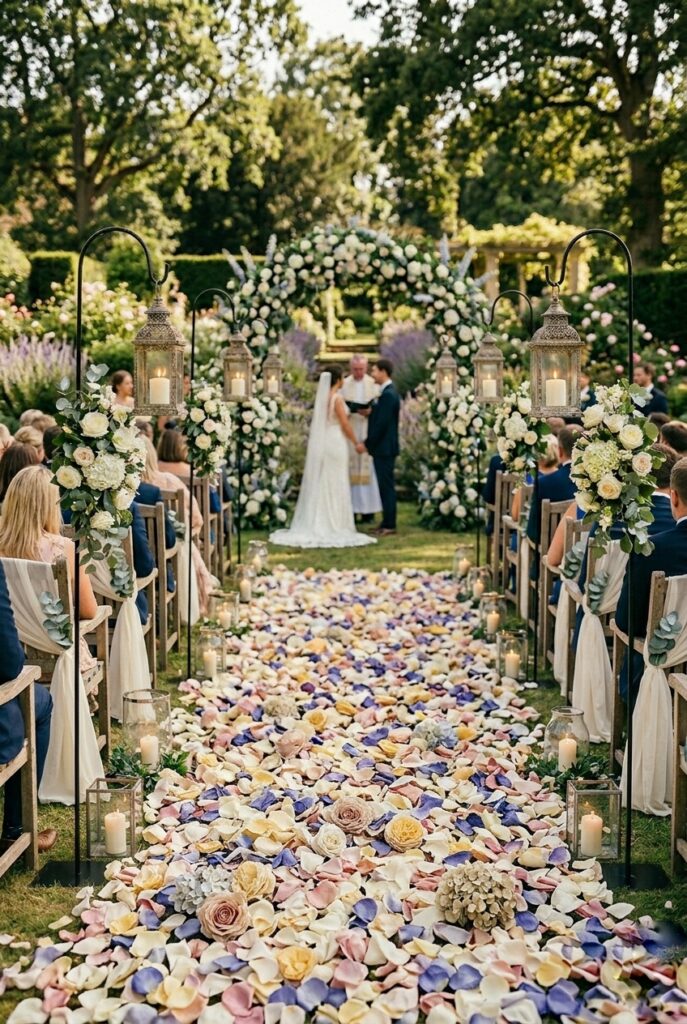
Tulle sashes snag on chair corners, wilt within an hour of setup, and photograph as synthetic regardless of how carefully they are tied — chiffon drapes with natural weight, photographs softly in both indoor and outdoor light, and a 10-yard length covers two to three full chair wraps at $8–$14.
Tie in a loose low knot rather than a bow, tuck a single eucalyptus sprig into each knot, and for the full range of no-skill aisle decoration approaches that hold up all day without floristry experience, that guide is worth reading before you buy anything.
BUDGET HACK #2: Chiffon fabric for chair sashes is dramatically cheaper bought by the bolt than in pre-cut “wedding sash” packs. A pre-packaged set of 10 chiffon sashes on Amazon runs $18–$28 for ten chairs. Buying chiffon fabric from Fabric Wholesale Direct at $2.50–$4 per yard and cutting your own sashes at 10-yard lengths costs $25–$40 for the same ten chairs — and you control exact color, width, and drape weight. For a 100-guest ceremony needing 50 sashes: pre-cut packs cost $90–$140; bolt fabric cut yourself costs $38–$60.
7. Overhead Aisle Decor — The Highest-Impact Upgrade for Indoor Ceremonies
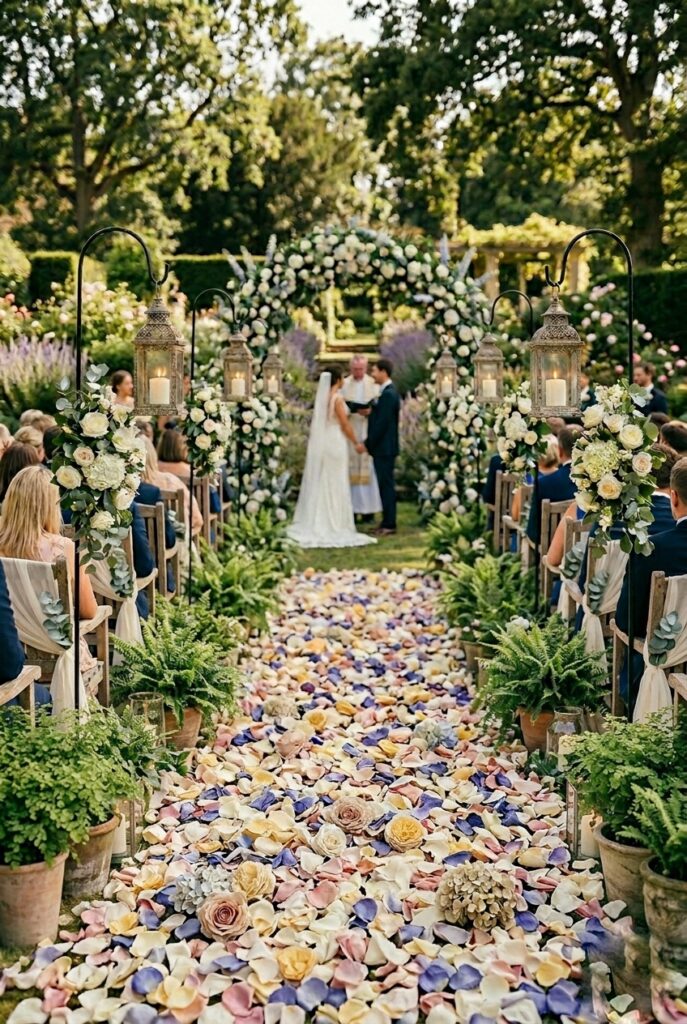
An overhead garland draped in a loose catenary curve from ceiling hooks creates a botanical tunnel that appears in every processional photograph and video, requires no floor footprint, creates zero tripping hazard, and is completely invisible to guests until the music starts — at which point it becomes the detail everyone mentions.
Artificial eucalyptus garlands run $8–$14 each and four to six strung end-to-end cover most aisle lengths, confirm ceiling attachment permissions with your venue before purchasing anything, and the complete guide to church and indoor aisle decoration covers rigging options, command hook ratings, and draping rig alternatives for venues that restrict permanent attachments.
8. Potted Ferns and Living Plants as Aisle Borders
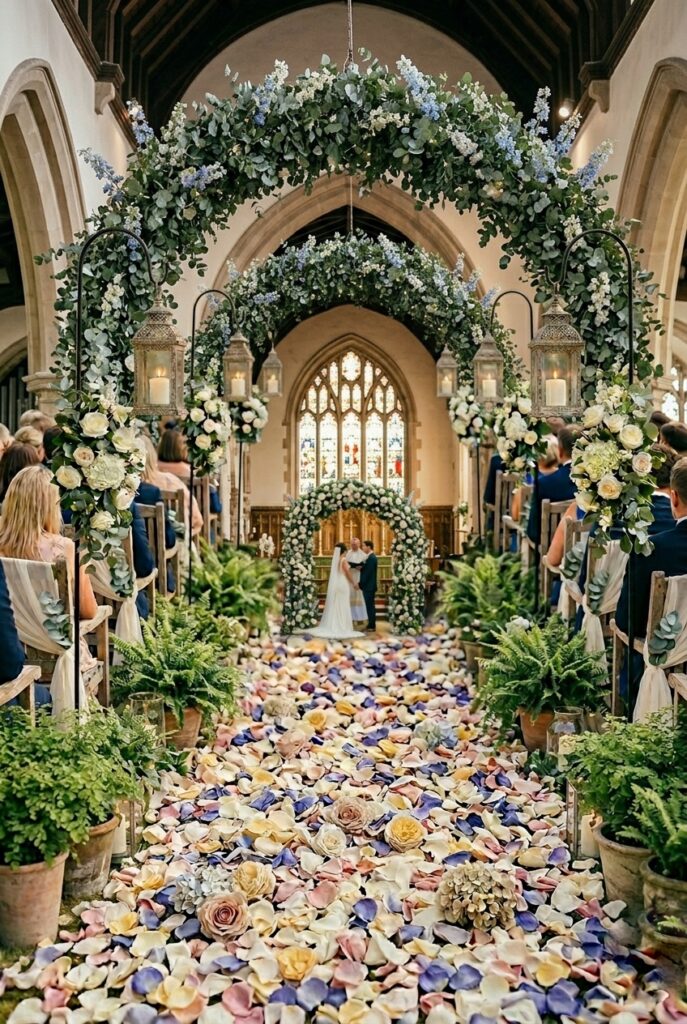
Living plants cost less than fresh florals, require no water management during setup, hold all day without wilting, and serve double duty at the end of the night as guest take-home gifts or sweetheart table flankers — Boston ferns in 10″ nursery pots run $8–$18 each at Home Depot, and a row of six per side gives enough density to read clearly in photographs from the rear of the aisle.
This approach is particularly strong for outdoor, garden, and barn ceremonies where the greenery reads as an extension of the setting rather than decoration placed inside it, which is exactly the vocabulary behind rustic wedding decor more broadly.
9. Chair-Back Posies — The Cheapest Meaningful Upgrade
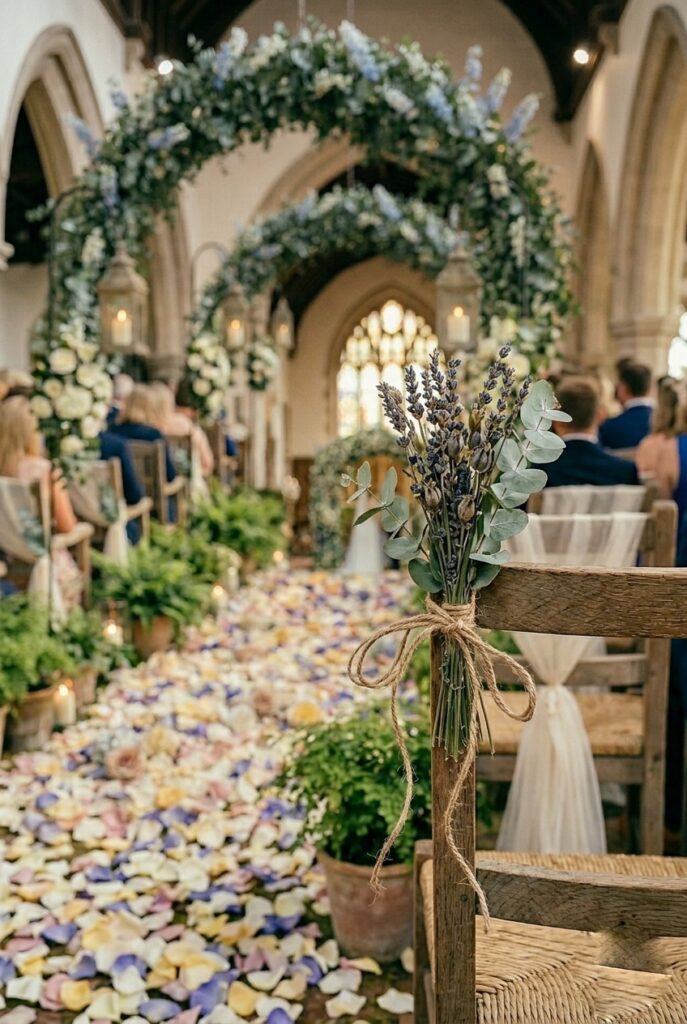
Three to five stems of eucalyptus, dried lavender, or a single dried rosebud bound with twine and tied to the chair slat costs $1.50–$3 per chair all-in and shows up in every photograph where a guest is seated and glances back toward the aisle — the lowest-cost aisle marker on this list and one of the most-commented-on details at ceremonies where it appears.
Eucalyptus from Trader Joe’s gives six to eight posies per bunch, dried lavender bundles from Amazon at $14–$22 for 100 stems make thirty to forty posies from one purchase, and the full step-by-step sourcing and assembly process is in the DIY aisle decoration guide.
BUDGET HACK #3: Ceremony florals — including aisle markers and posies — cost 30–40% less when ordered directly from a wholesale flower market rather than through a florist. In most major US cities, wholesale flower markets are open to the public on Friday and Saturday mornings. For smaller cities without a local market, GrowersBox.com and BloomsyBox wholesale both ship directly to consumers with no minimum order requirement. A mixed box of 100 stems suitable for ceremony aisle markers runs $45–$75 shipped, compared to $120–$200 for the same volume from a retail florist. Order two to three days before the wedding and keep stems in water at room temperature to open fully before the ceremony.
10. The Aisle-to-Reception Transfer System — Built In from the Start
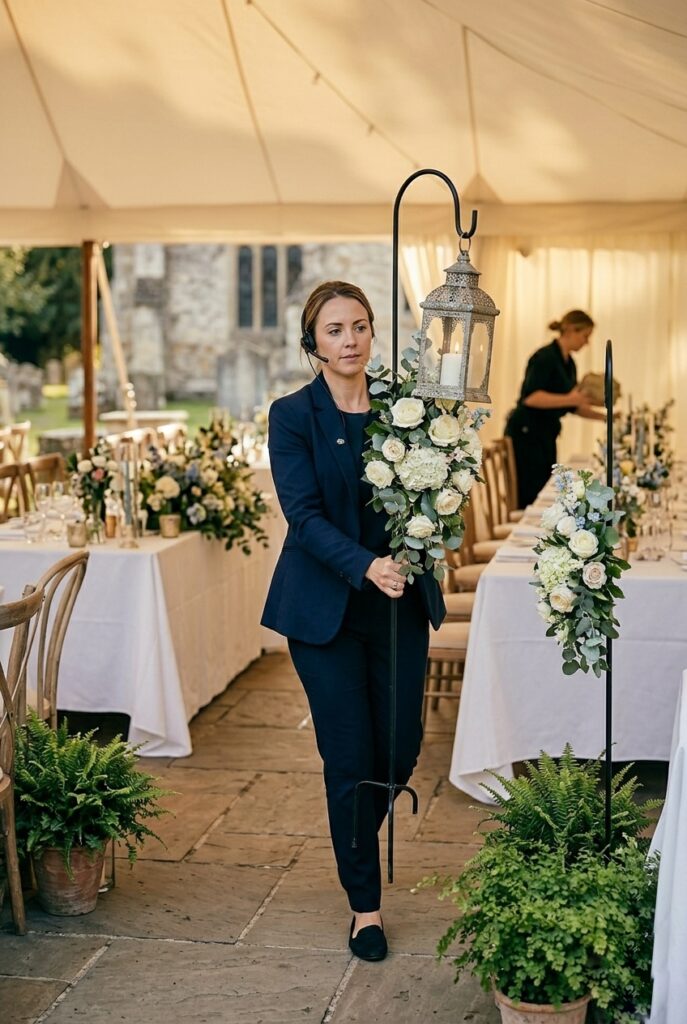
The ceremony-to-reception transfer only works when it is built into the aisle plan from the very beginning — identify your three or four highest-value pieces (typically the shepherd’s hook arrangements or entrance pedestal clusters) as transfer pieces, build them with detachable bases and floral water tubes rather than dripping wet foam, and give your day-of coordinator a written list of exactly where each piece moves during cocktail hour.
Done correctly this takes one coordinator and two venue staff approximately twelve minutes to execute, those four arrangements now serve two separate spaces instead of sitting in an empty ceremony room for three hours, and the reception aisle decoration guide covers how to stage and integrate the transferred pieces when they arrive at their new position.
Before you finalize any aisle decoration plan, stand at the back of your ceremony space and look toward the altar — that is the angle every processional photograph is taken from, and it tells you immediately where your budget will do the most visible work.
For the complete picture across every aisle format and venue type, start with the full aisle decoration guide and the unique wedding decor ideas guide for the specific finishing details that separate a well-decorated ceremony from one guests actually remember.