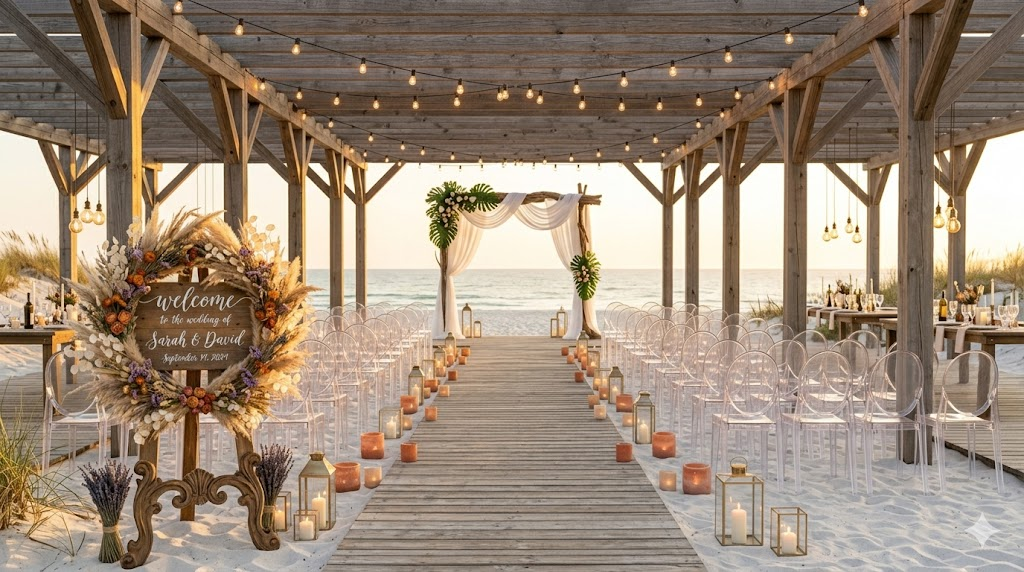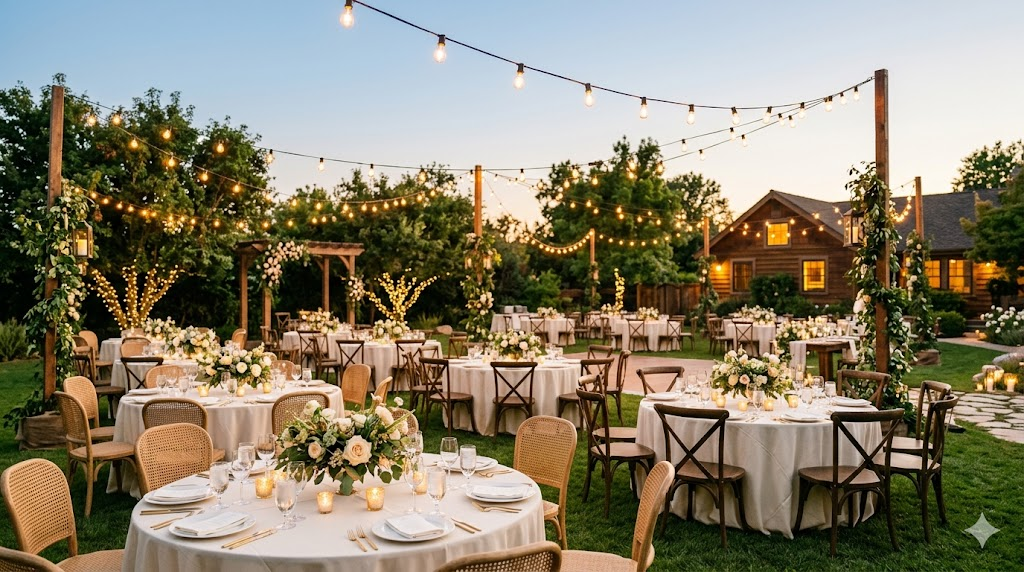
You know what separates an elegant table from one that just looks crowded? The table can breathe.
Guests can see each other’s faces instead of peering around a wall of decorations, and that comes down to sight lines, texture, and hierarchy, not how many flowers you bought.
Most couples spend weeks picking blooms when the real difference between a table that photographs like a luxury hotel and one that reads as cluttered comes down to what they choose to leave out.
1. Master Height Variation Without Looking Chaotic
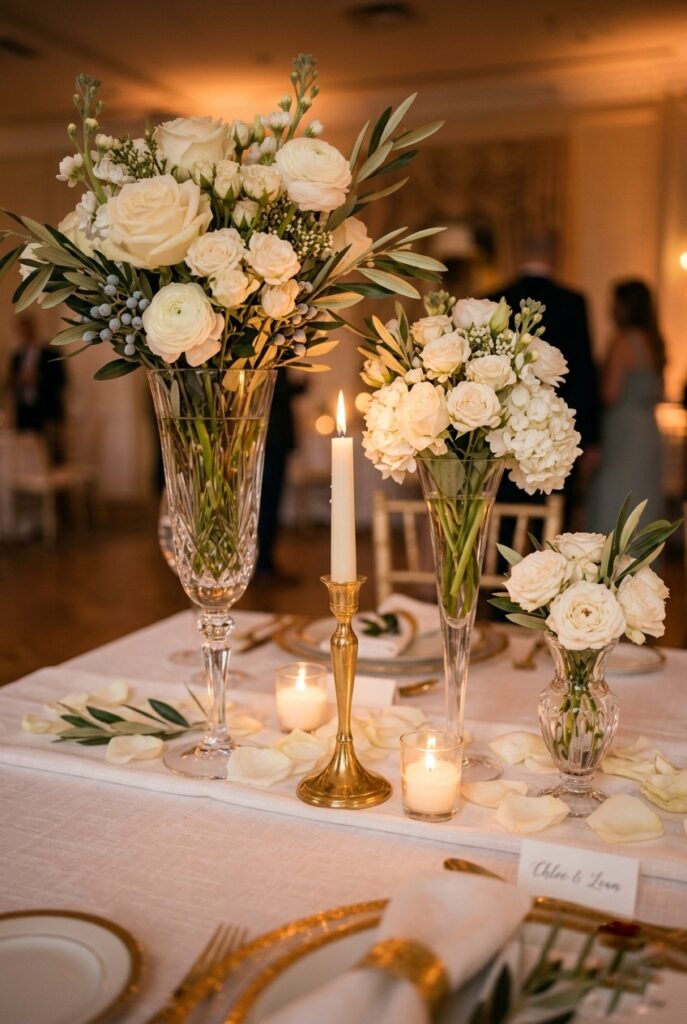
Place your tallest element toward one side of the table’s center, drop to a low arrangement on the opposite diagonal, and add a middle-height candle grouping between them so your eye follows a line across the table instead of stopping and starting.
Only attempt this with at least ten feet of clearance and round-table seating, since low ceilings or cocktail-height seating will have tall arrangements blocking views; renting tall glass cylinders in one shape and varying only the height is one of the smarter wedding decor ideas on a budget for keeping this consistent across every table.
Budget Hack: Rent tall glass cylinders from a wedding rental company ($15–$25 per vase) instead of buying, then use the same vases for all tables. One vase shape, varied heights, creates intentional unity instead of randomness. You save $300 by choosing constraints.
2. Upgrade Your Linens Before You Buy a Single Flower
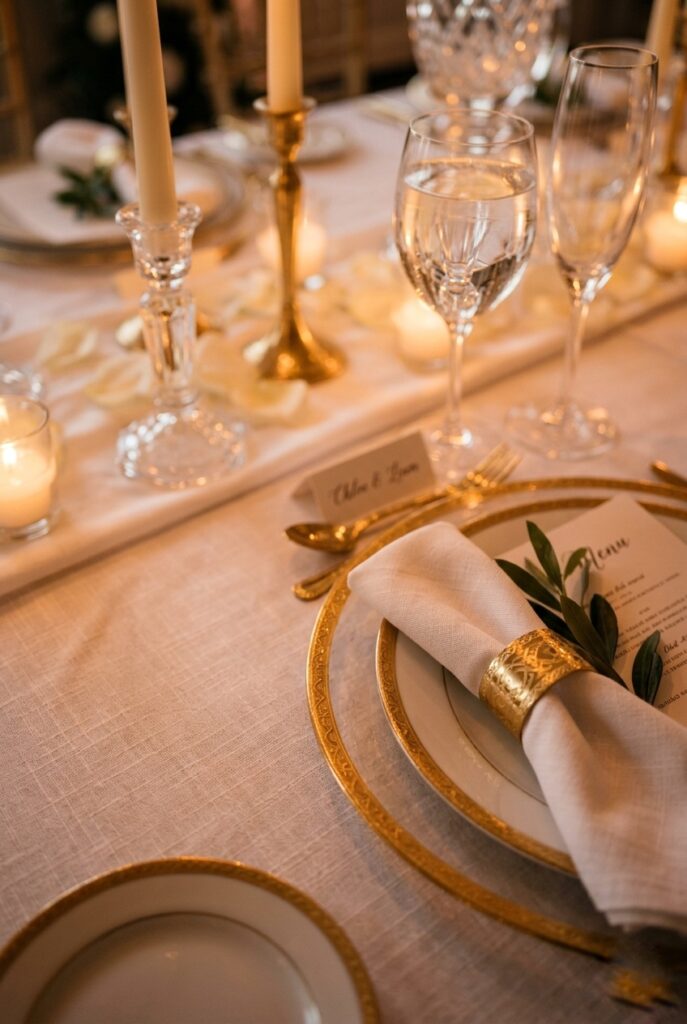
Choose one hundred percent linen in ivory, blush, or charcoal over polyester, since linen has weight and texture that catches candlelight while a thin, shiny tablecloth reflects it flat and reads as cheap under anything expensive sitting on top.
Test your fabric under the actual lighting your venue will use before you commit, since a linen that looks perfect in daylight can turn gray under certain uplighting; this kind of restraint is exactly what these elegant wedding decor ideas build on table after table.
3. One Sentence on Candlelight That Changes Everything
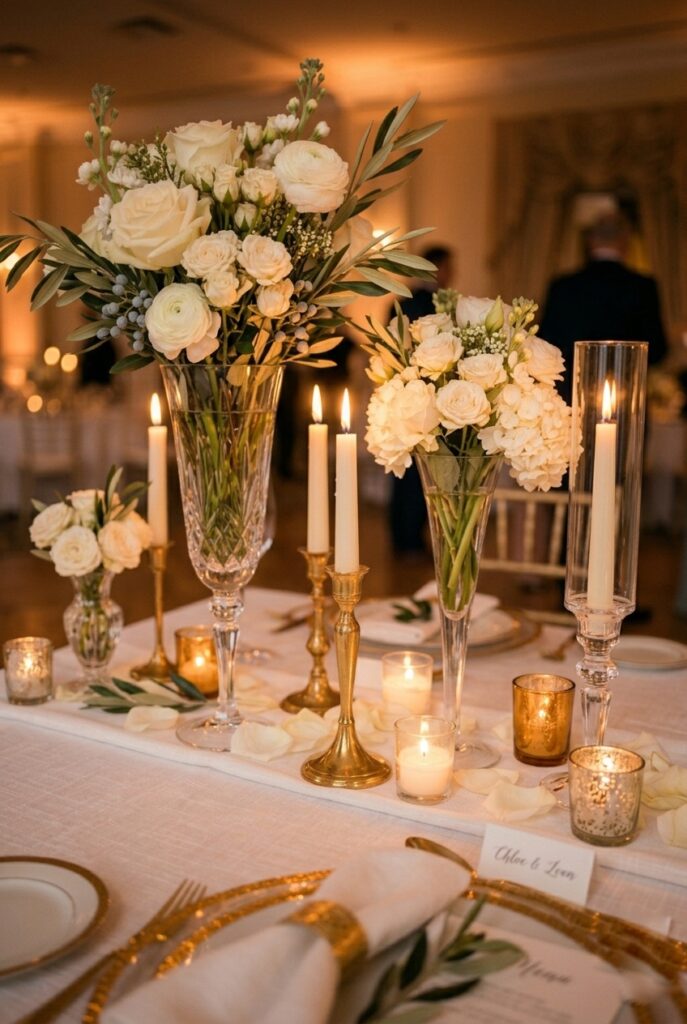
Keep your taper candles at roughly one-third the height of your tallest centerpiece so they don’t compete with your focal point, and add two or three votive candles at table level rather than above the surface where they create a visual wall.
Mixing flame heights this way is what makes a table feel alive instead of static, so treat candlelight as a design decision rather than an afterthought if your venue allows open flame.
Budget Hack: Buy unscented taper candles in bulk ($0.40 each) from CandleSupply.com instead of retail candle shops. Order 200 for a 50-table wedding and spend $80 total instead of $400 at a florist. Use holder rentals from your venue’s preferred rental company (usually included).
4. Place Cards That Actually Get Noticed (Not Just Read)
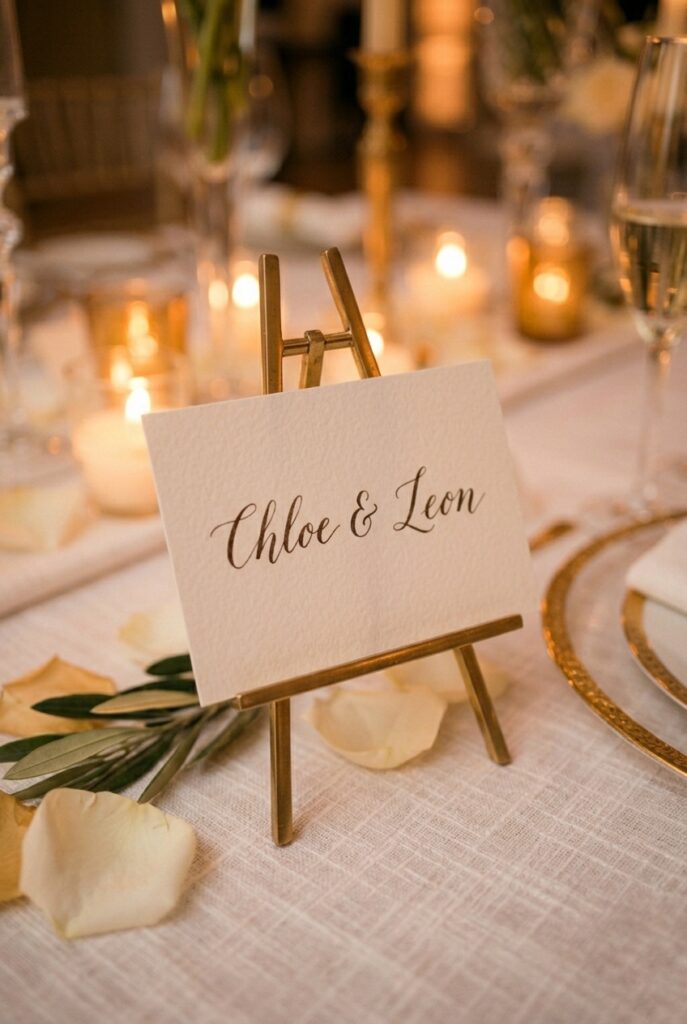
Prop each card on a small brass or gold easel at a slight angle, or hand-write names on a small card tucked into a napkin fold, so the vertical element breaks up the table’s flatness and draws the eye from three feet away instead of six inches.
Skip printed stick-on labels entirely and size your cards to be read while standing, since tiny place cards on a large table simply get lost; this is one of the DIY wedding decor touches that’s genuinely worth doing yourself.
5. The Charger Plate Strategy No One Talks About
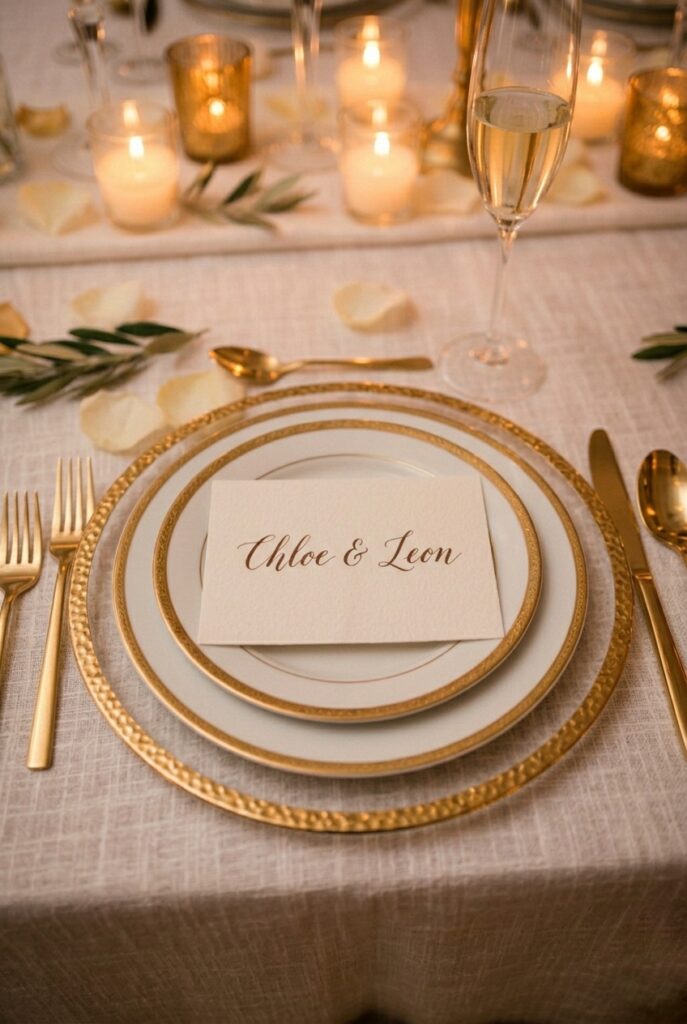
Choose a charger with texture, like hammered gold or brushed silver, over anything ornately patterned, since a heavily decorated charger fights with your florals instead of framing them, and pair it only with white or ivory china.
If the rental cost adds up, layer a less expensive flat charger with a gold or silver underplate for the same visual hierarchy at a lower price, or look at thrifted decor finds for vintage chargers that give you the texture without the rental fee.
Budget Hack: You can achieve the same visual effect with a less expensive flat charger ($3–$5) if you layer a gold or silver underplate beneath white plates.
6. Greenery as a Design Element, Not Filler
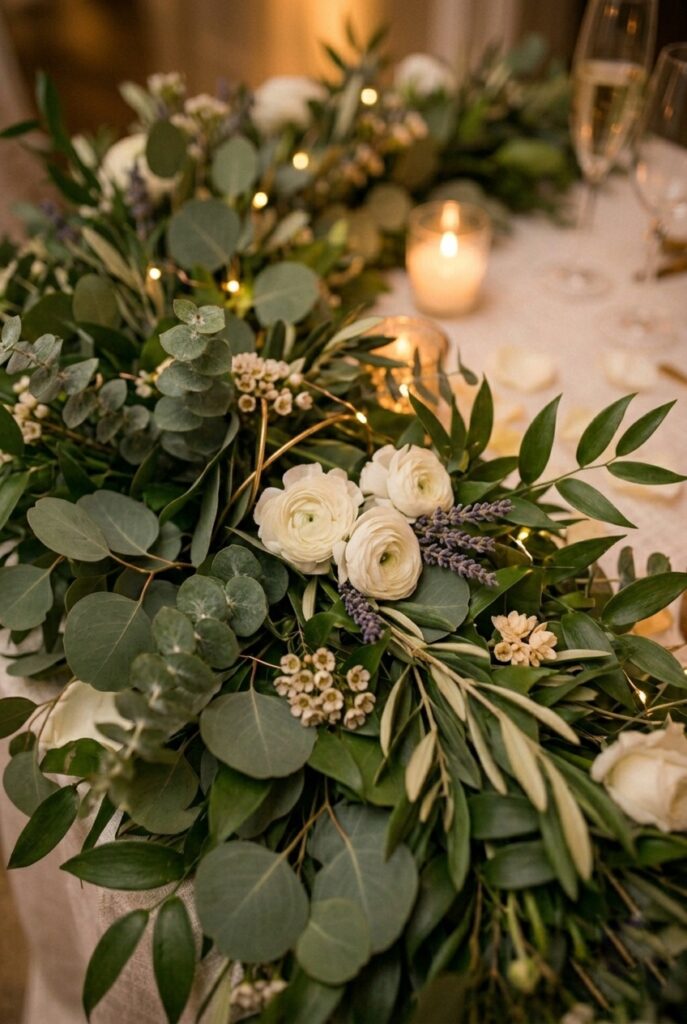
Choose one type of greenery per table, like eucalyptus, dusty miller, or ruscus, for its visual weight and texture rather than mixing several types to fill gaps around your flowers.
A single greenery used consistently across every table reads as designed, while mixing four or five types reads as whatever was available that week; treat it with the same intention you’d bring to any other wedding centerpiece decision.
7. The Linen Napkin Fold That Signals Elegance
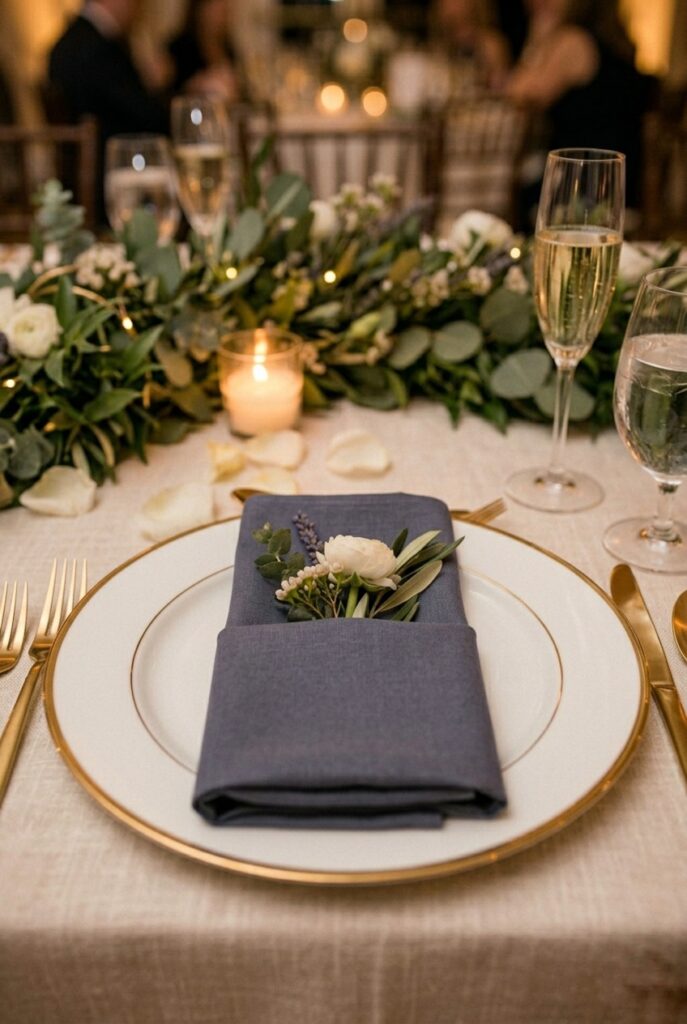
Skip the flat rectangle napkin and use a simple diagonal or standing fold instead, since it takes five seconds and immediately signals that someone thought about the table.
Choose a linen napkin in a contrasting or coordinating color rather than polyester, since the color pairing multiplies the elegance of everything else on the table; it’s one of the easiest wedding decor upgrades on this entire list for the effort it takes.
8. Mirror or Metal Accents as Visual Multipliers
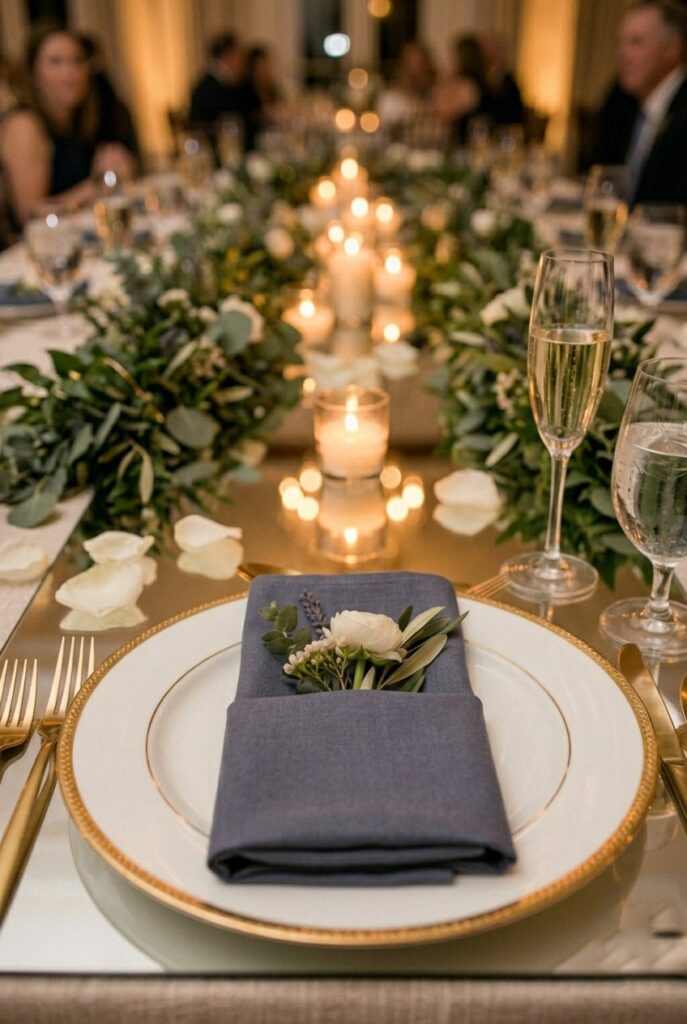
Add a mirrored charger, table runner, or votive holder instead of plain glass, since reflective surfaces catch candlelight and bounce it back across the table the way twenty extra candles would.
Spend the extra few dollars on real mirrored glass rather than mirrored plastic, since plastic clouds and catches fingerprints by the middle of the reception while real glass holds up all night.
9. Color Palette Restraint Over Complexity
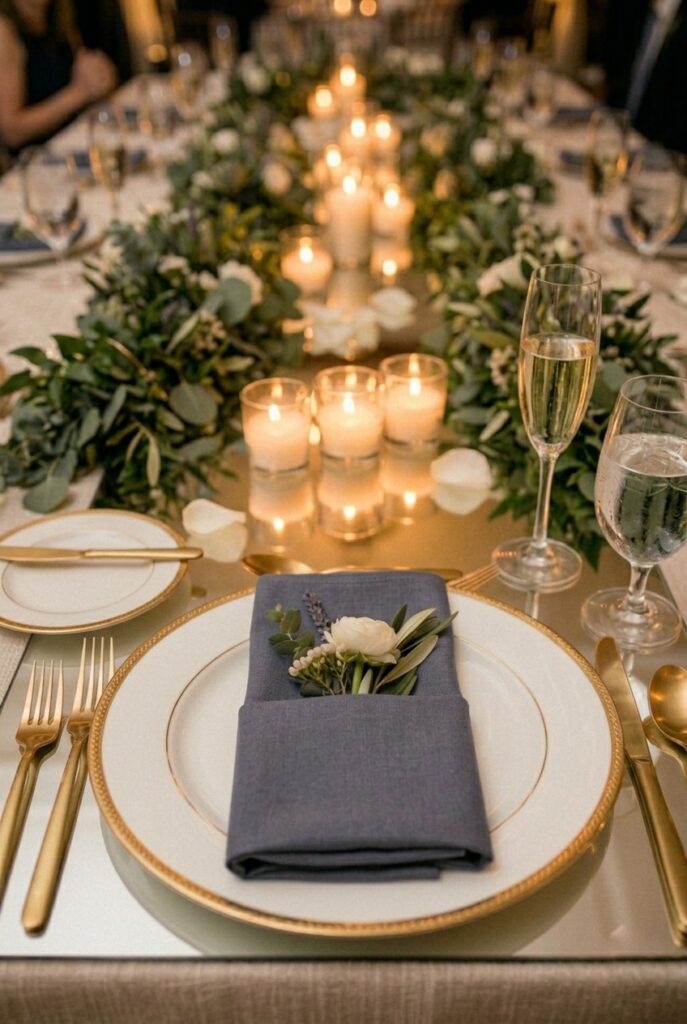
Limit your palette to a maximum of three colors, not counting white or cream as one of them, and repeat those same colors across your flowers, linens, candle holders, and place cards.
This costs nothing beyond the decision itself, and it’s the same restraint behind these simple wedding decor ideas, since fewer colors is what lets a guest’s eye settle instead of darting around the room.
10. The Sweetheart Table or Long Table: Different Rules Apply
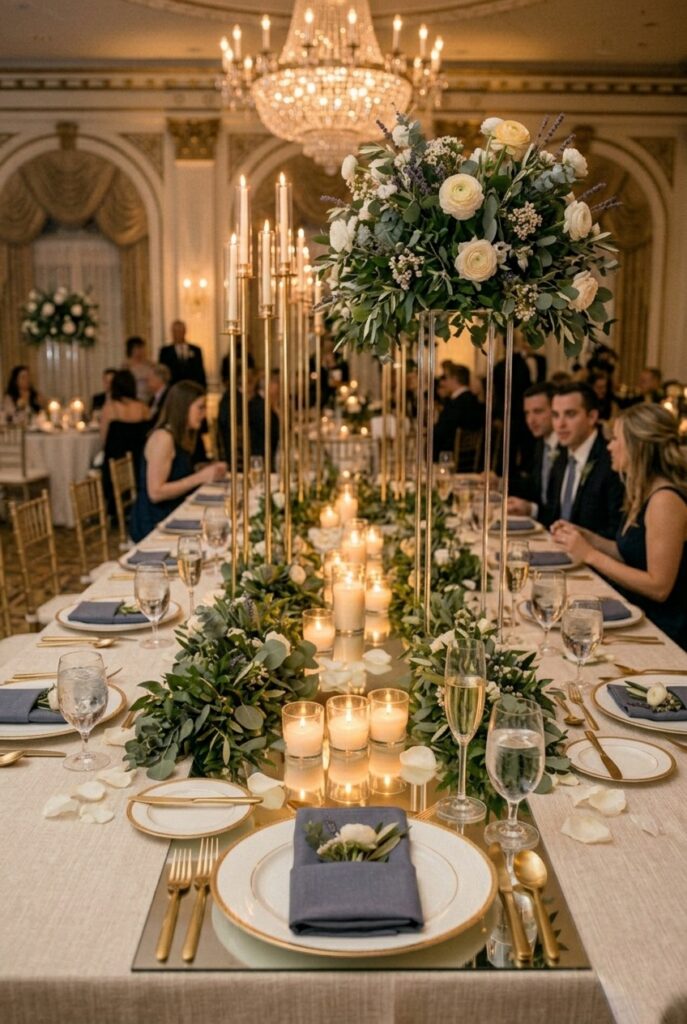
Use taller centerpieces and more visual density on a long head table than you would on round tables, since guests view a long table from one side only and need the continuity a runner or garland provides down its length.
Avoid a centerpiece around twelve inches tall on a long table specifically, since that’s exactly eye level and forces guests to look at flowers instead of each other; these round table wedding decor ideas cover the opposite approach for reception tables.
Budget Hack: If you’re doing a head table with limited budget, one statement centerpiece in the very center reads more expensive than six small ones spread across.
11. Lighting Direction Matters More Than You Think
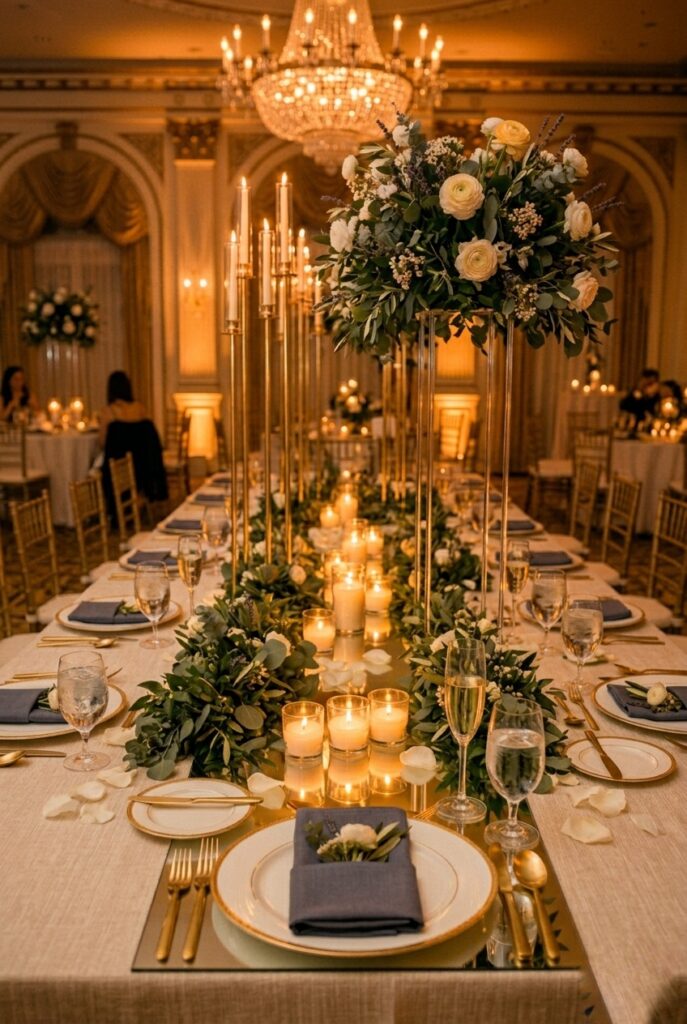
Ask your venue’s lighting contact for warm-white light rather than pure white or blue-white on your tables, since the direction and color of your lighting changes how linens, skin tones, and flowers all read in photos.
Request a lighting test during your walkthrough if your venue allows it, since a small adjustment here can make a modest floral budget look like a much larger one; the same principle carries over to these indoor elegant wedding decor setups.
Decision Filter
If you have under 100 guests and a tighter budget, put roughly 60 percent of your table spending into linens and candlelight, 30 percent into one strong centerpiece per table, and the rest into place card details.
If your venue is already naturally beautiful, like a garden or vineyard, dial your table decor back and let the space carry more of the visual weight instead of competing with it.
The Real Reason Elegant Tables Photograph Differently
A table covered in a lot of stuff photographs cluttered even when every individual piece was expensive, while a table with clear sight lines and intentional negative space photographs as luxury.
Real candlelight photographs like nothing else can, creating depth and warmth that flowers alone can’t replicate, and your camera will reward the restraint even if you can’t quite see why in person.
Your guests will spend two or more hours at these tables, so a design that makes conversation difficult isn’t actually elegant, no matter how it looks in photos.
Mistakes to Avoid
Believing more flowers automatically means more elegance works against you, since a single garden rose in a simple vase often reads as more expensive than a dense arrangement of six different blooms.
Ordering a centerpiece without testing it in your actual venue lighting risks a $400 arrangement looking flat or washed out on the day, so request a sample delivered for a lighting check a few weeks out.
Choosing pure white tablecloths without checking how they read under your venue’s specific lighting is an easy trap, since white can look bright in daylight and turn gray or blue-tinged under event lighting; ivory or cream sidesteps the problem for a small cost difference.
Forgetting that guests will photograph these tables on their phones matters more than it seems, since a table that looks romantic to your eye can look dark and cluttered through a phone camera in mixed lighting.
FAQ
How much should you actually spend on elegant table decor per table?
A genuinely elegant table runs $150 to $400 per setting once you factor in linens, centerpiece, candles, and rentals, and you can land at the lower end by prioritizing linen quality and lighting over expensive florals.
Can you do elegant table decor with faux flowers?
Yes, but only with quality faux florals, since cheap versions read as cheap immediately; high-end faux arrangements cost close to what real flowers do, so if budget is the concern, fewer real flowers is usually the better trade.
What’s the single most important element for making a table look expensive?
Lighting, with candlelight ranking above every other element, followed by linen quality and then clear sight lines between guests.
Should you use the same centerpiece on every table or vary them?
Use one consistent centerpiece design repeated across every table, since varying them table to table tends to read as indecision rather than personalization; save any variation for smaller accents like napkins or candles instead.
Your guests will sit at these tables for the better part of an evening, so make the design work for conversation as much as for photos.
Elegance isn’t about spending the most; it’s about spending intentionally, starting with linens and lighting and letting everything else support that foundation.
For a version of this same approach with more decoration cut out, these simple wedding table decor ideas show how far restraint alone can carry a reception.