Your home isn’t a ballroom — and that’s its biggest strength.
When you host a wedding at home, you’re not competing with grand venues: you’re creating something intimate, intentional, and entirely yours, and the decor that works best is the kind that helps your home look like itself on its best day rather than something it’s not.
1. Create an Entrance Moment (Not a Hallway)
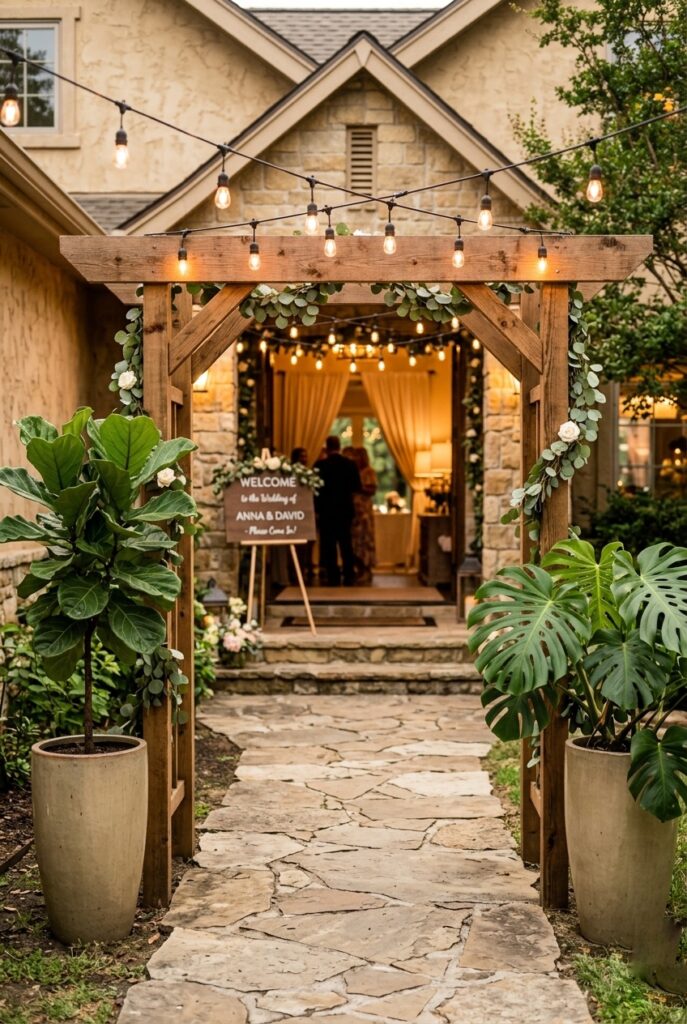
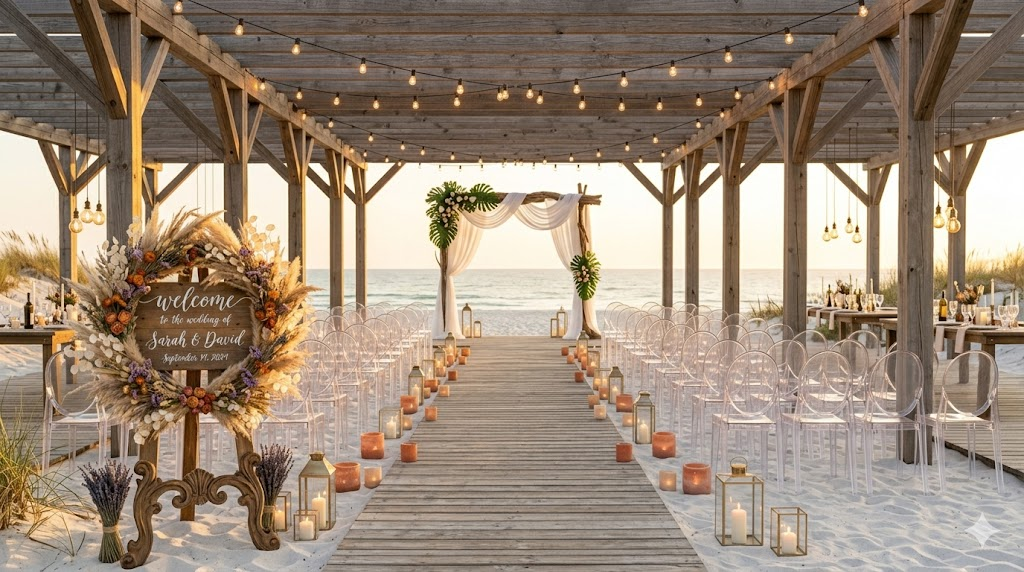
Your guests’ first 30 seconds shape their entire impression of the event — string market lights from the house to a threshold point and flank a simple archway with two tall potted greenery arrangements, and the entrance signals “you’ve arrived somewhere different” without announcing that it’s been decorated.
This is simple wedding decor applied at the entry level: only attempt it if your entry has at least 6–8 feet of depth; if guests walk directly from driveway to living room, skip the elaborate entrance and invest that budget in a statement lighting piece inside instead.
2. Lighting is Your Foundation, Not Your Accent
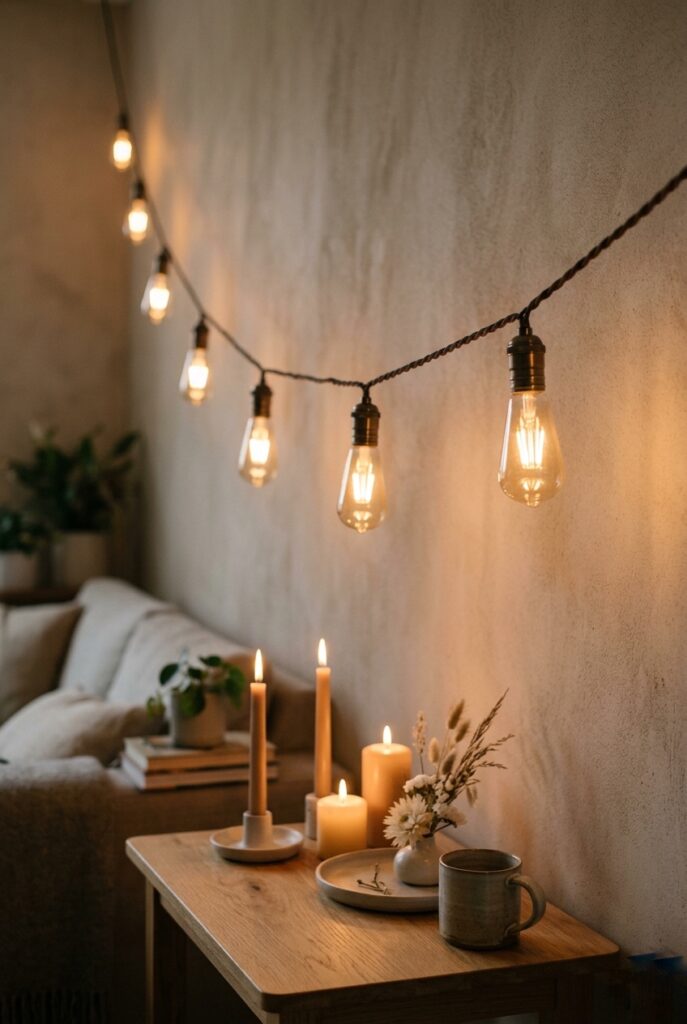
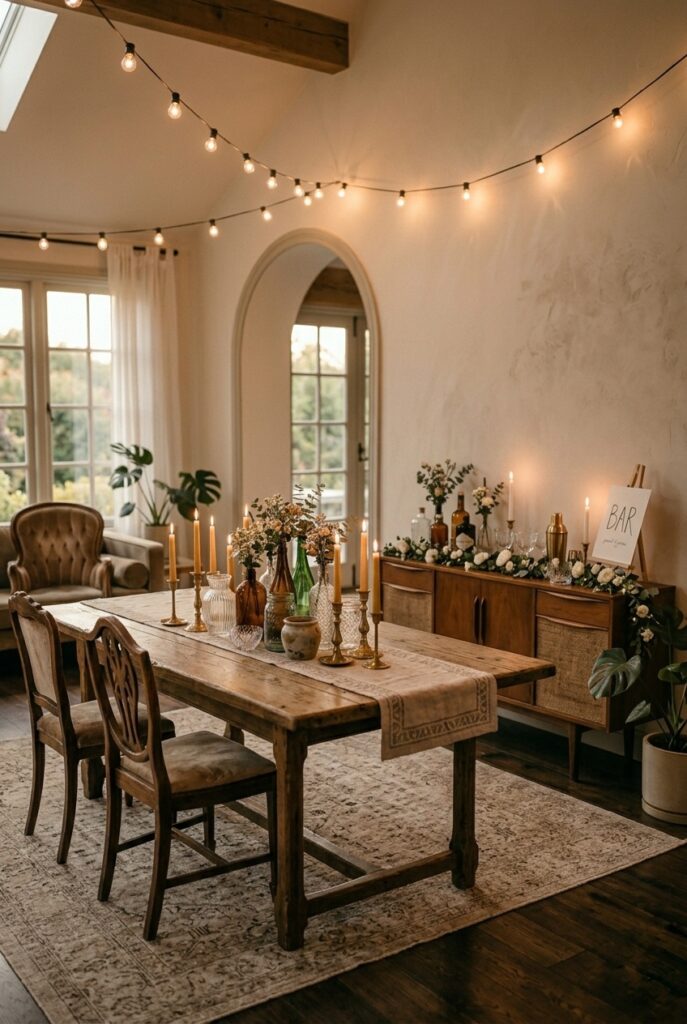
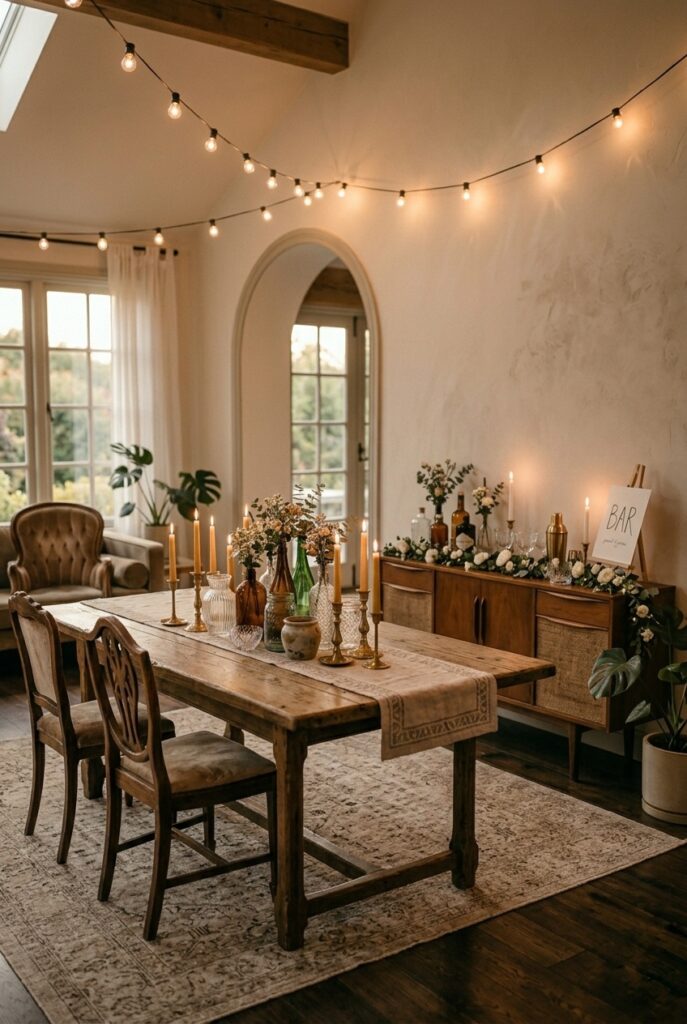
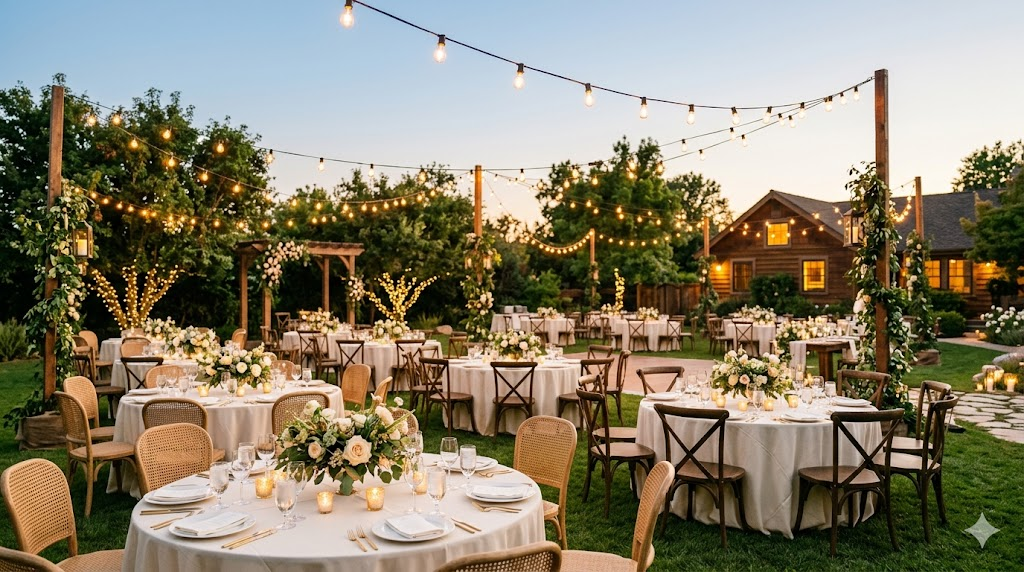
The move that makes home weddings look genuinely luxurious is replacing your existing room lighting rather than adding decorative light on top of it — two to three strands of warm Edison string lights draped at eye level across your main gathering space, all overhead lights off, candles on every table surface.
It’s the most easy wedding decor transformation available at $30–$60 in materials, and it’s also the one decision that makes every other element in the room look better than it would under standard overhead lighting.
3. Choose One Focal Wall, Not Four
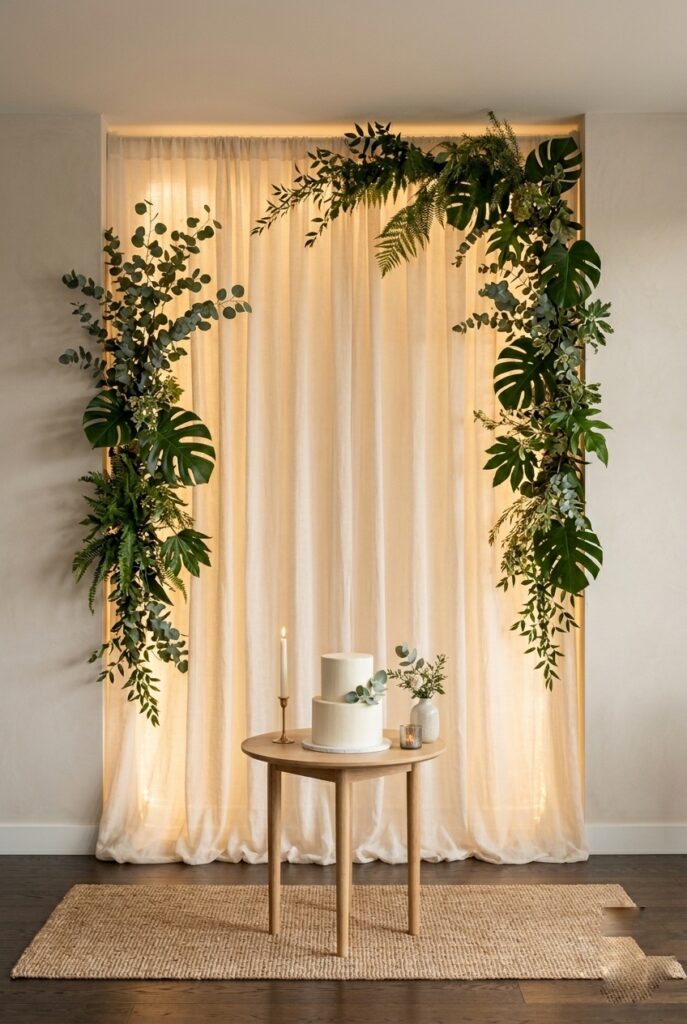
Pick one wall where guests will naturally look — where family photos happen, where the cake sits, where the couple stands during speeches — and give it depth with fabric draping, greenery, or a simple backdrop while everything else stays edited and untouched.
The single focal wall is the exact principle that makes elegant wedding decor work at any scale: one decision, fully committed to, with competing surfaces left deliberately bare so the focal point actually lands.
Budget Hack: Rent Plants, Don’t Buy Them
Real greenery instantly elevates any space and costs 60% less when rented than purchased.
Local florists often rent potted trees, monstera plants, and eucalyptus branches for 3–4 days at $20–$40 per item.
You return them after the wedding. For a 50-person home wedding, renting 8–10 greenery pieces ($200–$400) looks more impressive and costs less than fake flowers.
4. Limit Your Color Palette (This is Non-Negotiable)
A fireplace mantel lined with small pillar candles and nothing else, tall windows with sheer fabric and uplighting from below, an arched doorway framed with flowers rather than competed with — your home’s existing features are already the most interesting elements in the room, and the DIY wedding decor that works best here is the kind that reveals them rather than covers them.
Skip this approach if your home is a very modern or extremely simple space — in those interiors, you need to create architectural interest with decor rather than reveal what’s already there.
5. Let Existing Architecture Do the Work
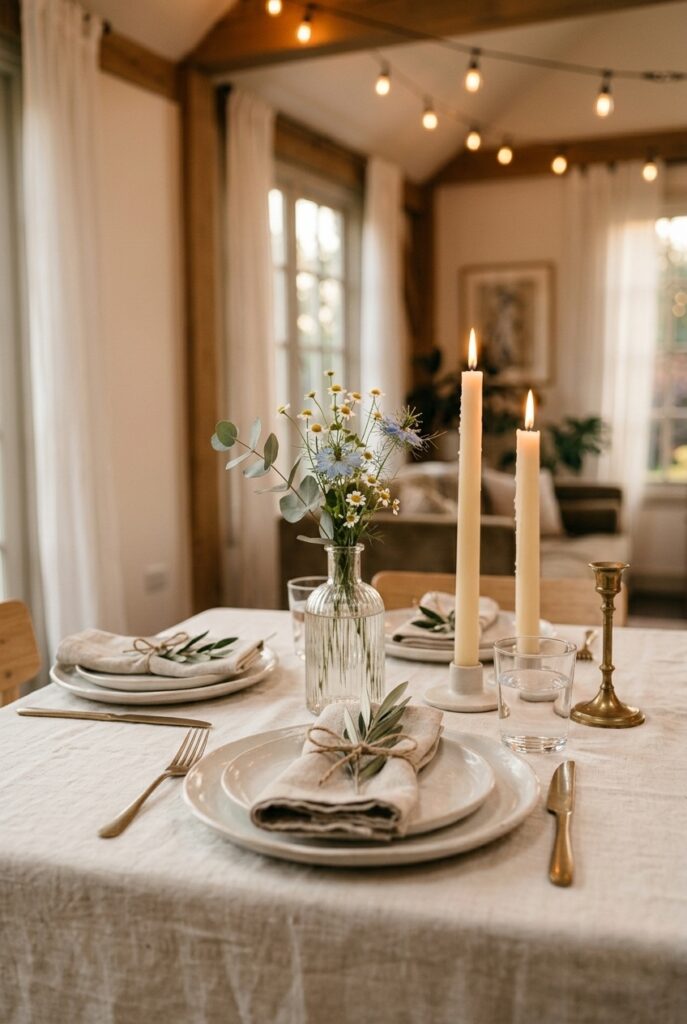
Mason jars, vintage bottles, and brass candleholders from Goodwill at $0.50–$8 per piece, filled with grocery store flowers or eucalyptus sprigs and set beside a pillar candle, produce a centerpiece that costs $8–$15 per table and reads as curated rather than budget-constrained — because the thrifted wedding decor principle applies here exactly: found objects placed with intention read as personal, not accidental.
Buy one vessel type in bulk across all your tables so the consistency signals intention, not scarcity.
Budget Hack: Thrifted Centerpiece Containers
Mason jars ($0.50–$2 from thrift stores), vintage bottles ($1–$5), and brass candleholders ($2–$8) from Goodwill or Etsy create sophistication on a micro-budget.
Fill with branches, flowers, or candles.
A table of 10 centerpieces sourced from thrift stores costs $30–$50 total instead of $200 from a florist.
6. Tables Get More Attention Than Walls
Guests spend hours sitting at tables and minutes looking at walls — white or cream linens, a small centerpiece in a thrifted vessel, pillar candles, and cloth napkins is a complete wedding table decor decision that costs $25–$45 per table and holds attention for the full duration of the meal.
Skip elaborate runners, confetti scatters, and place cards unless they serve a direct purpose — at a home reception, visual clutter on the table reads louder than it would in a venue because there is no surrounding room architecture to absorb it.
7. Your Own Furniture is Decor
Move your best pieces into the reception space — a vintage sideboard becomes the bar, accent chairs become a lounge moment, a patterned vintage rug thrown over hardwood floors defines the dining zone — and the result is a room that reads as unique wedding decor precisely because it looks like someone actually lives there.
This costs nothing and makes the room feel curated rather than rented — skip it only if your furniture is mismatched or worn, in which case renting the key pieces is the right call.
A home wedding succeeds through editing, not accumulation: three spaces, one focal point per space, warm light everywhere, and the confidence to leave the rest alone.
For a full treatment of the same approach applied to home and intimate settings, wedding decor at home ideas build on every principle here.
And if cost is a factor in any of these decisions — which it almost always is at a home wedding — wedding decor on a budget ideas show you exactly where to spend and where to hold back.