You’re getting married in the one season where nature is actively working in your favor — and somehow, most spring brides still overspend trying to recreate what’s already happening outside the window.
The smartest spring weddings I’ve seen didn’t have the biggest budgets.
They had the sharpest timing: buying what was peaking, skipping what wasn’t, and letting the light do what no venue lighting ever quite matches.
The ranunculus opens without being asked.
The tablecloth catches pollen from somewhere. Your grandmother says the light today is different — and she’s right. It only does this in May.
The Short Answer
Spring is the most forgiving season for wedding decor because seasonal flowers are abundant, cheap, and genuinely beautiful without much arrangement.
The moves that matter: choose flowers at their natural peak, lean into color rather than defaulting to blush, and put your budget into two or three statement moments rather than spreading it thin across every surface.
Below are the ideas that actually deliver — and a few popular ones worth skipping.
1. Build Around Butter Yellow — Not Just Blush
Everyone defaults to blush for spring — which means every spring wedding currently looks identical from March through May.
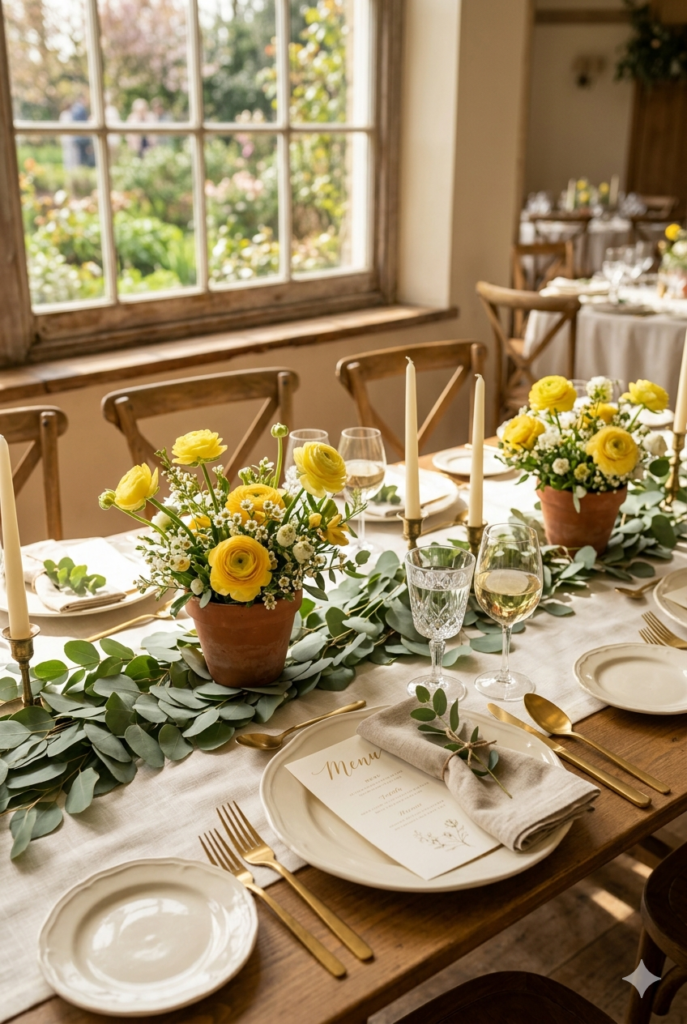
The palette dominating 2026 Pinterest boards is butter yellow paired with sage green, and it’s genuinely fresh without trying hard.
More importantly, it’s cheaper.
Yellow ranunculus, chamomile, and daffodils are significantly less expensive than the garden roses and peonies that drive blush palettes.
Ranunculus runs $1.50–$2.50 per stem wholesale; compare that to garden roses at $3–$5 per stem.
For a 10-table wedding, that difference adds up to $300–$600 in savingson florals alone — just by changing your color story.
Only do this if you’ve pulled a full flat lay of butter yellow, sage, and ivory together and love it.
Some couples look at it in real life and still want the pink. Trust your gut on that — but at least try it once.
2. Buy In-Season Flowers Wholesale — And Know What’s Actually Cheap in Spring
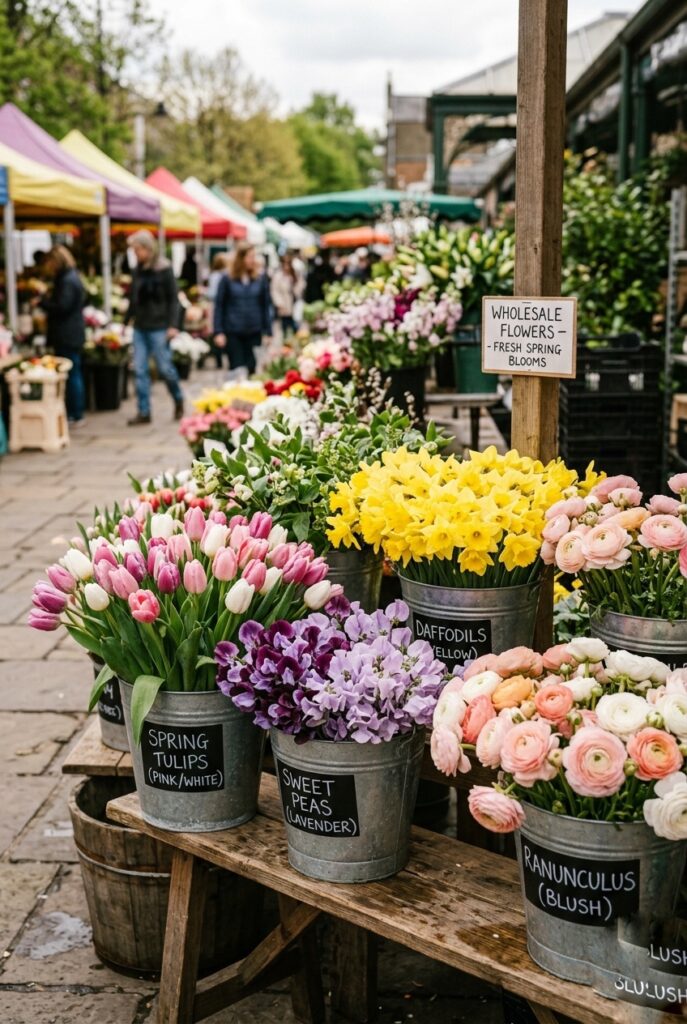
Here’s the money move almost nobody takes: source your own flowers wholesale and hand them to your florist for labor only — or DIY if you’re comfortable.
Spring has the most affordable wholesale flower window of any season because supply peaks in April and May.
The in-season stars with the best quality-to-price ratio: tulips ($0.50–$1.00 per stem), sweet peas ($0.80–$1.50 per stem), daffodils ($0.50–$0.80 per stem), anemones ($1–$2 per stem), and ranunculus ($1.50–$2.50 per stem).
Order from FiftyFlowers, BloomsyBox wholesale, or Blooms By The Box with 2-week lead time.
Florists charge 2–3x markup on flowers they source themselves — your savings on a medium wedding can hit $800–$2,000 by sourcing direct.
💰 Budget Hack #1: Order 20–30% more stems than you think you need. Flowers open at different rates, some will be past their peak by delivery day, and having surplus means you can be generous with installations, bud vases, and any last-minute gaps. Tulips at $0.70 per stem — extra is still cheap.
3. One Flower, One Color, Maximum Impact
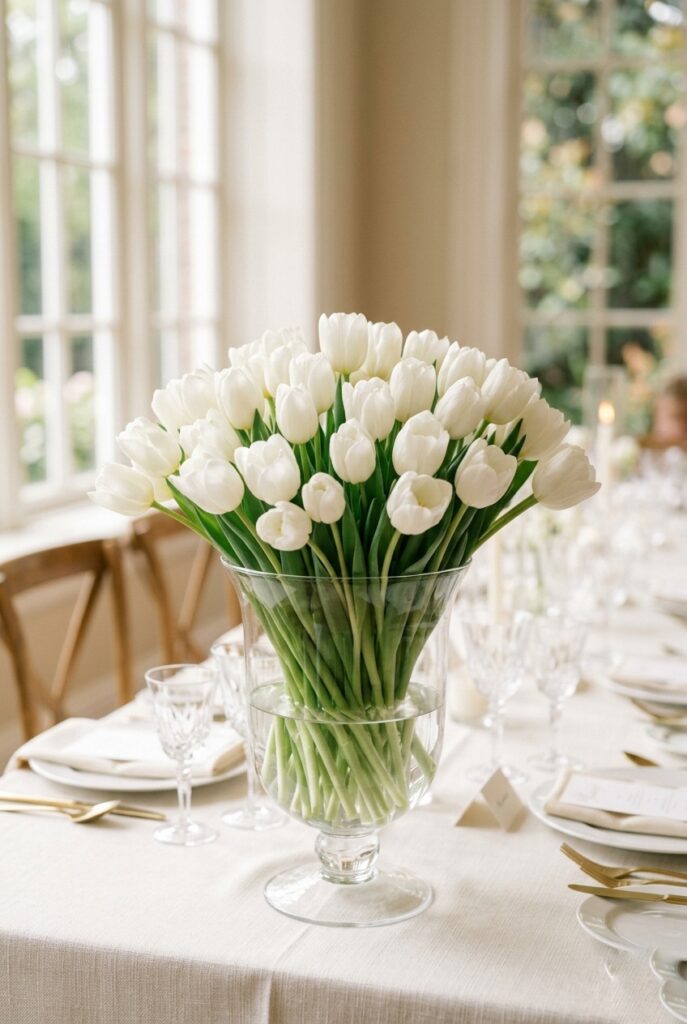
The most visually powerful spring centerpiece I’ve ever seen was 40 white tulips, stems cut to the same length, dropped into a wide-mouth glass compote. That’s it.
No greenery, no filler, no mixed blooms.
Monochromatic single-variety arrangements read as intentional and editorial in a way that mixed “garden-style” arrangements — which take more skill to execute well — frequently don’t.
The trick is volume: you need enough stems for the arrangement to feel full and lush, not sparse. For a 6-inch compote, that’s 25–40 stems depending on bloom size.
In tulips, at $0.75 per stem wholesale, that’s a centerpiece for $19–$30.
Compare to a florist-assembled mixed spring centerpiece at $80–$200.
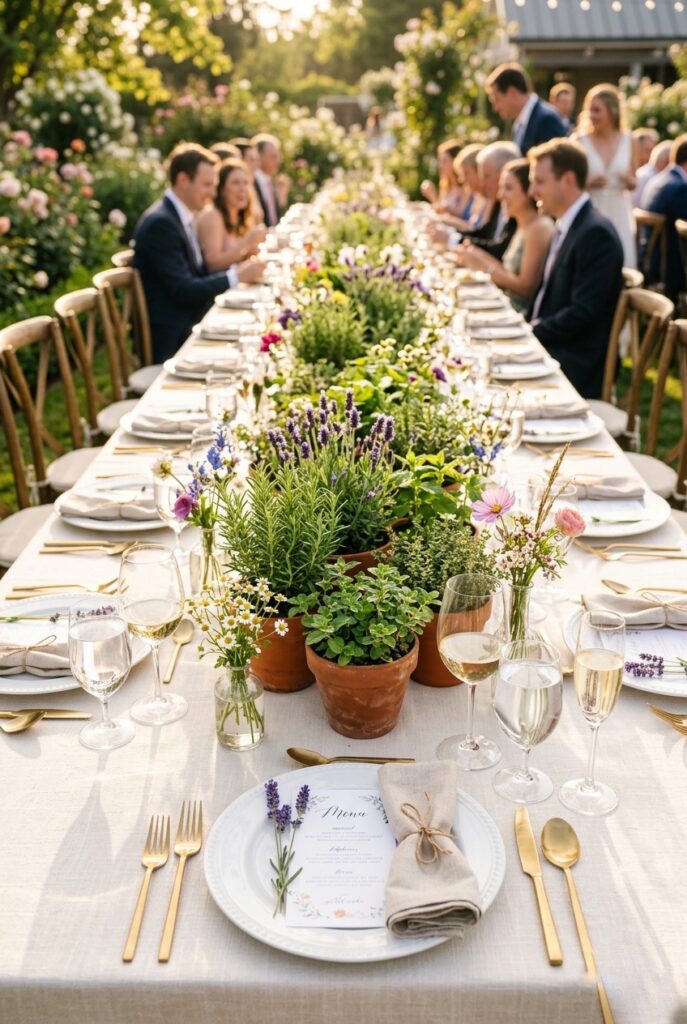
4. A Living Herb Table Runner

Nobody in your competitor research is talking about this one — and it’s genuinely beautiful.
Instead of a cut-flower or eucalyptus runner, line the center of your tables with small potted herbs: rosemary, lavender, thyme, mint, and sage.
The visual is lush and green; the scent is extraordinary (lavender and rosemary together smell like a Provençal garden); and at the end of the night, guests take a pot home as their favor.
Small 3-inch herb pots from a garden center or nursery run $1.50–$3 each.
A 10-foot table needs roughly 12–15 pots.
Total cost per table: $18–$45 — with no post-event waste and a favor that costs you nothing extra.
Skip this if any of your guests have fragrance sensitivities, or if your reception is fully air-conditioned and the herb scent won’t carry — it loses half its charm indoors with strong HVAC.
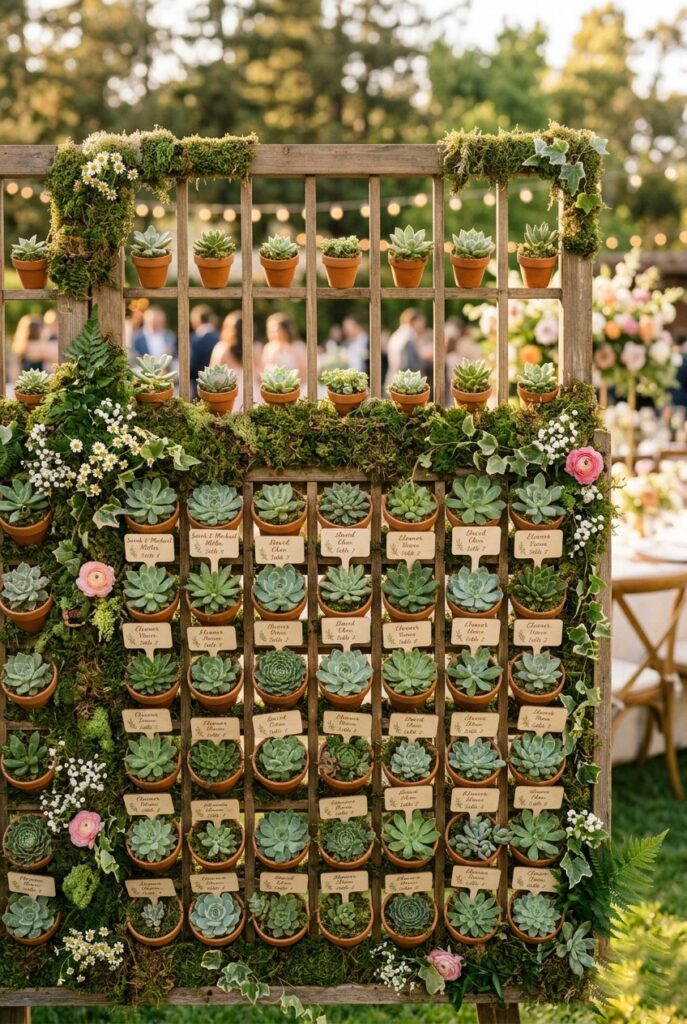
5. A Succulent Escort Wall

Spring gives you permission to do this without it feeling quirky: a seating chart made of small succulents, each pot bearing a wooden stake tag with a guest’s name and table number.
Mount a simple wooden grid panel (DIY with a pallet frame or rent from your florist — $50–$150), clip in the pots, and the whole installation functions as a living seating chart.
Small 2-inch succulents run $1–$3 each from nurseries or in bulk from Amazon.
For 80 guests, budget $80–$240 in plants. At the end of the night, guests take their succulent home.
Zero cleanup, zero waste, and it photographs spectacularly.
💰 Budget Hack #2: Buy succulents in bulk trays from a local nursery rather than individually — you’ll pay $0.75–$1.50 per plant in quantity versus $2–$4 each in small lots. Call 3–4 weeks ahead of your order date; succulent trays often need to be reserved.
6. Petal-Lined Aisle — But Use What’s Blooming, Not What’s Ordered
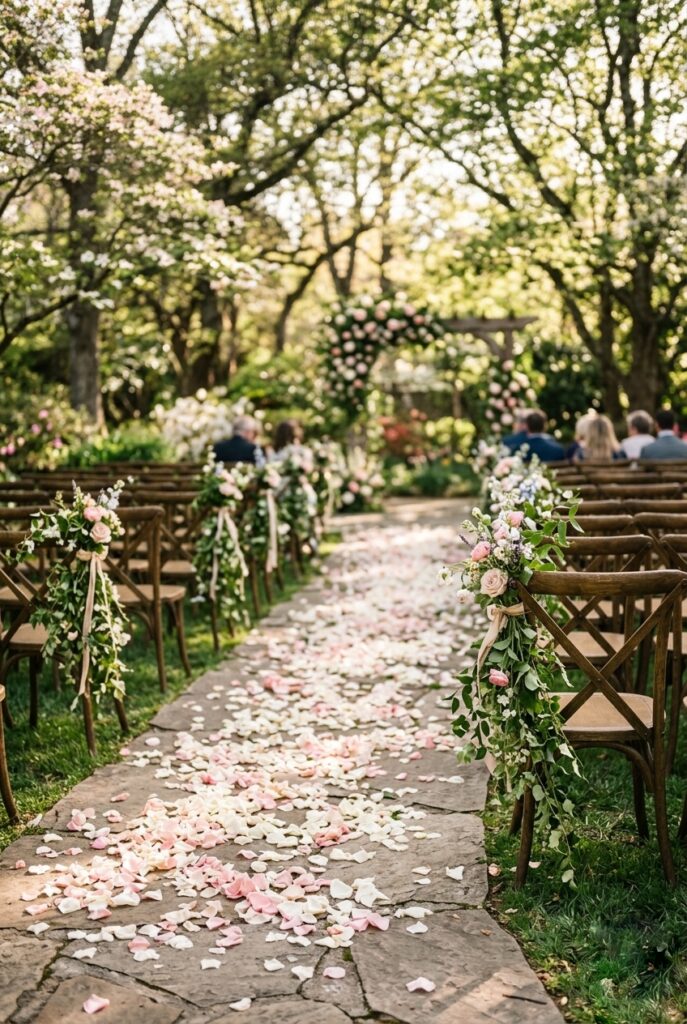
A petal-lined aisle is one of spring’s most photographed ceremony details — and one of the most over-purchased.
Most brides order fresh rose petals from their florist at $40–$80 per bag when the same effect (and often a better one) comes from: dried wildflower petals ($15–$25 per bag on Etsy or Amazon), lavender stalks gathered at the base rather than scattered ($8–$15 per bundle), or simply greenery ferns and eucalyptus stems placed flat on the ground instead of petals.
The latter photographs dark and lush against light stone or wood — and it costs almost nothing if you’re already buying eucalyptus for table runners.
Only do this if your venue permits petals or plant matter on the ceremony surface — some indoor venues prohibit it for cleanup reasons. Always confirm.
7. Colored Glassware as the Only “Pop” You Need
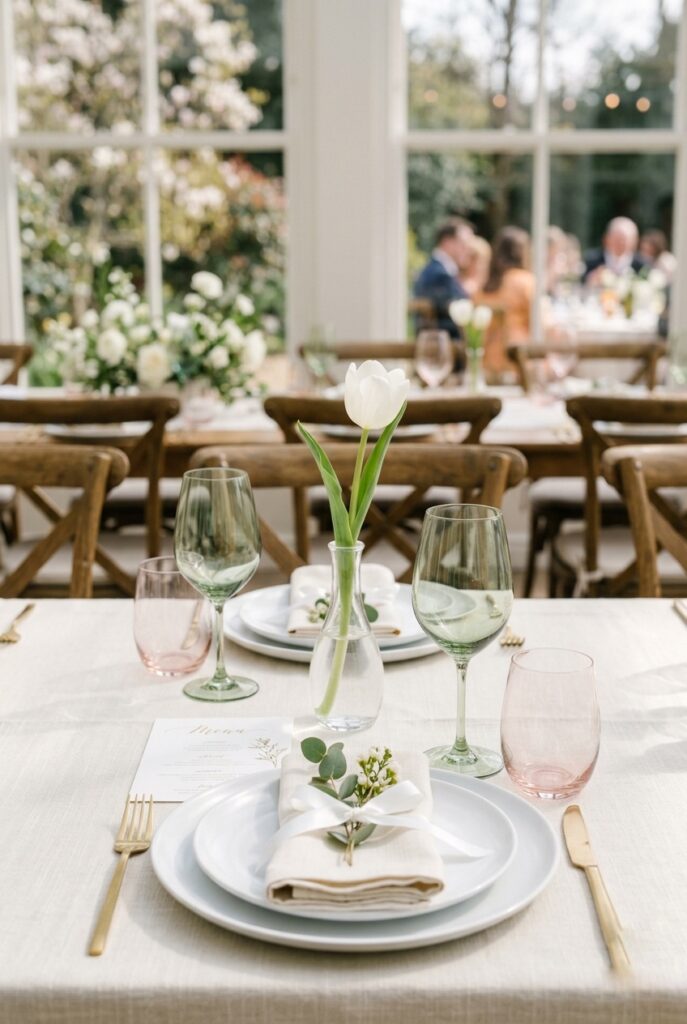
This is the single most underrated spring table idea in the current market.
Colored glassware — sage green, soft amber, or blush tinted wine glasses — adds an unexpected jolt of spring color to a tablescape without requiring any additional florals. A set of 6 sage green wine glasses on Amazon runs $28–$45.
For 100 guests (roughly 17 sets), budget $475–$765— and you own them after, to keep or resell.
The effect on the table is immediate: the glasses catch light, throw color into the linen, and make the whole setting feel designed rather than decorated.
This works especially well if you’re doing a minimalist centerpiece (bud vases, single-stem compotes) because the glasses carry the visual interest the flowers don’t.
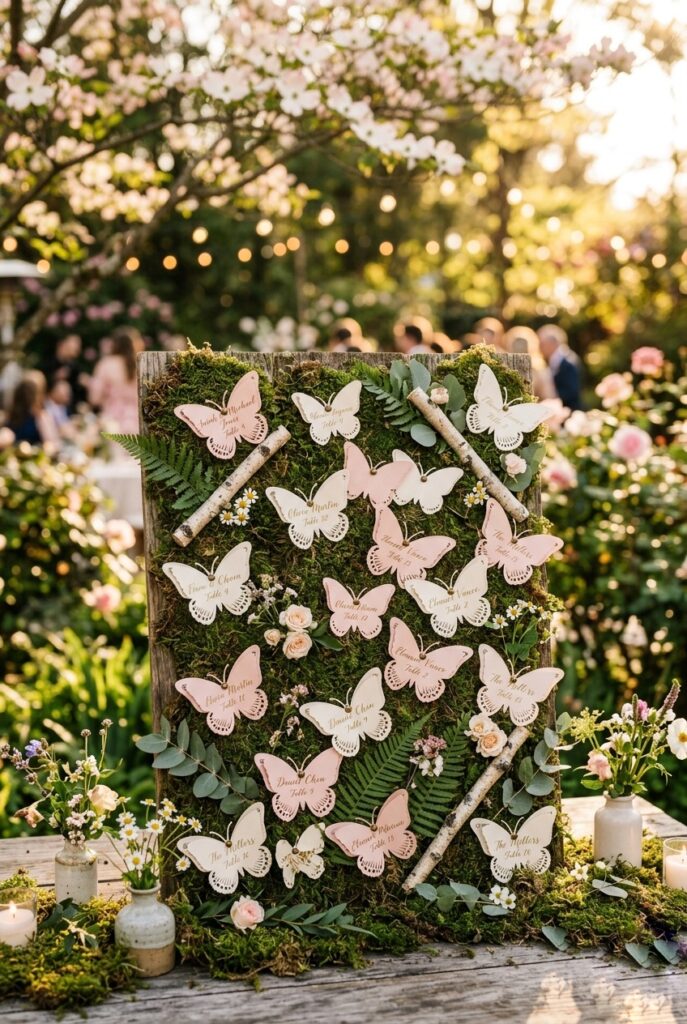
8. Butterfly Escort Cards

This is one of those details that costs almost nothing, takes an afternoon, and gets more comments from guests than the flower wall.
Cut escort card “butterflies” from card stock — your guest’s name on one wing, their table number on the other.
Pin them to a moss-covered foam board, hang them from a branch installation, or tuck them into individual flower stems.
Template downloads on Etsy run $3–$8 for the whole set.
Print at home or at Staples.
Total materials cost for 80 guests: under $25. If you have a creative bridesmaid and a weekend afternoon, this replaces a $150–$300 escort card display with something that photographs better and is genuinely personal.
💰 Budget Hack #3: Skip the framed seating chart entirely if you’re doing butterfly escort cards — the installation IS the seating chart display. One less vendor quote, one less piece to transport.
9. A Sheer Table Runner Over Natural Wood
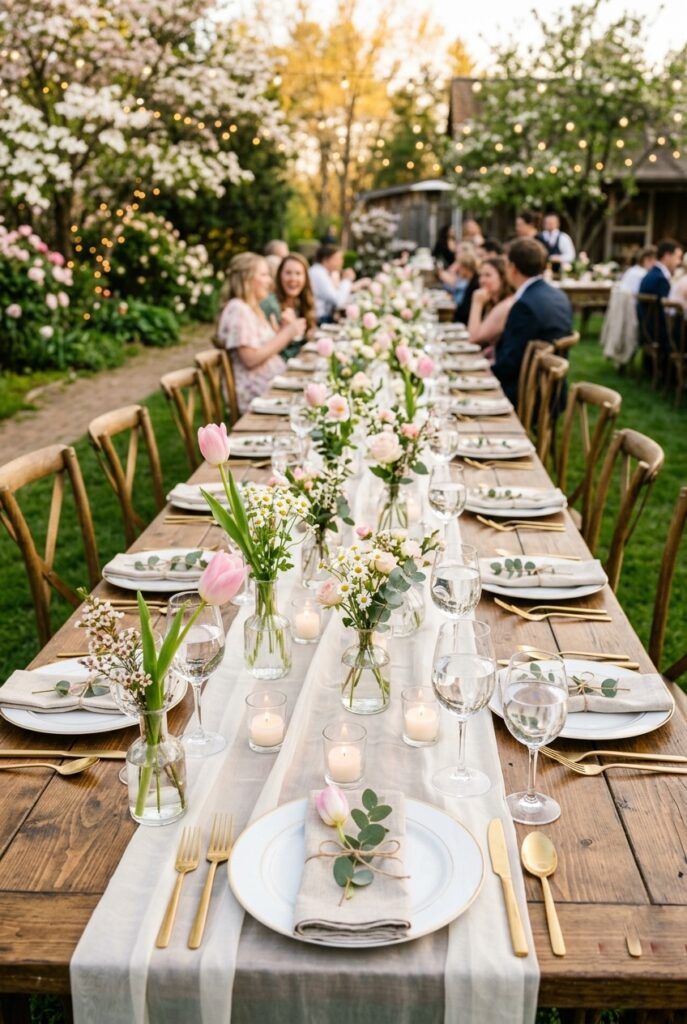
Here’s the table runner trick that almost nobody uses: replace opaque linen runners with sheer organza, so the natural wood grain of your table shows through underneath. The effect is light, airy, and genuinely spring-like in a way that heavy linen isn’t.
It works especially well on farm tables, wood harvest tables, or any rental table with attractive grain.
Sheer organza runners in ivory or blush run $5–$12 each on Amazon or Etsy — essentially the same price as standard linen runners — but the visual quality difference is significant.
Layer bud vases and tea candles directly on the runner and the whole tablescape reads as deliberately styled rather than assembled.
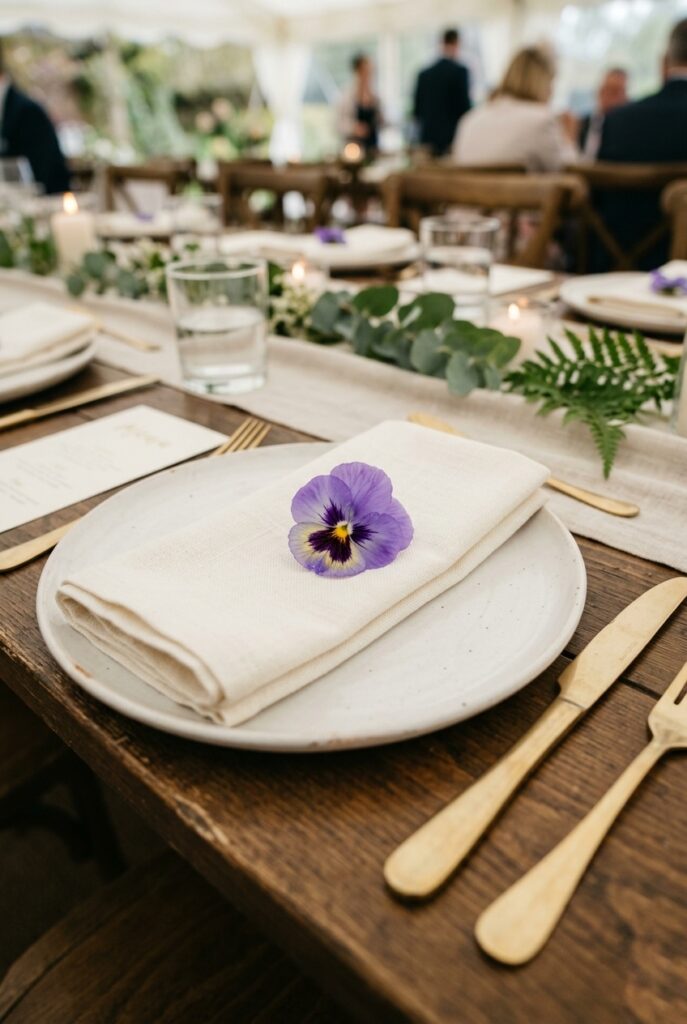
10. Edible Flower Place Settings

This is the smallest detail with the largest per-guest impact: place a single fresh edible flower — a pansy, a viola, or a nasturtium — on each folded napkin at the place setting.
Guests almost always touch it, smell it, and ask about it.
It tells them the meal cares about seasonality before they’ve read the menu.
Edible flowers in spring are at their cheapest: pansies and violas run $8–$15 per flat of 50+ blooms from garden centers or farmers markets.
For 80 guests, two flats covers you completely at a total cost of $16–$30.
This is the most underrated spring wedding detail I know — and it’s never in competitor articles.
How to Spend Spring’s Budget Wisely
If you have one splurge available, spend it on your floral arch or ceremony installation — not the reception centerpieces.
Ceremony photos are the ones that last; table shots are secondary. If your budget is tight across the board, wholesale tulip compotes and a sheer organza runner per table will carry the visual weight for under $40 per table total.
Skip mixed garden arrangements from a full-service florist — spring in-season single-variety arrangements always outperform them at a third of the price.
And if your venue has windows with natural afternoon light, that light is your best decor element.
Position your sweetheart table and ceremony space to use it.
No lighting budget required.
The Real Reason Spring Weddings Underperform
Spring brides spend the most money of any season’s couples — and frequently end up with the least distinctive weddings.
The reason is painfully simple: the default spring wedding palette (blush, ivory, greenery, garden roses) is so commonly beautiful that every vendor offers a version of it as their baseline package.
You book it thinking it’s yours and then arrive on the day to find it looks almost identical to your maid of honor’s wedding six months earlier — just with slightly different flowers in the same color family.
Here’s the contrarian truth nobody in the spring wedding industry wants you to know: the season’s most abundant flowers — tulips, sweet peas, anemones, ranunculus — are not the most-marketed ones.
Florists push garden roses and peonies because the margins are higher. Those flowers are beautiful, but they’re not uniquely spring.
A tulip arrangement, properly volumized, is one of the most striking things you can put on a table — and it costs less than half the price.
The brides who end up with genuinely distinctive spring weddings are the ones who leaned into what’s actually cheap and plentiful in April and May, not what the bridal industry has trained them to want.
Spring also gives you one tool that no other season can match: scent.
The smell of lavender, garden roses, sweet peas, and fresh herbs is part of the experience of your day in a way that photos will never capture but your guests will remember for years.
Spending even a small amount of your budget on scented elements — lavender bundles, herb runners, hyacinth clusters — creates a sensory memory that expensive florals without fragrance simply don’t.
Mistakes That Will Flatten Your Spring Wedding
Ordering out-of-season flowers for a spring wedding. Lisianthus, garden roses in premium varieties, and tropical blooms ordered in early spring cost two to three times their summer pricing.
If it’s not on the in-season list for your wedding month, you’re paying a premium to fight the calendar.
Spreading the floral budget across every surface. A small arrangement on every table, a small arrangement at the bar, a small arrangement at the sign-in table, a small arrangement at the cake — none of them large enough to make a statement — costs the same as two or three genuinely impactful installations that actually read in photos. Concentrate.
Defaulting to the blush-and-ivory palette without trying anything else. It’s beautiful.
It’s also everywhere. Pull a butter yellow, a lilac, or a garden green alternative before you commit.
You may be surprised.
Ignoring the weather reality. Spring means wind, unexpected rain, and temperature swings between the 10 AM ceremony and the 7 PM reception.
Tall floral arrangements in outdoor ceremonies tip in wind. Chiffon draping collects in unexpected ways.
Fresh flowers in full afternoon sun wilt faster than your timeline expects.
Have contingency conversations with your florist and coordinator about wind, sun exposure, and temperature before your layout is finalized.
Skipping the scent. I’ve said it once and I’ll say it again: a spring wedding that smells extraordinary is more memorable than one that photographs extraordinarily.
These two things are not mutually exclusive — but scent is consistently the afterthought.
What Does a Spring Wedding Actually Cost Per Table?
Q: Can I have a beautiful spring wedding on a tight budget?
Spring is genuinely the best season for budget wedding decor — not because spring is cheap, but because the in-season flowers are at their annual price floor and natural light is free.
A beautiful spring tablescape costs $35–$65 per table if you source flowers wholesale and DIY your arrangements: bulk tulips from FiftyFlowers, a sheer organza runner from Amazon, tea candles, and your edible flower place settings.
That’s it. The mistake is walking into a florist in March, saying “spring wedding,” and letting them build a package — because that package will include premium-priced flowers you don’t need to achieve the look you want.
Spring Wedding Decor Budget Table
| Item | Budget Range | Source |
|---|---|---|
| Tulips — wholesale per stem | $0.50–$1.00 | FiftyFlowers, Blooms By The Box |
| Ranunculus — wholesale per stem | $1.50–$2.50 | FiftyFlowers, BloomsyBox |
| Sweet peas — wholesale per stem | $0.80–$1.50 | FiftyFlowers, local flower market |
| Sheer organza table runners | $5–$12 each | Amazon, Etsy |
| Colored wine glasses (set of 6) | $28–$45 | Amazon |
| Small herb pots (per plant) | $1.50–$3.00 | Local nursery, garden center |
| Succulents in bulk trays | $0.75–$1.50 each | Local nursery (order ahead) |
| Butterfly escort card template | $3–$8 | Etsy digital download |
| Edible flower flats (50+ blooms) | $8–$15 per flat | Local garden center, farmers market |
| Dried wildflower petal aisle scatter | $15–$25 per bag | Amazon, Etsy |
| Succulent escort wall frame (DIY) | $30–$80 | Pallet wood + hardware store |
More From BlessedVows
Spring is the season where a little intention goes a long way — and the biggest opportunities are usually the ones hiding in your local nursery, not your florist’s catalog.
Explore our guides on how to source wholesale wedding flowers and save hundreds, budget-friendly centerpiece ideas that look expensive, and the best DIY wedding details worth your time.
Because spring gives you abundance already.
Your job is just to know which part of it to reach for.