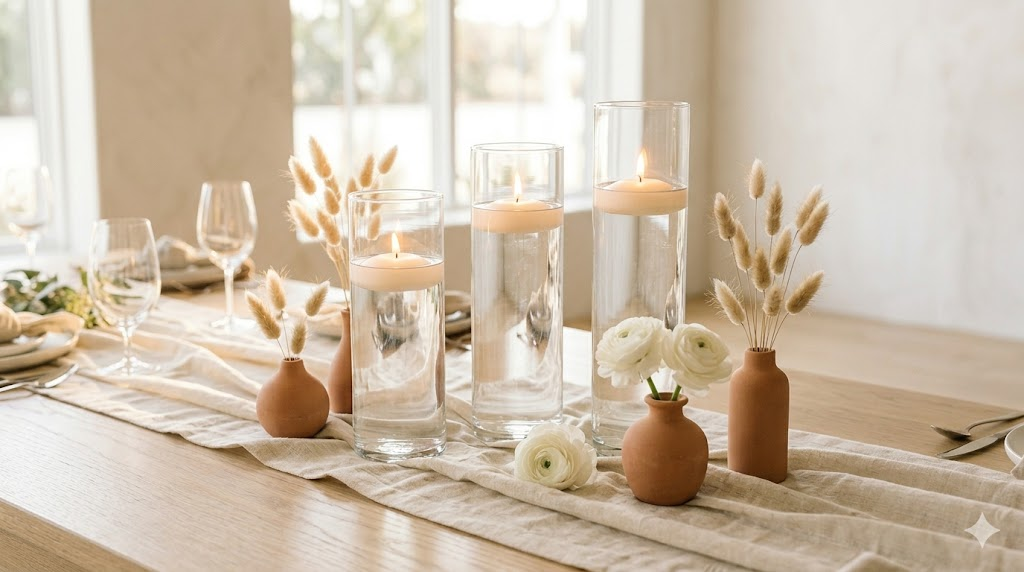
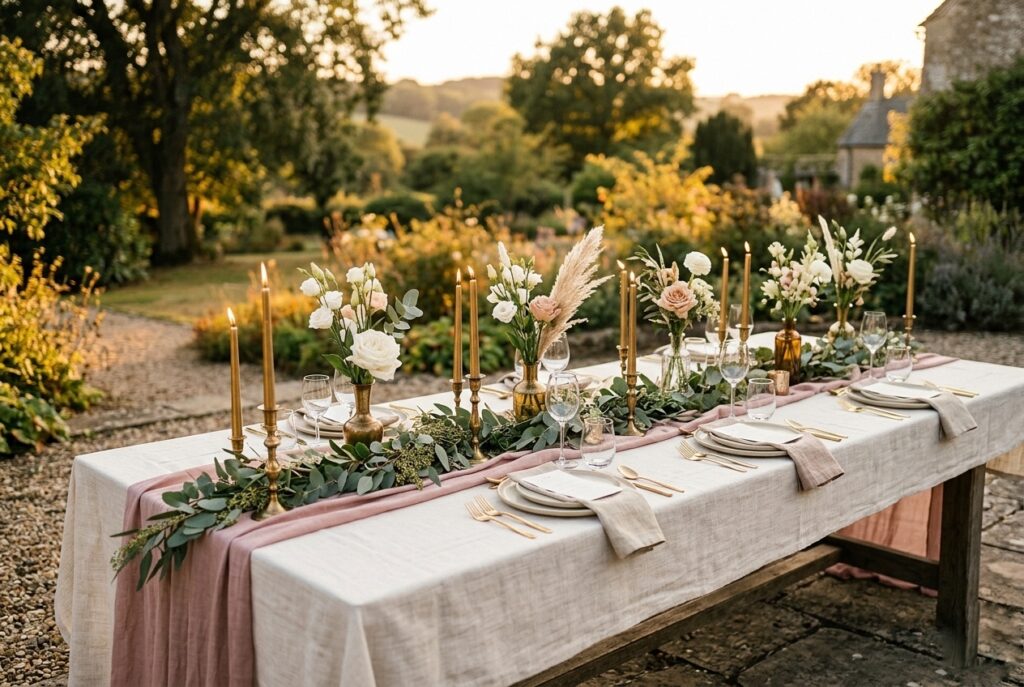
Your tables are where guests spend 80% of your reception.
They eat there, drink there, talk there, and photograph everything within arm’s reach.
And yet most couples treat table decor as the last budget line — the thing they rush through after the venue, the dress, and the flowers are locked.
That’s backwards. A stunning table is the detail guests remember longer than the centerpiece arch they saw for four minutes during cocktail hour.
The fork is cold and heavy. Someone placed it carefully beside the linen. There is a candle, and a stem, and a small cardwith your name in handwriting. You feel seen before the night begins.
The Short Answer
Great wedding table decor works in layers — linen first, then height, then light, then personal detail.
Hit all four layers with intention and your table photographs like a styled shoot.
Skip one and the whole thing reads flat.
The goal isn’t to spend more. It’s to build each layer with purpose and stop before you overdo it.
1. The Layered Linen Foundation (Not Just a Tablecloth)
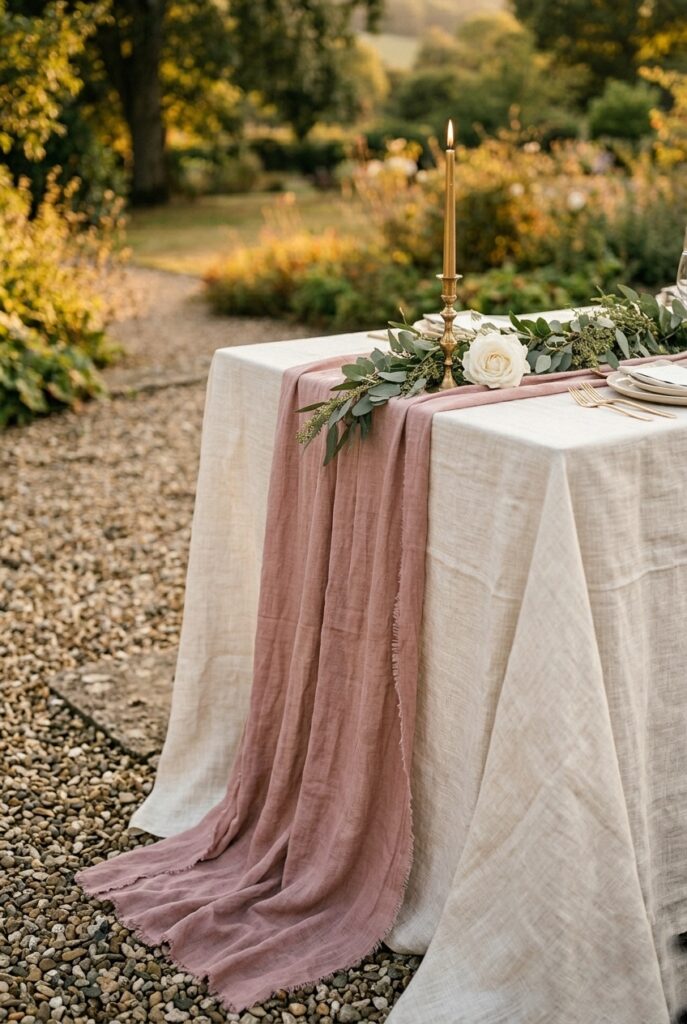
The table’s base sets the mood for everything above it.
The move competitors never explain clearly: layer two linen elements instead of one.
A floor-length tablecloth in ivory or sage, topped with a contrasting raw-edge runner in a slightly different tone — dusty rose over ivory, slate over white, terracotta over natural linen — creates immediate visual depth.
One linen looks dressed.
Two linens look designed.
Skip this if your venue has genuinely beautiful bare wood tables. In that case, a runner alone is the right call — let the wood do the work.
💰 $8–$25 per runner; $12–$25 per tablecloth — LinenTablecloth.com for bulk; raw-edge runners on Etsy; also rentable through most party rental companies
2. Mixed-Height Candle Clusters (The Real Centerpiece Secret)
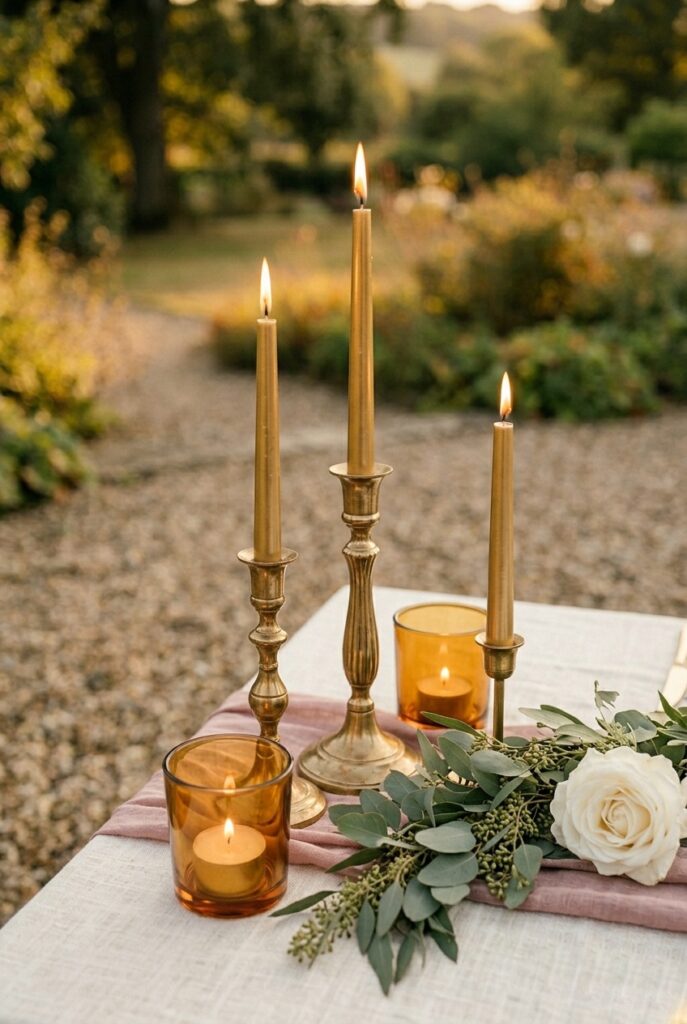
Here’s the opinion worth stating plainly: candles do more for a wedding table than flowers.
A grouping of three taper candles at different heights — in brass, iron, or ceramic holders — plus two low votives flanking a single bud vase is a complete table. It layers height, warmth, and texture simultaneously.
It photographs beautifully from 6 PM onward. And it costs a fraction of a floral centerpiece.
The version that doesn’t work: one taper candle, centered, alone. Lonely candles look like a birthday cake. Clusters look intentional.
💰 $20–$45 per table for the full setup — taper candles in bulk on Amazon; brass candlesticks from HomeGoods, IKEA, or thrifted; votives from Dollar Tree or Amazon multi-packs
3. A Loose Greenery Garland That Actually Looks Wild
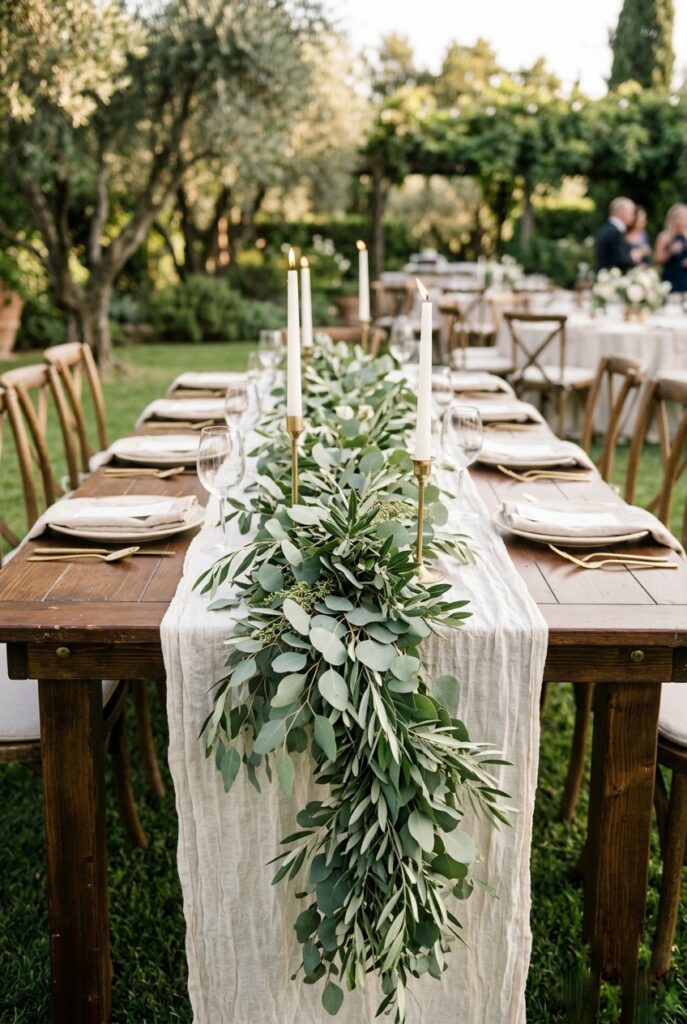
The greenery garland is everywhere on Pinterest — but the version most couples execute looks nothing like the version they saved.
The difference: loose and slightly falling over the table edge versus tight and coiled in a straight line.
Buy stems, not pre-made garlands.
Lay eucalyptus, olive branch, and ruscus in overlapping directions down the center, letting the ends spill over the table sides slightly.
Tuck in candles and vases between the stems. That’s the editorial version.
💰 $15–$35 per table — fresh eucalyptus stems from a wholesale flower market or Blooms2Door; faux versions on Amazon ($12–$20 each) work well for indoor, air-conditioned receptions
💡 Budget Hack #1: Order your greenery from Trader Joe’s the morning of. A $2.99 bunch of seeded eucalyptus covers two full tables when laid loose. At that price, you can afford to be generous with it. Skip the wholesale order entirely if you have three or fewer tables.
4. Charger Plates That Anchor the Whole Setting
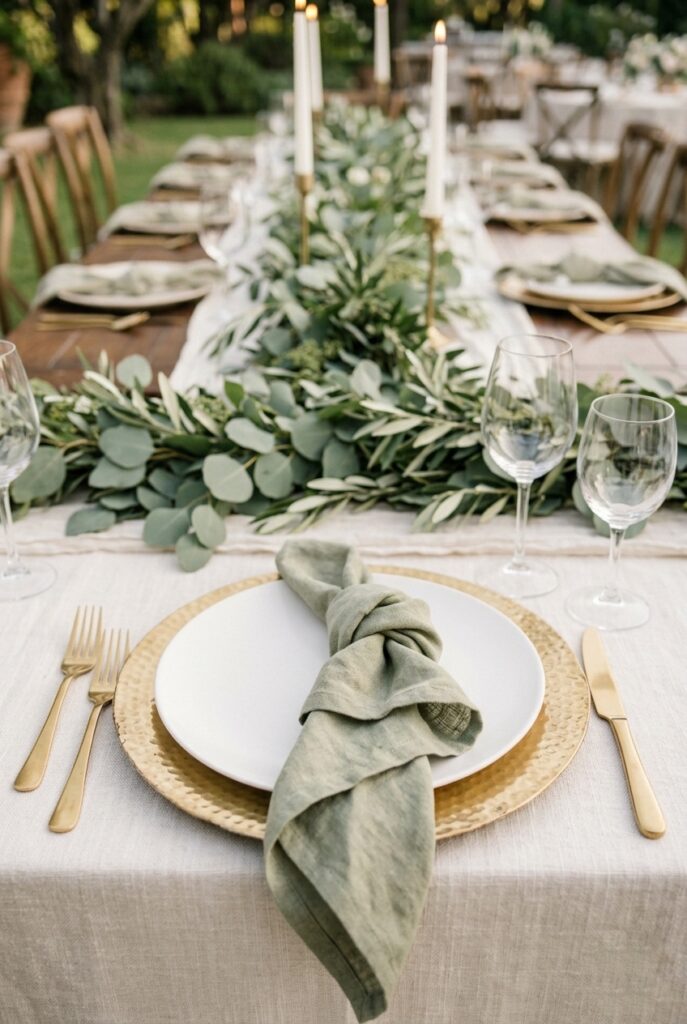
A charger plate is the foundation of a polished place setting — it’s what elevates “a plate on a table” to “a designed dining experience.”
Gold hammered chargers with white plates on top is the classic pairing that never fails.
But the move nobody is doing enough: a black or dark charger with ivory plates and blush napkins, which creates drama and contrast that reads completely modern.
Chargers don’t hold food — they hold the visual weight of the place setting.
Only do this if your venue’s rental package doesn’t already include chargers. If it does, use theirs and upgrade something else.
💰 $1–$3 per charger (rental); $15–$30 for a set of 4 to own — gold charger sets on Amazon; local party rental companies typically charge $0.75–$1.50 per plate per event
5. The Napkin as a Styling Moment
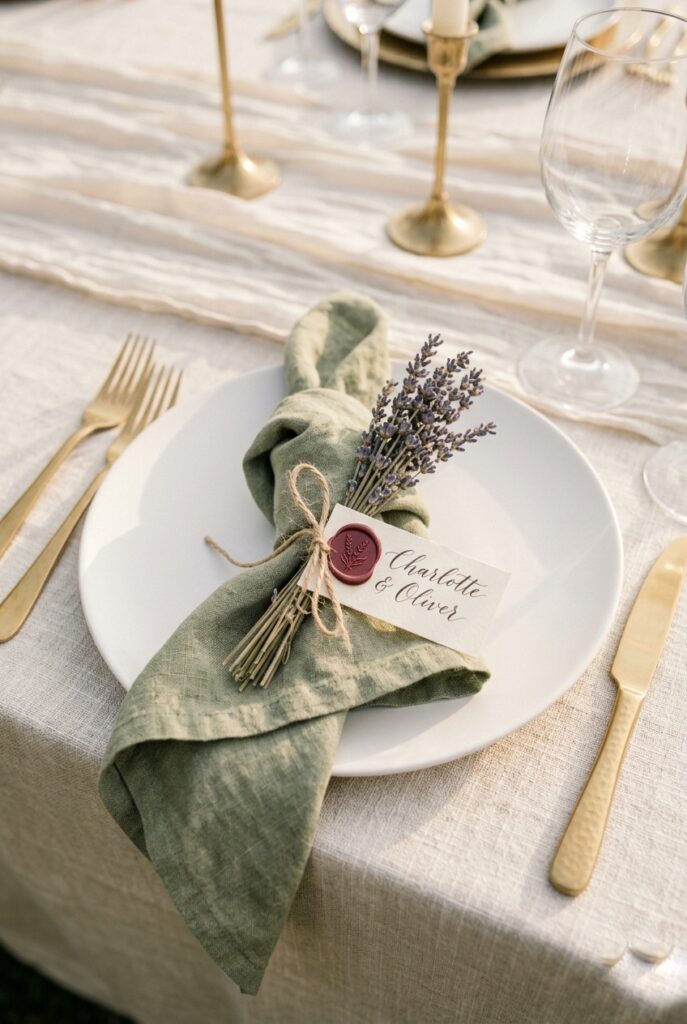
The napkin is the closest decor element to every single person at your table. It gets photographed, touched, and noticed before the entrée arrives — and almost every couple ignores it completely.
Here’s what actually works: a thick linen napkin in a contrasting color to your tablecloth, folded loosely (never fan-folded, which reads like a hotel banquet), with a single accent tucked inside — a sprig of rosemary, a dried lavender stem, a small piece of ribbon, or a personalized wax-sealed place card.
That one detail makes the table feel considered. It tells every guest someone thought about them specifically.
💰 $2–$5 per napkin — linen napkins in bulk on Amazon or IKEA; herb sprigs from a garden center or grocery store ($3–$6 per bunch)
6. Mismatched Bud Vases Instead of One Large Arrangement
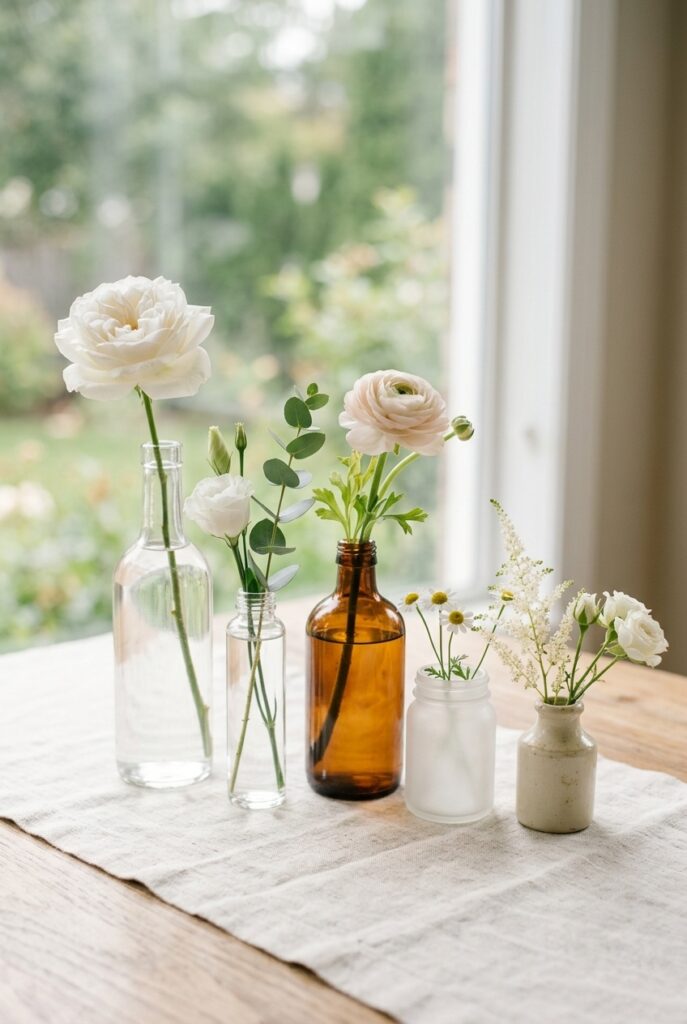
A florist-made centerpiece runs $60–$200 per table.
A collection of three to five mismatched bud vases — clear glass, amber, frosted, or vintage ceramic — each holding a single stem or a loose two-stem cluster, costs $8–$20 per table and consistently photographs better.
The mismatched quality reads as curated.
The looseness reads as confident.
The variety of vessel shapes creates visual movement across the table in a way a single formal arrangement never does.
The critical detail: vary the heights. Bud vases at all the same height look like a product display. Varying heights by at least three inches looks designed.
💰 $8–$20 per table — bud vase sets on Amazon (sets of 12 for $20–$30); individual vintage finds at thrift stores for $0.50–$3 each; single stems from Trader Joe’s, a farmers market, or Blooms2Door
💡 Budget Hack #2: Repurpose your bridesmaids’ bouquets as reception centerpieces. After the ceremony, drop them stem-down into one larger vessel per table. You paid for those flowers once — this gives them a second life and you can skip buying separate reception florals entirely. This move alone can save $500–$1,200 depending on your table count.
7. A Table Lamp for One or Two Tables (The 2026 Move)
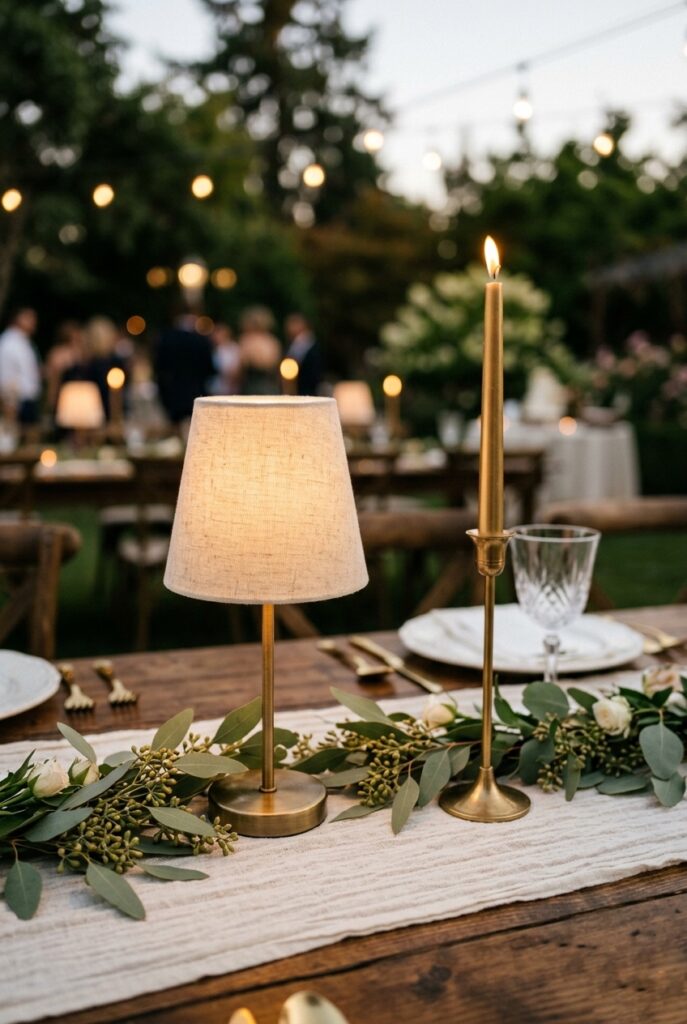
Nobody in the basic “wedding table decor” roundups is talking about this yet, and it’s already appearing in high-end editorials.
A small table lamp — think the kind you’d see at a chic boutique hotel — placed on two or three tables (not every table) creates a completely different quality of light and warmth than candles alone. It signals luxury.
It signals that someone thought about the feeling of sitting at that table, not just the look.
Use a warm-bulb rechargeable lamp so there are no cords, and pair it with candles so the rest of the room is consistent.
Only do this if your venue allows and you’re willing to source cordless rechargeable options. Corded lamps at a wedding are a logistical and visual disaster.
💰 $35–$80 per lamp — rechargeable LED table lamps on Amazon (search “cordless table lamp for events”); also available through wedding rental companies in larger markets for $15–$25/lamp per event
8. Fruit as a Design Element in the Centerpiece
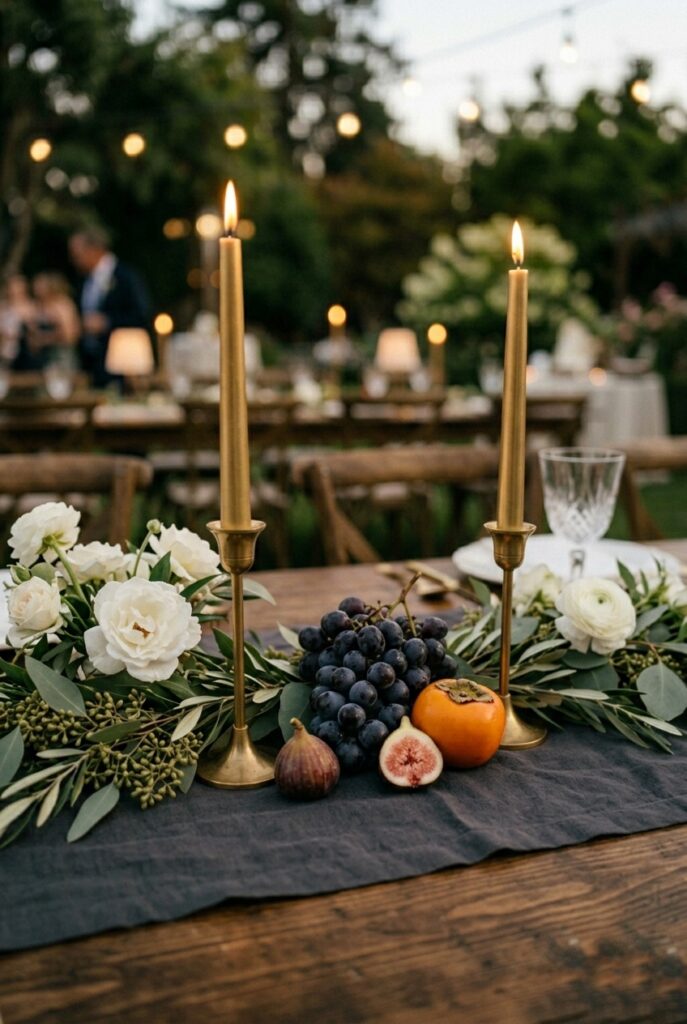
This is the idea your florist won’t mention because it reduces their billable hours — but incorporating fresh fruit into your table centerpiece is one of the smartest cost-to-impact moves in wedding decor right now.
Figs, green grapes, persimmons, small pomegranates: fruit adds color, texture, and organic shape that no floral filler can replicate, and it costs $2–$4 at any grocery store.
Nestle clusters of fruit between stems in your bud vases, or place them directly on the linen near candles.
It’s moody, modern, and completely original on most reception tables.
Best for late summer and fall weddings where seasonal fruit is at its visual peak.
💰 $3–$8 per table — seasonal fruit from any grocery store or farmers market
💡 Budget Hack #3: Ask your florist for their “day-old” or “B-grade” stems at a 40–60% discount. These are flowers that aren’t perfect enough for a bridal bouquet but look absolutely fine in a bud vase centerpiece. Most florists will sell them if you ask the week before — it’s inventory they would otherwise compost.
9. Personalized Place Cards That Double as a Favor
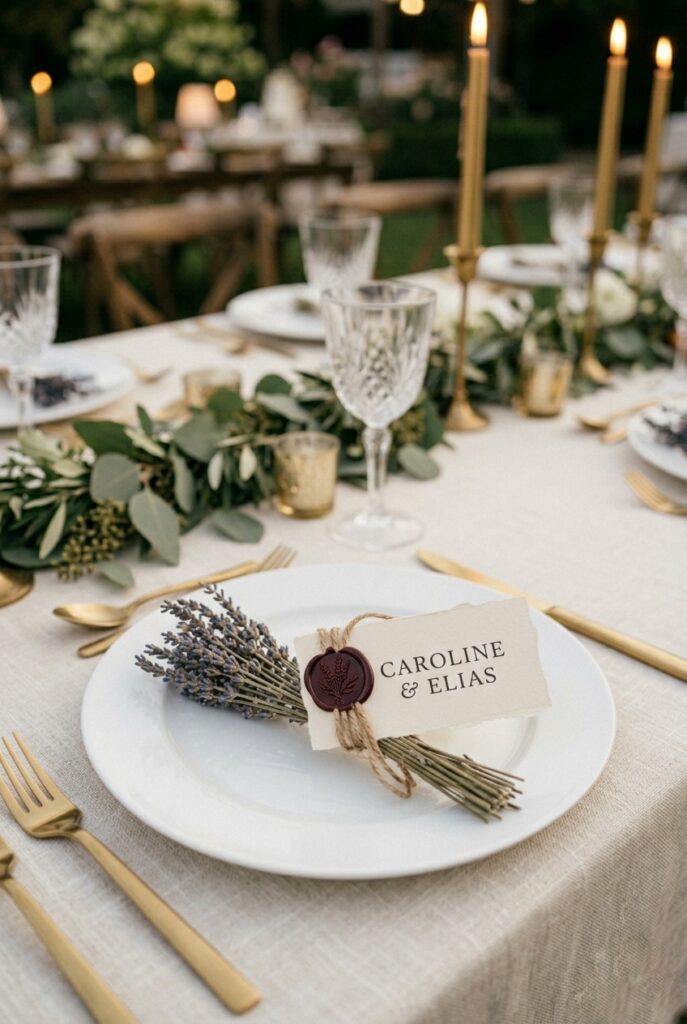
A paper place card folded in half and tent-standing on a plate is the default — and it’s forgettable by 8 PM.
The version that guests take home: a place card that is also something useful or beautiful.
A small card attached to a single stem of dried lavender.
A card tied around a small jar of honey.
A vintage-style card with a wax seal on the back.
A card that includes a one-line personal note to the guest. None of these cost much more than a basic card.
All of them make the guest feel individually seen — which is the whole point of a place card in the first place.
💰 $0.40–$1.50 per card — Canva templates printed at Staples or home printer; wax seal kit on Amazon ($12–$18); dried stems from Amazon ($10–$15/bundle)
10. A Single High-Low Contrast on Every Table
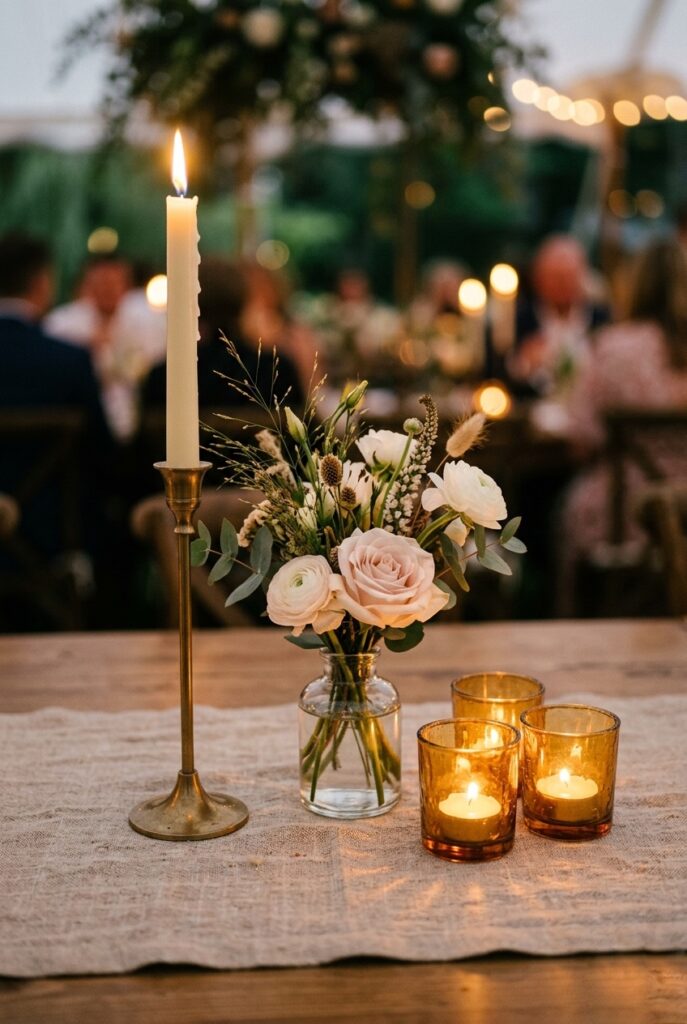
This is the designer move that separates tables that look “nice” from tables that look intentional: every table should have one moment of high-low contrast.
Tall with short. Rough with smooth. Dark with light.
Delicate with structural. Examples that work perfectly: a tall slender brass candlestick next to a low cluster of votives.
A rough stone vessel holding a delicate single stem.
A dark charger beneath a pale white plate. An oversize loose stem drooping slightly next to a tight, compact votive cluster.
Contrast is what creates visual tension — and visual tension is what makes people look twice.
Without at least one moment of contrast, a table looks decorated. With it, a table looks designed.
💰 $0 extra — this is an arrangement principle, not a purchase. Work with what you already have and place elements in deliberate contrast to each other.
11. A Patterned Plate as the Decorative Workhorse
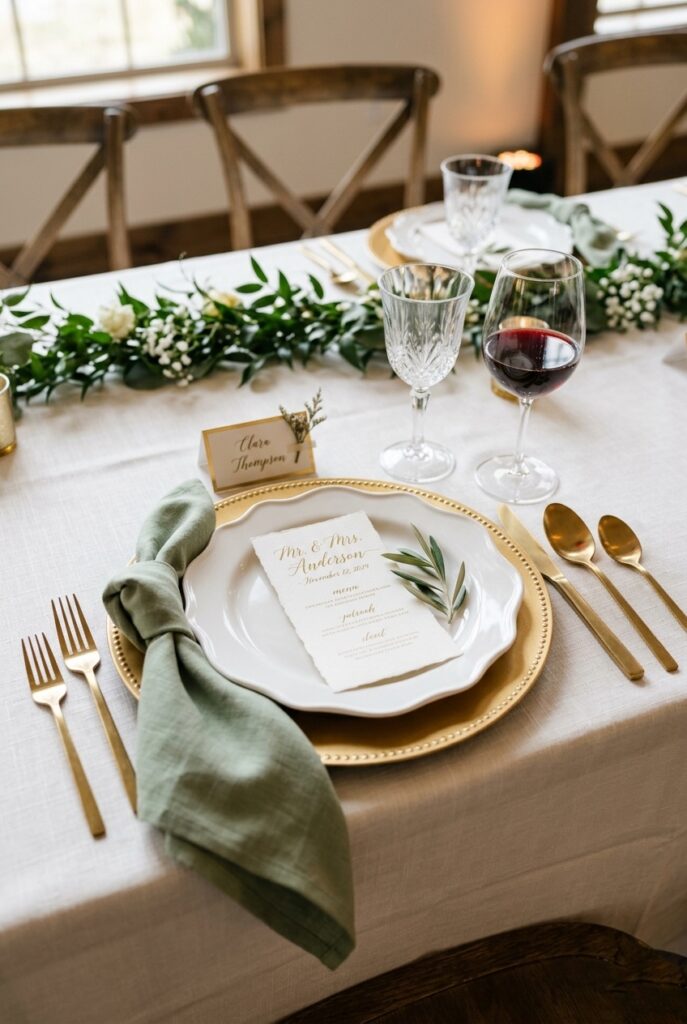
Most couples default to plain white plates and then spend money on extra decorative elements to make the table feel interesting.
The smarter move: rent or use a slightly patterned plate — botanical print, scalloped edge, gold rim, or organic wavy edge — and let the plate itself do the decorative work.
A patterned plate means your centerpiece can be simpler and still read as designed.
Organic or wavy-edged white plates in particular look far more expensive than they are and photograph beautifully.
💰 $3–$6 per plate (rental) — most wedding rental companies carry patterned or specialty china; wavy-edge white plates also available to purchase on Amazon for small weddings
Your Decision Filter
If your venue has round tables → prioritize a low, lush centerpiece that doesn’t block sightlines.
The rule: centerpieces should be either under 14 inches or over 28 inches tall.
The dead zone in between is exactly eye level when seated and kills conversation.
If your venue has long rectangular tables → a garland-and-candle runner down the center is more impactful than individual centerpieces and typically costs less per table.
If your budget is tighter → spend it on linens and candles first.
Those two elements do the most work per dollar, photograph in every guest’s wide-angle shot, and affect the feeling of the entire space.
Cut florals before you cut linens or light.
The Real Reason Tables Fail
It’s not a budget problem. It’s a layer problem.
Most disappointing wedding tables are missing one specific layer — usually light or personal detail — and because of that absence, the whole table feels unfinished.
A beautiful linen with bud vases but no candles feels like a florist’s shop.
Candles and linens with no personal detail feels like a hotel banquet.
Personal detail without linen and light feels like someone brought décor in a shopping bag.
Build all four layers — foundation, height, light, personal detail — even if each one is the most modest version of itself. A $3 printed place card still counts as personal detail.
A single $4 votive still counts as light. A $12 linen runner still counts as foundation.
Four modest layers beat one expensive layer every single time.
And the insider truth that no one says in polite company: the couples who agonize most over their tables are usually the ones trying to replicate something they saw on Pinterest from a $40,000 styled shoot.
Those tables have a florist, a lighting designer, a prop stylist, and a photographer all working together for one image.
Your table needs four intentional layers and a guest list who loves you.
That’s a different and genuinely better thing.
Mistakes to Avoid
Eye-level centerpieces. A centerpiece between 14 and 26 inches tall sits directly at seated eye level.
Guests spend the entire dinner leaning to the side or around it.
This is not a small problem — it actively makes the experience of sitting at your tables worse.
Go low (under 14 inches) or go tall and slender (over 28 inches).
There is no in-between that works.
White-on-white-on-white without texture.
All-white everything reads flat in photos and feels cold in person.
Add one element of contrast: a colored napkin, an amber-toned vessel, a dark charger plate, a raw-linen runner instead of smooth cotton.
Contrast doesn’t mean bold color.
Dusty sage, terracotta, and slate blue all read as neutral but still give the table depth.
Matching every table identically. Slight variation reads as intention.
Exact uniformity reads as a template you ordered from a party supply website.
Let some tables have taller candles.
Let some have a slightly different greenery mix.
Let the head table be noticeably more elaborate than the guest tables.
Variation creates the sense that a real person designed the room.
Over-DIY-ing the centerpiece but under-investing in linens.
Every year couples spend hours on handmade centerpieces and then put them on $5 polyester tablecloths that look like a school fundraiser.
The linen is the first thing the eye sees.
A simple $15 linen runner elevates everything sitting on top of it.
A cheap tablecloth diminishes even the most beautiful centerpiece above it.
People Also Ask: What Goes on a Wedding Reception Table?
A complete wedding reception table has five components: a linen base (tablecloth and/or runner), a centerpiece with height variation, a light source (candles, votives, or a table lamp), a styled place setting (charger, plate, napkin, flatware, glassware), and a personal detail (place card, favor, or napkin accent).
You don’t need all five to be elaborate — but all five should be present.
A table with four out of five always feels like something’s missing, and guests will feel it even if they can’t name it.
What Does Wedding Table Decor Actually Cost?
| Element | Budget Tier | Mid-Range | Well-Invested |
|---|---|---|---|
| Tablecloth (per table) | $12–$18 (Amazon/IKEA) | $20–$30 (linen rental) | $35–$60 (premium linen) |
| Table Runner (per table) | $8–$14 (Amazon) | $15–$25 (linen rental) | $30–$55 (Etsy raw linen) |
| Centerpiece (per table) | $8–$20 (bud vases + stems) | $35–$65 (florist low arrange) | $80–$200 (full floral) |
| Candles + holders (per table) | $10–$20 (Amazon bulk) | $25–$45 (mixed holders) | $55–$90 (brass + pillar) |
| Charger plates (per person) | $0.75–$1.50 (rental) | $1.50–$3 (premium rental) | $4–$8 (own, keep or resell) |
| Linen napkins (per person) | $2–$3 (Amazon bulk) | $3–$5 (linen rental) | $5–$9 (premium linen own) |
| Place cards (per person) | $0.30–$0.60 (DIY print) | $0.80–$1.50 (Etsy custom) | $2–$4 (calligrapher/laser) |
| Total per 10-person table | $120–$200 | $275–$430 | $500–$900 |
Your tables are where the real reception happens. Give them the four layers they deserve — and then trust them to do the work while you actually enjoy your wedding.