
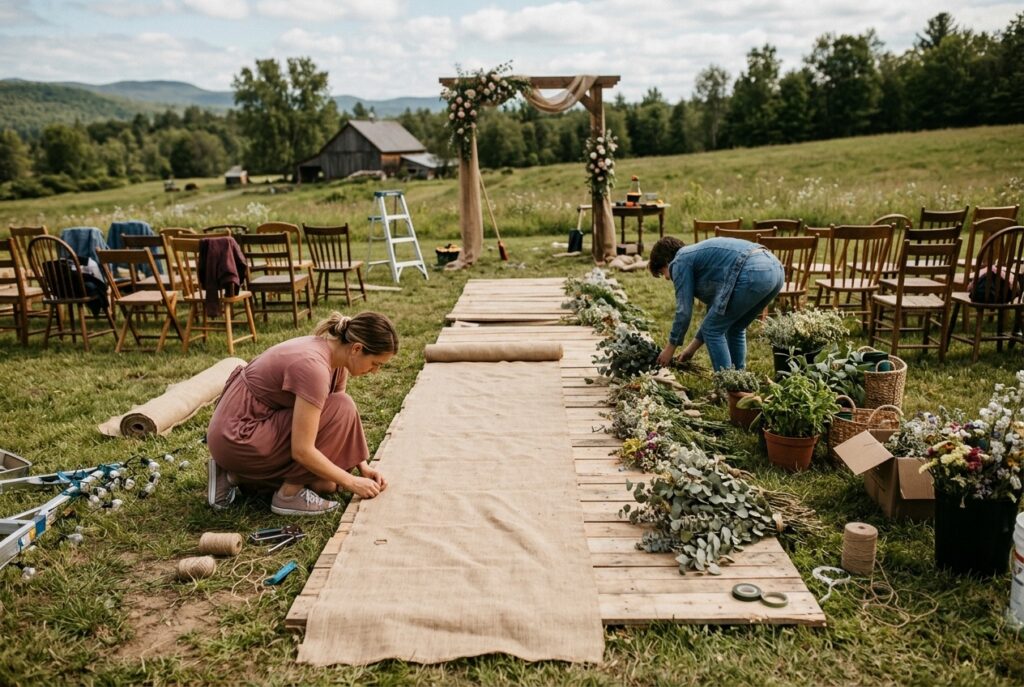
Most DIY wedding aisle guides show you a finished product and call it a tutorial.
If you’ve decided to DIY your aisle instead of hiring a florist, you’re saving $400–$1,500 depending on your vision.
But you’re trading money for time.
The real question is: How much time, and when?
Build a timeline that separates prep work (do in the weeks before) from install work (do the morning of), and you’ll actually finish without a meltdown.
Here’s how to do it realistically.
Scissors through ribbon,
wire wrapped around wet stems,
hands stained with green—
the hours before nobody sees.
The Short Answer
You can DIY a beautiful aisle for 40% of florist cost if you follow a two-phase system: assemble 80% of your decorations 2–5 days before the wedding in a climate-controlled space (flowers, pew markers, arrangements ready to go), then install only 20% the morning of the ceremony (tie pieces to chairs, place final fresh flowers, lay the runner). Rushing all assembly to the day-of is how DIY becomes a disaster.
1. The Pew Markers: DIY Flower Box Method (Realistic Cost & Time)
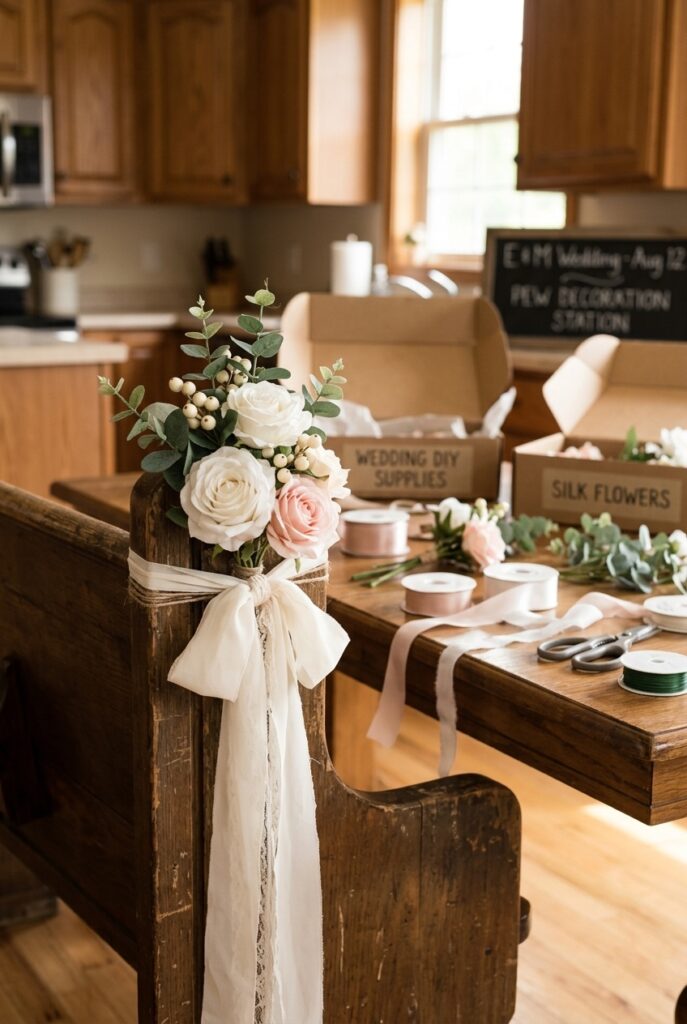
Ling’s Moment and other sites sell “DIY flower boxes”—pre-assembled silk or fresh flower bunches ($20–$35 each) that you tie together with ribbon and wire.
This is not the same as assembling stems individually.
You’re taking 3–5 pre-made flower stems, adding greenery sprays, wrapping the bundle with twine, tying a ribbon, and done. That single marker takes 8–12 minutes.
For 10 pew markers: plan 2 hours of assembly time. For 20 markers: plan 4 hours.
Do this task 3 days before the wedding, not the day-of.
Assemble everything in your kitchen or dining room, keep bundles in a cool space (garage, refrigerator if fresh), and transport them carefully to the venue.
The wrong approach is buying wholesale stems and trying to create arrangements from scratch without experience.
You’ll waste flowers, spend 45 minutes per marker, and end up frustrated.
Budget: $200–$350 for materials (flower boxes from Ling’s Moment, ribbon from Amazon, wire). Where to buy: Ling’s Moment, Rinlong Flower, Amazon (ribbon, wire, greenery sprays).
2. The Aisle Runner: Choose Between 3 Options Based on Your Timeline
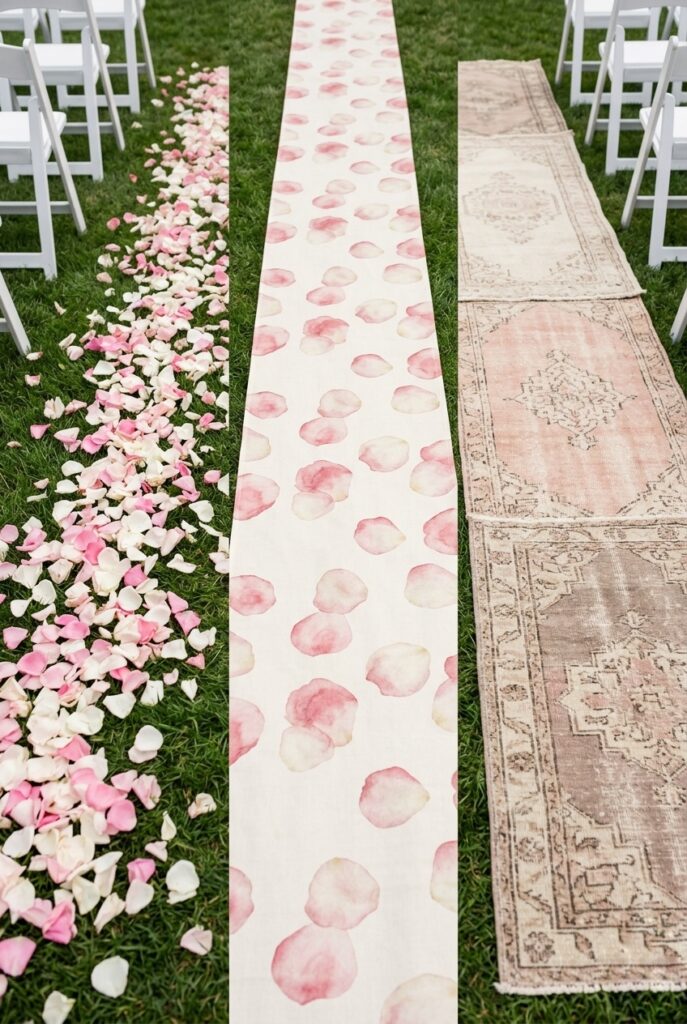
Option 1: Fresh Rose Petals from Costco — This looks romantic but requires exact timing. Buy bulk rose petals 2 days before the wedding, store them in the refrigerator (they’ll last 3–4 days refrigerated), and have a helper scatter them right before the ceremony begins (10–15 minutes before). In heat or direct sun, they wilt fast. Not recommended for outdoor summer weddings or indoor ceremonies without air conditioning.
Budget: $30–$60 for bulk petals. Where to buy: Costco, Sam’s Club, or wholesale florist suppliers.
Option 2: DIY Printed Linen Runner — Rent or buy a plain linen runner ($30–$80) and use adhesive vinyl, fabric paint, or stencils to personalize it 1 week before. This gives you a keepsake, photographs beautifully, doesn’t wilt, and can be reused in your home after the wedding. It takes 1–2 hours to design and create.
Budget: $50–$120 for runner + supplies. Where to buy: Etsy (linen runners), Amazon (fabric paint, vinyl, stencils).
Option 3: Vintage Rug or Layered Textiles — Thrift 2–3 vintage rugs, layer them end-to-end down the aisle, secure with tape underneath, and reuse them in your home. This approach takes 2–3 days of thrifting, but creates an intentional, boho look that’s impossible to replicate. Outdoor weddings on grass especially benefit from this since guests’ shoes won’t muddy the aisle.
Budget: $40–$100 for used rugs. Where to buy: Thrift stores (Goodwill, local vintage shops), Facebook Marketplace.
3. Shepherd’s Hooks + Hanging Arrangements: Lightweight & Reusable
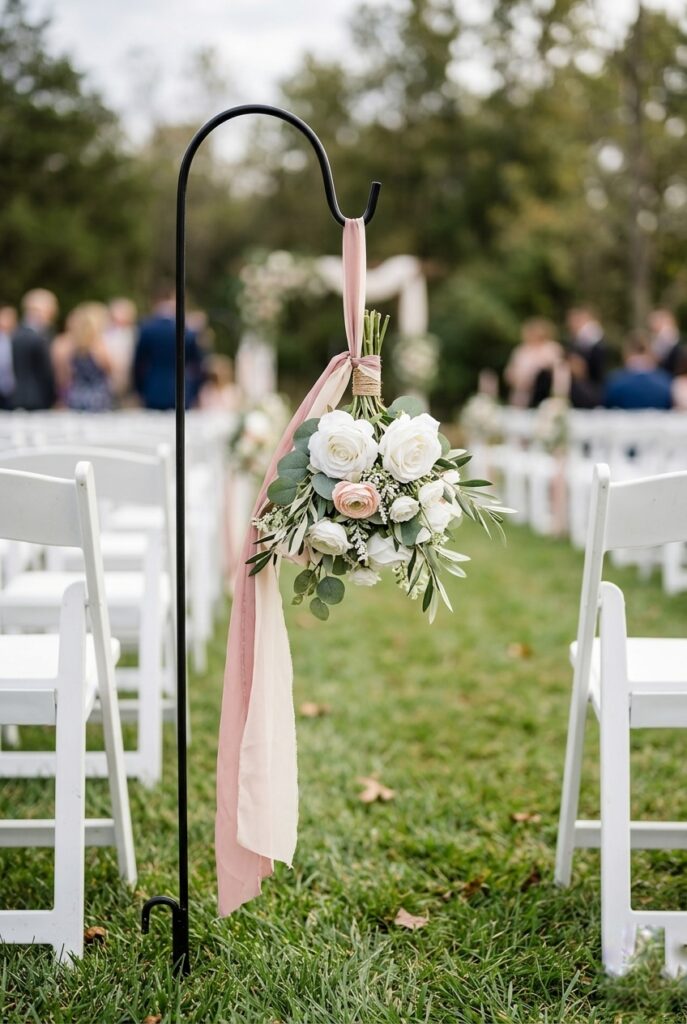
Garden shepherd’s hooks ($15–$30 each from Amazon, Home Depot) paired with small hanging silk or fresh arrangements ($20–$50 each) create height and drama without the cost of tall pedestal arrangements.
Position hooks every 4–6 feet down the aisle on alternating sides, then attach a small pre-made or DIY floral piece to each.
This approach requires zero installation day-of if you assemble it ahead.
Make/order the hanging pieces 5 days before, tie them to the hooks 2 days before, and on ceremony day you just position the hooks (literally just push them into the ground or set them on the aisle—takes 15 minutes for 6–8 pieces).
Don’t use fresh flowers hanging from hooks in heat; silk is more forgiving.
Budget: $150–$300 for 8 hooks + arrangements. Where to buy: Amazon, Home Depot (hooks), Ling’s Moment or Etsy (hanging arrangements).
Budget Hack #1: Buy Wholesale Greenery, Skip the Flowers Wholesale florists or online suppliers like FiftyFlowers sell bulk greenery (eucalyptus, ruscus, Italian ruscus) at 60% below retail. Buy 2–3 bunches ($20–$40 total), split them among pew markers, hanging arrangements, and a greenery runner. This cuts your flower budget from $300 to $120 while making everything look lush. Greenery lasts 7–10 days, so assemble 4 days before with zero risk of wilting.
4. Mason Jar Lanterns: Literally 5-Minute Assembly per Jar
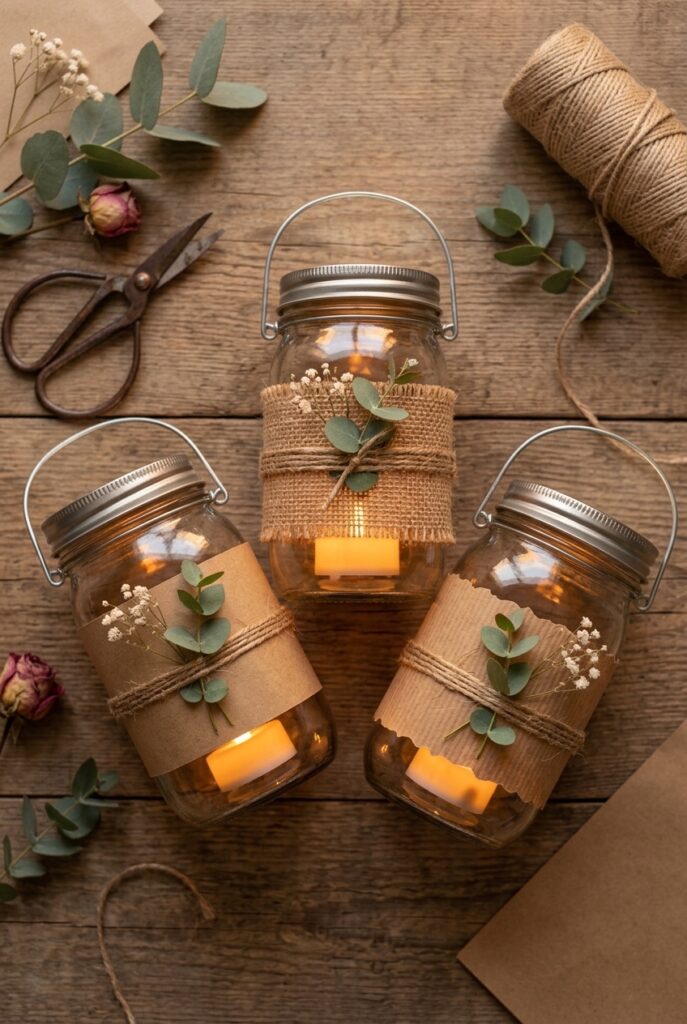
This is the single easiest DIY project that looks intentional.
Buy battery-operated candles ($0.50–$1 each in bulk from Dollar Tree), wrapping paper or cardstock ($3 for a pack), and mason jars you probably already have or can source for free.
Wrap the jar with paper or twine, insert the battery candle, and done.
No flowers required, no wilting risk, no fresh-day panic.
For 12 jars: 1 hour of assembly.
Do it 1 week before. Cost is genuinely $15–$25 total. This is a realistic DIY project that actually works.
Budget: $15–$25 for supplies (jars + candles + wrapping materials).
Where to buy: Dollar Tree (candles, jars), Amazon (bulk battery candles), craft stores (wrapping paper, twine).
5. Fresh Rose Petals: The Timing Trap (and How to Avoid It)
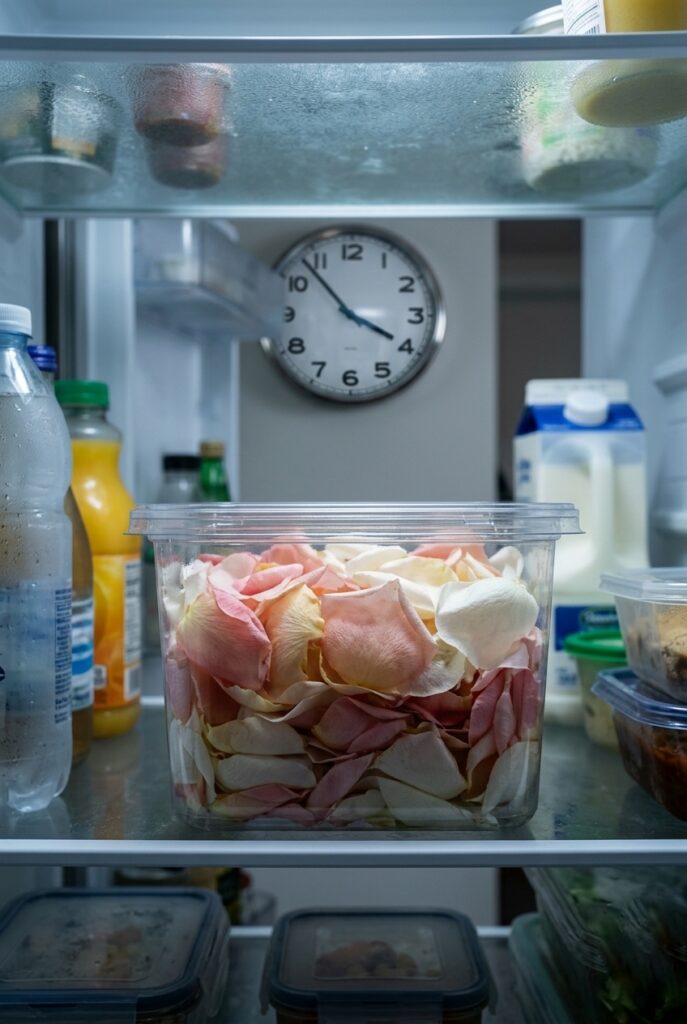
Fresh rose petals are iconic but fragile.
Petals purchased 7 days before the wedding turn brown, get dry, and look pathetic.
Petals purchased 1 day before stay fresh but must be kept refrigerated until the last moment.
Even a few hours in room temperature on a warm day will cause wilting.
The realistic approach: Order bulk petals from Costco or a wholesale florist 2–3 days before the wedding.
Store them in the refrigerator in a sealed container.
Have a designated helper assigned specifically to scatter them 10 minutes before the ceremony starts.
This means your helper isn’t doing other setup—they’re stationed with the petals, ready to go.
Don’t DIY the petal scattering yourself; you’ll be getting dressed and won’t have time.
Budget: $40–$80 for bulk petals. Where to buy: Costco (best bulk option), Sam’s Club, 1-800-Flowers, local wholesale florist.
Budget Hack #2: Grocery Store Flowers as Greener, Not Focal Blooms Skip the idea of making full arrangements from grocery store roses. Instead, buy 2–3 bunches of grocery store greenery or filler (eucalyptus, salal, Italian ruscus for $3–$8 each), then add 1–2 statement flowers (roses, hypericum berries) from a slightly better supplier mixed in. This cuts flower cost by 50% while looking intentional instead of cheap. The greenery does 80% of the visual work; the single focal flower adds elegance.
6. Fabric Draping on Chairs: 10 Chairs Takes 45 Minutes
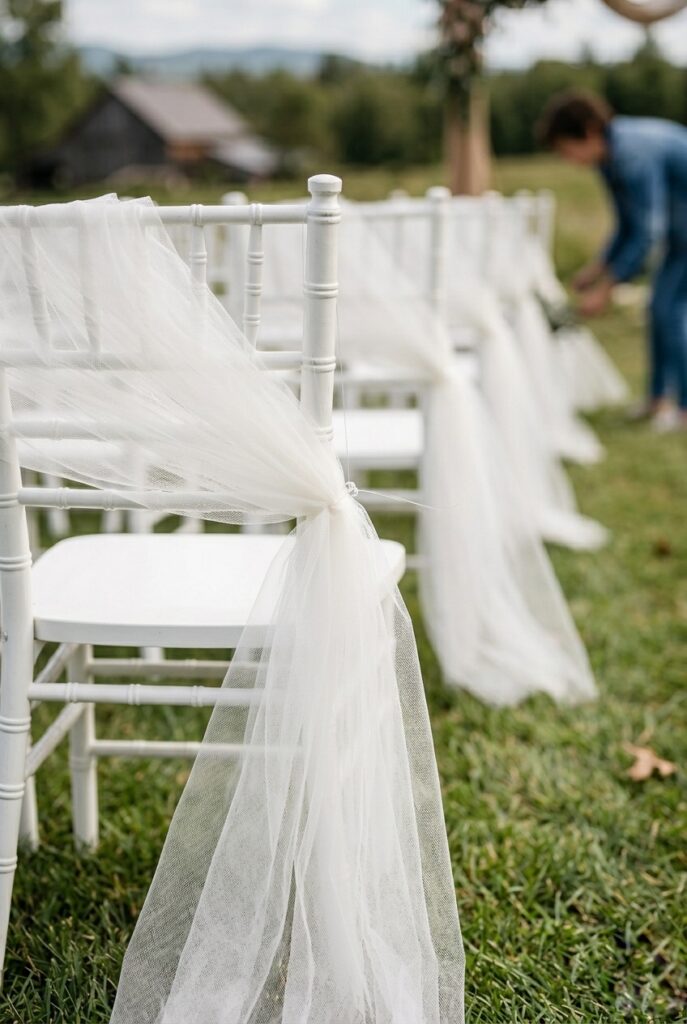
Instead of elaborate pew markers, drape tulle, chiffon, or ribbon along the sides of the first 6–8 chairs and skip the rest.
This creates a lush look with minimal cost and assembly.
Buy tulle or chiffon in bulk ($10–$20 for many yards), cut into sections, and loosely tie onto chairs with fishing line or pins (invisible from photos).
Assemble 4 days before (pre-cut all fabric into sections).
Install 1 hour before ceremony (tie onto chairs using the easy-undone knots that don’t permanently alter the venue’s chairs).
This respects venues that don’t allow permanent attachment to furniture.
Budget: $15–$40 for fabric + supplies. Where to buy: Amazon (tulle by the yard), fabric stores (Joann, hobby lobby), Etsy.
7. Greenery Garland Down the Aisle (or on Tables): Longest-Lasting Green
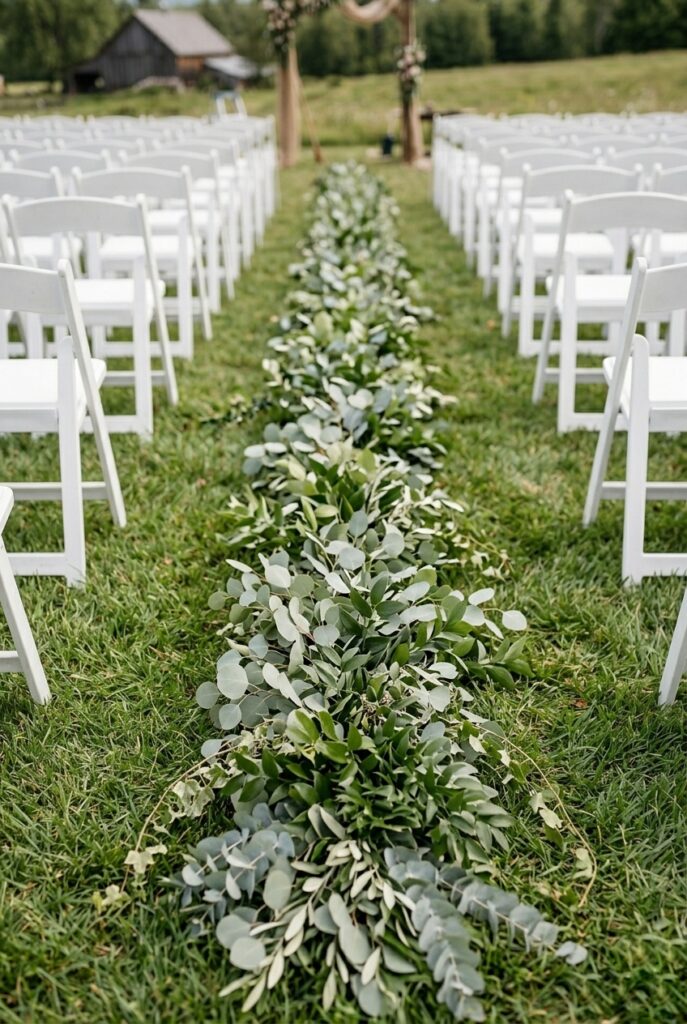
Buy a pre-made greenery garland ($40–$80 from Etsy, Amazon, or Ling’s Moment) or assemble your own from wholesale eucalyptus bunches ($20–$30 for enough to make 20 feet).
Lay it down the center of the aisle, drape it along the perimeter, or use it as the base for hanging arrangements.
Greenery doesn’t wilt for 7–10 days, so assemble 5 days out with zero stress.
This is the “lazy smart” option. It looks lush and expensive.
Setup is literally just laying it down (5 minutes). It’s reusable post-wedding as home decor.
Budget: $50–$100 for garland or materials. Where to buy: Etsy (pre-made garlands), Amazon, FiftyFlowers (bulk eucalyptus), Ling’s Moment.
8. Upcycled Vintage Doors or Wooden Frames: Statement Pieces, Not Full Coverage
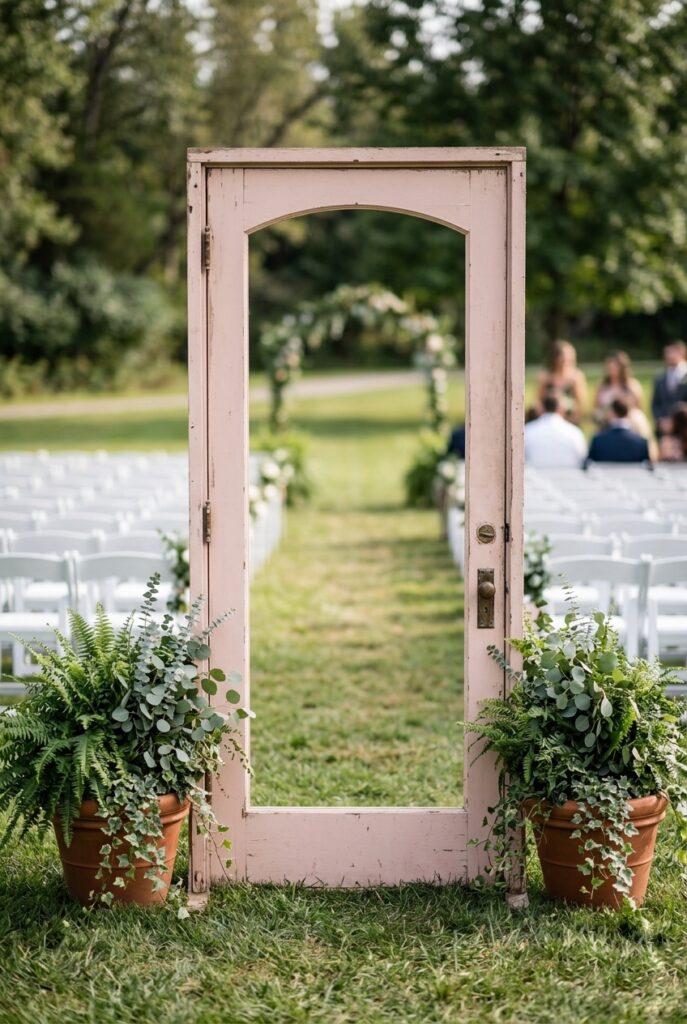
Position 2–3 vintage or wooden doors at the start and end of your aisle (or frame the altar area).
This creates a “moment” without decorating every single chair.
You’re directing visual focus, not covering everything.
Thrift for $20–$60 per door 2–3 weeks before, paint or stain if desired (takes 2–3 days), and position them day-of.
This is bold and unconventional but requires zero ongoing maintenance. Install 30 minutes before, no assembly needed.
Budget: $50–$150 for doors + paint. Where to buy: Habitat for Humanity ReStore, Craigslist, local salvage yards, Facebook Marketplace.
Budget Hack #3: Ask Florist Suppliers for Bulk Scraps or Seconds Many wholesale florists have “second grade” flowers or last-season greenery they sell at 70–80% off. Call local florists or wholesale suppliers and ask about their bulk discount and overstock. You might score premium greenery for $15–$30 instead of $50–$80. This requires advance coordination (2–3 weeks) but saves significantly.
Decision Filter
Under 50 guests? Do pew markers only on the first 4 rows and skip the rest.
Add a statement aisle runner (linen or vintage rugs) and shepherd’s hooks at the entrance. Total effort: 3–4 hours over 3 days.
50–100 guests, outdoor venue? Greenery garland down the center, fabric draping on first 6 rows, fresh rose petals scattered by a helper day-of, 2 vintage doors at the entrance. Total effort: 4–5 hours over 4 days, all pre-wedding.
Indoor ceremony, formal venue? Pew markers on all chairs, mason jar lanterns, printed aisle runner, shepherd’s hooks at entrance. Total effort: 6–7 hours over 5 days, zero day-of assembly required.
Budget-tight, time-limited? Greenery garland + mason jar lanterns only. Install takes 20 minutes. Cost: $60–$80. Effort: 1 hour of candle assembly.
The Real Reason
Here’s the honest truth: Professional florists quote $800–$1,500 for aisle decor partly because of flowers, but mostly because they solve the timeline and logistics problem for you.
They source, assemble, deliver, and install—removing all your stress and risk. DIY works only if you reverse-plan from the ceremony date and spread work across weeks, not days.
The couples who regret their DIY aisle are the ones who spent 8 hours assembling flowers the day before their wedding, missed sleep, had fresh flowers wilt before the ceremony started, or positioned everything at 7 AM in a panic.
The couples who loved their DIY aisle planned in phases: made pew markers 5 days out, positioned shepherd’s hooks 3 days out, installed runners and final touches 2 hours before the ceremony.
The insider observation: Florists know that most flowers visually peak for 4–6 hours, and they time everything to match your ceremony time exactly.
When you DIY, you lose that timing precision. If your flowers sit in your car in heat for 2 hours before the ceremony, they wilt. If your fresh petals are made the night before, they brown.
The florist’s premium isn’t just labor—it’s logistics expertise you’re buying.
If you’re DIY-ing, spend 20% of the money saved on a backup plan (extra petals, a pre-made garland to fill gaps, a second set of pew markers in case some don’t survive transportation).
Mistakes to Avoid
Mistake 1: Assembling all fresh flowers the day-of Competitors’ DIY guides imply you can make arrangements the morning of the ceremony.
In reality, fresh flowers assemble in 1–2 hours, but they only peak for 4–6 hours.
If your ceremony is at 4 PM and you assemble at 7 AM, the flowers have 9 hours to wilt before guests see them.
Assemble fresh flowers 2–4 hours before, not 8–12 hours before.
Mistake 2: Buying fresh petals more than 3 days before the ceremony One couple bought rose petals 8 days early “to be safe.”
By ceremony day, they were brown and papery. Petals are forgiving only within a narrow window.
Buy 2–3 days before maximum, refrigerate immediately, and scatter day-of. Anything else is wasted money.
Mistake 3: Underestimating assembly time and trying to DIY everything the week-of Assembling 20 pew markers takes 4 hours minimum.
A greenery garland with any density takes 2–3 hours.
Mason jar lanterns take 1 hour for 10 jars. If you’re making pew markers, a garland, petals, and lanterns all in the week before, you’re looking at 8–10 hours of work split across 3 days.
Most couples underestimate this and end up stressed. Budget explicitly for time, not just money.
Mistake 4: Not testing attachment methods before the ceremony One bride used fishing line to attach pew markers to rental chairs, but the fishing line broke during installation.
Test every attachment (ribbon, fishing line, pins, wire) on a sample chair 2 days before.
This takes 15 minutes and prevents ceremony-day disasters. Venues often have restrictions on what you can attach to furniture—ask before you start assembling.
FAQ
How far in advance can I assemble fresh flowers for the aisle?
Fresh flowers assemble 2–4 hours maximum before the ceremony.
If you assemble longer than that, petals will start to wilt, stems will dry out, and greens will droop.
For pew markers, you can pre-assemble the structure (tie ribbon, wire, greenery) 3–5 days before, then add fresh focal flowers (roses, peonies) just 4 hours before the ceremony.
This hybrid approach saves labor but ensures freshness.
Can I use grocery store flowers for my DIY aisle?
Yes, but only for greenery or filler, not as your statement flowers.
Grocery store roses are hardy and last well when refrigerated.
Use them mixed with higher-quality greenery for a cost-effective look.
For statement flowers like peonies or ranunculus, buy from a wholesaler or florist since grocery store versions are often past-prime when available.
Should I use fresh or silk flowers for my DIY aisle?
Silk flowers are forgiving (assemble 1 week out, no wilting risk, no refrigeration needed) and cost similar to fresh ($20–$40 per arrangement).
Fresh flowers are more romantic, last longer in person (not just in photos), but require precise timing.
For outdoor summer weddings, silk is smarter.
For indoor spring weddings where you can control temperature, fresh is worth the risk.
How do I transport DIY pew markers to the venue without damage?
Transport in shallow cardboard boxes lined with newspaper, one layer per box, flowers face-up. Avoid stacking boxes.
Keep them in a cool car (not trunk in summer heat).
Once at the venue, keep them in a cool shaded area until 1 hour before the ceremony, then tie to chairs.
Don’t tie them hours early and leave them in direct sun.
Budget Table
| DIY Aisle Component | DIY Cost | Pre-Made Alternative Cost | Time to Assemble |
|---|---|---|---|
| Pew Markers (20) | $250–$350 | $600–$800 (florist) | 4 hours |
| Aisle Runner (petals) | $40–$80 | $150–$300 | 15 min install |
| Aisle Runner (printed linen) | $50–$120 | $150–$250 | 1–2 hours |
| Shepherd’s Hooks + Hanging Arrangements | $200–$350 | $500–$800 | 1 hour |
| Mason Jar Lanterns (12) | $15–$25 | $80–$150 (pre-made) | 1 hour |
| Greenery Garland (20 ft) | $50–$100 | $150–$250 | 2 hours or ready-made |
| Fabric Draping (10 chairs) | $20–$40 | $100–$200 | 45 minutes |
| Vintage Door Frames (2–3) | $50–$150 | N/A | 30 min install |
| TOTAL REALISTIC DIY AISLE | $475–$900 | $1,500–$2,800 | 6–8 hours spread over 5 days |
You can absolutely DIY a beautiful aisle.
The secret is spreading work across weeks using a two-phase system: assemble non-perishable pieces (pew markers from silk flowers, lanterns, garlands, vintage doors) 3–5 days before, then add fresh or time-sensitive elements (rose petals, fresh focal flowers) 2–4 hours before the ceremony.
Don’t try to do it all at once. Don’t wait until the day-before.
And don’t skip a backup plan in case something wilts or breaks.
Start by ordering supplies this week.
DIY flower boxes from Ling’s Moment cut your labor in half compared to assembling from raw stems, so use them.
Buy your aisle runner or materials next week.
And assign someone else to handle last-minute fresh petals so you can focus on getting dressed.
That division of labor is what separates DIY success from DIY stress.