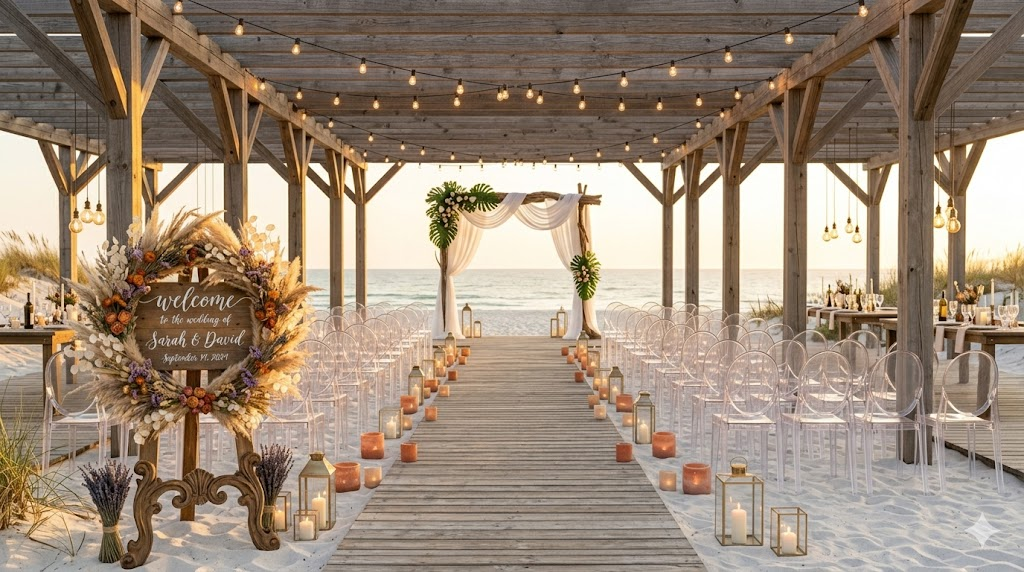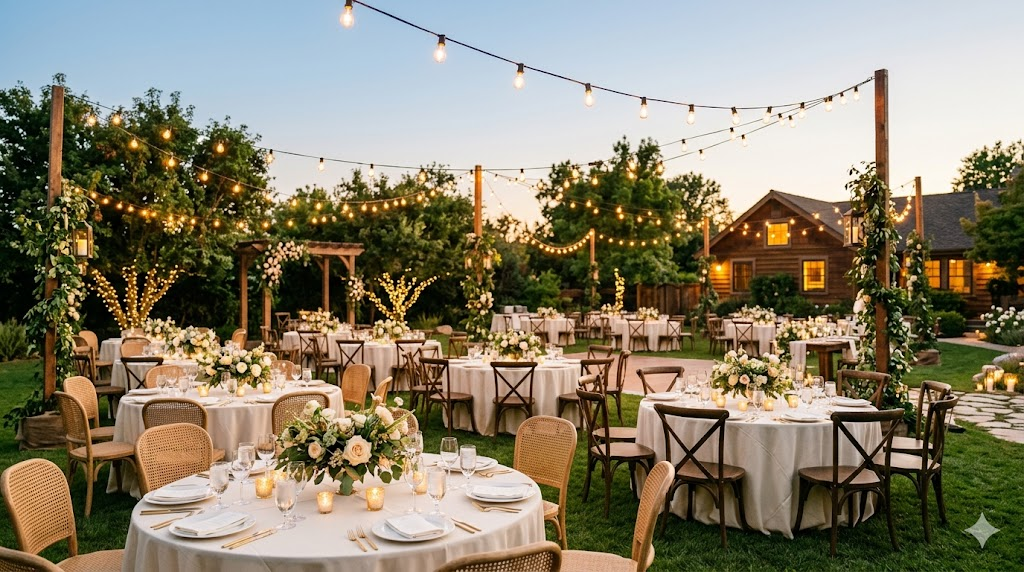
Most couples spend hundreds on centerpieces and then place them on a shiny polyester tablecloth that flattens the entire design in photographs.
Minimal centerpieces only work when every surrounding detail supports them — the linens, the candle height, the vessel quality, the spacing, and the lighting all matter as much as the flowers themselves.
The ideas below are built around that reality.
1. A Single Statement Stem Cluster in Clear Bud Vases
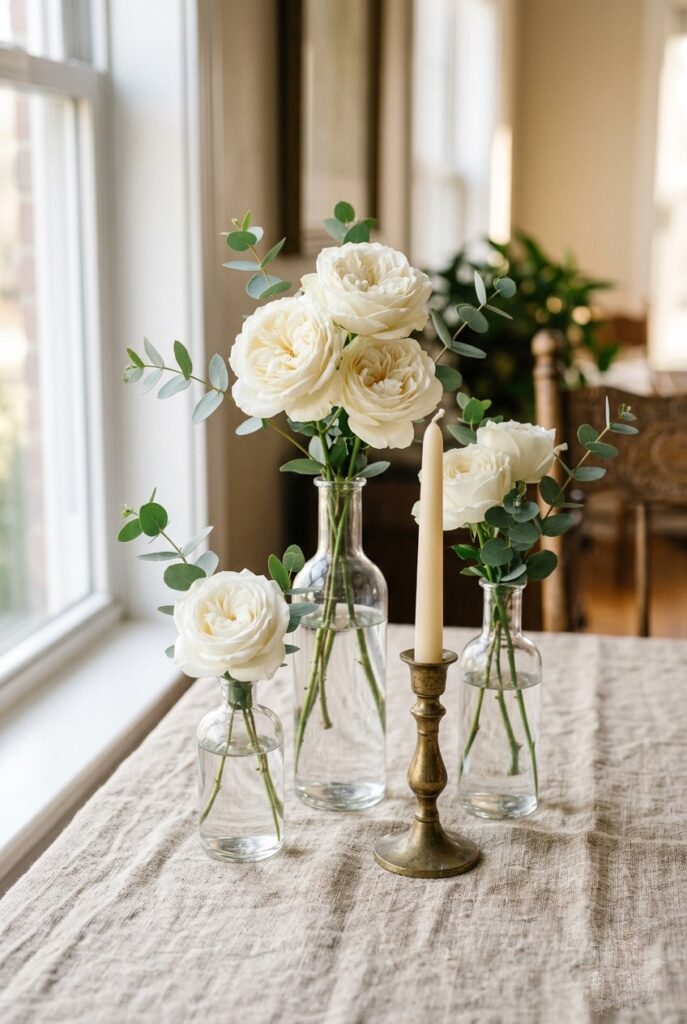
Three small bud vases grouped together create more visual movement than one large arrangement because the variation in height prevents the table from looking flat while still reading as restrained — this works especially well as a round table centerpiece on 60-inch rounds, though on very long banquet tables it can visually disappear from farther seats.
Fill each vase with two stems of a single seasonal flower — spray roses, ranunculus, or garden roses — and resist the urge to mix varieties, because restraint in flower choice is what keeps the look from reading as underfunded rather than intentional.
2. Taper Candles in Mixed Heights — No Flowers Needed
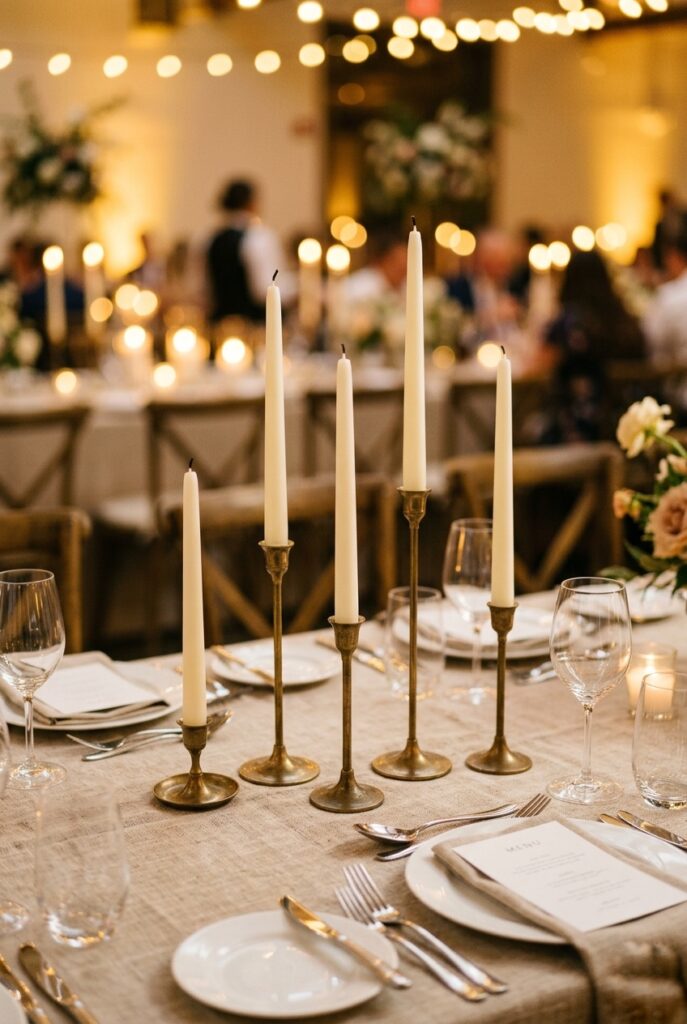
Candles-only centerpieces are one of the strongest evening reception looks available, and the entire difference between elegant and cheap comes down to the holders — slim brass or antique gold holders elevate the table immediately while thick plastic holders destroy the effect regardless of candle quality.
Use varying heights with deliberate negative space between candles rather than crowding them, and the full breakdown of flame formats, venue permissions, and flower-clearance rules lives in the wedding candle centerpiece guide — this format specifically outperforms florals in any formal indoor reception where the room already has strong ambient warmth.
3. Linen Napkin Knot Centerpiece With One Stem
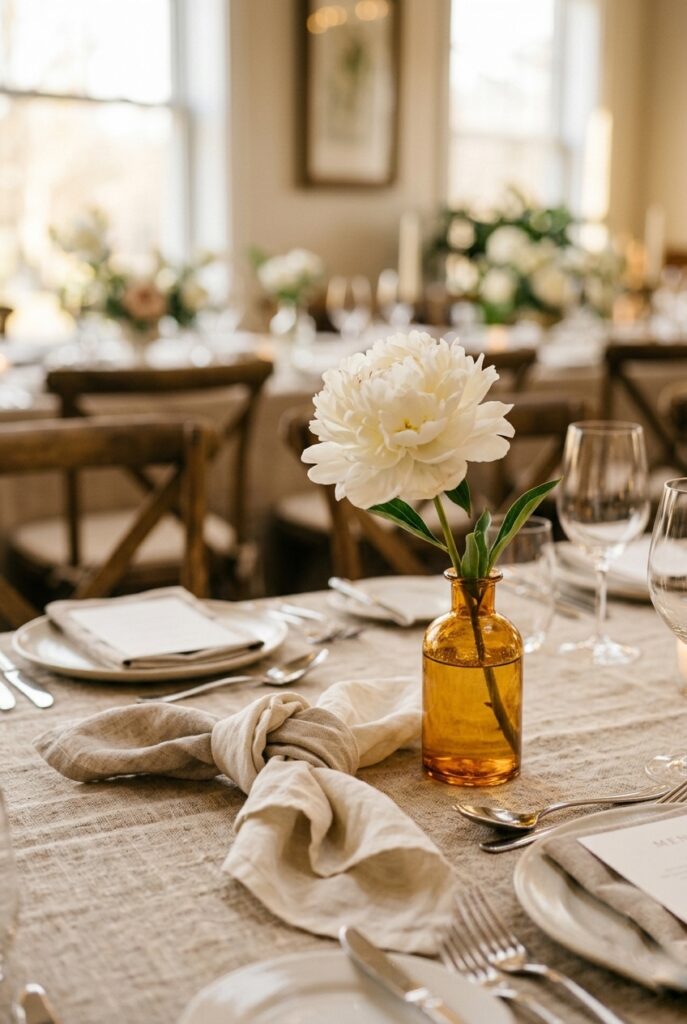
This centerpiece works because the linen texture becomes part of the design rather than backdrop to it — the flower acts as punctuation rather than the focal point, which means you need real linen or washed cotton napkins since polyester destroys the organic quality entirely.
It pairs best with exposed wood farm tables or naturally textured tablecloths, and sits comfortably within the broader category of simple wedding decor that relies on surface quality rather than floral volume to read as considered.
4. Eucalyptus Garland Runner With Taper Candles
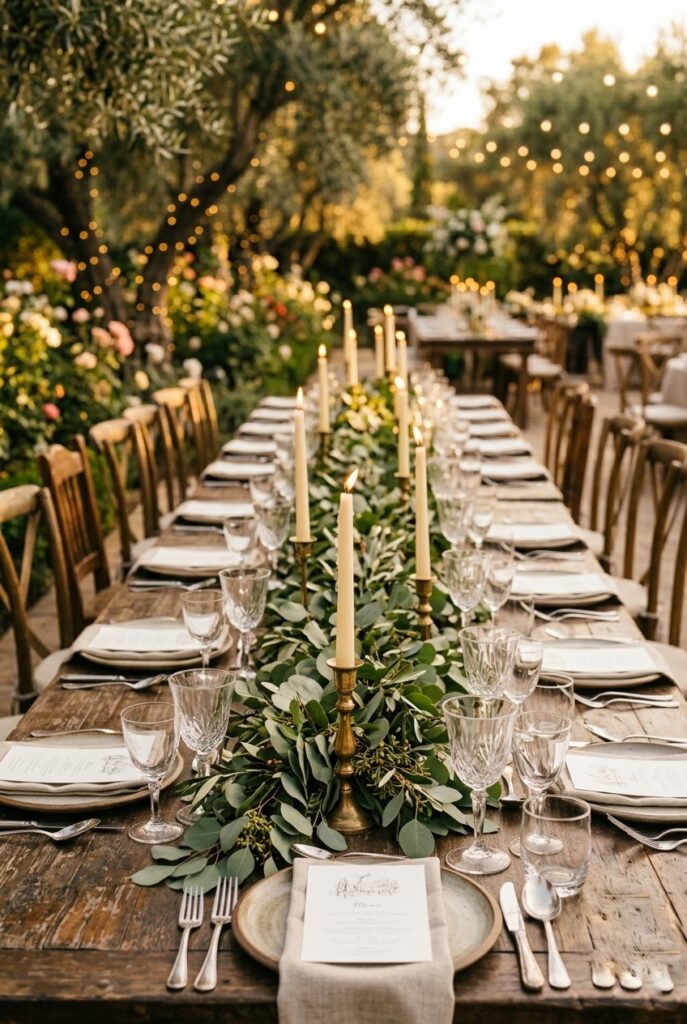
Eucalyptus is forgiving, affordable, and photographs consistently well from nearly every angle — but a dense garland with good volume is what reads as editorial, while thin craft-store greenery immediately looks unfinished and sparse no matter how many candles you surround it with.
Spacing taper candles throughout the runner rather than clustering them at the center adds warmth and depth across the full table length, and if you want to execute this yourself without floral experience, the DIY wedding decor guide walks through sourcing and assembly step by step.
5. One Hydrangea Bloom in a Short Cylinder Vase
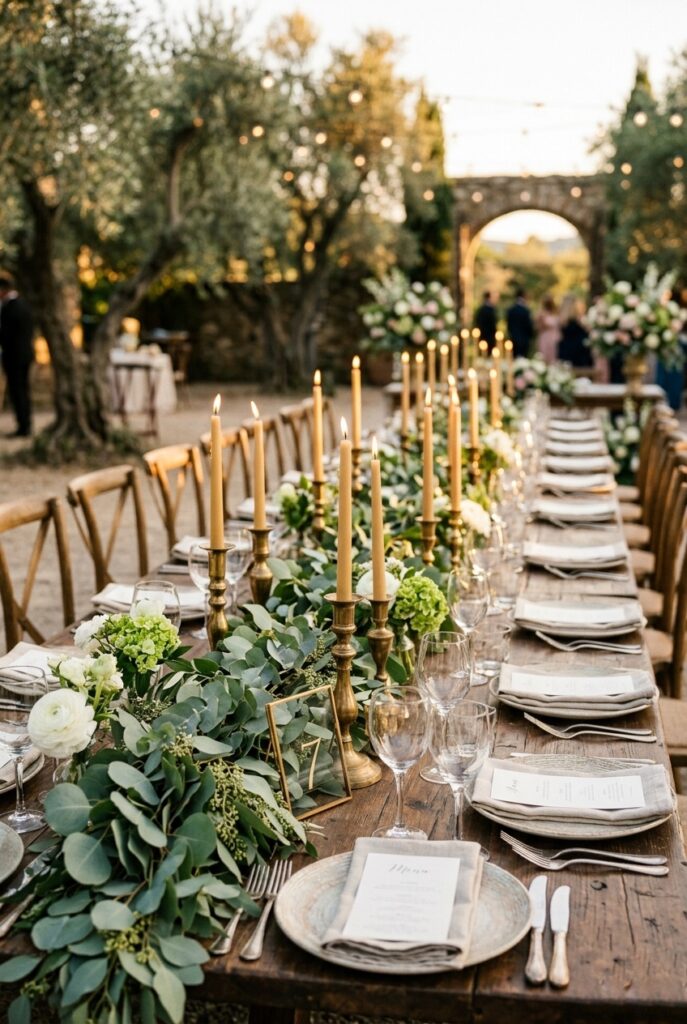
One hydrangea bloom in a genuinely short vase looks high-end because the flower creates its own volume — the critical detail is keeping the vase short enough that the bloom sits tightly at the rim rather than floating awkwardly above it, which is the mistake that makes this centerpiece read as unfinished instead of intentional.
At $8–$14 per table including surrounding tea lights, this is the strongest low-cost option on this list and the one most likely to survive the gap between how it looks in planning and how it reads across a reception room.
6. Herb Bundles in Terracotta Pots
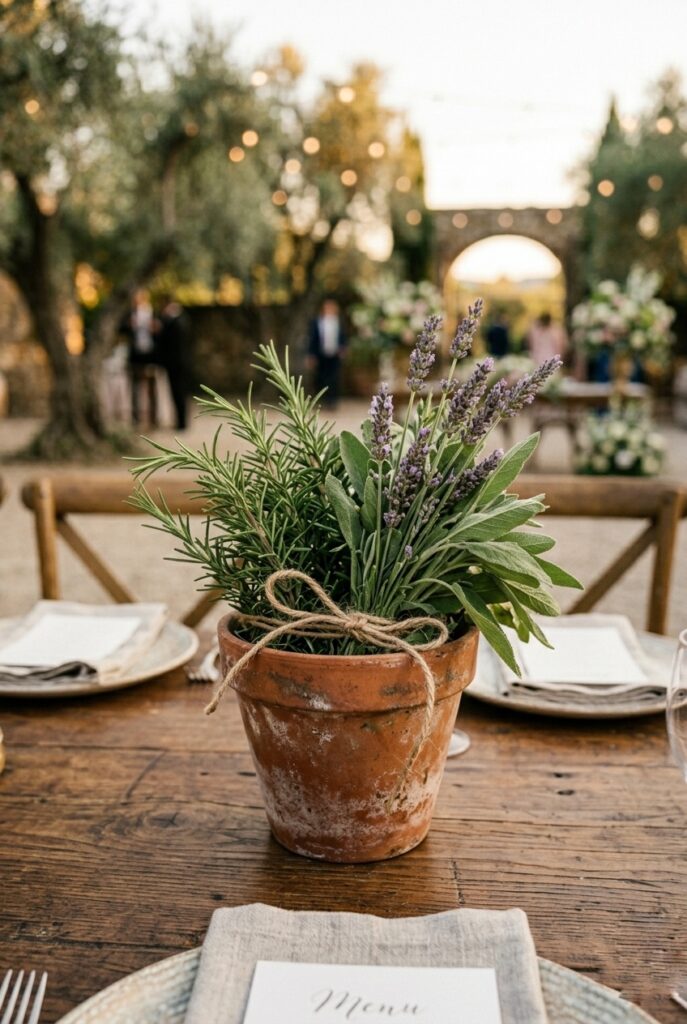
Herb centerpieces carry a subtle fragrance that changes the atmosphere of the room in a way guests notice without being able to name it — rosemary, lavender, and sage in terracotta pots read as organic and intentional, and the rustic wedding centrepiece guide covers exactly how to build this into a complete table look if you want the herb pots to anchor a wider scheme.
This style works best for outdoor and garden weddings and should be skipped entirely for formal ballroom spaces, where the earthiness of terracotta reads as mismatched against the venue’s existing architecture.
7. Vintage Book Stack With One Bud Vase
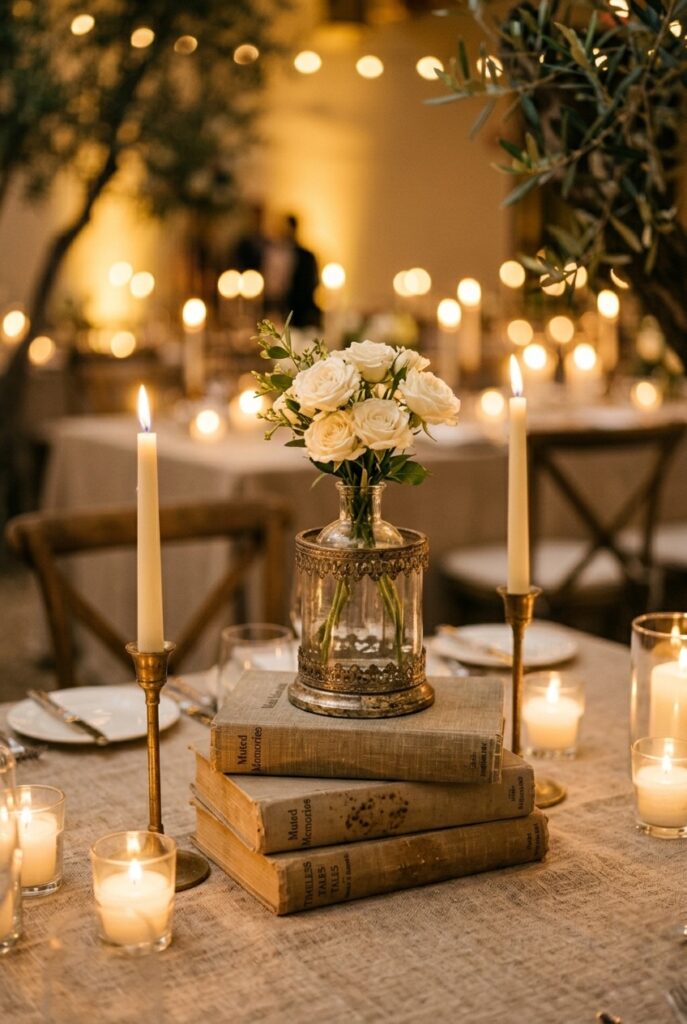
Three muted hardcover books stacked at slightly varying angles add height and texture without any floral expense, but this only works when the surrounding wedding aesthetic already leans literary, vintage, or eclectic — in a modern venue it reads as disconnected from the room rather than uniquely considered.
Goodwill and thrift stores are the right sourcing locations, and the books should stay neutral in spine color — avoid bright covers that pull the eye away from the flower at the top.
8. Floating Candles in Wide Glass Bowls
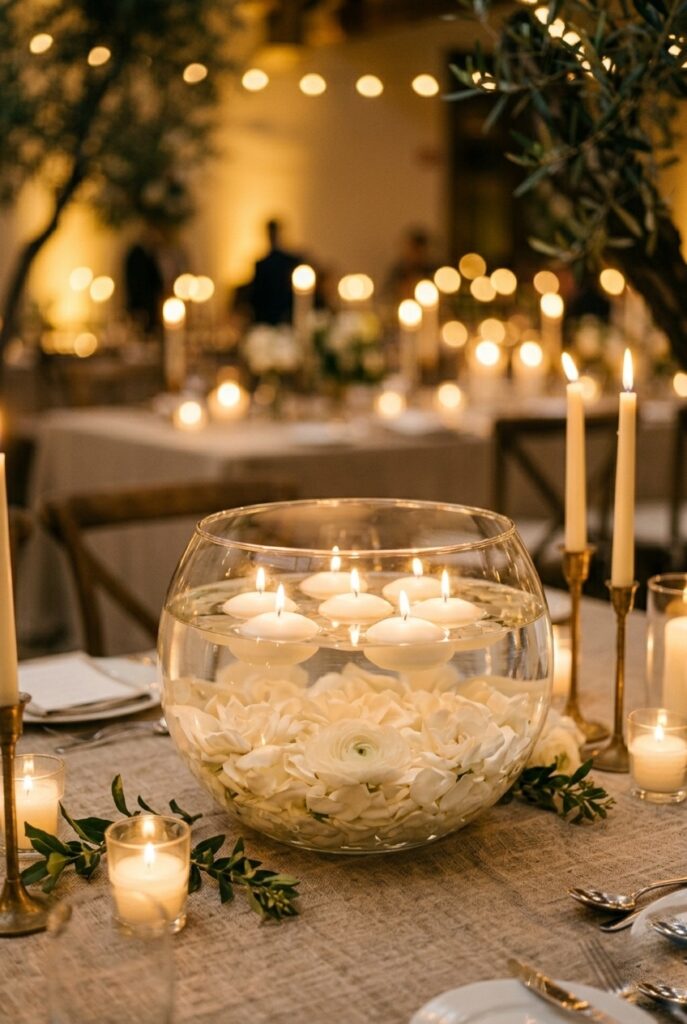
The difference between a floating candle centerpiece that reads as editorial and one that looks like a dollar-store setup is almost entirely the bowl — wide, heavy glass with enough water depth to stabilize the flame and create genuine light reflection across the table surface, rather than a shallow lightweight container that tips and burns unevenly.
Scatter rose petals or small flower heads beneath the floating candles for color without any fire risk since the blooms are submerged, and this format is worth considering for any venue where the candle policy restricts open flame to enclosed or water-contained formats.
9. Pampas Grass and Wheat in Terracotta
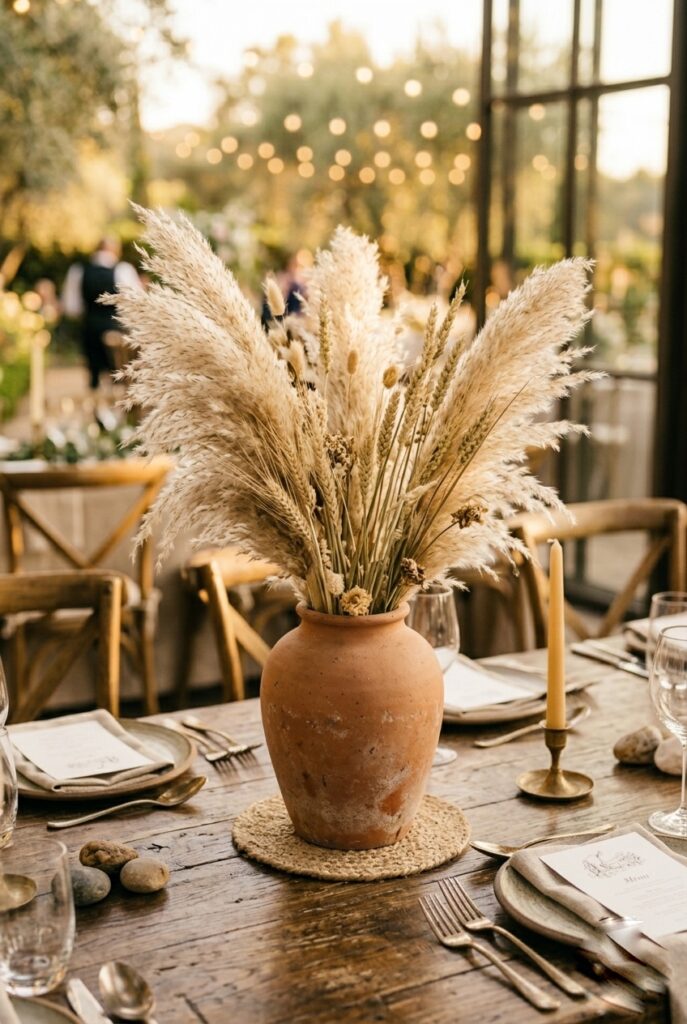
Dried centerpieces solve the problem fresh flowers never can — you can assemble them days ahead with no refrigeration and no wilting anxiety on wedding morning — but the quality of the pampas matters enormously, since cheap synthetic-looking stems shed heavily and photograph as flat and lifeless rather than the soft, feathery texture that makes this style work.
Natural unbleached dried pampas from a quality Etsy supplier reads as elevated in any season, and particularly photographs well at fall weddings where the ivory-gold tones sit naturally within the broader warm palette of the reception.
10. Potted Succulents as Centerpieces and Guest Favors
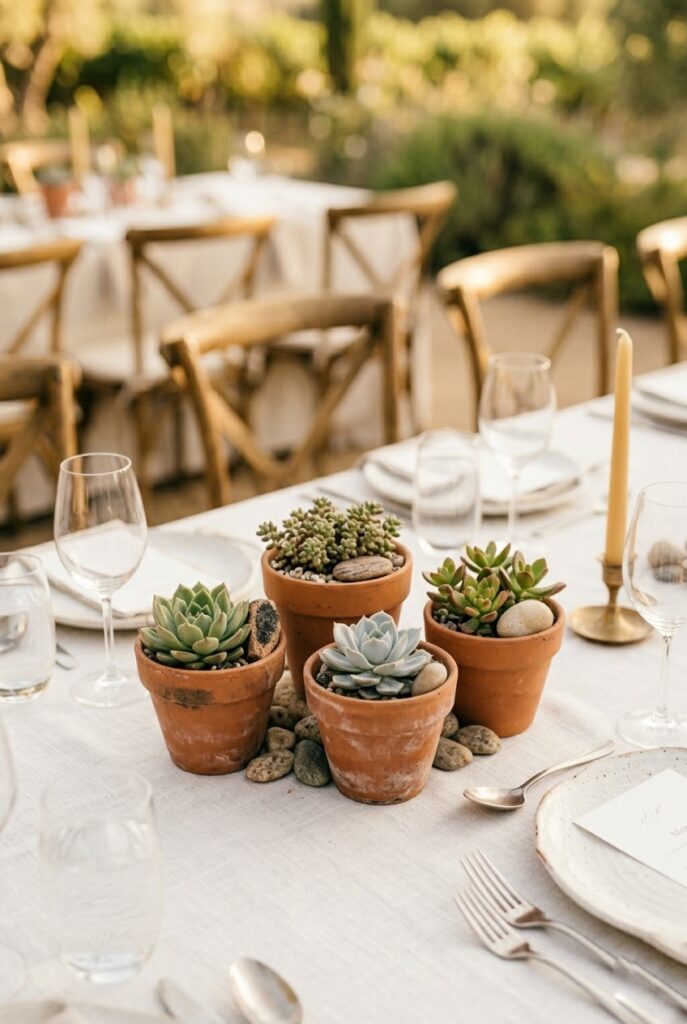
Succulents work best in modern, desert, or bohemian wedding aesthetics, and their practical advantage is significant — guests take them home, which eliminates the need for separate favors and gives you two budget line items for the cost of one.
Consistency is what makes this look work rather than feel informal: use matching pots, keep the cluster tight rather than scattered, and if you want to see how this sits within a full table scheme from linen to place setting, the wedding table decor guide covers every layer beneath the centerpiece.
The principle underneath every idea on this list is the same: spend on the surface first, then the vessel, then the light source, and let the flowers be the finishing detail rather than the whole design.
For more ways to apply this thinking across a full venue, the guides to elegant wedding decor ideas and unique wedding decor ideas show how restraint and intention translate at every scale.